
We’ve all been there. You’ve spent eighty dollars on a prime brisket. You’ve rubbed it down with a spice blend that cost more than your first car’s oil change. You’ve woken up at 4:00 AM, coffee in hand, ready to conquer the fire.
But twelve hours later, you’re looking at a piece of meat that has the texture of a recycled radial tire and the flavor of a campfire’s leftovers.
What happened? You followed the recipe. You bought the expensive wood chunks. You wore the “Kiss the Cook” apron. The truth is, you likely fell victim to the temperature trap.
In the world of backyard BBQ, temperature isn’t just a number on a dial; it is the invisible hand that either crafts a masterpiece or commits a culinary crime.
Most folks treat their grill like a kitchen oven, but a grill is a wild, living beast.
If you don’t understand the thermodynamics of your pit, you’re not cooking – you’re just gambling with lunch.
The Science of the Trap: Radiant vs. Convective Heat
To beat the temperature trap, we have to look under the hood. There are two main types of heat at play in your grill, and mistaking one for the other is the fastest way to serve raw chicken with a side of carbon.
Radiant heat is what you feel when you stand in the sun or put your hand near a glowing coal. It’s direct energy. It’s aggressive.
It’s great for searing a thin ribeye, but if you try to cook a whole turkey with radiant heat alone, the outside will be charred to a crisp before the inside even realizes the heat is turned on.
Convective heat is the hero of real BBQ. This is the movement of hot air around the meat. In a high-end offset smoker, the air flows like a river, licking the meat and cooking it evenly from all sides.
The temperature trap occurs when you rely on radiant heat for jobs that require convection.
Think of it this way: Radiant heat is a blowtorch; convective heat is a warm hug. For long cooks, you want the hug. If you see flames licking your meat during a six-hour smoke, you aren’t barbecuing; you’re conducting an outdoor cremation.
Fatal Mistake #1: The Lid-Flipping Obsession
I get it. You’re proud. You want to see that bark forming. You want to poke it, prod it, and show your neighbor how professional you look. But here is the hard truth: If you’re lookin’, you ain’t cookin’.
Every time you lift that lid, you are springing the temperature trap.
You aren’t just losing a little heat; you are dumping the entire stabilized environment you spent the last hour building. When that lid goes up, the hot air escapes instantly, and cool, oxygen-rich air rushes in.
This causes two problems. First, your cooking temperature plummets. Second, the influx of oxygen can cause your coals to spike in temperature once you close the lid again, leading to a “yo-yo” effect that toughens the meat.
A ten-second peek can add fifteen to twenty minutes to your total cook time. Multiply that by ten peeks, and you’re eating dinner at midnight.
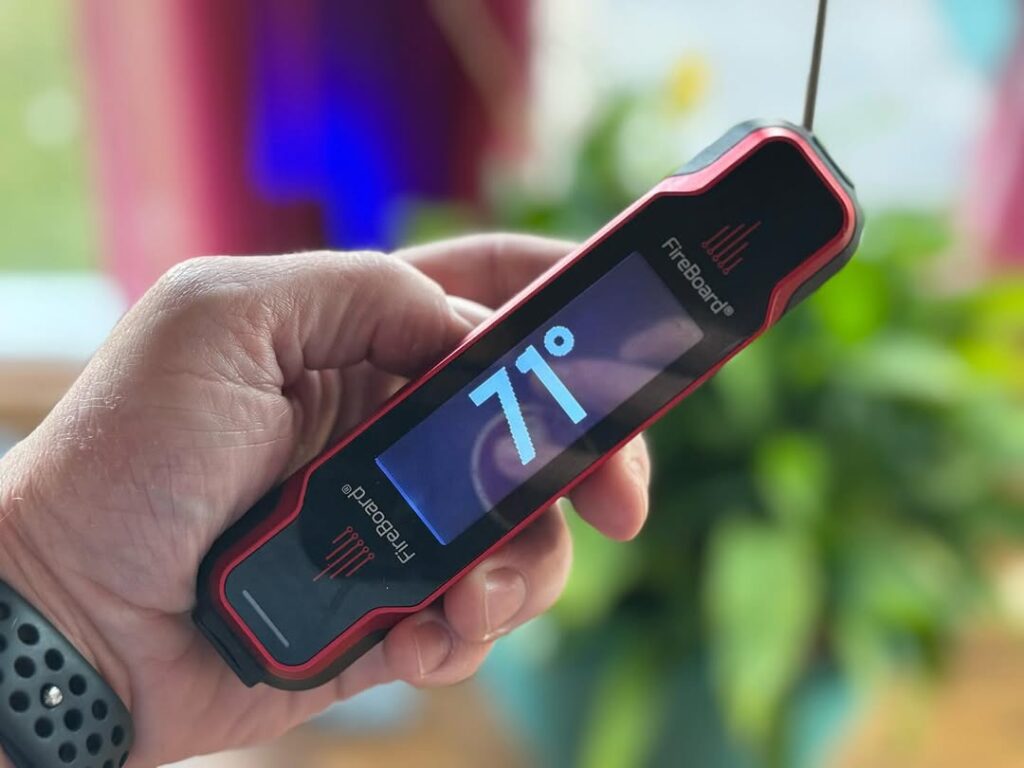
The Pitmaster’s Solution: Get a remote probe thermometer. It allows you to see the internal temperature of the meat and the ambient temperature of the grill from your phone while you sit on the couch.
Technology is the only way to keep your curiosity from killing the brisket.
Fatal Mistake #2: Ignoring the “Stall”
Around the five or six-hour mark of a big cook, something terrifying happens. The internal temperature of your meat reaches roughly 160ºF and then… it just stops. For two, three, or even four hours, the needle doesn’t move.
This is the ultimate temperature trap. Most beginners panic. They think the fire is out, so they dump more charcoal in. Or they think the meat is “stuck,” so they crank the heat up to 350ºF. Do not do this.
This phenomenon is called evaporative cooling. The meat is essentially “sweating.” As moisture rises to the surface and evaporates, it cools the meat down at the exact same rate the grill is heating it up. It’s a physical stalemate.
If you crank the heat to “break” the stall, you will render the fat too quickly and end up with a dry, stringy mess. The solution? Either wait it out with a cold drink and a stoic attitude, or use the Texas Crutch.
Wrapping the meat in foil or peach butcher paper at 160ºF traps the moisture, stops the evaporation, and powers you through the stall without sacrificing tenderness.
Fatal Mistake #3: Relying on the “Dome Lie”
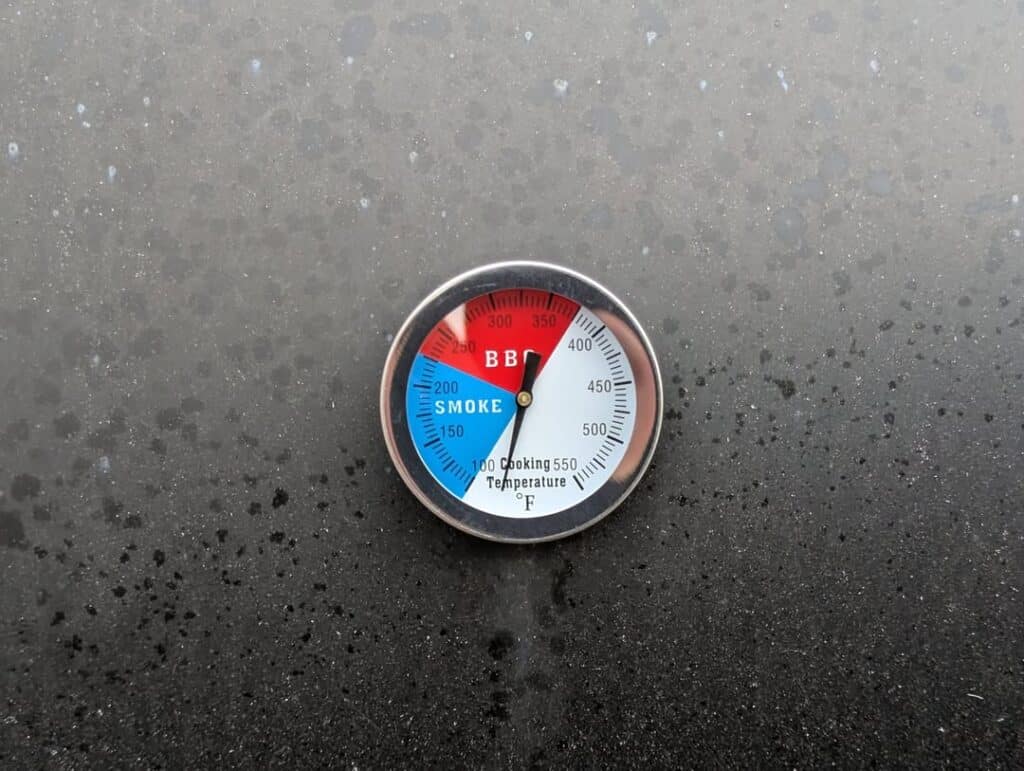
Look at the thermometer built into the lid of your grill. Now, I want you to forget it exists. That thermometer is a liar, a charlatan, and the primary architect of the temperature trap.
There are two reasons why hood thermometers are useless:
- Placement: Heat rises. The thermometer is at the top of the dome, while your meat is sitting six inches lower on the grate. The temperature difference between the dome and the grate can be as much as 50ºF.
- Quality: Most built-in thermometers are cheap bi-metal gauges that are notoriously inaccurate.
If your lid says 250ºF, your meat might actually be sitting in a 200ºF zone (meaning it’ll never finish) or a 300ºF zone (meaning it’s burning).
Real pitmasters measure the temperature at the grate level, right next to the meat. If you aren’t measuring where the meat lives, you aren’t really in control.
The Anatomy of a Perfect Cook: Zoning Your Grill
If you want to avoid the temperature trap, you have to stop treating your grill surface like one giant heating pad. You need zones.
The “Two-Zone Setup” is the fundamental building block of great BBQ. You pile your coals on one side (the Hot Zone) and leave the other side empty (the Cool Zone).
- The Hot Zone is for searing, browning, and making those beautiful grill marks.
- The Cool Zone is where the magic happens. By placing the meat on the cool side and closing the lid, you turn your grill into a convection oven.
This setup gives you an “emergency exit.” If your chicken starts to flare up or the skin is browning too fast, you slide it over to the cool side. You stay in control. You stay out of the trap.
The Meat’s Anatomy: Why One Size Doesn’t Fit All
The final piece of the temperature trap is failing to understand that different meats have different “finish lines.”
A common mistake is thinking that because a steak is done at 135ºF, a brisket or pork shoulder should be treated similarly. But BBQ is about collagen breakdown.
Tough cuts like brisket are filled with connective tissue. At 145ºF, that tissue is like a rubber band. It isn’t until the meat spends hours between 190ºF and 205ºF that the collagen melts into gelatin.
That gelatin is what makes the meat “jiggle” and feel moist.
However, you also have to account for carryover cooking. When you take a large hunk of meat off the grill, the residual heat on the outside will continue to cook the inside.
If you pull a brisket at 205ºF, it might hit 215ºF while resting on the counter, which leads to overcooking. Aim to pull your meat about 5 degrees before your target temperature.
The Importance of the Rest
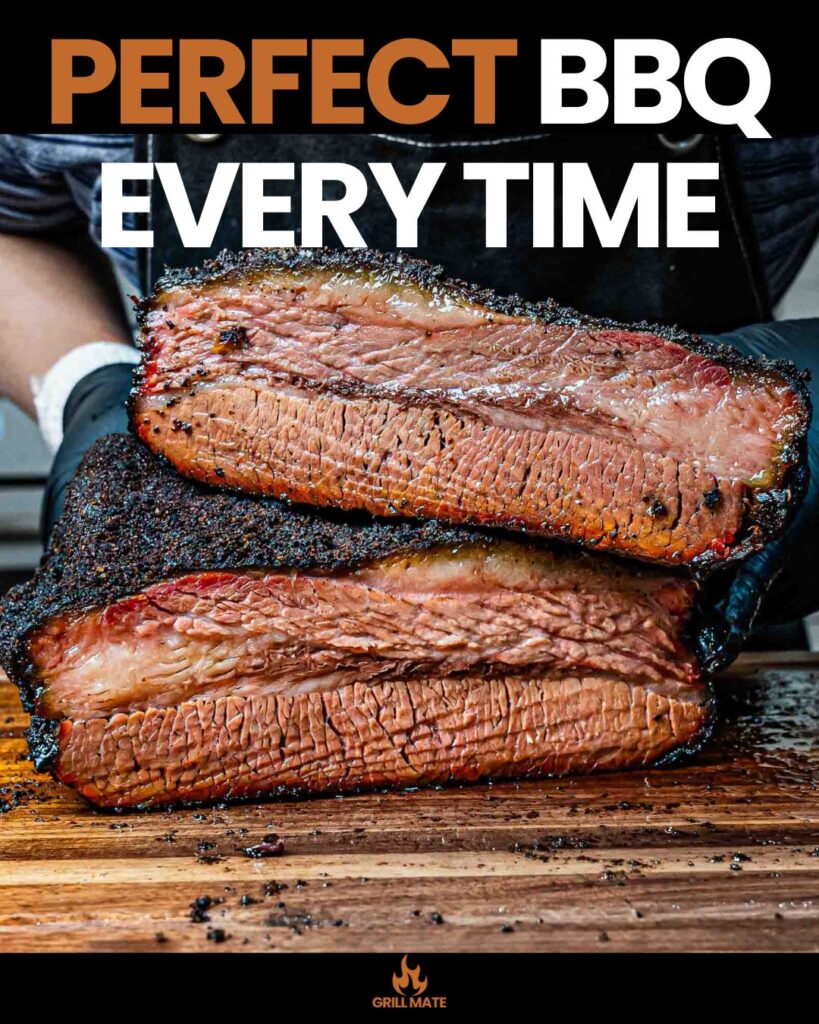
You’ve avoided the temperature trap for twelve hours. The meat looks perfect. You want to slice it immediately because the smell is driving you crazy. Stop.
If you cut into a hot piece of meat right off the grill, the internal pressure will force all those precious juices out onto the cutting board. You’ll be left with a pile of grey, dry meat and a lake of flavor you can’t eat.
When you let the meat rest (often in a dry cooler wrapped in towels), the temperature stabilizes and the muscle fibers relax, reabsorbing the moisture. For a brisket, a two-hour rest isn’t just a suggestion; it’s a requirement.
The Humidity Factor: Why Wet Air Cooks Faster
Most backyard grillers forget that they aren’t just managing fire; they are managing an atmosphere.
Thermal conductivity is much higher in moist air than in dry air. Think of it like a sauna: 180ºF in a dry room is a challenge, but $180^\circ F$ with 100% humidity is a medical emergency.
By placing a water pan directly over your heat source, you create a humid environment that offers several advantages:
- Efficient Heat Transfer: Moisture carries heat into the meat faster than bone-dry air.
- The “Smoke Magnet” Effect: Humidity keeps the meat’s surface tacky, allowing smoke particles to adhere for a better smoke ring.
- Preventing the Shell: Dry air creates a “skin” or shell too early, trapping the inside in a raw state while the outside turns into jerky.
Fuel Density: Not All Charcoal is Created Equal
If you think all black lumps are created equal, you’re walking straight into a combustion trap. Your fuel choice dictates how you steer your grill’s temperature.
- Briquettes (The “Cruise Control”):
o Uniform and predictable burn rates.
o Best for beginners who want a set-it-and-forget-it experience.
o The Catch: Contain binders and fillers that require you to wait until they are fully “ashed over” to avoid chemical flavors.
- Lump Charcoal (The “Formula 1 Fuel”):
o Pure carbonized wood that burns much hotter and cleaner.
o Responds instantly to vent adjustments – perfect for high-heat searing.
o The Catch: It’s erratic; you need a delicate touch on the intake vents or the temperature will run away from you like a freight train.
The “Cold Meat” Myth: The Truth About Tempering
For decades, the “counter-top thaw” was gospel. In the world of low-and-slow BBQ, however, this is a thermal mistake. Taking meat straight from the fridge to the grate is actually the superior move for a few reasons:
- Enhanced Smoke Absorption: Smoke condensation occurs more effectively on cold, damp surfaces. Cold meat gives you a “head start” on flavor.
- Wider Thermal Window: Starting at 38ºF instead of 70ºF gives the meat more time to sit in the “smoke zone” before the internal temperature climbs too high.
- Avoiding the Sweat: If meat sits out too long, it develops a film of moisture that can actually steam the meat rather than allowing a proper bark to form.
Altitude and Air Pressure: Grilling in the Clouds
If you’re cooking at 5,000 feet, you aren’t playing by sea-level rules. The temperature trap at high altitudes is a result of lower atmospheric pressure, which changes the very physics of your cook.
- Lower Boiling Points: Water evaporates at 200ºF or 202ºF instead of 212ºF, meaning your meat can dry out much faster and at lower temperatures.
- Oxygen Deprivation: Thinner air means your fire has less “fuel” to breathe. You’ll need to open your vents significantly wider than a pitmaster at the beach would.
- The “Vent Hawk” Strategy: You must constantly micro-adjust to ensure your fire doesn’t choke out in the thin mountain air.
Thermal Mass: The Secret Power of a Heavy Pit
Ever wonder why high-end smokers weigh as much as a small car? It’s all about thermal mass. Thin metal grills are at the mercy of the wind, but heavy pits act like a heat battery.
- Heat Memory: Once thick-gauge steel or ceramic gets hot, it stays hot, providing a buffer against wind, rain, or lid-opening.
- The “Firebrick Hack”: If you’re stuck with a thin-walled grill, you can “cheat” by lining the bottom of your cooking chamber with firebricks.
- Stable Radiation: These bricks soak up excess energy and radiate it back steadily, preventing the wild temperature swings that turn a relaxing Sunday into a stressful afternoon of vent-fiddling.
Final Thoughts: Mastering the Element
BBQ is a beautiful marriage of fire and patience. The temperature trap is always waiting for the person who tries to rush the process or trust the wrong tools.
Remember:
- Trust your digital probes, not your lid gauge.
- Control your airflow to control your fire.
- Respect the stall; don’t fight it.
- Keep the lid closed.
If you can master these simple rules of thermodynamics, you’ll stop being the person who “cooks out” and start being the person people travel miles to eat with. Now, get out there, light the fire, and keep that needle steady.
Your reputation – and your dinner – depends on it.
Frequently Asked Questions: Mastering the Pit
How do I know if my grill’s built-in thermometer is lying to me?
The easiest way is the Boiling Water Test.
Remove the thermometer from the grill hood and place the probe in a pot of boiling water. At sea level, it should read exactly 212°F. If it’s off by more than 10 degrees, it’s time to retire it.
However, the real “lie” is usually the placement; even an accurate lid thermometer can’t tell you the temperature of the grate where the meat is actually sitting.
If I’m in “The Stall,” should I just wait it out or wrap the meat?
It depends on your goal. If you want the ultimate crunchy bark, wait it out – but be prepared for a much longer cook and a slightly drier exterior.
If you want a guaranteed juicy result and need to eat before midnight, wrap it in butcher paper or foil (the “Texas Crutch”) once the internal temp hits 160°F. This beats the temperature trap by stopping evaporative cooling in its tracks.
Is it ever okay to cook by time instead of temperature?
In a word: No. Every animal is different, and every fire burns at a different rate. While time is a great “rough guide” for when to start checking your progress, the internal temperature is the only truth.
A brisket might be probe-tender at 200°F one day and need until 208°F the next. Trust the probe, not the clock.
What is “Carryover Cooking” and why does it matter?
Think of your meat like a thermal battery. Even after you take it off the heat, the hot outer layers continue to push energy toward the cooler center.
Large cuts like prime rib or brisket can rise by 5°F to 10°F while resting. If you pull your meat at your exact target temp, carryover cooking will likely push it into the “overdone” zone before you slice it.
Why did my temperature spike after I added more charcoal?
This is a classic airflow trap. When you open the lid to add fuel, you’ve introduced a massive burst of oxygen. Once you close the lid, that oxygen feeds the fire, causing a spike.
To prevent this, always pre-light your charcoal in a chimney starter so it’s already ashed over, and keep your vent adjustments small – give the grill 10 to 15 minutes to react to a change before fiddling with the dials again.
Can I use a water pan in a gas grill?
Absolutely. In fact, you should. Gas grills produce a very dry heat.
Placing a small metal tray of water on the flavorizer bars (under the grates) helps create that humid environment that prevents the meat from drying out and helps smoke flavor from wood chips “stick” to the surface.
Featured image credit: @bbqspitrotisseries
