
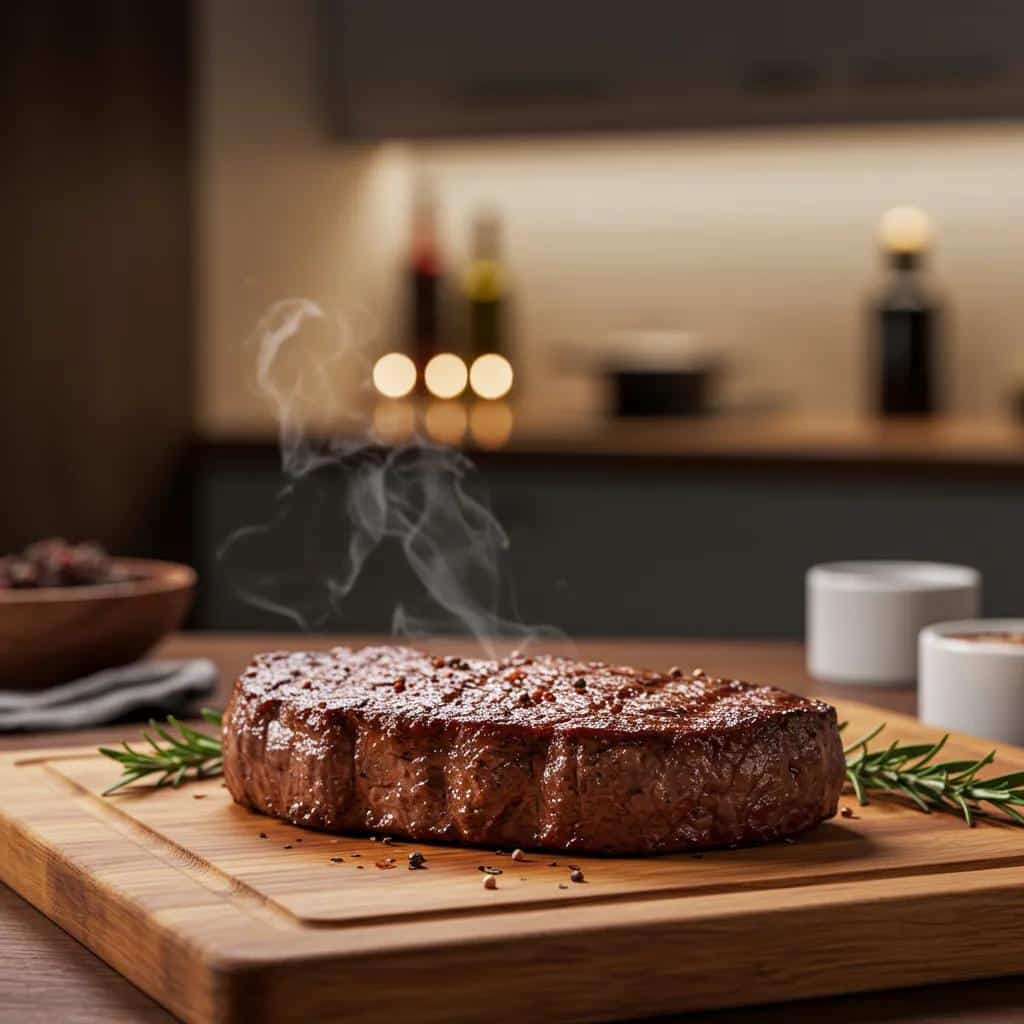
Resting a steak means letting a cooked piece of meat sit undisturbed so internal juices redistribute and carryover cooking finishes the interior, producing better juiciness and texture. This article explains the most common steak resting mistakes and the underlying steak resting science so you can avoid soggy crusts, dry interiors, or undercooked centers.
You will learn practical timing rules keyed to thickness and doneness, when to tent with foil versus leave a steak uncovered, and simple recovery tactics if a steak is over- or under-rested. The guide uses clear lists, quick-reference tables, and science-backed explanations about muscle fibers, carryover temperature, and steam to help you make repeatable decisions in the kitchen.
Read on for short cheat-sheet rules, side-by-side trade-offs, and step-by-step fixes that turn a good cook into a consistently reliable one.
What Are the Most Common Steak Resting Mistakes to Avoid?
Resting mistakes are usually practical errors that either let juices escape, trap steam that ruins the crust, or allow the steak to cool too much before serving, and avoiding them preserves both texture and flavor. The following short list highlights recurring errors and immediate corrective actions to use in service or at home.
Each item pairs the error with a targeted fix so you can scan and apply the right remedy before slicing. After the quick checklist, we explore why timing and wrapping decisions directly cause those outcomes.
Common resting mistakes and quick fixes:
- Slicing too early: Wait the recommended rest time so juices redistribute; if cut early, tent briefly to slow juice loss.
- Under-resting (too short): Allow more time; a quick recovery is a 2–3 minute tent to finish carryover cooking.
- Over-resting (too long): Rewarm gently on a low oven or hot pan for 1–2 minutes per side if the steak cooled excessively.
These high-level fixes reduce immediate loss and point to the two main decision axes—timing and wrapping—that we analyze next in detail.
Why Over-Resting or Under-Resting Steak Ruins Texture and Juiciness
Over-resting causes the steak to cool and the mouthfeel to become firmer, while under-resting prevents juices from re-entering relaxed muscle fibers, producing immediate drip when cut; both outcomes reduce perceived juiciness.
Muscle fibers contract during cooking and hold moisture toward the center; during a proper rest those fibers relax and moisture redistributes evenly, so cutting too soon ejects concentrated juices and cutting too late leaves the steak cold and less tender.
For example, a 1-inch steak may need only a short 5-minute rest, while a 2-inch steak requires longer to allow carryover cooking and redistribution; misjudging by several minutes produces noticeable texture shifts. To avoid these problems, adjust rest by thickness rather than weight and watch for internal temperature stabilization as your cue.
This scientific understanding of how muscle fibers react to heat and moisture loss during cooking is crucial for appreciating the benefits of proper resting.
Cooking Temperatures and Muscle Fiber Shrinkage in Beef
When the transverse shrinkage of the fiber axis occurs, mainly at 40–60C, this leads to a loss of moisture and affects the texture of the meat. At higher temperatures (60–70C), the connective tissue network and the muscle fibers begin to denature and shrink, further contributing to moisture loss and a tougher texture.
How Incorrect Wrapping Affects Steak Temperature and Flavor
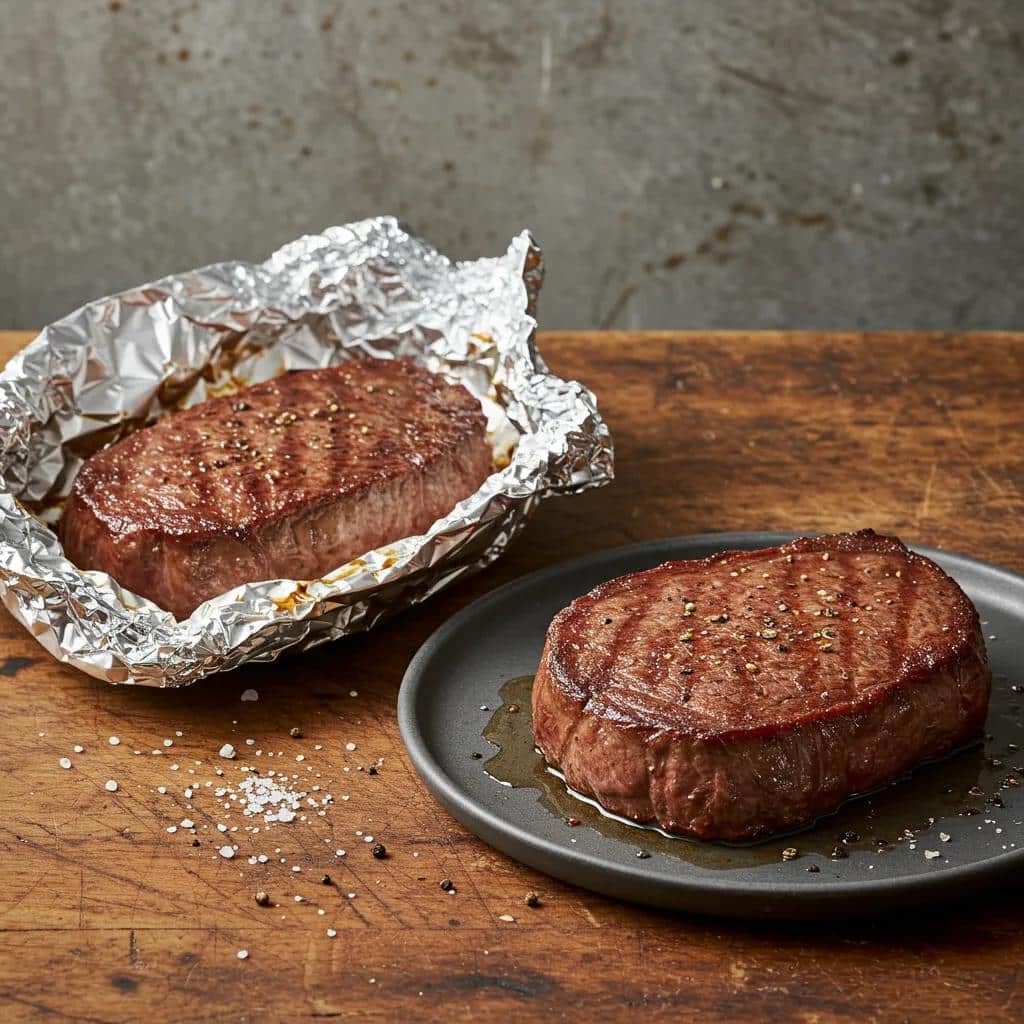
Wrapping changes the microclimate around the meat: tight wrap traps steam that can soften or soggify a crust, while leaving a steak fully uncovered speeds cooling and preserves a dry sear; each choice affects temperature retention and texture.
If you wrap tightly immediately after searing, trapped steam condenses on the crust and breaks down the Maillard layer, producing a limp exterior; conversely, leaving a heavy steak uncovered on a cold plate can drop its temperature too far before serving.
The best practice is a loose tent that slows heat loss while allowing some steam to escape, preserving crust integrity and internal juiciness. Understanding these trade-offs lets you choose the wrapping method that matches your priority—crust preservation or maximum temperature retention.
How Long Should You Rest Steak and Why Is Timing Crucial?
Resting time is the interval after cooking when internal heat redistributes and muscle fibers relax, and timing matters because carryover cooking raises internal temperature while redistribution stabilizes juiciness.
A simple rule is to rest by thickness: thinner steaks need only a few minutes, while thicker cuts require longer to allow carryover and equilibration; this keeps final doneness accurate and texture even. Below is a compact timing table for common cuts and doneness targets that you can use as a quick reference during cooking.
After the table we explain how to adjust times when cooking multiple steaks or when carryover cooking is particularly strong.
Use this compact reference for resting by cut and thickness:
This table gives baseline windows; increase rest by 1–2 minutes for very thick cuts and reduce slightly if you plan a light tent, since tenting slows cooling and prolongs effective carryover cooking.
Research has demonstrated that even short resting periods can significantly impact moisture retention and overall palatability in cooked meats.
Effect of Resting Time on Beef Roast Moisture Retention and Palatability
The objective of this study was to evaluate the effect of resting periods (0, 8 and 13 min) on moisture retention and palatability of beef roasts. The results showed that resting the beef roasts for 8 and 13 minutes significantly improved moisture retention and palatability compared to no resting.
What Is the Ideal Steak Resting Time for Different Cuts?
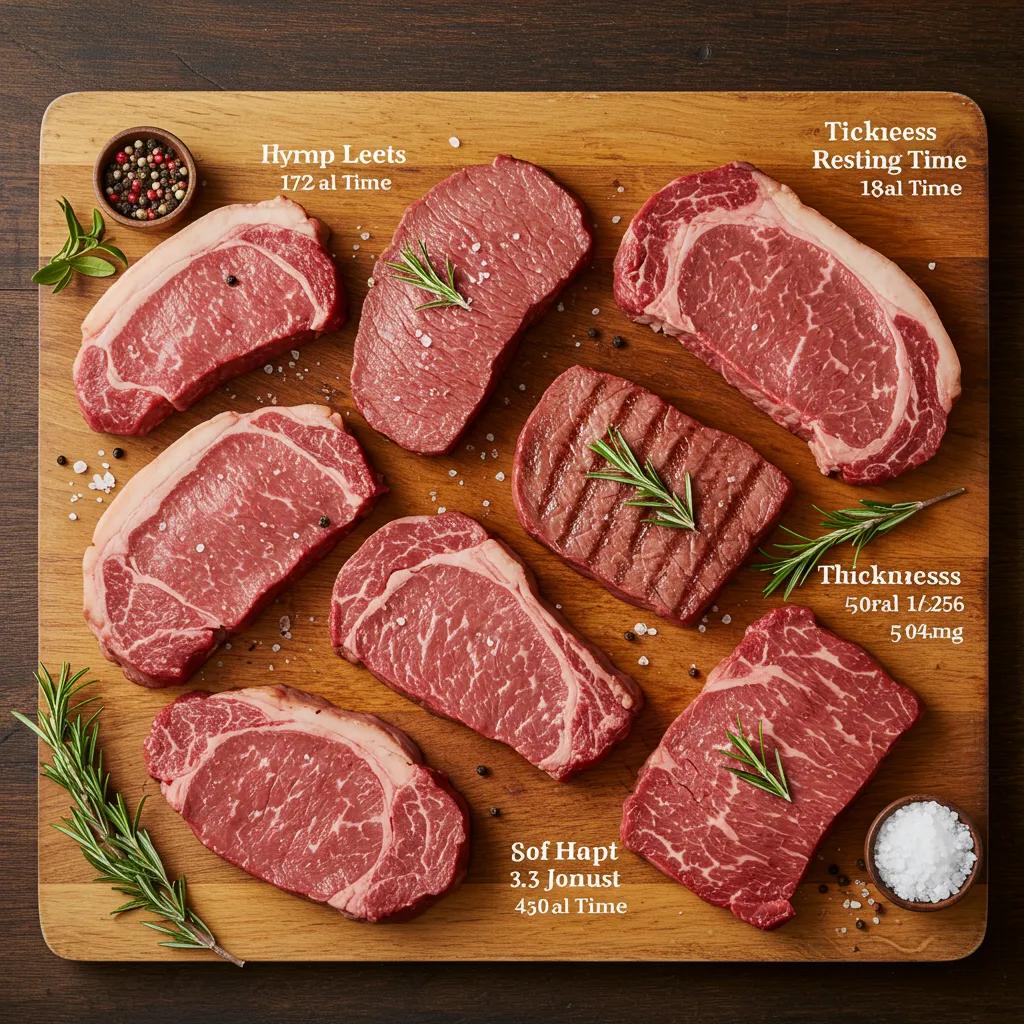
Ideal resting times depend on cut thickness and the carryover temperature expected after removing from heat; thicker steaks and roasts gain more carryover heat and need longer before slicing.
For practical use, treat thickness as the primary variable: 1-inch steaks generally rest 4–6 minutes, 1.5–2-inch steaks 6–10 minutes, and roasts proportionally longer, with resting helping internal temperature stabilize 3–6°F depending on size. If cooking multiple steaks of different thicknesses, remove thicker pieces earlier and use a probe thermometer to track stabilization rather than relying solely on a clock, which helps prevent over- or under-resting.
These timing rules preserve both target doneness and the juiciness achieved during searing and finish cooking.
Why Does Resting Steak Improve Juiciness and Tenderness?
Resting allows cooked muscle fibers to relax and for intramuscular fluids to redistribute into the meat matrix, increasing perceived juiciness and tenderness when chewed. Think of fibers like a compressed sponge: heat squeezes moisture toward the center, and rest lets the sponge relax so moisture re-enters the tissue evenly, reducing the drip you’d see if you sliced immediately.
This relaxation also reduces abrupt temperature gradients inside the steak, making every bite more consistent and tender. Recognizing this mechanism explains why a modest but properly timed rest improves mouthfeel even when searing and seasoning are excellent.
Should You Use Foil or Leave Steak Uncovered During Resting?
Choosing foil tenting versus uncovered resting is a decision about retaining heat versus preserving crust texture, and the right choice depends on steak size and service timing.
For single steaks where crust matters most, leaving them uncovered briefly or using a very loose tent preserves the sear while accepting modest temperature loss; for large cuts or when holding through service, tenting with foil maintains internal temperature but increases steam and risks crust softening.
Below are clear pros and cons offered as a quick decision aid so you can pick the method that matches your goals in any cooking scenario.
Pros and cons short list:
- Loose foil tent: Retains heat while allowing steam to escape; good compromise for thicker steaks.
- Tight foil wrap: Maximizes heat retention but produces steam that can soften the crust.
- Uncovered resting: Preserves a crisp crust but lets temperature fall faster; good for quick serving.
This trade-off summary shows when to prioritize crust or heat retention and prepares you to use a tenting strategy that matches the cut and service timing.
The cooking process itself, including heat treatment and its duration, significantly influences meat’s texture and quality, with weight loss being an inherent consequence.
Meat Cooking Effects on Texture, Weight Loss, and Quality
Cooking can positively affect meat tenderness, on the other hand, the heat treatment also causes weight loss. The resulting tenderness of cooked meat is influenced by the background toughness of fresh meat, by the post mortem ageing process and by the method of cooking. In the case of heat treatment, the temperature and duration of action play a key role. In this respect, the meat tenderness depends on the type of appliance used for cooking. The cooking loss of meat during heat treatment is caused by contraction of muscle fibres and intramuscular connective tissue, the intensity of which also depends on the temperature and device used. The extent of this cont
What Are the Pros and Cons of Foil Wrapping Steak While Resting?
Foil wrapping preserves internal temperature by slowing convective heat loss, which is useful for large cuts or delayed service, but it also traps evaporating moisture that condenses and softens the seared crust. Benefits include steadier final temperature and less immediate cooling; drawbacks include a limp exterior and potential loss of textural contrast that a good sear provides.
If you must use foil, tent loosely above the steak rather than wrapping tightly; this reduces steam accumulation while still slowing cooling. For immediate plating where crust is prized, avoid tight foil and favor short, controlled rests on a warm surface instead.
These comparisons clarify the trade-offs so you can select the approach that fits your priority—crisp sear or maximum heat retention.
How Does Resting Steak Uncovered Affect Crust and Temperature?
Leaving a steak uncovered preserves a dry environment around the crust, maintaining the Maillard-developed texture and crispness, but it also exposes the meat to faster convective cooling that lowers internal temperature more quickly.
This approach is ideal when plating immediately or when the crust is the primary sensory goal, and you can mitigate cooling by using a warmed plate or serving vessel to slow heat loss.
If temperature retention is critical, combine a brief uncovered rest to set the crust with a very short loose tent just before service to balance texture and warmth. These practical tactics help you keep both crust and serving temperature within acceptable ranges.
What Does Steak Resting Science Reveal About Avoiding Common Errors?
A concise science foundation shows that resting matters because of heat transfer, carryover cooking, and moisture migration within muscle fibers; these principles directly explain the mistakes cooks make and how to prevent them.
Heat continues to move from the hotter exterior to the cooler interior after removal from heat—carryover cooking—so resting lets the interior reach target doneness without additional surface exposure, while fiber relaxation allows juices to redistribute.
Understanding these mechanisms gives actionable rules: rest by thickness, tent loosely when needed, and use internal probes to confirm stabilization.
How Muscle Fibers and Juices React During Resting
Muscle fibers contract during cooking, expelling moisture toward the center, and during resting they relax and reabsorb fluids into the surrounding tissue, reducing the amount of liquid lost when sliced. A useful analogy is a squeezed sponge slowly releasing and then reabsorbing water as pressure eases; the same dynamics apply at a micro level in meat.
Practically, this means a properly rested steak delivers uniform juiciness across bites and a more tender mouthfeel, which is why timing and controlled cooling are essential steps in avoiding the common resting errors discussed earlier.
What Scientific Principles Explain the Importance of Resting Steak?
Key principles—carryover cooking, thermal inertia, and moisture migration—explain why rest influences final doneness and texture: carryover adds degrees to internal temperature after removal, thermal inertia slows cooling, and moisture migration governs juiciness distribution.
Linking these principles to action: use thickness-based timing to account for carryover, choose tenting to manage thermal inertia, and allow sufficient rest for moisture reabsorption to preserve juiciness.
Applying these simple science-backed rules prevents the typical mistakes of under-resting, over-resting, and incorrect wrapping that degrade a steak’s quality.
