
Nights at the smoker outnumber nights in bed for me, and the lesson is simple – you can’t polish a sneaker and call it a steak, no matter how much effort, seasoning, or smoke you throw at it.
You can have the most expensive offset smoker on the block.
You can use wood harvested from a mystical forest and rub your brisket with spices that cost more than my first truck. But if you start with a bad piece of meat, you’re just making expensive dog food.
In the world of BBQ and home cooking, the USDA meat grades are your North Star.
They are the difference between a steak that melts like butter and one that eats like a rubber band. If you’ve ever felt intimidated by the butcher counter, don’t sweat it.
We’re going to break down meat grades so you can shop with the confidence of a Texas pitmaster.
Why Meat Grades Matter (And Why Your Wallet Cares)
When you see those little shields on a package of beef – Prime, Choice, or Select – those aren’t just suggestions. They are a promise of quality.
Most folks shop with their eyes. They look for the brightest red color. While freshness is great, color can be deceiving. The real magic happens inside the muscle fibers.
The USDA grading system exists to tell you exactly what kind of experience you’re going to have once that meat hits the heat.
The goal is simple: We want to maximize tenderness, juiciness, and flavor.
If you ignore the grade, you’re basically playing Russian Roulette with your dinner party. And trust me, nobody wants to be the guy serving “Select” brisket that requires a chainsaw to slice.
What Exactly is USDA Grading?
Before we get into the “Big Three,” let’s clear up some confusion. In the United States, there are two types of stamps on your meat: Inspection and Grading.
- Inspection is mandatory. The USDA checks every animal to ensure it’s safe, wholesome, and disease-free. This is about public health.
- Grading is voluntary. Meat processors actually pay out of their own pockets to have a USDA grader come in and evaluate the quality.
Why would they pay for that? Because a Prime stamp allows them to charge a premium. If a cow is top-tier, the rancher wants the world to know it.
If they don’t pay for grading, the meat is often sold as “un-graded” or under a store brand name, which usually means it didn’t quite make the cut for the high-end stuff.
The USDA graders aren’t just guessing. They look at two main factors: Quality Grades (tenderness and flavor) and Yield Grades (how much meat is on the bone). For us backyard cooks, we only care about the Quality Grades.
The Secret Ingredient: Understanding Marbling
If you remember one word from this entire guide, make it this: Marbling.
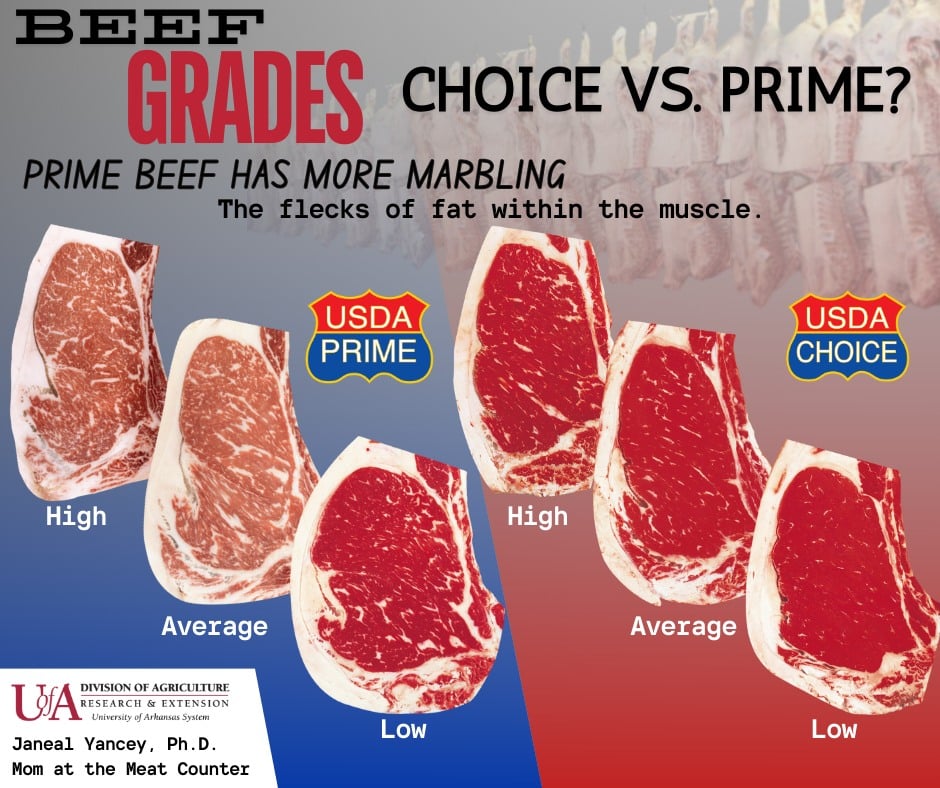
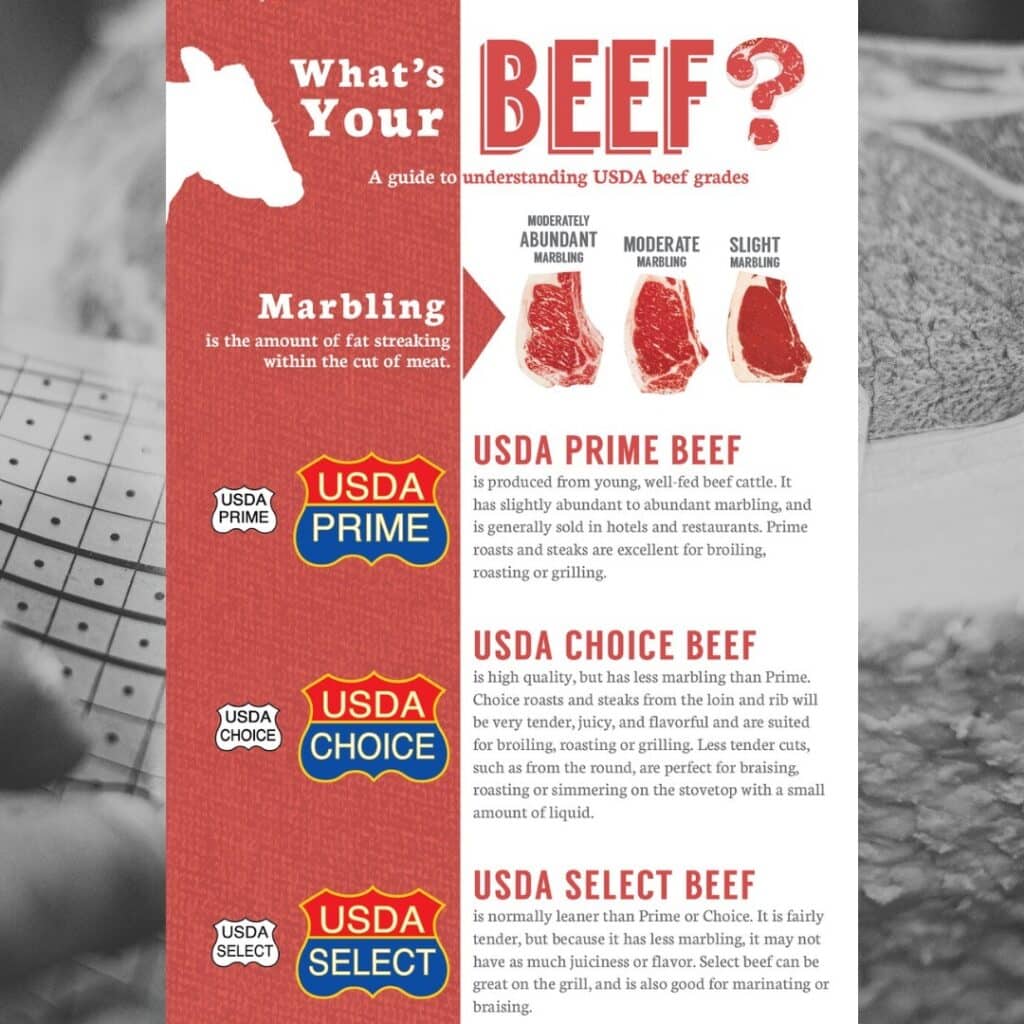
In the pitmaster world, marbling is the Holy Grail. It refers to the intramuscular fat – those beautiful little white flecks and streaks of fat interspersed within the lean muscle.
Do not confuse marbling with the “fat cap” (the thick layer of fat on the outside). While the fat cap is great for protecting meat during a long smoke, marbling is what provides the flavor.
As the meat cooks, that internal fat melts.
It undergoes a chemical transformation that bastes the meat from the inside out.
The Pitmaster’s Equation:
Intramuscular Fat + Heat = Tenderness + Flavor
The more marbling a cut has, the higher its grade will be. It’s that simple.
USDA Prime: The Gold Standard
If USDA Prime were a car, it would be a hand-built Italian sports car. It is the absolute peak of American beef.
The Stats:
Only about 2% to 3% of all beef produced in the U.S. earns the Prime designation. It is rare, it is expensive, and it is glorious.
What it looks like:
You’ll see an “abundant” amount of marbling. The meat will look like it’s been hit by a light snowstorm of white flecks. This meat comes from young, well-fed cattle.
Best For:
Because it has so much internal fat, Prime beef is incredibly forgiving. It is best suited for dry-heat cooking. I’m talking about grilling, broiling, or roasting.
If you’re buying a ribeye for a special anniversary, you get the Prime. You don’t need fancy sauces here. A little salt, a little pepper, and the meat does the rest of the talking.
Pitmaster Humor:
If you overcook a Prime steak, a little piece of my soul dies. But because of that fat content, it’ll probably still taste better than a perfectly cooked piece of shoe leather.
USDA Choice: The Crowd Pleaser
This is the “Old Reliable” of the meat world. If you walk into a standard grocery store, Choice is what you’ll see most often.
Characteristics:
Choice beef is high quality, but it has less marbling than Prime. It’s still very tender and juicy, but it won’t have that same “buttery” mouthfeel that makes you want to weep with joy.
The “Pitmaster Secret” (Top Choice):
Not all Choice is created equal. There is a huge range within this grade. High-end retailers often sell “Top Choice,” which is meat that almost made it to Prime.
If you look closely at the packages, you can often find a Choice steak that looks nearly as marbled as a Prime one for half the price. That’s called winning at life.
Best For:
Choice is the most versatile grade. It’s great for steaks, but it’s also the go-to for smoking briskets and roasts. It has enough fat to stay moist during a 12-hour smoke, but it won’t break the bank if you’re feeding a whole neighborhood.
USDA Select: The Leaner Option
Now we’re getting into the “budget-friendly” territory. Select is the leanest of the top three grades.
Characteristics:
Select beef is very uniform and has much less marbling than Choice or Prime. It’s lower in fat and calories, which sounds great on a diet, but it’s a challenge in the kitchen.
Because it lacks that internal fat, it can become dry and tough very quickly if you aren’t careful.
Best For:
I don’t recommend throwing a Select steak straight on a screaming hot grill unless you enjoy a jaw workout. Select meat is the king of marinades. The acidity in a marinade helps break down the tougher muscle fibers. It’s also perfect for:
- Stew meat
- Stir-fry (where you slice it thin)
- Pot roasts (low and slow in liquid)
If you’re on a budget, Select is fine, but you have to work for the flavor. You can’t just “set it and forget it.”

The “Mystery” Grades: Standard, Commercial, and Utility
You’ve probably noticed you never see “USDA Utility” steaks at the supermarket. There’s a reason for that. You wouldn’t want to eat them as a steak.
These lower meat grades come from older animals. The meat is tough, the fat is yellowed, and the flavor is… well, “funky” isn’t the right word, but “not great” is.
Where does it go?
- Standard and Commercial: Often sold as “ungraded” beef or store-brand “economical” cuts.
- Utility, Cutter, and Canned: This is the stuff that ends up in ground beef, frozen dinners, canned soups, and dog food.
Essentially, if the meat isn’t pretty enough for a steakhouse, it gets ground up and hidden inside a burrito or a can of chili. It’s still safe to eat, but the “experience” factor is zero.
Factors That Influence the Grade
Why does one cow get a Prime shield and another gets Select? It’s not just luck; it’s science and management.
Age Matters
As cattle age, their muscle fibers get thicker and tougher. The connective tissue becomes more “rigid.” The USDA primarily grades “young” beef (Category A) for the retail market.
Once a cow gets past a certain age, it’s almost impossible for it to earn a Prime or Choice grade, regardless of how much it ate.
The Diet
- Grain-Fed: This is the standard for USDA grading. Corn and grain diets produce that white, creamy marbling we love.
- Grass-Fed: Here is the kicker – most grass-fed beef actually grades out as Select. Why? Because grass is lean. It’s harder for a cow to pack on intramuscular fat eating just forage. Even though grass-fed beef is often more expensive and considered “premium,” it usually scores lower on the USDA marbling scale.
Price vs. Value: When to Splurge
I love a Prime ribeye as much as the next guy, but I’m not made of money. Part of being a smart cook is knowing when the meat grades actually matter.
| Grade | Cost | Best Occasion | Cooking Method |
| Prime | $15-$30/lb | Anniversaries, Holidays, Bragging | High-Heat Grill |
| Choice | $5-$10/lb | Weekend BBQ, Family Dinner | Smoker or Grill |
| Select | $27/lb | Mid-week meal prep, Tacos | Braising, Marinating |
The Pro Move: If you are making a beef stew where the meat is going to simmer in wine and broth for four hours, do not buy Prime. The liquid will provide the moisture, and the long cook time will break down the fibers.
You’re literally simmering away your money. Use Select or Choice for stews and save the Prime for the grill.
Expert Tips: Reading the Label Like a Pro
The marketing departments at grocery stores are clever. They want you to think everything is high-quality. Here is how to stay sharp:
- “Prime Rib” is NOT “USDA Prime”: This is the oldest trick in the book. “Prime Rib” is the name of the cut (the standing rib roast). A “Prime Rib” can actually be USDA Select grade. Always look for the USDA Shield to confirm the quality grade.
- Check the “Sell-By” Date: Even a Prime steak will taste like cardboard if it’s been sitting in the case for too long.
- The “Hanging” Fat: Look at the edges of the steak. If the fat is pure white, it’s likely grain-fed and high quality. If the fat has a yellow tint, the animal was likely older or entirely grass-fed, which might mean a “gamier” flavor.
Cooking by the Grade: Pitmaster Techniques
You’ve bought the meat. Now don’t mess it up.
For Prime:
Use a Reverse Sear. Cook it low and slow until it hits about 115°F internal, then finish it on a piping hot cast-iron skillet or grill to get a crust. This preserves every drop of that expensive marbling.
For Choice:
The Meat Thermometer is your best friend.
Choice beef is great, but it has less of a “safety net” than Prime. If you overcook a Choice steak to well-done, it will be dry. Aim for 130°F to 135°F (Medium Rare) for the best results.
For Select:
Think Mechanical and Chemical. Use a meat mallets to pound it thin or use an acidic marinade (lime juice, vinegar, or pineapple juice) for at least 4 hours.
This “pre-digests” some of those tough proteins so your teeth don’t have to do all the work.
You’re Ready for the Pit
Understanding meat grades isn’t about being a food snob; it’s about being an informed consumer.
Whether you’re grabbing a Choice brisket for a backyard smoke or splurging on a Prime tenderloin for a date night, you now know exactly what you’re paying for.
Next time you’re at the butcher, don’t just point at the red stuff. Look for the white flecks. Look for the USDA shield. And for the love of all things smoky, don’t buy Select and expect it to taste like a steakhouse.
Go forth, find that marbling, and fire up the grill. You’ve got this!
Frequently Asked Questions: Mastering Meat Grades
Even with the guide above, you might still have a few questions while standing in the meat aisle. Here are the most common things folks ask me at the pit.
1. Is there a difference between “Certified Angus Beef” and USDA Prime?
Yes. USDA Prime is a government grade based on marbling and age. Certified Angus Beef (CAB) is a brand owned by the American Angus Association. To be labeled CAB, the beef must come from Angus-influenced cattle and pass 10 specific quality standards.
While CAB is almost always high-quality (usually at the top end of the Choice scale or Prime), they are two different systems. Think of USDA as the “rank” and Angus as the “breed.”
2. Why is Grass-Fed beef usually graded lower than Grain-Fed?
The USDA grading system is heavily weighted toward marbling (intramuscular fat). Because grass-fed cattle are more active and eat a leaner diet, they don’t develop those white flecks of fat as easily as grain-fed cattle.
Even though grass-fed beef is often more expensive and contains higher levels of Omega-3s, it usually receives a Select or low Choice grade because it is leaner.
3. Does the grade affect the nutritional value of the meat?
Technically, yes. A USDA Prime steak has significantly more fat (and therefore more calories) than a USDA Select steak. If you are watching your fat intake, Select is the healthier choice.
However, if you are looking for Vitamin B12, Iron, and Zinc, all three grades are relatively similar. You’re essentially choosing between more flavor/fat (Prime) or more lean protein (Select).
4. Can I turn a Select steak into a Prime steak with a marinade?
You can’t change the grade – the marbling is either there or it isn’t – but you can narrow the gap.
A marinade with an acid (like lemon juice or vinegar) or an enzyme (like bromelain found in pineapple) will physically break down the tough connective tissues in a Select cut.
It won’t give it that buttery “Prime” flavor, but it will make it much easier to chew.
5. Is “Store Brand” meat graded?
Sometimes. If you see a package labeled “Market Pantry” or “Great Value” without a USDA shield, it is likely ungraded.
This doesn’t mean it’s unsafe (all meat is inspected), but it usually means the processor didn’t think the meat would score high enough to justify the cost of grading. It’s generally equivalent to Select or Standard grade.
6. Why is Prime beef so hard to find in local grocery stores?
Because it’s rare! Only about 2% of beef earns the Prime shield. Most of that supply is snatched up by high-end steakhouses and hotels before it ever reaches a grocery store.
If your local shop does carry it, it’s usually in small quantities at the butcher counter rather than the pre-packaged shelves.
7. Does the grade of meat matter for ground beef?
Not as much as the lean-to-fat ratio. When you buy a steak, you want the fat inside the muscle. When you buy ground beef, the fat is mixed in mechanically.
A “Prime” ground beef just means the trimmings came from a Prime-graded cow. For a great burger, you’re looking for a 20% fat content (80/20), regardless of whether the cow was Choice or Prime.
Featured image credit: @meatcountermom
