
Somewhere near the grill, somebody is always ready to defend their barbecue style like it’s a family heirloom.
Texas brisket versus Carolina pork. Wood versus charcoal. Sauce versus no sauce. Pellet grills versus “real fire.”
Meanwhile, Aboriginal Australians have probably been standing off to the side for 60,000 years thinking, “Cute arguments, fellas.”
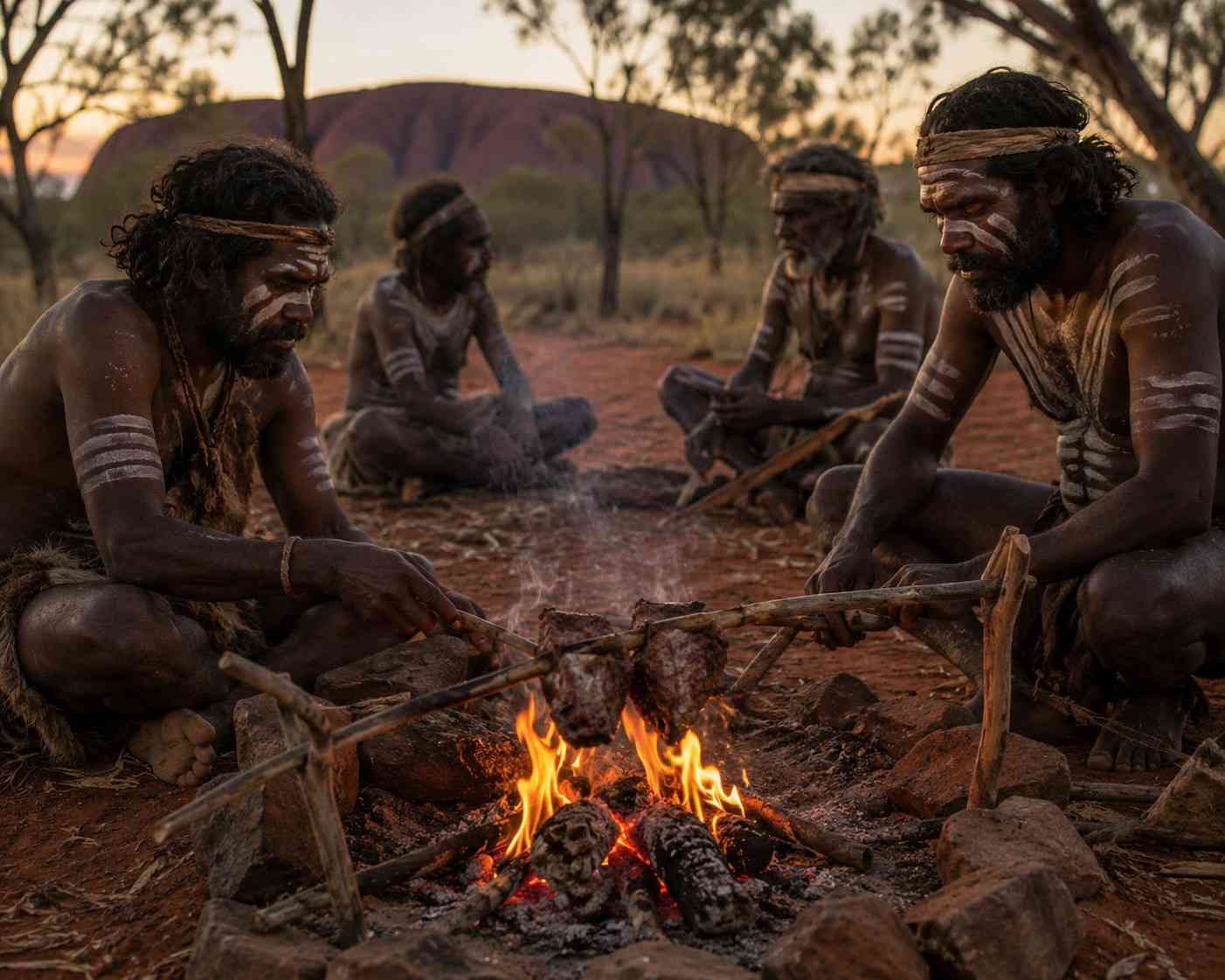
Long before backyard grills, competition smokers, or the invention of the phrase “low and slow,” Australian Aboriginal BBQ traditions were already deeply woven into daily life.
We’re talking ancient earth ovens, smoke cooking, fire-roasted game, and a level of heat management that would make modern pitmasters stare into their thermometers with shame.
And here’s the thing most people miss: this wasn’t just cooking.
It was survival. Science. Ceremony. Land management. Storytelling. Community.
In many ways, the history of Australian Aboriginal BBQ is the history of humans learning how to cook with fire at its most sophisticated level.
So pull up a chair near the coals. This story starts tens of thousands of years before the first steel smoker ever rolled off an assembly line.
The World’s Oldest Living Fire-Cooking Tradition
Archaeological evidence shows Aboriginal Australians have lived on the continent for more than 60,000 years. That makes Aboriginal culture one of the oldest continuous living cultures on Earth.
Now think about what that means for cooking.
That’s 60,000 years of:
- Reading fire
- Managing smoke
- Cooking over coals
- Preserving meat
- Roasting seafood
- Slow-cooking underground
- Passing techniques from generation to generation
Most modern BBQ traditions are measured in centuries.
Australian Aboriginal BBQ traditions are measured in ice ages.
That changes the way you look at outdoor cooking pretty quickly.
For Aboriginal communities, food was never separated from the land, often called “Country.” Country wasn’t just geography. It was identity, memory, spirituality, and survival all tied together. Cooking over fire became part of understanding the landscape itself.
Where animals migrated.
Which woods burned hot.
Which leaves trapped moisture.
How wind changed flame behavior.
When certain fish were fattest.
What plants could season or preserve meat.
A modern pitmaster might obsess over airflow in a smoker. Aboriginal cooks were reading entire ecosystems.
That’s next-level barbecue.
Fire Was More Than Cooking
One mistake people make when learning about Australian Aboriginal BBQ is assuming fire was only about preparing food.
Fire did much more than that.
Fire as Land Management
Aboriginal Australians practiced controlled burning for thousands of years. Sometimes called “fire-stick farming,” these low-intensity burns helped shape the environment in smart and sustainable ways.
Burning old grass encouraged fresh plant growth.
Fresh growth attracted animals like kangaroos.
Which, conveniently, also improved hunting opportunities.
That means fire helped create a renewable food system long before the phrase “sustainable agriculture” showed up in TED Talks and organic grocery stores.
It also reduced catastrophic wildfires by preventing dangerous fuel buildup.
Modern land managers now study many of these ancient techniques because they worked astonishingly well.
Imagine teaching modern wildfire experts something useful after 60,000 years. That’s a pretty solid résumé.
Fire as Community
Every pitmaster knows the truth.
People gather around fire naturally.
Always have.
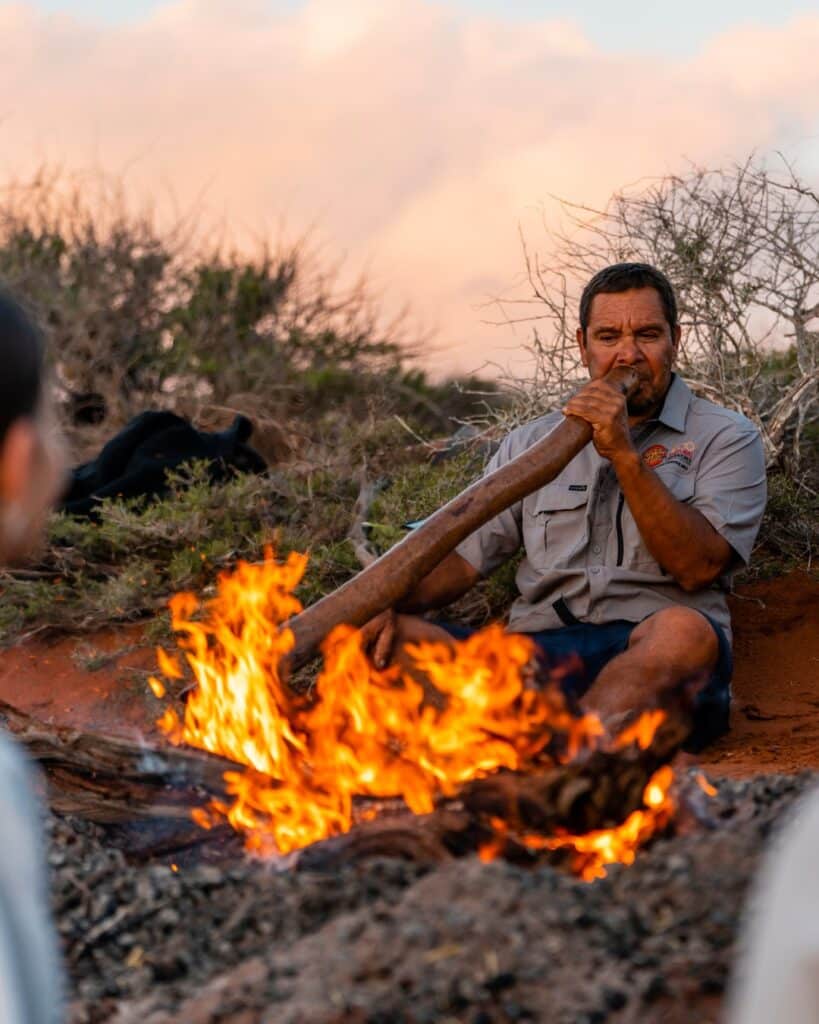
Campfires became places for storytelling, teaching, ceremony, and shared meals. Elders passed knowledge to younger generations while food cooked nearby.
Smoke wasn’t just aroma.
It was connection.
And honestly, that part hasn’t changed much. Whether it’s an ancient campsite or a backyard brisket cookout, humans still become philosophers the second glowing coals appear.
Traditional Aboriginal BBQ Cooking Methods
The techniques behind Australian Aboriginal BBQ were incredibly diverse because Aboriginal communities lived across deserts, rainforests, coastlines, rivers, and tropical regions.
Different landscapes created different cooking styles.
But one thing stayed consistent: deep knowledge of fire.
Open-Fire Roasting
This is probably the oldest form of barbecue on Earth.
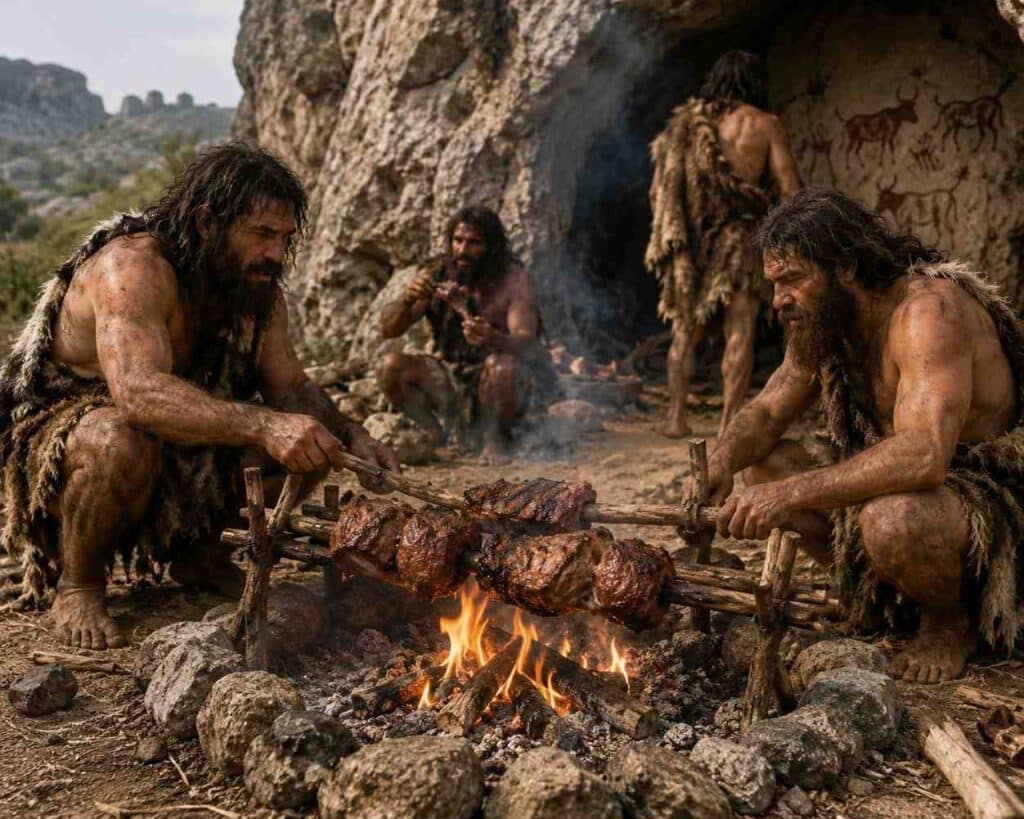
Meat was roasted directly over flame or hot coals using wooden skewers, green branches, or simple stone arrangements.
Kangaroo, fish, reptiles, shellfish, and birds could all be cooked this way.
And before anyone gets smug with their Bluetooth meat thermometer, remember this:
These cooks controlled heat entirely by instinct.
They understood:
- Coal spacing
- Flame intensity
- Smoke density
- Wind direction
- Wood moisture
- Cooking timing
No gadgets.
No apps.
No YouTube tutorials called “Top 5 Brisket Mistakes.”
Just experience and observation.
Earth Ovens and Underground Cooking
Now we get into serious pitmaster territory.
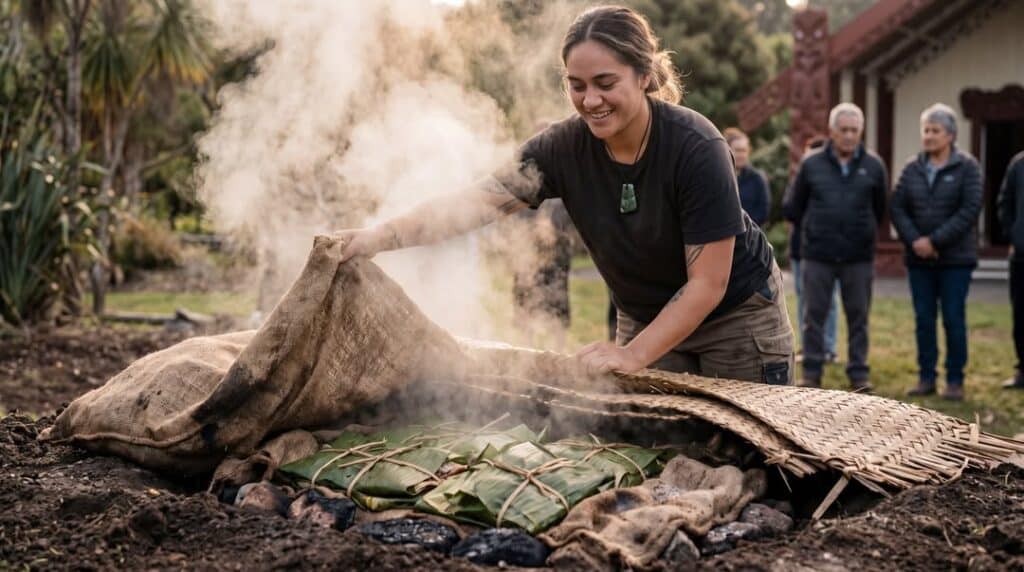
One of the most fascinating forms of Australian Aboriginal BBQ involved earth ovens.
The process looked something like this:
- Dig a pit
- Heat stones with fire
- Wrap food in leaves or bark
- Place food into the pit
- Cover everything with earth
- Let it slow-cook for hours
Sound familiar?
Because modern pit barbecue works on many of the same principles:
- Retained heat
- Indirect cooking
- Moisture control
- Smoke infusion
- Slow rendering of tough proteins
This method created tender meat while preserving moisture in harsh climates.
In other words, Aboriginal cooks mastered low-and-slow cooking before steel smokers existed.
That deserves respect.
Smoking and Preservation
Smoke wasn’t just about flavor.
It was practical.
Fish and meat could be smoked to extend shelf life, especially in warmer regions where preservation mattered.
Certain native woods added distinct flavors depending on region and availability.
Some woods produced cleaner smoke.
Others burned hotter.
Others created longer-lasting coals.
Again, this mirrors modern barbecue science almost perfectly.
The more you study Australian Aboriginal BBQ, the more you realize how universal fire cooking principles really are.
Cooking with Bark, Leaves, and Clay
One of the cleverest techniques involved wrapping food in paperbark or leaves before placing it near coals.
This created a natural steaming effect that locked in moisture.
Fish cooked this way stayed delicate and tender.
Meat absorbed smoky aromas without drying out.
Some foods were even coated in clay before cooking. Once hardened, the clay shell trapped steam inside.
Honestly, that’s basically nature’s Dutch oven.
And unlike your expensive cookware, this version came straight from the ground.
Native Ingredients of the Aboriginal BBQ
The ingredients used in Australian Aboriginal BBQ reflected one of the most unique ecosystems on Earth.
This wasn’t European livestock barbecue.
This was bush cooking built around native ingredients.
Kangaroo
Kangaroo has been a major protein source for thousands of years.
It’s lean, rich, and surprisingly flavorful.
Modern cooks often compare it to venison.
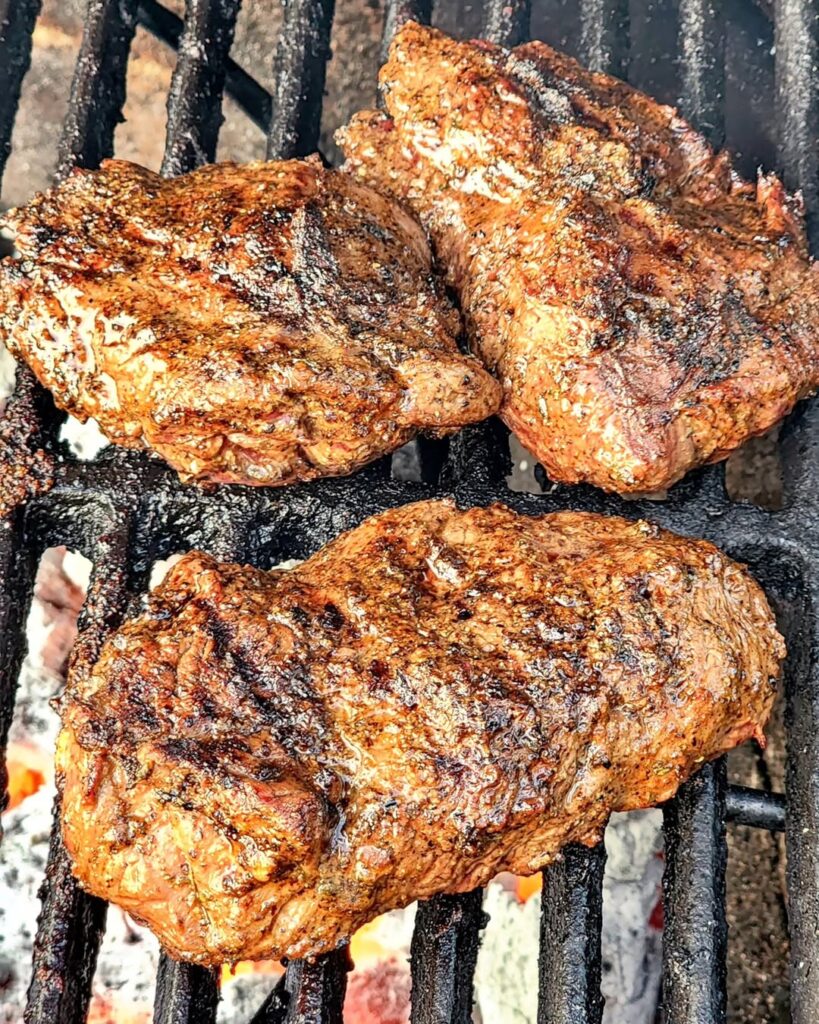
Because kangaroo meat contains very little fat, cooking it properly requires careful heat control.
Overcook it and it becomes tough quickly.
Sound familiar?
Every pitmaster who’s accidentally destroyed a pricey steak just nodded silently.
Traditionally, kangaroo could be roasted over coals, smoked, or slow-cooked in earth ovens.
Emu
Emu provided both meat and fat, making it incredibly valuable.
Large communal meals often involved bigger game animals like emu, especially during gatherings or ceremonies.
Roasting large birds over open flame takes patience and teamwork.
Even today, cooking a whole animal over fire tends to turn into an event instead of just dinner.
That’s one of barbecue’s greatest tricks.
It slows people down.
Fish and Seafood
Coastal Aboriginal communities developed highly sophisticated seafood cooking techniques.
Fish might be:
- Wrapped in bark
- Buried in hot sand
- Cooked over coals
- Smoked slowly
- Steamed in leaves
Shellfish could be roasted directly in embers.
And honestly, there’s something deeply satisfying about cooking seafood that simply came out of the ocean hours earlier.
Modern restaurants charge shocking amounts of money for that experience.
Reptiles and Bush Meats
Goanna, crocodile, turtle, and other reptiles were important regional food sources.
Goanna in particular became famous for its rich flavor when roasted over coals.
And before anyone wrinkles their nose at reptile barbecue, remember this:
Half the world thinks your favorite regional BBQ specialty looks weird too.
Food traditions are always local.
Bush Foods and Native Plants
One of the most exciting modern culinary trends is the rediscovery of native Australian ingredients.
Traditional Aboriginal cooking used:
- Wattleseed
- Lemon myrtle
- Saltbush
- Bush tomatoes
- Pepperberry
- Native herbs
These ingredients added flavor while also carrying medicinal or nutritional value.
Today, chefs around the world are experimenting with these flavors in modern barbecue and fine dining.
Turns out 60,000 years of culinary knowledge still holds up pretty well.
The Engineering Behind Ancient BBQ Techniques
Good barbecue always looks simple.
That’s the trap.
Behind every “effortless” pitmaster is a ridiculous amount of knowledge.
The same was true in Australian Aboriginal BBQ traditions.
Understanding Heat Without Thermometers
Modern pitmasters love gadgets.
Probe thermometers. Wireless apps. Smart smokers.
Aboriginal cooks had none of that.
Instead, they read:
- Coal color
- Smoke behavior
- Hand-feel heat
- Wind shifts
- Wood crackling sounds
- Cooking aromas
That level of sensory cooking takes experience most people never develop anymore.
And frankly, it’s impressive.
Seasonal Cooking Knowledge
Aboriginal Australians understood seasonal food cycles with incredible precision.
Different regions had different harvest periods, migrations, and cooking opportunities.
Food systems were adapted to local climates rather than forcing the land to behave differently.
That’s something modern barbecue culture is rediscovering through seasonal cooking and local sourcing.
Turns out “farm-to-table” sounds less trendy when ancient cultures already mastered it.
Sustainability and Zero-Waste Cooking
Waste was minimized whenever possible.
Different animal parts served different purposes.
Bones, fat, skin, organs, and meat all had value.
That mindset created a respectful relationship with food resources.
Modern barbecue sometimes forgets this lesson beneath giant portions and social media food stunts.
Ancient pitmasters understood balance better.
Regional Differences in Aboriginal Cooking
Australia is massive. So naturally, Australian Aboriginal BBQ varied dramatically across regions.
Desert Communities
Desert cooking required efficiency.
Fuel and water were precious.
Earth ovens became especially useful because they retained heat effectively while minimizing moisture loss.
Seeds, reptiles, and small game often played larger roles in desert diets.

Coastal Communities
Coastal cooking traditions focused heavily on seafood.
Fish smoking and shellfish roasting became highly refined techniques.
Cooking directly in sand or near tidal zones allowed for creative heat management methods.
Tropical Northern Australia
Northern communities used tropical ingredients like banana leaves for wrapping food.
Humidity also influenced preservation and smoking techniques.
Crocodile and tropical fish became important proteins.
Southern Forest Regions
Forest regions allowed for larger fires and different wood varieties.
That created opportunities for longer roasts and communal cooking gatherings.
Different woods also produced different smoke profiles.
Yes, even ancient pitmasters cared about wood selection.
Some things never change.
How Aboriginal BBQ Influenced Australian Food Culture
For many years, Indigenous Australian cooking traditions were overlooked in mainstream food conversations.
That’s finally beginning to change.
Modern chefs increasingly recognize Aboriginal culinary knowledge as one of the foundations of Australian cuisine.
Native ingredients are now appearing in:
- Restaurants
- BBQ competitions
- Smokehouses
- Gourmet products
- Fine dining menus
Indigenous chefs and educators are also helping preserve traditional knowledge while introducing broader audiences to these techniques respectfully.
That matters.
Because Australian Aboriginal BBQ isn’t just “ancient cooking.”
It’s living cultural knowledge.
What Modern Pitmasters Can Learn From Aboriginal BBQ
If there’s one thing modern barbecue culture can learn from Aboriginal traditions, it’s this:
You don’t need fancy equipment to cook incredible food.
You need understanding.
Simplicity Beats Gadgets
Fire management matters more than expensive gear.
Always has.
A skilled cook with basic coals will outperform an inexperienced cook using a $5,000 smoker almost every time.
Painful truth, but truth nonetheless.
Respect Ingredients
Traditional Aboriginal cooking often focused on enhancing natural flavors instead of burying food under heavy sauces.
Smoke, fire, herbs, and technique did the work.
That restraint takes confidence.
Cooking Creates Connection
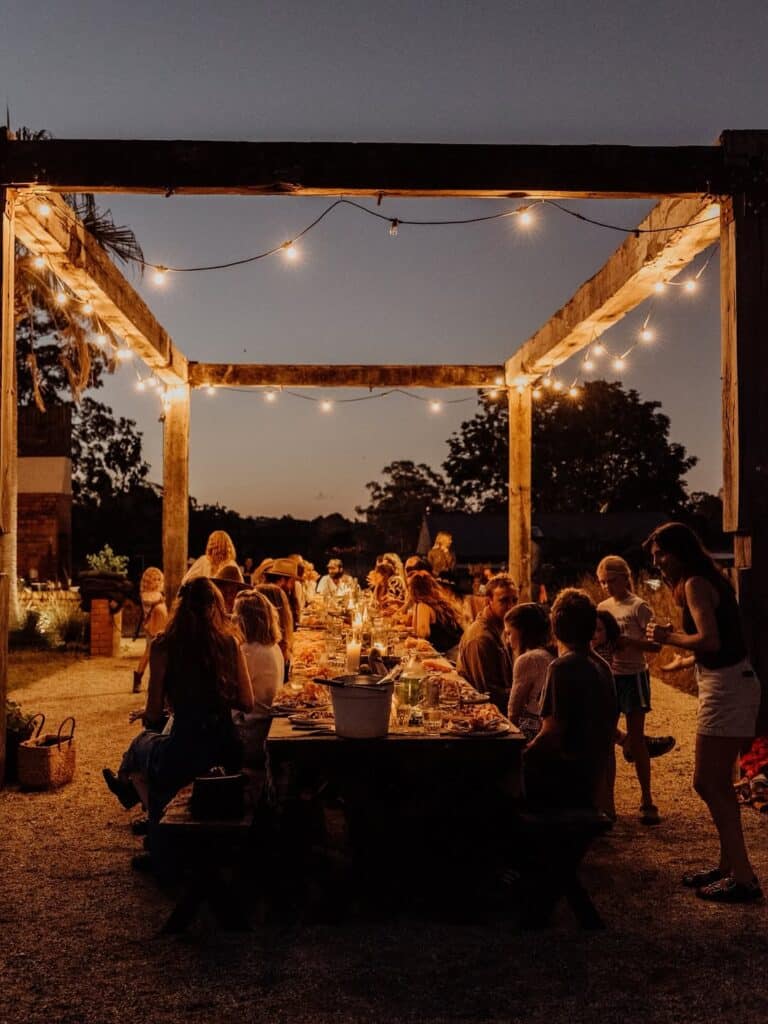
The best barbecue has never been only about food.
It’s about gathering people together.
Sharing stories.
Passing knowledge.
Making memories while smoke drifts through the air.
Ancient campfires and modern cookouts aren’t really that different after all.
Ancient Fire, Modern BBQ
The deeper you explore Australian Aboriginal BBQ, the harder it becomes to see barbecue as merely a backyard hobby.
This was advanced environmental knowledge.
Cultural identity.
Engineering.
Community building.
And yes, really good cooking.
Modern pitmasters often act like barbecue history started in the American South or with steel offset smokers.
But humans were mastering smoke and fire tens of thousands of years earlier.
Aboriginal Australians weren’t just cooking food.
They were building one of humanity’s oldest and most sophisticated fire traditions.
And somewhere across 60,000 years of glowing coals, smoke, stories, and slow-cooked meals, one truth stayed the same:
People gather around fire because it makes us feel human.
FAQ
What is Australian Aboriginal BBQ?
Australian Aboriginal BBQ refers to the traditional fire-cooking methods used by Indigenous Australians for tens of thousands of years. These techniques include open-fire roasting, earth ovens, smoking, ash cooking, and wrapping food in bark or leaves to cook slowly over coals.
How old are Aboriginal Australian cooking traditions?
Aboriginal Australian cooking traditions are believed to be more than 60,000 years old, making them among the oldest continuous culinary traditions in the world.
What foods were commonly cooked in Australian Aboriginal BBQ?
Traditional foods included:
- Kangaroo
- Emu
- Fish and shellfish
- Goanna and reptiles
- Crocodile
- Native plants and bush foods like wattleseed and lemon myrtle
The ingredients varied depending on the region and season.
Did Aboriginal Australians use smokers or pit ovens?
Yes. Many Aboriginal communities used earth ovens and smoke cooking techniques that worked similarly to modern pit barbecue. Food was often slow-cooked underground using heated stones, coals, leaves, and soil to trap heat and moisture.
What is an Aboriginal earth oven?
An Aboriginal earth oven is a traditional underground cooking pit. Hot stones were heated with fire, food was wrapped in leaves or bark, then buried and slow-cooked for several hours. This method helped tenderize meat and preserve moisture.
How did Aboriginal Australians cook without modern tools?
Cooking relied on deep knowledge of:
- Fire behavior
- Wind direction
- Wood types
- Heat from coals
- Seasonal conditions
Generations passed down these skills through observation and storytelling rather than written recipes or thermometers.
What woods were used in Australian Aboriginal BBQ?
Different regions used native hardwoods and local plant materials depending on availability.
Certain woods were preferred for:
- Longer-lasting coals
- Cleaner smoke
- Better cooking heat
- Flavor enhancement
Wood selection was an important part of traditional cooking knowledge.
What are bush foods in Australian Aboriginal cooking?
Bush foods are native Australian ingredients traditionally used by Aboriginal communities.
Popular examples include:
- Wattleseed
- Bush tomato
- Lemon myrtle
- Saltbush
- Pepperberry These ingredients added flavor, nutrition, and medicinal value to meals.
How did fire help Aboriginal Australians beyond cooking?
Fire was also used for:
- Land management
- Encouraging plant growth
- Attracting game animals
- Reducing dangerous wildfires
- Supporting hunting and food gathering
Controlled burning practices were highly advanced and sustainable.
How does Australian Aboriginal BBQ influence modern cooking today?
Modern chefs and pitmasters increasingly use native Australian ingredients and traditional fire-cooking ideas in restaurants and barbecue culture. Many Indigenous chefs are also helping preserve and share traditional culinary knowledge with wider audiences.
Why is Australian Aboriginal BBQ historically important?
Australian Aboriginal BBQ represents one of humanity’s oldest surviving fire-cooking traditions. It shows how ancient communities mastered smoke, heat, and sustainable cooking techniques thousands of years before modern barbecue equipment existed.
Is Australian Aboriginal BBQ still practiced today?
Yes. Many Indigenous communities continue to preserve and practice traditional cooking methods today, especially during cultural gatherings, ceremonies, educational programs, and community events.
Featured image credit: ChatGPT
