
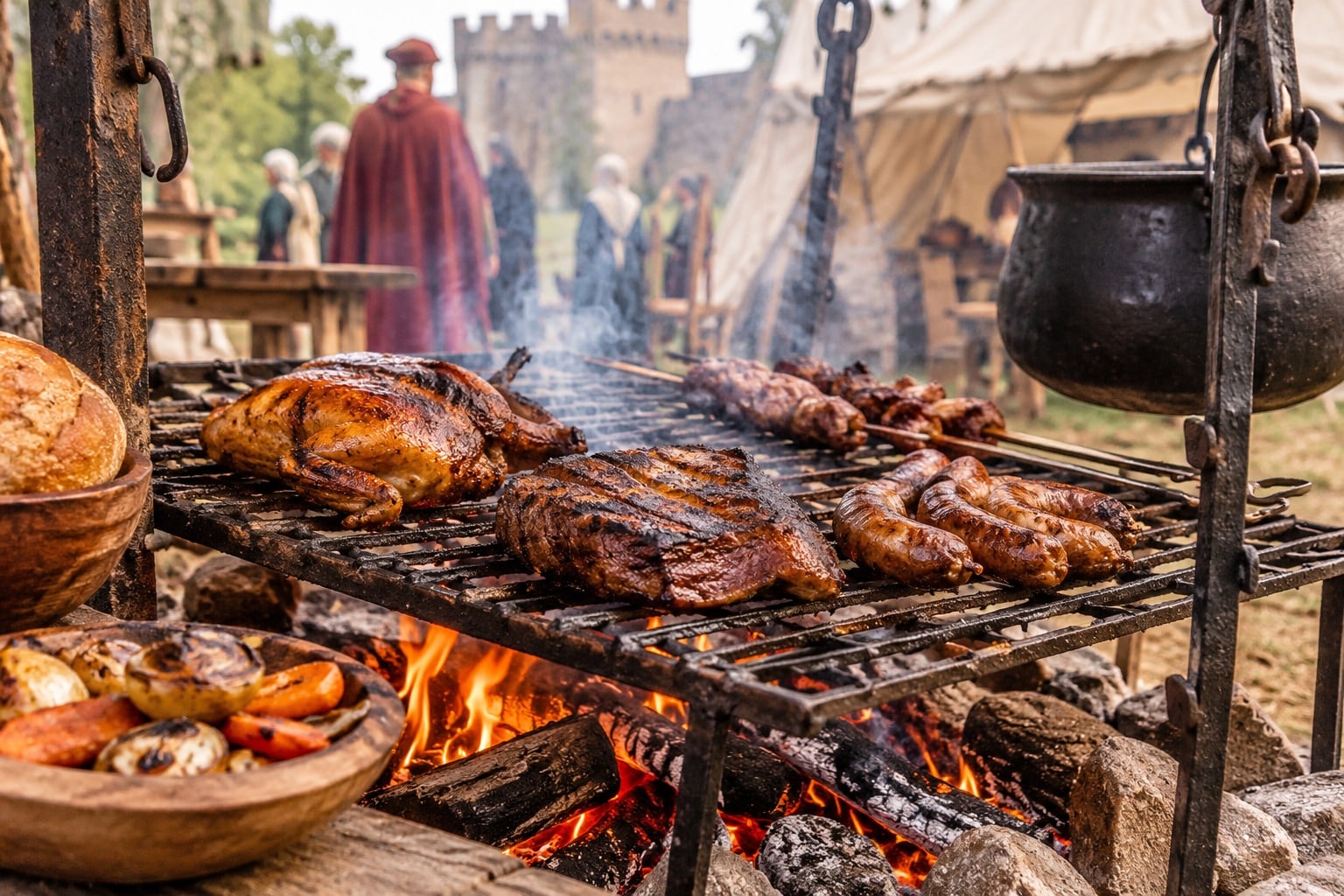
Imagine serving a whole roasted boar at a dinner party, with no gas grill, no digital thermometer, and absolutely no bottled barbecue sauce. Sounds like a pitmaster’s nightmare?
Not to a medieval cook. For centuries, people prepared magnificent meals over open flames, turning spits, glowing embers, and wood-burning hearths. And some of those dishes would look surprisingly familiar to anyone who loves a good backyard barbecue.
The grilled food in the Middle Ages was a lot more interesting than a chunk of meat tossed into a fire. Medieval cooks knew how to work with heat, fat, smoke, herbs, and carefully chosen ingredients.
They roasted whole animals, cooked fish over glowing coals, skewered smaller cuts of meat, and prepared elaborate feasts that could make a modern barbecue competition look modest.
Of course, medieval cooking came with a few challenges.
No instant-read thermometer. No temperature-controlled smoker. No convenient bag of lump charcoal from the hardware store. Just fire, experience, and a cook who knew when the meat was ready.
So, what exactly did medieval grilled food look like? What meats did people cook? How did they control the flames? And did ordinary peasants enjoy the same smoky delicacies as kings and nobles?
Let’s head back to the medieval kitchen, where the fire was hot, the meat was plentiful for some, and dinner was never just another trip to the microwave.
How Did People Grill Food in the Middle Ages?
Open-fire cooking was one of the most important food preparation methods during the Middle Ages. Long before modern grills and outdoor kitchens, households relied on wood-burning hearths, outdoor fires, and basic metal equipment to prepare meals.
Fire was the center of the medieval kitchen. It provided heat for cooking, warmth for the household, and a place where people gathered throughout the day.
Unlike modern grilling, medieval cooks had to manage everything manually. They judged heat by watching the flames, feeling the warmth, observing the coals, and relying on years of experience.
Cooking Over Open Flames
Most medieval households used an open hearth or fireplace for everyday cooking. Larger kitchens, particularly in castles and wealthy estates, had substantial fireplaces designed to accommodate multiple cooking activities.
Meat could be positioned near the flames or suspended over the fire. Smaller ingredients could be placed on skewers, while larger pieces were cooked slowly over hot embers.
Medieval cooks understood an important principle that modern grillers still follow: not every food needs the same amount of heat.
- Direct flames provided intense heat for browning and cooking smaller pieces.
- Hot embers offered steadier heat for slower cooking.
- Moving food closer to or farther from the fire helped prevent burning.
- Turning meat regularly encouraged more even cooking.
Think of it as an early version of managing hot and cool zones on a charcoal grill. The equipment was primitive by modern standards, but the cooking principles were surprisingly familiar.
Medieval Grills, Spits, and Cooking Equipment
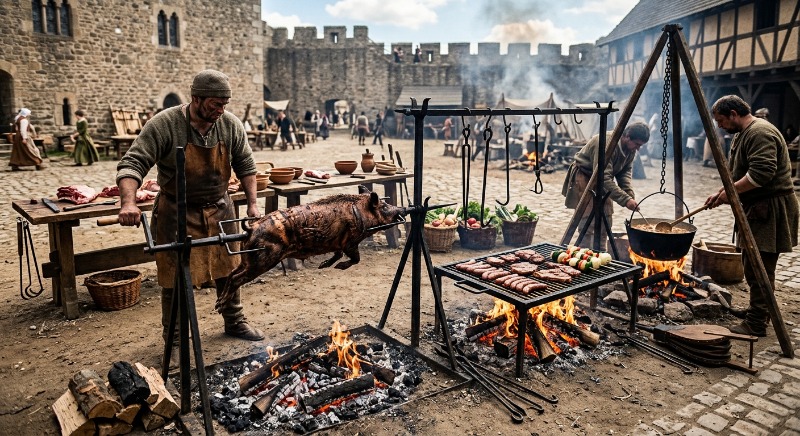
Medieval kitchens used a variety of tools to make open-fire cooking easier.
Some of the most important included:
- Iron grates: Metal racks that allowed food to sit above the heat.
- Roasting spits: Long metal or wooden rods used to hold meat over a fire.
- Skewers: Useful for smaller pieces of meat and other ingredients.
- Fire hooks and tongs: Tools for handling cookware and adjusting burning wood.
- Drip pans: Containers positioned beneath roasting meat to collect valuable juices and fat.
Wealthier households could employ dedicated kitchen workers to operate roasting equipment and tend large fires.
Some large kitchens also used mechanical spit-turning devices, including systems powered by gears or animals. Imagine having a dog-powered rotisserie. Modern barbecue gadgets suddenly seem a little less impressive!
What Types of Meat Were Grilled in Medieval Times?
Meat was one of the most impressive foods served during medieval celebrations, especially among wealthy households. However, availability depended heavily on location, season, income, and social status.
The grilled food in the Middle Ages included domesticated livestock, hunted game, and various types of poultry. Roasting over a fire was particularly useful for preparing larger cuts and whole animals.
Beef, Pork, and Lamb
Cattle, pigs, and sheep provided important sources of meat across medieval Europe.
Pork was especially popular because pigs were relatively practical animals to raise. They could forage for food and thrive in environments where other livestock might require more attention.
Common preparations included:
- Pork roasted over an open fire or cooked on a spit.
- Beef roasted in larger cuts.
- Lamb and mutton cooked with herbs and seasoning.
- Smaller portions of meat skewered and cooked over hot embers.
Fat played an important role in the cooking process. As meat heated, its fat rendered and helped create flavorful surfaces. The outside could develop a rich brown crust while the inside remained tender when properly cooked.
That familiar combination of smoky aroma, browned exterior, and juicy meat was just as appealing centuries ago as it is today.
Game Meat and Wild Animals
Hunting provided another source of meat, particularly for wealthy households and members of the nobility.
Popular game included:
- Venison from deer.
- Wild boar.
- Hare and rabbit.
- Other legally hunted wild animals, depending on the region.
Wild boar was particularly associated with medieval feasting. Its size and impressive presentation made it a natural centerpiece for extravagant banquets.
Venison was also highly valued. Hunting rights were often controlled by landowners and the nobility, making access to certain game animals a privilege rather than an everyday option.
Game meat could be roasted whole, prepared in large portions, or cooked using smaller cuts.
Poultry and Game Birds
Birds were another important feature of medieval dining.
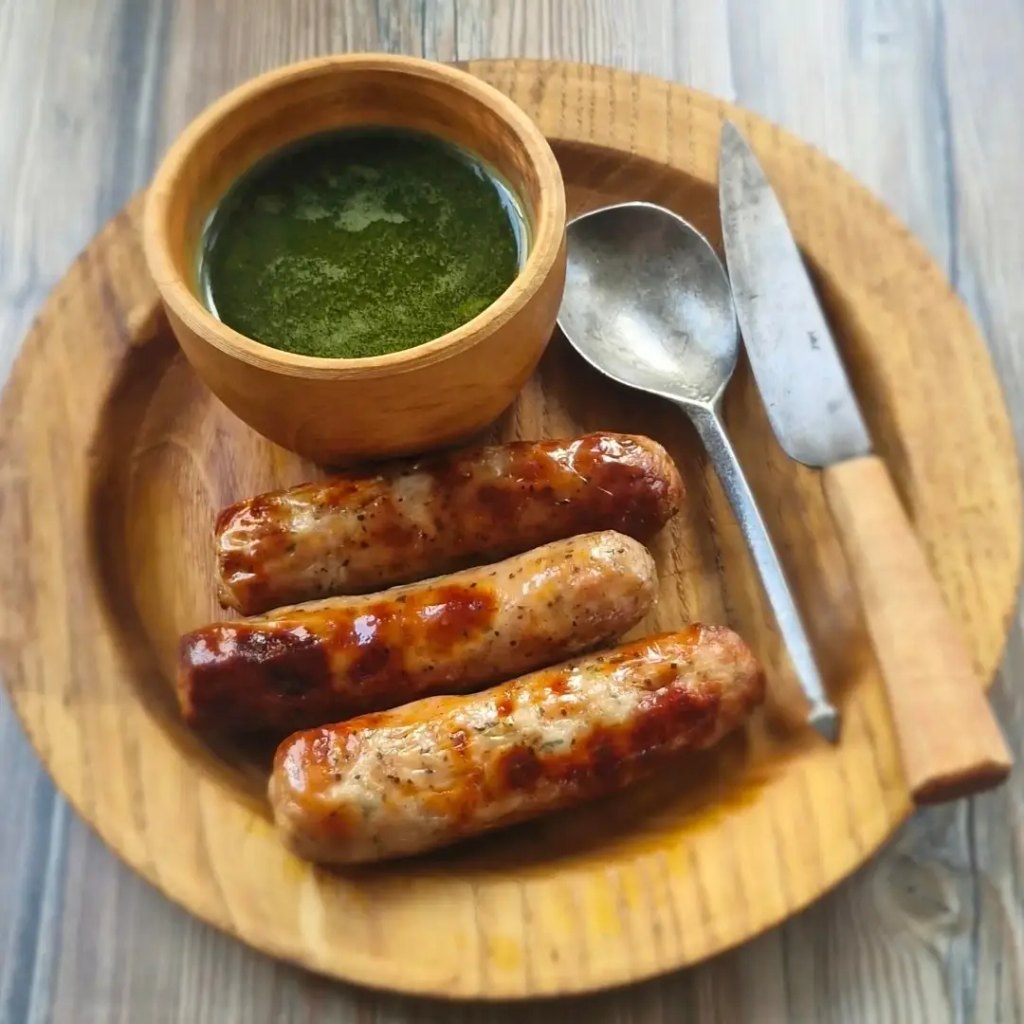
Chickens, geese, ducks, and other birds were prepared in various ways, including spit-roasting over open fires.
Whole roasted poultry offered several advantages. The skin could become beautifully browned, the fat helped baste the meat, and the finished bird made an attractive centerpiece.
Wealthy banquets sometimes featured elaborate poultry presentations. Some historical feasts even included unusual decorative displays designed to impress guests.
Medieval cooks understood that presentation mattered. A beautifully roasted bird could be just as important to the occasion as its flavor.
Did Medieval People Grill Fish and Vegetables?
Meat might have stolen the spotlight at medieval banquets, but it wasn’t the only food prepared over an open fire.
Fish and vegetables were also important parts of medieval cooking, particularly among households that couldn’t afford meat regularly or followed religious dietary restrictions.
Medieval diets varied considerably across Europe. Coastal communities had access to different fish than inland villages, while local growing conditions influenced which vegetables appeared on the table.
Fish Cooked Over Fire
Fish was an important food source during the Middle Ages. Freshwater varieties such as trout, pike, and carp were eaten in inland communities, while coastal populations had access to fish such as herring, cod, and other locally available species.
Fish could be cooked over embers, roasted near a fire, or prepared on metal grates and skewers.
Religious customs also influenced fish consumption. In many Christian communities, certain days and seasons required people to avoid meat, particularly during Lent. Fish became an important alternative during these periods.
Fish wasn’t simply a substitute for meat. It was a valuable ingredient in its own right, prepared using different herbs, seasonings, and cooking techniques.
Vegetables and Other Plant-Based Foods
Vegetables were everyday staples for many medieval households.
Common ingredients included:
- Onions and leeks.
- Cabbage and turnips.
- Carrots and parsnips.
- Garlic and seasonal herbs.
Some vegetables could be roasted directly in hot ashes, while others were cooked on grates or near the fire.
Root vegetables were particularly practical because they could withstand longer cooking times. Onions and leeks added sweetness and flavor, especially when their natural sugars began to brown.
Unlike modern barbecue menus loaded with elaborate vegetable skewers, medieval cooks generally worked with whatever was available locally and seasonally.
The result was simple, satisfying food that made good use of the ingredients at hand.
What Did Medieval Grilled Food Look and Taste Like?
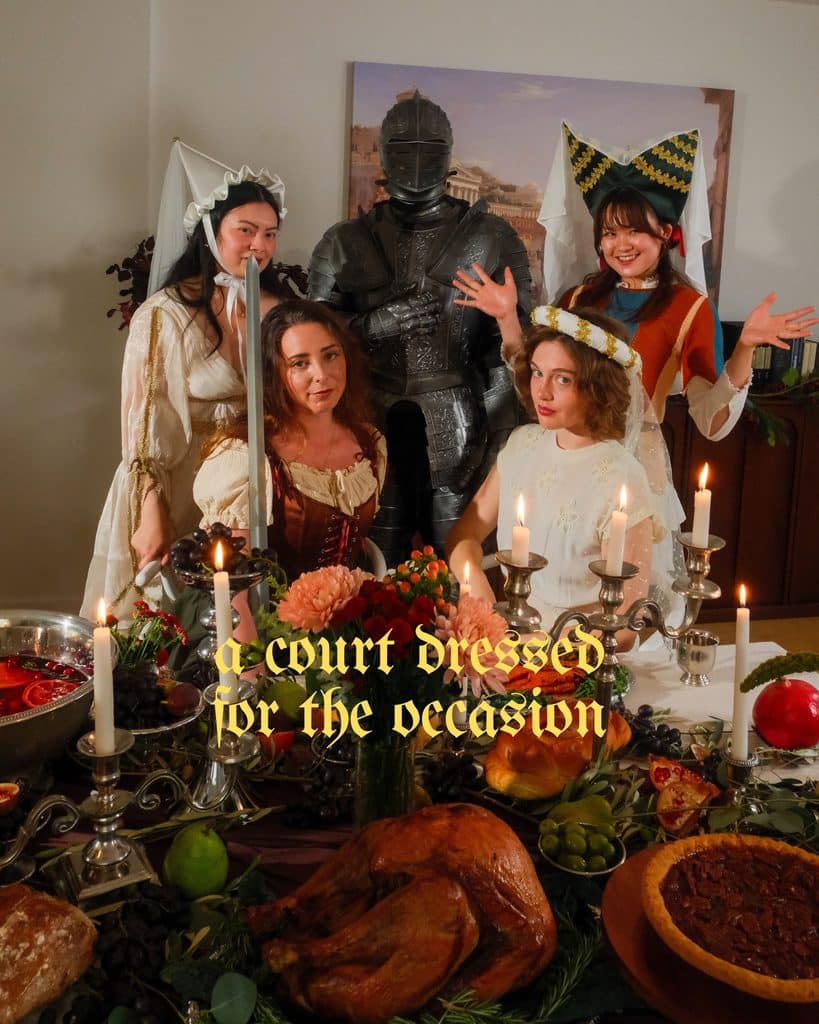
Here’s where things get interesting. Medieval grilled food probably looked much closer to traditional wood-fire cooking than many people imagine.
Forget perfectly uniform grill marks, glossy barbecue glaze, and carefully arranged restaurant garnishes. Medieval food was generally more rustic, with browned surfaces, uneven charring, visible fat, and the occasional smoky blackened edge.
The appearance depended on the cooking method, the type of food, and how closely the cook managed the fire.
Appearance and Texture
A whole animal turning slowly over an open flame could develop a deeply browned exterior as its fat rendered and dripped toward the fire.
Smaller cuts cooked over grates or embers could develop:
- Golden-brown surfaces.
- Crispy or darkened edges.
- Rendered fat around the meat.
- Smoky aromas from burning wood.
- Tender interiors when cooked properly.
The outside of a well-roasted piece of meat could be crisp while the inside remained moist.
Of course, not every medieval meal was a culinary masterpiece. Without accurate temperature controls, uneven cooking and overdone meat were genuine risks.
Some cooks undoubtedly served meat that was a little too charred. Apparently, the medieval equivalent of accidentally burning the burgers at a family barbecue is nothing new.
Medieval Seasonings and Flavors
Medieval food wasn’t necessarily bland. Cooks used a variety of seasonings to enhance meat, fish, and vegetables.
Common ingredients included:
- Salt: Used for seasoning and preserving food.
- Garlic and onions: Added depth and sweetness.
- Sage and rosemary: Popular aromatic herbs.
- Thyme: Used in various savory preparations.
- Pepper: A valuable imported seasoning.
- Other spices: Including cinnamon, cloves, ginger, and nutmeg in wealthier kitchens.
Spices were especially important among wealthy households because imported ingredients could be expensive and difficult to obtain.
Sauces also played a major role in medieval cooking. Recipes could combine herbs, spices, vinegar, wine, and other ingredients to create sharp, sweet, or savory flavors.
One interesting detail is that medieval cooks didn’t always season food the way modern barbecue enthusiasts do. Rather than relying on commercial dry rubs and bottled sauces, they used combinations of locally available herbs, spices, and liquids.
The goal was to create flavor using what the kitchen could provide, not to make every piece of meat taste like the same barbecue sauce.
How Did Medieval Grilling Differ Between the Rich and Poor?
Not everyone in the Middle Ages enjoyed the same food. The difference between a nobleman’s banquet and a peasant family’s evening meal could be enormous.
Social class influenced what people ate, how often they consumed meat, and which ingredients they could afford.
Grilled Food in Wealthy Medieval Households
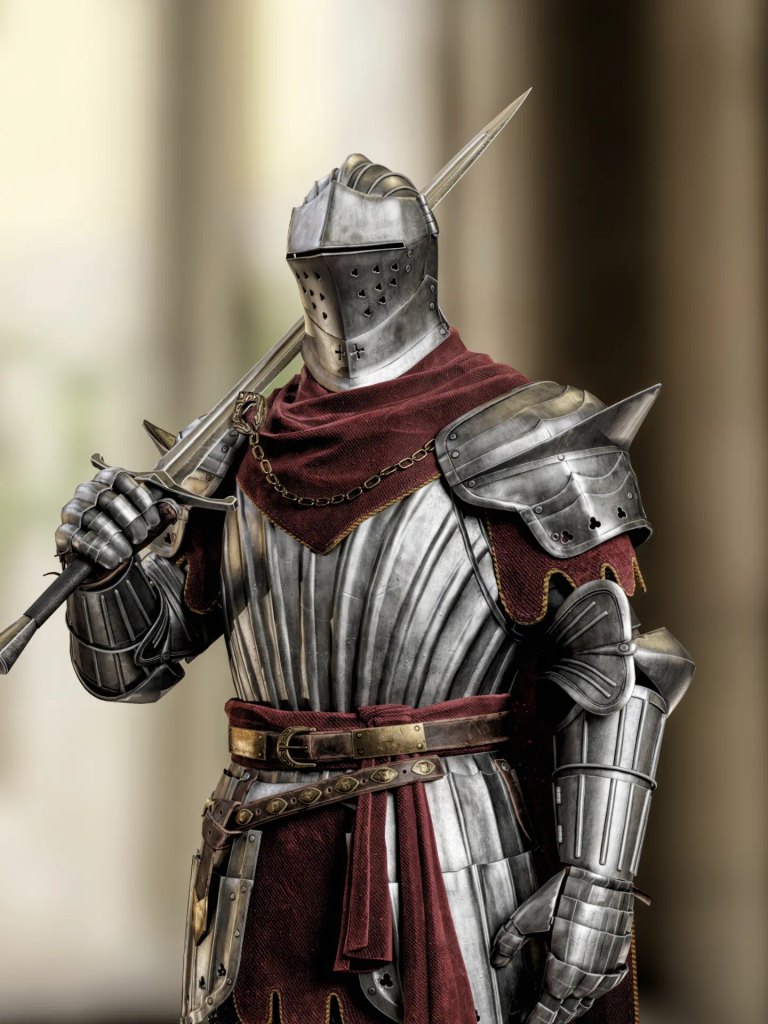
Noble households and wealthy landowners had access to larger kitchens, specialized cooking equipment, and trained kitchen staff.
Their meals could include:
- Whole roasted pigs and wild boar.
- Venison and other game.
- Roasted geese, chickens, and other birds.
- Fresh fish and elaborate vegetable dishes.
- Expensive imported spices and sauces.
Large estates could maintain dedicated kitchens with separate workers responsible for roasting, baking, preparing sauces, and managing food service.
Roasted meat was also a display of wealth and hospitality. Serving an impressive animal at a banquet demonstrated that the host had the resources to provide an extravagant meal.
For an important celebration, the kitchen might spend hours preparing multiple dishes while servants coordinated the presentation.
In other words, medieval entertaining could be a serious production. Nobody was simply throwing a few sausages on the grill and calling it a night.
Everyday Cooking Among Peasants and Commoners
Ordinary households had a very different experience.
For many peasants, daily meals relied heavily on grains, bread, porridge, legumes, vegetables, and seasonal produce. Meat was available, but regular access depended on income, local customs, livestock ownership, and the time of year.
When meat was available, it could be roasted over a household fire or cooked using simpler equipment.
A typical meal might include:
- Bread or a grain-based dish.
- Seasonal vegetables and herbs.
- Beans, peas, or lentils.
- Cheese or other dairy products.
- Small portions of meat or fish when available.
The biggest difference wasn’t necessarily cooking skill. It was access to ingredients.
A peasant household could understand how to roast meat perfectly well, but that didn’t mean it had a whole pig ready for the weekend.
Medieval grilling was therefore not one uniform food tradition. It ranged from simple hearth cooking to elaborate royal dining.
What Were Medieval Grilling Techniques and Recipes Like?
Although medieval cooks didn’t have modern grills, many of their techniques remain recognizable today.
The basic idea was simple: prepare the ingredients, position them near the heat, manage the fire, and keep a close eye on the food.
Here are some of the most interesting techniques.
Spit-Roasting Over an Open Fire
Spit-roasting was one of the most recognizable cooking methods in wealthy medieval kitchens.
A whole animal or large piece of meat was secured to a long rod and positioned horizontally over a fire.
The meat was turned regularly, either by hand or with mechanical assistance.
As it rotated:
- Heat gradually cooked the meat.
- Fat rendered from the surface.
- Drippings collected beneath the animal.
- The exterior developed a browned crust.
Some of those drippings could be used to prepare sauces or baste the meat during cooking.
Spit-roasting is one of the clearest connections between medieval cooking and modern rotisserie grilling.
The equipment has changed, but the principle remains remarkably similar.
Grilling on Metal Grates and Skewers
Smaller portions could be cooked using iron grates or skewers.
This method was useful for pieces that didn’t require the lengthy cooking time of a whole animal.
Cooks positioned the food over hot coals or flames, turning it as needed to prevent excessive charring.
Skewers were particularly practical because they allowed several small pieces to be cooked together.
Managing the distance between the food and the fire was essential. Too close, and the outside could burn before the center was cooked. Too far away, and dinner might take longer than expected.
Sound familiar? Anyone who’s cooked over charcoal knows the struggle.
Popular Medieval-Inspired Grilled Dishes
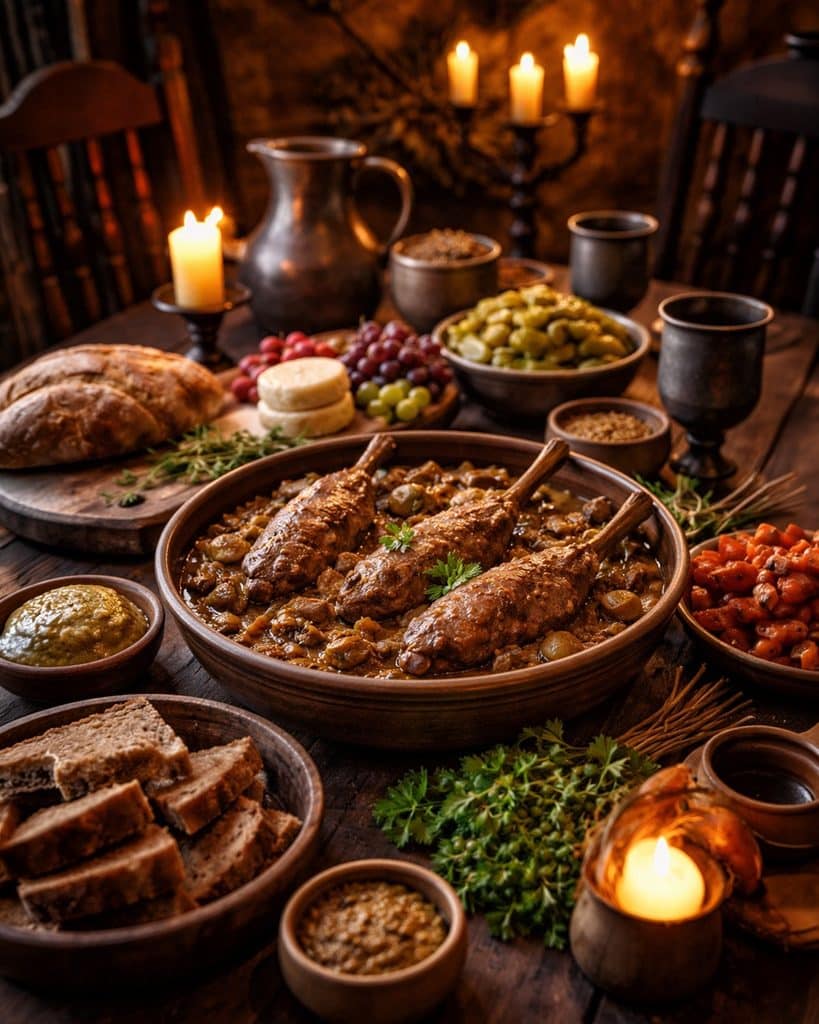
Although surviving medieval recipes don’t always describe modern-style grilling in precise detail, several historically inspired preparations help illustrate the ingredients and techniques of the period.
Consider these examples:
- Herb-roasted pork: Pork cooked over an open fire and seasoned with garlic, salt, and aromatic herbs.
- Spit-roasted poultry: Whole chickens or geese slowly rotated over a wood fire.
- Fire-roasted fish: Fresh fish cooked near hot embers with herbs and seasoning.
- Roasted game: Venison or other hunted meat prepared over a fire and served with a savory sauce.
These are illustrative reconstructions, not standardized recipes followed throughout medieval Europe.
The important takeaway is that medieval cooks had plenty of ways to turn basic ingredients into flavorful fire-cooked meals.
What Role Did Grilled Food Play in Medieval Feasts?
Medieval feasts were more than opportunities to eat. They were social events, political gatherings, and displays of wealth.
For kings, nobles, and wealthy landowners, serving impressive roasted dishes was a way to demonstrate power and generosity.
A spectacular roasted animal could become the centerpiece of an entire celebration.
Large Banquets and Royal Celebrations
Large medieval banquets often featured multiple courses, with roasted meats playing an important role.
Depending on the occasion and the host’s resources, guests might encounter:
- Whole roasted pigs and wild boar.
- Large portions of beef and venison.
- Roasted geese, ducks, and chickens.
- Elaborately presented fish dishes.
- Seasonal vegetables, bread, and sauces.
Some feasts included elaborate food displays designed to entertain guests. Cooks and servants worked together to prepare, transport, and present dishes in the great hall.
The preparation could take hours, sometimes requiring several cooks to manage different fires simultaneously.
And here’s something modern barbecue enthusiasts might appreciate: the spectacle was part of the experience. The aroma of roasting meat, the sight of large dishes arriving at the table, and the shared enjoyment of food helped make these gatherings memorable.
Grilling as a Social and Cultural Tradition
Food brought people together throughout medieval society.
Families gathered around household hearths, communities shared meals during celebrations, and wealthy hosts entertained guests with elaborate dining experiences.
Fire cooking wasn’t simply about preparing dinner. It was connected to hospitality, tradition, and social relationships.
In that sense, medieval open-fire cooking had something in common with modern backyard barbecues.
The setting might have changed, but the idea of gathering around good food and sharing a meal has remained remarkably consistent.
How Did Medieval Grilling Influence Modern Barbecue?
Modern barbecue has developed through centuries of cooking traditions across different cultures. Medieval European open-fire cooking is one part of that broader history.
Some techniques, however, are still easy to recognize.
Spit-roasting, cooking over glowing embers, using skewers, and managing direct heat remain important methods in contemporary grilling.
Here are a few familiar connections:
- Rotisserie cooking: Modern rotisserie grills use the same basic rotating principle as traditional roasting spits.
- Charcoal grilling: Cooking over hot embers follows a principle medieval cooks understood well.
- Wood-fire cooking: Burning wood to produce heat and smoke remains popular among traditional pitmasters.
- Herb seasoning: Garlic, rosemary, sage, and other aromatic ingredients continue to complement roasted meats.
However, modern barbecue isn’t simply medieval cooking with better equipment. It has been shaped by many regional and cultural traditions, including Indigenous American cooking practices and later developments in smoking, grilling, and outdoor food preparation.
Still, medieval cooks deserve some credit for understanding something that every good pitmaster knows: great food starts with good ingredients, controlled heat, and patience.
A Smoky Taste of Medieval History
So, what did grilled food in the Middle Ages actually look like? Think browned meats, spit-roasted poultry, fire-cooked fish, seasonal vegetables, aromatic herbs, and smoky flavors created over wood-burning fires.
From humble household hearths to extravagant royal banquets, open-fire cooking played an important role in medieval food culture.
The equipment may have been simpler, but the fundamentals haven’t disappeared. Managing heat, choosing quality ingredients, seasoning properly, and allowing food to cook patiently are still essential to great grilling.
Turns out, medieval cooks were already onto something. Good barbecue doesn’t need fancy technology. Sometimes, all you really need is fire, food, and someone who knows what they’re doing.
Frequently Asked Questions
1. Did people have barbecues in the Middle Ages?
Yes, people cooked food over open flames and hot embers, although they didn’t have modern barbecue grills. Hearths, iron grates, skewers, and roasting spits were among the equipment used to prepare food.
2. What was the most popular grilled meat in medieval times?
Pork, beef, lamb, and poultry were important meat choices, although availability varied by region and social class. Pork was particularly common in many European communities, while venison and wild boar were associated with hunting and wealth.
3. Did medieval people use spices when grilling meat?
Yes. Medieval cooks used salt, garlic, pepper, and aromatic herbs such as sage and rosemary. Wealthier households could also afford imported spices like cinnamon, cloves, and ginger.
4. How did medieval cooks know when meat was done?
They relied on experience, cooking time, appearance, and familiarity with fire. Cooks learned how different cuts responded to heat and adjusted their cooking methods accordingly. There were no digital thermometers or instant-read probes.
5. Did peasants eat grilled meat regularly?
Not necessarily. Many peasants relied on bread, grains, vegetables, and legumes for everyday meals. Meat consumption depended on household resources, local food availability, religious customs, and the season.
Featured image credit: ChatGPT
