
Darren McGrady, former personal chef to Queen Elizabeth II and Princess Diana, once shared a golden rule for kitchen cutlery:
“You only need three good knives: a chef’s knife, a paring knife, and a serrated knife… everything else in those wooden block sets is mostly marketing fluff.”
He wasn’t wrong.
Nothing reveals the absurdity of overly fancy cutlery quite like standing in front of a $120 full-packer beef brisket at 5:00 AM while holding a fragile, $200 boutique blade that chips the moment it glances off a stray rib bone.
Every backyard smoker enthusiast, hunter, and weekend cook reaches a pivotal crossroad: do you spend $30 on a utilitarian, commercial-grade workhorse, or drop $180 on a forged, high-carbon Japanese steel beauty that looks like a museum piece?
Marketing teams will try to convince you that an expensive blade magically turns you into a master of charcuterie. Meanwhile, real-world meat processing plants break down hundreds of carcasses a day using knives that cost less than a round of craft beers.
Does dropping big money on butcher knives actually net you cleaner cuts, better edge retention, and safer handling? Or are you just paying for fancy handles and shiny packaging?
Let’s slice through the hype and break down the real differences between budget workhorses and premium steel.
What Defines a True Butcher Knife?
A common mistake made around the cutting board is assuming a standard 8-inch chef’s knife can handle heavy butchery. It can’t – at least not without tearing muscle fibers, tiring out your wrist, or dulling itself halfway through a prep session.
Specialized butcher knives are engineered for a very specific type of violence: parting raw meat, navigating dense fat caps, and riding along bone without binding up.
Key Anatomical Features:
- Heavy Spine: Provides structural weight and leverage needed to guide the blade through dense cuts and thick cold fat without forcing it.
- Sweeping Curved Tip: Enables long, continuous slicing motions (a draw-cut) across large muscle groups without having to lift the blade off the meat.
- High Heel Clearance: Keeps your knuckles elevated well above the cutting board surface, protecting your skin during deep, sweeping cuts.
The Geometry of Meat Prep
Standard chef’s knives feature flat or slightly rockable profiles designed for chopping vegetables against a board. A proper butcher blade features a sweeping, upward curve (often called a cimiter or breaking profile).
This curve allows you to execute clean, single-pass slices through large cuts like brisket or pork shoulder.
Unlike thin, flexible boning knives, a true butcher knife remains rigid to hold a razor-straight path even when carving through tough connective tissue.
Budget vs. Premium Butcher Knives: The Core Differences
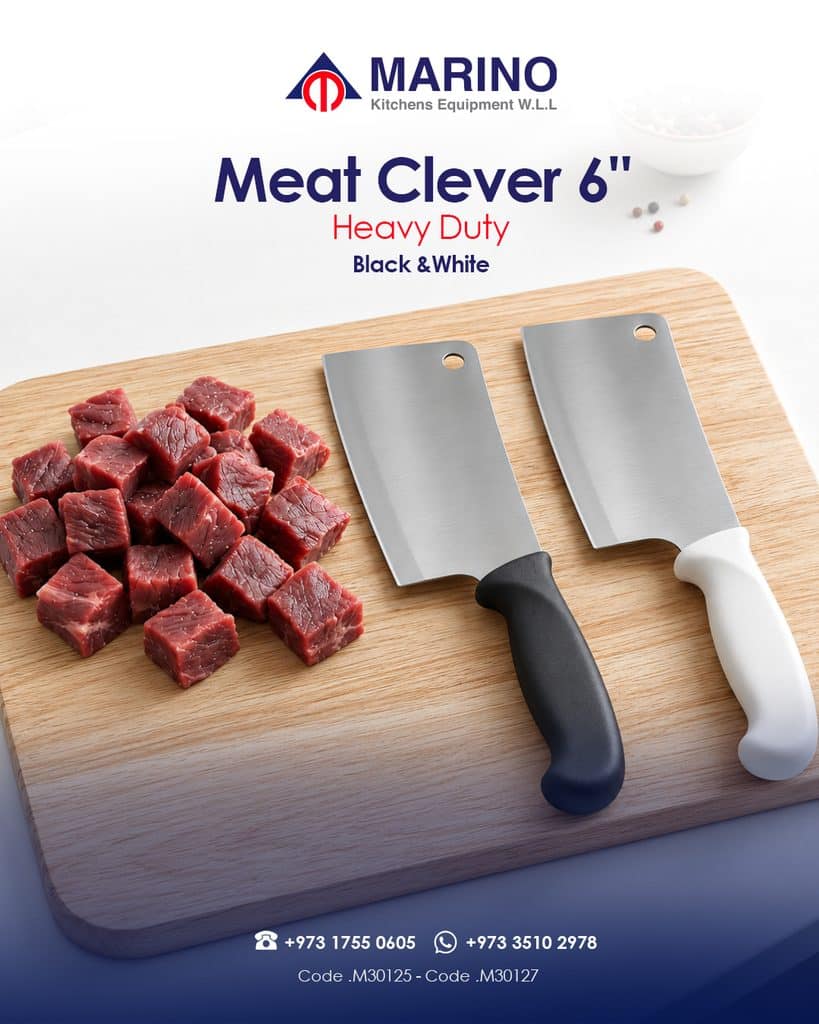
Choosing between budget and high-end blades comes down to three main construction factors: steel chemistry, manufacturing style, and handle ergonomics.
Steel Quality & Heat Treatment
The metal alloy determines how a blade behaves on the cutting board:
- Budget Steels (52–56 HRC): Entry-level butcher knives use stainless alloys like X50CrMoV15 or 420HC. They are intentionally kept softer. When a soft blade hits a hard bone, the edge rolls over rather than snapping or chipping. A few passes on a honing steel straightens that rolled edge back out in five seconds.
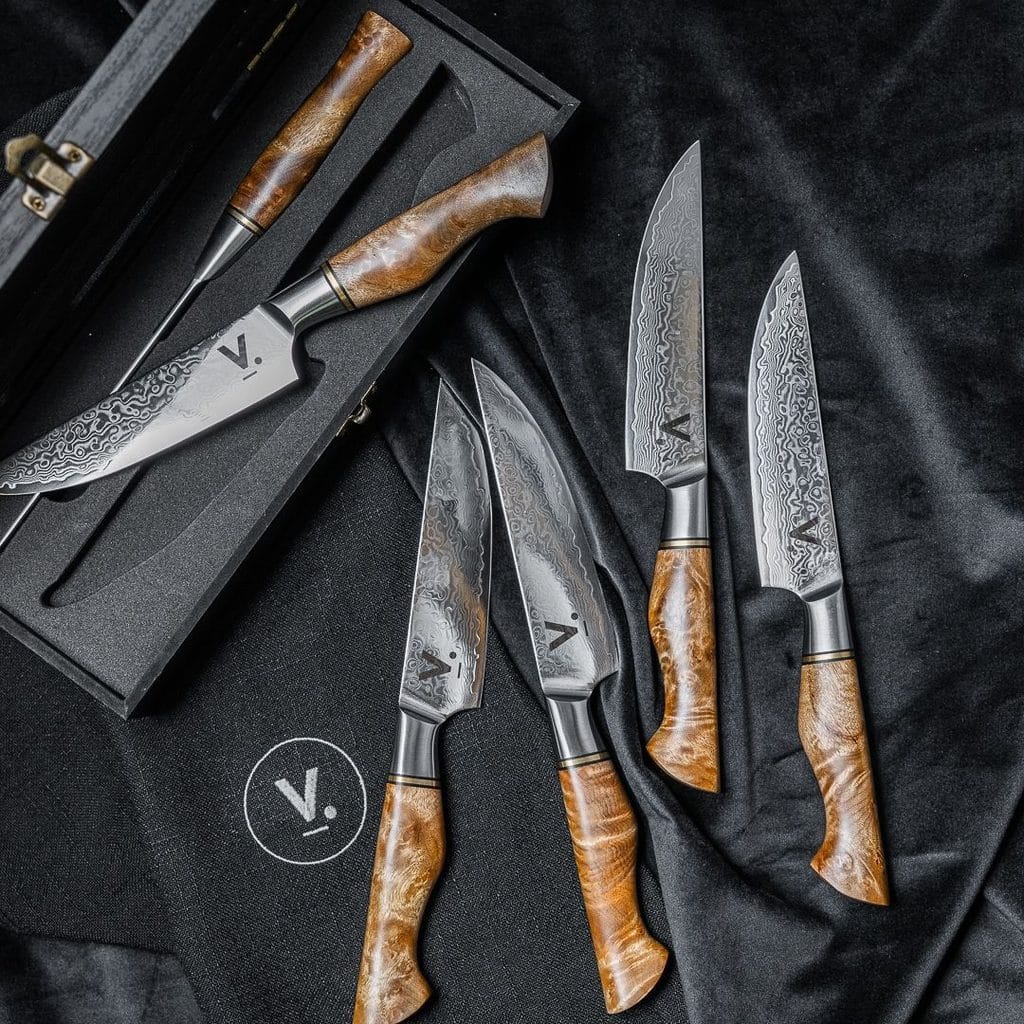
- Premium Steels (58–62+ HRC): High-end tools use super-steels like VG-10, AUS-10, or Japanese high-carbon alloys. They hold a razor edge significantly longer, but that extreme hardness makes them brittle. Impact with dense bone can cause micro-chipping along the edge.
Stamped vs. Forged Construction
- Stamped Blades: Cut out of flat sheets of steel, stamped blades are lightweight, uniform, and inexpensive to produce. They flex slightly under lateral pressure, making them forgiving during tough cuts.
- Forged Blades: Formed from a single bar of red-hot steel pounded under extreme pressure, forged blades feature integrated bolsters, full tangs, and natural weight forward balance.
Handle Design and Hygiene
- Commercial Plastics (Fibrox/Polypropylene): Made for sanitization and grip. When your hands are covered in tallow and moisture, textured plastic grips lock into your palm like Velcro. They are NSF-certified and impervious to bacteria.
- Luxury Materials (Pakkawood/G10/Micarta): Visually stunning with ergonomic contours. While G10 and resin-impregnated woods are durable, natural wood handles require careful hand-washing and routine mineral oil treatments.
Side-by-Side Comparison: Feature Breakdown
| Metric / Feature | Budget Tier ($20 – $40) | Premium Tier ($100 – $250+) |
| Blade Steel | Basic Stainless (X50CrMoV15, 420HC) | Hard High-Carbon / Alloy (VG-10, AUS-10) |
| Construction | Stamped Sheet Metal | Precision Forged / High-End Precision Stamped |
| Hardness (Rockwell) | 52 – 56 HRC | 58 – 62+ HRC |
| Edge Retention | Moderate (Requires frequent honing) | Exceptional (Holds edge through long shifts) |
| Bone Impact | Tough & Resilient (Folds without cracking) | Rigid & Sensitive (Prone to chipping on bone) |
| Maintenance | Simple (Honing steel / Quick touch-ups) | Demanding (Whetstones & strict dry storage) |
| Handle Material | Textured Plastic (Fibrox / Polypropylene) | G10, Pakkawood, Micarta, Hardwood |
| Primary Use | Field dressing, high-volume prep, heavy bone contact | Fine trimming, display kitchens, precision slicing |
Top Budget Butcher Knife Brands (The Workhorses)
When you look at the prep tables of high-volume commercial kitchens, you rarely see display-case blades. You see utilitarian tools designed to work all day without fuss.
1. Victorinox (The Industry Benchmark)
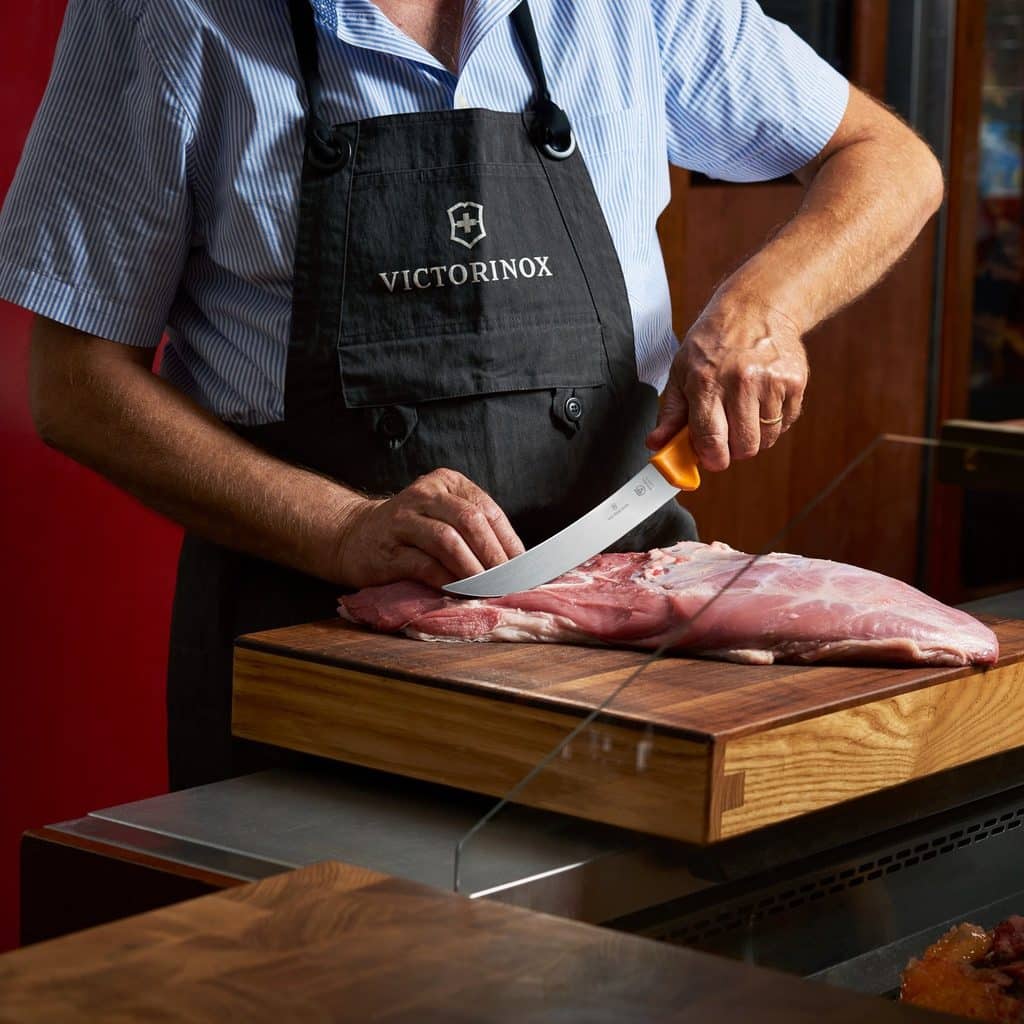
Swiss-made Victorinox butcher knives are the gold standard for meat processing plants and pitmasters alike.
- The Go-To Model: The Victorinox Fibrox Pro 8-inch or 10-inch Breaking Knife.
- Why It Works: The patented Fibrox handle provides an unbeatable grip even when covered in wet fat. The steel takes a razor edge quickly and holds up to endless abuse.
- The Catch: It looks like a basic commercial tool. If you want a knife that draws admiring glances on social media, this isn’t it.
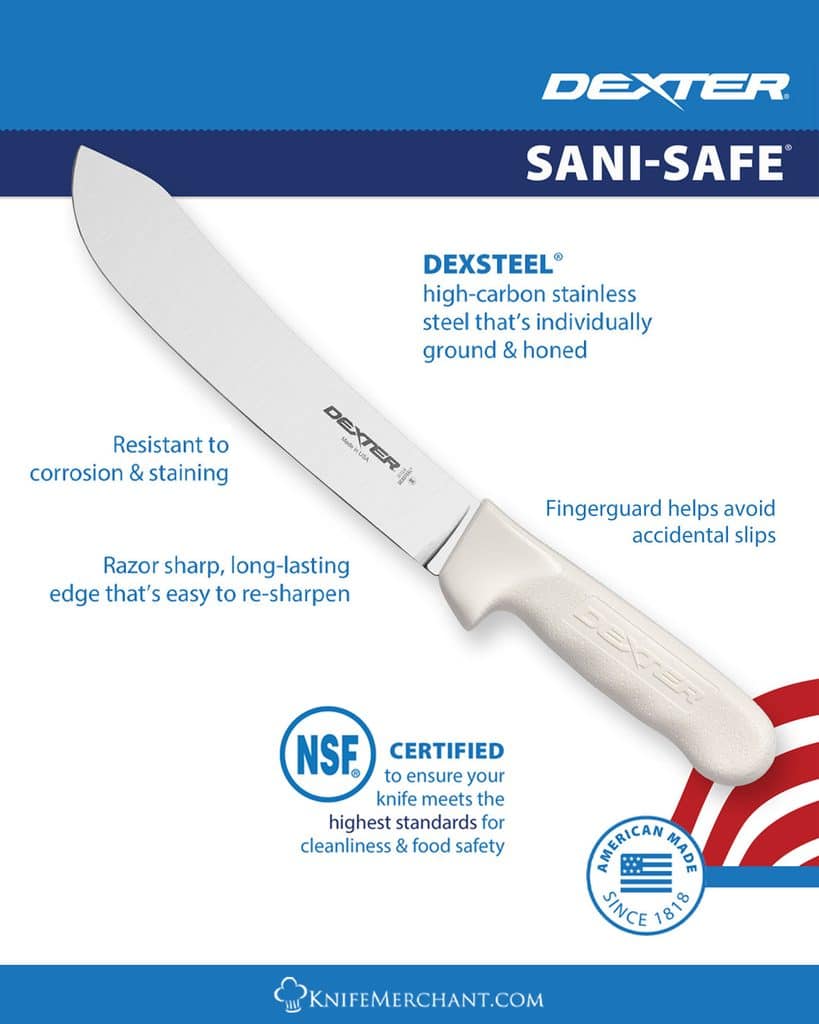
2. Dexter-Russell (The Commercial American Classic)
Dexter-Russell has been outfitting American meatpacking plants for generations.
- The Go-To Model: The Sani-Safe 10-inch Cimiter.
- Why It Works: Built with stain-free, high-carbon steel and an indestructible white plastic handle, this knife is built to last. The blade is stiff, durable, and inexpensive to replace if damaged.
- The Catch: The factory finish can feel plain out of the box, requiring a quick touch-up on a sharpening stone before first use.
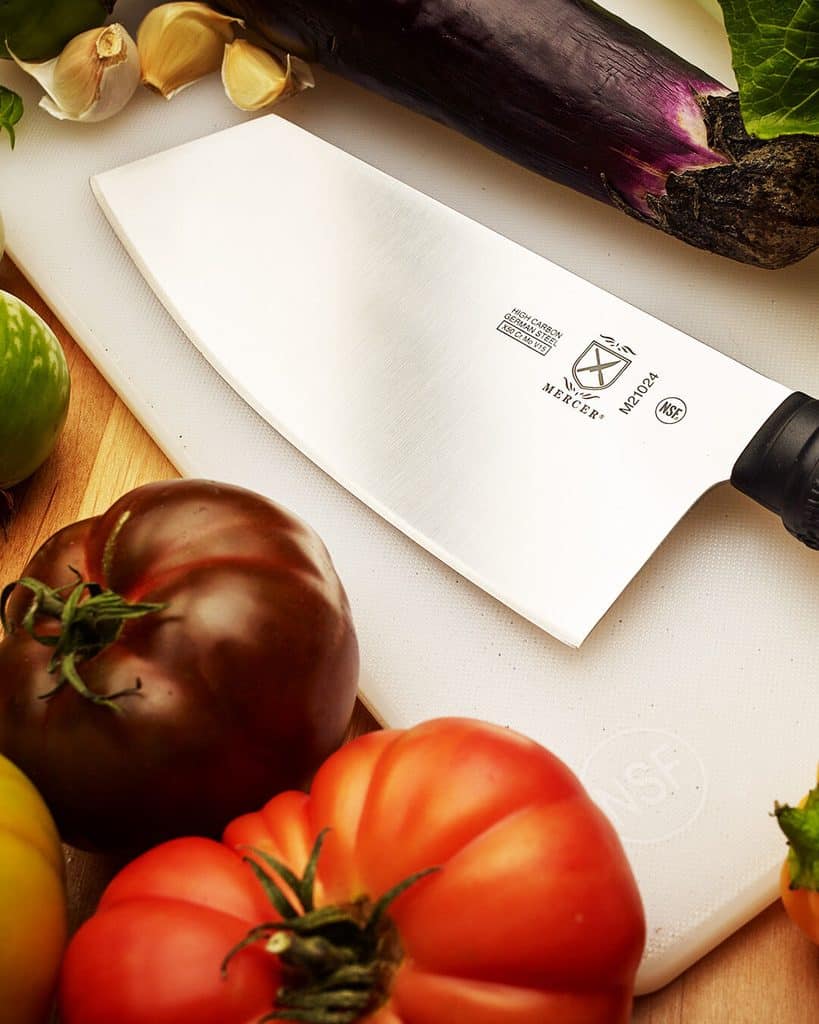
3. Mercer Culinary (Budget Precision)
Mercer offers reliable geometry at an accessible price point, making it popular in culinary schools.
- The Go-To Model: Mercer Culinary Ultimate White 10-inch Cimiter.
- Why It Works: It features a comfortable ergonomic handle, solid steel quality, and NSF certification at a budget price.
- The Catch: The softer steel profile requires regular steeling sessions during heavy prep work.
Top Premium Butcher Knife Brands (The Artisan Tools)
If you appreciate refined balance, high-end fit and finish, and superior edge retention, premium butcher knives offer exceptional craft quality.
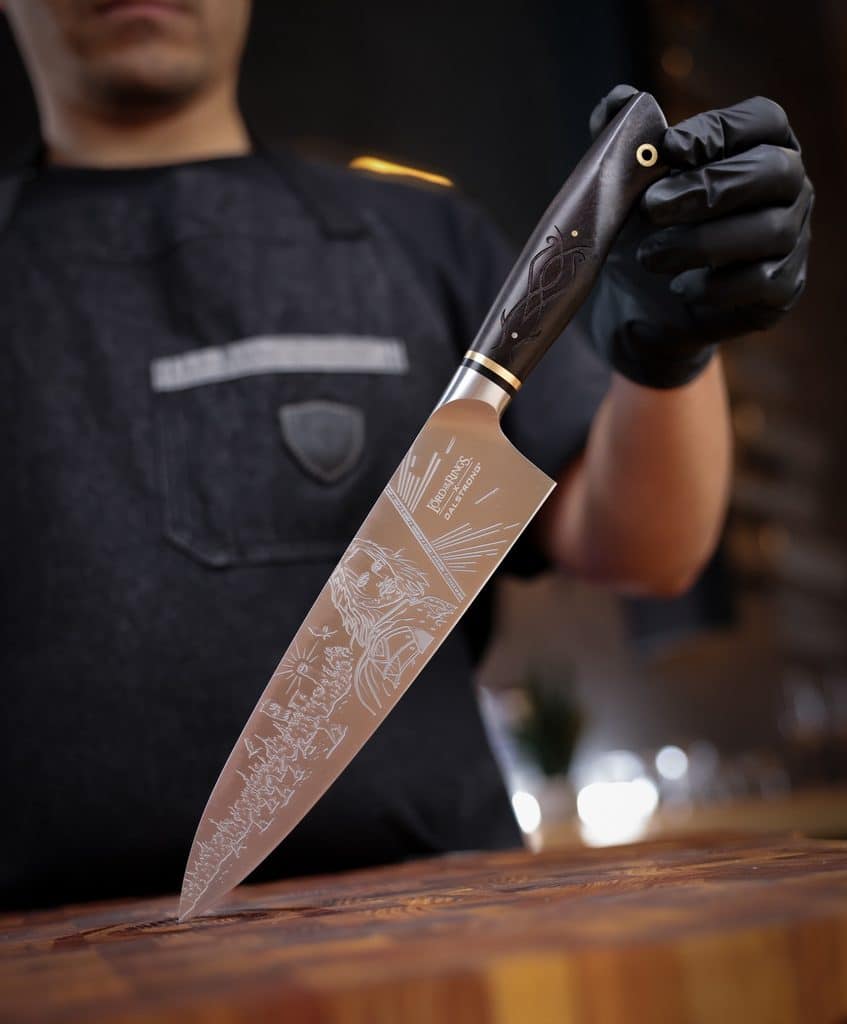
1. Dalstrong (Modern Hybrid Performance)
Dalstrong combines high-carbon Japanese steel with eye-catching design details.
- The Go-To Model: Shogun Series 10-inch Bullnose Butcher Knife.
- Why It Works: Constructed with an AUS-10V super-steel core clad in 67 layers of Damascus steel, this blade delivers incredible sharpness and edge duration. The heavy spine provides substantial momentum through thick cuts.
- The Catch: The prominent branding and aggressive styling aren’t for everyone, and the blade is heavier than standard stamped tools.
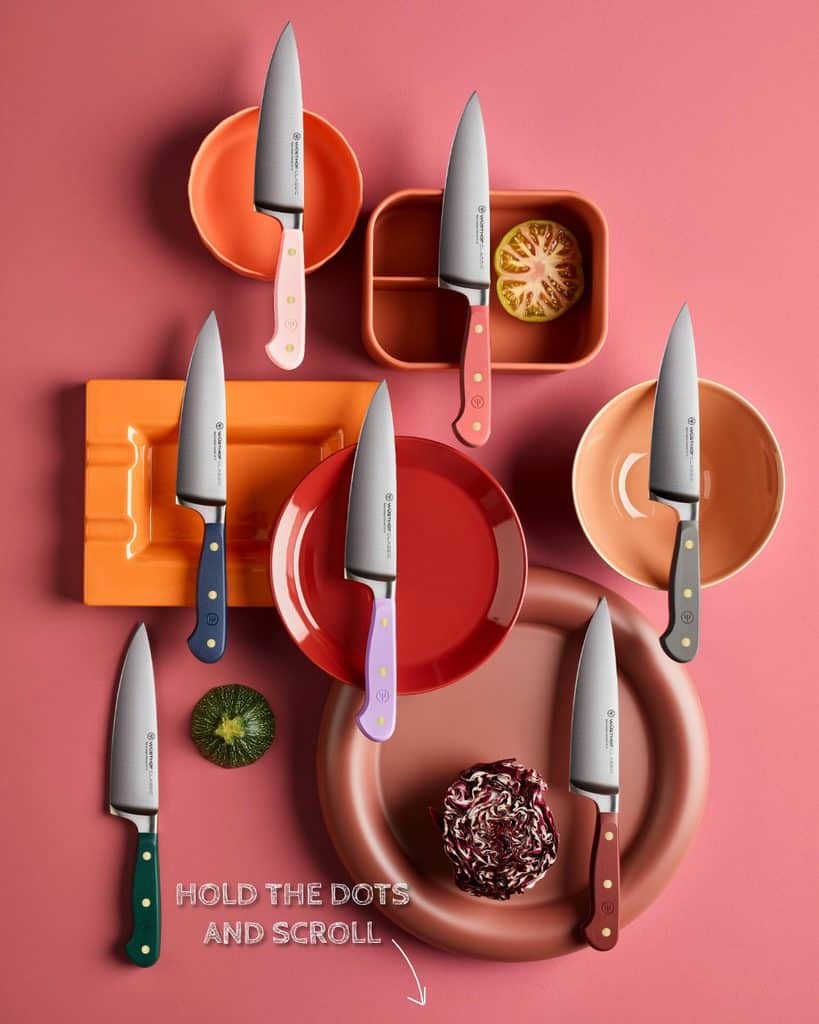
2. Wüsthof (German Forged Heavyweights)
Forged in Solingen, Germany, Wüsthof produces robust blades built for endurance.
- The Go-To Model: Wüsthof Classic 8-inch Butcher/Cleaver Knife.
- Why It Works: Hot-forged from a single piece of high-carbon stainless steel, it features a full bolster, full tang, and triple-riveted handle scales. It cuts through thick roasts with ease.
- The Catch: The solid forged weight can cause wrist strain during long meat processing sessions.
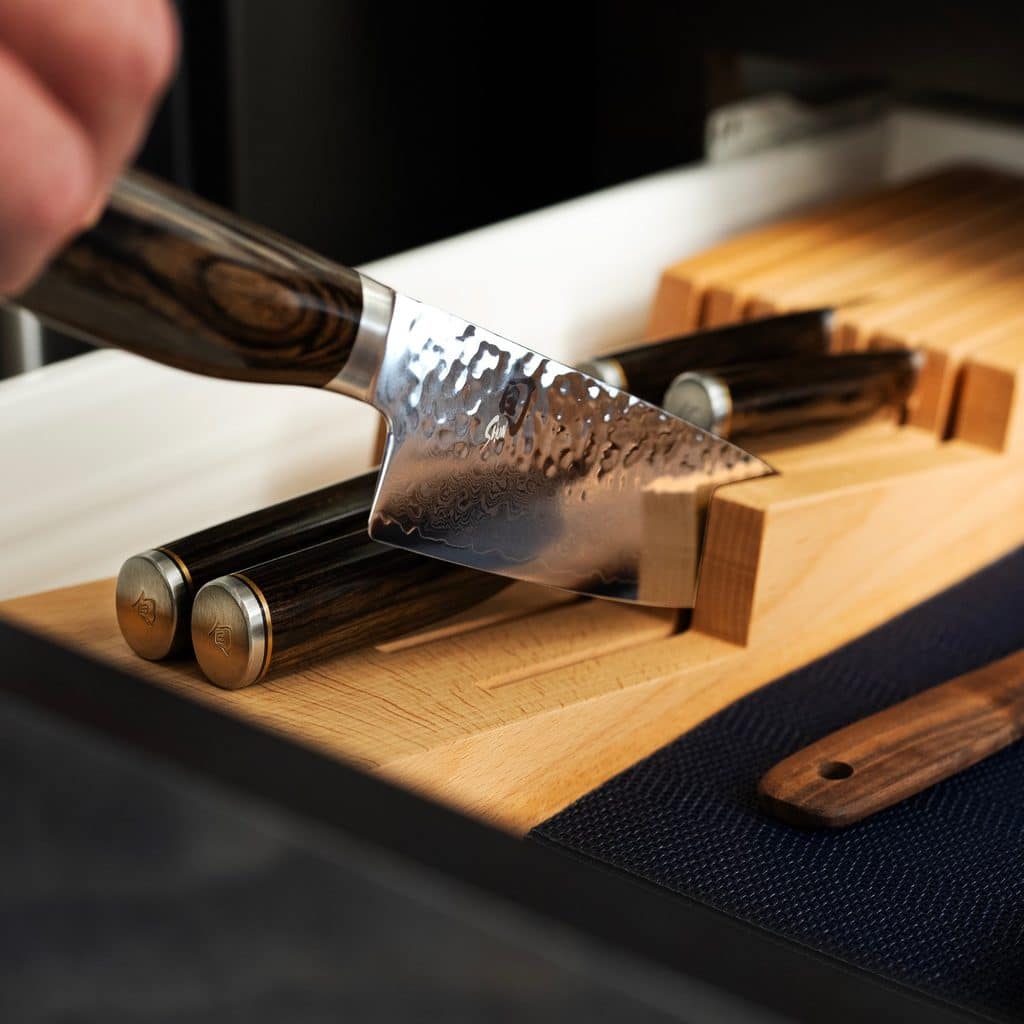
3. Shun (Japanese Precision)
Shun brings traditional Japanese cutlery design to specialized meat prep tasks.
- The Go-To Model: Shun Classic Hankotsu or Meat Cleaver.
- Why It Works: Featuring ultra-hard VG-MAX steel, Shun knives slice through raw muscle fibers with minimal resistance.
- The Catch: The hard, thin edge requires careful handling. Striking a hard beef femur can chip the blade edge.
Performance Evaluation: How They Compare in the Field
Putting these tools to work reveals the clear practical trade-offs between cheap and premium options.
Scenario A: Slicing 15 Smoked Beef Briskets
- Premium (High HRC): Glides through brisket bark and render fat without tearing. It stays razor-sharp from the first brisket to the last without needing a single touch-up.
- Budget (Low HRC): Performs exceptionally well initially, but requires 3 to 4 quick passes on a honing rod midway through the session to maintain clean, uniform slices.
- Budget (Soft Steel): Hits a joint pin or heavy bone? The steel edge rolls slightly rather than breaking. A simple honing steel realigns it on site in seconds.
- Premium (Hard Steel): Hits a joint pin or heavy bone? Hardened steel carries a high risk of micro-chipping, requiring a full sharpening session on a whetstone later to grind out the defect.
Granton Edges vs. Smooth Blades: The Physics of Friction
Ever wonder why some butcher knives feature hollowed-out ovals along the blade edge? That’s a Granton edge (or fluted edge), and it isn’t just for show.
When carving through dense beef brisket or raw pork belly, wet muscle tissue creates a natural vacuum against smooth steel, pulling the blade down and sticking.
- The Air Pocket Effect: Granton dimples trap small pockets of air between the steel and the meat, drastically reducing surface drag.
- Budget vs. Premium Flutes: Cheap Granton knives stamped into soft steel can wear down after repeated sharpenings. Conversely, premium forged fluted blades maintain these air pockets for years, giving you effortless, paper-thin slices without tearing precious brisket bark.
The Micro-Serrated Secret: High-Grit Polish vs. Toothiness
Most home cooks believe a knife edge should be polished like a mirror, but real meat prep tells a different story:
- High-Grit Mirror Edges (6000+ grit finish): Excel at shaving soft sashimi, but they often skitter off slippery, tough silver skin.
- Toothy Micro-Serrated Edges (800 to 1200 grit): Perform far better for butchery. That slight microscopic toothiness saw-slices through stubborn fat caps, elastic connective tissue, and dense muscle fibers with far less downward pressure.
Budget steels naturally hold this toothy bite well with simple steeling. Ultra-hard premium steels, on the other hand, often get over-polished by enthusiasts, making them surprisingly prone to slipping on wet fat.
Handle Metallurgy: Full Tang vs. Rat-Tail Construction
What lies hidden inside the handle dictates whether your knife survives a heavy drop on a concrete floor or a tough joint twist:
- Full-Tang Construction (Premium): A single piece of steel extends continuously from blade tip to handle butt, sandwiched between riveted handle scales. This provides unmatched structural balance and prevents snaps under extreme levering.
- Rat-Tail / Push-Tang (Budget): Hides a thin needle of steel inside molded plastic.
While lightweight plastic handles like Victorinox’s Fibrox use chemically bonded encapsulation to remain sturdy, cheaper off-brand rat-tail blades can snap right at the bolster when twisting around tough joint sockets.
Tallow, Blood, and Acids: Preventing Blade Corrosion
Meat processing subjects steel to an aggressive chemical cocktail of salt, acidic marinades, moisture, and warm animal tallow. Stainless steel isn’t entirely stain-proof, and different metals react uniquely to moisture:
- High-Carbon Premium Steel: Highly susceptible to pitting corrosion and rust spot formation if left sitting in meat juices. Requires instant washing, thorough drying, and a light wipe of food-grade mineral oil after every prep session to build a protective patina rather than destructive rust.
- Chromium-Rich Stainless Alloys (Commercial Budget): Built to withstand harsh chemical sanitizers, soapy dish pits, and damp storage rooms without rusting, making them virtually indestructible for rugged field use.
Blade Profile Mechanics: Cimiter vs. Bullnose vs. Breaking Knife
Not all curved butcher knives serve the same operational task on the prep table. Choosing the right blade geometry prevents tearing meat and saves your wrist over a long session:
- Cimiter Knife (10–14 inches): Features a long, dramatic sweep designed for slicing giant boneless sub-primals into steaks with one continuous draw-cut.
- Breaking Knife (8–10 inches): Sports a slightly stiffer spine and pronounced tip curve, making it ideal for breaking down hanging quarters and maneuvering around cartilage.
- Bullnose Butcher Knife: Uses a heavy-fronted design that puts maximum weight right at the tip, giving you momentum to chop through dense fat layers with minimal hand fatigue.
Buyers’ Guide: Which Tier Should You Buy?
Choose a Budget Brand If:
- You process wild game in field conditions or handle high volumes of raw meat.
- You want low-maintenance tools that store easily in a gear bag without delicate care needs.
- Non-slip textured safety grips are a top priority when handling slick fat and moisture.
- Top Recommendation: Victorinox Fibrox Pro 8″ or 10″ Breaking Knife
Choose a Premium Brand If:
- You are a home cook or pitmaster focused on presentation, aesthetics, and precision.
- You primarily trim boneless cuts like brisket, pork loin, and ribeye roasts.
- You enjoy maintaining fine cutlery on high-grit whetstones.
- Top Recommendation: Dalstrong Shogun Series / Wüsthof Classic
The Verdict: What Is the Best Butcher Knife Brand Overall?
Price doesn’t always equal performance on the prep table. While premium butcher knives offer superior edge retention, exceptional balance, and refined craft quality, they aren’t strictly necessary for efficient meat processing.
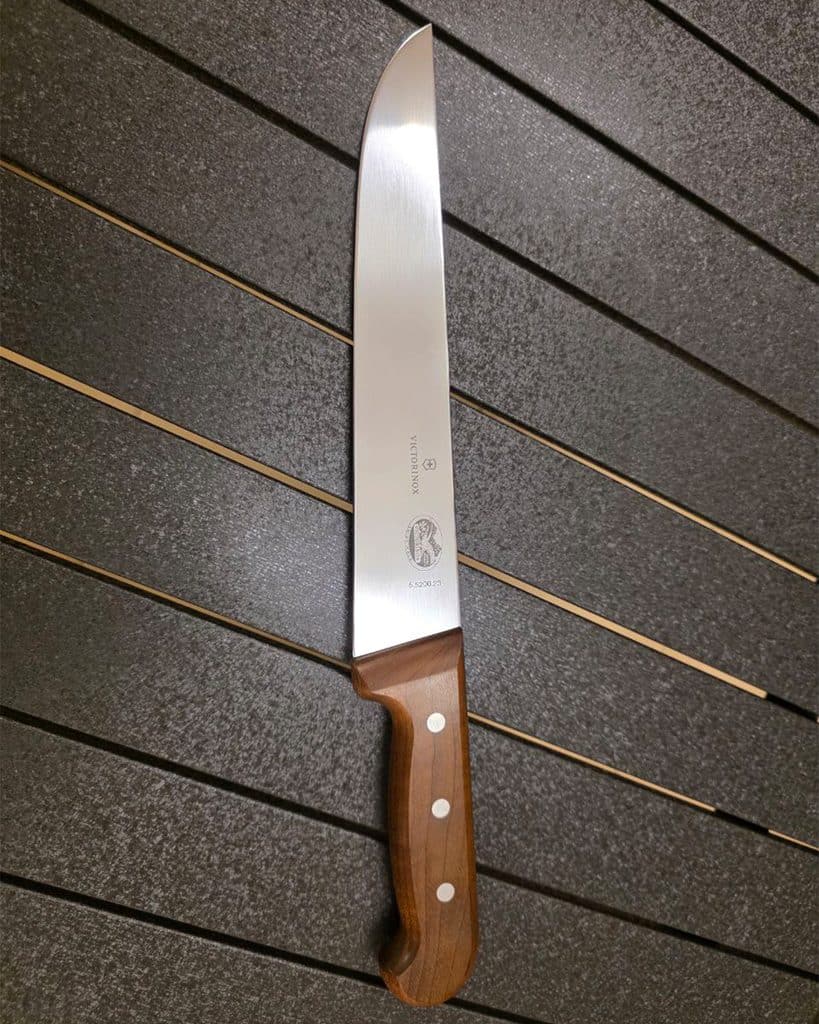
For pure utility, safety, and performance, Victorinox takes the top spot as the best overall brand for most users. It delivers exceptional grip, reliable steel geometry, and easy edge maintenance at an accessible price point.
If you enjoy fine craftsmanship, balanced heft, and long-lasting sharpness for boneless prep, investing in a premium brand like Dalstrong or Wüsthof is worth every penny.
Match the tool to your actual workflow, keep your blades sharp, and let the steel do the work.
Frequently Asked Questions (FAQs)
1. Is a forged butcher knife always better than a stamped one?
No. Forged knives offer superior balance and structural weight, but stamped knives are lighter, more flexible, and far less prone to chipping when making accidental contact with bone.
2. Why do professional butchers prefer commercial plastic handles?
Textured plastic handles (like Victorinox Fibrox or Dexter Sani-Safe) maintain a secure, slip-resistant grip even when wet or coated in tallow. They are easy to sanitize and meet strict commercial health standards.
3. What blade length should I start with?
An 8-inch to 10-inch blade is the sweet spot for most home cooks and pitmasters. It provides enough length for long, single-pass slices through large cuts without feeling unwieldy.
Featured image credit: Zakhar Vozhdaienko
