
Traditional pitmasters will swear on their grandmother’s cast-iron skillet that true barbecue requires suffering.
They insist that if you haven’t stood over a burning offset smoker at 3:00 AM in a robe and work boots, freezing your toes off while adjusting a baffle valve by a quarter-inch, you aren’t actually cooking – you’re just warming meat.
To those purists, I say: enjoy the sleep deprivation.
Some of us love smoky, fall-off-the-bone brisket, but we also thoroughly enjoy eight hours of uninterrupted sleep.
Enter the Pit Boss 42-Inch Wi-Fi Smoker, a vertical cabinet unit designed specifically for people who believe patience is a virtue best monitored from a smartphone on the couch.
But does automated convenience sacrifice authentic smoke flavor? I put this unit through weeks of rigorous testing to see if it truly earns the title of a lazy smoker’s dream or if it’s just another over-engineered piece of lawn decor.
At-a-Glance Specifications
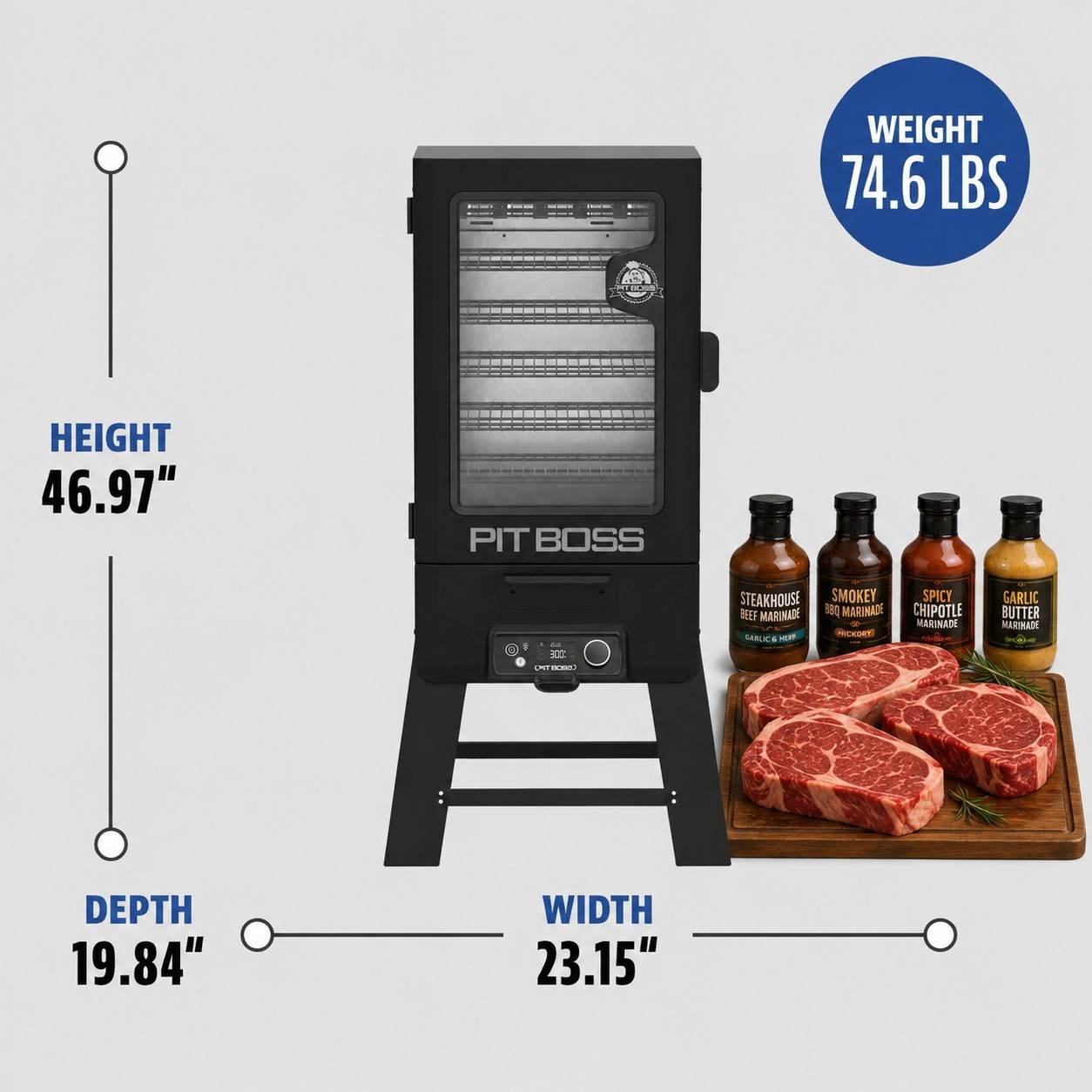
- Cooking Space: 1,520 sq. in. across 5 adjustable racks
- Hopper Capacity: 60+ lbs of wood pellets
- Temperature Range: 150°F – 420°F
- Connectivity: Wi-Fi and Bluetooth (Smoke IT App)
- Control System: PID Controller with digital readout
- Probes Included: 2 stainless steel meat probes
Unboxing, Build Quality, and Setup
Unboxing this monster feels like opening a metal gun safe. The shipping crate weighs a solid 130 pounds, so invite a friend over – preferably one you can bribe with the promise of pulled pork later.
Building it isn’t overly complicated, taking roughly 45 to 60 minutes. The assembly instructions are clear, though you’ll want your own socket set rather than relying on the flimsy stamped wrenches provided in the box.
- Double-Walled Insulation: Keeps heat locked inside, ensuring consistent internal temps even on breezy or cooler days.
- Heavy-Gauge Steel Cabinet: Feels solid, sturdy, and built to survive years on a patio.
- Latch Mechanism: Features a heavy-duty adjustable door latch that creates a tight seal against the high-temp gasket.
- Massive Glass Door: Lets you monitor the bark development without opening the door and dumping precious heat.
The casters are functional on smooth concrete, but rolling this top-heavy vertical cabinet across uneven brick pavers or lawn grass requires caution. Wide rubber wheels would have been a welcome upgrade.
Key Features and Technology Deep Dive
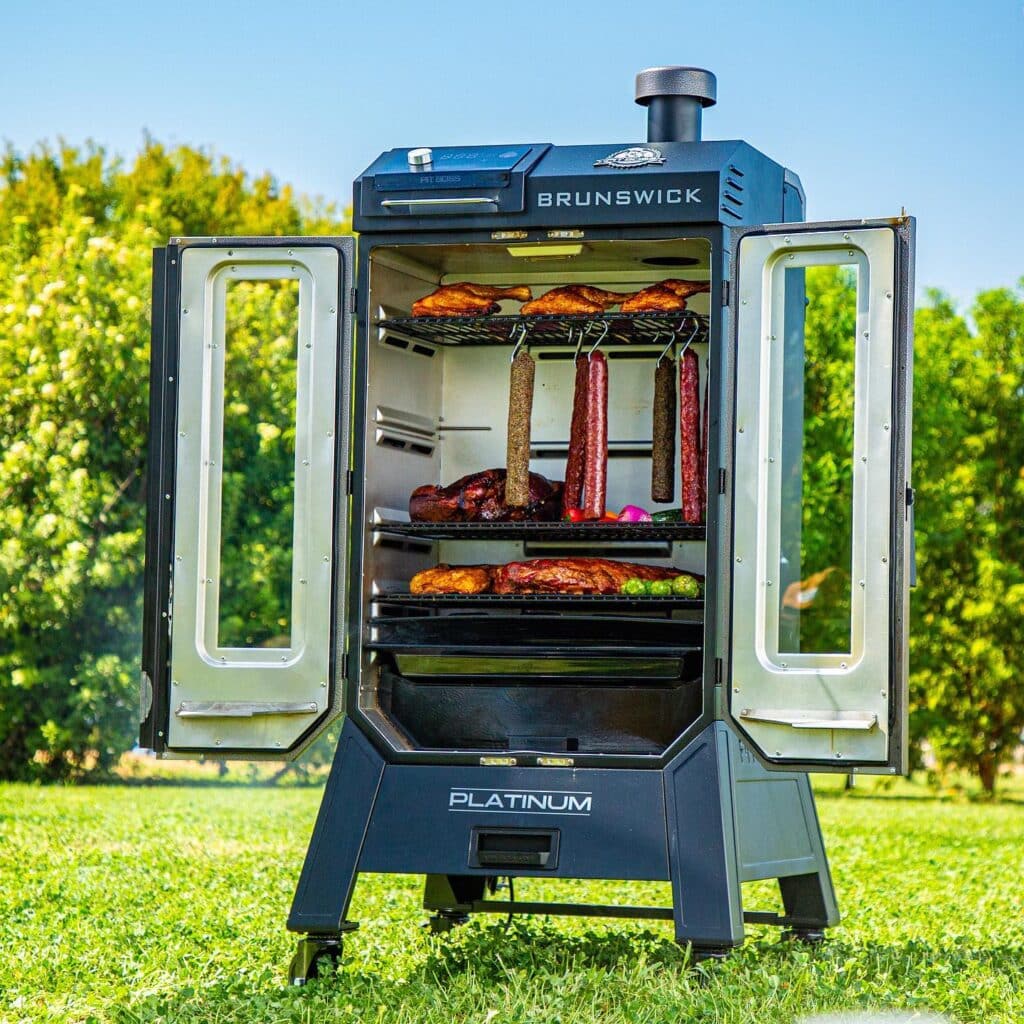
Horizontal barrel smokers look cool, but vertical cabinet designs are vastly superior for spatial efficiency. The Pit Boss 42-Inch Wi-Fi Smoker occupies a modest 28 x 28-inch footprint on your deck while offering a massive 1,520 square inches of cooking space.
You can easily rack five full slabs of ribs, four pork shoulders, or multiple briskets simultaneously without crowding the chamber. Heat naturally rises, making vertical designs inherently efficient at maintaining uniform cabinet temperatures.
The brain of this unit is its Pro-Series PID controller. Unlike old-school manual dials that swing wildly by 30°F, this digital controller constantly adjusts the auger speed and fan output. During testing, the internal cabinet temperature held steady within ±5°F of the set point.
Most pellet grills feature an 18 to 20-pound hopper, requiring refills halfway through an overnight brisket cook. Pit Boss loaded this model with a massive 60-plus pound hopper.
Filled with hard oak or hickory pellets, this unit can run at 225°F for up to 40 hours continuous cook time without a refill. That is the definition of true set-and-forget convenience.
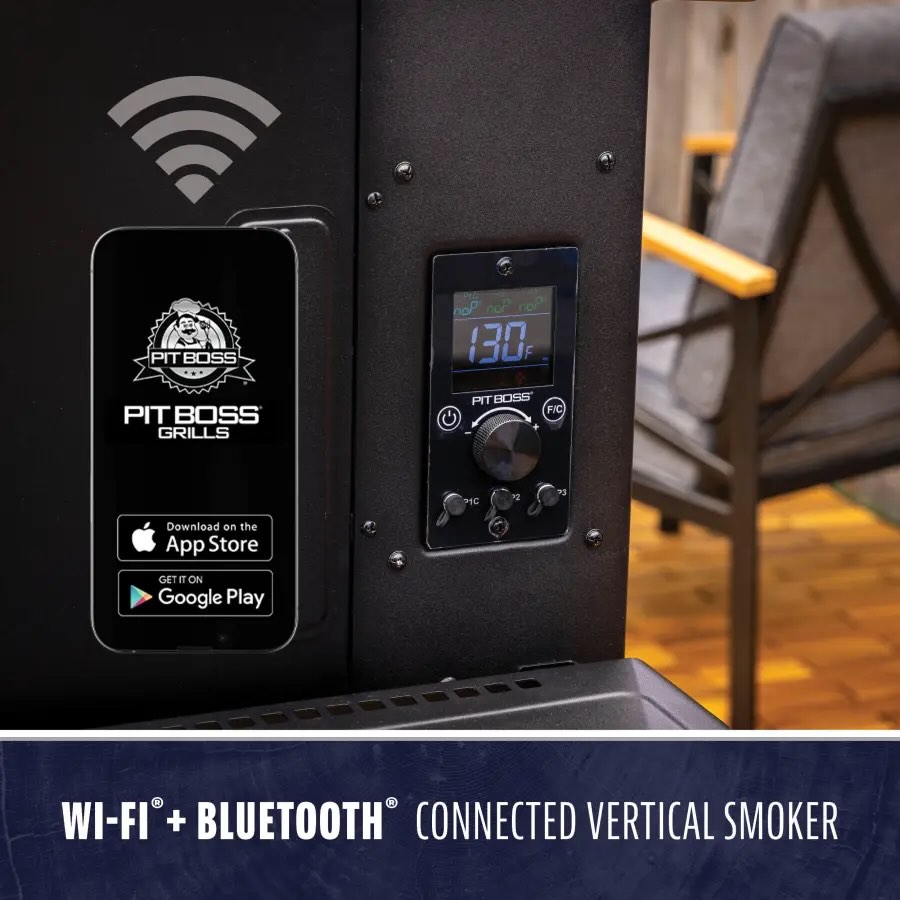
Pairing the smoker with the Pit Boss Smoke IT App over 2.4GHz Wi-Fi took under three minutes. The app gives you total remote control to:
- Adjust cooking chamber temperatures on the fly.
- Track probe temperatures in real-time with visual graphs.
- Set target internal temp alerts to avoid overcooking meat.
- Trigger a safe shut-down cycle directly from your phone.
Real-World Cooking Tests
To truly test the hands-off claim, I loaded the hopper with a competition blend of hickory and apple wood pellets, seasoned a 10-pound pork shoulder, and set the temp to 225°F at 11:00 PM.
I slept through the night without checking the yard once. Waking up at 7:00 AM, the app confirmed the cabinet held a rock-solid 225°F all night, and the meat probe read 165°F – right in the middle of the stall.
I wrapped the pork butt in butcher paper, put it back on the rack, bumped the temp to 250°F from my phone while drinking coffee, and let it ride.
At 1:00 PM, the probe slid into the meat like soft butter at an internal temperature of 203°F. The pork shoulder had a deep mahogany bark, a visible pink smoke ring, and pulled apart with zero resistance.
Pellet vertical smokers excel at low-and-slow, but how do they handle higher temps? I adjusted the grate levels and set the unit to 375°F for a batch of dry-rubbed chicken wings.
- Warm-up Time: Reached 375°F from cold start in 18 minutes.
- Skin Texture: Crisp and render-free without getting rubbery.
- Smoke Profile: Lighter than low-temp smoking, but still distinct and noticeable.
Pros, Cons, and Usability
- Unbeatable Fuel Capacity: The 60-lb hopper eliminates middle-of-the-night pellet runs forever.
- Massive Cooking Volume: Five adjustable shelves make cooking for massive tailgate parties effortless.
- App Reliability: Wi-Fi connectivity remained stable throughout testing with no dropped signals.
- Glass Viewport: Allows visual inspections without losing heat or smoke density.
- Hopper Cleanout Issues: Changing pellet flavors requires using a small rear hatch, which can be awkward.
- Glass Maintenance: The viewing window gets smoky fast. You must wipe it down after every cook with water and vinegar, or it bakes opaque.
- No Direct Sear Zone: This is strictly a vertical smoker/roaster; don’t expect to sear steaks at 700°F.
The Pellet Burn-Rate Breakdown: Cost Per Cook
While a 60-pound hopper sounds luxurious, calculating your fuel economy determines what this smoker actually costs to run every weekend:
- Low-and-Slow (225°F): Burns roughly 1 to 1.5 pounds of pellets per hour.
- High-Temp Cranking (375°F): Consumption spikes to nearly 3 pounds per hour for tasks like crisping chicken wings.
- The Real-World Math: An all-night 12-hour brisket cook consumes about 15 pounds of fuel, translating to roughly $10 to $12 in wood pellets.
Compared to traditional offset smokers that devour expensive hardwood split logs, this vertical pellet design is shockingly budget-friendly for high-frequency cooks.
Modding Your Smoker: High-Value Aftermarket Upgrades
Out-of-the-box performance is great, but a few simple aftermarket modifications transform this unit into a competition-ready rig:
- Lavalock Nomex Felt Gasket: Install along the door perimeter to eliminate minor smoke leaks and dramatically boost thermal efficiency.
- Heavy-Duty Aluminum Foil: Line the bottom drip tray to save massive cleanup hassle down the road.
- A-MAZE-N Smoke Tube: Fill with smoldering hardwood pellets and place on the floor plate to add a continuous billow of extra smoke, solving the typical pellet-smoker light-smoke complaint.
Mastering Thermal Drift: Microclimates Inside the Cabinet
Vertical smokers naturally exhibit vertical temperature gradients, and understanding these microclimates is key to perfect timing.
Heat rises, meaning the top two racks run roughly 10°F to 15°F warmer than the lower shelves directly above the heat deflector plate.
Use this natural airflow pattern to your advantage during multi-meat cookouts:
- Upper Grates: Position heavy, forgiving cuts like pork shoulders and beef briskets here where higher heat accelerates render times.
- Middle-to-Lower Grates: Place delicate items like pork ribs, salmon, or jalapeño poppers on these cooler racks to prevent them from drying out.
Overcoming the Wi-Fi Drop: Offline & Fallback Hacks
Nothing ruins an overnight cook faster than losing Wi-Fi connectivity halfway through the stall.
The Smoke IT app relies on a stable 2.4GHz Wi-Fi band, which struggles to penetrate brick exterior walls or heavy glass patio doors.
Keep your connection bulletproof with these steps:
- Install an Outdoor Wi-Fi Extender: A simple, inexpensive range extender near your deck fixes weak signals instantly.
- Rely on Bluetooth Fallback: If the network fails entirely, the controller automatically falls back to local Bluetooth pairing, letting you monitor temperatures from your phone within 30 feet of the patio.
Cold Weather Operations: Smoking in Sub-Zero Temps
Cooking in freezing winter weather forces most pellet grills to burn through fuel at alarming rates, but this cabinet’s double-walled insulation keeps internal heat remarkably well-contained.
- Fuel Adjustment: Expect pellet consumption to increase by roughly 25% in sub-zero temps to offset the ambient cold.
- Shield from Wind: Position the unit out of direct wind gusts using a patio windscreen to maintain rock-solid temperature stability.
- Keep the Door Shut: Avoid opening the glass viewing door unnecessarily, as dumping the heat envelope forces the PID controller into several minutes of aggressive auger feeding to recover.
Maintenance and Cleaning Routine
Keeping a vertical smoker running smoothly requires minimal effort if you stay proactive. Follow this simple checklist after every major cook session:
- Run the automatic shutdown cycle to safely burn off leftover pellets in the firepot.
- Scrape warm grate surfaces with a brass-bristle brush.
- Empty the water pan and replace the aluminum foil liner in the grease tray.
- Vacuum out cold ash from the firepot every 2-3 cooks using an ash vacuum to prevent ignition clogs.
- Wipe down the interior glass door using a damp microfiber cloth while the frame is warm.
Smoker Comparison: How It Stacks Up
| Feature / Model | Pit Boss 42″ Vertical | Traeger Pro 780 | Masterbuilt 40″ Digital |
| Design Type | Vertical Cabinet | Horizontal Barrel | Vertical Cabinet |
| Cooking Area | 1,520 sq. in. | 780 sq. in. | 971 sq. in. |
| Fuel Source | Wood Pellets | Wood Pellets | Electric / Wood Chips |
| Hopper Capacity | 60+ lbs | 18 lbs | N/A (Chip Tray) |
| Smart Control | Wi-Fi / Bluetooth | Wi-Fi (WiFIRE) | Bluetooth |
| Best For | Volume & Convenience | Versatility & Searing | Budget Smoking |
Pellet Hopper Maintenance: Preventing Jammed Augers & Flameouts
A massive 60-pound hopper is a double-edged sword: if pellets sit in the bin during humid weather, they absorb ambient air moisture, swell up, and dissolve into a sticky sawdust paste.
This soggy mass quickly hardens inside the auger tube, causing disastrous auger jams, motor burnouts, or dangerous flameouts during your next cook.
To prevent expensive repairs and safeguard your auger drive assembly:
- Empty the hopper: Run the bin empty if storing the unit unused for more than two weeks.
- Upgrade storage: Store unused wood pellets in airtight 5-gallon buckets with gamma seal lids rather than flimsy paper bags.
Safety Precautions: Managing Flare-Ups & Deep Grease Fires
While vertical smokers operate well below high-heat searing temps, accumulated pork fat and rendered beef drippings pose a serious fire hazard near the lower deflector plate. Never throw water onto a smoker fire, as it causes violent steam explosions and spreads hot grease.
If a raging bottom-shelf grease fire breaks out, follow these immediate steps:
- Keep the main cabinet door closed to starve the flames of oxygen.
- Hit the digital emergency power button immediately.
- Unplug the unit directly from the wall outlet.
- Replace aluminum foil on the slanted drip pan after every long session as a primary preventive defense.
Flavor Customization: Smoke Profiles Beyond Standard Hardwoods
Pellet vertical units burn fuel so efficiently that subtle wood notes can sometimes get lost in heavy meat cuts. You can easily customize your flavor delivery system by strategic pellet blending:
- Beef Brisket Blend: Mix 70% dense oak for long-lasting heat with 30% bold mesquite to build a dark, traditional smoke ring.
- Poultry & Pork Blend: Layer sweet applewood or cherry pellets into the hopper to create a rich mahogany color without bitter creosote.
Experimenting with custom pellet ratios lets you fine-tune your barbecue profile, proving automated temperature precision doesn’t have to yield bland flavor.
Portability and Storage: Protecting Smart Electronics Outdoors
Weighing over 130 pounds, this vertical cabinet requires careful handling. Roll the unit slowly over flat surfaces, as the high center of gravity makes top-heavy smokers prone to tipping on soft lawns or steep deck ramps.
To protect the digital PID controller board and internal wiring from harsh weather:
- Allow the smoker to cool completely after every session.
- Perform a quick surface wipe-down to remove grease and residue.
- Fit a custom heavy-duty UV-resistant cover over the cabinet to shield the LCD screen from sunlight and rain.
Eco-Friendly Smoking: Sustainability & Ash Management
Unlike traditional charcoal units that generate piles of chemical-heavy ash, hardwood pellets produce minimal natural ash residue during combustion – leaving less than two cups of fine ash per overnight cook.
Instead of tossing cold ash into the trash, repurpose it around your yard:
- Ensure the burn pot is 100% cold and inert before using an ash vacuum.
- Sprinkle the residue into garden beds or compost piles as an excellent organic soil amendment rich in potassium and calcium carbonate.
Top 3 Best Alternatives
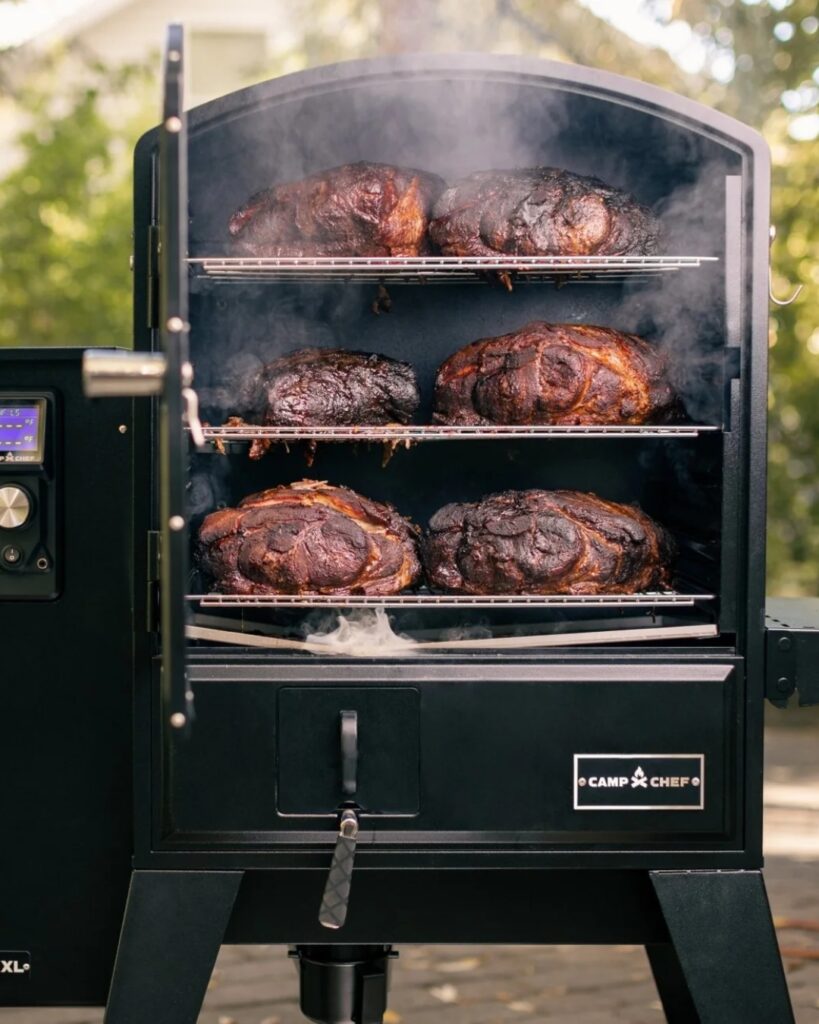
1. Best Direct Upgrade (Vertical Pellet): Camp Chef XXL Pro Wi-Fi Vertical Smoker
If you love the vertical cabinet style, massive cooking capacity, and Wi-Fi convenience of the Pit Boss, but want heavier, authentic smoke flavor, this is the premier alternative.
- Why it’s better: Features a Smoke Box that lets you add real wood chunks or charcoal on top of the pellet fire, giving you a significantly deeper smoke flavor profile.
- Key Specs: ~1,228 sq. in. cooking area, Wi-Fi PID controller, 2.4GHz app control, four smoking racks, and three jerky racks.
- Best For: Pitmasters who want set-and-forget pellet tech without losing bold wood smoke flavor.
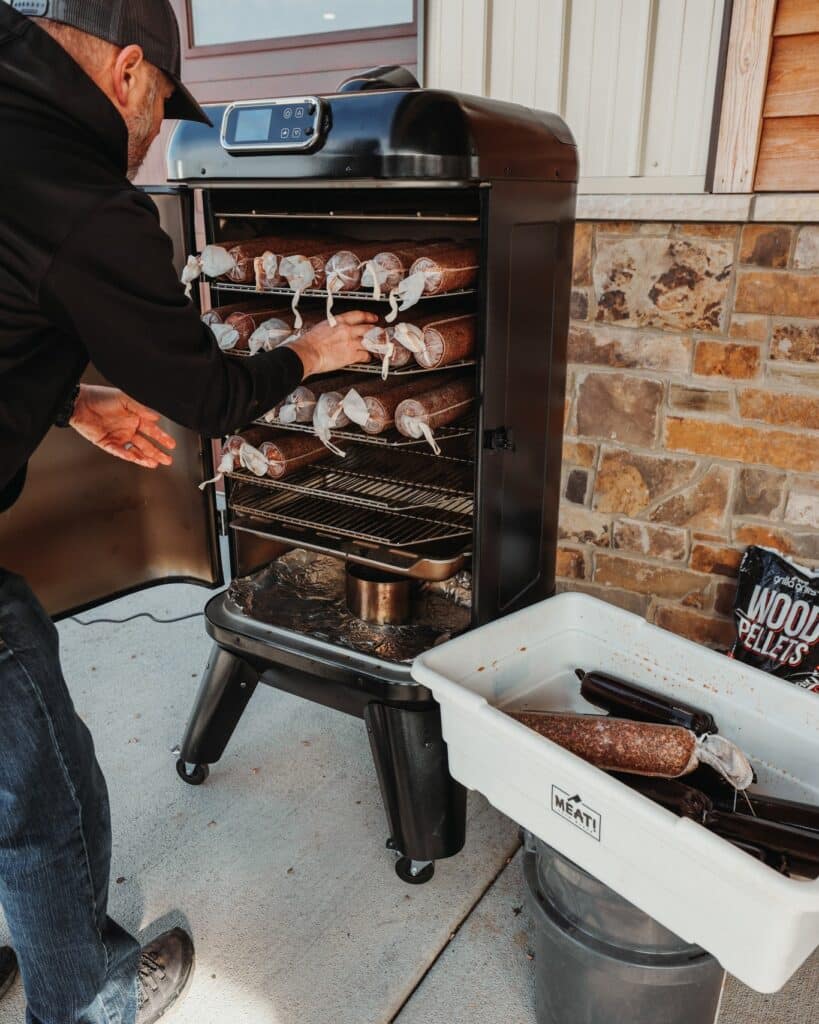
2. Best Heavy-Duty / Heavy Smoke Option: Grilla Grills Mammoth Vertical Pellet Smoker
If you want better heat retention, heavy build quality, and extreme insulation, the Grilla Mammoth is one of the highest-rated vertical smokers on the market.
- Why it’s better: Uses double-walled thermal insulation and heavy-gauge construction that holds temps effortlessly even in freezing winter conditions. It also holds a massive 40-lb pellet hopper.
- Key Specs: 1,690+ sq. in. cooking area across 5 racks, double-wall insulation, heavy-duty door latch, and Wi-Fi control.
- Best For: Year-round smokers living in colder climates who prioritize thermal efficiency and rock-solid construction.
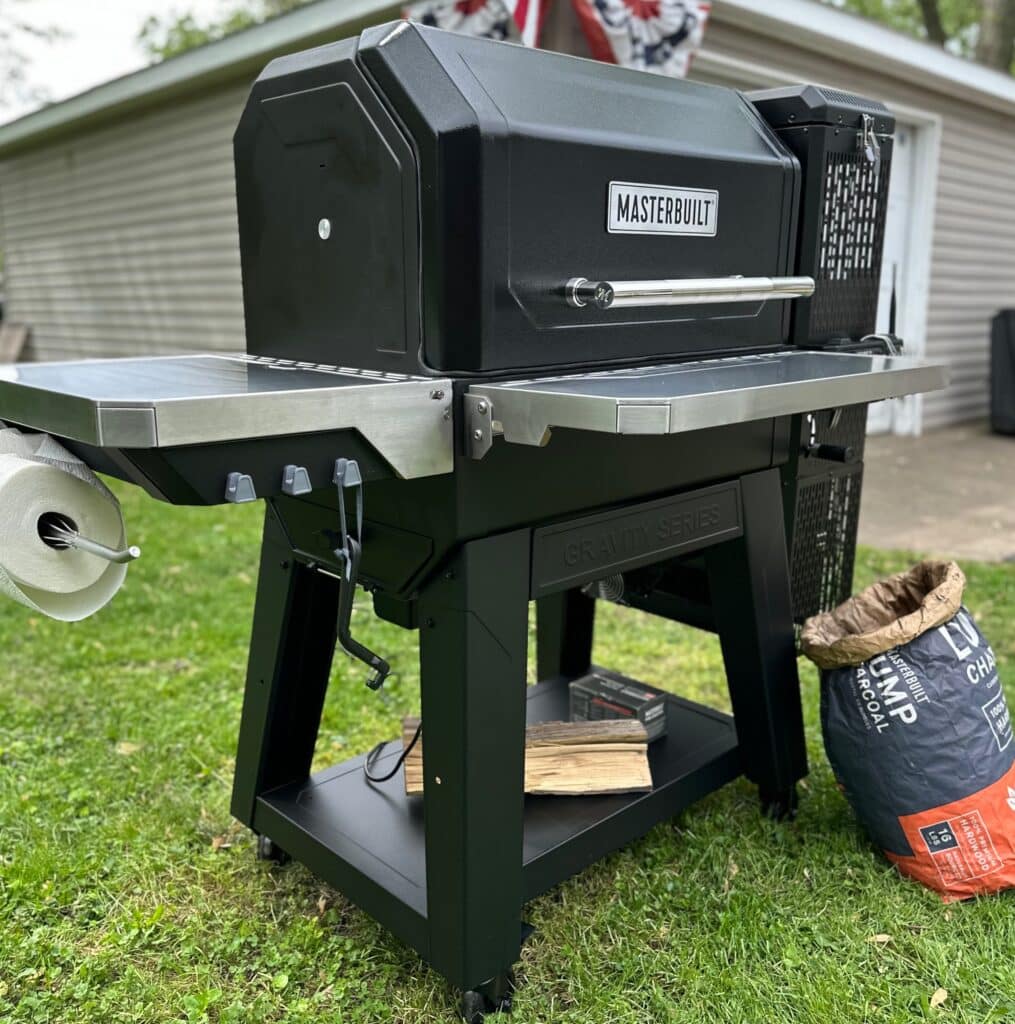
3. Best Flavor & Temperature Range Alternative: Masterbuilt Gravity Series 1050
If you want the set-and-forget Wi-Fi app convenience of a pellet smoker, but want real charcoal flavor and the ability to high-heat sear steaks at 700°F, the Masterbuilt Gravity Series is a game-changer.
- Why it’s better: Instead of wood pellets, it uses a gravity-fed hopper loaded with real lump charcoal or briquettes. You get true charcoal flavor, plus it can go from low-and-slow 225°F smoking all the way up to 700°F high-heat searing.
- Key Specs: 1,050 sq. in. cooking area, digital PID fan control with Wi-Fi/Bluetooth app, 10-hour charcoal hopper runtime.
- Best For: Backyard cooks who refuse to compromise on charcoal flavor and want a single unit that can smoke briskets AND sear steaks.
Final Verdict
The Pit Boss 42-Inch Wi-Fi Smoker earns its title as a lazy smoker’s dream. It strips away the frustrating variables of heat management without stripping away the authentic flavor of wood smoke.
The vast interior capacity, rock-solid PID temperature control, and immense 60-pound hopper make low-and-slow barbecue accessible to anyone, regardless of experience level.
Who Should Buy This?
- Anyone who wants competition-quality smoke flavor without sacrificing sleep or free time.
- Large families or hosts who regularly cook massive batches of food at once.
- Tech-loving backyard cooks who appreciate monitoring temperatures remotely.
Who Should Skip It?
- Cooks who want a single unit that can high-heat sear steaks as well as smoke.
- Anyone with limited patio space or small storage areas.
Final Score: 9.1 / 10
Frequently Asked Questions
How long does a 60-lb hopper of pellets last?
At standard low-and-slow smoking temperatures (225°F), the smoker burns roughly 1 to 1.5 pounds of pellets per hour. A fully loaded hopper provides up to 40 to 60 hours of continuous cook time, allowing you to run multiple overnight sessions without refilling.
Can you grill or high-heat sear steaks on this vertical smoker?
No. This unit tops out at 420°F and is engineered specifically for smoking, roasting, and baking. It lacks a direct flame broiler, so if high-heat searing at 700°F is a requirement, a traditional horizontal pellet grill or charcoal unit is a better fit.
Does the glass door stay clean during long cooks?
Smoke, grease, and moisture build up on the viewing window during extended sessions. To keep it clear, wipe the interior glass with a damp microfiber cloth or a water-and-vinegar solution while the frame is still warm right after cooking.
What happens if my Wi-Fi signal drops during an overnight cook?
The smoker’s physical PID controller continues to run your set temperature independently of internet connectivity. Additionally, the control panel automatically switches to local Bluetooth pairing so you can still check probe temperatures from your phone near the patio.
How do you clean out ash from the firepot?
Allow the unit to cool completely after running the automatic shutdown cycle. Remove the bottom water pan and grates, then use an ash vacuum to pull cold ash out of the burn pot every 2 to 3 cooks to prevent airflow clogs.
Can I use this smoker in cold winter weather?
Yes. Thanks to its double-walled cabinet insulation, it maintains internal chamber temperatures reliably in sub-zero weather. However, expect pellet consumption to increase by roughly 25% to offset extreme ambient cold.
Featured image credit: ChatGPT
