

A backyard grill should do more than turn burgers brown. At least, that’s what the people selling $3,000-plus outdoor cooking appliances would like us to believe.
But here’s the uncomfortable question: how many grills does one backyard actually need?
A smoker for brisket. A gas grill for burgers.
Something screaming hot for steaks. Maybe a pizza oven because apparently we have all decided that pizza belongs outside now.
Before long, the backyard looks less like a cooking area and more like a small commercial kitchen.
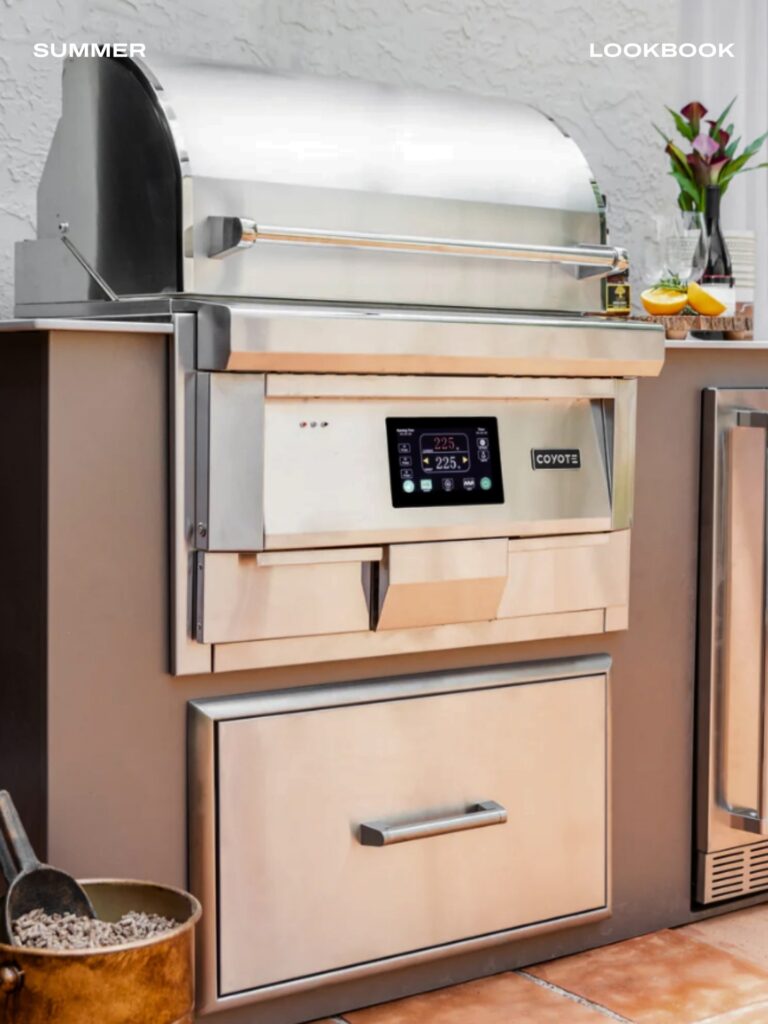
The Coyote 36-Inch Pellet Grill takes a different approach. Instead of asking you to choose between smoking and grilling, it attempts to cover both ends of the barbecue spectrum—and quite a bit in between.
With a 175°F-to-700°F temperature range, 304 stainless-steel construction, digital touch controls, multiple temperature probes, and a Versa-Rack system for multiple cooking levels, this is not your basic pellet smoker with a digital thermostat slapped on the front.
The big question is whether all that versatility translates into better barbecue and a better cooking experience, or simply a very expensive way to cook a hamburger.
After looking at what this grill brings to the backyard, here’s the verdict: the Coyote 36-Inch Pellet Grill has a legitimate claim to being the Swiss Army knife of outdoor cooking – but its size, price, and complexity mean it isn’t for everyone.
Coyote 36-Inch Pellet Grill at a Glance
Before we get into brisket, steaks, smoke, and the inevitable argument about whether charcoal tastes better, here’s what you’re dealing with.
- Model: Coyote 36-Inch Pellet Grill
- Construction: 304 stainless steel
- Temperature range: 175°F–700°F
- Pellet hopper: Up to 15 pounds on the C1P36 specification
- Controls: Digital touch control
- Temperature monitoring: Three food probes
- Cooking system: Versa-Rack multiple-level cooking system
- Grates: Laser-cut grates
- Lighting: Interior grill lighting
- Hood: Double-walled, gasketed canopy with spring assist
- Power: 120V electrical ignition
- Cooking configurations: Built-in and freestanding versions have been offered
The newer Coyote pellet-grill lineup lists the 36-inch C2P36 and continues to advertise the 175°F–700°F range, 304 stainless-steel construction, three temperature probes, Versa-Rack, laser-cut grates, and digital touch controls.
That last point matters because buyers should pay attention to the exact model generation when comparing specifications, reviews, and pricing.
What Makes the Coyote 36-Inch a “Swiss Army Knife”?
The best thing about a Swiss Army knife isn’t that it has a tiny screwdriver.
It’s that you don’t have to carry five different tools.
That’s the philosophy behind this Coyote.
Traditional pellet grills earned their reputation as excellent smokers.
Set a temperature, feed the hopper with wood pellets, and let the grill manage the fire. It’s a remarkably convenient way to cook ribs or a pork shoulder without spending half the day adjusting vents.
The Coyote pushes the concept further.
More Than a Smoker
The grill is designed to operate from 175°F for low-and-slow cooking all the way up to 700°F for high-temperature cooking.
That’s a substantial temperature window.
At the lower end, you’re in brisket, ribs, pulled pork, and smoked chicken territory.
Move upward and you’re cooking steaks, burgers, chops, vegetables, and other foods where a little more heat – and a lot less patience – is useful.
That’s important because one of the biggest weaknesses of some pellet grills is that they’re fantastic smokers but merely adequate grills.
The Coyote’s design is clearly intended to blur that line.
One Appliance, Several Jobs
Think about a typical weekend cookout.
Saturday morning: brisket.
Saturday afternoon: chicken.
Saturday evening: steaks.
Sunday: burgers because nobody can agree on anything.
A versatile pellet grill can handle that progression without requiring you to move food between different appliances.
That’s where the Coyote’s versatility starts making practical sense.
Its Versa-Rack system adds multiple cooking surfaces, while the manufacturer also includes dedicated smoke and sear grates in the C1P36 specification.
The result is less “specialist smoker” and more outdoor cooking workstation.
And that’s a useful distinction.
Design and Build Quality
The first thing you’ll notice about the Coyote isn’t the smoke.
It’s the stainless steel.
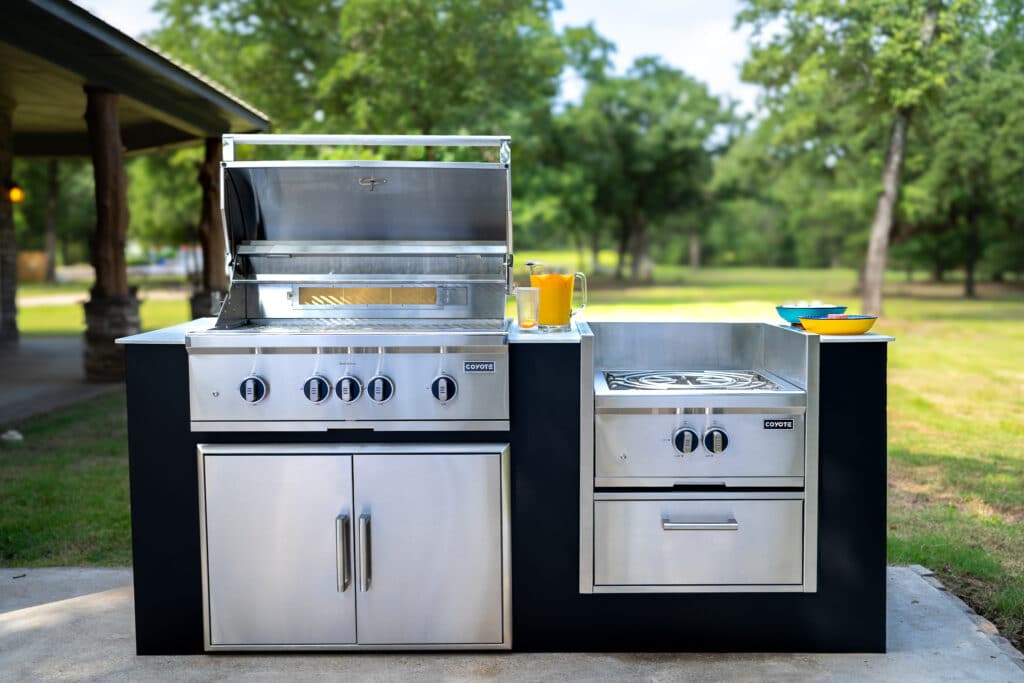
The 36-inch model is built around 304 stainless steel, both a premium-looking material and a sensible choice for an outdoor appliance that has to deal with heat, grease, humidity, and weather.
The design also has the polished, built-in-kitchen look that separates Coyote from the traditional barrel-shaped pellet smoker.
That’s a big deal if you’re designing an outdoor kitchen.
A giant black smoker can look perfectly at home next to a stack of firewood. It can look considerably less at home next to a stainless-steel refrigerator, stone countertops, and outdoor cabinetry.
The Coyote is clearly designed to belong in the latter environment.
The 36-Inch Cooking Space
Thirty-six inches is a lot of grill.
The overall dimensions of the C1P36 are approximately 36 inches wide, 31 inches high, and 27 inches deep, so this isn’t a grill you casually squeeze into the corner of a small patio.
But the size is also the point.
If you regularly cook for a crowd, the extra real estate becomes valuable. You can separate different foods, use different rack levels, and keep delicate foods away from the hottest areas.
For someone who cooks a brisket once a year for Thanksgiving and spends the rest of the year making two burgers at a time, the 36-inch format may be overkill.
For someone who treats Saturday barbecue like a minor sporting event, the extra space is much easier to justify.
Details That Matter
Small design choices can make or break a premium grill.
The Coyote includes a spring-assisted hood, double-walled canopy with a gasket, interior lighting, a built-in wind guard, and laser-cut cooking grates.
None of those features will make your brisket taste better by themselves.
But together, they contribute to something more important: a grill that feels designed for regular use rather than occasional backyard duty.
Cooking Performance: How Does It Actually Grill?
This is where the stainless steel stops mattering and the food starts doing the talking. A beautiful grill that produces mediocre barbecue is still a mediocre grill.
The Coyote’s strongest argument is its combination of low-temperature smoking and high-temperature cooking.
Low-and-Slow Smoking
Pellet grills are built for convenience.
Instead of tending a charcoal fire or managing a wood-burning smoker, you load the hopper, choose your target temperature, and let the grill’s automated system manage pellet delivery.
Coyote’s system uses a Smart Drop pellet feed, along with a dual-fan and auger setup designed to manage the fire and airflow.
For long cooks, that’s a major advantage.
Brisket doesn’t care how heroic you feel at 2 a.m. It just wants stable heat.
The ability to maintain a low cooking temperature while supplying wood-fired smoke is one of the fundamental reasons to buy a pellet grill in the first place.
And the Coyote gives you a particularly broad range to work with.
At 175°F, you can settle into traditional low-and-slow territory. At higher temperatures, you can roast or grill without changing appliances.

Grilling and Searing
Here’s where things get more interesting.
A common criticism of pellet grills is that they’re better at smoking than searing.
That’s understandable. Pellet grills use indirect heat and convection to do their thing. A traditional charcoal grill can throw intense radiant heat directly at a steak.
Coyote’s answer is a combination of high-temperature capability and a dedicated searing setup.
The current product information advertises temperatures up to 700°F, while the earlier C1P36 specification includes both smoke and sear grates.
That gives the Coyote a legitimate advantage over pellet grills that top out at more modest temperatures.
And it changes how you think about the appliance.
You aren’t necessarily buying a smoker that happens to grill.
You’re buying a pellet-fueled outdoor cooker designed to cover both jobs.
That’s a much more compelling proposition.
Roasting and Baking
The Coyote’s broad temperature range also makes it useful for roasting.
Chicken, turkey, vegetables, casseroles, and other oven-style foods can all benefit from the controlled environment of a large outdoor cooker.
The multiple cooking levels are particularly useful here. Instead of thinking only in terms of “grill surface,” think vertically.
You can cook different foods at different heights, move food away from direct heat, and use the grill more like an outdoor oven.
That versatility is exactly why the Swiss Army knife comparison works.
What About Flavor?
Pellet grills won’t produce exactly the same smoke profile as a traditional offset smoker. That’s not necessarily a criticism.
They’re designed around consistency and convenience, not maximum smoke intensity at all times.
Coyote’s Smart Drop system allows users to experiment with different wood-pellet flavors, which adds another layer of control over the finished food.
Want a stronger profile for beef?
Try a different pellet.
Cooking chicken?
Something lighter may make more sense.
It’s not magic. It’s simply another variable you can use to shape the cook.
Temperature Control and Smart Features
The modern pellet grill has one enormous advantage over the old-school smoker:
you don’t have to babysit it every five minutes.
Coyote’s digital touch controls let you set cooking temperatures electronically, while the grill includes three food temperature probes for monitoring what matters most – the food itself.
That last part is particularly useful.
A grill temperature tells you what the cooking environment is doing. A meat probe tells you what dinner is doing.
Those are not the same thing.
A brisket can look perfectly happy while its internal temperature is still miles away from where you want it.
Having multiple probes means you can monitor more than one piece of food or track different points during a larger cook.
Is It Truly “Set and Forget”?
Mostly – but don’t take that phrase too literally.
Pellet grills automate the fire. They don’t eliminate barbecue.
You’ll still need to:
- Choose the right pellets.
- Prep and season the food.
- Monitor long cooks.
- Clean the grill.
- Keep the pellet supply dry.
- Pay attention to weather and operating conditions.
Automation reduces the work. It doesn’t remove responsibility.
And honestly, that’s a good thing.
Part of the pleasure of barbecue is still standing outside with a cold drink, staring at a piece of meat as though it has personally offended you.
Ease of Use and Everyday Experience
A premium grill needs to be easy to live with, not merely impressive on a showroom floor.
The Coyote’s front-loading pellet hopper, digital controls, built-in timer, temperature probes, interior lighting, and spring-assisted hood all work toward that goal.
The front-loading hopper is particularly useful in an outdoor kitchen because access is easier than reaching awkwardly around the grill.
The interior light is another one of those features you don’t appreciate until you’re trying to identify whether that suspicious-looking piece of chicken is actually done at 9:30 p.m.
Then there’s cleanup.
Here’s the unglamorous truth about premium barbecue equipment:
you still have to clean it.
Grease, ash, drippings, and food debris don’t care how much stainless steel you paid for.
A regular cleaning routine will help maintain performance and keep the grill ready for the next cook.
That’s especially important with a pellet grill because the fire and airflow systems depend on proper maintenance.

Pros and Cons
The Pros
- Extremely versatile temperature range
- 304 stainless-steel construction
- Large 36-inch cooking format
- Multiple cooking levels with Versa-Rack
- Three food temperature probes
- Digital touch controls
- High-temperature capability up to 700°F
- Wood-pellet flavor with automated temperature management
- Built for outdoor-kitchen integration
The Cons
- It’s a premium-priced appliance
- Large footprint
- Requires electricity to operate
- Pellet storage and maintenance become part of the routine
- May be excessive for casual grillers
- Buyers need to pay attention to the specific model generation when comparing reviews and specifications
That final point deserves emphasis.
Older C1P36 reviews and newer C2P36 information should not automatically be treated as reviews of the exact same machine.
The current Coyote lineup identifies the 36-inch model as the C2P36, while older documentation identifies the C1P36.
Know which Coyote you’re buying before you trust an old review.
Who Should Buy the Coyote 36-Inch Pellet Grill?
The ideal Coyote owner isn’t necessarily the person who grills the most.
It’s the person who wants one serious outdoor cooking appliance that can do a lot of different jobs.
This grill makes the most sense for:
- Serious backyard barbecue enthusiasts.
- Homeowners building a premium outdoor kitchen.
- People who entertain regularly.
- Families that need substantial cooking capacity.
- Cooks who want both smoking and high-temperature grilling.
- Anyone tired of owning three different outdoor cooking appliances.
On the other hand, think twice if your normal barbecue routine is three burgers on Tuesday night.
You don’t need a 36-inch stainless-steel pellet grill to make a good burger. That’s like buying a pickup truck to transport a single grocery bag.
The Coyote makes sense when you actually use its versatility.
Coyote 36-Inch Pellet Grill vs. a Traditional Grill
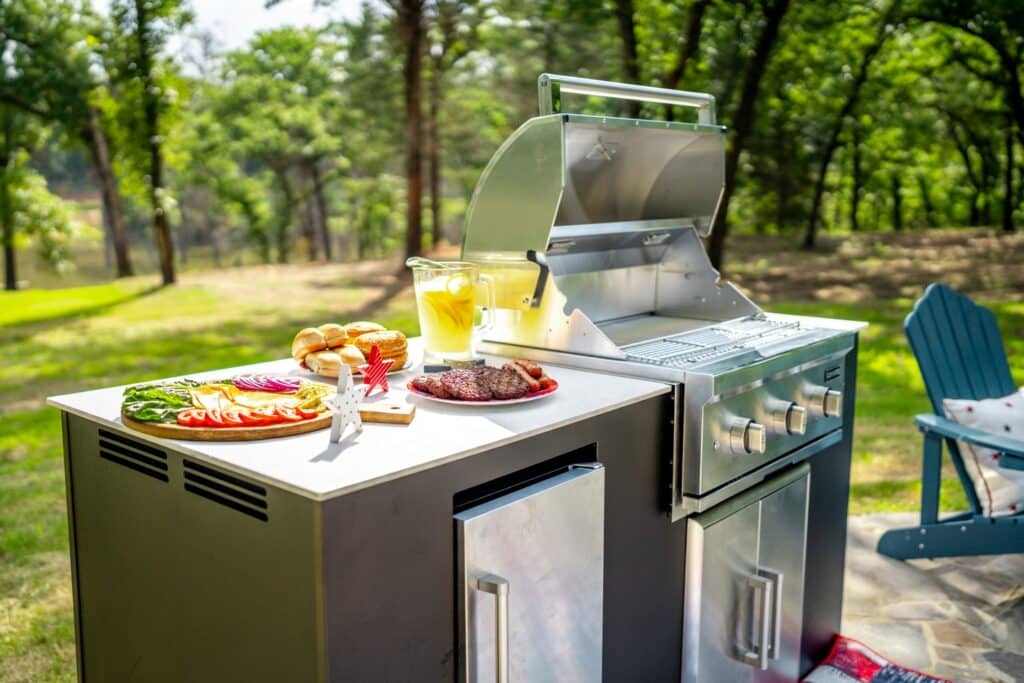
The easiest way to understand this grill is to stop thinking of it as a replacement for one particular appliance.
Instead, think of it as a compromise between several.
A gas grill is excellent for speed and convenience.
A charcoal grill brings intense heat and classic live-fire cooking.
A traditional smoker excels at low-and-slow barbecue.
A pellet grill attempts to borrow the best parts of each.
The Coyote takes that idea and pushes it toward the premium end of the category.
Its 175°F–700°F operating range gives it far more flexibility than a smoker designed exclusively for low temperatures.
And the multiple-rack cooking system makes the large interior more useful than simply having one enormous flat cooking surface.
The trade-off is obvious: you pay for versatility.
Is the Coyote 36-Inch Pellet Grill Worth It?
The price question is where things get serious. This isn’t a budget pellet grill.
You’re paying for stainless-steel construction, a large cooking area, digital controls, temperature monitoring, high-temperature capability, and a design intended to integrate into a premium outdoor kitchen.
That means the Coyote should not be judged against an entry-level pellet smoker.
The better question is:
How much is it worth to have one appliance that can handle most of your outdoor cooking?
For someone who smokes briskets, grills steaks, roasts chickens, entertains guests, and uses an outdoor kitchen frequently, the answer can be quite different from someone who grills occasionally.
That’s the Coyote’s strongest argument.
It’s not necessarily the cheapest way to make barbecue.
It’s potentially one of the more convenient ways to make a wide variety of barbecue without filling your patio with appliances.
And that’s a meaningful distinction.
Top 3 Alternatives for the Coyote 36-Inch Pellet Grill
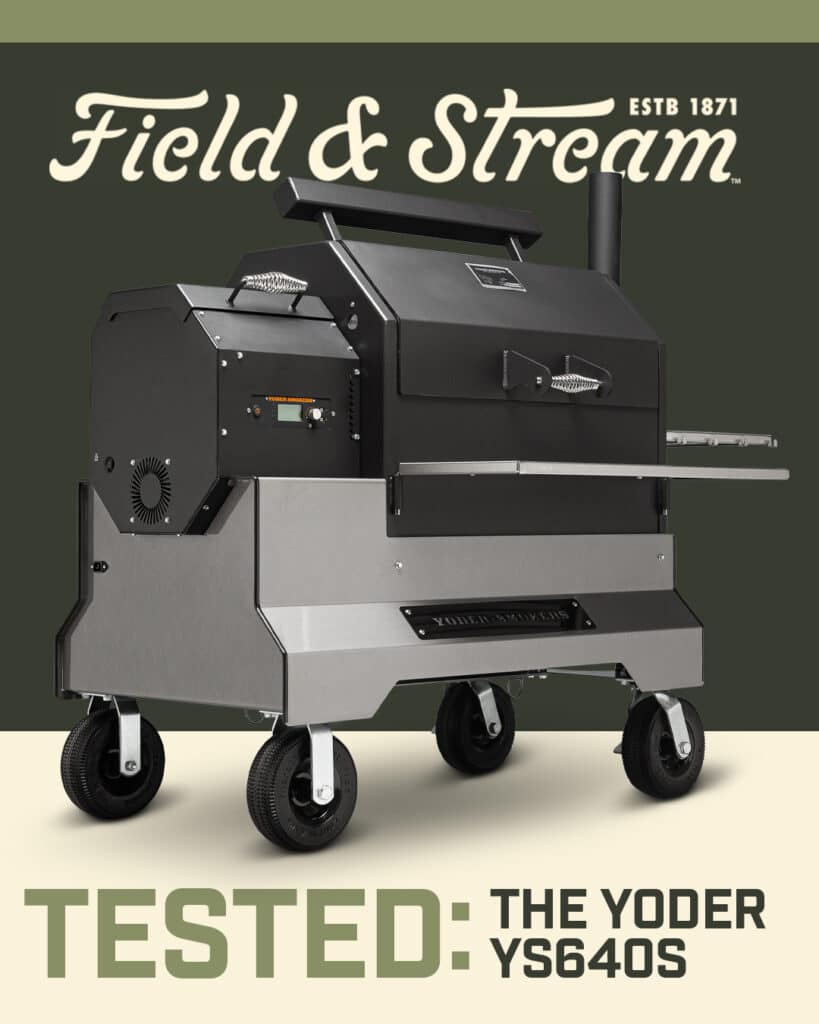
The Yoder YS640S is probably the strongest alternative if the buyer cares more about heavy-duty construction and long-term durability than having the sleekest outdoor-kitchen aesthetic.
It has 1,070 square inches of cooking space, a 20-pound hopper, and 1/8-inch steel construction, and weighs a hefty 335 pounds.
Why choose it over the Coyote:
- Extremely robust construction
- Excellent temperature consistency
- Strong smoking and grilling performance
- Large cooking capacity
- Very customizable with accessories
- Strong reputation among serious BBQ enthusiasts
Best for: The pitmaster who wants a tank-like cooker and is willing to trade some convenience and refinement for durability.
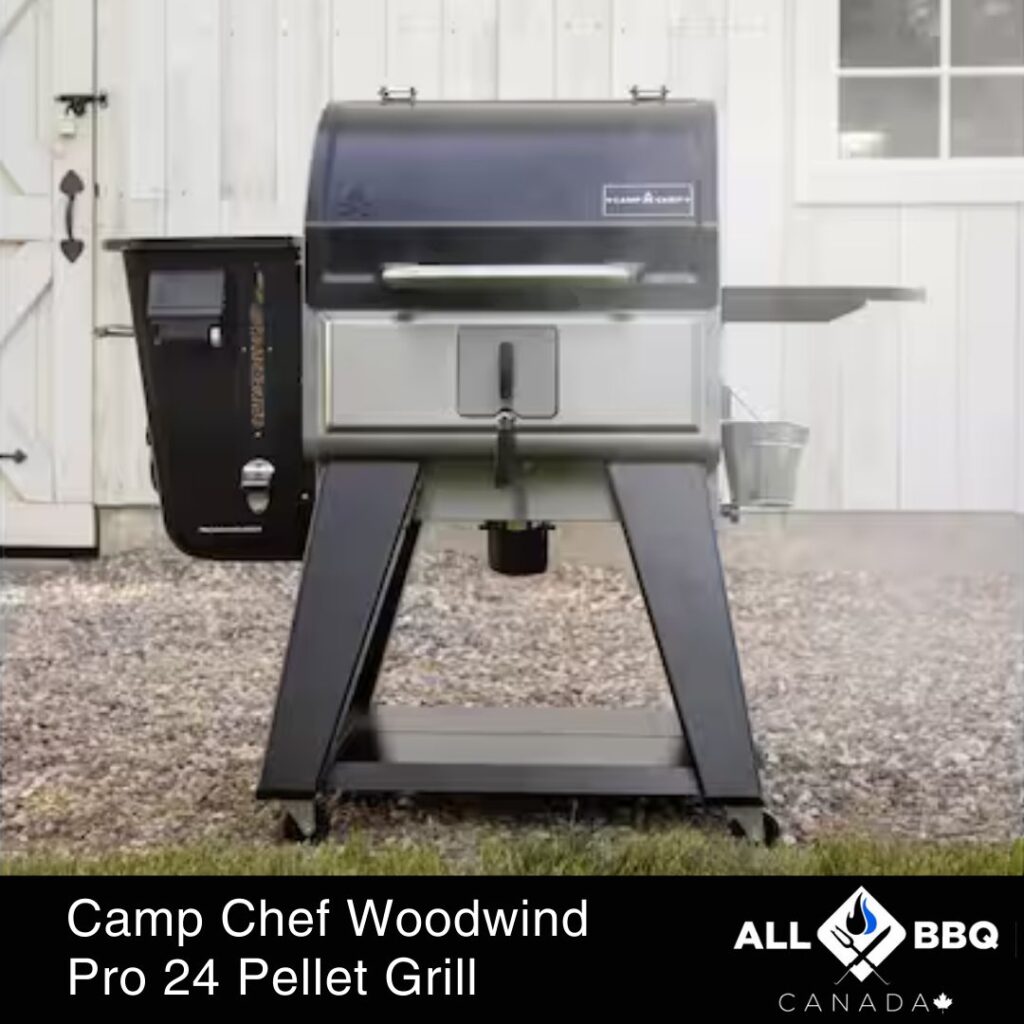
2. Camp Chef Woodwind Pro 36 – Best versatility/value alternative
I’d actually put the Camp Chef Woodwind Pro 36 at the top of the list for someone who loves the Coyote’s “Swiss Army knife” concept but doesn’t necessarily want to spend at the premium end.
Its biggest trick is the Smoke Box, which lets you add real wood chunks for a more pronounced smoke profile. It can also be paired with a Sidekick for high-heat cooking. Current comparisons list the Pro 36 at 1,236 square inches of cooking space.
Why choose it over the Coyote:
- Excellent versatility
- Dedicated smoke box
- Large cooking area
- Strong low-and-slow performance
- Direct-searing capability with the appropriate setup
- Generally more compelling value
The interesting part is that community comparisons put the Woodwind Pro 36 extremely close to the Yoder YS640S, with users particularly praising its smoke box and versatility.
Best for: The backyard cook who wants one grill to smoke, grill, sear, roast, and experiment with real wood smoke without going all the way into luxury-grill pricing.
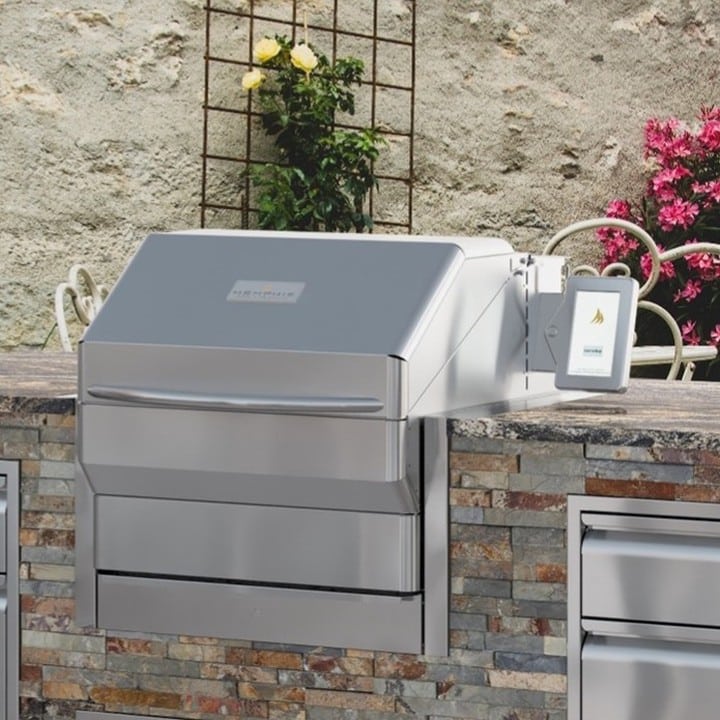
3. Memphis Pro – Best luxury alternative
The Memphis Pro is the alternative I’d consider when the buyer is attracted to the Coyote because of its premium outdoor-kitchen positioning.
It’s aimed squarely at the high-end pellet-grill market, combining pellet-grill convenience with a more refined, premium build and cooking experience. Current 2026 pellet-grill roundups continue to position Memphis as a premium/heirloom-level option.
Why choose it over the Coyote:
- Premium construction
- Sophisticated design
- Strong temperature control
- Excellent versatility
- Designed for upscale outdoor kitchens
- More of a luxury-appliance feel
Best for: Someone who wants a high-end centerpiece for an outdoor kitchen, rather than simply the most economical way to smoke ribs.
Final Verdict
The Coyote 36-Inch Pellet Grill earns the Swiss Army knife comparison because it refuses to stay in one lane.
It can smoke at low temperatures, push toward serious high-heat cooking, handle multiple levels of food, monitor internal temperatures, and bring wood-pellet flavor into a premium outdoor-kitchen format.
Its biggest strength is versatility.
Its biggest weakness is that versatility comes with a premium price tag – and a 36-inch footprint that isn’t exactly shy.
For the serious backyard cook, frequent entertainer, or homeowner building a high-end outdoor kitchen, that’s easier to justify.
For everyone else, a smaller and simpler grill may make more sense.
But if your barbecue philosophy is “why own three cookers when one can do nearly everything?”
The Coyote 36-Inch Pellet Grill makes a surprisingly strong case.
Frequently Asked Questions
1. Is the Coyote 36-Inch Pellet Grill worth it?
Yes, for serious backyard cooks who value versatility.
The Coyote 36-Inch Pellet Grill combines smoking, grilling, roasting, and high-temperature cooking in one large-format cooker. Its premium construction and features come at a higher price, so casual grillers may find a smaller model more practical.
2. How hot does the Coyote 36-Inch Pellet Grill get?
The Coyote 36-Inch Pellet Grill can reach temperatures up to 700°F, giving it the flexibility to handle both low-and-slow barbecue and high-heat grilling. That wide temperature range is one of its biggest advantages over pellet grills designed primarily for smoking.
3. Can you sear steaks on the Coyote 36-Inch Pellet Grill?
Yes. Its high-temperature capability and searing-focused cooking setup make it capable of producing the high heat needed for steaks, burgers, chops, and other foods that benefit from a good crust.
4. Is the Coyote 36-Inch Pellet Grill good for smoking brisket?
Absolutely. The grill’s low-temperature capability and automated pellet-feed system make it well suited to long cooks such as brisket, ribs, pork shoulder, and smoked chicken. Temperature automation also means less time spent managing the fire.
5. What can you cook on the Coyote 36-Inch Pellet Grill?
You can cook brisket, ribs, pork, chicken, turkey, steaks, burgers, seafood, vegetables, and more. Its large cooking area and multiple rack levels also make it useful when you’re preparing several foods for a crowd.
6. Does the Coyote 36-Inch Pellet Grill use electricity?
Yes. The grill requires electricity to operate its digital controls, auger, fans, and ignition system. Unlike a charcoal grill, it can’t operate without a suitable power source.
7. Who should buy the Coyote 36-Inch Pellet Grill?
The grill is best suited to serious BBQ enthusiasts, frequent entertainers, and homeowners with premium outdoor kitchens. It’s particularly appealing if you want one cooker that can replace several specialized outdoor cooking appliances.
8. What are the best alternatives to the Coyote 36-Inch Pellet Grill?
Three strong alternatives are the Yoder YS640S, Camp Chef Woodwind Pro 36, and Memphis Pro. The Yoder stands out for heavy-duty construction, the Camp Chef for versatility and value, and the Memphis for its premium outdoor-kitchen positioning.
Featured image credit: @theoutdoorappliancestore
