
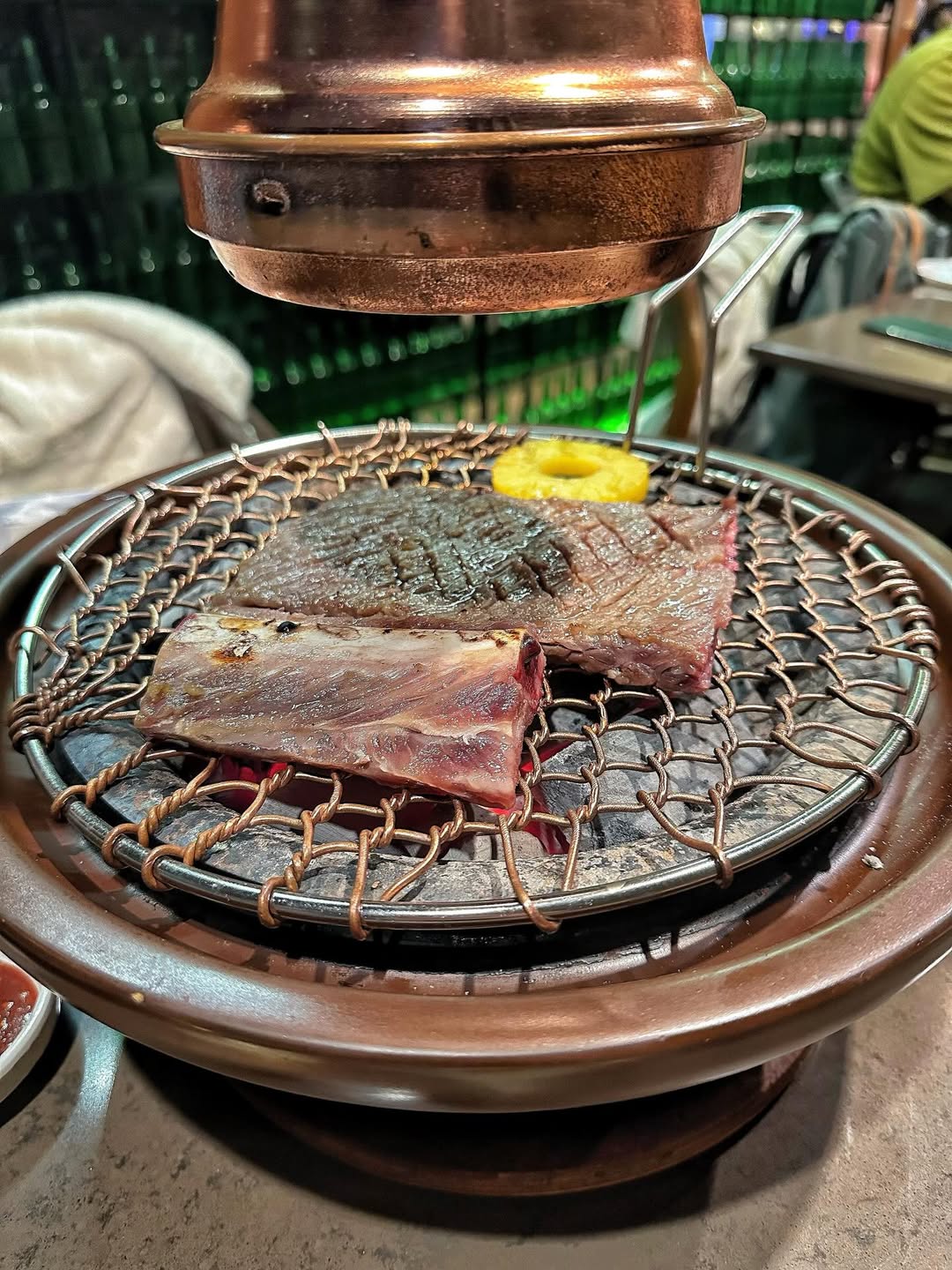
In the realm of backyard gatherings, few things command instant silence like the smell of Korean galbi hitting a hot flame.
Not politely quiet either – full-on “who just opened a food truck in my yard?” silence.
If it walks on four legs and fits on a grill, I’ve cooked just about every cut of beef you can throw on fire, from low-and-slow briskets to those expensive, weekend-trip ribeyes.
But galbi? Galbi is the show-off cousin who walks in late, cooks fast, and still gets all the compliments.
Korean galbi (flanken short ribs) is sweet, savory, smoky, and slightly sticky in the best possible way. Think caramelized edges, juicy beef, and a marinade that clings like it’s afraid of being forgotten.
And the best part? You don’t need a fancy setup. Just fire, beef, and a little confidence.
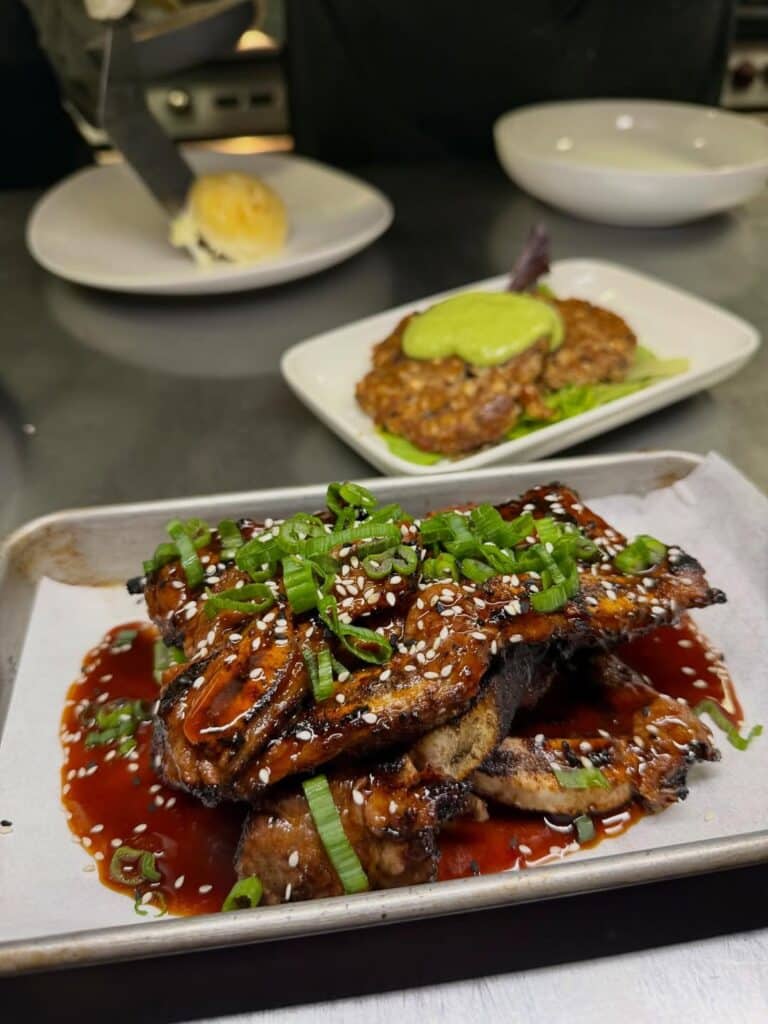
What is Korean Galbi?
Let’s clear something up first – “galbi” just means ribs in Korean cuisine. But when most people say Korean galbi, they’re talking about thin-cut beef short ribs known as flanken-style ribs or LA galbi.
Here’s the deal:
Traditional short ribs are thick. They’re slow-cooked, braised, and treated like they’ve got nowhere to be.
Flanken-cut ribs, on the other hand, are sliced across the bone so you get long strips of meat with small cross-sections of bone. That means:
- Faster cooking
- More surface area for marinade
- Better caramelization on the grill
In BBQ terms, it’s basically the difference between a marathon and a sprint. And galbi? It sprints – then wins.
Why You’ll Love This Recipe
I’ll keep it simple. You’ll love this grilled Korean galbi recipe because:
- It cooks in minutes, not hours
- The marinade does most of the heavy lifting
- The flavor hits that perfect sweet-savory balance
- It looks like restaurant food but feels like backyard freedom
Honestly, if BBQ had a “cheat code,” this would be it.
I’ve seen people who “don’t cook” become instant grill legends with galbi. One minute they’re nervous about flare-ups, next minute they’re flipping ribs like they’ve been doing it since birth.
The Science of the Sear: Why Galbi Gets That Sticky Crust
If you’ve ever wondered why grilled Korean galbi develops that glossy, almost candy-like crust, it’s not luck – it’s chemistry showing off under fire.
The magic happens through the Maillard reaction, where heat transforms simple ingredients into deep, complex flavor. In plain terms: it’s the moment meat goes from “raw protein” to “why does this taste unreal?”
Here’s what’s really happening on the grill:
- Amino acids + sugars = flavor explosion under high heat
- The marinade’s sugar sources – brown sugar, honey, or fruit puree – caramelize fast
- That caramelization creates the signature sticky-sweet glaze
- High heat = fast browning; slow heat = missed opportunity
But here’s the pitmaster warning:
- Too much direct flame = sugar burns before it caramelizes
- Burnt sugar doesn’t taste “smoky,” it tastes like regret with grill marks
The sweet spot is simple:
- High heat
- Fast cooking
- Constant attention (no wandering off for “just a minute”)
Think of it like cooking with a stopwatch and a dare.
When done right, every bite of galbi delivers:
- A crispy caramelized edge
- A juicy, tender center
- A smoky-sweet finish that lingers just long enough to make you reach for another piece before you’ve even swallowed
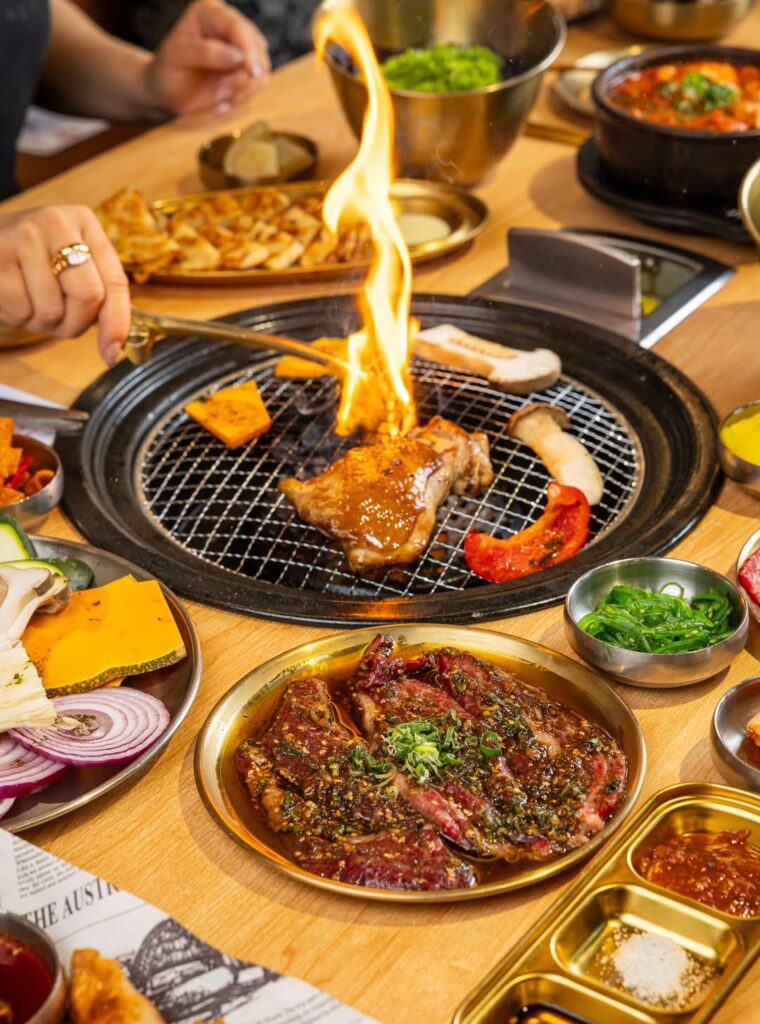
The Korean BBQ Table Ritual: How Galbi Is Truly Eaten
In Korea, grilled Korean galbi isn’t just food – it’s a full table experience that feels part meal, part social event, part controlled chaos.
Galbi almost never stands alone. Instead, it arrives surrounded by an entire supporting cast:
- Banchan (side dishes) like kimchi, pickles, and seasoned vegetables
- Fresh lettuce leaves for wrapping
- Dipping sauces like ssamjang (savory, spicy, fermented magic)
- Steamed rice ready to balance every bite
The eating ritual is where things get fun:
- Take a slice of hot galbi off the grill
- Place it into a fresh lettuce leaf
- Add a spoon of rice
- Add a small scoop of ssamjang
- Fold it into a compact bite-sized bundle
One bite in, and it clicks – this isn’t casual eating, it’s flavor construction with intention.
And then there’s the unspoken rule of Korean BBQ:
- The person grilling becomes the temporary table authority
- They don’t eat first
- They don’t sit down much
- But they do earn universal respect (and occasional silent applause when the sear is perfect)
It’s one of the few cuisines where standing over fire makes you both chef and social coordinator.
Choosing the Right Cut: Why Not All Short Ribs Are Equal
Not all short ribs are created equal, and this is where many home cooks accidentally sabotage their grilled Korean galbi before it even hits the fire.
The gold standard is the flanken-cut (LA-style) short rib, sliced thin across the bone. This cut is engineered for quick cooking and maximum flavor absorption.
Here’s why it matters:
- Thin slices mean fast, even cooking on high heat
- Cross-cut bones add structure without slowing down tenderness
- More surface area = more marinade contact = deeper flavor
Now compare that to the wrong choice:
- English-cut short ribs (thick cut) are meant for braising
- On the grill, they cook unevenly
- You risk either:
o Chewy, undercooked meat
o Or overcooked edges with a raw center panic situation
What you actually want in good galbi meat:
- Visible marbling (fat = flavor insurance)
- Even thickness across slices
- A balance of meat, fat, and bone that cooks quickly under high heat
Think of it this way:
- Flanken cut = built for speed and caramelization
- Thick cut = built for slow, cozy braises on rainy days
Choosing correctly isn’t a small detail – it’s the difference between:
- “This is pretty good barbecue”
And - “Why is everyone suddenly silent because they’re too busy eating?”
Tips for Perfect Grilled Korean Galbi
After years of cooking grilled Korean galbi, here’s what I’ve learned:
- Fruit matters more than people think – it’s not decoration, it’s chemistry
- High heat equals caramelization; low heat equals sadness
- Don’t crowd the grill unless you enjoy steamed beef
- Slice against the grain if serving plated
- And always, always taste your marinade before committing
One time I skipped tasting and ended up with ribs that could’ve powered a small salt mine. Never again.
Serving Suggestions
Galbi doesn’t like to be alone. It shows up best with company.
Serve it with:
- Steamed white rice (the classic partner)
- Kimchi for acidity and crunch
- Pickled radish for contrast
- Lettuce wraps with ssamjang if you want the full experience
Wrap a piece of galbi in lettuce with rice and sauce, take a bite, and suddenly you understand why people gather around grills in Korea for hours.
It’s not just food – it’s edible conversation.
Variations and Substitutions
Once you master grilled Korean galbi, you start experimenting.
Try:
- Chicken thighs for a lighter version
- Pork ribs for a richer, fattier bite
- Gochujang added to the marinade for heat
- Tamari instead of soy sauce for gluten-free cooking
- Extra honey if you like your glaze stickier than a comic book villain
Just don’t remove the garlic. That’s where I draw the line.
Storage and Reheating
Leftovers? Rare. But possible.
Store in an airtight container in the fridge for up to 3–4 days. Reheat on a pan or grill if you can. The microwave works, but it turns crispy edges into something emotionally distant.
If you reheat it right, it still tastes like victory.
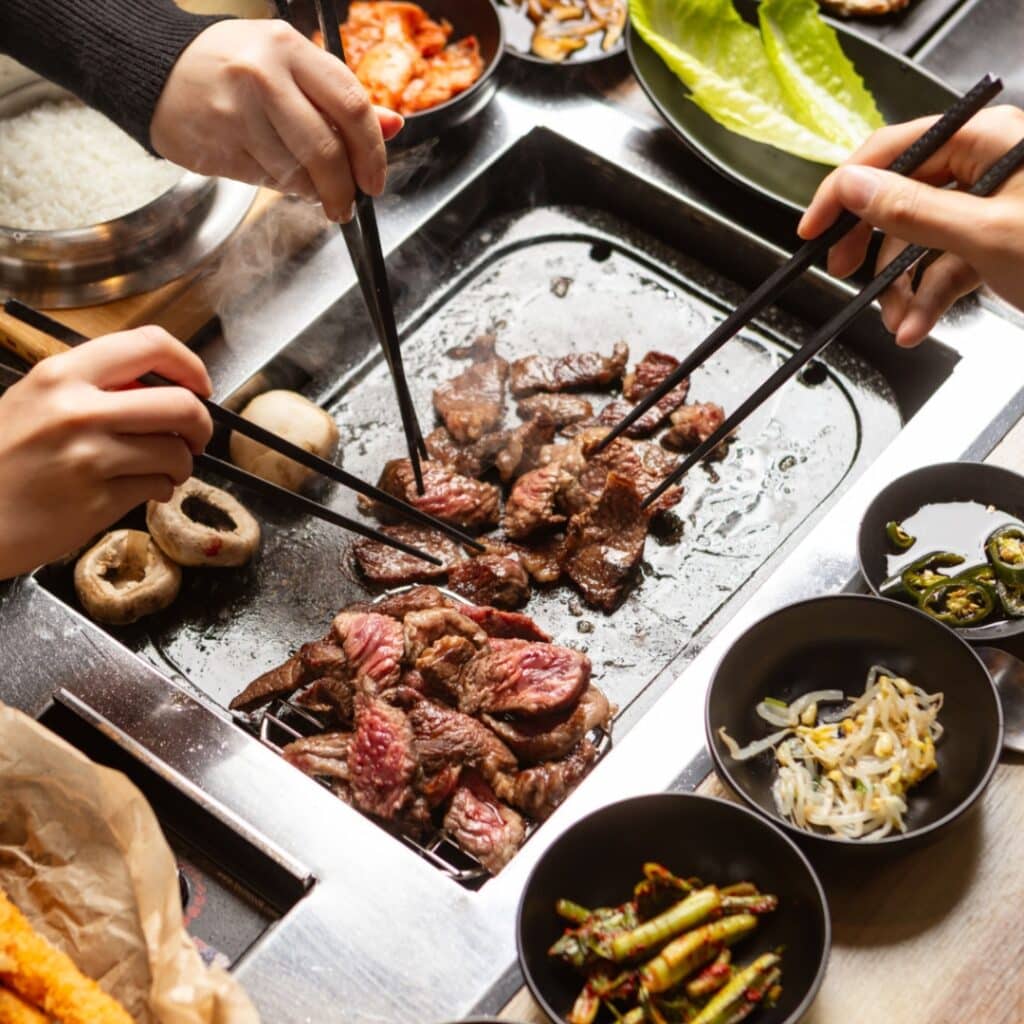
Final Thoughts
Grilled Korean galbi is one of those rare recipes that feels impressive without being difficult. It’s fast, bold, and a little bit addictive.
As a pitmaster, I love complicated barbecue. But I respect galbi because it doesn’t try to prove anything. It just shows up, cooks in minutes, and steals the spotlight anyway.
And honestly? That’s the kind of energy more food should have.
Now light the grill. And don’t walk away this time – you’ve got greatness happening in minutes.
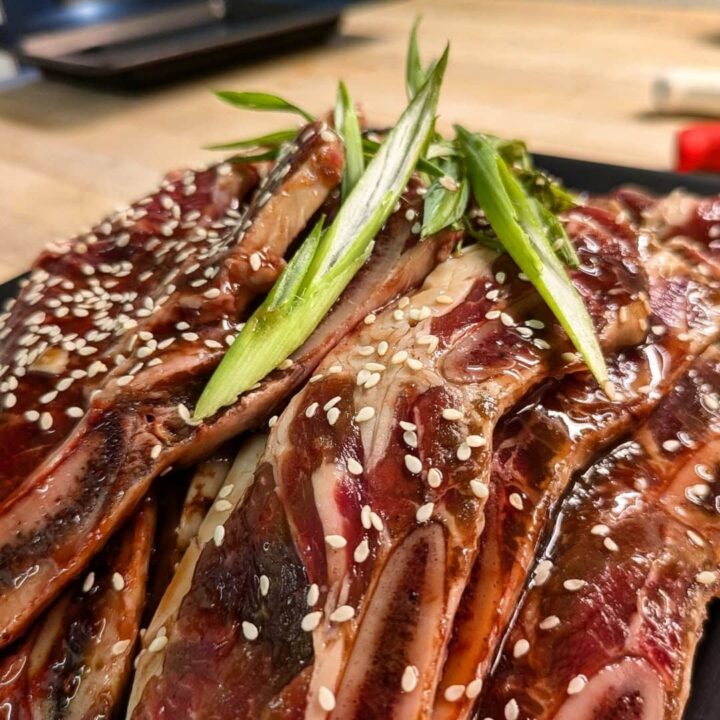
Grilled Korean Galbi (Flanken Short Ribs)
Image credit: @rosenbaumsbutcher
Ingredients
- This is where the magic starts. A good galbi marinade isn’t complicated – it’s balanced.
- For the marinade:
- Soy sauce (the salty backbone)
- Brown sugar or honey (for that sticky glaze)
- Garlic, finely minced (don’t be shy)
- Fresh ginger (for warmth and bite)
- Sesame oil (nutty depth)
- Rice wine or mirin (soft acidity)
- Asian pear or apple puree (the secret weapon)
- Black pepper
- That fruit puree? That’s not optional in my kitchen. It tenderizes the meat and adds a subtle sweetness that makes people ask, “What is THAT flavor?” You smile and say “family secret,” even if you just read it online five minutes ago.
- For the ribs:
- Flanken-cut beef short ribs (the real grilled Korean galbi star)
- Optional finish:
- Toasted sesame seeds
- Sliced green onions
- How to Prepare the Marinade
- This is where most people either build flavor… or accidentally make beef soup.
- Start by mixing your soy sauce, sweetener, garlic, ginger, sesame oil, and rice wine. Then add your pear or apple puree.
- Now here’s a pitmaster tip: don’t just stir it – whisk it like you mean it. You want everything fully emulsified so every bite of meat gets the same flavor treatment.
- Once your marinade is ready, add the ribs and massage them a bit. Yes, massage. If it feels weird, good – you’re doing it right.
- Then let time do its job:
- Minimum: 4 hours
- Best: overnight
- Anything beyond 24 hours and you risk the meat turning too soft. Galbi is tender, not fragile.
Instructions
This is where things get exciting. Fire changes everything.
Step 1: Heat your grill
You want medium-high heat. Not “screaming inferno,” not “sad campfire.” Think confident sizzle.
Step 2: Prep the meat
Shake off excess marinade. Too much sugar dripping onto flames equals flare-ups, and flare-ups are just BBQ drama nobody asked for.
Step 3: Grill the ribs
Lay them down and listen. That sound is the beginning of happiness.
Cook for about:
- 2 to 4 minutes per side
You’re looking for:
- Deep caramelization
- Slight char on the edges
- Glossy, sticky glaze forming
Flip once. Not five times. This isn’t a debate club.
Step 4: Watch closely
This is fast cooking. Blink too long and you’re making beef jerky.
Step 5: Rest briefly
Let it sit for a couple minutes. Not because it needs it – but because you need it. This is emotional recovery time before eating.
Featured image credit: @whatsoeva
