
Purists, look away. Deep in the heart of Texas, barbecue is practically a religion, and its holy trinity consists of three simple things: beef, coarse salt, and black pepper.
Messing with that formula is a risky business. But as a pitmaster who has logged more hours staring at thin blue smoke than I care to admit, I believe rules are meant to be broken – especially when the result is this good.
Say hello to the everything bagel smoked brisket.
We are taking the holy grail of low-and-slow barbecue and crusting it in the ultimate breakfast seasoning. This isn’t just a gimmick; it is a flavor revolution.
The toasted garlic, onion, poppy seeds, and sesame seeds of an everything bagel blend fuse with rendering beef fat to create an insanely textured, savory bark that will make you question why we stuck to plain old salt and pepper for so long.
The Anatomy of the Perfect “Everything” Rub
If you think you can just grab a standard jar of store-bought everything bagel seasoning, dump it on a twelve-pound hunk of beef, and call it a day, I have bad news for you.
Most grocery store blends are heavy on the tiny salt crystals and light on the big flakes.
In a twelve-hour smoke session, that fine-grain salt will turn your brisket into a leather boot, and the tiny seeds will burn to a crisp before your meat even clears the stall.
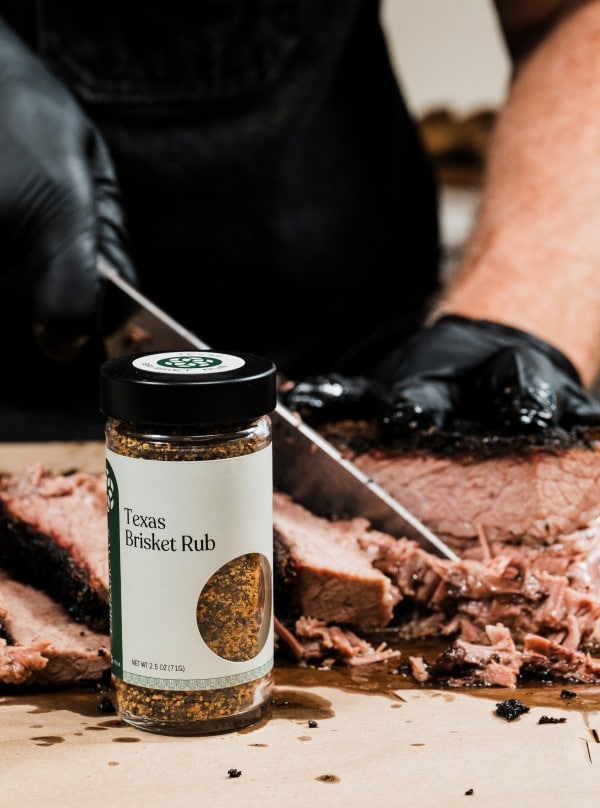
To make this work, we need a custom blend engineered for the smoker. The secret is structural integrity. We want coarse dried garlic and minced onion flakes that can stand up to the heat, alongside flaky sea salt and heavy cracked black pepper.
Here is the master ratio for our custom everything bagel brisket rub:
- 2 parts coarse butcher-blend black pepper
- 2 parts kosher salt or flaky sea salt
- 1 part dried minced garlic
- 1 part dried minced onion
- 1 part white sesame seeds
- 1 part black sesame seeds
- 1/2 part poppy seeds
To make this heavy, textured seasoning stick to the meat, you need a binder. Skip the fancy oils. A thin slather of plain yellow mustard is your best friend here.
Don’t worry, your brisket won’t taste like a ballpark hot dog; the vinegar evaporates during the cook, leaving behind a perfectly tacky surface that locks the rub in place.
Meat Prep & Smoking Technique
Before we even touch the match to the wood, we have to talk about the canvas: a whole packer brisket. You want a choice or prime grade brisket, ideally weighing in around 12 to 14 pounds.
Trimming a brisket is an art form, but let’s keep it simple.
You want to trim the fat cap down to a uniform quarter-inch thickness. If the fat is too thick, the everything bagel seasoning won’t penetrate the meat; if it’s too thin, the meat will dry out.
Shape the brisket into an aerodynamic block so the smoke can glide over it smoothly without creating turbulent pockets that pool liquid.
Once trimmed, apply your mustard binder and press – don’t rub – the everything bagel seasoning firmly into every nook and cranny.
Now, fire up the pit. For this cook, wood selection is absolutely critical. Traditional Texas brisket loves heavy hickory or punchy mesquite. But today, we are playing a different game.
The garlic and onion in the everything bagel rub are already bold, dominant flavors.
If you hit them with heavy mesquite, your palate will feel like it just went three rounds in a boxing ring. Instead, opt for a milder, complementary wood like pecan, oak, or applewood.
They provide a smooth, sweet smoke that lets the savory crunch of the seasoning shine.
Bring your smoker to a steady temperature between 225ºF and 250ºF. Place the brisket on the grates, fat-side up (or fat-side down, depending on where your cooker’s heat source originates – just make sure the fat shields the meat from direct heat).
The Critical Step: Managing the Stall & Wrap
Around the six-to-eight-hour mark, you will hit “the stall.” This is the point in the cook where the internal temperature of the meat hits roughly 160ºF and completely stops rising. It can drive a beginner insane.
You’ll think your smoker is broken. You’ll think you cursed the barbecue gods. In reality, the brisket is just sweating out moisture, cooling itself down.
To push past this, pitmasters use a technique called the Texas Crutch: wrapping the meat. However, for an everything bagel brisket, aluminum foil is your sworn enemy.
Foil traps 101% of the moisture, essentially braising the meat and turning your glorious, crunchy garlic-and-seed crust into a soggy, mushy soup.
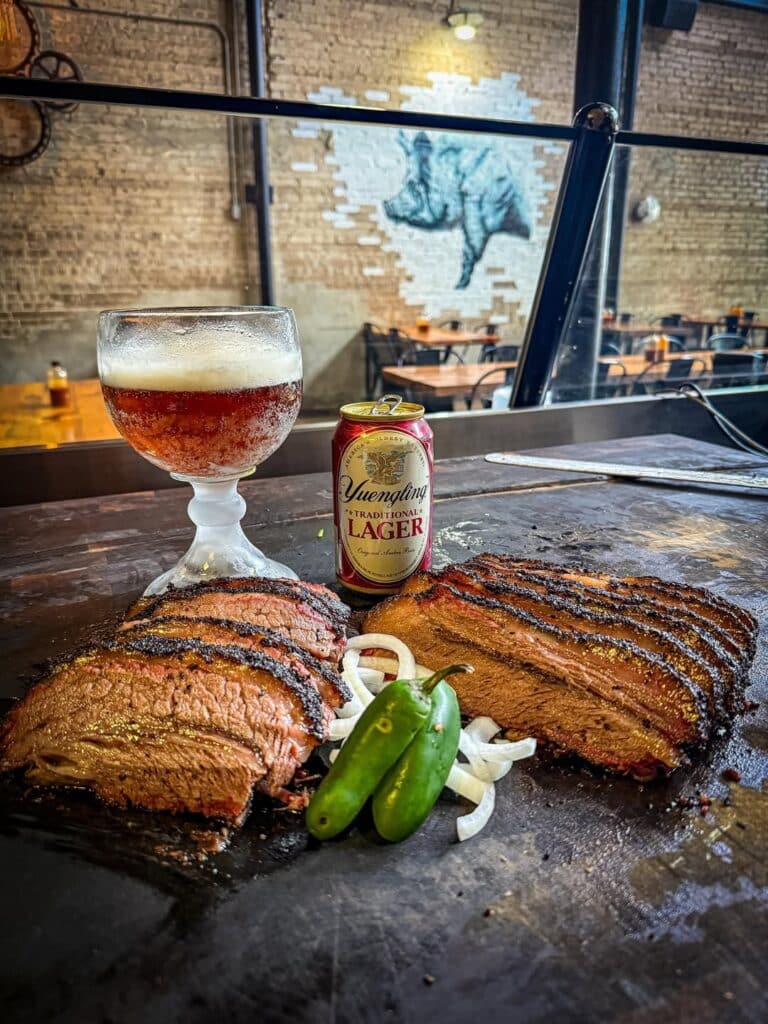
Instead, reach for pink peach butcher paper. Butcher paper is porous. It breathes just enough to let excess steam escape while still trapping enough heat to blast through the stall.
This preserves the structural integrity of your everything bagel bark, keeping it beautifully crisp and intact. Wrap the brisket tightly like a present when the internal temperature hits 165ºF and the bark looks dark and set.
Slicing and Serving Suggestions
When the agonizing wait is finally over, lay the brisket on a large cutting board.
Look for the grain of the meat and always slice against the grain in pencil-thin slices. If you slice with the grain, you’ll end up with a chewy mess, regardless of how perfectly you cooked it.
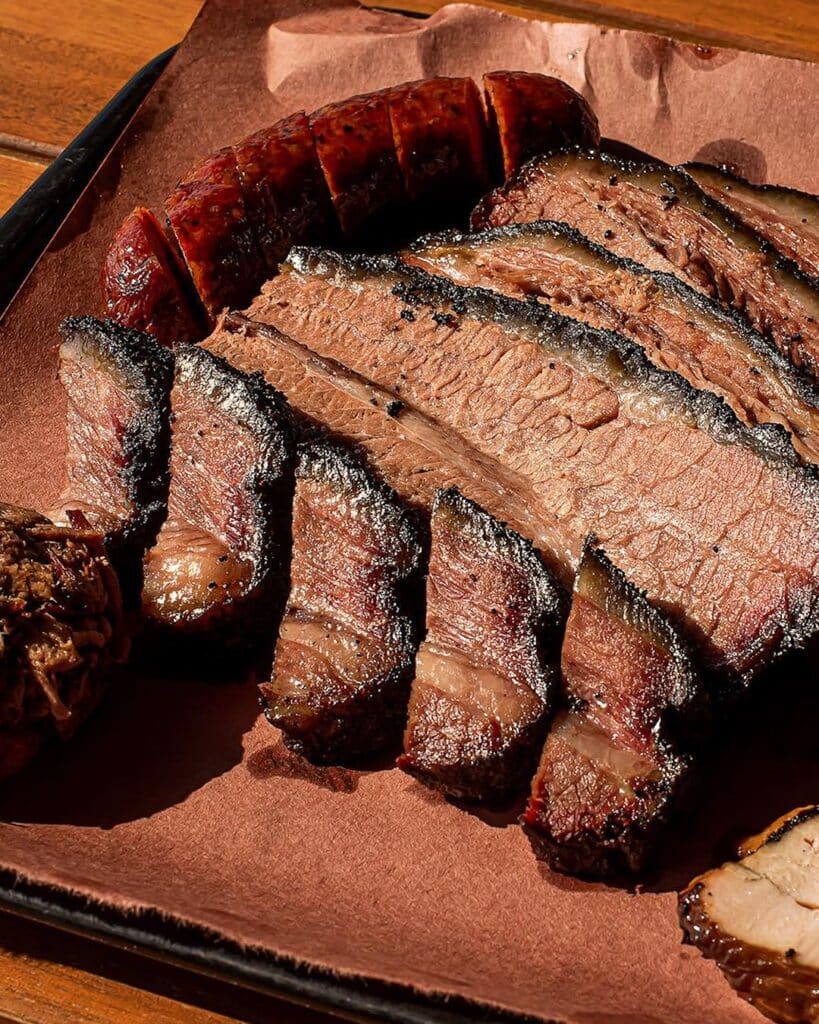
As you slice, you will notice the incredible contrast: the deep pink smoke ring, the glistening, rendering fat, and that mind-blowing, speckled everything bagel crust.
While this brisket is incredible on its own, the leftovers offer a golden opportunity.
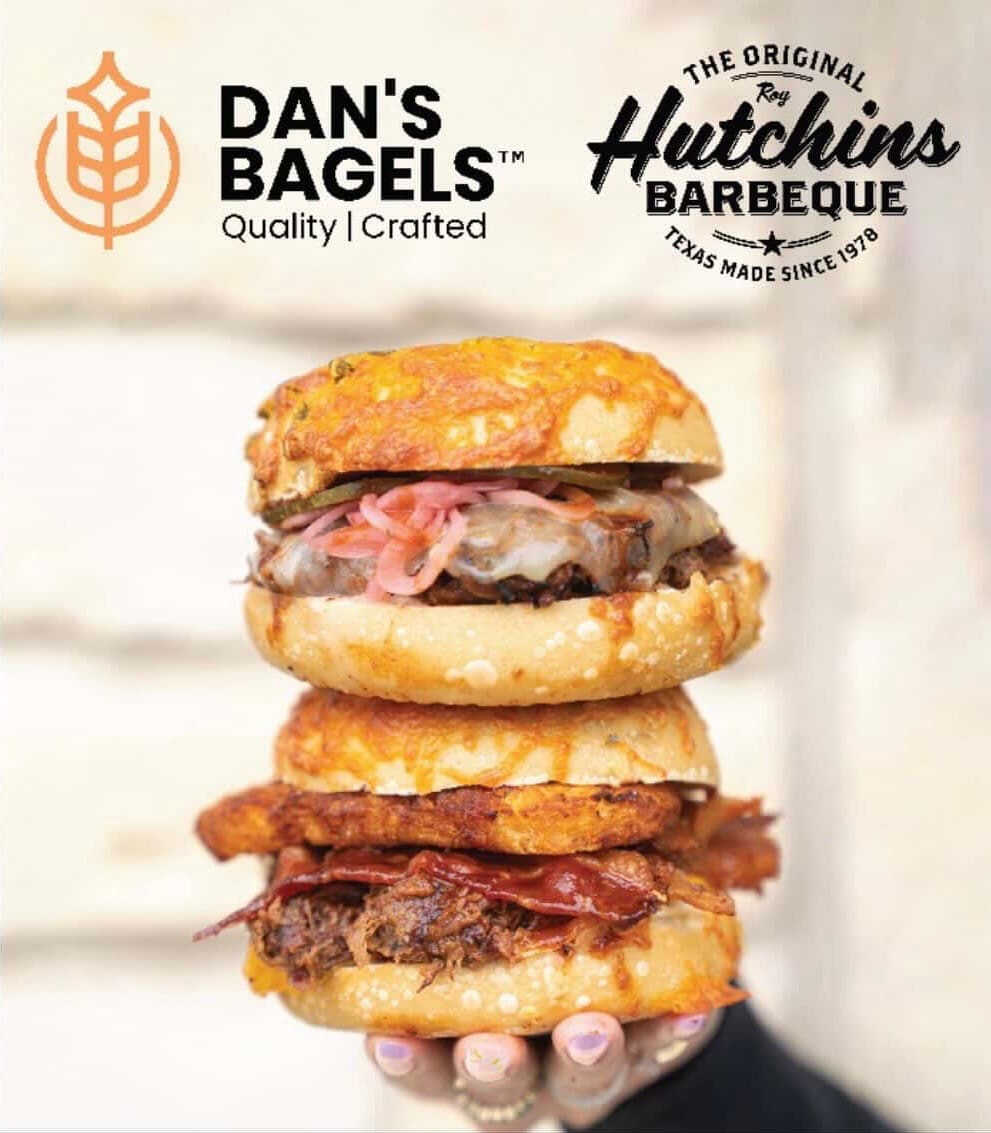
The next morning, toast a fresh, high-quality bagel, spread a thick layer of scallion cream cheese on it, top it with pickled red onions, and lay down a couple of thick slices of this brisket.
It is a breakfast sandwich so rich and savory it might actually alter your life path. Who says you can’t have barbecue for breakfast?
Final Thoughts: The Ultimate Cookout Plot Twist
At the end of the day, barbecue is all about sharing great food and pushing the boundaries of what’s possible over an open flame.
While the traditional salt-and-pepper approach will always hold a special place in my pitmaster heart, breaking the rules with this everything bagel smoked brisket proves that some risks are absolutely worth taking.
It’s a guaranteed crowd-pleaser that delivers a satisfying crunch, a punch of savory garlic and onion, and a serious wow-factor to your next backyard cookout.
So, fire up the smoker, embrace the aroma, and get ready to ruin standard brisket for your friends forever.
Just be prepared – once they taste this bark, they’re going to expect you to bring the bagels next time, too.
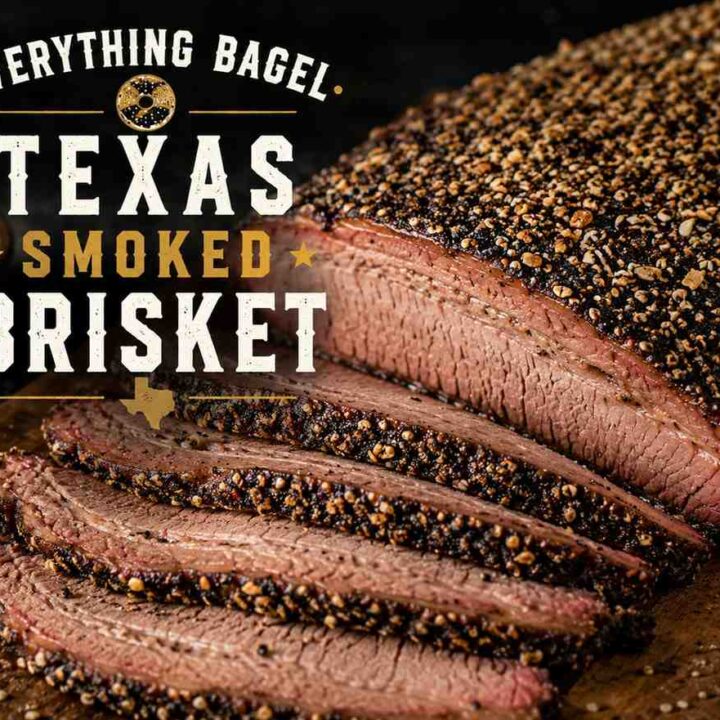
Classic Texas Smoked Brisket
Image credit: ChatGPT
Ingredients
- 1 whole packer brisket (12–14 lbs)
- 1/4 cup yellow mustard
- 1/4 cup coarse butcher-blend black pepper
- 1/4 cup kosher salt
- 2 tbsp dried minced garlic
- 2 tbsp dried minced onion
- 2 tbsp white sesame seeds
- 2 tbsp black sesame seeds
- 1 tbsp poppy seeds
Instructions
- Prep and Trim: Trim your brisket's fat cap to a quarter-inch. Square up the edges for smooth airflow.
- Apply Binder: Slather the entire brisket with a thin, even coat of yellow mustard.
- Season Heavily: Mix the pepper, salt, garlic, onion, sesame seeds, and poppy seeds in a bowl. Shake the blend generously over the meat, pressing it in so it forms a thick layer.
- Start the Smoke: Get your smoker settled at 225ºF using pecan or oak wood. Place the brisket inside and close the lid. Walk away. Let the smoke do the heavy lifting.
- The Wrap: When the internal temperature reaches 165ºF and the seasoning has formed a dark, firm crust, wrap the brisket tightly in pink butcher paper. Put it back in the smoker.
- The Finish: Keep cooking until the internal temperature reaches 203ºF in the thickest part of the flat. The ultimate test is texture: a temperature probe should slide into the meat like it’s warm butter.
- The Rest: Do not skip this unless you want to ruin half a day's work. Pull the wrapped brisket, place it inside an empty, insulated camping cooler, and let it rest for at least two hours. This allows the juices to redistribute back into the meat.
Featured image credit: @thegrapevineedit
