
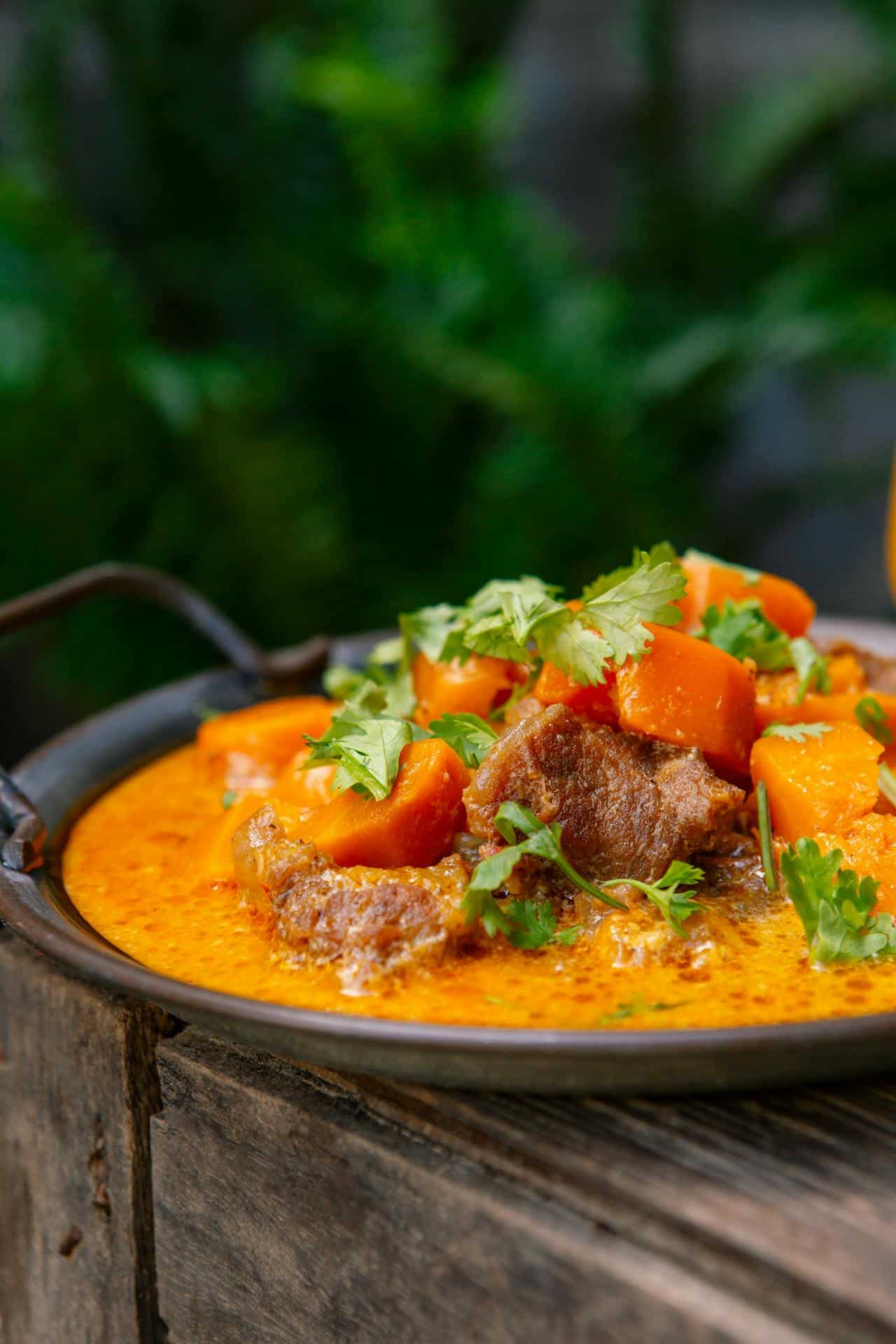
A wave of pure sensory bliss unfolds as soon as coconut milk hits a screaming hot pan.
If you’ve ever stood over a skillet waiting for that rich, pale liquid to bubble, reduce, and start glistening with its own natural oils, you know exactly what I mean.
But in Filipino cuisine, we take that magic a step further. We add earthy squash, snappy yardlong beans, a savory kick of fermented shrimp paste, and – if you’re doing it my way – a mountain of shattered, ultra-crunchy pork belly.
Welcome to Ginataang Sitaw at Kalabasa, a classic Filipino squash and string bean stew that is about to become your new weeknight obsession.
In the Philippines, ginataan simply means “cooked in coconut milk.” It’s a culinary technique born out of an abundance of coastal coconut trees and a need to survive the tropical heat with comforting, high-energy food.
Traditionally, this dish is a humble, one-pot vegetable stew with a few bits of boiled pork thrown in for flavor.
But as a chef, I have a rule: we don’t do boring pork. Boiling pork belly until it’s soft and rubbery is a missed opportunity for texture.
Today, we are upgrading this comfort classic by separating our proteins and our veggies, creating a dish where velvety, sweet squash meets a crown of golden, crackling pork slices. It’s a contrast that will make your tastebuds do a double-take.
The Lineup: Key Ingredients & Smart Swaps
Before you fire up the stove, let’s talk about what’s going into the pot. Authentic Filipino cooking relies on specific local produce, but you don’t need a plane ticket to Manila to make this happen. You just need a few smart substitutions.
| Traditional Item | What it Brings | Best Western Substitute |
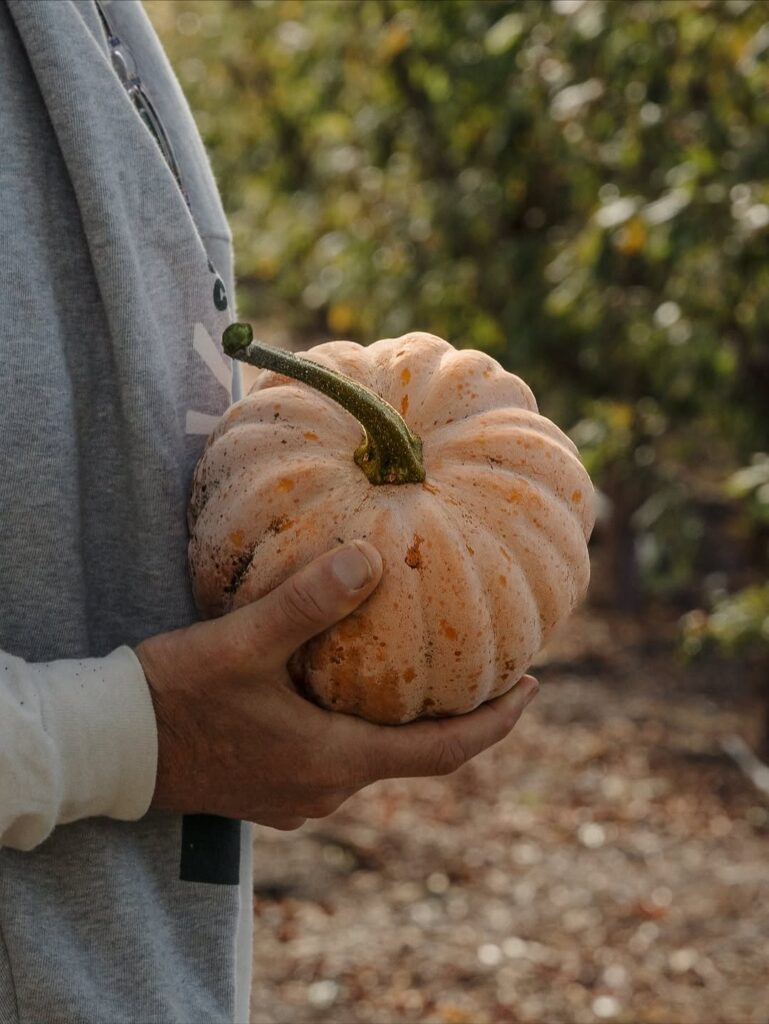
| Kalabasa | Sweet, starchy, nutty | Kabocha or Butternut Squash |
| Sitaw | Long, stringy, snappy | Standard French Green Beans |
| Bagoong Alamang | Deep, savory umami bomb | Fish Sauce + pinch of sugar |
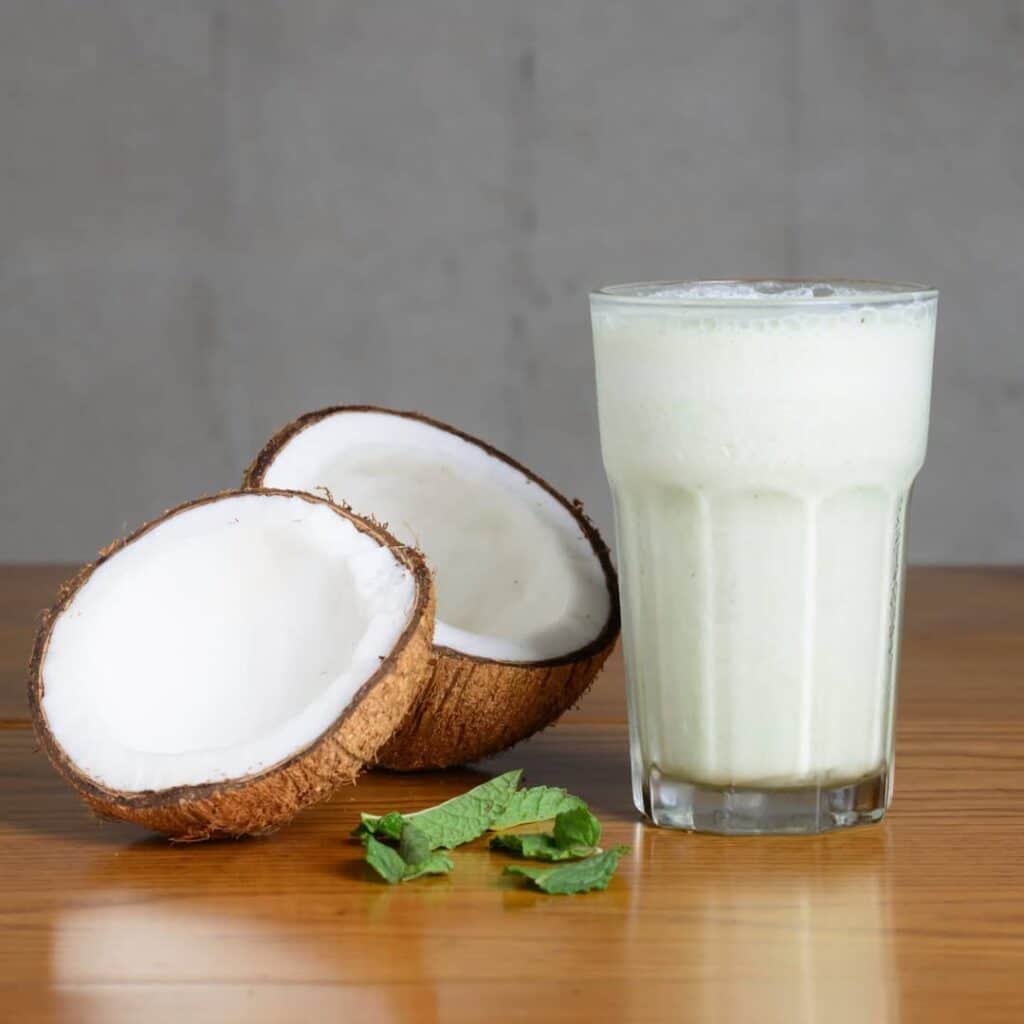
| Kakang Gata | Velvety, thick finish | Heavy Coconut Cream (Can) |
- The Veggies: Traditional kalabasa is a thick-skinned, deeply orange Filipino squash. It’s incredibly sweet and starchier than an American pumpkin. If you can’t find it at your local Asian market, Kabocha squash is your absolute best bet. It behaves exactly the same way in the pan. Butternut squash works too, though it’s a bit sweeter and less starchy. For the sitaw (yardlong beans), standard green beans will do the trick, though they lack that slightly hollow, sauce-absorbing texture of the original.
- The Creamy Base: We are using a two-tier coconut strategy here. First, canned coconut milk to simmer and cook the vegetables. Second, coconut cream (kakang gata) added at the very end to give the sauce that luxurious, restaurant-quality gloss.
- The Flavor Bombs: Do not skip the ginger. It cuts through the heavy fat of the coconut and pork like a sharp knife. And then there’s bagoong alamang (fermented shrimp paste). I know, the smell straight out of the jar can be intimidating to the uninitiated. It smells loud. But once it hits hot pork fat and garlic? It transforms into a deeply savory, complex umami foundation. It’s the secret baseline of the whole dish. If you absolutely cannot find it, a heavy splash of quality fish sauce (patis) will get you in the ballpark, but the bagoong is what makes it legendary.
- The Protein: Get yourself some skin-on pork belly (liempo). We want thin slices – about a quarter-inch thick – so they crisp up quickly without turning into jaw-breaking rocks.
The Culinary Secret: Master the Textures
Great cooking isn’t just about following instructions; it’s about managing textures. In a dish like this Filipino squash and string bean stew, you are fighting two distinct enemies: mushy vegetables and soggy pork.
First, let’s talk about preventing mushy squash. Squash is full of water and sugar. If you drop it into the pot at the wrong time, it will dissolve into a sad, orange baby food puree.
The goal is to cook the squash until it is tender enough to crush against the roof of your mouth with your tongue, but structurally sound enough to still look like a cube on your plate.
We achieve this by timing our vegetable drops perfectly and letting the outer edges of the squash melt just enough to naturally thicken the coconut milk.
Second, the pork. Most recipes tell you to boil the pork directly in the coconut milk. That’s fine if you like soft meat, but we want drama. We are using a two-step rendering method.
By starting the pork belly in a dry pan with just a splash of water, we boil the meat to tenderize it first.
Then, as the water evaporates, the pork renders its own clean fat. The meat literally fries itself in its own grease. This yields a shatteringly crispy exterior while keeping the inside juicy.
The Science of the “Gata” Split
Ever notice how your coconut gravy can suddenly turn oily and separated?
That is because coconut milk is a delicate emulsion of fat and water. When you expose it to aggressive, high-temperature boiling, the proteins holding them together break down, causing the oil to split from the liquid.
While some traditional Filipino dishes intentionally force this split to create crunchy oil solids called latik, we want our stew to remain smooth and velvety.
The secret? Keep the heat low, let it simmer gently, and never slap a tight lid on the pan once the heavy coconut cream is added.
The Cultural Roots of New World Crops
It might surprise you to learn that kalabasa is not actually native to the Philippines. Centuries ago, during the Manila-Acapulco Galleon Trade, Spanish ships traveled between Mexico and the Philippines, exchanging spices, textiles, and seeds.
This historic maritime network introduced Western hemisphere staples like squash, tomatoes, and chili peppers to Southeast Asian soil.
Filipino home cooks took these imported seeds, planted them in rich volcanic earth, and seamlessly married them with native ingredients like coconuts and fermented seafood – forever transforming the flavor profile of traditional Filipino comfort food.
Boosting Nutritional Synergy
Beyond its rich flavor, this vibrant stew is a textbook example of dietary bioavailability. Squash is packed with fat-soluble vitamins like Vitamin A and carotenoids, which mean your body cannot actually absorb them efficiently on its own.
However, when you cook that squash directly in the healthy medium-chain triglycerides found in full-fat coconut milk, the fats act as a vehicle, allowing your digestive system to maximize nutrient uptake.
Pairing it with vitamin-dense green beans transforms this indulgent, creamy treat into a nutrient-dense powerhouse that fuels your body while satisfying your soul.
Zero-Waste Cooking: What to Do with the Skins
Before you toss those squash skins and string bean trimmings into the trash, let’s talk about chef-style zero-waste kitchen hacks.
If you are using organic Kabocha squash, the skin is actually 100% edible and softens beautifully during a simmer, adding a rustic texture to the dish.
But if you prefer it peeled, save those thick skins and fibrous bean ends in a freezer bag.
Once the bag is full, boil the scraps with ginger peels and garlic skins to create a rich, earthy vegetable broth that serves as an incredible savory base for future soups and stews.
Expert Pairing & Storage Tips
If you serve this dish without steamed white jasmine rice, you are breaking a fundamental rule of Southeast Asian dining. The rice isn’t just a side dish; it’s an essential sponge meant to soak up that decadent, savory coconut gravy.
Because the stew leans rich and slightly sweet from the squash, it pairs beautifully with a side of crispy fried fish or a simple dipping bowl of fish sauce spiked with crushed bird’s eye chilies.
The heat and acid cut through the richness beautifully.
If you happen to have leftovers, you’re in luck. Coconut stews are notorious for tasting even better the next day because the flavors have had twelve hours to sit in a dark fridge and get to know each other.
However, there is one caveat: save the pork separately. Pack your leftover stew into one container, and your crispy pork slices into another. When you are ready for round two, heat the stew on the stovetop or microwave until bubbling.
Take the pork slices and pop them into an air fryer at 375°F (190°C) for three minutes, or flash-fry them in a dry skillet. Drop the re-crisped pork back onto the hot stew, and you’ve successfully recreated the magic of day one.
Final Thoughts
At the end of the day, cooking a great meal isn’t about rigid perfection – it is about creating contrast, depth, and comfort.
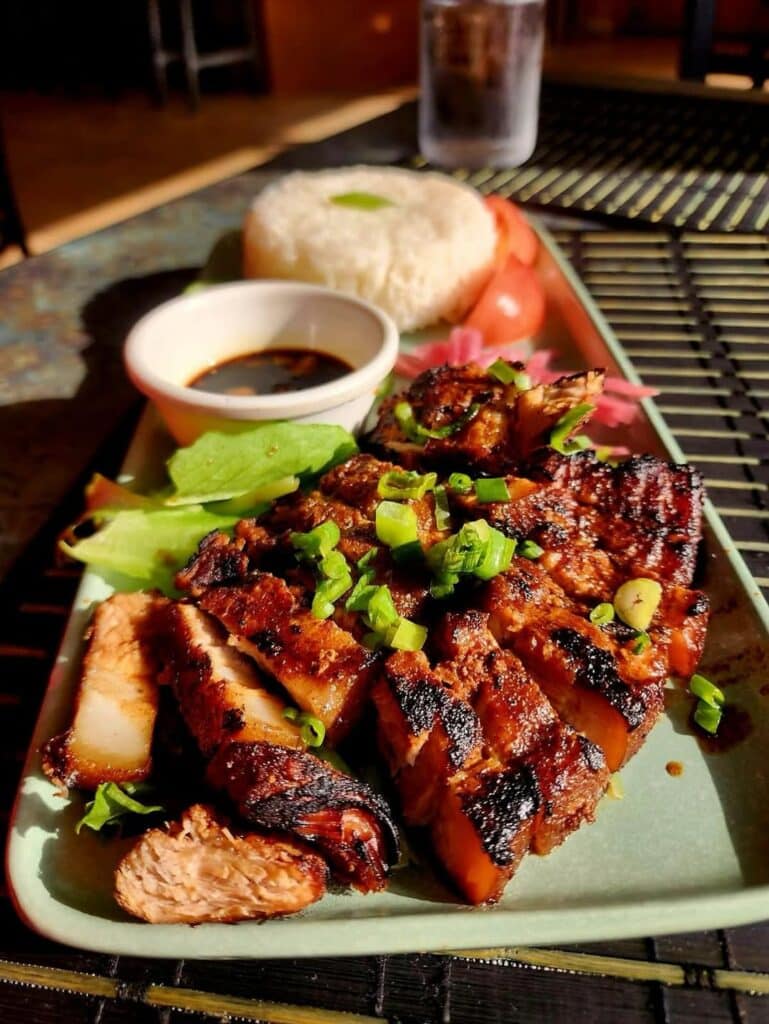
This elevated Filipino squash and string bean stew gives you exactly that: a masterclass in balance, where the silky, sweet coconut base gently wraps around a mountain of deeply savory, shattered pork cracklings.
It’s a dish that respects tradition while refusing to settle for soggy meat. So, fire up your skillet, embrace the loud, beautiful aroma of frying bagoong, and don’t forget to make extra rice.
Your kitchen is about to smell like a home-cooked Filipino masterpiece, and your dinner table will never be the same.

Filipino Squash and String Bean Stew with Crispy Pork Slices
Image credit: @georgeandonnies
Ingredients
- To make this dish a total knockout, precision matters. Here is the detailed grocery list, broken down by component.
- 1. The Crispy Pork Topping
- 1 lb (450g) Pork Belly (Liempo): Look for skin-on pork belly with a good balance of fat and meat. Have your butcher slice it into 1/4-inch thick bite-sized strips.
- 1/4 cup Water: Just enough to boil and tenderize the pork before it begins rendering its own fat.
- 1/2 tsp Sea Salt: To season the meat as it crisps up.
- 2. The Aromatics & Flavor Base
- 1 tbsp Rendered Pork Fat: (Harvested directly from frying your pork belly in step one).
- 5 cloves Garlic: Peeled and finely minced.
- 1 medium Yellow Onion: Sliced thin.
- 1-inch knob Fresh Ginger: Peeled and cut into thin matchsticks (julienned). Ginger is crucial to cut through the heavy coconut milk.
- 1.5 tbsp Sautéed Shrimp Paste (Bagoong Alamang): Use the pink or dark reddish-brown fermented shrimp paste found in jars at Asian markets. Look for "regular" or "sweet" varieties.
- 3. The Stew Veggies & Liquid Gold
- 1 can (13.5 oz / 400ml) Full-Fat Coconut Milk (Gata): Do not use light coconut milk here – we need the fat content for flavor depth.
- 1/2 cup Pure Coconut Cream (Kakang Gata): Usually sold in smaller cans or boxes. This is added at the end for that signature glossy, thick finish.
- 1 lb (450g) Kabocha Squash or Calabaza Squash (Kalabasa): Seeded, peeled, and cut into uniform 1-inch cubes.
- 1/2 lb (225g) Yardlong Beans (Sitaw): Washed, trimmed, and snapped or cut into 2-inch long pieces.
- Fish Sauce (Patis): Keep this on standby. You'll use it to adjust the saltiness at the very end if needed (usually 1/2 to 1 teaspoon is perfect).
- Fresh Bird's Eye Chilies (Siling Labuyo): Optional, but highly recommended if you want a spicy kick. Chop up 1 or 2 and toss them in right alongside the string beans.
- Chef's Tip on Prep: Cut your squash into uniform sizes! If you have some tiny pieces and some giant chunks, the small ones will melt into mush before the big ones are even cooked through. Aim for a neat 1-inch cube across the board.
Instructions
1.Crisp the Pork Slices:10 mins.
Drop your sliced pork belly into a cold, wide skillet with a quarter-cup of water and a heavy pinch of salt. Bring it to a boil over medium-high heat. Once the water completely cooks off, turn the heat down to medium.
The pork will start sizzling and releasing its own fat.
Fry the slices in their own grease, flipping occasionally, until they are deeply golden and crackling. Remove the pork with a slotted spoon and set aside. Leave exactly 2 tablespoons of that liquid gold pork fat in the pan.
2.Sauté the Aromatics:5 mins.
Crank the heat to medium. Toss in your minced garlic, sliced onions, and smashed ginger directly into the hot pork fat. Sauté until the onions are translucent and your kitchen smells incredible.
Now, drop in a tablespoon of the shrimp paste (bagoong). Use your spoon to mash it into the fat and let it fry for about two minutes. This cooks out the harshness of the paste and unlocks its sweet, savory depth.
3.Simmer the Squash:10 mins.
Pour in your can of coconut milk, scraping up any delicious browned bits stuck to the bottom of the pan from the pork and bagoong. Bring it to a gentle simmer – never boil coconut milk aggressively, or it might split.
Toss in your cubed squash. Cover the pan and let it simmer for about 8 to 10 minutes, or until the squash is just piercingly tender with a fork.
4.Add the String Beans:5 mins.
Remove the lid and drop in your chopped string beans. Pour the thick coconut cream over the top. Stir everything gently to combine. Let it simmer uncovered for another 3 to 5 minutes.
The string beans should turn bright green and retain a satisfying snap, while the sauce thickens into a rich, velvety gravy. Taste the sauce; if you want it saltier, add a dash of fish sauce.
5.Garnish and Serve:2 mins.
Ladle the creamy, vibrant stew into a large serving bowl. Now for the grand finale: pile your reserved crispy pork slices right on top of the stew. Do not mix them in!
We want those pork slices sitting high and dry so they maintain their crunch. Serve immediately.
Featured image credit: Sự Minh
