
Legend has it among old-school pitmasters that a little wood smoke can cure just about any ailment.
Few things match the sensory experience of stepping outside on a crisp morning and smelling thin blue wood smoke curling into the sky.
It is a primal ritual that connects us to our ancestors, or at least to that guy down the street who makes a really mean pork shoulder.
Today, the backyard cooking landscape is experiencing a massive golden age. We are no longer limited to rusty charcoal kettles or uninspired gas grills.
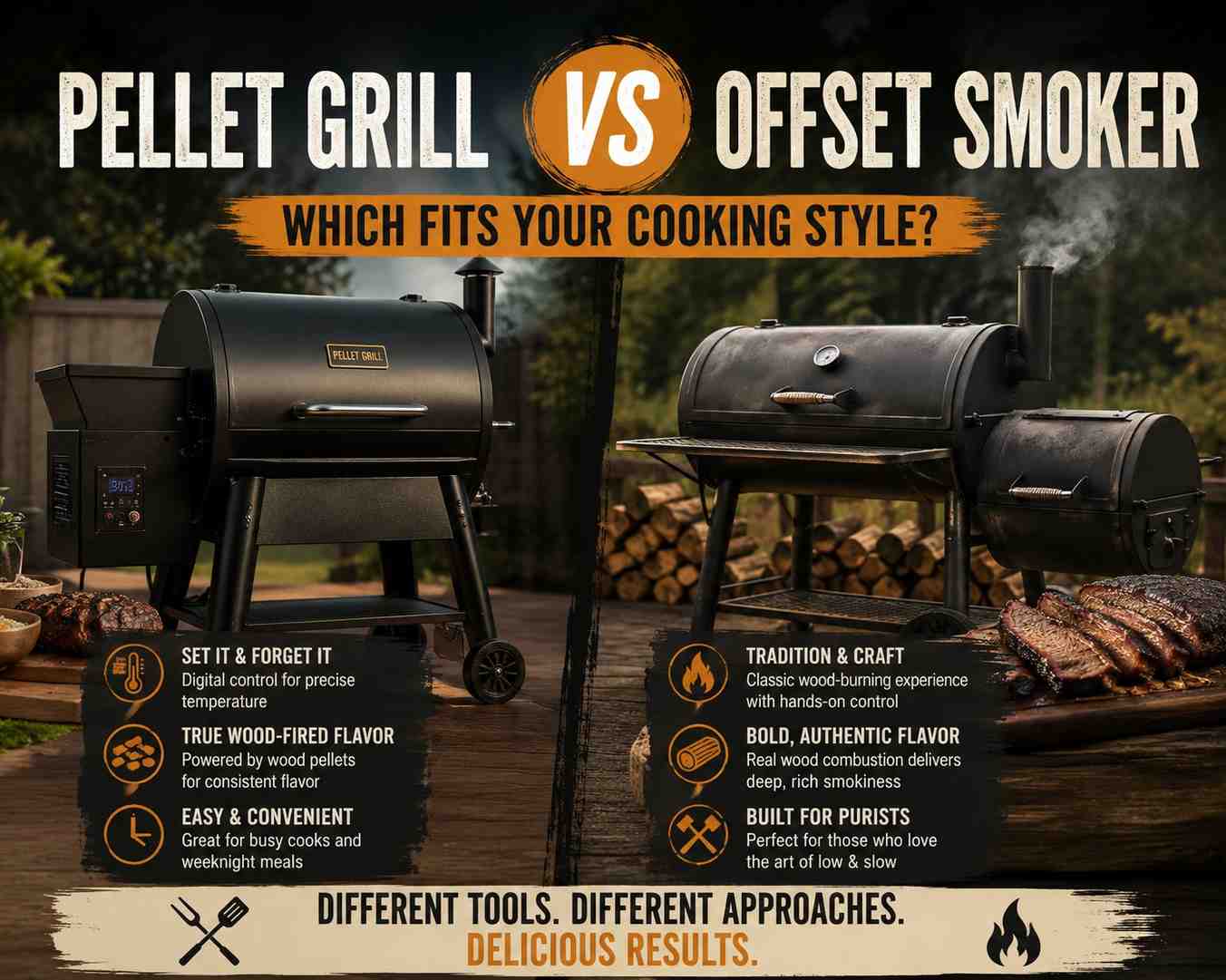
Instead, we are faced with an embarrassment of riches, dominated by two heavyweights of the modern smoking scene: the pellet grill and the traditional offset smoker.
Choosing between these two machines is not a matter of finding out which cooker is objectively better. It is about discovering which machine matches your lifestyle, your patience level, and your personal definition of great barbecue.
Are you a tech-savvy cook who wants incredible wood-fired flavor with the push of a button? Or are you a traditionalist who wants to sit in a lawn chair for twelve hours, tending a live flame like a mad scientist?
Let us break down the mechanics, the flavors, and the daily realities of both so you can make the right investment for your backyard.
Understanding the Contenders
Before we pit these two machines against each other, we need to understand exactly how they operate. Each machine takes a radically different path to achieve the same ultimate goal: tender, smoky, mouth-watering food.
What is a Pellet Grill?
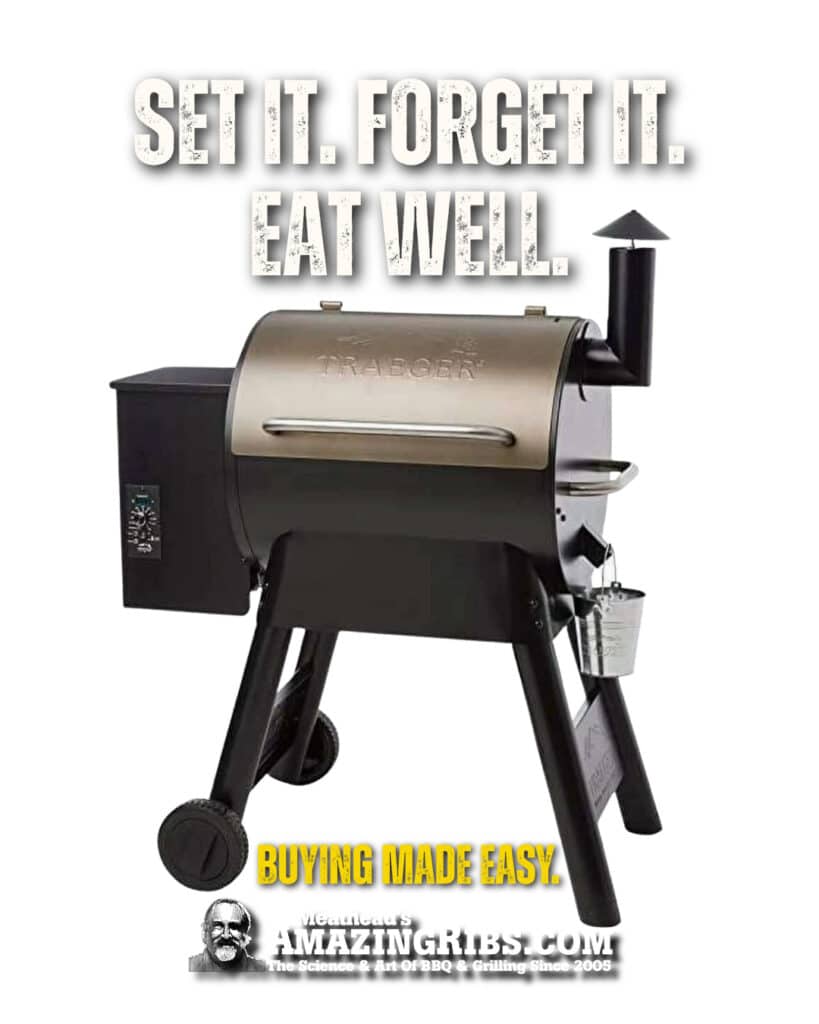
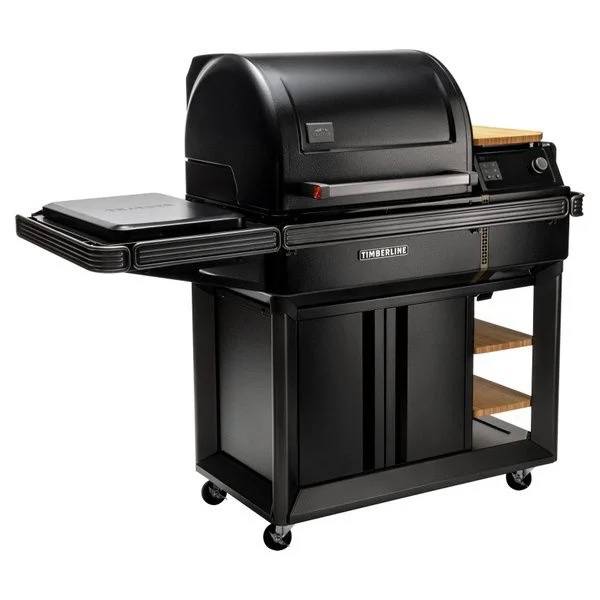
Imagine if your kitchen convection oven and a wood-burning campfire had a highly intelligent baby. That is a pellet grill. Often called pellet smokers, these machines are a marvel of backyard engineering designed to take the guesswork out of outdoor cooking.
The brain of the operation is a digital controller. You fill a side bin, known as a hopper, with food-grade wood pellets made of compressed sawdust.
When you turn the machine on and set your desired temperature, a motorized corkscrew called an auger begins feeding those pellets into a small fire pot inside the main chamber.
An electronic igniter rod lights the pellets, and a combustion fan kicks on to stoke the flames. The fan distributes the heat and smoke evenly throughout the entire cooking area.
Cooking on a pellet grill feels less like operating heavy machinery and more like setting a high-tech thermostat.
It actively monitors internal conditions, feeding more pellets when the temperature drops and slowing down when it hits the sweet spot.
It is an elegant system built for the modern cook who values consistency and precision.
What is an Offset Smoker?
If the pellet grill is a modern electric car, the traditional offset smoker is a vintage muscle car. It is heavy, it is loud in spirit, and it requires you to get your hands dirty under the hood.
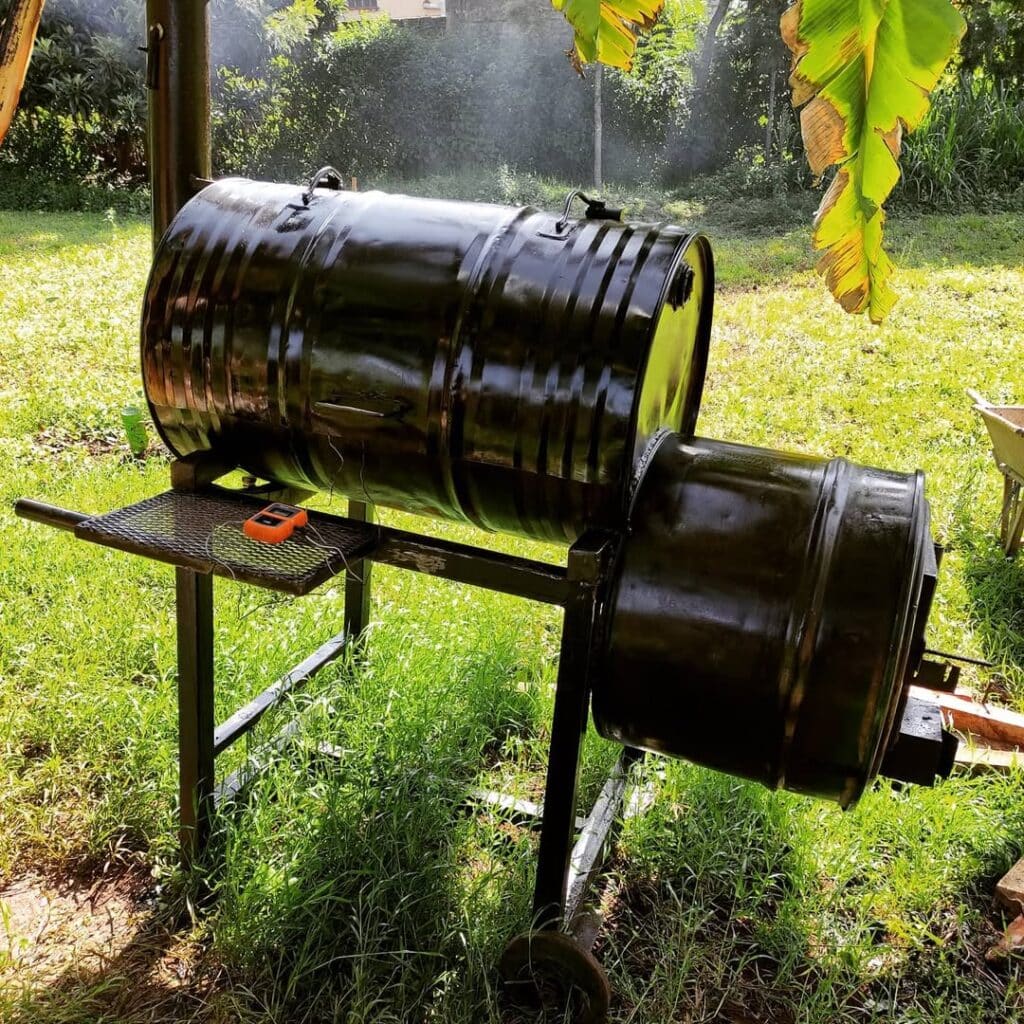
This is the iconic silhouette born decades ago in the oil fields of Texas, crafted from thick industrial pipes and steel barrels.
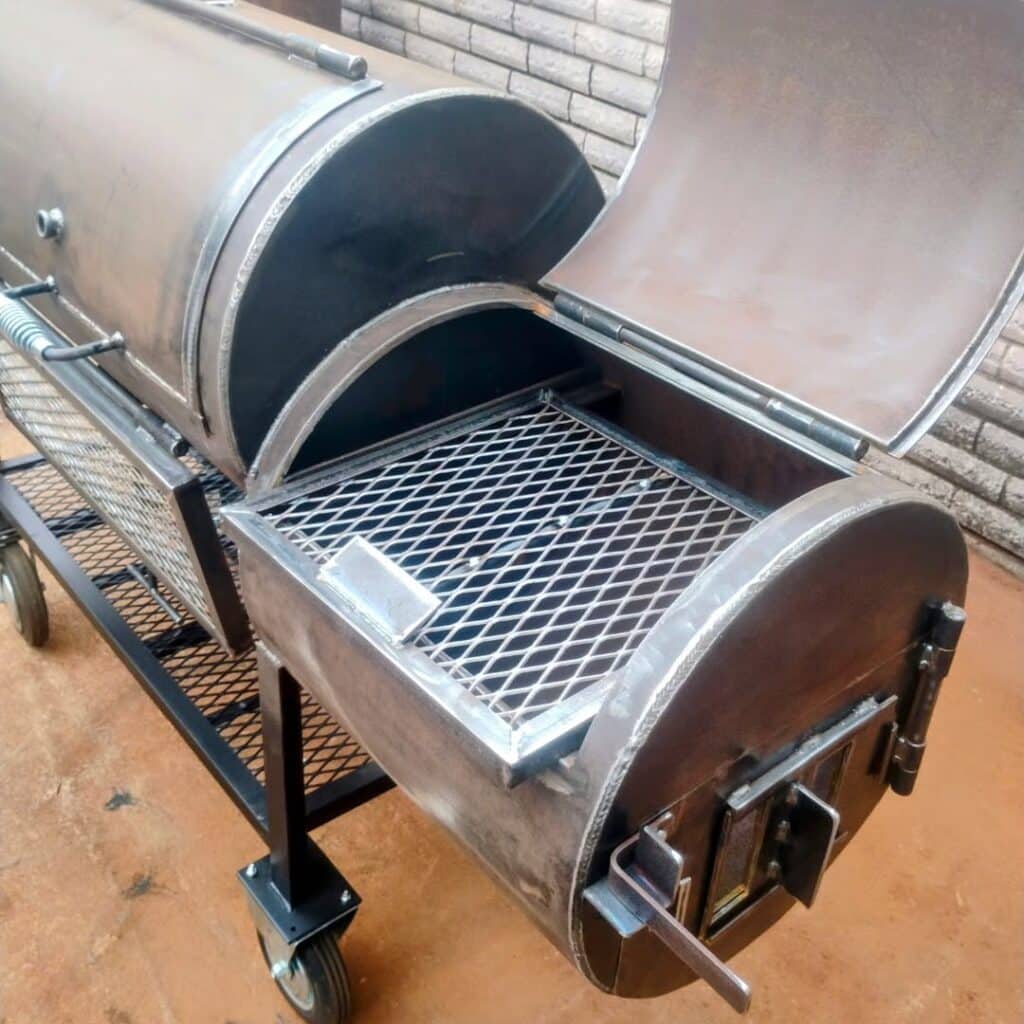
The anatomy of an offset smoker is brilliantly simple. It consists of two main parts: a large, horizontal cooking chamber where your meat rests, and a smaller, lower firebox attached to one side.
This offset design is exactly where the machine gets its name.
To cook with it, you light a fire inside the separate firebox using charcoal and split hardwood logs.
The heat and smoke travel horizontally out of the firebox, sweep across the food in the main barrel, and escape through a smokestack on the opposite end.
Operating an offset smoker is an active, physical craft. There are no circuit boards, no digital screens, and no automated fans.
You control the internal environment completely by hand, adjusting metal intake vents on the firebox and dampeners on the exhaust chimney to regulate airflow. It is a pure, unadulterated relationship between the cook, the wood, and the fire.
Head-to-Head Comparison Metrics
Now that you know how these machines work, let us look at how they perform when the heat is turned up. We will evaluate them across the most critical categories that matter to backyard cooks.
Flavor Profile: Ambient Smoke vs. Clean Wood Fire
Let us start with the most important factor: the taste of the food on your plate.
An offset smoker is the undisputed world champion of pure, traditional barbecue flavor.
Because you are burning actual split logs of hickory, oak, or cherry, you create a incredibly clean, hot, and intense wood fire. This environment produces what pitmasters call “thin blue smoke” – the holy grail of outdoor cooking.
The result is a deep, dark exterior crust, known as a bark, and a pronounced pink smoke ring beneath the surface of the meat.
The flavor profile is bold, complex, and distinctively authentic. If you want your brisket to taste like it came from a legendary Texas smokehouse, this is how you get there.
Pellet grills offer a different style of flavor. Because wood pellets are highly compressed and burn incredibly efficiently, they produce a much lighter, cleaner smoke. The flavor is subtle, sweet, and delicate.
While you will still get a beautiful wood-fired taste and a decent bark, it will rarely match the intense, deep smokiness of an offset smoker.
For many people, this milder flavor profile is actually a benefit, as it ensures the smoke never overpowers the natural taste of the meat or your spice rubs.
However, if you are a hard-core smoke fanatic, you might find yourself wishing for a bit more punch.
Ease of Use and Temperature Control
This is where the pendulum swings dramatically in the other direction. If convenience is your highest priority, the pellet grill wins by a landslide.
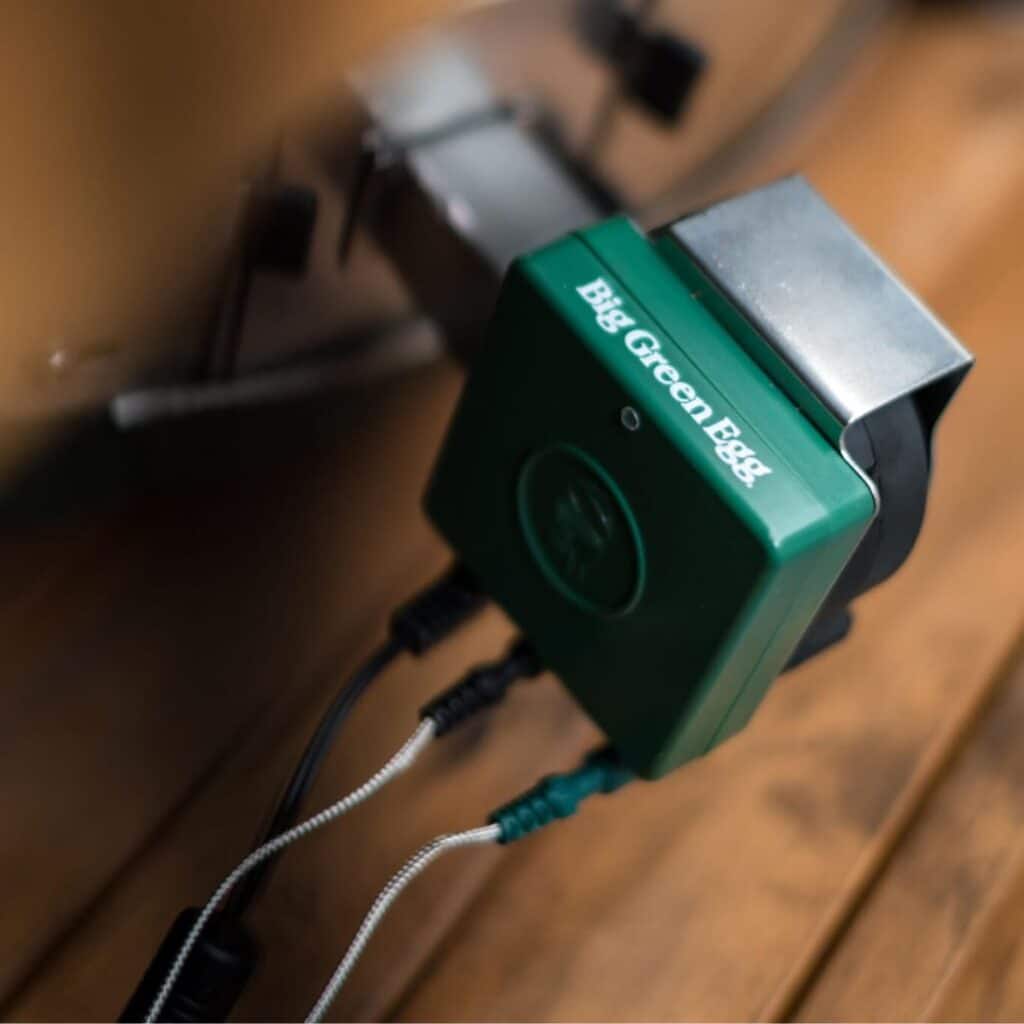
Operating a pellet grill is an incredibly relaxed experience. You flip a switch, dial in your temperature – say, 225 degrees – and walk away. You can go to bed, head to the grocery store, or watch a football game without a single worry.
The digital internal controller handles all the micro-adjustments for you, maintaining rock-solid temperatures through rain, wind, and freezing weather. It is the ultimate “set-it-and-forget-it” machine, making it virtually impossible to accidentally burn your food due to a sudden temperature spike.
An offset smoker, by contrast, demands your absolute attention. It is a demanding partner that requires constant interaction. Every thirty to forty-five minutes, you must open the firebox, check the embers, and add another split log.
If the wind picks up, your temperatures can plummet. If your wood is slightly damp, your fire can smolder, creating a thick, bitter white smoke that ruins your meat. Managing an offset smoker requires intuition, patience, and a willingness to learn from your mistakes.
It turns cooking into an all-day event, anchoring you to your backyard for the duration of the smoke.
Versatility: Can They Do More Than Smoke?
Modern backyard chefs want appliances that can handle multiple cooking tasks. Versatility is another area where these two cookers diverge wildly.
Pellet grills are designed to be true multi-cookers. Because they use a powerful fan to circulate heat, they double as fantastic outdoor convection ovens.
You can smoke a rack of ribs at 225 degrees, roast a whole chicken at 350 degrees, or bake a wood-fired pizza at 450 degrees.
Many high-end modern pellet grills even feature direct-flame sliding panels, allowing you to sear steaks directly over the fire pot at temperatures exceeding 500 degrees. This wide operational range makes them a versatile centerpiece for any deck.
The offset smoker is an incredibly specialized tool. It is engineered to do one specific thing flawlessly: cook meat low and slow between 225 and 275 degrees.
While you can technically open the firebox lid and grill a couple of burgers directly over the coals, the main cooking chamber is simply not built for high-heat roasting or baking.
Trying to force an offset smoker to run at 400 degrees requires a massive, aggressive fire that wastes an enormous amount of wood and can warp thin steel. It is a purebred smoker, not a Swiss Army knife.
Maintenance, Cleaning, and Fuel Logistics
Owning an outdoor cooker involves ongoing maintenance and fuel management. Both styles require a bit of upkeep, but the tasks look very different.
A pellet grill relies heavily on electricity and proper fuel storage. You must plug it into a standard outlet, meaning your cooking location is limited by the reach of an extension cord.
Furthermore, wood pellets are highly sensitive to moisture. If they get wet, they swell up and turn into a useless wood paste that can jam your auger system.
Cleaning a pellet grill involves periodically removing the internal grates and drip pans to vacuum out the fine ash that accumulates in the bottom of the fire pot. You must also keep the internal temperature probes clean to ensure the computer reads data accurately.
An offset smoker is a purely mechanical, rugged machine. It requires zero electricity, meaning you can take it to a remote campsite, a tailgate party, or the middle of a field without an issue.
However, dealing with fuel takes physical effort.
You need a dedicated storage space to keep split hardwood logs dry and protected from pests.
Cleaning an offset smoker is a straightforward, heavy-duty chore.
You scrape out the grease from the main barrel, shovel the spent ash out of the firebox, and occasionally wipe down the exterior with high-heat oil to keep the steel seasoned and rust-free.
It is built like a tank, and with proper care, it can easily last for decades.

Feature Comparison Quick Reference
To help you visualize how these two iconic cookers match up side by side, let us look at a quick breakdown of their foundational characteristics.
| Operational Feature | Modern Pellet Grill | Traditional Offset Smoker |
| Primary Fuel Source | Food-grade wood pellets | Split hardwood logs and charcoal chunks |
| Electrical Dependency | Requires standard outlet | Entirely manual, zero electricity needed |
| Active Effort Required | Minimal, automated system | High, continuous fire management |
| Smoke Flavor Profile | Mild, sweet, and clean | Deep, robust, and traditional |
| Temperature Control | Automated digital controller | Manual intake and exhaust adjustments |
| Cooking Versatility | High (Smoke, bake, roast, sear) | Low (Engineered for low-and-slow smoking) |
| Average Learning Curve | Very low, beginner-friendly | Moderate to high, rewards experience |
Who is Each Smoker For?
At the end of the day, your choice comes down to how you want to spend your time outside. Let us look at which machine matches your personality.
You Should Choose a Pellet Grill If…
You are a busy professional, a parent juggling a hectic schedule, or someone who values efficiency.
If you love the flavor of smoked food but simply do not have a twelve-hour block of free time on Saturday to watch a fire burn, the pellet grill is your perfect match.
It allows you to cook incredible meals during the workweek. You can put a pork butt on the grill at midnight, go to sleep, head to work the next morning, and come home to a perfectly cooked dinner.
It is also ideal for beginners who want immediate, repeatable success without the frustration of learning fire dynamics. If your goal is great food with minimal hassle, let the onboard computer do the heavy lifting.
You Should Choose an Offset Smoker If…
You view outdoor cooking as a passionate hobby, a craft, and a weekend escape.
If your idea of a perfect Saturday involves waking up before dawn, drinking coffee by a live fire, and actively working to create the best barbecue possible, you are an offset smoker cook.
This machine rewards the process just as much as the final product. There is a deep, unmatched sense of pride that comes from serving a perfectly tender brisket when you manually controlled every single variable that went into making it.
If you are a culinary purist who wants maximum smoke flavor, an incredible bark, and a striking backyard showpiece, do not settle for anything less than a real steel barrel.
Buying Guide: What to Look For
If you have decided which direction to go, you want to make sure you buy a machine that lasts. Here is what to keep in mind when shopping.
When evaluating pellet grills, look past the fancy paint jobs and focus on the internal electronics. Prioritize models that feature a PID (Proportional-Integral-Derivative) controller.
This is the specific technology that allows the grill to make intelligent, continuous micro-adjustments to the fuel delivery, keeping your temperatures incredibly stable.
Additionally, look for heavy-gauge metal construction, sturdy lid gaskets that trap heat, and a convenient hopper clean-out door that lets you swap out wood pellet flavors easily.
When shopping for an offset smoker, weight is your best friend. Avoid the cheap, thin-gauge sheet metal models found outside big-box hardware stores. These cheap units leak heat and smoke terribly, making them an absolute nightmare to keep at a steady temperature.
Instead, look for a smoker constructed from thick, heavy-gauge steel, ideally one-quarter of an inch thick. You want fully welded seams, a well-balanced smoke chimney, and doors that seal tightly against the frame.
A heavy steel smoker absorbs and holds heat beautifully, making fire management infinitely easier and more enjoyable.
The Final Verdict
Backyard cooking is not a competitive sport with a single winner. The debate between a pellet grill and an offset smoker is a beautiful demonstration of how different paths can lead to incredible culinary results.
The pellet grill represents the bright future of outdoor cooking: smart, efficient, adaptable, and accessible to absolutely everyone. The offset smoker represents the timeless, soul-stirring heritage of traditional American barbecue: rustic, demanding, artistic, and extraordinarily rewarding.
Before you swipe your credit card, take an honest look at your lifestyle and your backyard goals.
If you want convenience and versatility, embrace the high-tech automation of the pellet grill. If you want the ultimate smoke flavor and love the meditative ritual of tending a real wood fire, invest in a heavy-duty offset smoker.
Whichever path you choose, turn up the heat, trust the process, and enjoy every single bite.
Frequently Asked Questions
Can you use wood chips or chunks in a pellet grill?
No, you should never put standard wood chips or logs into a pellet grill’s hopper. These machines are precisely engineered to feed only uniform, compressed wood pellets via the motorized auger.
Using anything else will jam the mechanism, potentially damage the motor, and void your warranty.
If you want to boost the smoke flavor on a pellet grill, you can use a separate, inexpensive stainless-steel smoke tube filled with pellets resting right on the grill grates.
How long does a bag of pellets last compared to a cord of wood?
On average, a pellet grill burns about 1 to 2 pounds of pellets per hour. A standard 20-pound bag will give you roughly 10 to 20 hours of cooking time, depending on how hot you are running the machine.
With an offset smoker, fuel consumption depends heavily on the size of your rig and the outside weather, but you can expect to burn roughly one to two split logs every hour.
For a long 12-hour cook, you will need a small stack of logs, making the physical storage footprint for offset fuel much larger.
Do pellet grills use a lot of electricity?
Not at all. While they do need to be plugged in, pellet grills only draw a significant amount of electricity during the first 5 to 10 minutes of start-up to power the electronic igniter rod.
Once the fire is successfully lit, the grill only uses a small amount of power (about equivalent to a standard household lightbulb) to keep the digital screen, the internal fan, and the auger motor running.
Why do some people say offset smokers are hard to use?
The reputation comes down to fire management. In an offset smoker, you cannot just flip a switch to change the temperature.
You have to learn how to read the fire. If you open the air vents too much, the fire gets too much oxygen, spikes the temperature, and dries out your meat.
If you choke the air supply too much, the fire smolders and produces “dirty smoke” – a thick, white, soot-heavy smoke that makes your food taste bitter and like ash. It takes a few practice runs to master the balance.
Can you leave a pellet grill outside in the rain?
You need to be very careful here. While the heavy metal exterior can handle the elements, the internal digital controller, electrical wiring, and the wood pellets themselves must stay completely dry.
If water gets into the hopper, the wood pellets will absorb the moisture, swell up, and turn into a concrete-like sawdust paste that can completely ruin your auger system. Always use a high-quality, heavy-duty grill cover, and store your pellets in airtight plastic buckets.
Which option is better for cooking a classic Texas-style brisket?
If your absolute, number-one priority is replicating a true, competition-level Texas brisket with a thick, pitch-black bark and a deep smoke ring, the offset smoker is the winner.
The intense airflow and pure wood fire create an environment that a pellet grill simply cannot fully replicate.
However, if you do not want to manage a fire for 12 straight hours, a pellet grill will still make a phenomenal, juicy brisket with a fraction of the physical effort.
Featured image credit: ChatGPT
