
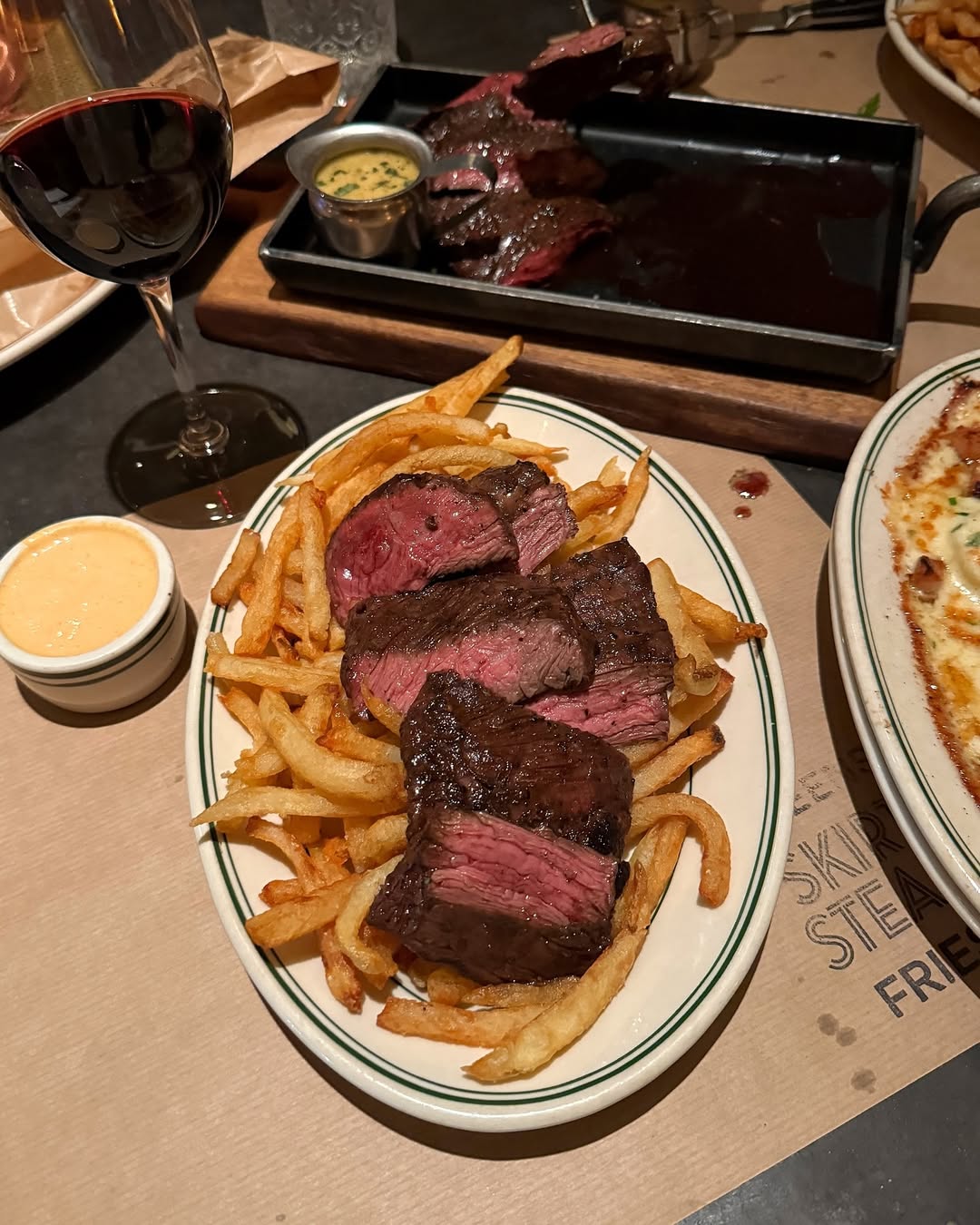
I think I’ve spent a quarter of my life standing over a bed of glowing coals, beer in hand, smoke in my eyes, feeling like the absolute king of my domain.
There is a primal, unmatched joy in cooking meat over an open flame in your own territory.
But let’s be completely honest with each other for a second.
Have you ever splurged on a thick, beautiful ribeye at the local supermarket, seasoned it with absolute reverence, grilled it to a visual perfection, and then taken a bite only to realize… it’s just not the same? It’s good, sure.
But it doesn’t have that deeply caramelized, melt-in-your-mouth magic of a high-end steakhouse. It lacks that rich, uniform crust and that intensely beefy punch that makes you close your eyes and forget how much you just paid for dinner.
As a pitmaster, it pains me to admit this, but it’s the truth: restaurant steaks consistently taste better than backyard steaks.
For a long time, home cooks assumed this gap existed because chefs possessed some sort of mystical culinary wizardry or guarded a secret blend of eleven herbs and spices. I’m here to bust that myth wide open. The difference isn’t magic. It boils down to three things:
uncompromising sourcing, extreme industrial infrastructure, and basic chemical physics.
If you want to close the gap between your patio setup and a five-star kitchen, you have to understand the rules of the game they are playing.
Let’s pull back the curtain on why those steakhouse cuts hit differently, and how you can use their playbook to elevate your own game.
The Raw Material: Sourcing and the Beef Hierarchy
The race for the ultimate steak is won or lost before the meat ever touches a cooking surface. In the backyard world, we are largely at the mercy of whatever is sitting in the fluorescent-lit display cases of our local grocery store.
In the restaurant world, sourcing is an elite, high-stakes game of supply chains and grading systems.
When you walk into a standard supermarket, you are primarily looking at beef graded by the United States Department of Agriculture (USDA). The system is broken down into three main tiers available to consumers: Select, Choice, and Prime.
- USDA Select: This is the leanest option with the least amount of fat. It is standard, everyday beef but tends to lack flavor and tenderness.
- USDA Choice: This tier features moderate marbling and decent tenderness. It is the standard quality level found in most supermarkets.
- USDA Prime: This is the elite tier with maximum richness. It represents less than 5% of all beef produced, offering incredible marbling.
Most of what you find on grocery shelves is USDA Choice or Select. USDA Prime represents the absolute pinnacle of beef quality, characterized by an abundance of intramuscular fat, which we in the business call marbling.
Marbling is not the thick strip of gristle running along the edge of your steak. It is the intricate, spiderweb-like network of white flecks woven directly into the red muscle fibers.
When a steak cooks, this intramuscular fat melts from the inside out. It acts as an internal, automatic basting mechanism.
This liquid gold lubricates the muscle fibers, creating that velvety, buttery texture that defines high-end dining. If your meat doesn’t have that marbling to begin with, you can cook it perfectly, and it will still taste relatively dry.
High-end establishments lock down exclusive contracts with packers to secure the top tier of USDA Prime beef before it ever has a chance to reach a grocery store.
When you eat at a premium steakhouse, you are starting with a raw material that is fundamentally superior to 95% of the meat available to the general public.
The Science of Dry-Aging
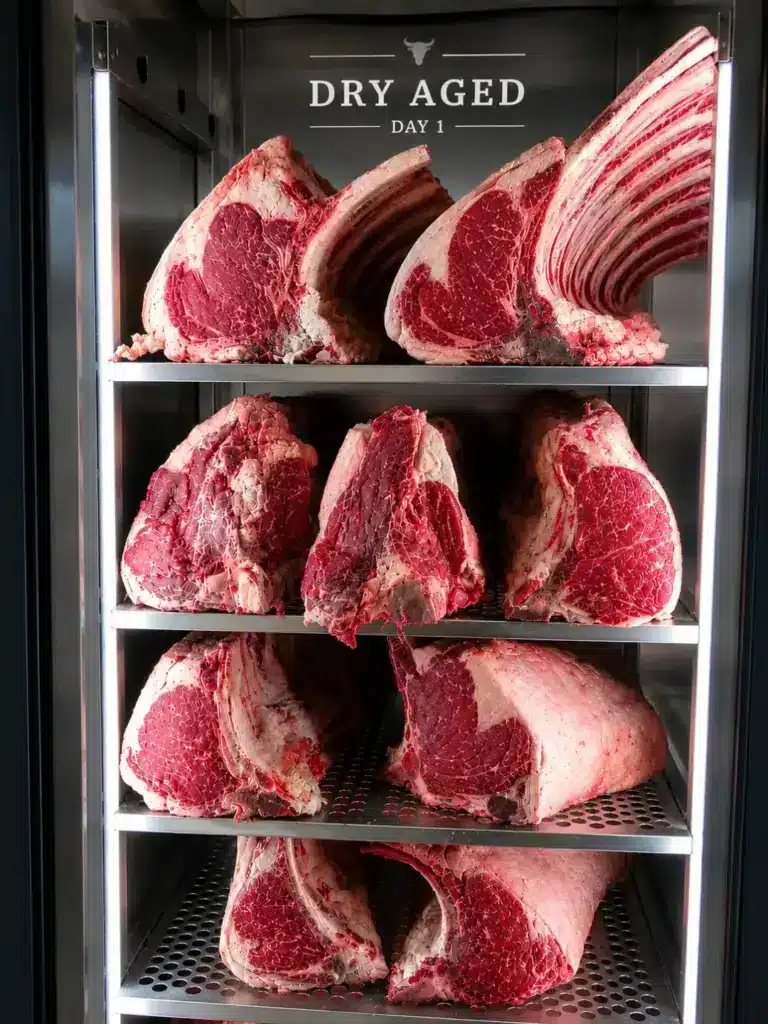
The premium tier of restaurant steaks undergoes a secondary transformation called dry-aging. This is where chemistry takes the wheel to supercharge both texture and flavor.
Dry-aging is the process of resting large primal cuts of beef in a highly controlled environment for anywhere from 21 to 45 days (and sometimes much longer).
The environment must keep a precise temperature, strict humidity levels, and constant airflow. If any of these variables wavers by a fraction, the meat spoils, and thousands of dollars go down the drain.
Two fascinating transformations occur during this period:
First, moisture evaporation concentrates the flavor. A steak is roughly 75% water. As it sits in a dry-aging room, it loses up to 20% of its water weight. As the water evaporates, the actual beef flavor concentrates.
The meat doesn’t taste different; it tastes louder. It develops deep, complex, nutty notes reminiscent of blue cheese or roasted mushrooms.
Second, natural enzymes break down the tough connective tissue. The beef essentially tenderizes itself over time. The result is a steak so tender you could practically cut it with a butter knife.
Trying to replicate this in a standard home refrigerator is a recipe for a very expensive, very dangerous science experiment. Without industrial airflow and humidity control, you are just rotting meat, not aging it.
Restaurants invest tens of thousands of dollars into dedicated aging rooms because they know this controlled decomposition is a shortcut to flavor profiles that cannot be manufactured any other way.
The Element of Fire: Heat Dynamics and Industrial Infrastructure
Once you have the ultimate piece of beef, you need the energy to cook it. This is where the backyard grill faces an insurmountable hardware limitation: the sheer volume of heat energy.
Your backyard propane grill or charcoal setup is a wonderful tool for smoking ribs or charring burgers. It usually tops out around 500°F to 600°F.
If you get your charcoal screaming hot, you might push it a bit higher, but it struggles to maintain that energy the moment a cold piece of meat hits the grates.
A high-end steakhouse doesn’t use a standard grill. They use an industrial infrared overhead broiler, often referred to in the industry as a salamander.
These beasts don’t rely on open gas flames or glowing briquettes. They use ceramic infrared burners that radiate heat downward at temperatures ranging from 1,200°F to 1,800°F.
To put that in perspective, lava erupting from a volcano is roughly 1,300°F to 2,200°F. You are essentially cooking a steak under a controlled volcanic inversion.
While a backyard grill provides a slow sear that risks overcooking the core, an infrared broiler delivers an instant crust with a perfectly rare interior.

The Maillard Reaction on Overdrive
Why does this insane amount of heat matter? It all comes down to a chemical phenomenon known as the Maillard reaction.
This is the reaction between amino acids and reducing sugars that occurs when food is browned. It is the reason toasted bread tastes better than raw dough, and why roasted coffee smells incredible.
In beef, the Maillard reaction creates hundreds of new flavor compounds, giving the steak its distinct, savory crust.
The Maillard reaction begins around 280°F, but it really hits its stride at higher temperatures. On a backyard grill, achieving a deep, dark crust takes time because the heat transfer is relatively slow.
By the time you get that beautiful brown exterior, the intense heat has traveled deep into the center of the meat, creating a thick, gray, overcooked band of dry beef surrounding a tiny core of pink.
An industrial broiler transfers heat so rapidly that it triggers the Maillard reaction almost instantly. It flashes the exterior of the steak into a crisp, caramelized, mahogany crust in a matter of seconds.
Because the exposure time is so brief, the heat never has the chance to penetrate deep into the core. This allows restaurants to deliver a steak with a flawless crust while keeping the interior perfectly uniform, wall-to-wall pink.
The Secret Ingredients (That Aren’t Actually Secret)
We’ve covered sourcing and infrastructure, but what happens right on the kitchen line?
This is where home cooks often shoot themselves in the foot due to a lack of confidence or a misplaced fear of basic ingredients. Steakhouses do not play conservative games with seasoning.
The Salt Threshold
If you watched a line cook season a steak at your favorite high-end restaurant, your blood pressure would probably spike just looking at it.
Home cooks tend to sprinkle salt from a couple of inches above the meat, creating an uneven, light dusting. Chefs, on the other hand, rain down coarse kosher salt from a foot above the meat, ensuring full, heavy, uniform coverage.
Salt is not just a flavor enhancer; it is a functional tool.
When applied correctly ahead of time, salt draws out surface moisture through osmosis. The salt then dissolves into that moisture, creating a highly concentrated brine that is reabsorbed deep into the muscle fibers.
This breaks down tight proteins, making the meat juicier while ensuring every single bite is seasoned from the outside all the way to the core.
Furthermore, by drawing out and evaporating surface moisture, salt creates a bone-dry exterior.
Because moisture is the sworn enemy of a good sear (water turns to steam, and steam boils meat instead of browning it), a dry surface ensures an explosive Maillard reaction the moment it hits the heat.
The Unapologetic Use of Butter
If there is a single, ultimate open secret in the restaurant industry, it is this: everything tastes better because it is drowning in butter.
When your steak is lounging in the broiler or pan, it is constantly basted with fat. But the real magic happens right as it leaves the heat.
Before that steak is placed on a plate to be carried to your table, it is treated to a technique called finishing with butter.
Once the hot steak leaves the heat, it is immediately glazed with clarified butter. This process transforms it into a glossy, rich, and savory masterpiece.
Chefs will swipe a heavy brush of clarified butter across the top of the hot steak, or place a cold pat of compound butter (infused with garlic, fresh rosemary, and thyme) directly on top to melt over the crust.
This creates a glossy, silken sauce that clings to the caramelized exterior. It adds a layer of dairy richness that rounds out the sharp, metallic tang of the beef iron.
When you cut into a restaurant steak and find it impossibly rich, you aren’t just tasting beef fat; you are tasting a magnificent amount of high-quality butter.

Precision Kitchen Workflows and the Physics of Cooking
The final piece of the puzzle is execution. In a high-volume, professional kitchen, consistency is a science. They don’t guess; they measure. They rely on rigid workflows designed around the physical properties of meat.
The Danger of the Cold Steak
A classic backyard mistake is pulling a steak straight out of the icy depths of the refrigerator and throwing it directly onto a screaming hot grill grate.
When you do this, you are fighting a losing battle against physics. The exterior of the meat heats up instantly, but the core remains at a chilly 38°F.
By the time the interior heats up to a safe, edible medium-rare (around 130°F), the outer layers have been exposed to high heat for far too long.
You end up with an unevenly cooked steak that is tough on the outside and underdone in the center.
Professionals understand the importance of tempering. They pull the steaks out of refrigeration well ahead of service, letting them rest on the counter until the internal temperature rises toward room temperature.
This minimizes the thermal shock when cooking begins, allowing the heat to travel evenly through the meat for a uniform cook.
Mastering Carryover Cooking and the Mandatory Rest
When a steak is exposed to intense heat, the muscle fibers tighten up like coiled springs. This mechanical contraction squeezes the internal juices away from the heat source, pushing them inward toward the center of the steak.
If you cut into a steak the absolute second it comes off the fire, all that trapped, highly pressurized moisture will instantly rush out onto your plate, leaving you with a puddle of liquid and a dry, gray piece of leather.
When a steak is on the fire, the muscle fibers contract and push juices to the center. If you make an immediate cut, those juices escape instantly onto the plate, resulting in a dry steak.
However, by resting the meat for 10 minutes, the fibers relax and redistribute the juices evenly throughout for perfection.
Restaurants treat the resting period as a non-negotiable step of the cooking process. As the steak rests away from direct heat for 8 to 10 minutes, the internal temperature stabilizes, and the tightly coiled muscle fibers begin to relax.
As they loosen their grip, the juices migrate back outward, redistributing evenly throughout the entire cut.
During this resting phase, chefs also account for carryover cooking.
A thick steak contains a massive amount of residual thermal energy. Even after you pull it away from the fire, that trapped heat continues to push inward, raising the core temperature by an additional 5°F to 10°F.
A backyard griller often pulls a steak when it looks perfect on their digital thermometer, only to find it overcooked ten minutes later because they failed to pull it early to let carryover cooking finish the job.
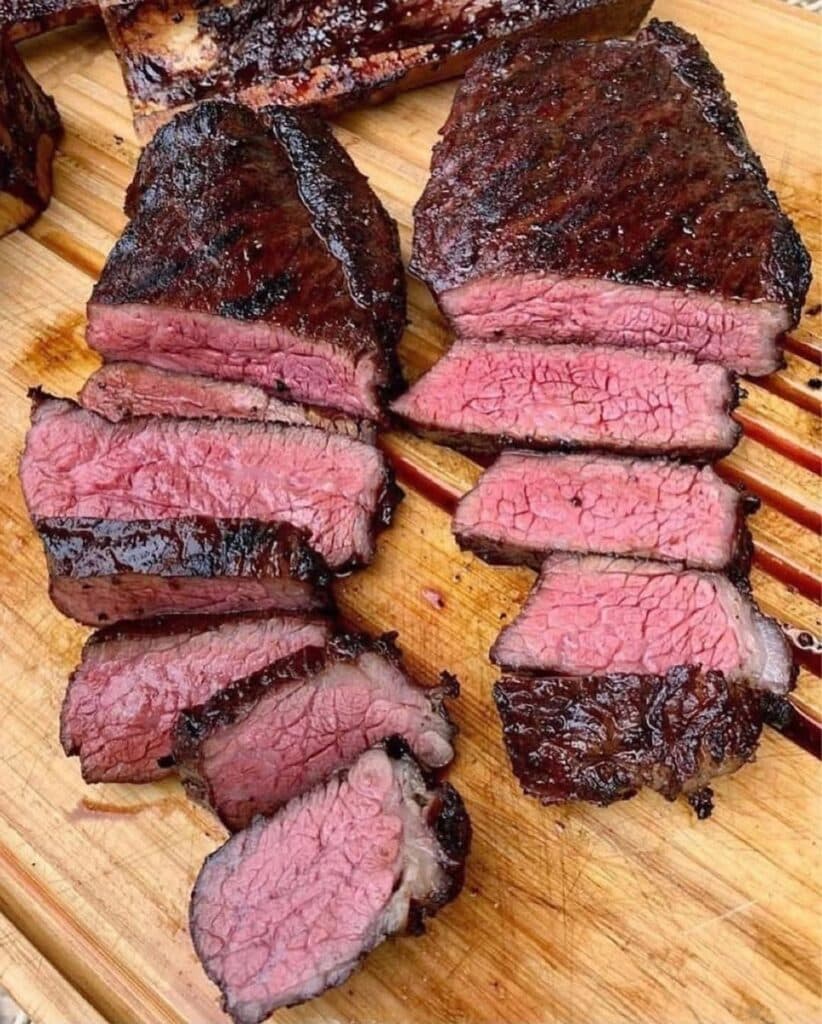
The Bridge: How to Bring the Steakhouse Experience to Your Patio
Now that we know the industry secrets, the question becomes: are we completely helpless at home? Absolutely not.
While you might not have an 1,800°F infrared broiler sitting next to your patio furniture, you can adapt these professional principles to completely transform your home-cooked steaks.
To match that restaurant profile, you need to abandon the traditional mindset of open-flame grilling and embrace the physics of heat retention.
Step 1: Upgrade Your Sourcing
Stop buying thin, generic steaks from the standard supermarket wall. Find a local, dedicated craft butcher or an upscale grocer. Look specifically for cuts labeled USDA Prime or ask if they stock dry-aged beef.
If you are going to put the effort into cooking a world-class meal, start with a canvas that can handle it.
Buy thick cuts – at least 1.5 to 2 inches. Thin steaks cook through to the center way too fast, destroying your chances of building a great crust.
Step 2: The Reverse Sear Technique
Because you don’t have an industrial broiler to flash-cook a thick steak, you should use the most reliable home alternative: the reverse sear.
Instead of starting with high heat, start low and slow. Season your steak heavily with kosher salt and place it in an oven set to a low 225°F (or on the indirect, cooler side of your backyard smoker).
Cook it slowly until the internal temperature reaches about 115°F for medium-rare. This slow heating profile cooks the meat perfectly even from edge to edge and dries out the exterior surface beautifully.
Step 3: The Heavy Metal Finish
While your steak is warming up in the oven, get a heavy cast-iron skillet screaming hot on your stove or side burner. Cast iron has an incredible volumetric heat capacity, meaning it stores a massive amount of thermal energy.
Drop a tablespoon of high-smoke-point oil into the pan, then lay the dry steak down.
Because the steak is already warm and dry, it will form an explosive, restaurant-grade crust in about 60 seconds per side without creating that dreaded gray ring of overcooked meat.
Step 4: The Butter Baste
During the final 30 seconds of the sear, turn the heat down slightly and toss a generous knob of unsalted butter, a few crushed cloves of garlic, and a sprig of fresh rosemary into the pan.
Tilt the skillet slightly and use a large spoon to continuously scoop that foaming, aromatic melted butter over the top of the steak.
Step 5: The Precise Pull and Rest
Pull the steak out of the pan when your digital meat thermometer reads 125°F. Place it on a warm cutting board, pour the remaining pan juices and butter right over the top, and walk away.
Leave it alone for a full 8 to 10 minutes. Let the carryover heat lift it to that sweet spot of 130°F to 135°F while the muscle fibers relax and lock those juices in place.
The Final Verdict
The legendary gap between a backyard barbecue and a luxury dining room isn’t driven by a culinary mystery. It is the predictable outcome of premium livestock selection, extreme energy output, bold seasoning choices, and scientific precision.
The backyard grill is an incredible tool for atmosphere, camaraderie, and that unmistakable hint of woodsmoke.
But when your goal is a flawless, caramelized crust paired with an incredibly rich, uniform, tender interior, you have to transition from a backyard mindset to a kitchen scientist mindset.
Upgrade your heat source, master cast iron browning, and finish with a rich butter baste to bring the steakhouse experience straight to your dinner table.
Frequently Asked Questions
1. What is the single biggest difference between a steakhouse steak and a home-cooked steak?
Infrastructure and sourcing. High-end restaurants use industrial infrared broilers that reach 1,200°F to 1,800°F to create an instant crust, and they have exclusive access to the top tier of USDA Prime and dry-aged beef that rarely makes it to local supermarkets.
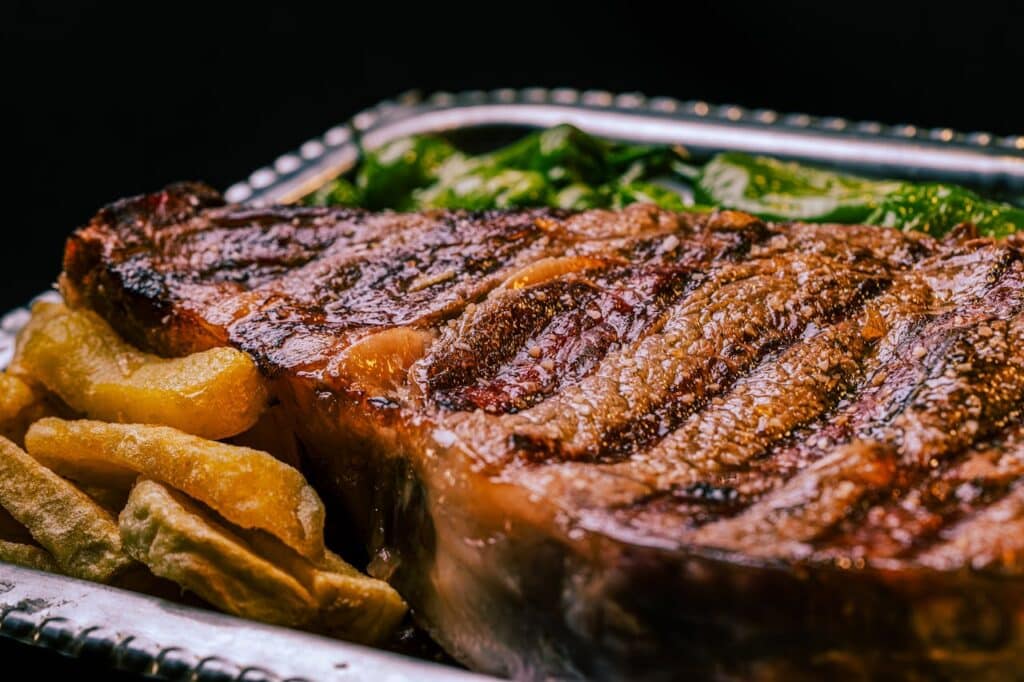
2. Why does my backyard steak always end up with a thick gray ring around the inside?
Because the cooking temperature is too low. A standard backyard grill transfers heat slowly.
By the time you spend enough time over the fire to build a brown crust on the outside, the heat has already traveled deep into the core, overcooking the outer layers of the meat.
3. Do restaurants really put butter on every steak?
Yes, almost universally. Before a steak leaves the kitchen, chefs will brush it with clarified butter or top it with a melting pat of compound butter.
This adds a glossy finish, locks in moisture, and provides a rich flavor that balances the iron-heavy taste of the beef.
4. How long should I actually let my steak rest after cooking?
As a general rule, let it rest on a warm cutting board for 8 to 10 minutes. This gives the tightly coiled muscle fibers time to relax and reabsorb the juices.
If you cut it open immediately, all that moisture will spill out onto the plate, leaving the meat dry.
5. Can I get restaurant-quality results at home without an expensive grill?
Absolutely. Skip the grill entirely and use a heavy cast-iron skillet inside.
By combining the reverse sear method (warming a thick steak in a low oven first) with a screaming-hot cast-iron pan finish and a heavy butter baste, you can easily replicate a $100 steakhouse crust.
Featured image credit: @skirtsteak.nyc
