
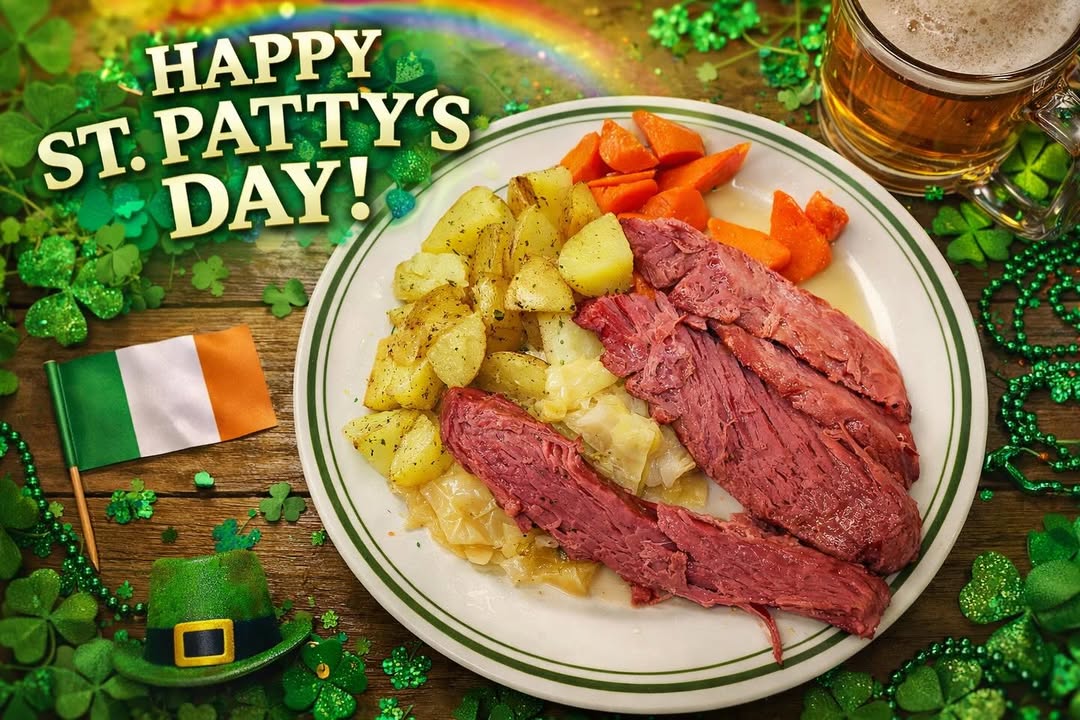
I’ve scrutinized more fat caps and spice rubs in my life than a dermatologist looks at freckles on a Tuesday. As a pitmaster, my life usually revolves around wood splits and butcher paper.
But once a year – or whenever the craving for salty, fork-tender comfort hits – I hang up the tongs and reach for the Dutch oven.
We’re talking about corned beef and cabbage recipes.
It’s a dish that’s often treated like an afterthought, tossed into a pot until it’s gray and sad. We aren’t doing that today. We’re going to treat this brisket with the respect a pitmaster gives a Wagyu flat.
Whether you’re honoring your Irish roots or you just found a brisket on sale and have a literal head of cabbage taking up space in the crisper, this is your definitive roadmap.
The “Irish” History That Actually Started in New York
If you walked into a pub in Dublin 200 years ago and asked for corned beef, they’d probably look at you like you had two heads.
In the Old Country, the traditional celebratory meal was bacon and cabbage. But we aren’t talking about the crispy strips you put on a cheeseburger; we’re talking about Irish back bacon – a salty, cured pork joint.
When Irish immigrants flooded into New York City in the 19th century, back bacon was hard to find and expensive. You know who lived right next door to the Irish tenements?
Jewish immigrants. They frequented kosher butcher shops that sold brined beef brisket.
It was cheap. It was salty. It reminded the Irish of home.
They swapped the pork for beef, kept the cabbage because it was the cheapest vegetable at the market, and a classic was born. It’s a beautiful story of two cultures colliding in a melting pot – literally.
So, when you eat this, you aren’t just eating dinner; you’re eating the flavor of the American Dream.
Choosing Your Weapon: Point vs. Flat
In the world of BBQ, we argue about wood types. In the world of corned beef, we argue about cuts. When you go to the store, you’ll see two main options.
Choosing the wrong one isn’t a “fail,” but it changes the experience.
The Flat Cut (The Perfectionist’s Choice)
The flat is the leaner, more uniform part of the brisket.
If you want those picture-perfect, beautiful slices that look like they belong on a magazine cover, buy the flat. It’s easier to slice against the grain and makes for a killer Reuben sandwich the next day.
However, because it’s leaner, it’s less forgiving. Overcook it by twenty minutes, and you’re eating a salty shoe-sole.
The Point Cut (The Flavor Bomb)
This is the pitmaster’s favorite. The point is the fat-marbled, triangular end of the brisket. It’s “ugly” compared to the flat, but fat equals flavor.
It’s much harder to dry out, and the meat will naturally want to shred rather than slice. If you want “melt-in-your-mouth” texture and don’t care about “pretty” slices, the point is your best friend.
Pitmaster Secrets: The “Why” Behind the Method
Before we get to the stovetop, we need to talk about the physics of the pot. Corned beef is a tough cut of meat that has been cured in salt. If you treat it like a steak, you lose.
1. The Great Rinse
The meat comes in a bag filled with “corned” (large grain) salt brine.
Rinse it. If you don’t, your final dish will be so salty it’ll make your thirst feel like a desert trek. Give it a good cold-water bath to remove the surface brine.
2. Never, Ever Boil
I know the recipes say “boil,” but they are lying to you. Boiling toughens muscle fibers.
You want a gentle simmer. Think of it like a warm bath, not a jacuzzi on high. If you see big, aggressive bubbles, turn the heat down.
We want the connective tissue (collagen) to melt into gelatin. That only happens with low, slow heat.
3. The Cabbage Conspiracy
Most people throw the cabbage in too early. You end up with a gray, mushy mess that smells like a locker room. Cabbage only needs about 15 to 20 minutes. It should have a slight snap to it.
The Recipe: The “Low & Slow” Masterpiece
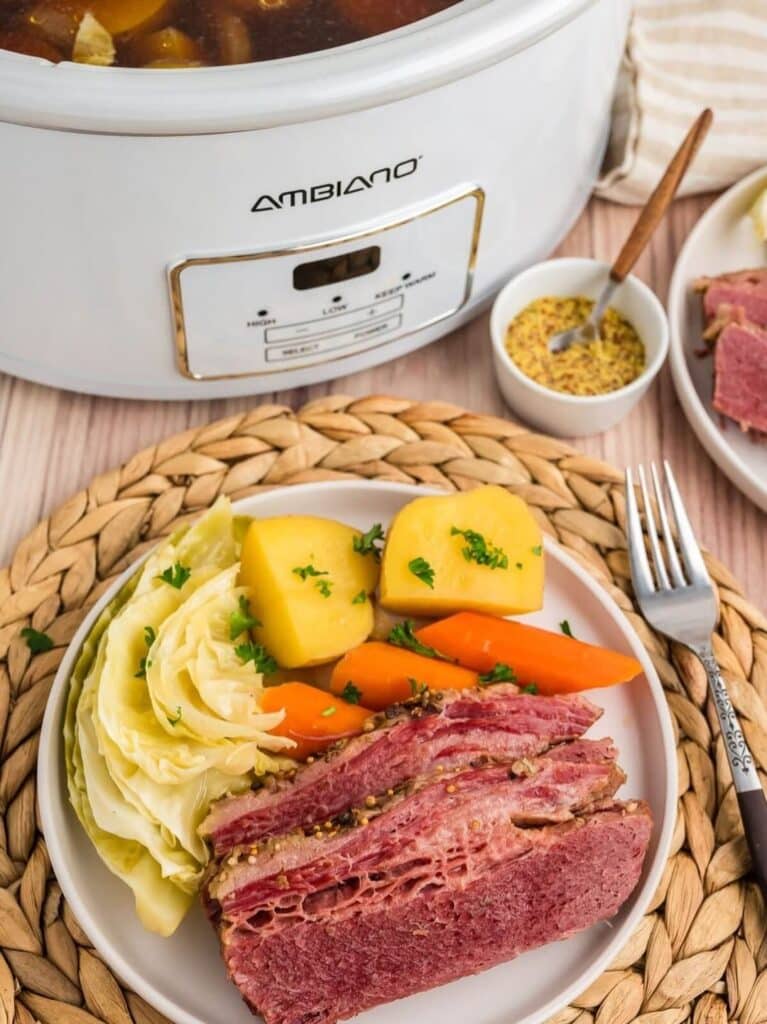
This recipe is designed for a 3-to-4-pound brisket. It’s simple, but every ingredient serves a purpose.
The Prep
- The Beef: One 4lb corned beef brisket (flat or point).
- The Liquid: Water is fine, but one bottle of Irish Stout (like Guinness) adds a malty, earthy backbone that water can’t touch.
- The Aromatics: One onion (quartered), four smashed garlic cloves, and two bay leaves. Use the spice packet that came with the meat, but add a teaspoon of black peppercorns for a bit more bite.
The Execution
- Submerge the Beast: Place your rinsed beef in a large pot. Add the onion, garlic, spices, and your stout. Fill the rest with water until the beef is covered by at least two inches.
- The Simmer: Bring it to a boil, then immediately drop the heat to low. Cover it. Now, go do something else. This needs about 50 minutes per pound.
- The Test: Don’t rely on a clock. Use a fork. If the fork slides in and out with zero resistance, you’re gold.
- The Veggie Drop: About 30 minutes before the beef is done, toss in your halved red potatoes and thick-cut carrots.
- The Final Act: In the last 15 minutes, lay your cabbage wedges right on top of the liquid. Cover the pot and let the steam do the work.
The Rest
This is the most important part of any corned beef and cabbage recipe.
Take the meat out and let it sit on a cutting board for 15 minutes before you touch it. If you cut it immediately, all those juices will run away, and your meat will turn into a desert.
Slicing: Don’t Ruin It at the Finish Line
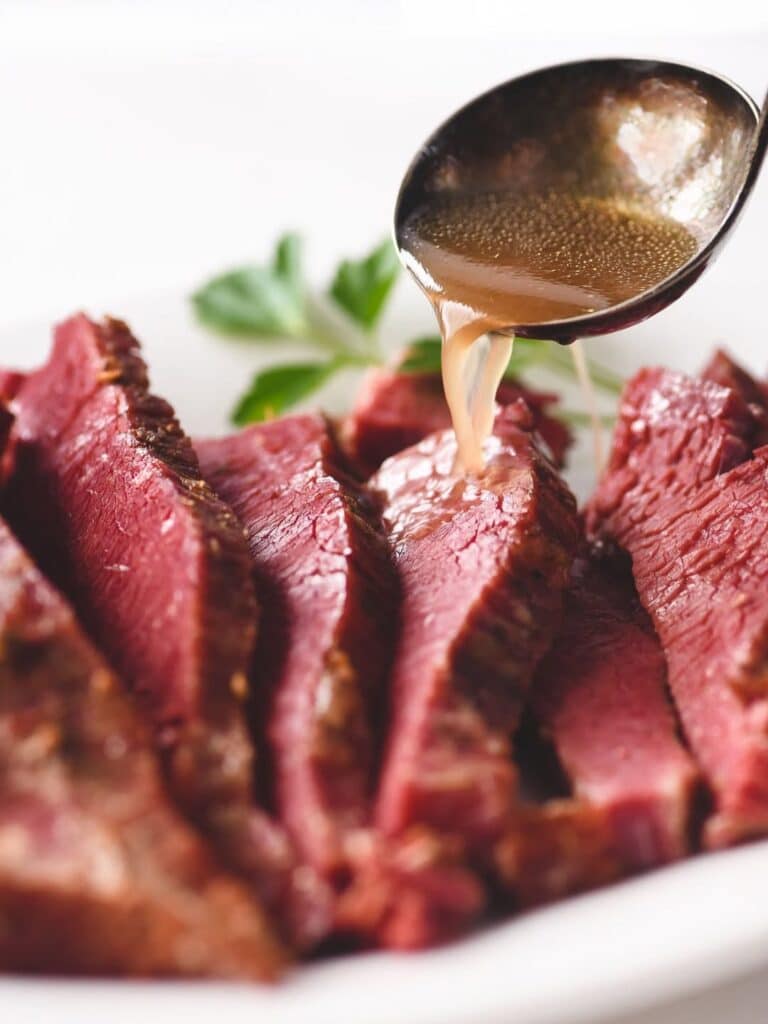
You’ve waited three hours. Don’t mess it up now. Look at the meat. You’ll see long lines running across it – that’s the grain. Slice perpendicular to those lines.
If you slice with the grain, the meat will be stringy and tough to chew. Slice against it, and the fibers stay short, making the meat feel incredibly tender.
The “Crutch” Strategy: Steam vs. Simmer
In the BBQ world, we use the “Texas Crutch” (wrapping meat in foil) to power through the stall. With corned beef, you can apply a similar principle by oven-braising instead of stovetop simmering.
By placing the brisket in a roasting pan with an inch of liquid and sealing it tight with a double layer of heavy-duty foil, you create a high-pressure steam environment. This breaks down collagen even faster than simmering in a pot.
The result is a brisket that holds its structural integrity better – so it doesn’t fall apart when you touch it – but melts the second it hits your tongue. It’s the ultimate “set it and forget it” move for a busy host.
Regional Brine Variations: Beyond the Packet
Most folks just dump in the “mystery sand” spice packet that comes in the bag. If you want to elevate the dish, you need to understand the pickling spice profile.
Traditional blends are heavy on mustard seed and coriander, but a “West Coast” twist might include dried orange peel and star anise for a bright, floral nose.
Down South, we might add a few dried red chilies to the water to give the meat a “back-of-the-throat” warmth.
Building your own aromatics allows you to control the flavor profile, moving it away from “generic salty beef” toward a nuanced, artisanal brisket that smells like a high-end deli.
The Science of the “Pink” Color
Ever wonder why corned beef stays bright pink even when it’s cooked to death? It’s not magic; it’s Sodium Nitrite (Pink Curing Salt #1). This additive prevents spoilage and keeps the myoglobin in the meat from turning gray.
As a pitmaster, I appreciate the chemistry here because that nitrite reacts with the heat to create that signature “cured” flavor profile.
If you ever try to “corn” your own beef at home without nitrites, you’ll end up with a pot roast that tastes like salt – but looks like a rainy Tuesday in London.
Understanding this chemical reaction helps you appreciate why the texture of corned beef is so distinct from a standard smoked brisket.
Beverage Pairing: Stout, Cider, or Soda?
What you drink with your corned beef is just as important as how you cook it. While a dry Irish Stout is the traditional companion, the heavy salt content of the beef actually pairs beautifully with a crisp, semi-sweet hard cider.
The acidity and effervescence act as a palate cleanser, cutting through the fatty richness of the point cut. If you’re keeping it non-alcoholic, a spicy ginger beer is the pro move.
The “burn” of the ginger mimics the heat of horseradish, creating a bridge between the beverage and the condiments on your plate. It’s all about balancing the salt, fat, and acid triad.
The “Glaze” Controversy: To Bake or Not to Bake?
Some purists say the beef should go straight from the pot to the plate. I disagree. Taking the cooked brisket, slathering it with a honey-mustard or brown sugar glaze, and popping it under the broiler for five minutes is a game-changer.
This creates a caramelized crust (the Maillard reaction) that provides a sweet contrast to the salty interior. It transforms the dish from a “boiled dinner” into a roasted centerpiece.
Think of it like the “bark” on a smoked brisket – it adds a layer of texture that makes every bite more interesting.
Knife Skills: The Anatomy of the Grain
I see people ruin $50 worth of meat with a $5 serrated bread knife every day.
To do justice to a long-simmered brisket, you need a long, scalloped slicing knife. Because the muscle fibers in a brisket are long and rope-like, your goal is to “shorten” them.
By slicing at a 45-degree angle against the grain, you ensure that the teeth don’t have to work hard to break the meat down. If you see the meat “shredding” while you cut, your knife is either dull or you’re cutting with the grain.
Proper slicing mechanics are the difference between a tender slice and a mouthful of dental floss.
Upcycling the “Pot Liquor”
Once the meat and veggies are gone, don’t you dare pour that liquid down the drain. That “pot liquor” is liquid gold, infused with beef fat, cabbage sweetness, and pickling spices.
Pitmasters use “mop sauces”; you can use this as a base for an incredible Split Pea or Navy Bean soup. The salt and nitrites from the beef act as a seasoning base that you simply cannot replicate with store-bought broth.
Simply strain the liquid, freeze it in quart containers, and you have a flavor-bomb starter for your next slow-cooker meal. It’s the ultimate zero-waste kitchen hack.
The “Grey” Corned Beef Myth
In some New England circles, “Grey Corned Beef” is the gold standard. This is brisket cured only with salt, omitting the nitrites. It’s a colonial-style preparation that focuses purely on the mineral flavor of the beef.
While it lacks the “holiday pink” look, the flavor is deeply savory and reminds you of a high-quality pot roast.
It’s a polarizing topic in the culinary world, but trying a natural cure can be an exciting experiment for the purist who wants to taste the beef in its most “naked” and traditional form.
Serving and Leftovers
Serve this with a massive dollop of grainy Guinness mustard or a sharp horseradish cream. The acidity cuts through the fat of the beef perfectly.
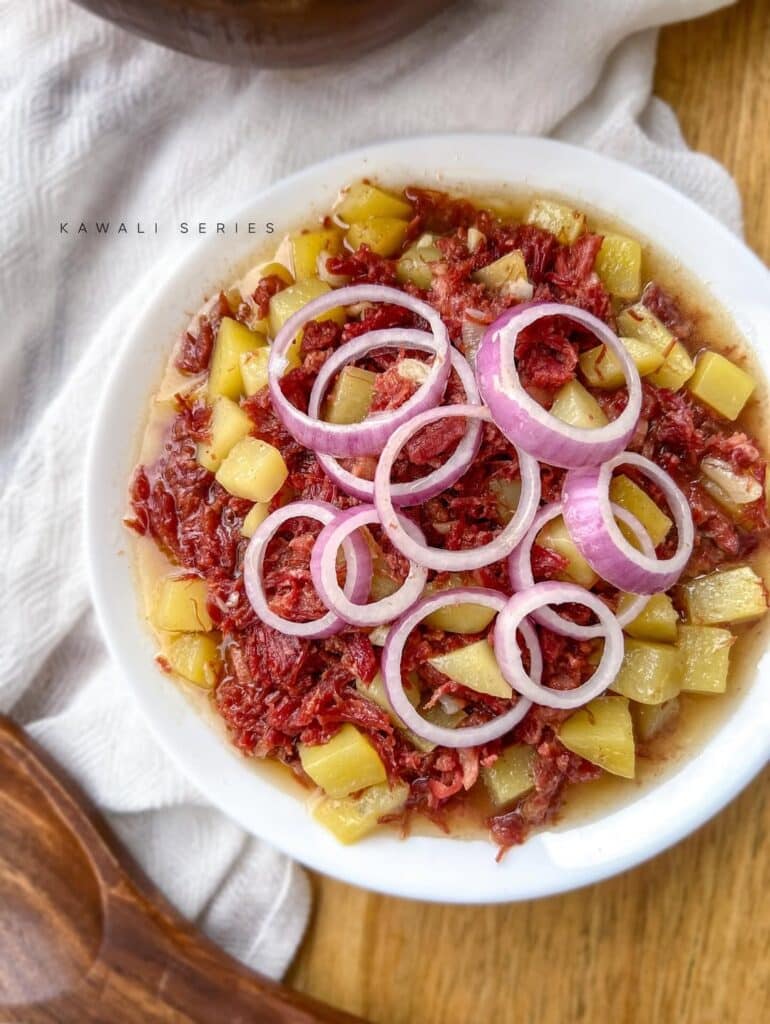
And if you have leftovers? You’re a lucky soul. Chop that beef up, fry it in a skillet with the leftover potatoes until crispy, and top it with a fried egg. That’s Corned Beef Hash, the breakfast of champions.
Cooking this isn’t just about a meal; it’s about patience and technique. You’ve just turned a humble, salty slab of beef into a centerpiece.
Frequently Asked Questions (FAQ)
Is corned beef and cabbage actually Irish?
Not exactly. In Ireland, the traditional meal was back bacon and cabbage.
When Irish immigrants arrived in New York, they found back bacon expensive and instead turned to the affordable, salted beef brisket sold by their Jewish neighbors.
It is a classic Irish-American “melting pot” dish.
What does “corned” actually mean?
The term “corned” refers to the large grains of salt (historically called “corns”) used to brine and preserve the beef.
Why is the meat always pink?
The pink color comes from Sodium Nitrite (Pink Curing Salt #1). This additive prevents spoilage and reacts with the meat’s myoglobin to keep it from turning gray during the long cooking process.
Shopping & Prep
Should I buy the Flat Cut or the Point Cut?
- The Flat Cut: Leaner and uniform. Choose this if you want beautiful, magazine-ready slices or perfect sandwich meat.
- The Point Cut: Fattier and more marbled. Choose this for maximum flavor and a “melt-in-your-mouth” texture that shreds easily.
Do I really need to rinse the meat?
Yes. The brisket comes sitting in a heavy brine. If you don’t rinse it under cold water before cooking, the final dish will be overwhelmingly salty.
Can I use something other than water for the cooking liquid?
Absolutely. Adding a bottle of Irish Stout (like Guinness) provides a malty, earthy depth. You can also customize the flavor by adding star anise, dried orange peel, or even dried chilies to the pot.
Cooking Techniques
How long does it take to cook?
A good rule of thumb is roughly 50 minutes per pound at a gentle simmer. A 4lb brisket typically takes about 3 to 3.5 hours.
Why is my corned beef tough?
You likely boiled it. High heat toughens muscle fibers. To get tender beef, you must maintain a gentle simmer – small bubbles only – to allow the collagen to melt into gelatin.
When do I add the vegetables?
Don’t toss them in at the start!
- Potatoes and Carrots: Add 30 minutes before the beef is finished.
- Cabbage: Add 15 minutes before the beef is finished. This prevents the cabbage from becoming gray and mushy.
Serving & Storage
How do I slice it correctly?
Always slice perpendicular (against) the grain. Look for the long lines of muscle fiber and cut across them. This shortens the fibers, making every bite tender rather than stringy.
What should I do with the leftover liquid?
Don’t throw it away! This “pot liquor” is packed with flavor. Strain and freeze it to use as a base for split pea soup, navy bean soup, or a slow-cooker stew.
How should I serve the leftovers?
Leftovers are perfect for Corned Beef Hash (fried up with potatoes and a fried egg) or the classic Reuben sandwich with Swiss cheese, sauerkraut, and Russian dressing.
Final Thoughts
At the end of the day, a perfect plate of corned beef and cabbage is more than just a recipe – it’s a testament to the “low and slow” philosophy that defines great cooking.
Whether you’re a seasoned pitmaster or a home cook looking to nail a classic, remember that patience is your secret ingredient.
By honoring the history of this Irish-American staple and respecting the science of the simmer, you’ve turned a humble, brined brisket into a melt-in-your-mouth masterpiece. So, pour yourself a stout, slice against the grain, and enjoy the fruits of your labor.
After all, the only thing better than that first tender bite is knowing you’ve got enough leftovers for the best Reuben of your life tomorrow.
Featured image credit: @renshaw_lounge_
