
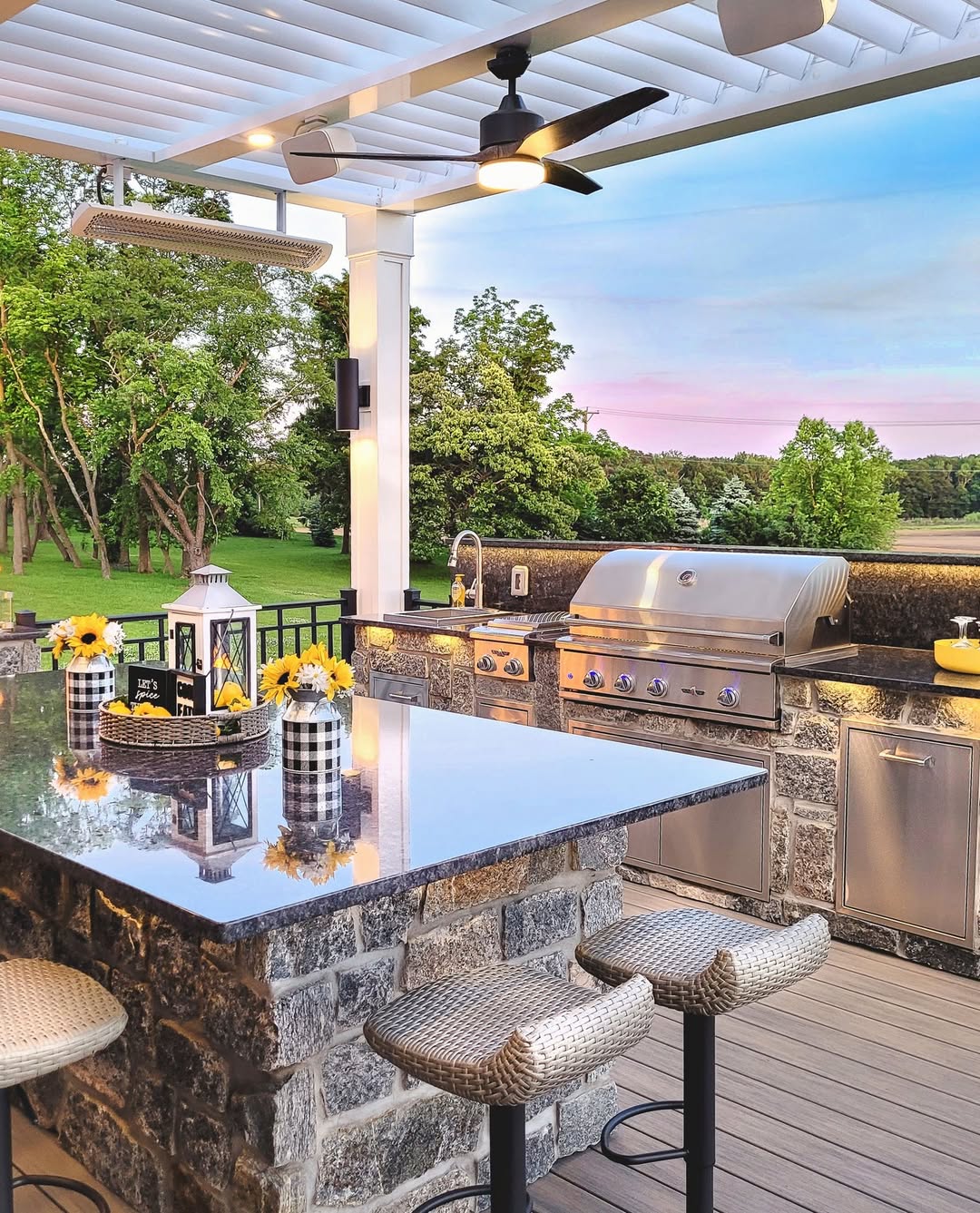
Ninety percent humidity, darkening skies, and a hot grill in front of you – that’s when you realize a typical outdoor kitchen can’t handle the tropics.
I’ve cooked everywhere – from backyard barbecue pits to beachside cook stations where the salt air eats metal faster than your guests eat ribs. And I can tell you straight: a great tropical-climate outdoor kitchen design isn’t about looking pretty on Instagram.
It’s about surviving heat, humidity, monsoon rains, and the occasional sideways storm.
The good news? When you design it right, a tropical outdoor kitchen becomes the ultimate year-round cooking playground.
Let’s break down the 10 smartest tips I’ve learned from sweat, smoke, and a few expensive mistakes.

1. Choose Materials That Laugh at Humidity
Humidity is sneaky. It doesn’t just make you sweat – it makes your cabinets swell, your hinges rust, and your grill regret its life choices.
In a proper tropical-climate outdoor kitchen design, materials are everything.
Look for:
- Marine-grade stainless steel (304 or 316) – especially in coastal areas
- Powder-coated aluminum
- Sealed concrete
- Natural stone
- Teak or other dense tropical hardwoods
What to avoid? Regular steel, untreated wood, and anything labeled “indoor use.” That’s like wearing suede shoes in a typhoon.
Key point:If it can’t handle moisture 24/7, it doesn’t belong in a tropical outdoor kitchen.
2. A Roof Is Not Optional – It’s Survival Gear
In the tropics, rain doesn’t politely fall. It attacks sideways.
I once saw a beautiful outdoor kitchen flooded because the owner figured a pergola was “good enough.” It wasn’t. The grill turned into a decorative fish tank.
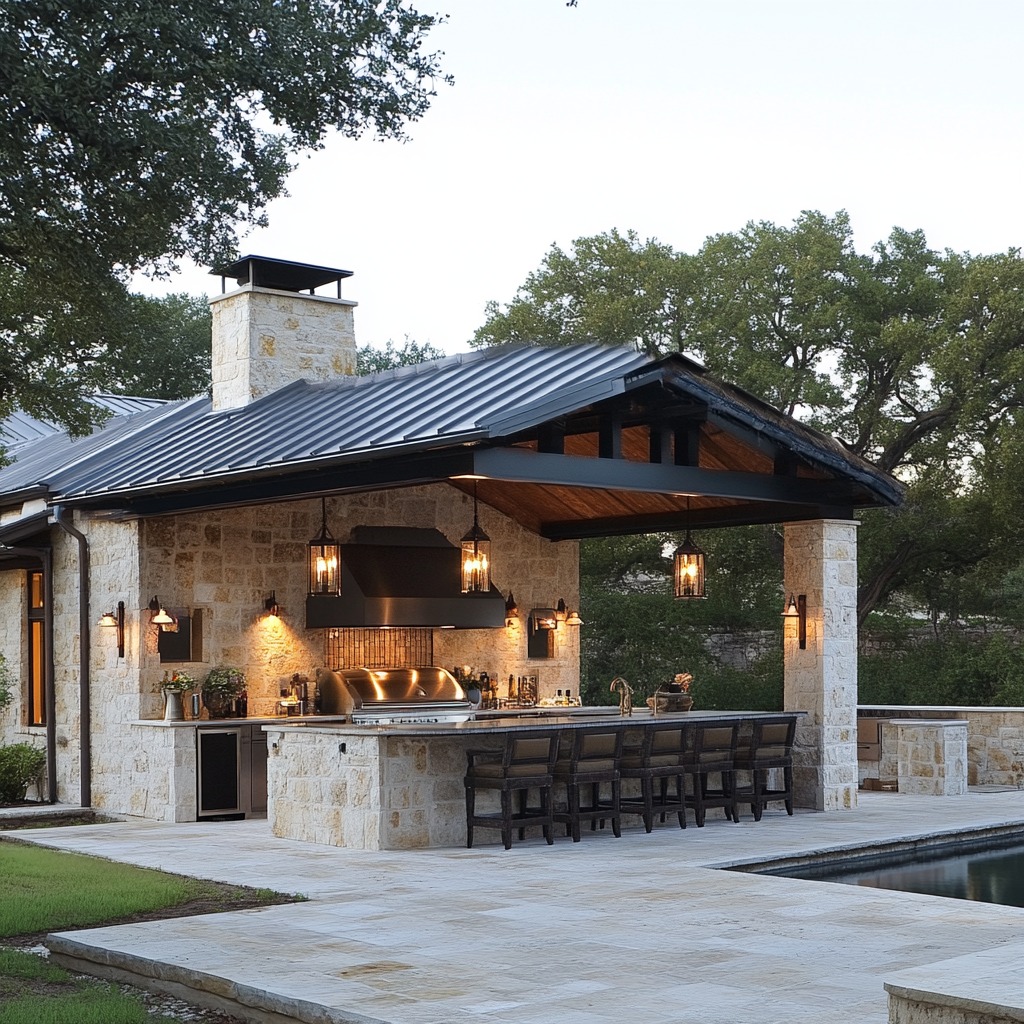
Your tropical-climate outdoor kitchen design needs serious overhead protection:
- Solid insulated roofing panels
- Proper roof pitch for drainage
- Wide overhangs
- Heat-reflective materials
You want shade from brutal midday sun and protection from monsoon rain. A covered kitchen also keeps appliances cooler and extends their lifespan.
Important phrase:Full overhead coverage dramatically increases durability.
3. Design for Cross-Ventilation
Here’s the irony: you’re cooking over fire… in a place that already feels like a sauna.
Without airflow, your outdoor kitchen becomes a steam room that serves brisket.
Smart placement is key:
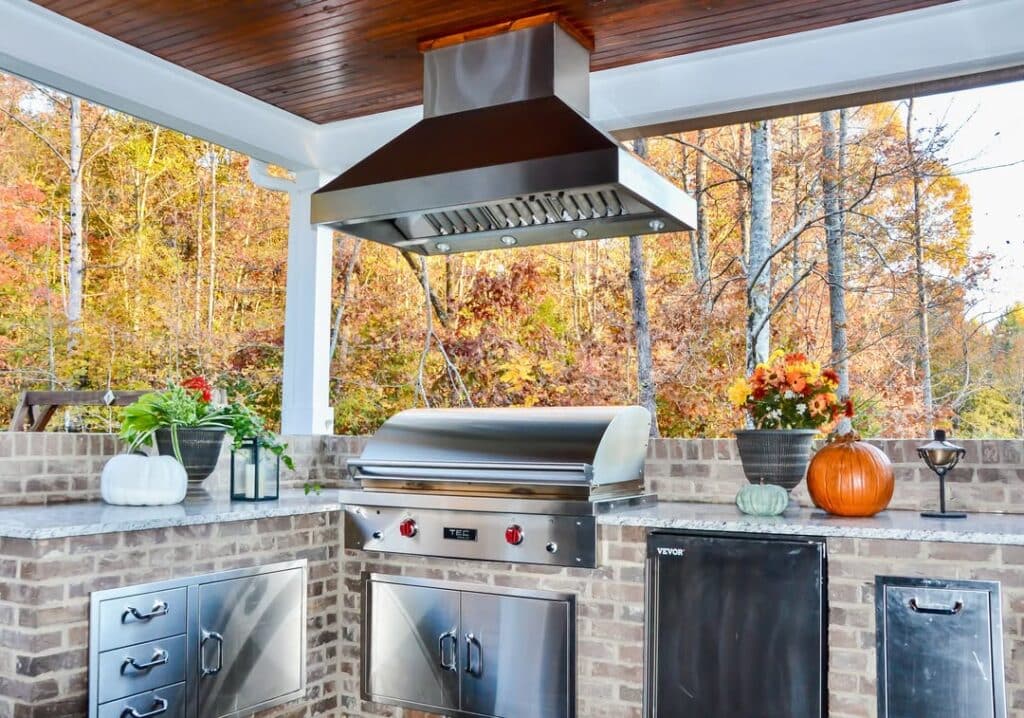
- Position the kitchen to catch prevailing winds
- Keep at least two open sides
- Use high ceilings to release heat
- Install outdoor-rated ceiling fans
Ventilation isn’t luxury. It’s comfort insurance.
Key point:Airflow is the difference between enjoying the cook and surviving it.
4. Plan Drainage Like You Expect a Flood
Because you should.
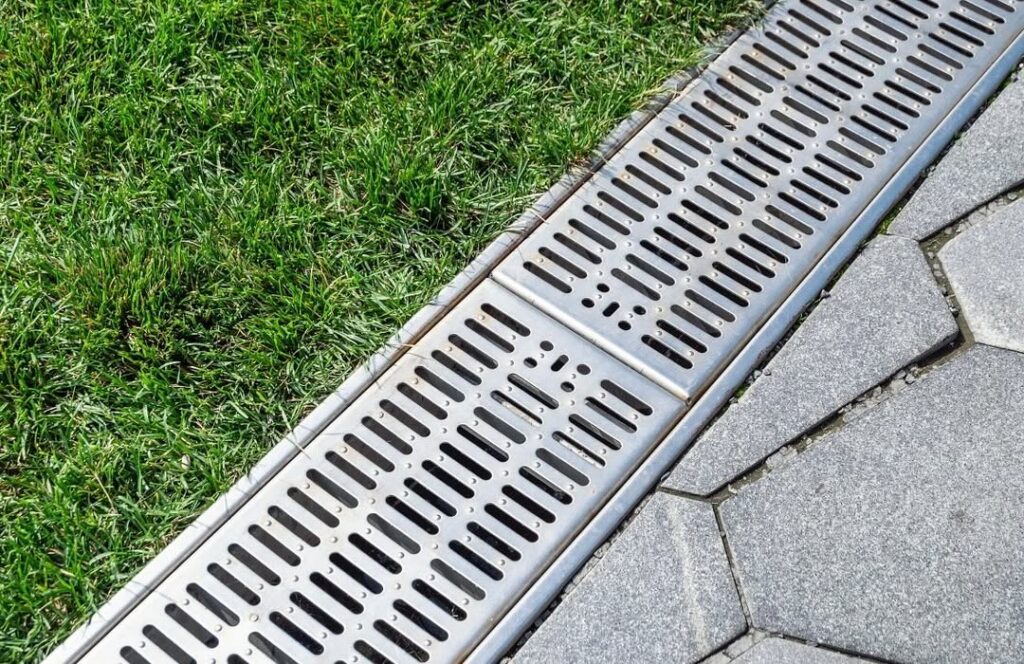
Heavy rain is part of tropical life. Your flooring must be slightly sloped – just enough to guide water away from cooking zones.
Best practices:
- Non-slip textured tile or sealed concrete
- Trench drains along edges
- Slight elevation above yard level
Water pooling around your grill is not charming. It’s a hazard.
Important phrase:Proper drainage protects both safety and structural integrity.
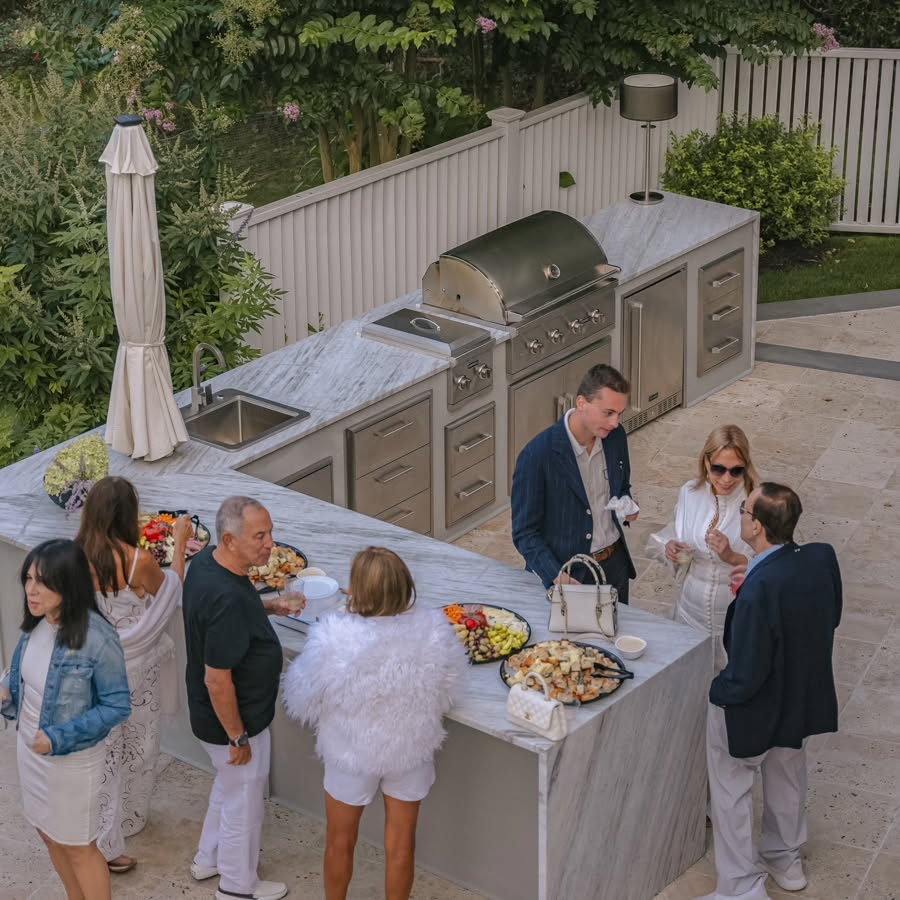
5. Pick Countertops That Handle Heat and UV
Your countertops will face:
- Direct sunlight
- High heat from grills
- Constant humidity
Not all materials survive that triple threat.
Best choices:
- Granite
- Sealed concrete
- Sintered stone
Avoid laminate or unsealed wood unless you enjoy warping.
I once had a client insist on a trendy surface that looked amazing for six months. By month seven? It looked like a potato chip.
Key point:UV-resistant, heat-tolerant surfaces are essential in tropical climates.
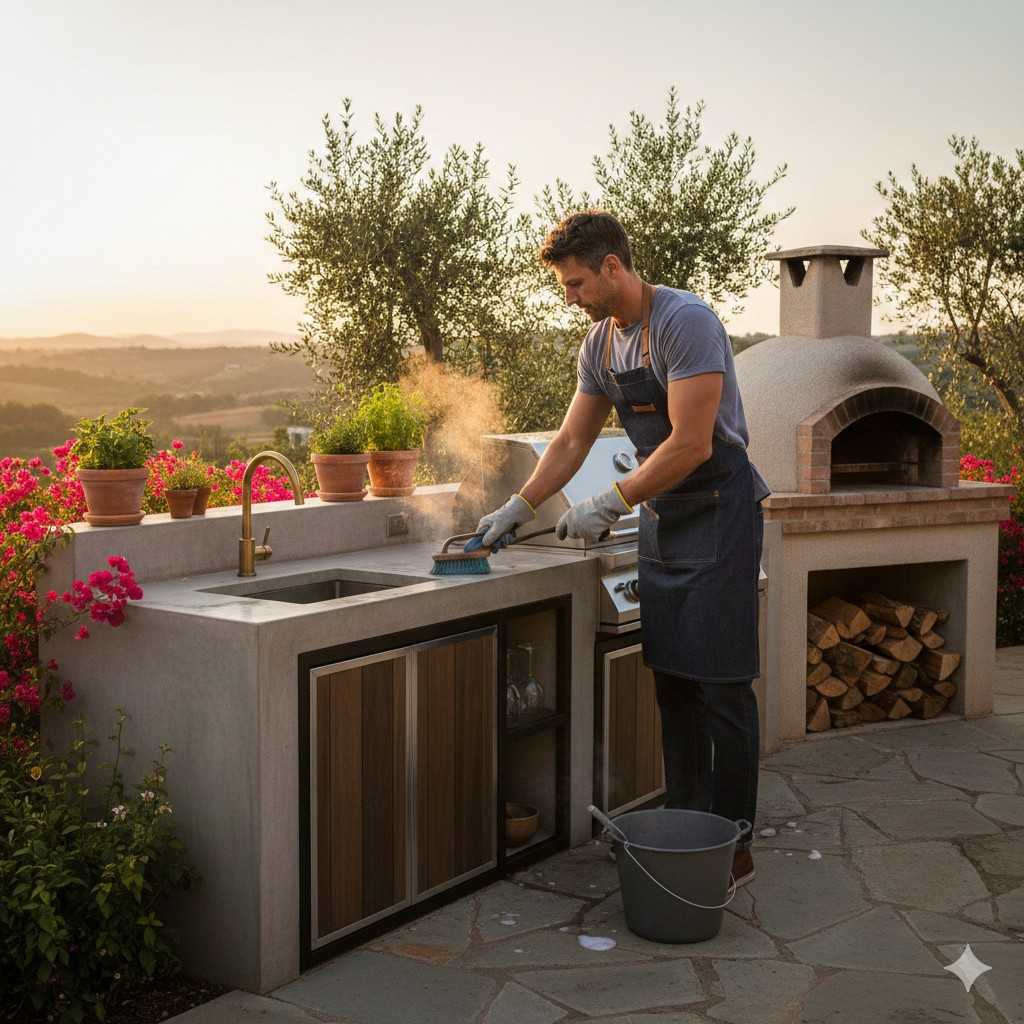
6. Protect Against Rust, Mold, and Mildew
If moisture had a favorite hobby, it would be ruining outdoor kitchens.
In a serious tropical-climate outdoor kitchen design, prevention is better than repair.
Smart protection includes:
- Ventilated cabinetry
- Anti-mold sealants
- Stainless hardware
- Routine wipe-downs
Pro tip from someone who learned the hard way: open cabinets occasionally to let them breathe. Mold loves dark, closed spaces.
Important phrase:Humidity control equals longevity.
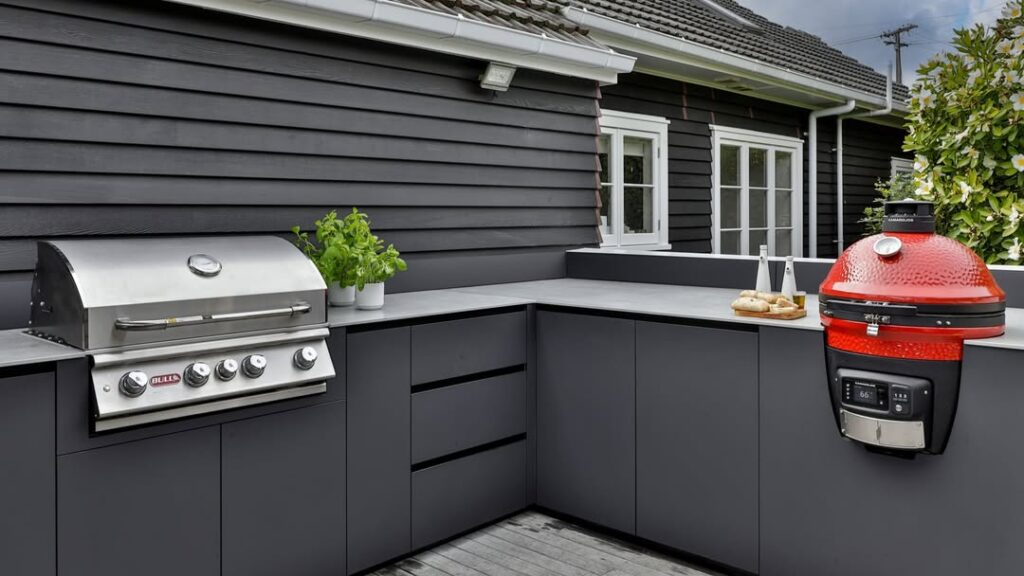
7. Use Outdoor-Rated Appliances Only
I know. That indoor fridge looks like a bargain.
Don’t do it.
Indoor appliances are not built for:
- Heat fluctuations
- Moisture exposure
- Outdoor electrical demands
Invest in true outdoor-rated equipment with proper IP ratings for electrical outlets.
Yes, it costs more upfront. But replacing rusted components every year costs more in the long run.
Key point:Outdoor-rated appliances are non-negotiable.
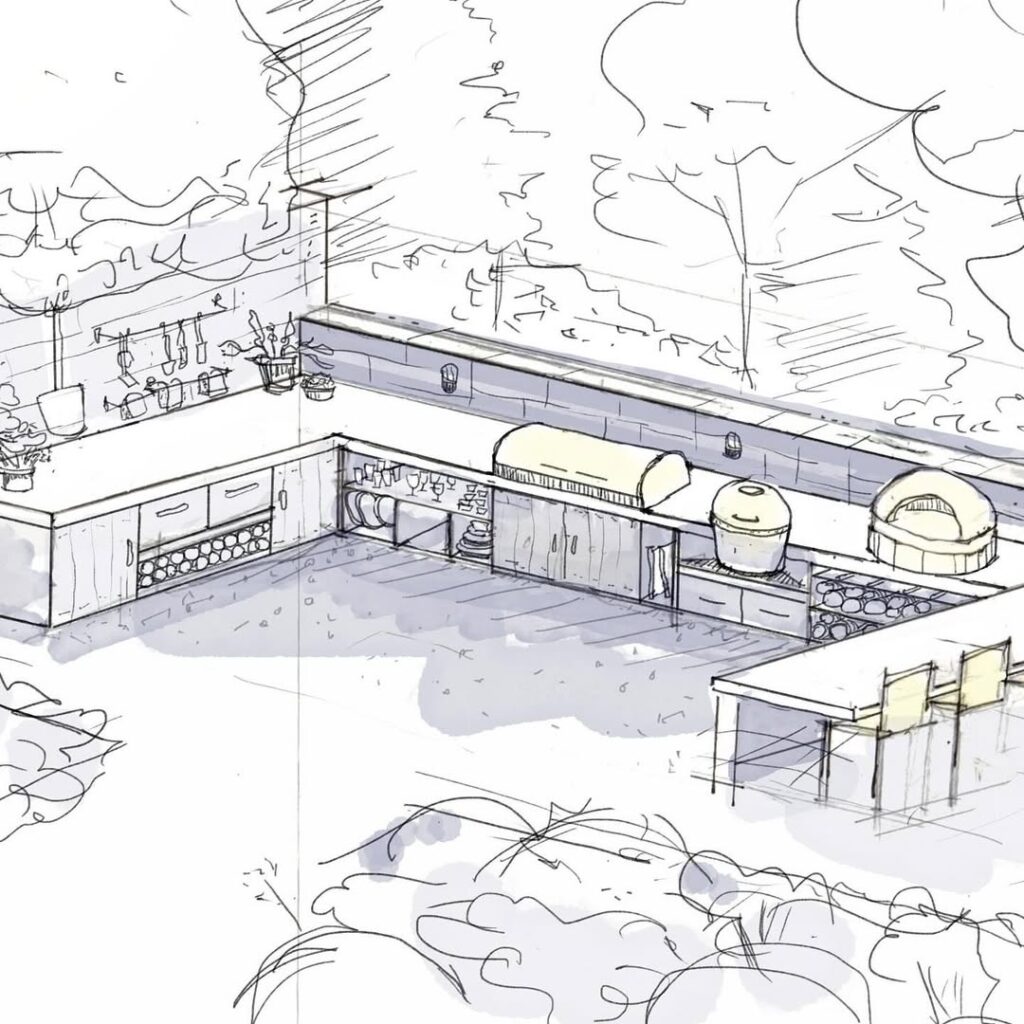
8. Layout Matters More Than You Think
Good cooking flow makes you feel like a chef. Bad layout makes you feel like you’re playing kitchen dodgeball.
Your tropical-climate outdoor kitchen design should respect the classic work triangle:
- Prep area
- Cooking area
- Cold storage
But in tropical environments, you also consider:
- Keeping seating away from direct heat
- Avoiding walls that reflect sun
- Creating shaded dining zones
Smart spacing also improves airflow – and airflow improves everything.
Important phrase:Layout affects comfort, efficiency, and temperature control.
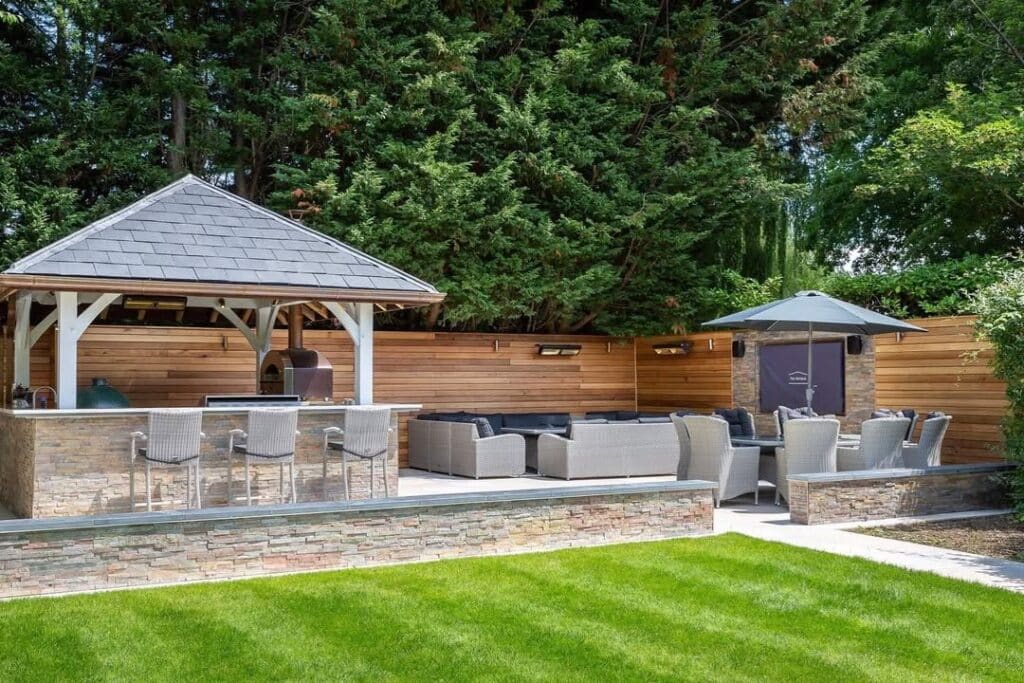
9. Use Landscaping as a Climate Tool
Plants aren’t just decoration. In the tropics, they’re climate managers.
Strategic landscaping can:
- Provide natural shade
- Reduce heat reflection
- Block strong winds
- Repel mosquitoes (hello, lemongrass)
But choose wisely. You don’t want leaves constantly dropping into your prep station.
I once cooked beside a mango tree during peak season. Let’s just say gravity was not on my side.
Key point:Smart landscaping enhances both comfort and functionality.
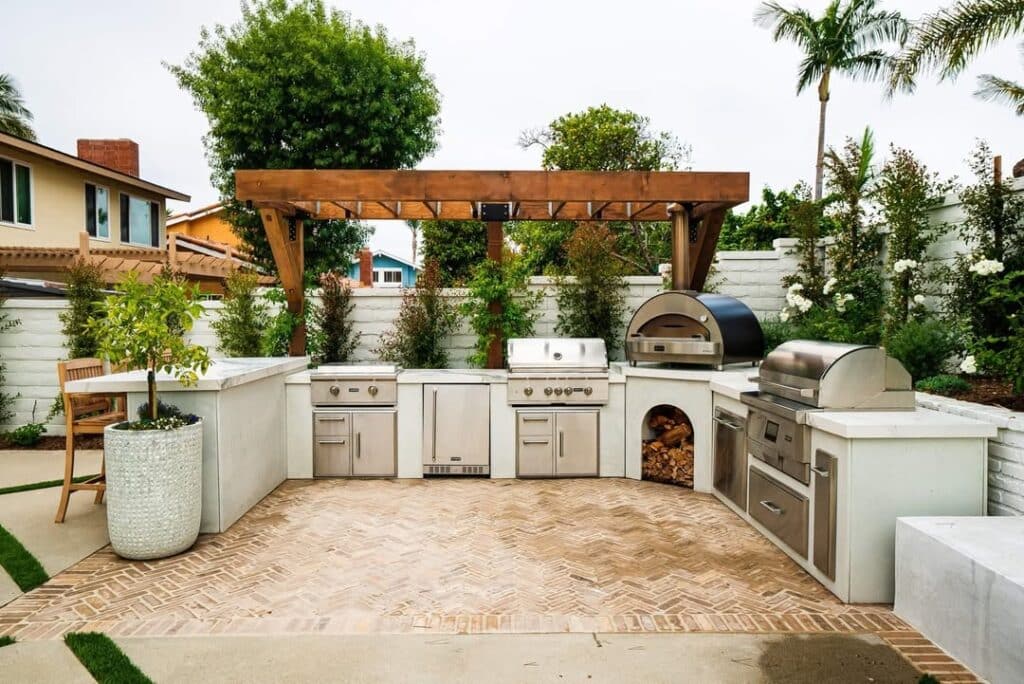
10. Design for Easy Maintenance
Here’s the honest truth: tropical outdoor kitchens need maintenance. The goal is to make it easy.
Plan for:
- Accessible plumbing and electrical lines
- Simple-to-clean surfaces
- Storage for storm prep
- Annual resealing of stone surfaces
Storm season should not feel like you’re preparing a space shuttle for launch.
The more accessible and durable your setup, the less time you spend fixing – and the more time you spend cooking.
Important phrase:Low-maintenance design ensures long-term success.
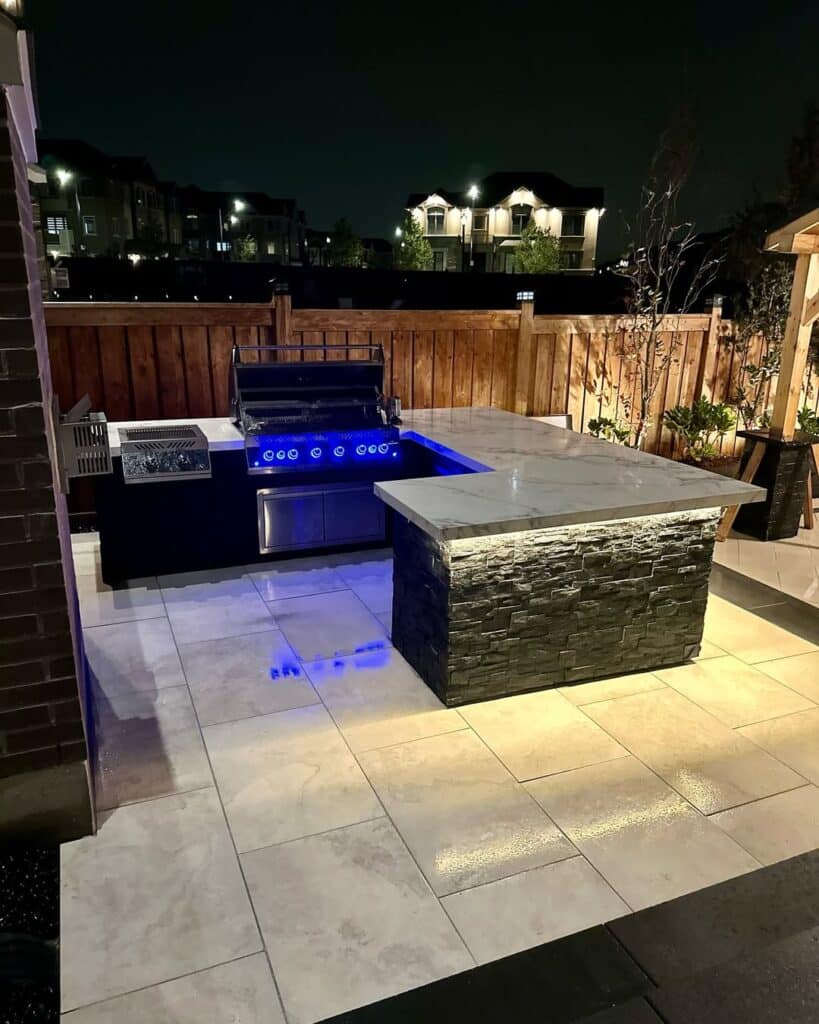
11. Lighting That Survives Storms and Sets the Mood
In the tropics, it gets dark fast – and when clouds roll in, it gets darker faster. Good lighting isn’t just about ambiance. It’s about safety, functionality, and durability.
You need three layers of lighting:
- Task lighting over prep and cooking zones
- Ambient lighting for dining and entertaining
- Accent lighting for style and atmosphere
But here’s the key: everything must be outdoor-rated and moisture-sealed. Look for fixtures with proper IP ratings and corrosion-resistant housing.
Warm LED strips under counters create a clean, modern glow. Overhead pendants? Beautiful – as long as they’re rated for damp or wet conditions.
Key phrase:Lighting should enhance performance, not just aesthetics.
Because slicing brisket in dim light is a fast track to bandaged fingers.
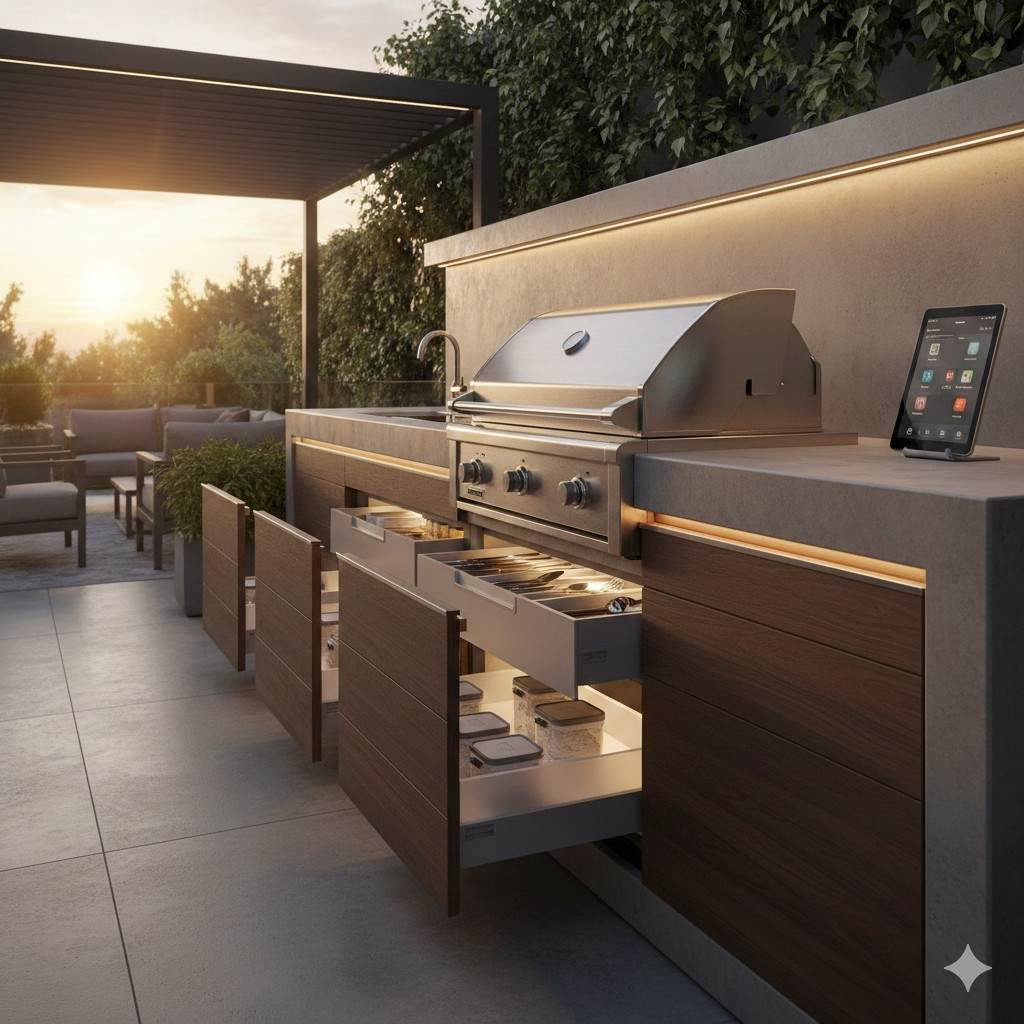
12. Smart Storage That Handles Humidity
Storage in the tropics isn’t about space – it’s about airflow and moisture control.
Closed cabinets trap humidity. Humidity breeds mold. Mold ruins everything.
Smart storage features include:
- Ventilated cabinet panels
- Slatted shelving
- Raised storage off the floor
- Waterproof drawer liners
And don’t forget dry storage for spices and charcoal. If your charcoal feels damp, your fire will struggle. If your spices clump, your flavors suffer.
Consider installing a small weather-sealed pantry cabinet with gasketed doors for sensitive items.
Important phrase:Ventilated storage extends the life of everything inside it.
In tropical cooking spaces, airflow doesn’t stop at the walls – it continues inside your cabinets.
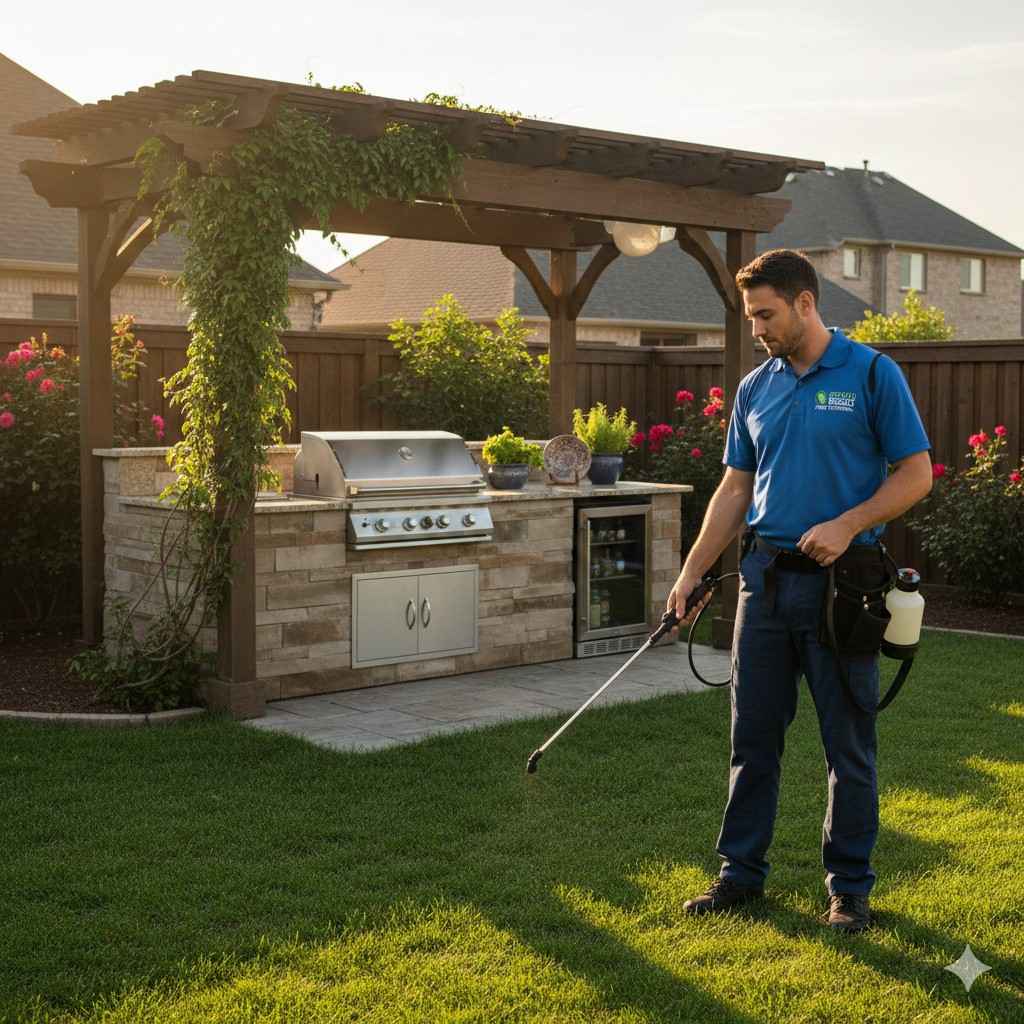
13. Pest-Proofing Without Killing the Vibe
Let’s talk about the uninvited guests: ants, flies, mosquitoes, even the occasional gecko.
A well-designed tropical-climate outdoor kitchen design plans for pest control without making your space look like a chemical lab.
Smart solutions include:
- Fine stainless mesh screens
- Sealed trash compartments
- Covered drains
- Built-in citronella planters
- Tight-sealing cabinet doors
Avoid leaving food residue anywhere overnight. In the tropics, insects work the night shift.
Key point:Prevention beats extermination.
A clean, well-sealed outdoor kitchen naturally discourages pests – and keeps your focus on cooking, not swatting.
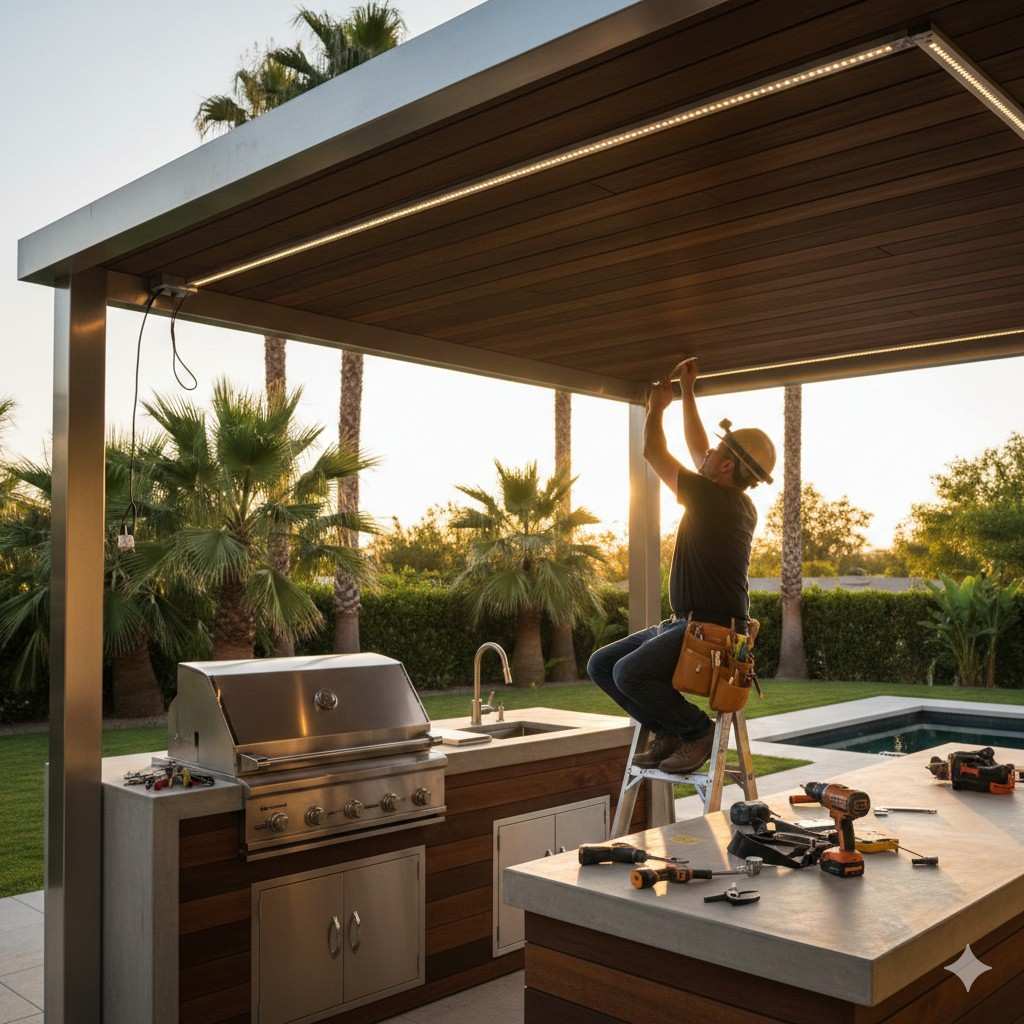
14. Storm-Ready Electrical Planning
Tropical climates mean lightning storms and sudden power fluctuations.
Electrical planning should include:
- GFCI outlets
- Surge protectors
- Weatherproof outlet covers
- Elevated wiring pathways
Proper grounding
And here’s the pro move: install a clearly labeled shutoff switch for your outdoor kitchen. When a storm hits, you flip one switch and protect everything.
Important phrase:Storm-safe electrical systems prevent costly appliance damage.
You don’t want your premium grill ignition fried because a thunderstorm rolled in during dinner prep.
Respect electricity in humid environments. It demands it.
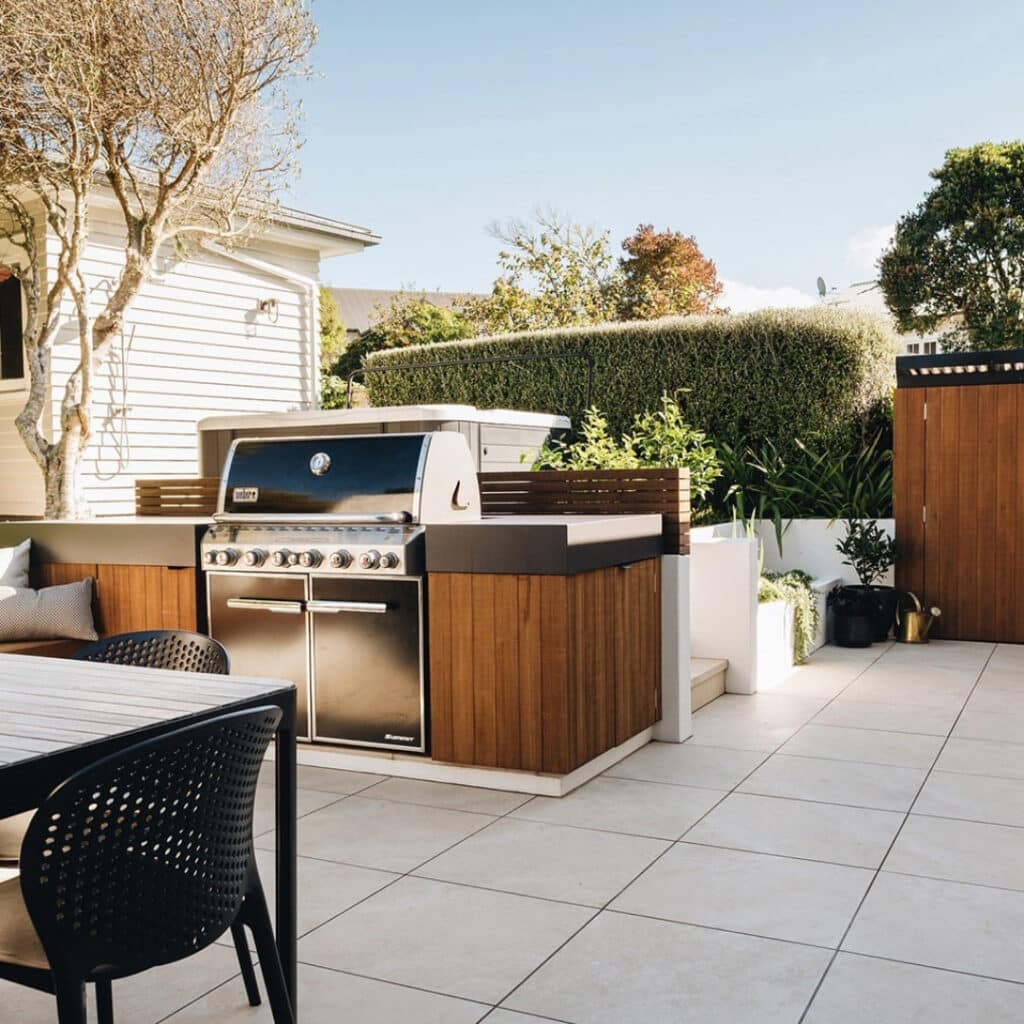
15. Slip-Resistant Flooring That Stays Cool
Outdoor kitchens in the tropics deal with water and heat – often at the same time.
Your flooring must be:
- Slip-resistant
- Heat-reflective
- Mold-resistant
- Easy to hose down
Textured porcelain tile, brushed concrete, or natural stone with a matte finish works beautifully.
Avoid glossy surfaces. They look stunning in photos and terrifying when wet.
And consider lighter tones. Dark tiles absorb heat and turn barefoot cooking into a firewalk.
Key phrase:Safe flooring protects both guests and the cook.
Because nothing ruins a backyard feast faster than someone sliding across the patio.
16. Water Filtration and Quality Control
In many tropical regions, water quality varies – and outdoor plumbing can introduce sediment buildup over time.
Installing:
- Inline water filters
- Sediment traps
- Anti-scale devices
protects sinks, faucets, and ice makers.
If your outdoor kitchen includes a bar or beverage station, filtered water improves taste immediately.
Important phrase:Clean water improves both flavor and equipment lifespan.
You spend hours perfecting a marinade. Don’t let mineral-heavy water dull the result.
In a professional-grade tropical-climate outdoor kitchen design, even the water gets attention.
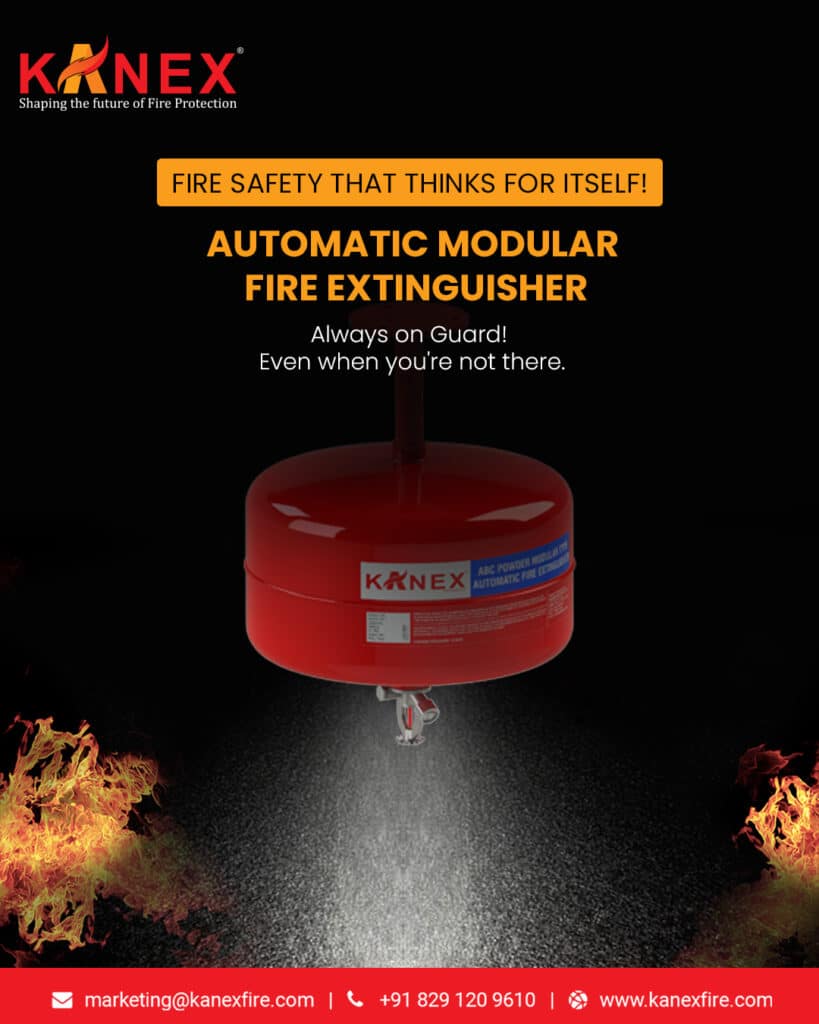
17. Fire Safety in High-Heat Environments
Heat plus dry spells plus open flame equals risk.
Even in humid regions, outdoor kitchens must plan for fire safety.
Install:
- A Class B/C fire extinguisher within reach
- Non-combustible backsplash materials
- Heat shields near walls
- Adequate clearance around grills
And never underestimate airflow. Too much wind can intensify flame flare-ups.
Key phrase:Controlled fire is flavor. Uncontrolled fire is disaster.
Build with fire in mind, and you’ll cook confidently year-round.
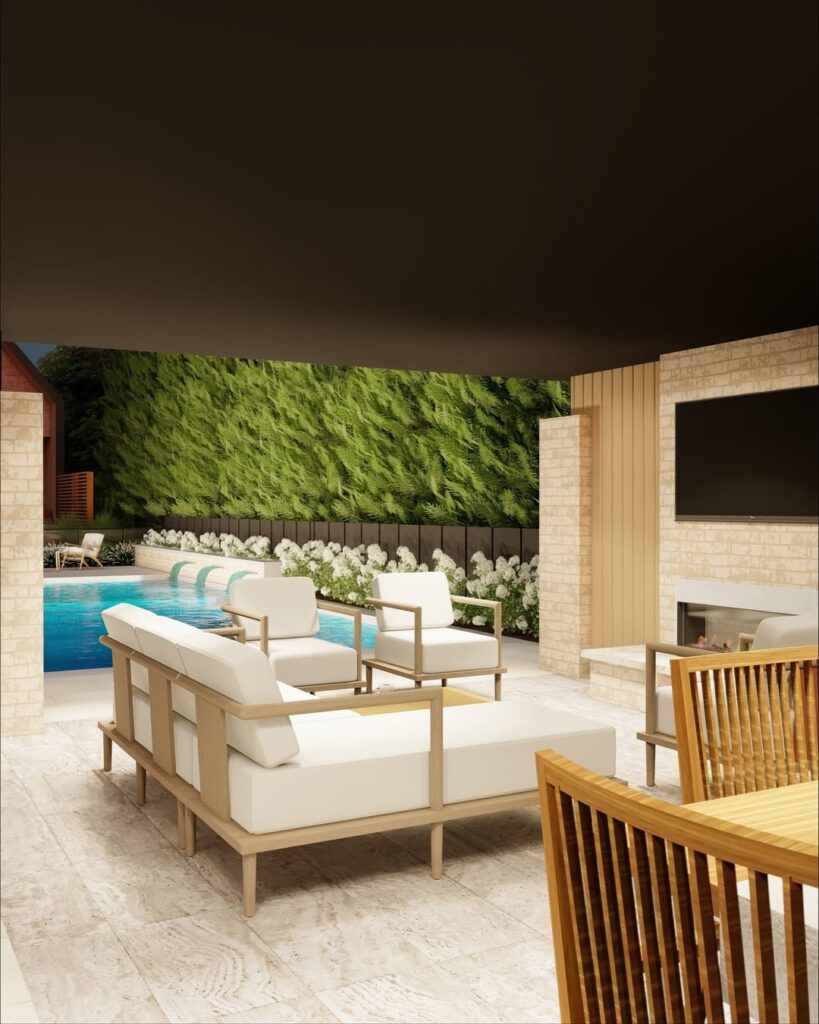
18. Comfort Features That Extend Cooking Time
Finally – comfort.
If your kitchen feels unbearable after 30 minutes, you won’t use it.
Consider:
- Outdoor misting systems
- Retractable side screens
- Built-in beverage coolers
- Comfortable, heat-resistant seating
- Sound systems rated for outdoor use
The best tropical outdoor kitchens feel like resort spaces – not survival camps.
Important phrase:Comfort increases usage.
And the more you use it, the more value it brings.
Because in the end, a great tropical-climate outdoor kitchen design isn’t just about resisting the weather.
It’s about making you want to cook outside – even when the air feels like soup.
And trust me… when it’s built right, you will.
Common Mistakes to Avoid
Even seasoned homeowners slip up. Watch out for:
- Installing indoor cabinetry outside
- Ignoring wind direction
- Skipping proper roofing
- Choosing trendy but fragile materials
- Forgetting drainage slope
A tropical kitchen punishes shortcuts.
Why Tropical Planning Changes Everything
A regular outdoor kitchen design focuses on aesthetics. A tropical-climate outdoor kitchen design focuses on survival first – beauty second.
When you respect the climate, something magical happens:
- Appliances last longer
- Surfaces stay cleaner
- Cooking feels comfortable
- Maintenance drops dramatically
And here’s the best part – you can cook year-round.
No winter shutdowns. No seasonal storage. Just smoke, flavor, and good company.
Frequently Asked Questions
1. What is the most important factor in a tropical-climate outdoor kitchen design?
The single most important factor is weather resistance. In tropical regions, your kitchen must handle high humidity, heavy rainfall, intense UV exposure, and possible salt air.
If the materials, roofing, and drainage aren’t designed specifically for tropical conditions, the kitchen will deteriorate quickly.
Top three priorities:
- Durable, corrosion-resistant materials
- Proper roofing and shade
- Effective drainage and ventilation
Get those right, and everything else becomes easier.
2. Do I really need a roof over my outdoor kitchen in the tropics?
Yes – and not just a decorative pergola.
A solid, well-pitched roof protects against:
- Sudden downpours
- Sun damage
- Appliance overheating
- Long-term corrosion
Full overhead coverage dramatically increases durability and usability.
Without it, your outdoor kitchen becomes seasonal at best – and expensive to maintain at worst.
3. What are the best materials for tropical outdoor kitchens?
For a reliable tropical-climate outdoor kitchen design, use materials that resist moisture and corrosion.
Best choices include:
- Marine-grade stainless steel (especially in coastal areas)
- Sealed concrete
- Granite or sintered stone countertops
- Powder-coated aluminum
- Dense hardwoods like teak
Avoid untreated wood, laminate, and indoor-rated materials – they won’t survive long in high humidity.
4. How do I prevent rust in an outdoor kitchen?
Rust prevention starts with smart material selection. Choose 304 or 316 stainless steel, especially in coastal zones.
Beyond that:
- Keep surfaces clean and dry
- Use protective covers during extreme weather
- Inspect hardware regularly
- Apply anti-corrosion treatments where needed
Humidity control equals longevity.
Rust doesn’t happen overnight – it happens from neglect.
5. What is the best countertop for tropical climates?
The best countertop materials are those that handle heat, UV exposure, and moisture without warping or fading.
Top options:
- Granite
- Sealed concrete
- Sintered stone
These surfaces resist staining, cracking, and sun damage.
Avoid laminate or unsealed wood unless you’re prepared for frequent repairs.
6. How do I manage ventilation in a tropical outdoor kitchen?
Ventilation is critical because tropical heat plus cooking heat equals discomfort.
Effective solutions include:
- Open-sided layouts
- High ceilings
- Strategic positioning for prevailing winds
- Outdoor-rated ceiling fans
Cross-ventilation keeps the space usable and prevents trapped heat.
A well-ventilated kitchen feels 10 degrees cooler – and cooks more comfortably.
7. Are outdoor appliances really necessary?
Yes. Indoor appliances are not built for fluctuating temperatures, humidity, or outdoor electrical exposure.
Outdoor-rated appliances are:
- Weather-sealed
- Corrosion-resistant
- Designed for temperature swings
Outdoor-rated equipment is non-negotiable in tropical climates.
It’s an upfront investment that saves you repeated replacements later.
8. How do I keep pests out of my tropical outdoor kitchen?
Pest control starts with design.
Use:
- Sealed trash compartments
- Ventilated but screened cabinets
- Covered drains
- Tight-fitting cabinet doors
Regular cleaning is essential. In tropical climates, insects respond quickly to food residue.
Prevention beats extermination every time.
9. How much maintenance does a tropical outdoor kitchen require?
A well-designed tropical-climate outdoor kitchen design requires moderate but consistent upkeep.
Plan for:
- Annual resealing of stone surfaces
- Regular hardware inspections
- Seasonal deep cleaning
- Storm-prep checks
When built properly, maintenance becomes routine – not overwhelming.
10. Is a tropical outdoor kitchen worth the investment?
Absolutely – when designed correctly.
A climate-adapted outdoor kitchen:
- Extends living space
- Increases property value
- Allows year-round entertaining
- Reduces indoor heat from cooking
The key is building it for the climate, not against it.
When durability meets smart design, your outdoor kitchen doesn’t just survive the tropics – it thrives in it.
Final Thoughts
Designing an outdoor kitchen in the tropics isn’t about fighting nature. It’s about working with it.
Get the materials right.
Respect ventilation.
Take drainage seriously.
Do those three things well and you’re 80% of the way to success.
Because when the rain starts tapping on the roof, the fans are spinning, the grill is hot, and your guests are laughing – that’s when you realize something:
A well-planned tropical-climate outdoor kitchen design doesn’t just survive the climate.
It thrives in it.
Now fire it up.
Featured image credit: @deckremodelers
