
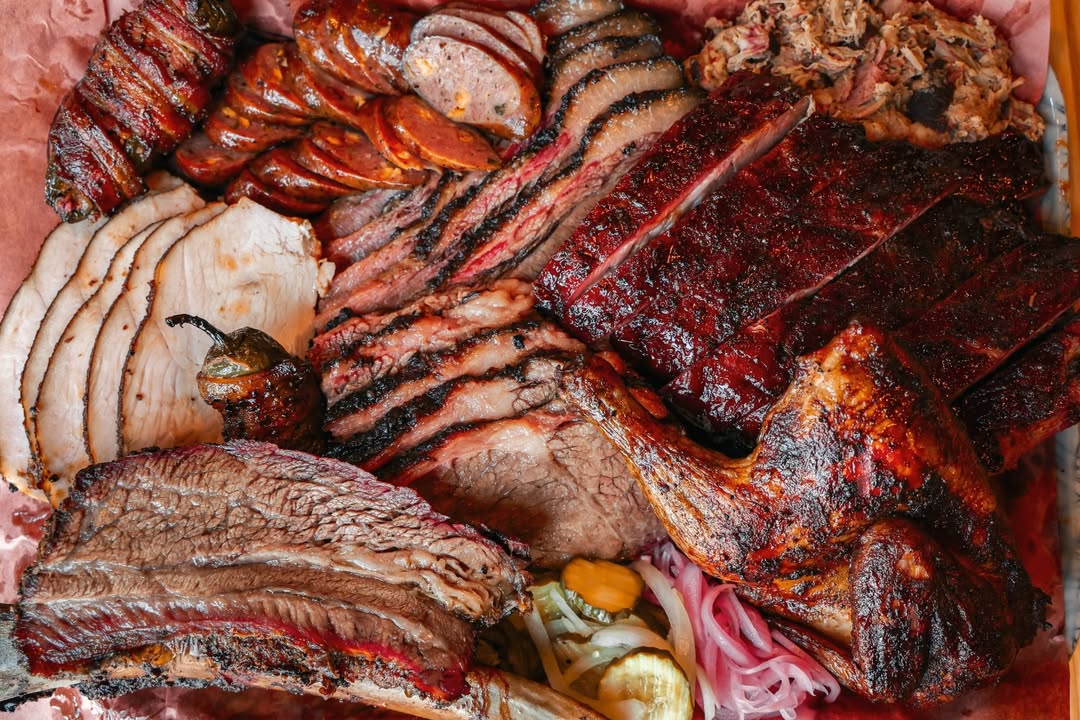
Slice into a properly smoked brisket and there it is: that gorgeous pink halo hugging the outer edge like it knows it’s the star of the show.
For a lot of BBQ fans, the smoke ring is the visual proof that something magical happened in the smoker. It’s the culinary equivalent of opening a treasure chest and finding exactly what you hoped was inside.
But here’s the twist: the smoke ring is one of the most admired – and misunderstood – features in barbecue.
A lot of backyard pitmasters assume a deep smoke ring means more smoke flavor.
Some think it’s a sign of elite technique. Others treat it like a grade on the final exam. If the brisket has a bold pink ring, you passed. If it doesn’t, you’re apparently grounded from the smoker.
Not so fast.
When it comes to smoke rings explained, the real story is less about smoke “penetrating” the meat and more about chemistry doing a little showboating.
That pink layer under the bark is real, beautiful, and traditional – but it’s not what most people think it is.
In this article, we’ll break down exactly what causes a smoke ring in BBQ, why it happens, what it does not mean, and whether it actually matters when you’re chasing great barbecue.
Spoiler: it’s more science class than campfire myth, and honestly, that makes it even cooler.
What Is a Smoke Ring in BBQ?
A smoke ring is the pink or reddish band that appears just beneath the surface of smoked meat. You’ll usually see it in cuts like brisket, pork shoulder, ribs, and sometimes even poultry.
It’s most obvious when you slice into a darker, fully cooked piece of meat and that rosy layer pops against the grayish-brown interior.
It usually sits right under the bark, which is why people often confuse the two. But they’re not the same thing. Bark is the dark, flavorful crust on the outside. The smoke ring is the colored layer just beneath it.
And no, before anyone panics at the cutting board, the smoke ring does not mean the meat is undercooked.
That pink band can show up in meat that is fully cooked, perfectly safe, and ready to make everyone at the table suddenly “just want a small slice” before taking half the brisket.
If the pink color is only near the surface and not in the center, you’re almost certainly looking at a smoke ring – not raw meat.
In simple terms, the smoke ring is a surface-level color change caused during the early stages of cooking. It’s a visual marker of how the meat reacted to heat, moisture, and combustion gases – not a map of where smoky flavor traveled.
So yes, it looks dramatic. But it’s not some magical tunnel of smoke boring into the meat like a tiny barbecue drill.
Why People Care So Much About the Smoke Ring
In barbecue culture, the smoke ring has developed a reputation that’s almost mythical.
For decades, pitmasters and BBQ fans have treated it as a badge of honor.
Pull out a brisket with a clean, noticeable smoke ring and people start nodding like they’re judging a state fair livestock competition. It looks impressive, it photographs beautifully, and it instantly signals “real barbecue” to a lot of people.
Part of that reputation comes from tradition. Old-school low-and-slow barbecue often produced visible smoke rings because of the way wood and charcoal fires behave. Over time, that pink band became associated with authenticity.
If it looked like classic pit barbecue, it must be classic pit barbecue.
Competition BBQ helped cement the legend. Judges and spectators absolutely eat with their eyes, and a bold smoke ring can make meat look irresistible before anyone even takes a bite. It’s a visual flex. A barbecue peacock feather.
But here’s the catch: a smoke ring can tell you that certain conditions existed during the cook. It does not automatically tell you the meat tastes better.
That’s where the myth starts. Because while the smoke ring is pretty, it’s not a direct measurement of smoke flavor, tenderness, juiciness, bark quality, or fire management. It’s one clue – not the whole case file.
Smoke Rings Explained: The Real Science Behind the Color
Now for the good stuff: the actual BBQ smoke ring science.
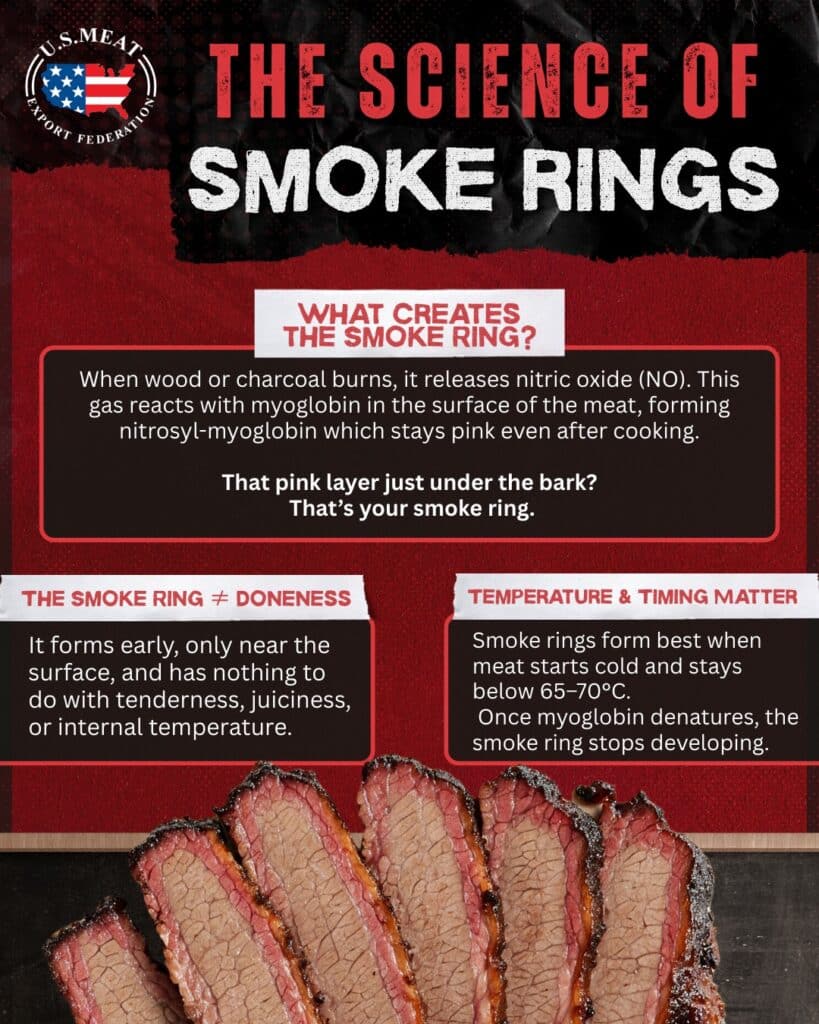
The smoke ring forms because of a chemical reaction involving three main players:
- Nitric oxide (NO)
- Carbon monoxide (CO)
- Myoglobin, the protein in meat responsible for much of its red or purplish color
When wood or charcoal burns, it releases a mix of particles, vapor, and gases. Among those gases are nitric oxide and carbon monoxide.
Those are the real stars of the smoke ring story – not the visible white smoke rolling out of your pit. The white smoke looks dramatic, sure, but the pink ring is mostly about invisible gases interacting with meat chemistry.
Here’s how it works in plain English.
Raw meat contains myoglobin, a pigment-rich protein that stores oxygen in muscle tissue.
It’s a major reason raw beef looks red, why some cuts are darker than others, and why meat changes color as it cooks.
The American Meat Science Association notes that myoglobin can bind with gases like oxygen, nitric oxide, and carbon monoxide – and those bindings affect meat color.
Normally, as meat heats up, myoglobin denatures. That’s a fancy way of saying heat changes its structure, and the meat shifts from red or pink toward gray-brown. Totally normal. Totally expected.
But if nitric oxide and carbon monoxide reach the meat’s surface early enough – while that surface is still cool and moist – they can dissolve into the outer layer and bind with the myoglobin before heat fully changes it.
That interaction helps “fix” or preserve a pink color in that thin band near the surface. The rest of the meat continues cooking normally and turns the familiar brownish-gray color of fully cooked barbecue.
That’s the real answer to smoke rings explained:
A smoke ring is a chemical reaction, not smoke soaking deep into the meat.
Think of it like a race. The gases are trying to reach and react with the myoglobin.
Heat is trying to denature that myoglobin and turn it brown. If the gases get there first, the pink color gets “locked in” near the surface. If heat wins first, no dramatic ring.
That’s why smoke rings are usually thin. The gases don’t travel very deep before the interior warms up and the opportunity disappears. In many cases, the ring is only about 1/8 inch deep, though it can vary depending on conditions.
So the smoke ring isn’t magic. It’s chemistry with excellent PR.
Does the Smoke Ring Add Flavor?
This is the myth that refuses to leave the cookout.
A lot of people assume a deeper smoke ring means stronger smoke flavor. It sounds logical. It even looks logical. Pink ring equals smoke went in deeper, right?
Wrong.
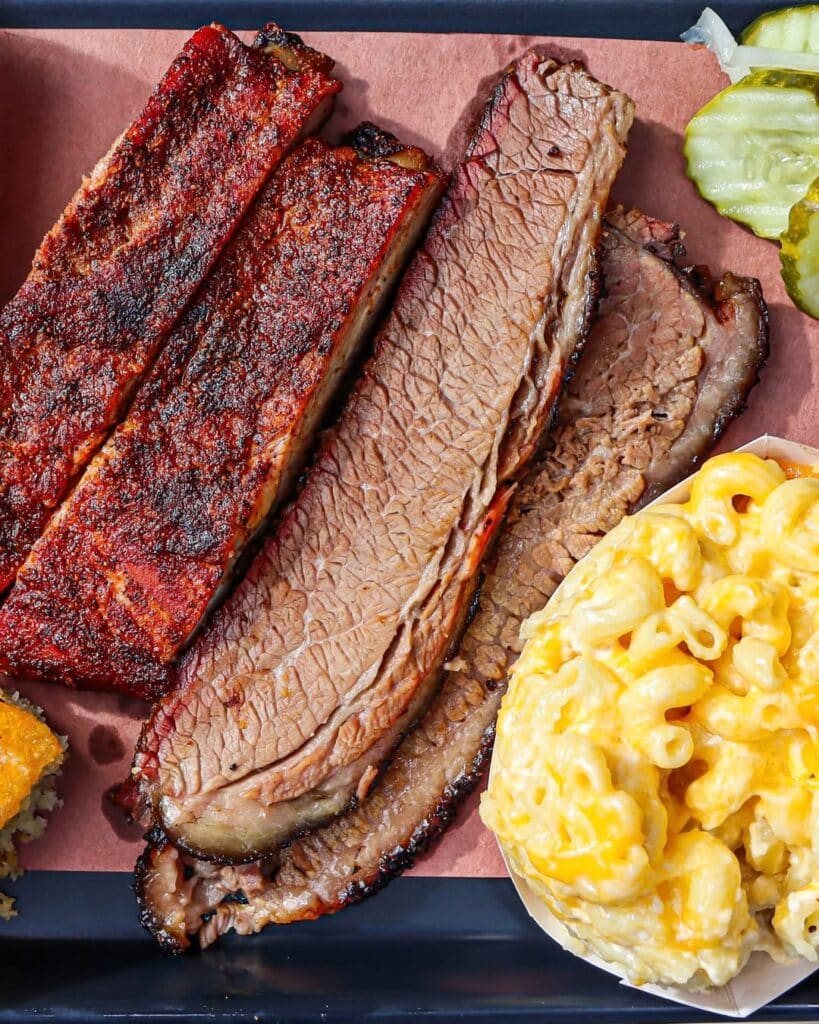
The smoke ring itself does not create smoky flavor.
Smoky flavor comes mostly from compounds that settle on the surface of the meat during cooking – along with bark development, rendered fat, seasoning, and the overall combustion quality of the fire.
In fact, the same sources that explain smoke ring chemistry are very clear on this point: the ring is mostly a color reaction, not a flavor layer.
That means you can absolutely have:
- A great smoke ring with only average smoke flavor
- A modest smoke ring with incredible smoke flavor
This is why some beautifully cooked barbecue from pellet smokers, hot-and-fast cooks, or wrapped briskets can taste fantastic even if the smoke ring isn’t dramatic enough to make Instagram cry.
If you want the blunt version:
A smoke ring is a beauty mark, not a flavor guarantee.
Looks matter in barbecue. But flavor still gets the final vote.
What Conditions Help a Smoke Ring Form?
If you’re wondering how smoke rings form more reliably, several factors make a difference. None of them are magic tricks. They just help the chemistry happen before the heat shuts the window.
1. Start with Cold Meat
Colder meat gives nitric oxide and carbon monoxide more time to react before the outer layers heat up too much. That’s why many pitmasters put brisket or ribs on the smoker straight from the fridge.
The cooler the surface stays early on, the longer the gases have to do their thing.
2. Keep the Surface Moist
Moisture helps those gases dissolve and interact with the meat. A damp surface is more welcoming to smoke chemistry than a dry one.
That’s one reason spritzing, mopping, or cooking in a humid pit can help with smoke ring development. Moisture can also slightly cool the surface, which extends the reaction window.
3. Low-and-Slow Helps Early
The smoke ring forms mostly in the early part of the cook. Once the meat surface heats enough and myoglobin denatures, the ring stops growing. Lower pit temps early on can slow that process and give the gases a longer head start.
AmazingRibs notes that smoke ring growth effectively stops once myoglobin has broken down enough – often around the time that outer meat temperatures get much higher, not because the meat “stops taking smoke” at some random myth number.
4. Real Combustion Matters
Wood and charcoal fires produce the gases that create smoke rings. That’s why traditional stick burners and charcoal smokers often create stronger rings.
Electric smokers can still cook excellent barbecue, but they often don’t generate the same combustion gas profile, which is why the smoke ring can be weak or absent.
5. Fire Quality and Airflow Matter Too
A clean-burning fire is better for flavor overall, but combustion conditions also influence how much nitric oxide and carbon monoxide are available.
Translation: the type of fire you run changes both taste and appearance. Yet another reason barbecue feels like cooking, chemistry, and mild emotional instability all at once.
Why Some Great BBQ Has Little or No Smoke Ring
This is where a lot of people get misled.
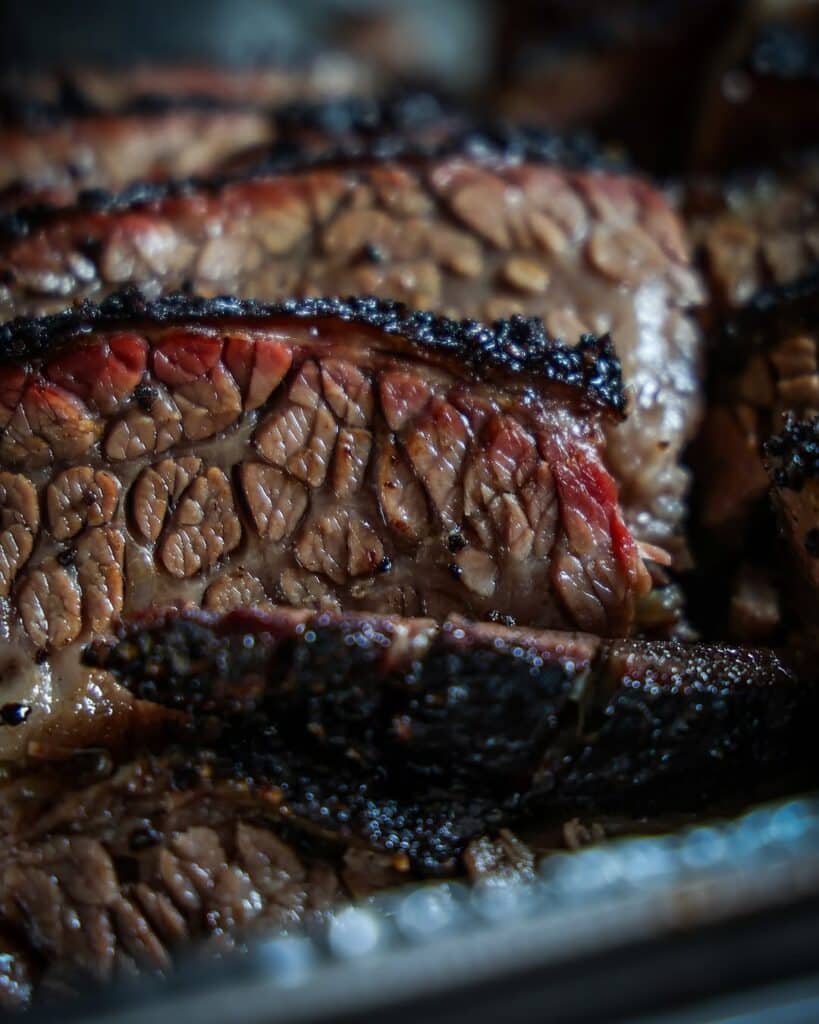
You can make phenomenal barbecue and still end up with a small smoke ring – or none worth bragging about.
Why?
Because smoke ring formation depends on timing and conditions, not just “good barbecue energy.”
A few common reasons the ring may be smaller:
- The meat cooked hotter at the start
- The surface dried out quickly
- The meat got wrapped early
- The cooker had a different combustion pattern
- The fuel source produced fewer of the right gases
- There was a thick fat cap blocking the visual effect in some areas
Electric smokers are the classic example.
They can produce tender, flavorful meat, but because they often rely on smoldering wood over a heating element instead of a full combustion fire, they may not create enough nitric oxide and carbon monoxide to form a strong smoke ring.
That doesn’t mean the barbecue is bad. It just means the chemistry party was under-attended.
Bottom line:
Judge barbecue with your mouth first, not your eyes.
Can You Fake a Smoke Ring? Yes – and That Changes the Conversation
Here’s the part that really messes with the myth.
Yes, you can fake a smoke ring.
Because the smoke ring is fundamentally about a color reaction involving myoglobin, it can be created by other sources of nitrite or related compounds – not just traditional smoking conditions.
Curing salts that contain sodium nitrite can produce a similar pink color in meat because nitrite chemistry also preserves that rosy hue. That’s why cured meats like corned beef or pastrami are pink throughout.
That doesn’t mean every smoke ring is fake. Far from it.
But it does mean this:
A smoke ring is not absolute proof of authentic smoke flavor or pitmaster superiority.
Some cooks understand how to encourage the effect. Some products or ingredients can influence color. Some cured or treated meats will look pink for entirely different reasons.
And in some cases, meat can even develop pinking in other cooking environments due to combustion gases, though traditional barbecue is where it’s most iconic.
So while the smoke ring is a cool visual, it should never be treated like a lie detector test for barbecue.
Smoke Ring vs. Bark: Don’t Confuse the Two
This mix-up happens all the time.
- Smoke ring = the pink layer beneath the surface
- Bark = the dark, crusty exterior on the surface
And if we’re being honest, bark matters a lot more to the eating experience.
Bark forms through a combination of:
- Rub and seasoning
- Surface dehydration
- Maillard browning
- Smoke particle deposition
- Fat rendering
- Time and heat
That crusty exterior brings texture, concentrated flavor, and the kind of bite that makes people suddenly stop talking mid-sentence.
The smoke ring? It’s mostly visual.
If the smoke ring is the jewelry, bark is the actual outfit.
Pretty ring, sure. But bark is doing the heavy lifting.
The Biggest Smoke Ring Myths, Debunked
Let’s clear the smoke – literally.
Myth 1: A bigger smoke ring means more smoke flavor
False. Smoke flavor and smoke ring depth don’t directly correlate. The ring is chemistry; flavor comes from smoke compounds, bark, fat, and fire quality.
Myth 2: The pink ring means the meat is undercooked
False. If the pink is only near the surface and the meat is otherwise properly cooked, it’s a smoke ring – not raw meat.
Myth 3: Only expert pitmasters get smoke rings
Not exactly. Technique helps, but fuel, moisture, airflow, meat temperature, and cooker design all matter too.
Myth 4: Smoke penetrates deep into the meat to make the ring
False. The smoke ring is mostly a shallow reaction near the surface before the meat heats up too much.
Myth 5: No smoke ring means bad BBQ
Absolutely false. Plenty of outstanding barbecue has a modest smoke ring or none at all – especially depending on cooker type and method.
So, Should You Chase the Smoke Ring?
Sure – but don’t worship it.
The smoke ring is part of what makes barbecue fun. It’s dramatic, nostalgic, and undeniably satisfying. If you can get one naturally, great. It’s a nice visual reward for a well-managed cook.
But if you’re prioritizing your barbecue goals, the order should look more like this:
- Flavor
- Tenderness
- Moisture
- Bark
- Fire management
- Then the pretty pink ring if the BBQ gods are feeling generous
A smoke ring can make your brisket look legendary.
But the first bite settles the argument.
Smoke Rings in BBQ is a Good Sign of BBQ Done Right
So, if you’ve ever wondered what causes a smoke ring in BBQ, here’s the short version:
The smoke ring forms when gases from burning wood or charcoal – especially nitric oxide and carbon monoxide – react with myoglobin in the outer layer of the meat before heat fully changes its color.
It’s a shallow, early-stage chemical reaction, not proof that smoke tunneled deep into the meat like it was trying to escape prison.
That means the smoke ring is real, beautiful, and rooted in classic barbecue tradition.
It also means it’s not the ultimate test of quality.
A bold ring can look amazing. A weak ring can still hide phenomenal flavor. And once you understand the science, you stop chasing myths and start cooking smarter.
In other words, BBQ’s most beautiful secret isn’t magic at all.
It’s chemistry wearing a very convincing disguise.
Featured image credit: @thesmokepit
