
Where Fire, Fish, and Forest Collide
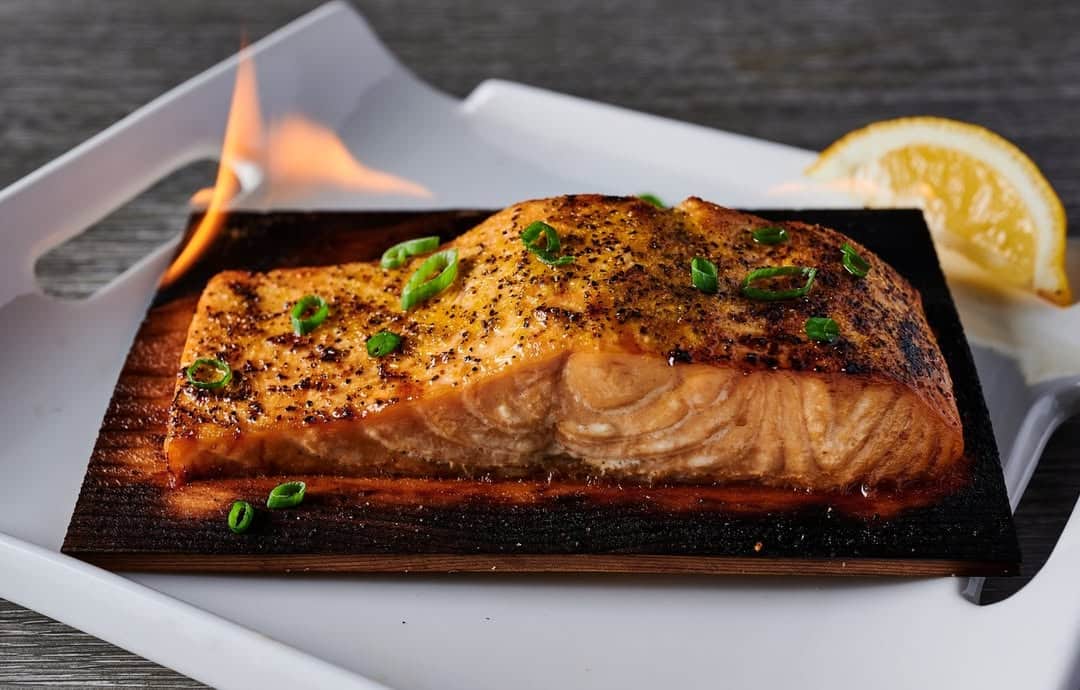
Cedar-planked salmon over live fire announces itself before anyone takes a bite. The smoke is sweet, the fish is sizzling just enough, and suddenly you’re hungry in a way that feels ancient.
That’s the Pacific Northwest in a nutshell.
This region doesn’t just cook food – it collaborates with nature. The rivers bring salmon. The forests bring cedar. The smoke brings everything together. Two dishes capture that spirit better than almost anything else: cedar-plank salmon and squaw candy.
As a pitmaster, I love both because they prove an important truth: great barbecue isn’t about fancy gear. It’s about understanding ingredients, respecting tradition, and letting smoke do what smoke has always done – turn simple food into something unforgettable.
In this article, we’re diving deep. You’ll learn where these foods come from, why they taste the way they do, and how tradition, technique, and a little fire magic keep them alive today.
Expect history, practical insights, and maybe a few smoke-stained jokes along the way.
The Pacific Northwest Food Identity
Before we talk technique, let’s talk place – because Pacific Northwest cuisine is inseparable from its environment.
Land, Water, and Ingredients That Do the Heavy Lifting
This region is spoiled. Cold rivers packed with salmon. Coastal waters loaded with seafood. Forests full of cedar, alder, and maple. Mild, wet weather that practically begs for smoking and preservation.
Key ingredients show up again and again:
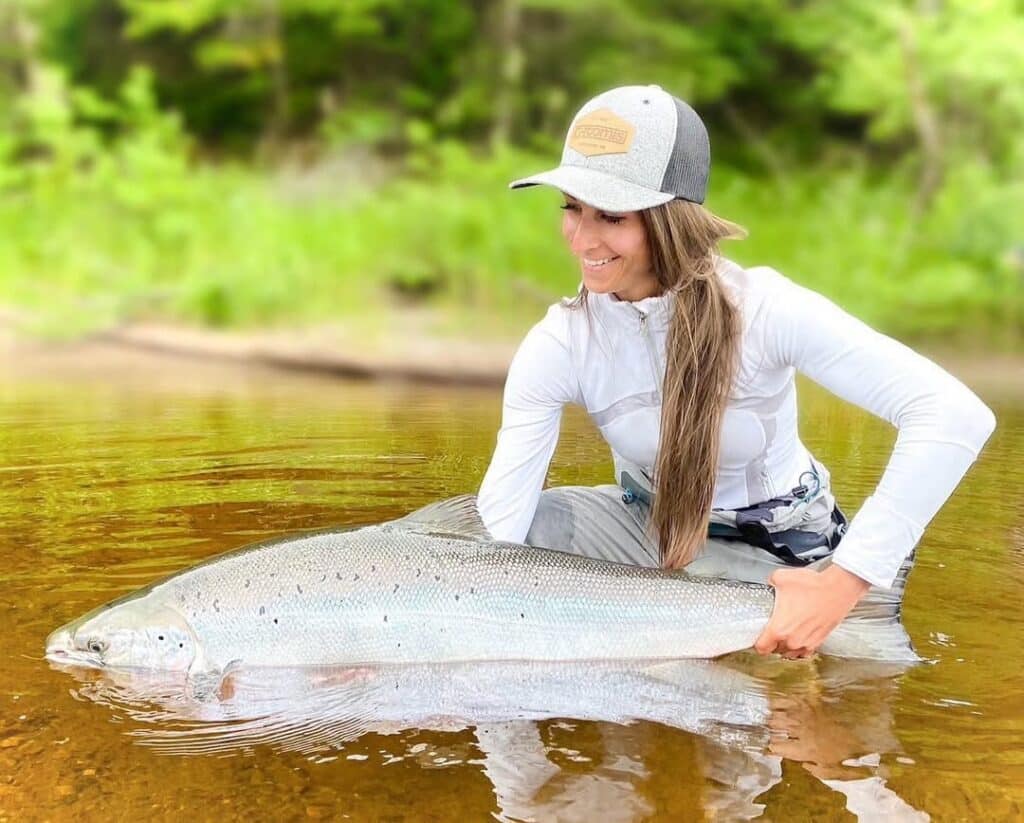
- Salmon, especially Chinook, Coho, and Sockeye
- Cedar wood, used for cooking, smoking, and storage
- Natural sweeteners like maple and brown sugar
- Smoke from alder and fruit woods
When you’ve got ingredients this good, the goal isn’t to show off – it’s to get out of the way.
Indigenous Influence: The Original Pitmasters
Long before pellet grills and Instagram brisket shots, Indigenous peoples of the Pacific Northwest were mastering fire and smoke. They developed methods to:
- Cook salmon gently over open flames
- Preserve fish for winter through drying and smoking
- Use wood not just as fuel, but as a flavoring agent
That knowledge is the backbone of cedar-plank salmon and squaw candy. Every modern version is standing on those shoulders, whether it admits it or not.
Cedar-Plank Salmon: The Showstopper
Let’s talk about the dish that makes people stop mid-conversation when it hits the table.
Origins and Cultural Weight
Cooking salmon on cedar wasn’t about being fancy – it was practical. Cedar planks:
- Lifted fish off direct flame
- Prevented sticking and burning
- Added subtle, aromatic smoke
But over time, practicality turned into tradition. Salmon wasn’t just food – it was ceremony, currency, and community. Cedar-plank salmon became a symbol of respect for the fish.
Why Cedar Works (And Why It’s Not Optional)
You’ll hear people say, “Wood is just wood.” Those people are wrong.
Cedar-plank salmon works because cedar does three critical things:
- Adds aroma, not harsh smoke
- Protects moisture, keeping salmon juicy
- Controls heat, acting like a buffer
The result is fish that’s smoky but clean, rich but balanced. No bitterness. No ashtray vibes.
How Cedar-Plank Salmon Is Prepared
This is where pitmaster instincts kick in. You don’t rush this dish. You court it.
Choosing the Right Salmon
Start with the best fish you can get. Period.
Look for:
- Wild-caught Pacific salmon
- Firm flesh with visible fat lines
- No fishy smell (fresh smells like the ocean, not regret)
Fat equals flavor, especially when smoke is involved.
Preparing the Cedar Plank
If you skip this step, the plank will catch fire and you’ll panic. Ask me how I know.
Basic rules:
- Use untreated food-grade cedar
- Soak the plank in water for 1–2 hours
- Optional: add wine, citrus, or herbs to the soak
The goal is smoldering, not flaming.
Cooking and Seasoning
This is not the time for complicated rubs.
Classic seasoning:
- Salt
- Black pepper
- Maybe a touch of brown sugar or maple
Cook over medium heat, indirect if possible. When the salmon flakes easily and the edges just start to caramelize, you’re there.
Key phrase to remember:Pull it early. Carryover heat is real.

Squaw Candy: Sweet Smoke With a Backbone
Now let’s talk about the sleeper hit – the snack that disappears faster than beer at a backyard cookout.
What Is Squaw Candy?
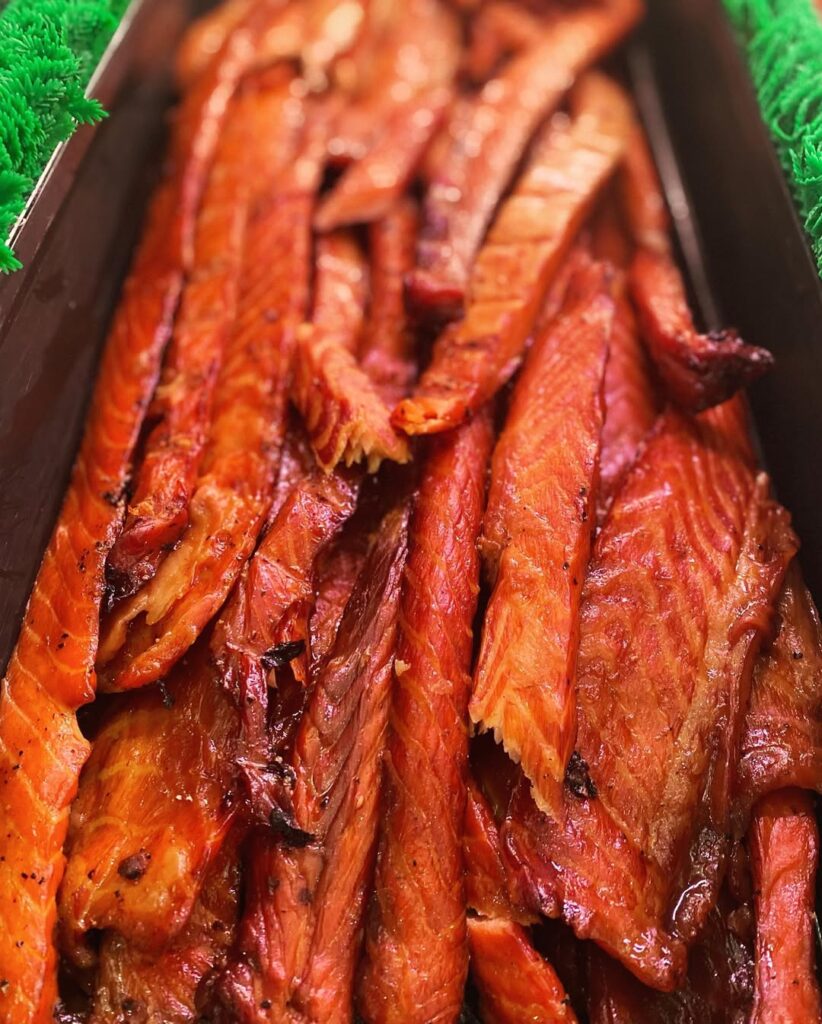
Squaw candy is salmon candy, plain and simple. Thin strips of salmon are cured, sweetened, and smoked until they’re:
- Chewy
- Glossy
- Sweet, smoky, and addictive
It’s not jerky. It’s not candy. It lives in that perfect middle ground where restraint goes to die.
A Note on the Name
The term “squaw candy” comes from historical usage tied to Indigenous communities, but it’s increasingly recognized as problematic. Many people now use “salmon candy”, which keeps the focus where it belongs – on the food.
Respect matters, especially when we’re borrowing from traditions that aren’t ours.
Why Sweet and Smoke Work Together
Sugar isn’t just for taste. It:
- Preserves the fish
- Helps form a protective glaze
- Balances smoke bitterness
This was survival food that accidentally became gourmet.
How Squaw Candy Is Made
This is patience food. If you’re in a hurry, go grill a hot dog.
Prep and Cure
Salmon is sliced into strips, then cured in a mixture of:
- Brown sugar or maple syrup
- Salt
- Optional soy sauce or spices
The cure firms the flesh and builds flavor.
Smoking Process
Low and slow wins again.
- Temperature stays low
- Smoke is light and steady
- Time can run 6–12 hours
You’re looking for tacky, not wet. Glossy, not brittle.
Pitmaster tip: Alder wood is king here. Mild, clean, and traditional.
Cedar-Plank Salmon vs. Squaw Candy
Same fish. Totally different personalities.
Cedar-plank salmon:
- Fresh-cooked
- Moist and flaky
- Best eaten hot
Squaw candy:
- Preserved
- Chewy and sweet
- Perfect for travel, gifting, or hiding from your family
One is a sit-down meal. The other is a “where did the whole batch go?” situation.
Modern Popularity and Reinvention
These foods aren’t stuck in the past – and that’s a good thing.
Restaurants and Food Culture
Across the Pacific Northwest, you’ll find:
- Cedar-plank salmon in fine dining
- Salmon candy in markets and breweries
- Chefs blending tradition with modern technique
Smoke still leads. Ego stays out of it.
Innovation Without Disrespect
The best modern cooks understand the rule:
Innovation is welcome. Erasure is not.
That means new glazes, new woods, new presentations – but always acknowledgment of where the methods came from.
Sustainability: Cooking With a Conscience
As pitmasters, we don’t just burn wood – we steward resources.
Important considerations:
- Choose sustainably harvested salmon
- Support Indigenous fisheries when possible
- Use responsibly sourced cedar
If we want these flavors to last, we have to cook like they matter.
Science that Seems Magical: Why Salmon Loves Smoke So Much
Smoke isn’t magic – it’s chemistry with good PR. Salmon is uniquely suited for smoking because of its natural fat content, and fat is where smoke flavor likes to hang out.
When wood burns, it releases flavorful compounds that latch onto fat and protein, creating that deep, savory aroma we all chase. The big players include:
- Phenols, which bring smoky depth
- Aldehydes, responsible for sweetness and aroma
- Natural wood sugars that caramelize on the surface
Here’s the fun part: cedar smoke behaves differently than heavier woods. It’s lighter, sweeter, and more aromatic, which means it enhances salmon instead of overpowering it.
That’s why cedar-plank salmon tastes refined, even when cooked over live fire.
As a pitmaster, this is where restraint matters. Too much smoke ruins fish faster than it ruins brisket. Salmon wants a kiss of smoke, not a bear hug. Nail that balance, and you’re not just cooking – you’re orchestrating flavor on a molecular level.
Fire Control: The Quiet Skill Behind Great Salmon
People love to talk rubs and woods, but fire control is the real flex. Salmon doesn’t forgive sloppy heat.
Here’s what goes wrong fast:
- Too hot → albumin pushes out, leaving that white goop nobody asked for
- Too cool → mushy texture and dull flavor
The Pacific Northwest approach favors steady, moderate heat, usually indirect. This lets the fish cook gently while soaking up aroma from cedar and smoke. Think calm campfire, not raging bonfire.
Great pitmasters learn to read the fire:
- The sound of a soft sizzle
- Smoke that drifts instead of billows
- Consistent heat without flare-ups
With cedar-plank salmon, the plank itself becomes a heat moderator, slowing the cook and protecting the flesh.
Master this, and you separate “grilled fish” from truly memorable salmon – and you’ll start applying that same patience to everything else you cook.
The Role of Texture: Why Mouthfeel Matters More Than You Think
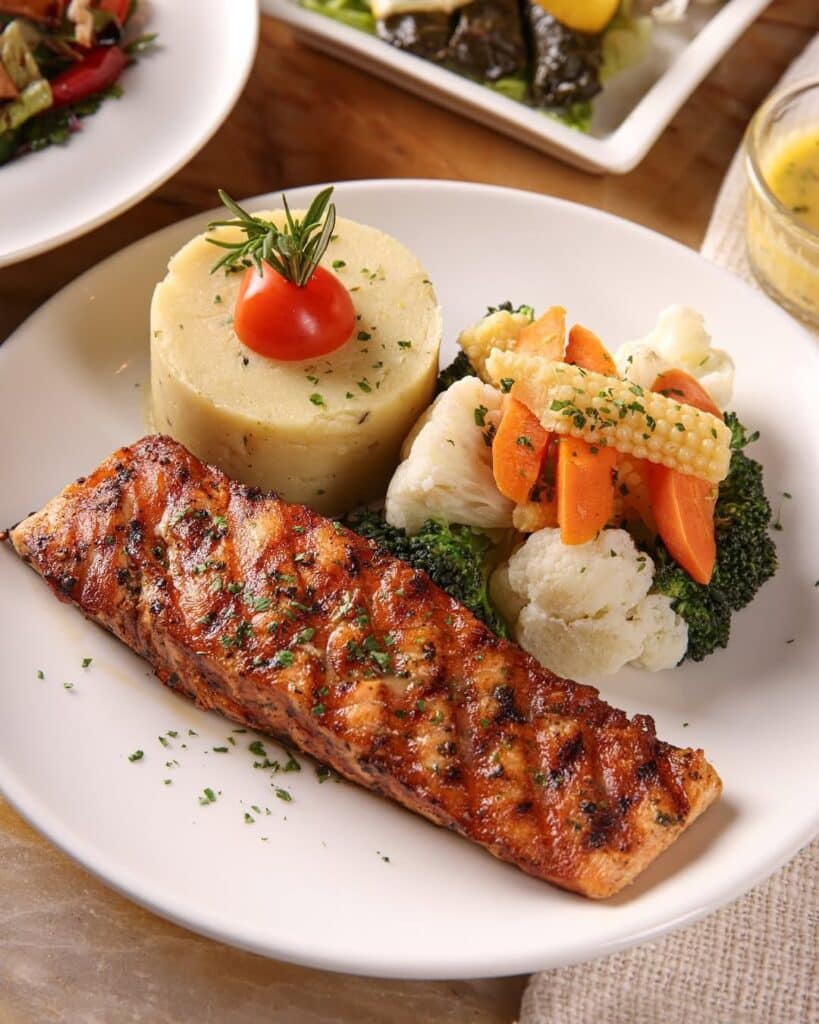
Flavor gets the headlines, but texture is what people remember. Perfect cedar-plank salmon should be:
- Moist
- Gently flaky
- Just barely holding together
Squaw candy plays a different game. It should fight back a little, in the best way possible.
Texture tells the truth about technique:
- Overcooked salmon goes chalky
- Undercooked salmon goes jelly-soft
- The sweet spot is where fat renders, proteins set, and moisture stays locked in
That’s why timing matters so much. You don’t cook salmon to temperature alone – you cook it to feel:
- A gentle press with your finger
- A clean flake with a fork
When texture is right, people stop chewing and start nodding. That’s pitmaster body language for you nailed it.
Pairing the Experience: Drinks, Sides, and Atmosphere
Food doesn’t exist in a vacuum. Cedar-plank salmon shines brighter with the right supporting cast. Acidic sides cut richness, while earthy elements echo forest flavors.
Strong pairings include:
- Pickled vegetables or citrus-forward salads
- Wild rice, mushrooms, or roasted root vegetables
As for drinks, the Pacific Northwest keeps it honest:
- Dry white wines
- Crisp lagers
- Smoky whiskies, poured with restraint
But atmosphere matters too. This food begs for outdoor tables, long evenings, and people lingering after the plates are empty. These dishes slow the pace, and that’s part of their charm.
You’re not just serving salmon. You’re hosting a moment—and moments are what people come back for.
Common Mistakes That Ruin Great Salmon
Let’s save some fish. The biggest mistake? Treating salmon like meat instead of seafood. It cooks faster, absorbs smoke quicker, and demands gentler handling.
Common pitfalls include:
- Using dry, farmed salmon with little fat
- Skipping plank soaking
- Over-seasoning to “add flavor”
- Letting flames lick the fish directly
Cedar-plank salmon doesn’t need rescue – it needs respect. When something goes wrong, it’s usually because someone tried to do too much.
Less intervention equals better results. That’s pitmaster humility in action.
Smoking Techniques Passed Down from Generation to Generation
We live in an age of shortcuts – pre-smoked this, artificial smoke flavor that. But traditional methods endure because they work, and because they connect us to something real.
Cooking salmon on cedar or turning it into candy isn’t about nostalgia. It’s about understanding food from the source outward:
- Fire
- Wood
- Fish
- Time
That order matters.
In a modern kitchen – or backyard – these techniques slow us down. They remind us that good food doesn’t need constant reinvention. Sometimes it just needs preservation, patience, and fire.
That’s not old-fashioned. That’s timeless.
Frequently Asked Questions
What makes cedar-plank salmon different from grilled salmon?
Cedar-plank salmon cooks more gently and absorbs a light, aromatic smoke from the wood. The plank protects the fish from direct heat, keeping it moist and preventing flare-ups.
Do you need a grill to make cedar-plank salmon?
No. While a grill adds extra smoke, cedar-plank salmon can be cooked in an oven or over a fire pit. The key is moderate heat and a properly soaked plank.
Why does salmon sometimes get white stuff on the surface?
That white substance is albumin, a protein that pushes out when salmon cooks too hot or too fast. Lower, steadier heat helps prevent it.
Is salmon candy the same as jerky?
Not quite. Salmon candy is sweeter, softer, and glossier than jerky. It’s cured and smoked but still retains moisture and chew.
What type of wood works best with salmon?
Cedar is traditional for planking, while alder wood is a favorite for smoking. Both provide mild smoke that complements salmon without overpowering it.
How do you avoid over-smoking salmon?
Use light, clean smoke and short exposure times. Salmon absorbs smoke quickly, so less is always more.
Why These Flavors Endure
Cedar-plank salmon and squaw candy aren’t trends. They’re proof that when fire meets respect, food becomes culture.
They teach us:
- Simplicity beats excess
- Smoke is a language
- Tradition and technique belong together
Every time I cook salmon on cedar, I’m reminded that barbecue isn’t about chasing perfection. It’s about honoring the ingredients, listening to the fire, and sharing something real with the people around you.
And if someone sneaks the last piece of salmon candy while you’re not looking? That’s tradition too.
Featured image credit: @theribandchophouse
