
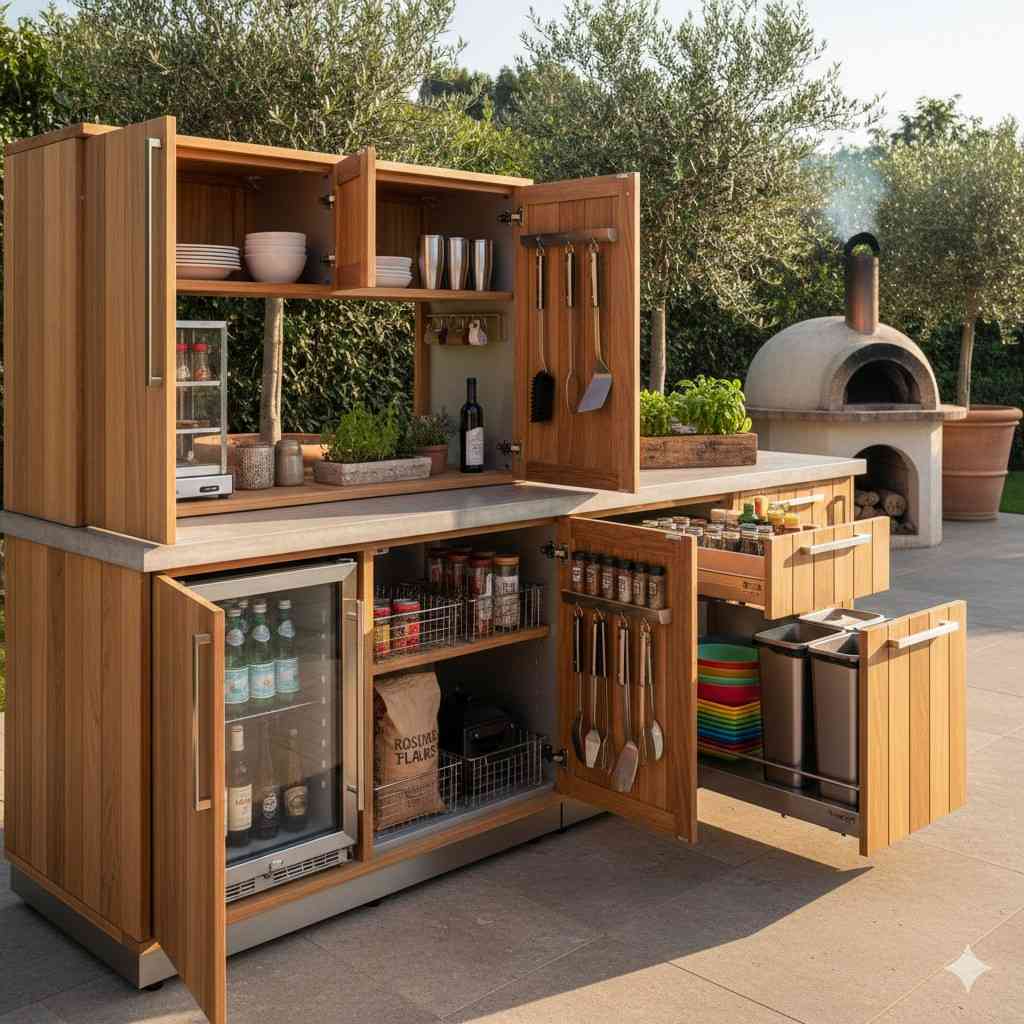
I’ve seen contractors and interior designers designed, built, and fixed outdoor kitchens over the years. And if there’s one thing homeowners underestimate every single time, it’s storage.
Everyone obsesses over the grill. Then the pizza oven. Then the countertop material. Storage usually comes last – until the first rainy season hits, the drawers swell shut, and the tongs are rusted solid.
Outdoor kitchen storage solutions aren’t just about having space. They’re about keeping your tools usable, your food safe, and your outdoor kitchen enjoyable year after year.
Let’s break it down properly – what actually works outdoors, what fails quietly, and how to design storage that survives weather, time, and real-life use.
Understanding the Real Challenges of Outdoor Kitchen Storage
This goes far beyond simply choosing cabinets that look good outside.
Unlike indoor kitchens, outdoor kitchen storage must endure constant exposure to weather elements such as heat, rain, humidity, wind, and UV radiation, all of which can cause warping, rust, fading, and material breakdown over time.
In addition to weather-related damage, pests, insects, and small animals pose a serious threat by infiltrating poorly sealed storage areas. Temperature fluctuations can also affect stored items, leading to condensation, mold growth, and food spoilage.
Homeowners must also consider security concerns, as outdoor spaces are more accessible and may require lockable, reinforced storage solutions.
Balancing durability, functionality, and aesthetic appeal presents a unique challenge, making it essential to select weather-resistant materials, proper sealing systems, and smart organizational designs to ensure long-term performance and convenience.
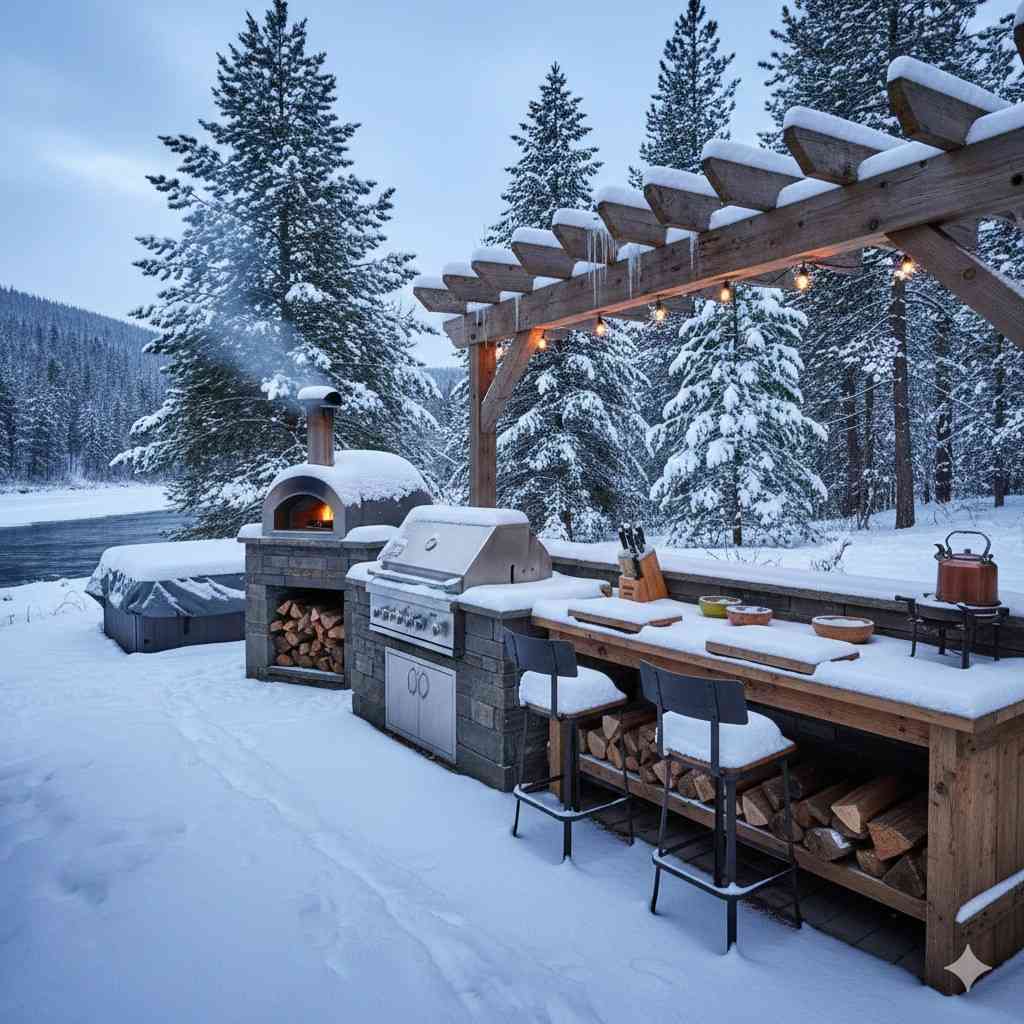
Weather Is the Enemy (And It’s Relentless)
Rain doesn’t politely stay outside cabinets. Humidity creeps in. Heat expands materials. Cold contracts them. UV rays quietly degrade finishes until one day they just give up.
This is why indoor-grade cabinets fail outdoors – even when they look “water-resistant.” I’ve replaced more swollen MDF cabinets than I care to remember, all installed by people who swore they’d be “under cover.”
They never are.
Space Is Always Tighter Than You Think
Outdoor kitchens look big on paper. Then you add:
- Grill clearance
- Prep space
- Sink access
- Traffic flow for guests
Suddenly, storage is fighting for leftovers.
Good outdoor kitchen storage solutions respect circulation first, then sneak storage into smart, usable places.
Pests, Moisture, and Hygiene Matter More Outside
The fact that outdoor kitchens are constantly exposed to insects, rodents, and wildlife that can easily access poorly sealed storage areas, means that you have to take extra precautions.
Ants don’t care how expensive your cabinets were. Neither do mice.
If storage isn’t sealed, ventilated, and easy to clean, you’ll know it fast – and not pleasantly.
Smart Outdoor Kitchen Cabinets: Choosing Materials That Actually Last
Here’s the blunt truth: materials matter more outdoors than design. You can organize a bad cabinet all day – it’ll still fail.
Exposure to sun, rain, humidity, and temperature swings quickly reveals weak construction and inferior finishes.
Choosing marine-grade polymers, stainless steel, or sealed masonry isn’t an upgrade – it’s a requirement for cabinets that are built to survive outdoors, not just look good at installation.
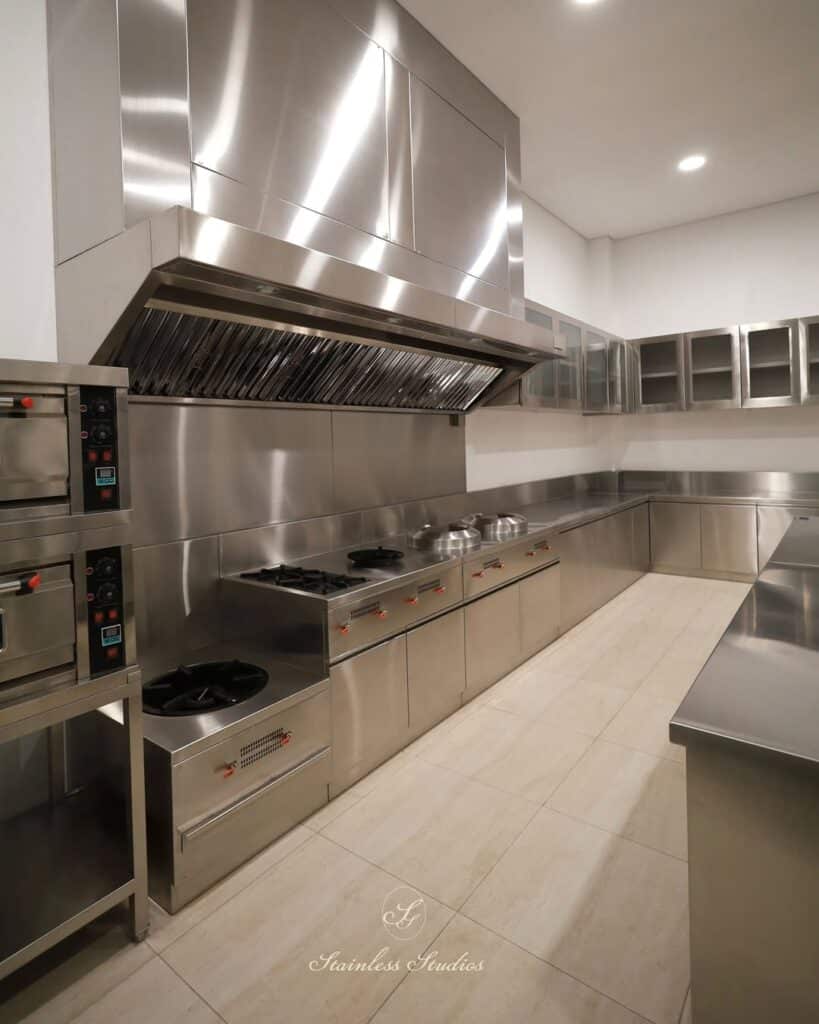
Stainless Steel Cabinets: The Contractor Favorite
When clients ask me what I’d install in my own backyard, stainless steel is always on the shortlist.
Why stainless steel works:
- Rust-resistant (when properly graded)
- Doesn’t swell, warp, or crack
- Easy to clean after spills and grease
What to watch out for:
- Cheap stainless dents easily
- Poor ventilation leads to trapped heat
- Gets hot in direct sun (ask me how I learned that)
Look for 304 or marine-grade stainless, solid welds, and proper drainage holes.
Marine-Grade Polymer (HDPE): Quietly Excellent
HDPE cabinets don’t look flashy – but they’re absolute workhorses.
Why designers love them:
- Completely moisture-proof
- UV-resistant
- No rust, no rot, no drama
They’re ideal for humid, coastal, or rainy climates. The tradeoff? Less of that “commercial kitchen” aesthetic. But functionally, they’re rock solid.
Masonry and Built-Ins: Permanent and Powerful
Stone, concrete, and stucco cabinets feel luxurious – and they are.
Pros:
- Extremely durable
- Excellent thermal stability
- Visually seamless with outdoor architecture
Cons:
- Expensive
- Not flexible
- Mistakes are permanent
If you’re building a forever kitchen and your layout is locked, masonry storage is a smart investment.
Modular Cabinets: Flexibility Wins
One trend I’m seeing more of – and recommending – is modular outdoor kitchen storage systems.
They let you:
- Replace individual units
- Reconfigure layouts later
- Upgrade components over time
Smart design isn’t just about now. It’s about future-proofing your outdoor kitchen storage solutions.
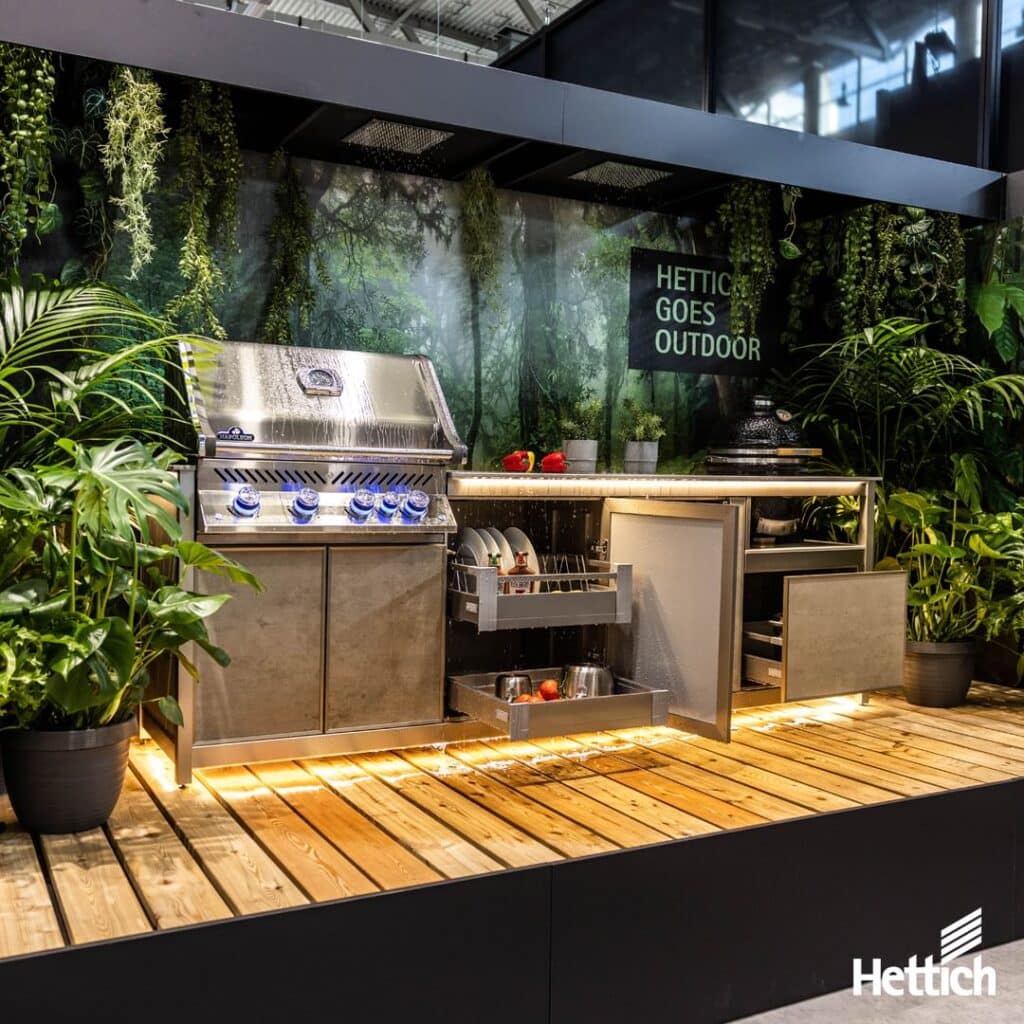
Weather-Proofing Outdoor Kitchen Storage (Where Most Fail)
Here’s where good kitchens become great – and bad ones become expensive lessons.
Most failures happen at the seams, hinges, and backs of cabinets where water, heat, and humidity quietly penetrate over time.
Proper weather-proofing requires sealed joints, corrosion-resistant hardware, and designs that actively shed water instead of trapping it.
Waterproof Isn’t Enough – You Need Moisture Management
Even waterproof cabinets trap moisture if there’s no airflow.
Without proper ventilation, condensation can build up, leading to mold and mildew. Moisture management systems, like vented panels or desiccant inserts, help keep interiors dry.
Regularly checking and maintaining airflow ensures your cabinets stay truly protected over time.
Key features to look for:
- Ventilation slots
- Raised cabinet bases
- Sloped interiors or drainage channels
Water will get in. Your job is making sure it can get out.
Seals, Gaskets, and Hardware Matter
Soft-close hinges mean nothing if they rust solid.
Use:
- Rubber or silicone gaskets
- Corrosion-resistant hardware
- Powder-coated or stainless fasteners
It’s boring stuff. It’s also what keeps drawers opening smoothly five years later.
UV Protection Is the Silent Killer
Sunlight fades finishes, weakens plastics, and cracks cheaper coatings.
Smart placement matters:
- Avoid direct southern exposure when possible
- Use overhangs or pergolas
- Choose UV-stable materials
Think sunscreen – for cabinets.
Covers and Enclosures Are Insurance, Not Cheating
A fitted cabinet cover or partial enclosure can double the lifespan of your outdoor kitchen storage.
I’ve seen modest kitchens outlast luxury builds simply because someone bothered to protect them in the off-season.
Organization Ideas That Actually Improve How You Cook Outside
Storage isn’t helpful if it’s chaotic.
Organization is about reducing friction. Fewer steps. Less digging. No frustration.
Smart layouts place tools, prep items, and cookware exactly where you use them most, minimizing movement and wasted time.
Pull-out drawers, vertical dividers, and dedicated zones turn outdoor cooking into a smooth, intuitive process instead of a constant search for essentials.
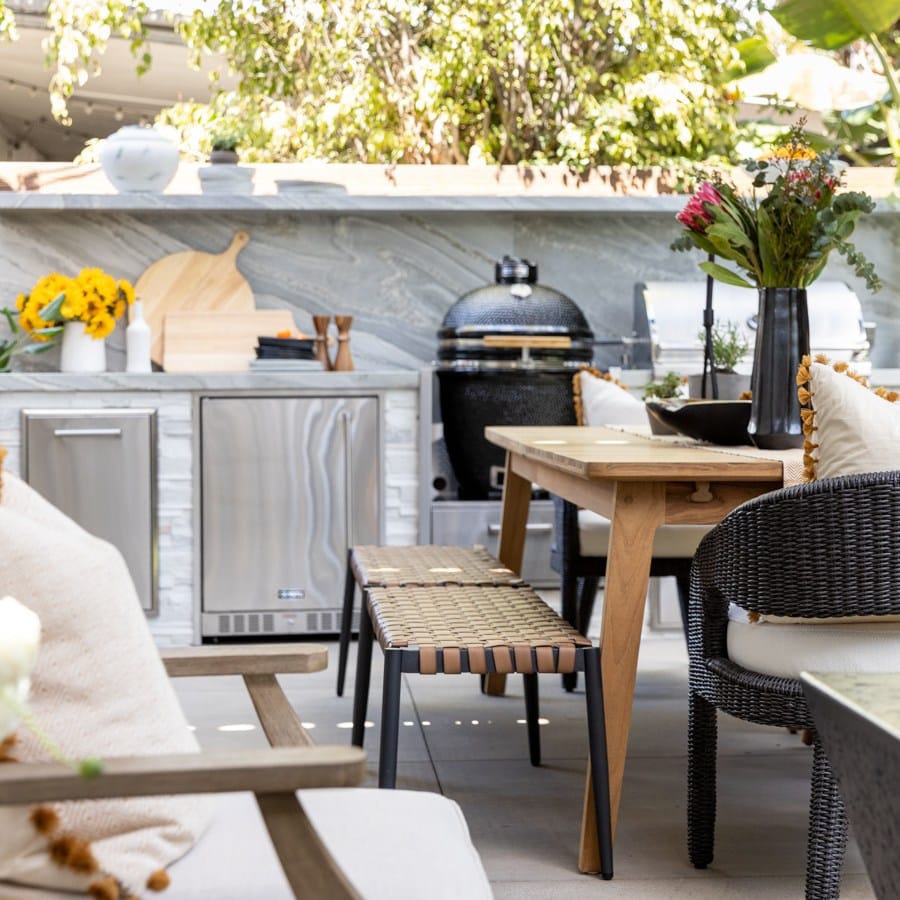
Zone Your Storage Like a Pro Kitchen
Think in zones:
- Cooking zone: tools, thermometers, grill brushes
- Prep zone: knives, cutting boards, oils
- Serving zone: trays, plates, napkins
If you’re walking across the patio to grab tongs, your storage layout is wrong.
Drawers Beat Cabinets (Almost Every Time)
Deep drawers with inserts beat base cabinets for usability.
Use:
- Utensil dividers
- Spice inserts
- Adjustable trays
You’ll see everything at a glance – and actually use it.
Vertical Storage Is Free Space
Walls are often ignored outdoors.
Smart options include:
- Rail systems with hooks
- Magnetic strips for tools
- Wall-mounted shelves under cover
This keeps frequently used tools visible and dry.
Fuel Storage Needs Respect (And Planning)
Propane, charcoal, and wood pellets need:
- Ventilated storage
- Dry conditions
- Clear separation from food items
This isn’t just organization – it’s safety.
Outdoor Kitchen Storage Solutions for Small Spaces
Small outdoor kitchens aren’t limited. They just demand smarter decisions.
Vertical storage, multi-functional cabinets, and compact pull-out systems maximize every inch without crowding the space.
When storage works upward and double-duty surfaces are used, even the smallest outdoor kitchen can feel efficient, open, and effortless to cook in.
Multi-Functional Storage Is Your Best Friend
Look for:
- Prep counters with hidden storage
- Benches with lift-up compartments
- Sink bases with pull-out organizers
If it only does one job, it’s wasting space.
Mobile Storage Adds Flexibility
Rolling carts and portable islands are underrated.
They:
- Expand storage when entertaining
- Store away when not needed
- Adapt to different layouts
I’ve seen carts save entire projects.
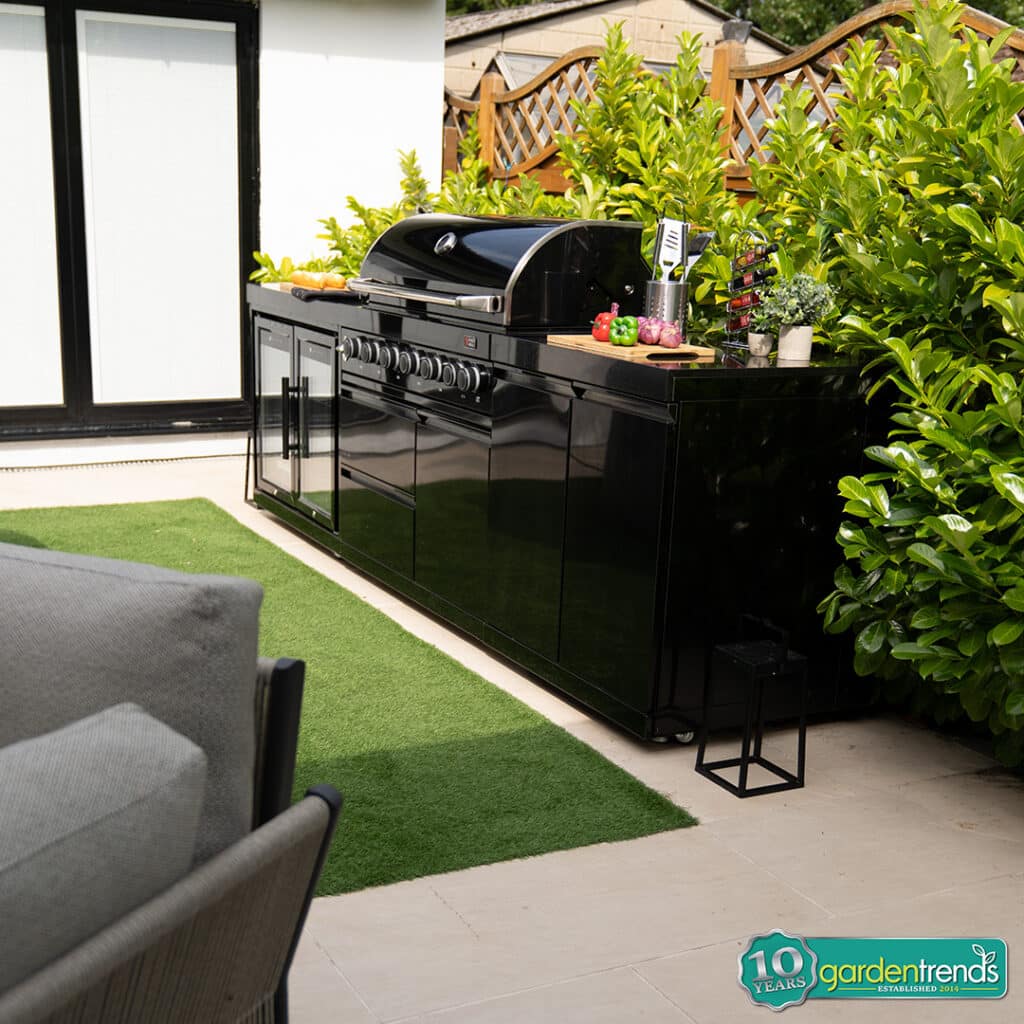
Minimalism Isn’t a Style – It’s Survival
Outdoor kitchens don’t need everything indoors has.
Store only what you actually use outside. Everything else becomes clutter – and clutter rots faster outdoors.
Maintenance: The Difference Between “Aging” and “Failing”
Outdoor kitchen storage doesn’t need babying – but it does need attention.
Routine cleaning, seasonal inspections, and quick fixes prevent minor wear from turning into structural damage.
Well-maintained cabinets develop character over time, while neglected ones absorb moisture, corrode, and fail far sooner than expected.
Simple Habits That Extend Lifespan
- Wipe spills promptly
- Keep vents clear
- Inspect seals seasonally
Ten minutes a month beats thousands in repairs.
Seasonal Checks Matter
Before and after harsh seasons:
- Tighten hardware
- Check for rust or cracks
- Clean and dry interiors
Think of it as an annual physical for your kitchen.
Budgeting Smartly for Outdoor Kitchen Storage
Budgeting for outdoor kitchen storage isn’t about cutting corners – it’s about spending where it actually counts.
A smart budget prioritizes durability, weather resistance, and long-term use, saving you from costly replacements and repairs down the line.
Here’s my rule: Spend where failure is expensive. Save where replacement is easy.
Climate Should Drive Spending
- Coastal or humid? Invest in premium materials.
- Mild climate? Mid-range solutions work fine.
Ignoring climate is the fastest way to overspend – or underbuild.
Security and Wildlife-Proof Storage (The Problem No One Plans For)
Outdoor kitchens live in semi-public space, which means security and wildlife intrusion are real concerns – especially in unfenced yards, rural areas, or vacation homes.
I’ve seen raccoons open drawers, birds nest in cabinets, and opportunistic hands help themselves to tools. If storage isn’t lockable, reinforced, and tightly sealed, it becomes an invitation.
Look for lockable drawer systems, tamper-resistant latches, and metal-reinforced cabinet frames. For wildlife-heavy areas, compression seals and tight tolerances matter more than aesthetics. Even small gaps invite big problems.
This isn’t about paranoia – it’s about protecting your investment, maintaining hygiene, and avoiding surprise damage. A kitchen that feels secure is one you’ll actually leave stocked and ready to use.
Drainage and Elevation: The Details That Prevent Silent Damage
Most outdoor kitchen storage doesn’t fail dramatically – it fails quietly from trapped water and ground moisture.
Cabinets placed directly on patios or soil are constantly exposed to splashback, pooling rain, and rising damp. Over time, that moisture finds seams, fasteners, and joints.
Smart designs incorporate raised cabinet bases, adjustable feet, or masonry plinths to lift storage off wet surfaces.
Internally, drainage holes, sloped cabinet floors, and moisture escape paths prevent condensation buildup. This is especially critical in humid or rainy climates.
You can buy the best materials available – but without proper elevation and drainage, even premium cabinets will age faster than they should.
Water management isn’t optional outdoors – it’s foundational.
Planning for Growth: Storage That Adapts as Your Kitchen Evolves
Outdoor kitchens almost never stay the same. A grill becomes a smoker. A prep counter becomes a bar. Suddenly, storage that once worked feels cramped.
This is why planning for growth is one of the smartest design moves you can make.
Choose modular systems, standardized cabinet widths, and expandable layouts that allow you to add drawers, swap units, or reconfigure zones later. Leave intentional gaps or capped utility chases for future appliances.
Storage that adapts saves you from demolition-level upgrades later. The best outdoor kitchen storage solutions aren’t just built for today – they’re designed to evolve with how you cook, entertain, and use the space over time.
Flexibility is long-term value.
DIY vs Professional Installation
DIY works for:
- Modular cabinets
- Carts and organizers
Hire a pro for:
- Built-ins
- Gas-adjacent storage
- Structural masonry
Some mistakes are cosmetic. Others are dangerous.
Common Outdoor Kitchen Storage Mistakes
- Using indoor cabinets outdoors
- Blocking ventilation openings
- Overloading drawers
- Ignoring drainage
Most failures aren’t dramatic – they’re slow and expensive.
Outdoor Kitchen Storage FAQ
1. What’s the biggest mistake with outdoor storage?
Using indoor-grade cabinets outdoors – they swell, rust, and fail quickly under sun, rain, and humidity.
2. Which materials last longest outside?
Marine-grade stainless steel, HDPE polymer, and masonry resist moisture, heat, and pests best.
3. Do outdoor cabinets need ventilation?
Yes. Airflow prevents trapped moisture, mold, and corrosion, even in waterproof cabinets.
4. How can I maximize small-space storage?
Use vertical systems, multi-functional cabinets, and mobile carts to keep everything accessible without clutter.
5. How much maintenance is required?
Minimal but regular – wipe spills, inspect seals, and check hardware seasonally to prevent expensive failures.
Storage Is What Makes an Outdoor Kitchen Livable
A beautiful outdoor kitchen that’s frustrating to use won’t get used. Period.
The best outdoor kitchen storage solutions are invisible when they work well. Everything is where you expect it. Nothing is damp, rusted, or stuck. Cooking feels effortless.
Design for weather. Design for use. Design for the future.
Do that – and your outdoor kitchen won’t just look good. It’ll work beautifully, season after season.
Featured image credit: Google Gemini
