
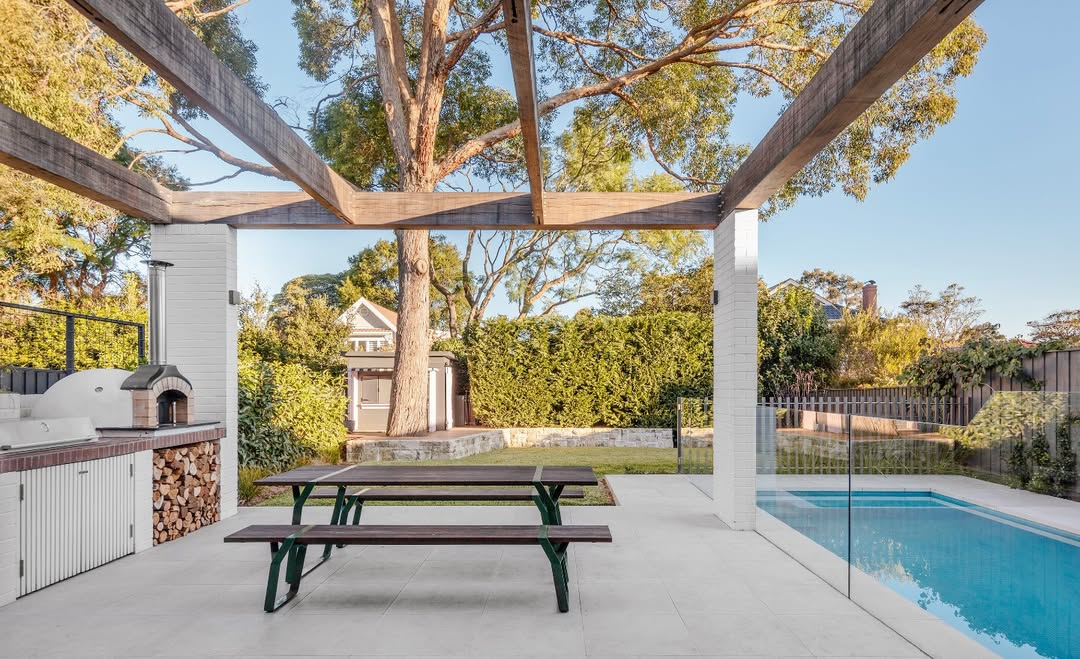
There’s nothing quite like cooking outdoors. The smell of sizzling food, the laughter of friends around the grill, and – let’s be honest – the smug satisfaction of knowing your backyard rivals a five-star resort.
But all too often, outdoor kitchens start as dream projects and end as frustrating headaches.
Having had the pleasure to actually see the design process (i.e. schematic drawings and 2D/3D CAD renderings) of my friend’s subcontracting firm, and attending on-site construction of infrastructures – including outdoor kitchens – I can tell you this: most people stumble over the same outdoor kitchen planning mistakes.
Avoid them, and your backyard becomes a haven. Ignore them, and you might as well call Bugs Bunny to teach you carpentry – because things are going to get wacky.
Here’s my no-nonsense guide to what to watch for, what to do instead, and a sprinkle of humor to keep you awake while planning.
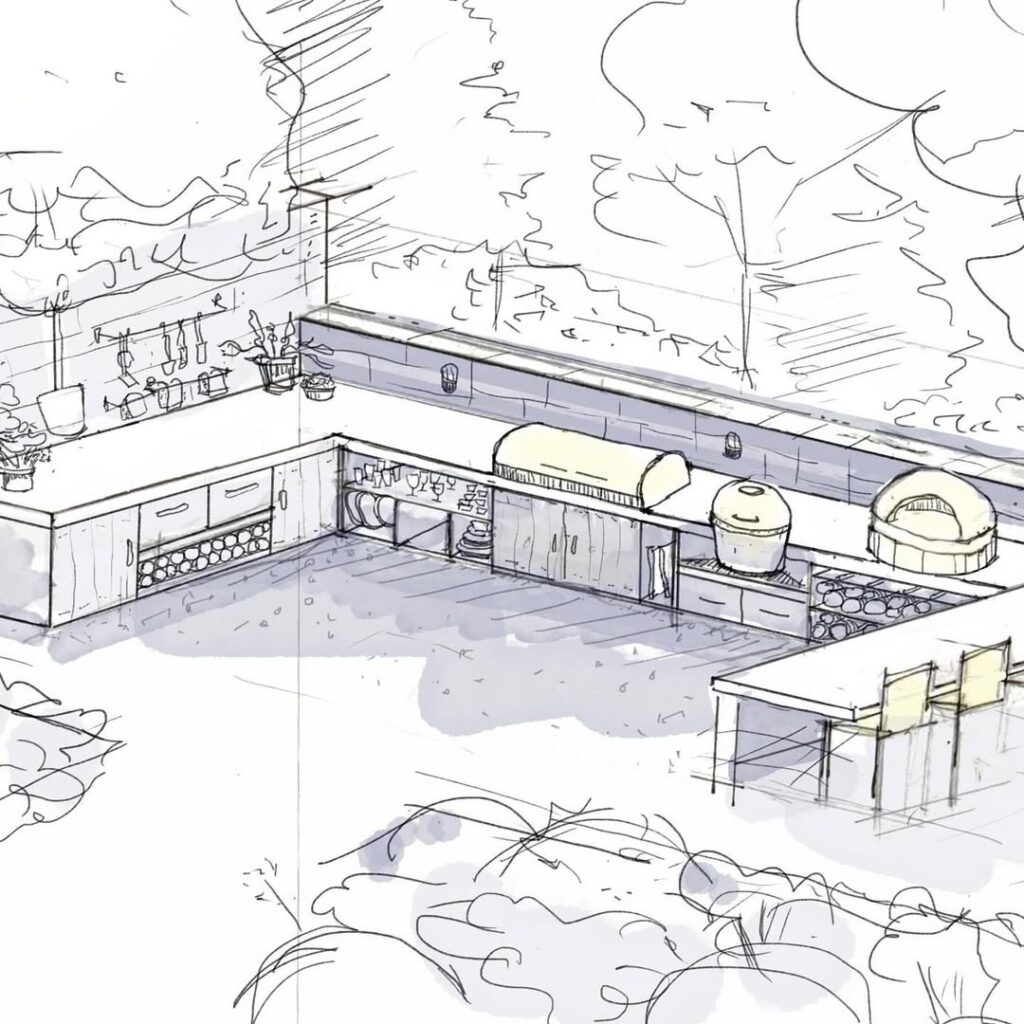
1. Skipping a Clear Purpose for Your Outdoor Kitchen
Mistake: Many homeowners jump straight into buying a grill and cabinets without deciding why they even want an outdoor kitchen.
Why it’s a problem: Without a defined purpose, you end up with mismatched appliances, wasted space, and a kitchen you never actually use.
Imagine installing a smoker, pizza oven, and wine fridge just because they look cool on Instagram, only to realize you don’t even like pizza.
What you really need: Start with a simple question: Who will use this kitchen, and for what?
- Entertaining friends? Prioritize seating and prep space.
- Family meals? Focus on efficiency and durability.
- Occasional BBQ? Keep it small, portable, and low-maintenance.
Think of it as building your kitchen around your life – not the other way around. Even Harry Callahan would say: “A man’s got to know his kitchen purpose.”
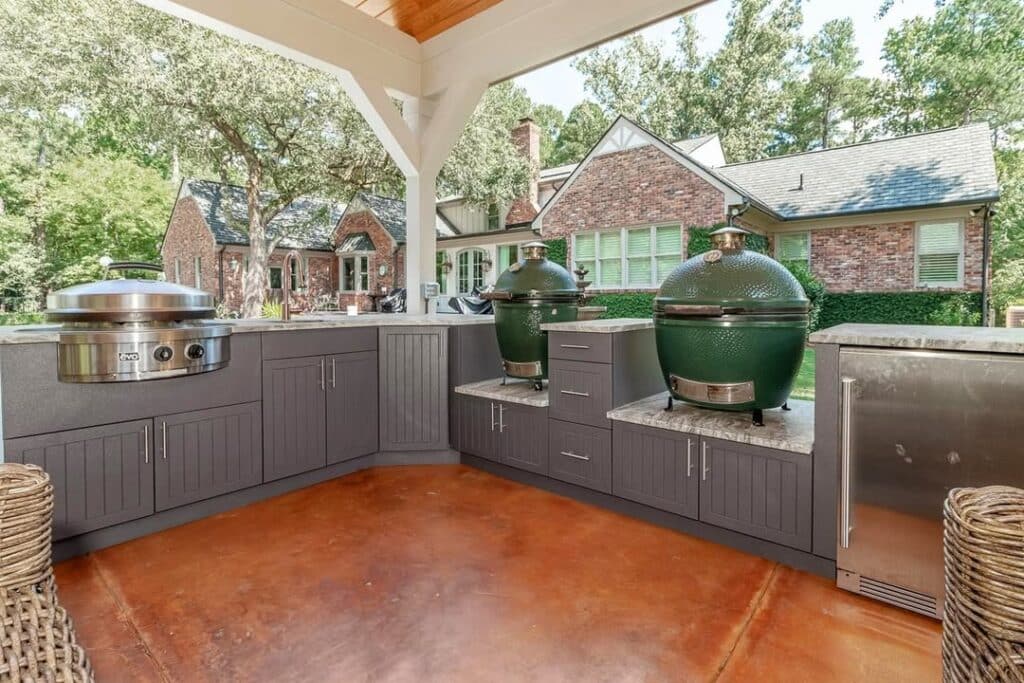
2. Poor Layout and Workflow Design
Mistake: Placing the grill in one corner, the sink in another, and the fridge at the far end because “it looks cool.”
Why it’s a problem: Cooking is movement-intensive. If your prep, cook, and serve zones are scattered, you’ll feel like you’re training for the Backyard Olympics every time you flip a burger.
What you really need: The work triangle, a concept from indoor kitchens, works wonders outdoors too. Ideally, your prep area, grill, and sink should form a triangle with unobstructed pathways.
Practical tip: leave at least 36 inches between work zones so you can chop, grill, and grab a drink without bumping into guests – or accidentally sending Kelvin Celsius flying in a summoning mishap.

3. Ignoring Local Climate and Weather Conditions
Mistake: Treating the outdoor kitchen like it’s an indoor room with perfect temperature and zero weather concerns.
Why it’s a problem: Wind, rain, snow, or blazing sun can ruin appliances and materials fast. Rust, warped wood, and cracked countertops are common nightmares.
What you really need:
- Shade: Pergolas, retractable awnings, or umbrellas.
- Wind breaks: Screens, trellises, or walls that don’t block airflow completely.
- Drainage: Slight slopes, gutters, or floor drains to prevent puddles near your grill.
Remember: a kitchen that survives one season of Mother Nature is a kitchen that earns its keep. Bugs Bunny might dig a hole underground to escape bad weather – but your kitchen shouldn’t have to.

4. Choosing the Wrong Materials
Mistake: Using indoor cabinetry, laminate countertops, or untreated wood outdoors.
Why it’s a problem: Your dream kitchen can quickly turn into a maintenance nightmare. Mold, fading, rust, and peeling surfaces are common.
What you really need:
- Stainless steel: Rust-resistant, durable, and low-maintenance.
- Stone or concrete countertops: Heat and stain-resistant, and they look timeless.
- Outdoor-rated wood: Teak or cedar with protective sealant.
Pro tip: invest in materials that age gracefully. You want a kitchen that looks better with time – not like Kelvin Celsius after a failed summoning spell.
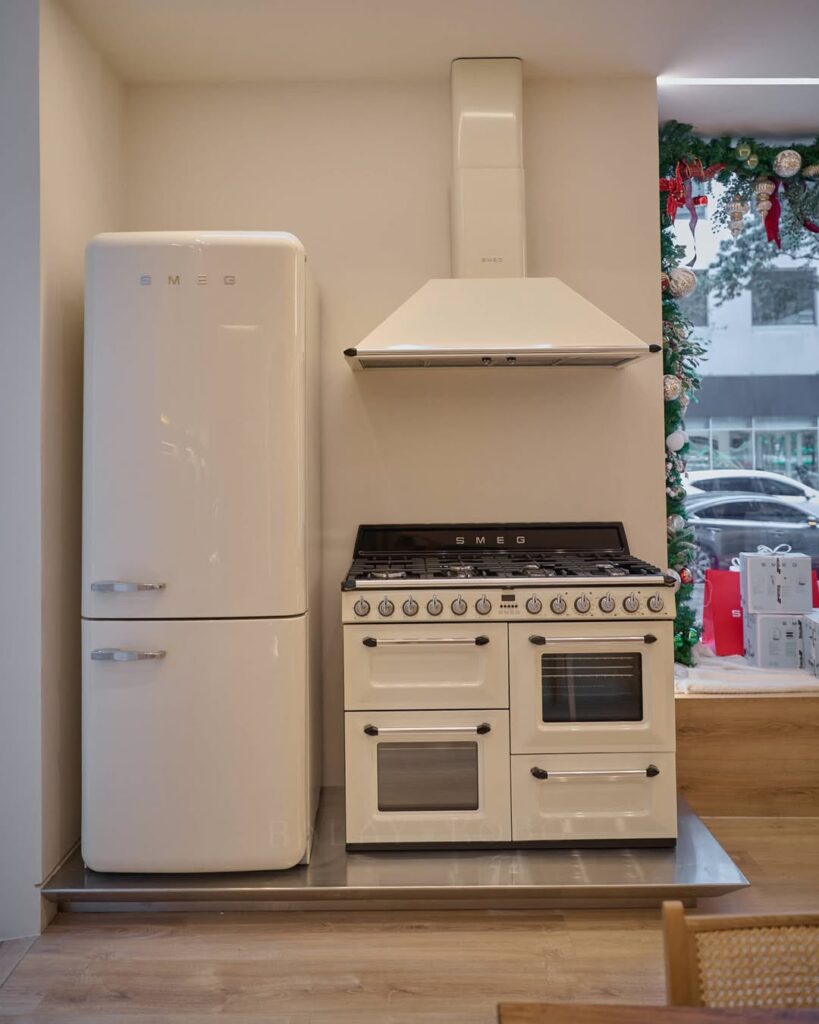
5. Overloading the Kitchen with Unnecessary Appliances
Mistake: Trying to fit a pizza oven, smoker, double grill, ice maker, and wine fridge all in a modest backyard.
Why it’s a problem: Space is limited. Too many appliances make your kitchen feel crowded and harder to use.
And let’s be honest, when you have 5 appliances, you’re more likely to open one and stare at it wondering what to do – just like Dirty Harry staring at a pile of paperwork he didn’t ask for.
What you really need: Start simple: grill, prep space, sink, and storage. Add extras later if you genuinely use them. Less is more.
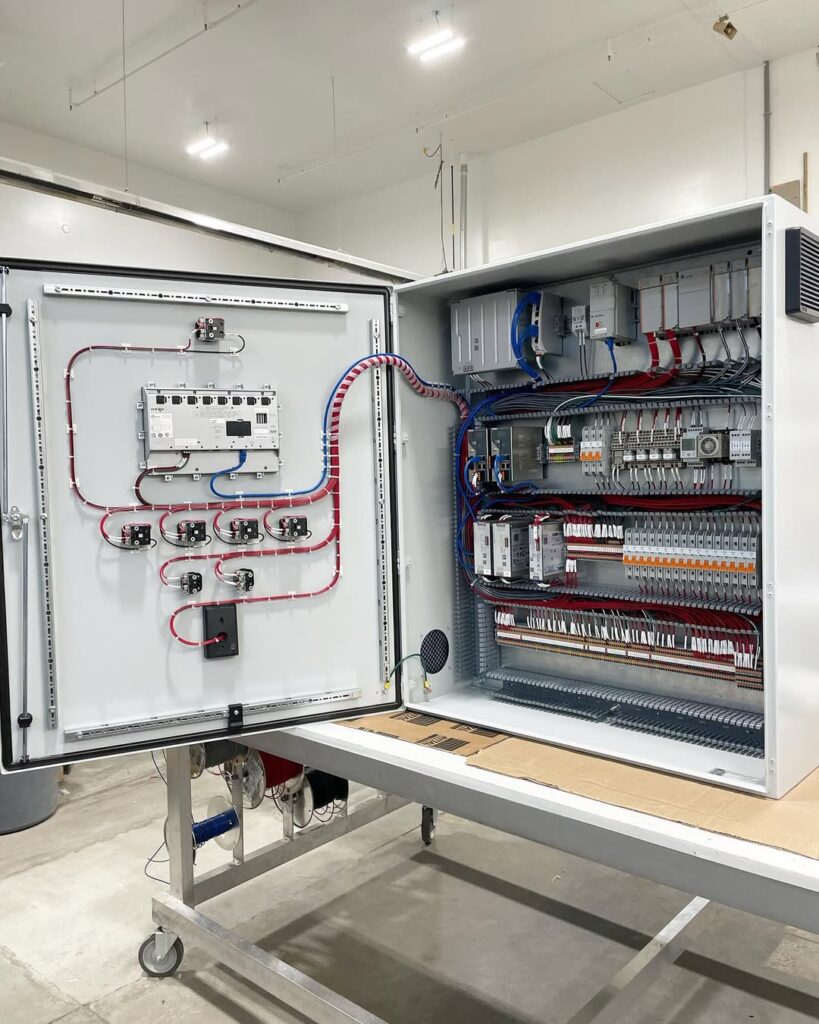
6. Underestimating Electrical and Gas Requirements
Mistake: Treating utilities as a “last-minute thing” and assuming you can just plug in a fancy outdoor fridge wherever.
Why it’s a problem: Poor planning can lead to expensive retrofits, blown fuses, or worse – safety hazards.
What you really need:
- Plan your gas, water, and electricity layout before construction.
- Hire licensed professionals to install lines safely.
- Include extra outlets for small appliances and future expansion.
Remember, electricity isn’t like magic. You can’t just summon a spark out of nowhere unless, of course, you’re Kelvin Celsius – but I wouldn’t recommend it.
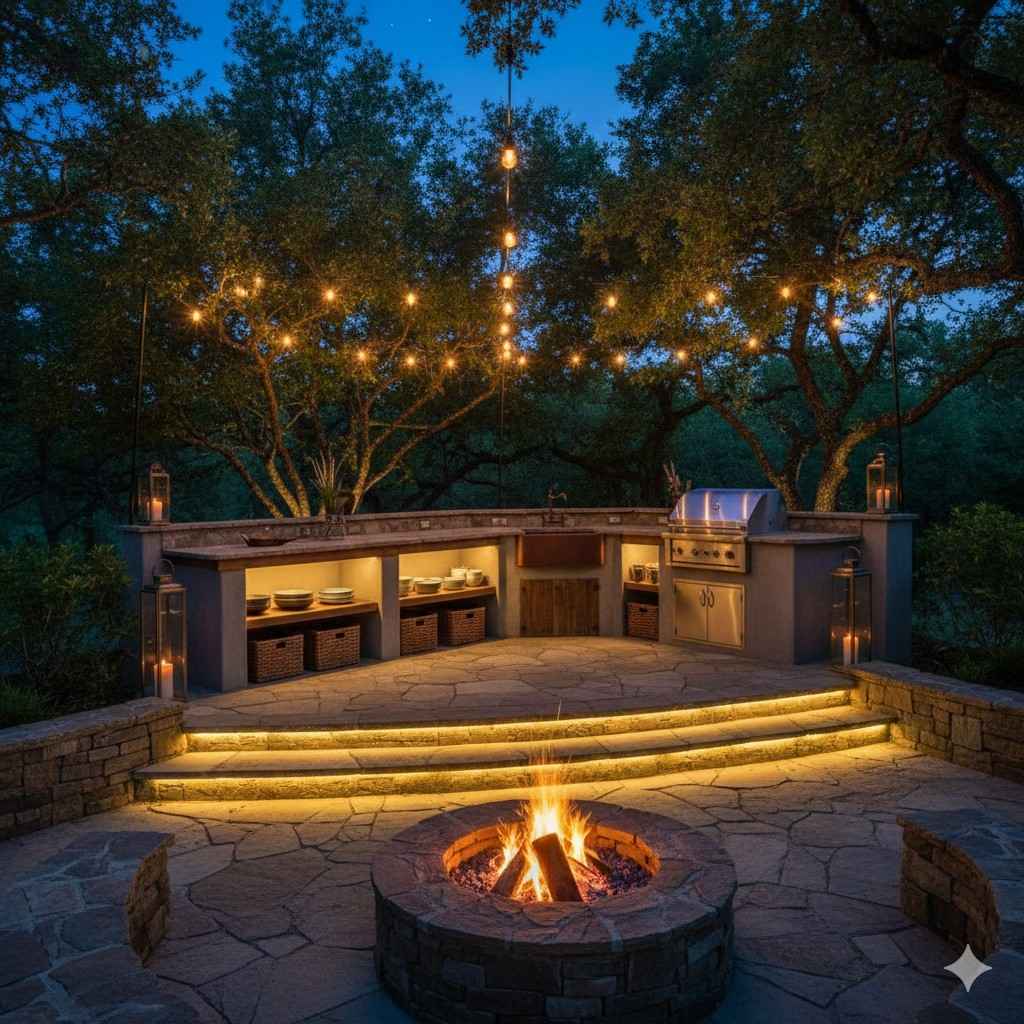
7. Forgetting About Lighting
Mistake: Relying on one overhead porch light or candle lanterns.
Why it’s a problem: Poor lighting makes cooking unsafe and dining awkward. You don’t want to serve a salad while accidentally mistaking kale for cilantro.
What you really need:
- Task lighting: Focused over prep and cooking areas.
- Ambient lighting: String lights, lanterns, or LED strips for cozy evenings.
- Safety lighting: Pathways and stairs need subtle illumination.
Pro tip: energy-efficient, outdoor-rated lights save money and headaches. You want to look like the host, not Bugs Bunny lost in a dark carrot patch.

8. Neglecting Storage and Prep Space
Mistake: Focusing solely on appliances and forgetting that prep surfaces and storage are just as important.
Why it’s a problem: Without proper storage, your kitchen turns into chaos. Utensils, spices, and plates end up indoors while you chase everything outside mid-cook.
What you really need:
- Cabinets and drawers designed for outdoor conditions.
- Ample counter space next to cooking areas for prep and plating.
- Consider modular storage that adapts as your needs change.
Think of it this way: a good prep space is like a good sidekick. Harry Callahan may survive solo, but your kitchen thrives with support.
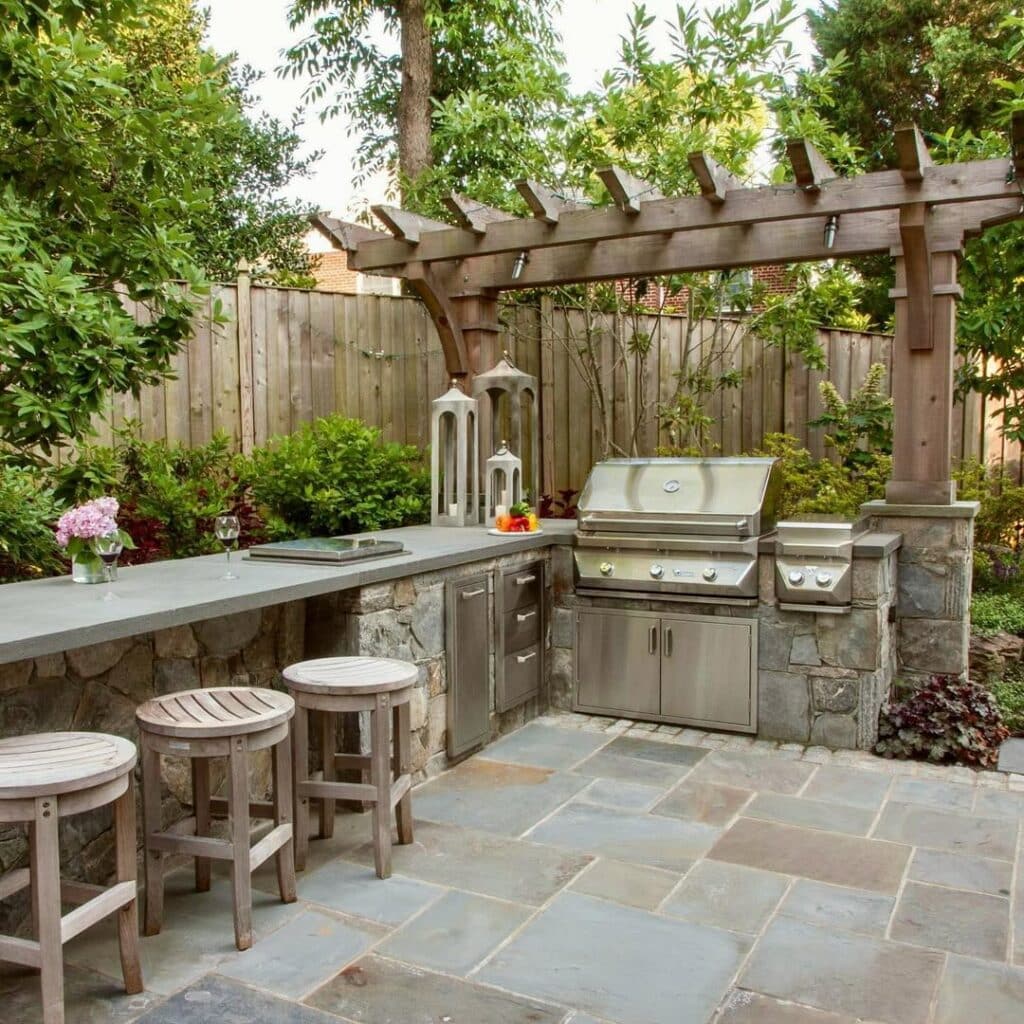
9. Poor Seating and Social Flow Planning
Mistake: Treating seating as an afterthought or cramming guests around the grill.
Why it’s a problem: Guests end up blocking the cook, or worse, sitting too far to interact comfortably. Nobody wants to yell across a backyard to pass the ketchup.
What you really need:
- Separate cooking zones from social zones.
- Bar seating for casual chats, dining tables for meals.
- Flow that encourages conversation but keeps the chef in command.
Remember, the kitchen is the stage, and your guests should be the audience – not the props.

10. Skipping Permits and Local Building Codes
Mistake: Assuming an outdoor kitchen is “just a deck” and skipping local approvals.
Why it’s a problem: Fines, forced removals, and insurance issues can turn a dream kitchen into a nightmare.
What you really need:
- Research local zoning laws and HOA rules.
- Obtain permits for gas, plumbing, and electrical work.
- Consult professionals early to avoid expensive surprises.
Even Bugs Bunny knew better than to ignore rules when digging into someone else’s property – don’t be that guy with a kitchen that technically doesn’t exist legally.
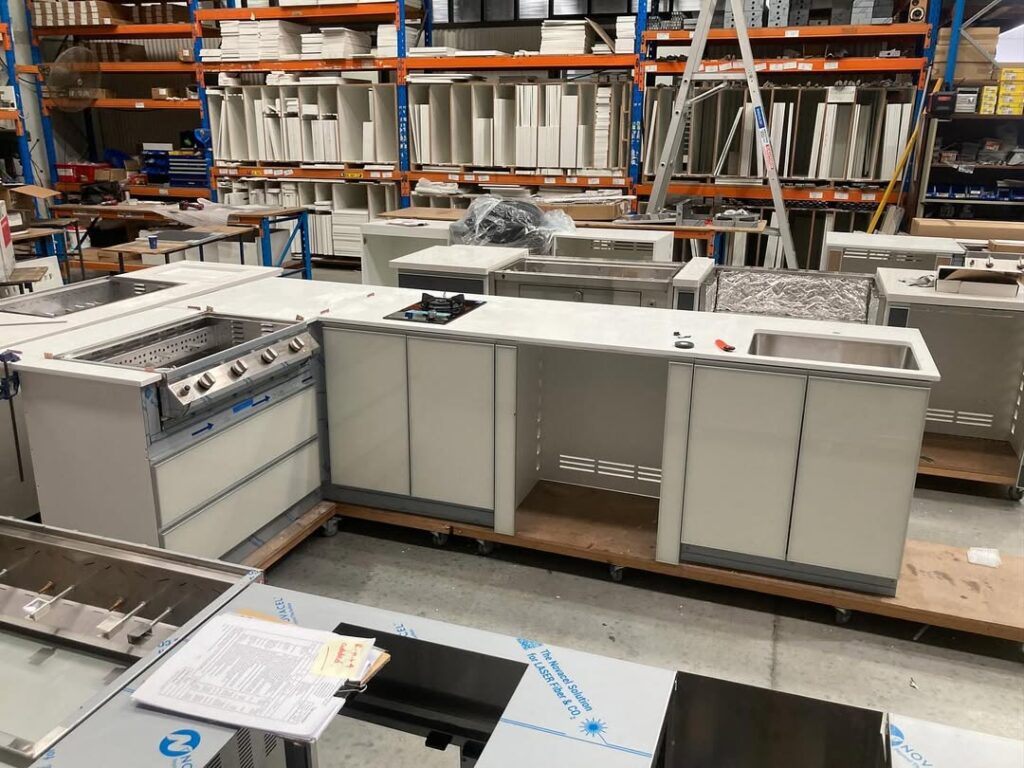
11. Designing Without Future Maintenance in Mind
Mistake: Choosing designs that are hard to clean, repair, or update.
Why it’s a problem: A beautiful kitchen loses its shine fast if you can’t maintain it. Stains, rust, and leaks are inevitable without proper planning.
What you really need:
- Easy-to-clean countertops and surfaces.
- Accessible utility connections for repairs.
- Modular or replaceable components for long-term flexibility.
Think of it like this: plan for maintenance now, or prepare for frustration later. Kelvin Celsius may handle chaos magically, but in real life, you need practicality.
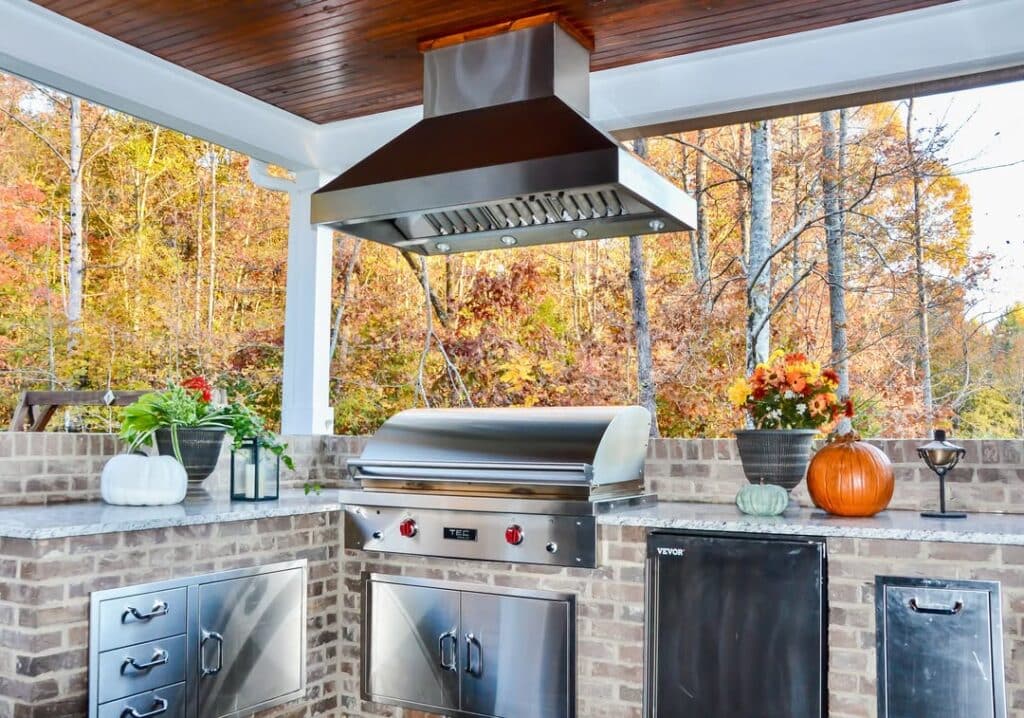
12. Overlooking Outdoor Kitchen Ventilation
Mistake: Many homeowners assume outdoor kitchens are naturally ventilated and skip thinking about smoke and heat control.
Why it’s a problem: Without proper ventilation, smoke from your grill can linger around your guests, food, and even your house. Excess heat can also make cooking uncomfortable, and in extreme cases, damage nearby structures or appliances.
What you really need:
- Install chimneys, vent hoods, or overhead fans to guide smoke away.
- Position grills at least 3–4 feet from walls to prevent heat damage.
- Consider wind direction and natural airflow when planning your cooking zone.
A well-ventilated kitchen keeps the air fresh, your guests happy, and your hair un-singed – something Bugs Bunny could definitely appreciate after an unfortunate encounter with a too-close smoker.
Remember: smoke-free cooking is happy cooking, and a little foresight now prevents choking later.

13. Forgetting Smart Technology Integration
Mistake: Treating outdoor kitchens like they belong in the 1980s with only knobs and dials.
Why it’s a problem: Modern outdoor kitchens can feel outdated if you ignore smart appliances, lighting, and climate control. You could be manually adjusting temperatures, timers, and lighting while your guests are texting from indoors.
What you really need:
- Smart grills with temperature sensors and remote controls.
- Outdoor-rated speakers and lighting that sync with apps.
- Weather sensors to adjust awnings or heaters automatically.
Smart integration makes your kitchen efficient, comfortable, and futuristic. Imagine flipping burgers while monitoring temps from your phone – Kelvin Celsius would probably call that sorcery, but it’s just good design.
A tech-savvy kitchen isn’t just convenient – it’s modern outdoor luxury at its finest.

14. Ignoring Green and Sustainable Practices
Mistake: Many outdoor kitchens are designed without thinking about environmental impact.
Why it’s a problem: High energy use, disposable fuel, and non-durable materials create unnecessary waste and higher costs over time.
What you really need:
- Solar-powered lighting or energy-efficient LEDs.
- Recycled or sustainable materials for countertops, cabinetry, and decking.
- Rainwater harvesting for cleaning and plants around the kitchen.·
Sustainable design doesn’t mean compromising style. It means planning smart, lasting kitchens that save money and reduce environmental impact.
Even Harry Callahan might nod in approval – “a man’s got to know his resources” – especially when those resources include sunshine and rain instead of extra gas bottles. Your backyard can be both luxurious and eco-friendly.
FAQ – Outdoor Kitchen Planning Mistakes
Q1: How much space do I really need for an outdoor kitchen?
A: Space depends on your intended use. For basic grilling and prep, 50–100 square feet may suffice. For entertaining or full-scale cooking, aim for 150+ square feet.
Always plan enough room for workflow, seating, and movement – remember, crowded kitchens are frustrating, even if Bugs Bunny somehow manages to squeeze through.
Q2: Can I use indoor materials outdoors to save money?
A: Short answer: no. Indoor materials like laminates, untreated wood, or standard cabinetry are prone to warping, mold, and rust.
Investing in outdoor-rated materials saves you time, money, and headaches in the long run. It’s worth it – you don’t want to replace a deck of cabinets after one rainy season.
Q3: Do I really need permits for an outdoor kitchen?
A: Yes. Most areas require permits for gas, electrical, and plumbing installations, and sometimes zoning approval. Skipping permits can lead to fines, forced removal, or insurance issues. Plan ahead – it’s not as glamorous as grilling, but it’s essential.
Q4: How do I protect my kitchen from weather?
A: Use shade structures, wind breaks, and water-resistant materials. Plan drainage carefully and consider covers for appliances. Even a small roof or pergola can prevent damage and make your kitchen usable in most conditions.
Q5: Are smart appliances really necessary?
A: Not necessary, but highly recommended. Smart grills, lighting, and sensors can make cooking safer, more efficient, and more enjoyable. Plus, they give your kitchen a modern edge, and you might finally get to show off a setup Kelvin Celsius would envy.
Q6: What’s the biggest mistake homeowners make with seating?
A: Treating seating as an afterthought. Guests shouldn’t crowd the cook, and there should be a clear separation between cooking and social zones. Proper planning ensures comfort, flow, and a more enjoyable dining experience.
Build Smarter, Not Bigger
Avoiding these outdoor kitchen planning mistakes doesn’t just save money – it saves frustration, stress, and countless trips inside chasing utensils or trying to fix a rusted grill.
Focus on purpose, workflow, materials, and maintenance. Add appliances sparingly. Plan lighting, utilities, and social flow carefully. And don’t forget the permits.
When done right, an outdoor kitchen is more than a cooking space – it’s a backyard sanctuary, a place where family and friends gather, laughter echoes, and memories are made.
And maybe, just maybe, Bugs Bunny, Kelvin Celsius, and Dirty Harry would all agree it’s worth doing correctly.
Featured image credit: @georginawilsonassociates
