
The Beef That Breaks the Internet (and Your Expectations)
If you hang around barbecue pits long enough, someone will eventually ask:
“So… what’s the deal with Japanese wagyu? Why does it look like beef wearing marble pajamas?”
And fair question – because wagyu isn’t just beef. It’s a global culinary flex, a luxury ingredient, and to a lot of pitmasters like me, the beef equivalent of a sports car: smooth, engineered, and slightly dangerous to your wallet.
But once you understand what wagyu actually is, why it’s so famous, and how to cook it without committing a meat felony, you’ll see why chefs and grill nerds worship this stuff.
Let’s break it down – clean, clear, and bite-sized (kind of like the steak itself).
What Exactly Is Wagyu?
A Beef Breed, Not a Buzzword
Let’s clear something up right away:
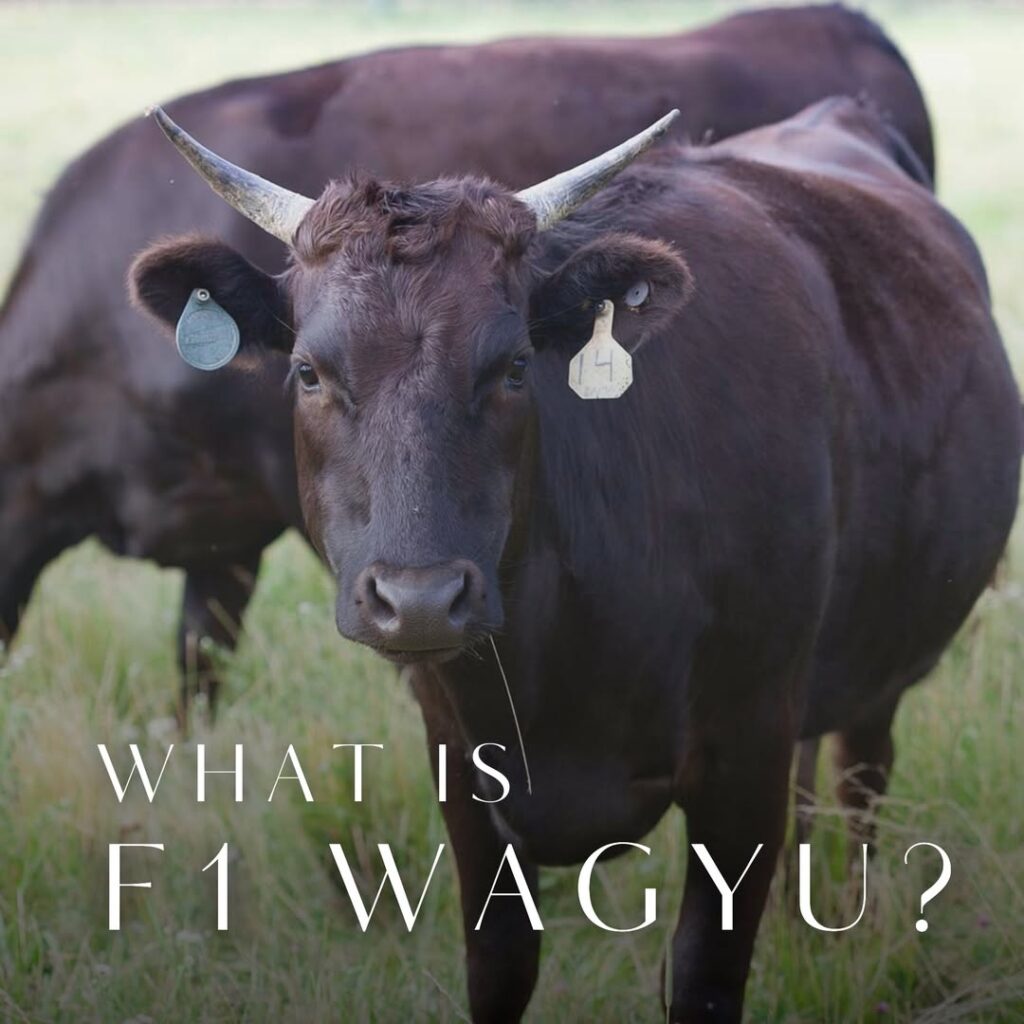
Wagyu literally means “Japanese cow.”
Not “expensive cow.” Not “fancy steak.” Just… cow. But the magic comes from the breeds:
- Kuroge Washu (Black) – The star of the show. Known for insane marbling.
- Akaushi (Red) – Leaner but flavorful.
- Shorthorn and Polled – Rare and region-specific.
The Kuroge Washu breed is the reason your Instagram feed is full of steaks that look like they’ve been tattooed with lace patterns. This breed is genetically predisposed to produce ultra-fine intramuscular fat, aka the famous marbling.
Highlighted Key Point:
The thing that sets wagyu apart isn’t marketing – it’s genetics. The cattle literally build fat differently.
Why Japanese Wagyu Became World-Famous
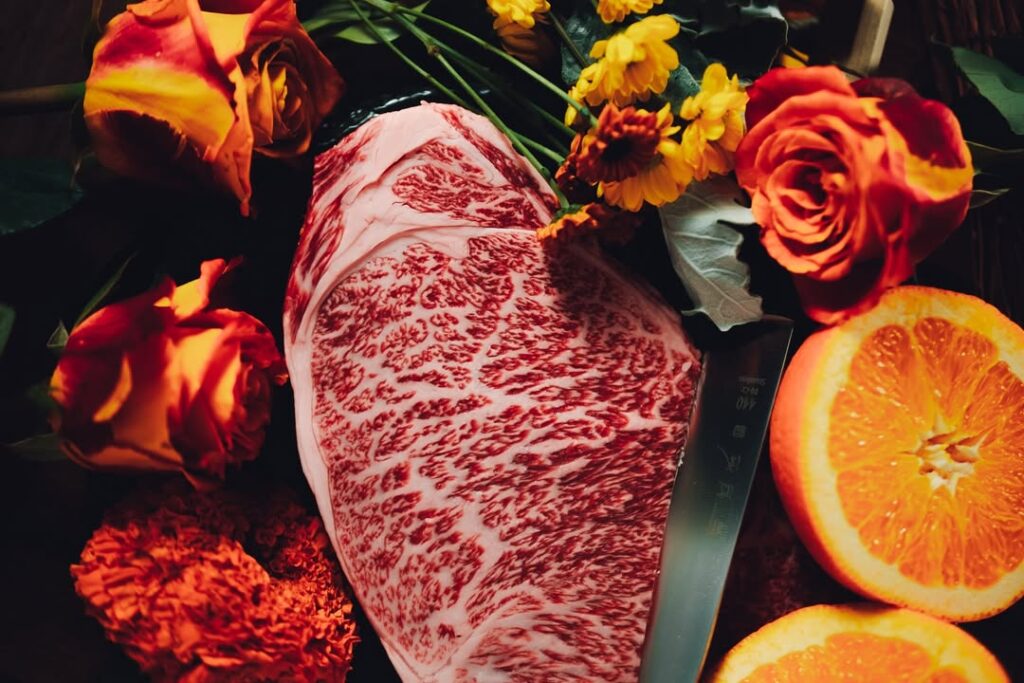
The Marbling: Fat That Melts Like Butter at 77°F
Most beef melts in your mouth because it’s tender.
Wagyu melts in your mouth because the fat literally melts.
Wagyu fat liquifies at a temperature close to body heat, giving it that buttery feel.
Important phrase:
“Wagyu fat isn’t heavy – it’s silky.”
This is why even a thin strip packs the flavor punch of a full ribeye.
The Japanese Wagyu Flavor: Sweet, Rich, Umami-Forward
That melt-in-your-mouth bite isn’t just texture.
Wagyu fat carries a deep, savory umami flavor that’s almost sweet.
People describe it as:
- “Beefy but delicate”
- “Rich but not greasy”
- “Delicious enough to make you question your life decisions”
The Science of Wagyu Marbling
Wagyu’s legendary marbling isn’t magic – it’s biology. These cattle deposit intramuscular fat in a way other breeds simply can’t, giving each cut a silky, buttery texture that melts almost instantly at body temperature.
This unique fat structure is why A5 wagyu can be sliced paper-thin yet still deliver an intense, juicy mouthfeel. Scientists point to Wagyu’s high ratio of monounsaturated fats, which not only taste richer but also lower the beef’s melting point.
It’s like having a steak with its own built-in luxury lubricant. Understanding the science behind wagyu helps explain why even small portions pack enormous flavor, making it more about finesse than quantity.
This is why chefs handle wagyu with respect – overcooking or heavy seasoning destroys the delicate balance nature spent decades perfecting.
The Standards: Japan Doesn’t Play Around with its Japanese Wagyu
Wagyu gets graded like a student taking the world’s most stressful exam.
The two big metrics:
- Yield (A–C) – How much usable beef the cow produces
- Marbling Score (1–12) – How much intramuscular fat is present
A5 wagyu with a marbling score of 10–12 is the gold standard – the stuff people sell kidneys to buy.
Key point:
Japanese wagyu is regulated from birth to butcher.
Every cow has documentation thicker than a passport.
The Rarity: Not Mass-Produced
Japan strictly controls:
- Breeding
- Genetics
- Export quantities
- Regional labeling (e.g., Kobe, Matsusaka, Miyazaki)
This keeps wagyu authentic, traceable, and yes – expensive.
The Economics of Wagyu
Wagyu’s sky-high price tag isn’t arbitrary. Raising a single A5 cow can cost thousands of dollars due to special feed, long rearing periods, and meticulous care. Every cow is tracked from birth, ensuring genetic purity and marbling potential, and export quotas keep supply low.
When you buy wagyu, you’re essentially investing in decades of breeding science, specialized farming, and strict quality control. Restaurants mark up prices further, reflecting both the rarity and preparation labor, from precision slicing to exact cooking methods.
Understanding the economics helps explain why wagyu is rarely a casual purchase – it’s a luxury experience, designed to be savored. A few ounces go further than a whole ribeye, proving that wagyu isn’t about quantity, it’s about exceptional quality and indulgence.
Types of Wagyu: Not All Are Created Equal
Fullblood Wagyu
100% pure lineage. Highest marbling potential. This is the good stuff.
Crossbred Wagyu
Often 50% wagyu, 50% another breed like Angus. Great quality, more affordable, but not the same as Japanese fullblood.
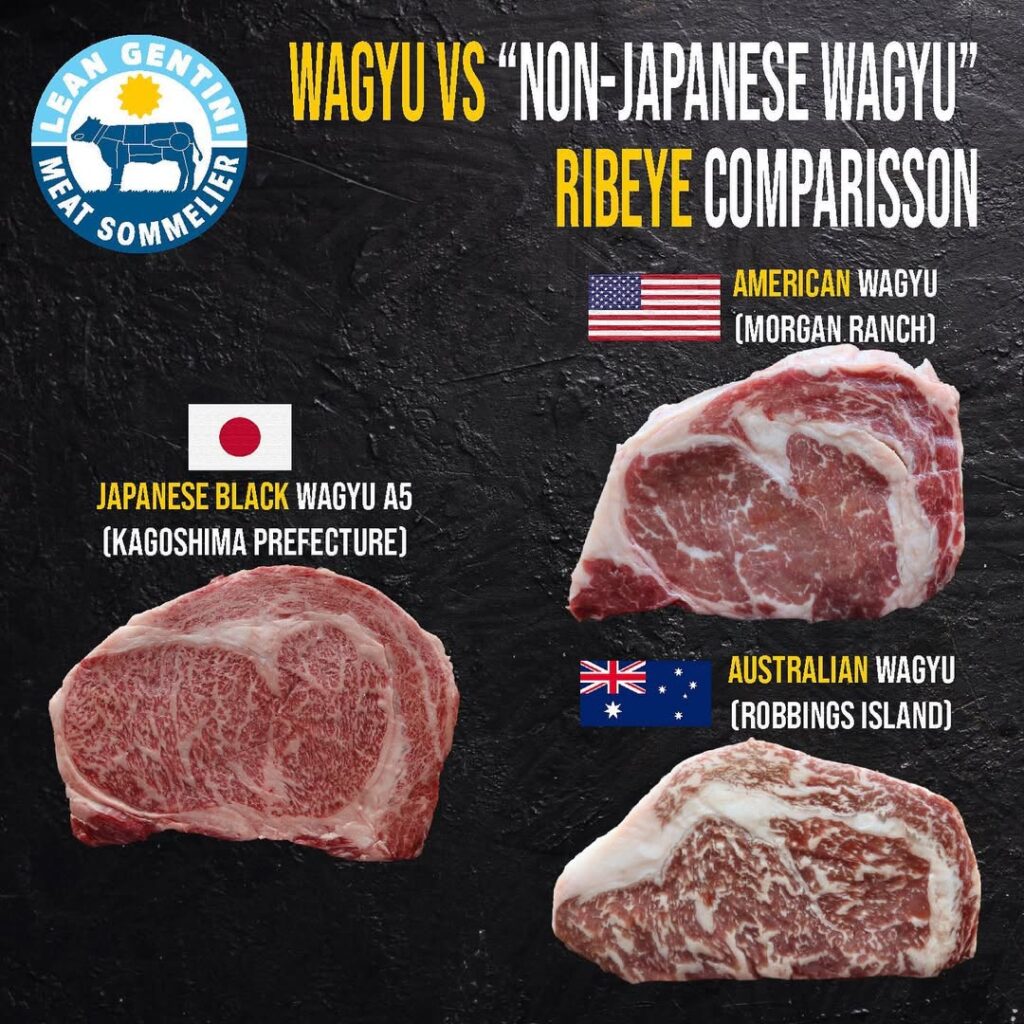
American & Australian Wagyu
Still delicious, still marbled, but raised differently. Think of them as wagyu with accents.
Why Wagyu Is So Expensive
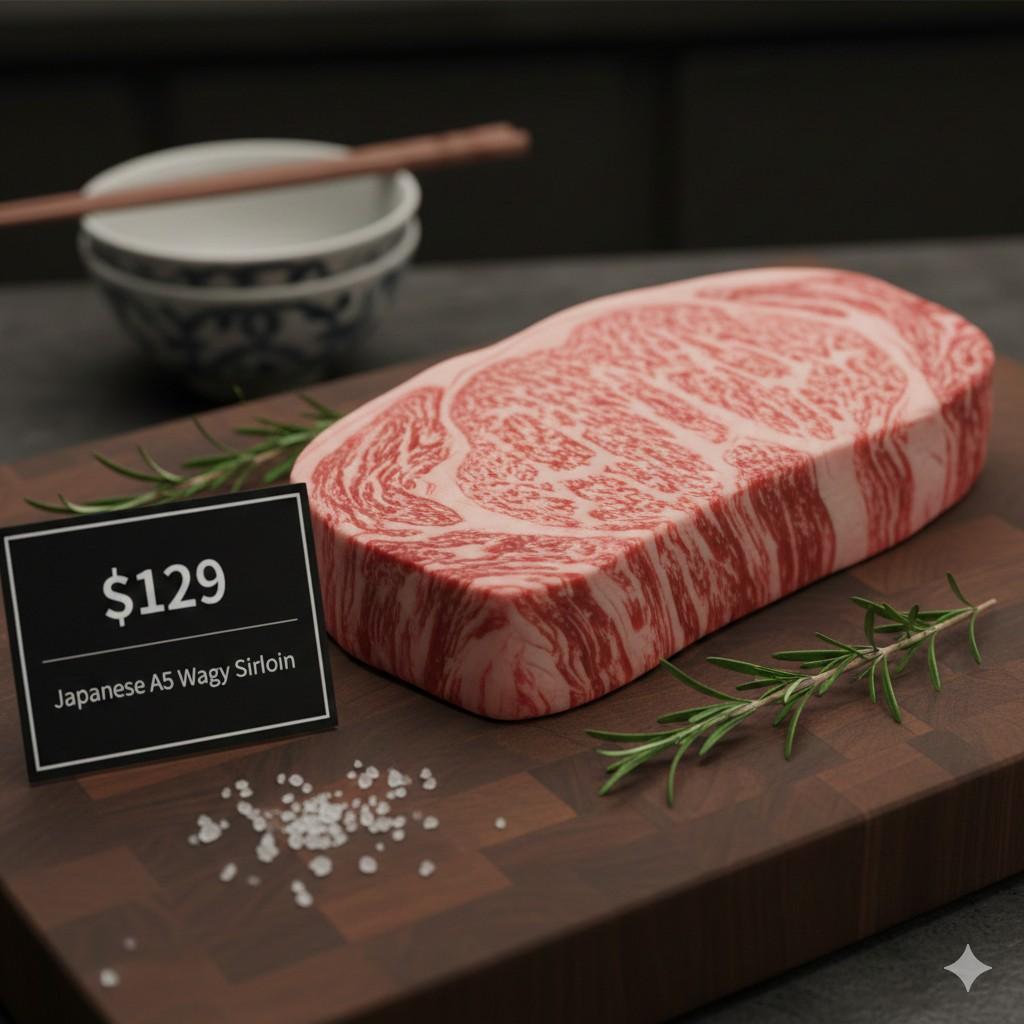
Here’s the short version:
- Longer feeding cycles
- Special diets
- Intensive care and tracking
- Strict genetic protection
- Limited exports
You’re not just paying for beef – you’re paying for the cow’s entire life story.
Wagyu Around the World
While Japanese Wagyu reigns supreme, American, Australian, and European wagyu have carved out their own niches. American wagyu is often crossbred with Angus, creating beef with robust flavor but slightly less marbling.
Australian wagyu tends to be grass-fed longer, giving it a different umami profile and firmer texture. Each region interprets wagyu through its local climate, feed, and husbandry practices, resulting in unique taste experiences.
Global wagyu shows that while the breed is critical, how the cattle are raised and fed can dramatically change the steak on your plate.
Even if it’s not A5, well-raised wagyu outside Japan can be a luxury experience in its own right, showing that the world has embraced wagyu not just as a dish, but a lifestyle of indulgence.
Pairing Wagyu With Drinks
Wagyu’s rich fat and umami call for thoughtful beverage pairings. Light, crisp sake or dry white wine can cut through the fat, highlighting the beef’s sweetness and clean flavors.
For red wine lovers, a low-tannin Pinot Noir works beautifully, complementing the steak without overwhelming it.
Beer? Opt for a lager or pilsner, which provides carbonation to refresh the palate between bites. Even cocktails like a bourbon-based Old Fashioned can enhance wagyu’s buttery richness.
The trick is balance: don’t let the drink overshadow the beef, but let it amplify each savory nuance. Proper pairing transforms wagyu into an immersive dining experience, where every sip and bite is in dialogue, showing that luxury meat deserves equally considered drinks.
Japanese Wagyu’s Role in Modern Cuisine
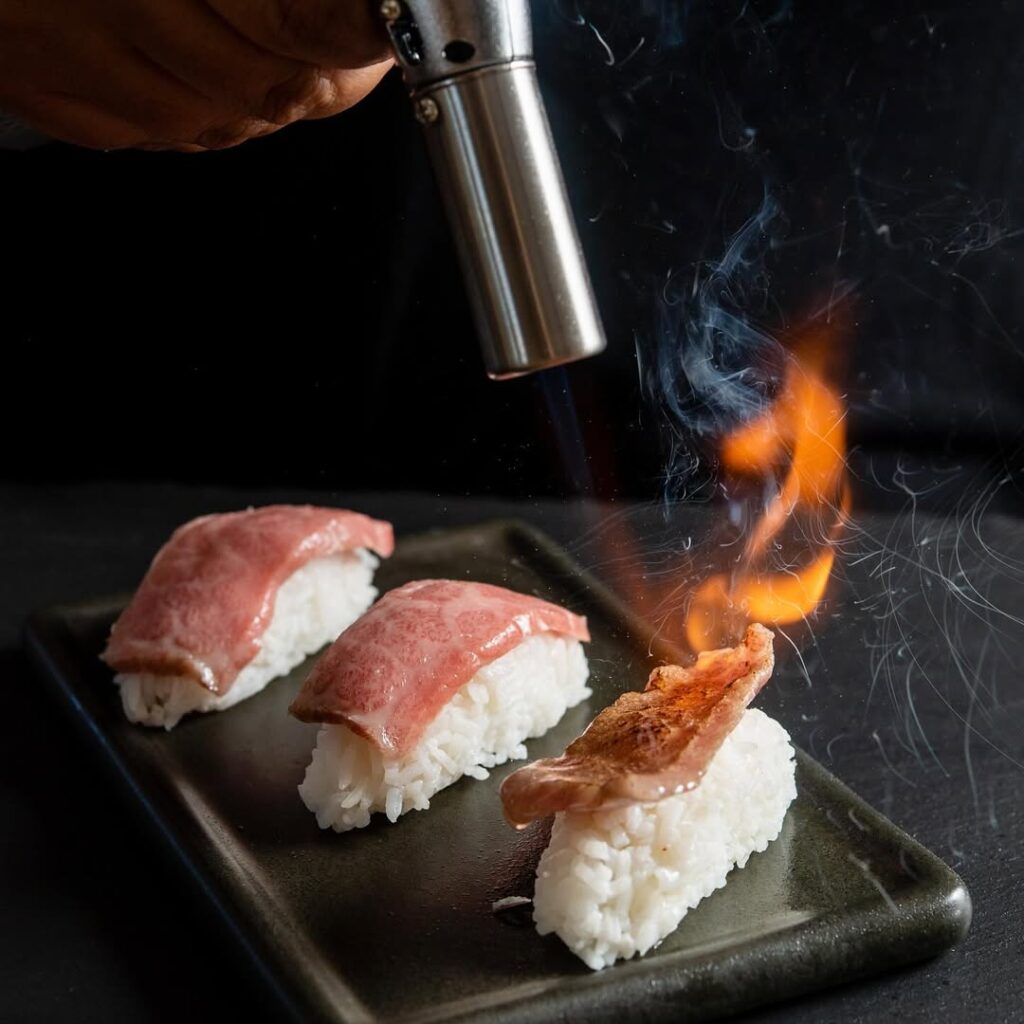
Wagyu has transcended steakhouse menus to appear in ramen, sushi, tacos, and gourmet sliders. Chefs love wagyu because its high-fat content and rich flavor elevate even simple dishes.
Think of a wagyu shabu-shabu where a thin slice swirls in hot broth, releasing umami-laden juices instantly, or a wagyu tartare seasoned minimally to showcase the beef itself. Wagyu isn’t just a steak — it’s a canvas for culinary creativity.
Restaurants worldwide use wagyu to redefine comfort foods, turning everyday meals into decadent experiences.
Its versatility proves that while wagyu is luxurious, it can adapt to playful, modern cuisine, appealing to traditionalists and food adventurers alike, without ever losing its signature buttery, melt-in-your-mouth charm.
How Japanese Wagyu Is Raised (The Truth, Not the Myths)
Let’s bust a few myths before somebody tells you wagyu cattle get daily massages while listening to jazz.
Myth: Japanese Wagyu cattle drink beer.
Reality: Some farms used beer decades ago to stimulate appetite during hot seasons – mostly marketing now.
Myth: Wagyu cows get massages.
Reality: Some farmers brush cattle to keep coats clean. Not spa day.
Myth: Japanese Wagyu cows live better than I do.
Reality: …Okay, that one might be true.
How to Cook Japanese Wagyu Like You Actually Know What You’re Doing
As a pitmaster, let me be blunt:
Japanese Wagyu is NOT cooked like regular steak. If you treat A5 like a ribeye, you’ll ruin it.
Keep It Thin
A5 wagyu is usually served in thin slices, not cowboy-steak thickness. Too thick and the fat overwhelms you.
High Heat, Fast Cook
Cast iron. Screaming hot. 30–45 seconds per side. Done. You’re not trying to “cook” it – you’re trying to kiss it with heat.
Salt (Barely)
Wagyu doesn’t need fancy seasoning. Sometimes just salt feels like too much.
Key phrase:
“You’re tasting the fat, not the seasoning.”
How to Grill Japanese Wagyu (Pitmaster’s Version)
If you want to bring wagyu outside and introduce it to your grill:
For A5 Wagyu:
- Use a plancha, skillet, or flat top
- NOT open flames – fat will turn your grill into a fireworks show
- Quick sear, then slice
For American/Australian Wagyu:
You can treat these more like premium steaks:
- Reverse sear
- Two-zone cooking
- Finish over medium-high heat
Important point:
A5 wagyu is too fatty for low-and-slow BBQ. Yes, I’ve seen people try. Yes, it ends in tears.
Best Ways to Enjoy Wagyu
Wagyu isn’t a solo mission. It’s too rich. Serve it family style or tapas style.
With White Rice
The contrast of simple starch + rich beef is perfection. In Sukiyaki or Shabu-shabu. Thin slices dipped quickly in broth? Chef’s kiss.
As a Burger (Yes, Really)
But only if it’s blended with lean beef. A 100% wagyu burger will dissolve like a crayon on a hot day.
How to Spot Real Japanese Wagyu (And Avoid the Fakes)
Because yes – wagyu gets faked more often than celebrity apologies.
Look for:
- Japanese export certificate
- Breed information
- Prefecture branding
- A5 or A4 grading
If the restaurant can’t tell you exactly where the wagyu came from, it probably came from the land of You Wish.
Japanese Wagyu Storage and Handling Tips
Treat wagyu like a delicate work of art, not a regular steak. Always store it cold – ideally in the fridge, tightly wrapped to prevent odor absorption. If freezing, use vacuum-sealed bags to preserve texture.
When preparing, bring it to room temperature briefly, but never let it sit too long; the fat can become too soft, risking uneven cooking. Handle slices gently and use sharp knives to cut against the grain, highlighting tenderness.
Even plating is key: let slices rest for a minute after cooking to redistribute juices. Proper storage and handling ensure you experience maximum flavor and melt-in-your-mouth texture, turning your wagyu meal into a culinary masterpiece instead of a wasted investment.
Is Wagyu Worth the Price?
If you want:
- A once-in-a-lifetime food experience
- A flavor you can’t get from any other beef
- A steak that eats like velvet mixed with butter mixed with magic
Then yes, wagyu is worth it.
Just don’t expect it to replace your Tuesday ribeye.
Wagyu Is Luxury, Not Everyday Beef
Wagyu is one of the world’s most iconic foods because it’s rare, regulated, genetically unique, and unbelievably delicious.
It’s beef elevated to art.
Wagyu isn’t about eating more – it’s about eating better.
And if you cook it right, even a few ounces can feel like the best bite of beef you’ve had in your life.
Featured image credit: @wagyuofjapan
