
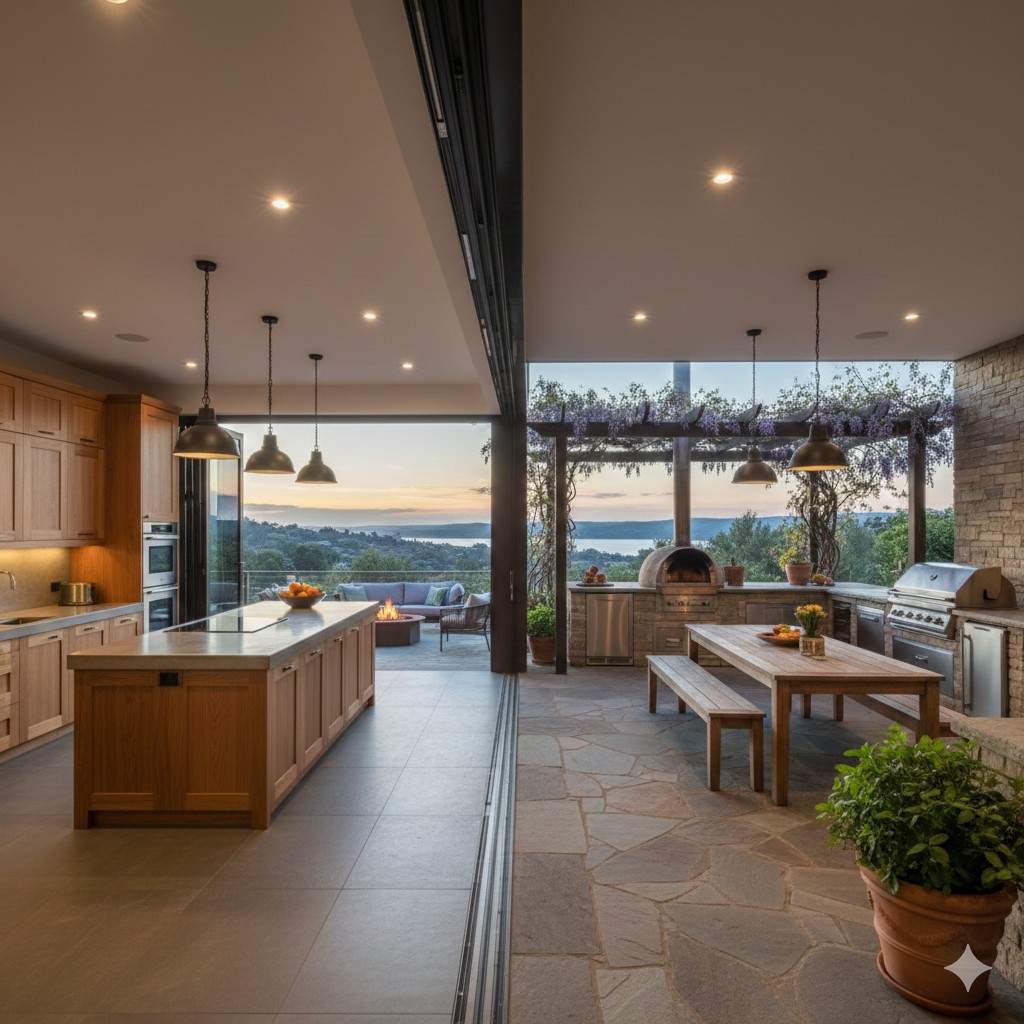
There was a time when an “outdoor kitchen” meant a lonely grill shoved against the fence and a folding table holding the hot dogs. Those days are long gone.
Today, homeowners want indoor & outdoor kitchens that work together as one connected space, not two separate zones stitched together as an afterthought. And when it’s done right, the result isn’t just beautiful – it completely changes how a home is lived in.
A contractor friend of mine who has designed and built plenty of these spaces over the years has this to say: a seamless indoor & outdoor kitchen feels effortless, but it never happens by accident.
It takes planning, intention, and a solid understanding of flow, materials, and human behavior (especially how people move during a party).
Let’s break it all down – clearly, practically, and without the fluff.
Understanding the Indoor & Outdoor Kitchen Concept
At its core, a seamless indoor & outdoor kitchen is about continuity – visually, functionally, and emotionally.
It’s not about duplicating your indoor kitchen outside. It’s about creating one extended cooking and entertaining environment that happens to cross a wall.
Here’s how my contractor friend explain it to clients:
- The indoor kitchen handles prep, storage, and everyday cooking
- The outdoor kitchen handles grilling, finishing, serving, and socializing
- The design makes the transition feel natural, not forced
If it feels like you’re “leaving” the kitchen when you step outside, something’s off.
The best integrated kitchens:
- Share similar materials, proportions, and sightlines
- Allow food, people, and conversation to move easily
- Feel intentional even when doors are wide open
Think of it less like adding a room – and more like stretching the kitchen outward.
Planning the Layout: Designing for Flow and Function
If there’s one place where projects succeed or fail, it’s layout. You can fix finishes later. You can’t fix bad flow without tearing things apart.
Choosing the Right Location
The golden rule:
Your outdoor kitchen should be as close to your indoor kitchen as possible.
Why?
- Fewer steps carrying food and plates
- Easier access to sinks, refrigeration, and storage
- Better connection during entertaining
I’ve seen homeowners insist on placing an outdoor kitchen at the far end of the yard for the “view.” Two parties later, they’re exhausted from running back and forth like a caterer.
Convenience beats scenery every time.
Also consider:
- Prevailing wind (smoke matters)
- Sun exposure during cooking hours
- Rooflines or overhangs for weather protection
Aligning Work Zones
A seamless design respects how kitchens actually work.
Inside and outside, you still need:
- Prep areas
- Cooking zones
- Serving and gathering space
The trick is letting these zones complement each other.
For example:
- Indoor kitchen = prep, baking, sauces
- Outdoor kitchen = grilling, searing, finishing
- Shared serving area near the opening between spaces
When zones are aligned, entertaining feels calm instead of chaotic.
Traffic Flow and Accessibility
Here’s a hard-earned lesson:
Design for people first, appliances second.
During a gathering, people will:
- Hover near food
- Drift between inside and outside
- Stop in doorways to talk (every time)
Avoid:
- Narrow door openings
- Islands directly in line with outdoor access
- Pinch points where guests collide with cooks
A good layout allows people to circulate without interrupting the cooking rhythm.

Creating Visual Continuity Between Spaces
This is where designers earn their keep.
The goal is not to match everything – but to make everything belong together.
Matching Materials and Finishes
Continuity comes from repetition:
- Similar flooring tones (even if materials differ)
- Coordinated cabinetry colors or textures
- Countertops that visually relate, if not identical
One of my favorite tricks?
Carry the indoor countertop material to the outdoor bar edge, even if the main outdoor counters need a more durable surface.
That small connection does a lot of visual heavy lifting.
Consistent Design Language
Your style should read the same inside and out.
Modern homes benefit from:
- Clean lines
- Flat-panel cabinetry
- Minimal color palettes
Transitional or rustic homes might lean on:
- Wood textures
- Stone surfaces
- Softer edges and warmer tones
When styles clash, the eye notices immediately – even if the homeowner can’t explain why.
Blurring the Boundary: Doors, Windows, and Openings
This is where the magic really happens.
The opening between indoor & outdoor kitchens is not just a door – it’s a design feature.
Popular options include:
- Folding glass walls
- Large sliding panels
- Retractable doors
- Pass-through windows with counters
The best ones:
- Open wide enough to erase the boundary
- Disappear visually when open
- Feel intentional when closed
Pro tip:
Design the opening first, then design the kitchens around it – not the other way around.
Appliances and Fixtures: Choosing Compatible Elements
Appliances can either support the design – or completely undermine it.
Outdoor-Rated Appliances Matter
Outdoor kitchens need:
- Weather-rated grills and refrigerators
- Proper ventilation
- Durable finishes that won’t fade or corrode
Using indoor appliances outdoors is a short-term savings with a long-term regret.
If it’s not rated for outdoor use, it doesn’t belong outside.
Coordinating Fixtures
Visual harmony matters here too:
- Faucets with similar silhouettes
- Sink styles that feel related
- Lighting fixtures that speak the same design language
You don’t need twins – you need cousins.
Climate, Comfort, and Durability Considerations
A beautiful outdoor kitchen that’s uncomfortable won’t get used.
Period.
Key comfort factors:
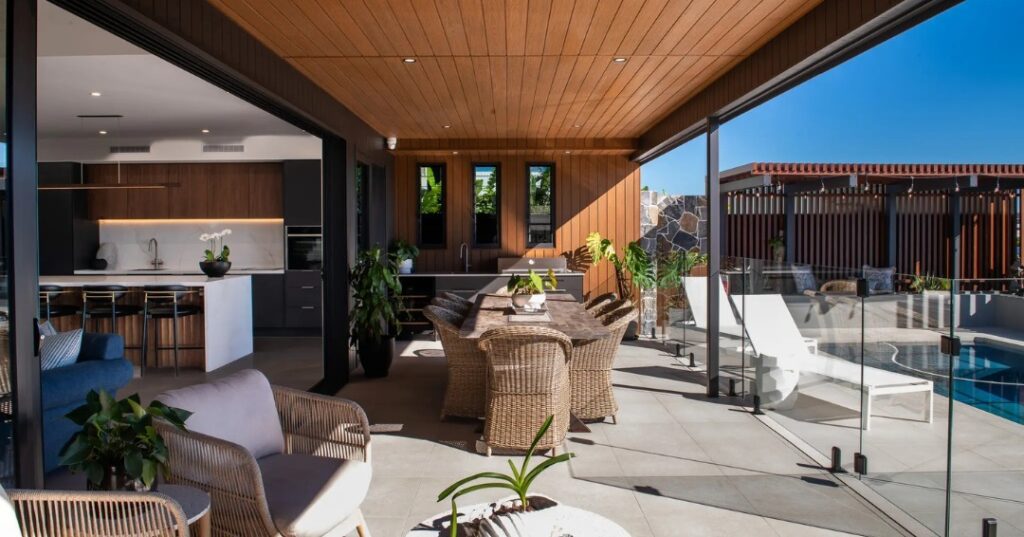
- Shade from pergolas or roof extensions
- Heating for cooler nights
- Fans for airflow and bug control
Material choices should handle:
- Sun exposure
- Moisture and humidity
- Temperature swings
Durability is invisible when it’s done right – and painfully obvious when it’s not.
Lighting Design for a Unified Experience
Lighting is often overlooked, yet it defines how the space feels at night.
A seamless lighting plan includes:
- Task lighting where food is prepared
- Ambient lighting for mood
- Accent lighting to connect architectural features
Avoid harsh contrasts where:
- Indoors feels bright
- Outdoors feels dim and disconnected
Light should guide people naturally from one space to the other.
Common Design Mistakes to Avoid
I’ve seen these too many times not to mention them:
- Treating the outdoor kitchen as an add-on
- Ignoring wind, sun, and weather patterns
- Overloading the outdoor space with appliances
- Forgetting storage and prep space
And the biggest one?
Designing for looks instead of how the space will actually be used.
Budgeting and Phasing Your Project
A seamless indoor & outdoor kitchen is an investment – but it doesn’t have to happen all at once.
Smart strategies include:
- Building structural openings first
- Roughing in utilities for future upgrades
- Prioritizing layout and flow over luxury finishes
You can upgrade finishes later. You can’t easily upgrade bad planning.
The Psychology of Seamless Spaces: Why People Linger Longer
A well-integrated indoor–outdoor kitchen doesn’t just look good – it changes how people behave. I’ve watched guests unconsciously drift outside, glass in hand, without realizing they’ve crossed a boundary. That’s not coincidence – that’s design psychology at work.
When sightlines are open and materials feel continuous, the brain reads the space as one large, comfortable environment. There’s no mental “stop sign” telling people they’re entering a different zone.
The result? Guests linger longer, conversations feel more relaxed, and the space stays active instead of splitting into indoor and outdoor camps.
Key triggers include visual depth, consistent ceiling heights, and repeated textures. Even subtle cues – like aligned lighting or matching island proportions – tell the brain it’s safe to keep moving.
Great design doesn’t push people.
It quietly invites them to stay.
Sound Matters: Managing Acoustics Across Open Kitchens
Here’s something most people don’t think about until it’s too late: noise travel.
When indoor and outdoor kitchens connect, sound moves freely – music, conversations, clanking dishes, even appliance hums. Without planning, you can end up with echo-heavy chaos that kills the vibe.
Smart acoustic strategies include:
- Soft interior surfaces near openings (wood ceilings, fabric panels)
- Textured outdoor materials that break up sound waves
- Strategic placement of speakers instead of cranking volume
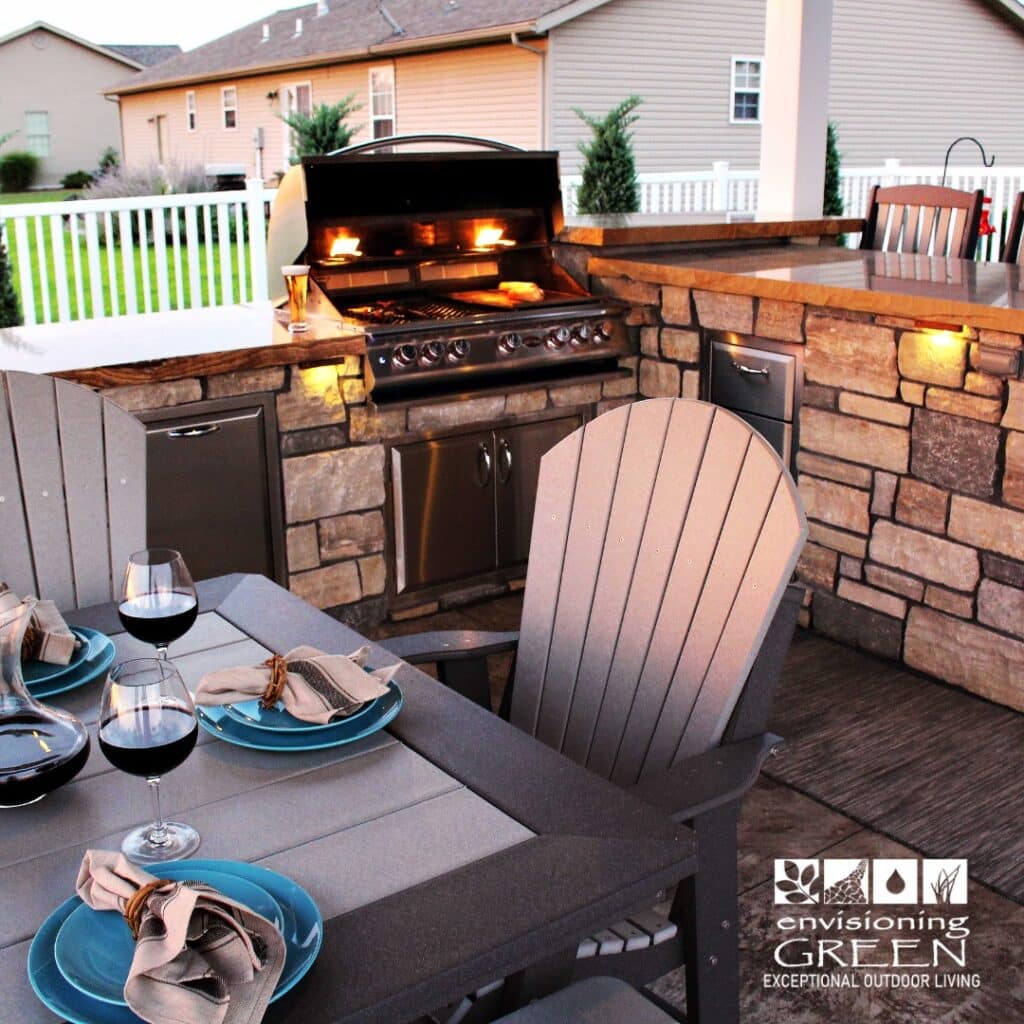
Outdoor kitchens with hard stone everywhere may look stunning, but they act like echo chambers. Indoors, wide openings can amplify noise straight into living areas.
The goal isn’t silence – it’s balance.
Good acoustic design keeps energy lively without becoming overwhelming, letting conversations flow just as smoothly as the layout.
Storage Continuity: The Hidden Ingredient Nobody Talks About
Storage isn’t sexy – but bad storage will ruin an otherwise perfect kitchen faster than anything else.
In seamless indoor–outdoor kitchens, storage should feel planned, not patched together. That means thinking beyond cabinets and asking how items move between spaces.
Examples of smart storage continuity:
- Indoor pantry zones aligned with outdoor prep areas
- Shared serving ware stored near transition points
- Weather-protected outdoor drawers for tools used daily
One client told me their outdoor kitchen “felt unfinished.” The fix wasn’t new appliances – it was adding proper storage so they didn’t have to keep running inside.
When storage supports flow, the space feels effortless.
When it doesn’t, even the best design feels clunky.
Great kitchens hide the work – seamless storage makes that possible.
Designing for Smell: Smoke, Aromas, and Air Movement
Smell is powerful – and in integrated kitchens, it can work for you or against you.
A little grill smoke drifting inside can feel inviting. Too much? Suddenly your sofa smells like last night’s burgers.
Managing scent starts with airflow awareness:
- Vent hoods placed with prevailing winds in mind
- Outdoor grills offset from direct indoor openings
- Cross-ventilation paths that pull air outward
Designers often focus on visuals and forget that air moves independently of walls. I’ve seen stunning kitchens ruined by smoke blowing straight into living rooms because nobody studied wind direction.
When airflow is right, smells enhance the experience.
When it’s wrong, they linger where they don’t belong.
Invisible design decisions make the biggest difference here.
Entertaining Zones: Designing for Hosts Who Actually Cook
Some homeowners cook for show. Others really cook.
A seamless indoor & outdoor kitchen should support both – but especially the host who’s juggling food, guests, and timing.
Smart entertaining zones include:
- A host-focused prep corridor away from foot traffic
- Guest-friendly serving areas near the transition opening
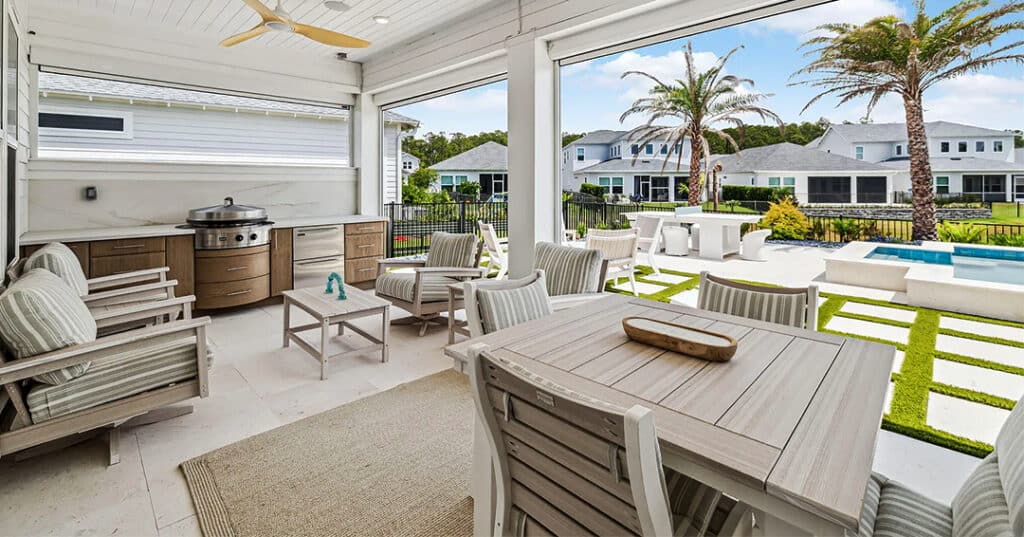
- Seating positioned so cooks stay part of the conversation
The biggest mistake? Centering seating too close to cooking heat or prep chaos.
Great layouts let hosts:
- Cook without being boxed in
- Serve without crossing paths repeatedly
- Stay socially connected without sacrificing focus
When entertaining zones are intentional, the host enjoys the party too – not just the guests.
Seasonal Flexibility: Designing for Year-Round Use
A truly seamless kitchen shouldn’t disappear half the year.
Seasonal flexibility means planning for:
- Cold nights
- Sudden rain
- Shorter daylight hours
Design features that extend usability:
- Retractable screens or glass panels
- Built-in heaters disguised as architectural elements
- Lighting scenes tailored to different seasons
Contractors always tell clients: design for the worst day, not just the best one. Anyone can make a space feel good on a perfect summer afternoon. The real test is whether it still works in shoulder seasons.
When outdoor kitchens adapt to the calendar, they stop being “seasonal features” and become daily lifestyle spaces.
Resale Value: Why Seamless Kitchens Appraise Better
From a real estate perspective, integrated indoor–outdoor kitchens punch above their weight.
Buyers may not articulate it, but they instantly feel:
- Expanded living space
- Better entertaining potential
- Higher perceived quality
Appraisers often note:
- Structural openings
- Permanent outdoor cooking installations
- Design continuity across zones
These features signal intentional architecture, not DIY additions. Even modest homes benefit when kitchens feel larger and more flexible.
The key is restraint. Over-customized designs can limit appeal, but clean, timeless integration almost always adds value.
Well-designed kitchens don’t just sell homes faster.
They justify higher offers.
The “Future-Proofing” Mindset: Designing Beyond Today’s Trends
Trends come and go. Layout mistakes don’t.
Future-proof indoor–outdoor kitchens focus on:
- Flexible layouts
- Neutral base materials
- Infrastructure that allows upgrades
Think:
- Oversized openings that can accept new door systems later
- Electrical and gas rough-ins for future appliances
- Modular cabinetry instead of fixed, hyper-custom units
I’ve seen clients thank themselves years later for planning ahead – especially when lifestyles change or technology evolves.
The best compliment a kitchen can get isn’t “this looks new.”
It’s “this still works.”
That’s timeless design.
Frequently Asked Questions
1. What makes an indoor–outdoor kitchen feel truly seamless?
A seamless indoor–outdoor kitchen feels cohesive because layout, sightlines, and materials work together. The transition should feel natural, not like stepping into a different room.
When flooring tones align, openings are generous, and work zones complement each other, the space reads as one extended kitchen. If you don’t consciously notice the boundary, the design is doing its job.
2. Do indoor and outdoor kitchens need to match exactly?
No – and they shouldn’t. The goal isn’t a carbon copy, but visual continuity. Using related materials, similar color palettes, and consistent proportions creates harmony without forcing identical finishes.
Think of the spaces as part of the same family rather than twins. Matching everything often feels flat and overly staged.
3. How close should the outdoor kitchen be to the indoor kitchen?
Ideally, as close as possible.
The fewer steps between prep, cooking, and serving areas, the better the flow.
Long distances make entertaining tiring and inefficient. In most successful designs, the outdoor kitchen sits directly outside the indoor kitchen, connected by wide doors or pass-through openings.
4. Are outdoor kitchens worth the investment?
Yes – when they’re designed properly.
A well-integrated kitchen adds usable living space, lifestyle value, and resale appeal. Buyers may not always say “outdoor kitchen,” but they respond strongly to homes that feel open, flexible, and designed for entertaining.
Poorly planned ones, however, rarely deliver the same return.
5. What’s the biggest mistake homeowners make with indoor–outdoor kitchens?
The biggest mistake is designing the outdoor kitchen as an afterthought. When layout, airflow, storage, and comfort aren’t planned together, the space looks good but doesn’t function well.
Seamless kitchens succeed because they’re designed as one system from the start, not stitched together later.
Final Thoughts: Designing a Kitchen Without Boundaries
A truly seamless indoor & outdoor kitchen doesn’t announce itself. It just works.
People drift.
Food flows.
Conversations continue without interruption.
That’s how you know the design is right.
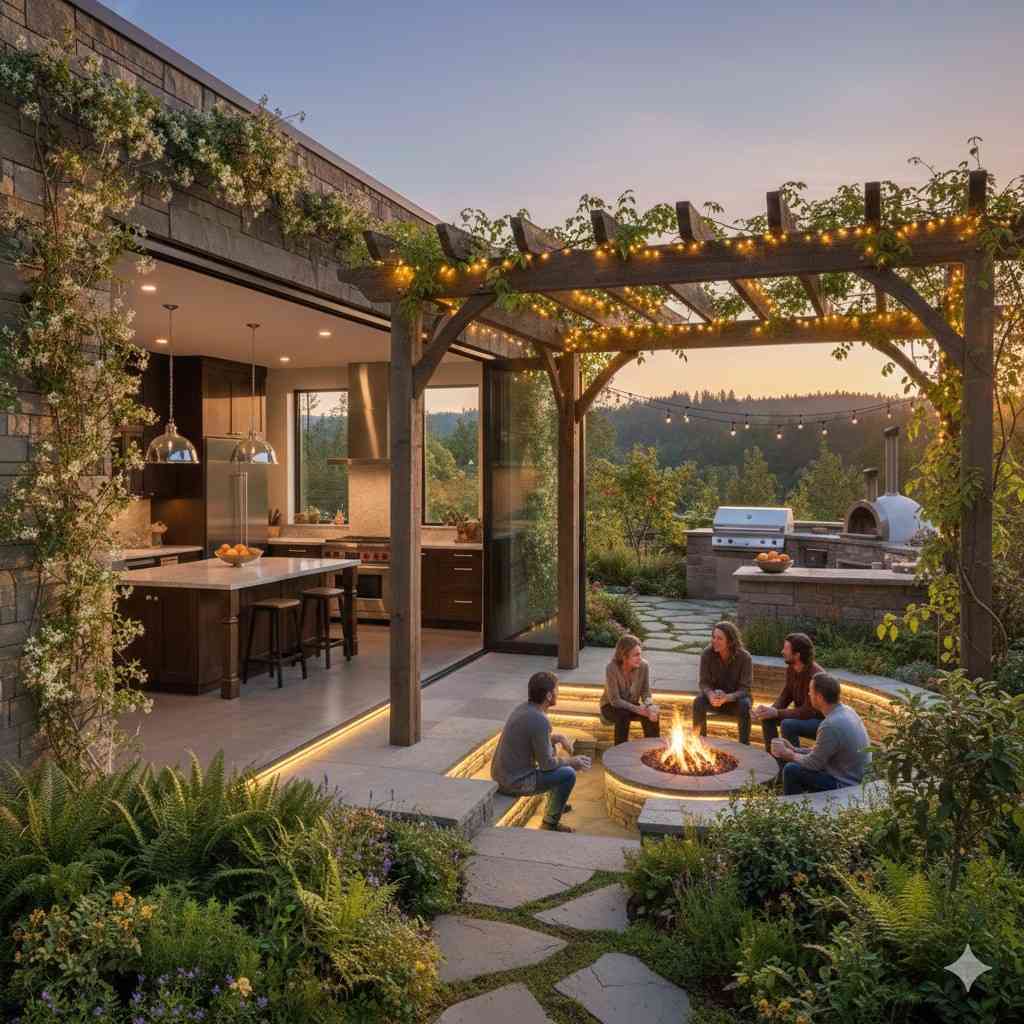
When layout, materials, lighting, and comfort are aligned, the kitchen stops being a room – and becomes an experience.
And honestly?
That’s when a house starts to feel like home.
Featured image credit: Google Gemini
