
The Invisible Ingredient Nobody Talks About
Every pitmaster obsesses over temperature, wood choice, and cook time. We argue offsets vs pellets like it’s religion. But there’s one variable quietly running the show while everyone else takes the credit:
Humidity.
Yep. The same thing that ruins your hair on a summer day is also deciding whether your brisket has mahogany bark or looks like it came out of a crockpot.
Early in my BBQ journey, I blamed bad bark on rubs. Then on meat quality. Then on the weather. Turns out… I wasn’t totally wrong about that last one.
Humidity controls how bark forms, how smoke sticks, and how nitric oxide bonds to meat to create that iconic smoke ring. Ignore it, and you’re cooking blind. Understand it, and suddenly your BBQ jumps a whole level.
Let’s break it down – plain English, pitmaster-to-pitmaster, with real-world takeaways you can actually use.
Understanding Humidity in the BBQ Environment
What Humidity Really Means in BBQ
In BBQ terms, humidity is the amount of moisture hanging out inside your smoker while meat cooks. Not the weather forecast. Not how sweaty you feel. The microclimate inside the pit.
- High humidity = moist air that slows evaporation
- Low humidity = dry air that pulls moisture fast
And here’s the kicker:
Your smoker almost always has a different humidity level than the air outside.
That’s why two cooks at the same temperature can look totally different.
Where Humidity Comes From During a Cook
Humidity doesn’t magically appear. It comes from a few main sources:
- The meat itself – Brisket is basically a giant water balloon at first
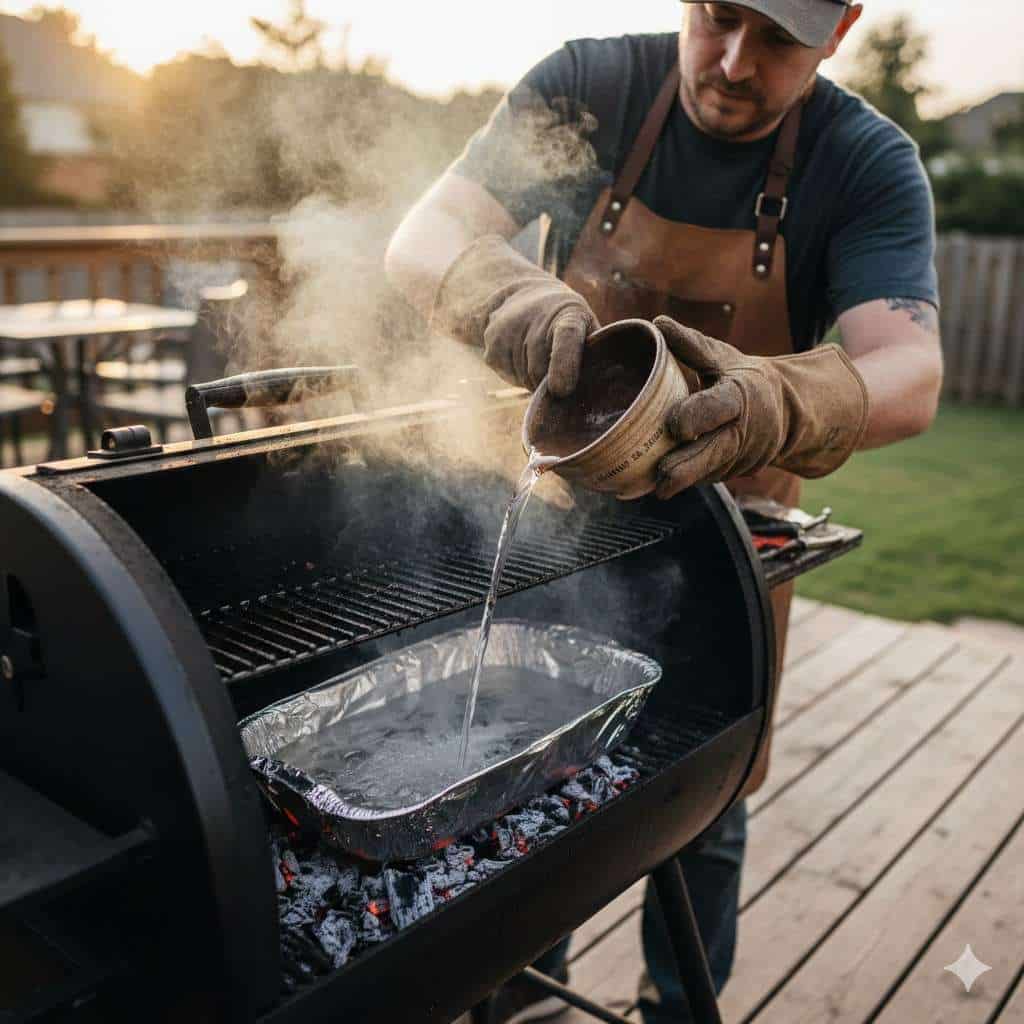
- Water pans – Literal humidity machines
- Fuel combustion – Burning wood releases moisture
- Spritzing and mopping – Controlled surface moisture
- Smoker design – Tight cookers trap moisture, leaky ones don’t
Every pit creates its own little weather system. Some are Arizona-dry. Others feel like a Florida summer.
The Science of Bark Formation (Without the Boring Part)
What BBQ Bark Actually Is
Let’s clear this up right now:
Bark is not just “dry rub getting crispy.”
Real bark is the result of several things happening together:
- Protein denaturation on the meat surface
- Fat rendering and frying against the meat
- Rub dehydration and fusion
- Smoke particles bonding to a moist surface
- Maillard reactions adding color and flavor
When it works, you get that dark, crackly, bite-through crust that makes people stop mid-sentence.
When it doesn’t… well, you get pot roast.
Where Humidity Fits In
Humidity decides how fast moisture leaves the meat’s surface.
- Too fast → bark hardens early and stalls flavor
- Too slow → bark never fully sets
Humidity is the tempo knob of bark development.
How Humidity Directly Impacts Bark Development
High Humidity: Slow and Steady
High-humidity environments keep the meat surface moist longer.
Pros:
- Better smoke adhesion
- Deeper color development
- Reduced risk of early bark “locking up”
Cons:
- Bark forms slowly
- Risk of soft or rubbery texture if unchecked
This is common in:
- Drum smokers
- Cabinet smokers
- Pellet grills with water pans
- Tight backyard cookers
High humidity gives you time – but you still have to finish the job.
Low Humidity: Fast and Furious
Low-humidity pits pull moisture fast.
Pros:
- Bark forms quickly
- Great crunch potential
- Strong texture
Cons:
- Bark can harden before fat renders
- Smoke stops sticking too early
- Higher chance of bitter flavors
This is typical of:
- Offsets with strong airflow
- Leaky pits
- Windy conditions
Ever had bark that looked perfect but tasted hollow? That’s low humidity moving too fast.
The Bark Sweet Spot
Perfect bark lives in the middle:
- Moist early so smoke sticks
- Dry later so bark sets
- Enough humidity to delay crusting
- Enough airflow to finish strong
That’s not luck. That’s control.

Nitric Oxide and Smoke Ring Formation Explained
What a Smoke Ring Really Is
Despite popular belief:
Smoke does not “penetrate” meat.
A smoke ring is a chemical reaction, not a flavor indicator.
It happens when nitric oxide (NO) from combustion reacts with myoglobin in raw meat, locking in that pink color.
No reaction, no ring. Simple.
Where Nitric Oxide Comes From
Nitric oxide forms when:
- Wood or charcoal burns clean
- Nitrogen compounds react at the flame
- Oxygen levels are right
Dirty smoke doesn’t help. Billowing white smoke doesn’t help.
Clean fire + moisture = smoke ring opportunity
Why Humidity Is Critical for Nitric Oxide Absorption
This is where humidity becomes the unsung hero.
Moisture Keeps the Door Open
Nitric oxide needs a moist meat surface to dissolve and react.
If the surface dries too quickly:
- Myoglobin denatures
- NO can’t bind
- Smoke ring formation stops
This usually happens in the first 2–3 hours of the cook.
That’s why:
- Early spritzing helps
- Water pans work
- Cold meat gets better smoke rings
Humidity extends the smoke ring window.
Temperature, Timing, and Humidity
Smoke rings don’t care about the last six hours of your cook.
They care about:
- Early temperature
- Clean combustion
- Surface moisture
Once the meat surface hits ~140°F and dries out, the show’s over.
No amount of extra smoke will bring it back.
Managing Humidity in Different BBQ Setups
Offset Smokers
Offsets are naturally low humidity beasts.
Tips:
- Use a water pan near the firebox
- Avoid over-venting early
- Don’t chase thin blue smoke at the cost of moisture
Offsets reward patience – and punish neglect.
Pellet Grills
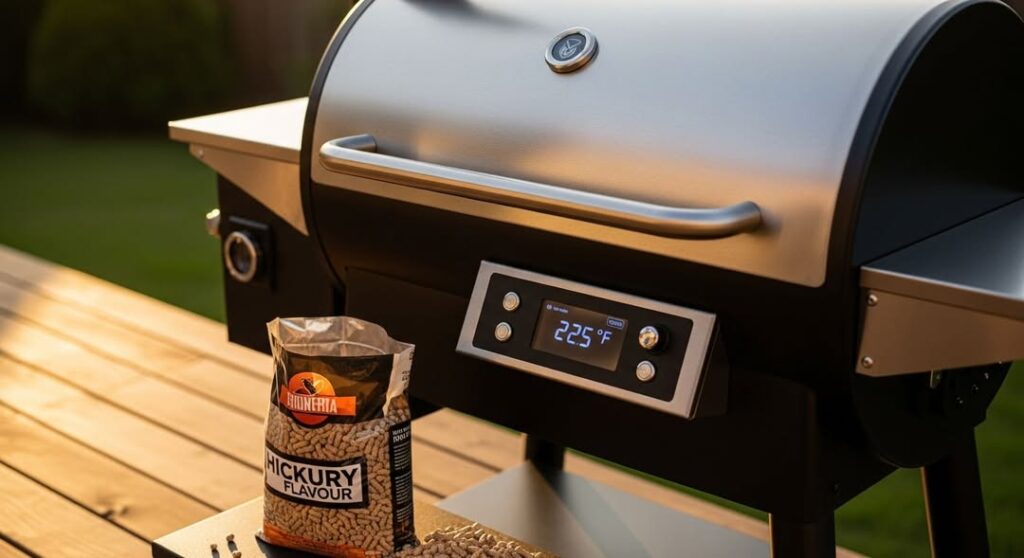
Pellet grills tend to run dry due to efficient combustion.
Fixes:
- Add a water pan
- Spritz during the first half
- Start cold and steady
Pellet grills make consistency easy. Humidity makes them great.
Drum and Cabinet Smokers
These hold humidity like a thermos.
Watch out for:
- Mushy bark
- Delayed setting
- Over-spritzing
Sometimes the best move here is doing nothing at all.
Common BBQ Myths About Humidity and Smoke Rings
Let’s bust a few real quick.
- Myth: More smoke = better smoke ring
- Truth: Clean combustion + humidity wins every time
- Myth: Smoke rings mean better flavor
- Truth: They’re visual, not flavor indicators
- Myth: Humidity ruins bark
- Truth: Poor management ruins bark
Humidity is a tool, not a villain.
Practical Pitmaster Tips for Controlling Humidity
Here’s the stuff you’ll actually use.
1. Use Water Pans Strategically
Early in the cook? Yes.
Late in the cook? Maybe not.
2. Spritz With Purpose
Spritzing isn’t hydration – it’s humidity management.
Best window:
- First 3–4 hours
- Stop once bark sets
3. Trust Feel Over Time
When bark:
- Feels dry
- Doesn’t smear
- Resists light pressure
…it’s ready to finish.
4. Adjust Airflow, Not Just Temperature
More airflow = less humidity
Less airflow = more moisture retention
Balance beats extremes.
Competition BBQ vs Backyard Reality
Competition cooks chase:
- Perfect color
- Heavy smoke rings
- Visual drama
Backyard cooks want:
- Crunch
- Juiciness
- Big flavor
Humidity strategy should match your goal.
You don’t need a trophy brisket for your buddies – but you do want one they talk about.
How Meat Thickness and Cut Affect Humidity Needs
Not all meat is created equal. Thicker cuts like brisket or pork shoulder release more moisture over time, naturally increasing internal humidity, while thin cuts like chicken breasts dry out fast.
Understanding how cut thickness interacts with smoker humidity can prevent a bark that’s either too soft or too hard. For instance, a 3-inch brisket can tolerate lower external humidity early, but a thin flank steak needs moisture to avoid desiccation.
Adjusting water pans, spritzing, or wrapping based on meat type ensures uniform cooking. Recognizing how different cuts “breathe” inside your smoker can be the difference between perfectly moist meat and a leathery disappointment.
The Role of Sugar in Rubs and Bark Development
Sugars in BBQ rubs – like brown sugar, honey, or maple sugar – do more than add sweetness. They react with meat surface proteins in the Maillard reaction, influencing color, flavor, and bark texture.
Humidity plays a key role here: in a high-humidity smoker, sugar caramelizes slower, creating deep, sticky bark.
Too dry, and it can burn or create bitter notes. Understanding how humidity interacts with sugary rubs allows pitmasters to control crust development, prevent early burning, and balance sweet, smoky, and savory flavors.
This subtle relationship between rub ingredients and cooking environment often separates backyard cooks from competition-level bark builders.
Humidity and Smoke Flavor Penetration
Smoke doesn’t just sit on meat – it dissolves into moisture on the meat’s surface. High humidity allows smoke compounds to adhere and react with meat proteins, creating richer flavor.
Low humidity, in contrast, makes smoke skim over the surface, giving you a pale ring with weak flavor. The key takeaway: smoke flavor and smoke ring formation go hand-in-hand with surface moisture.
Spritzing or water pans aren’t just for bark – they’re flavor delivery systems. Experienced pitmasters know that managing humidity is like controlling your seasoning gun: too little, and flavor falls flat; too much, and bark never sets.
Wrapping Meat: How Foil and Butcher Paper Influence Humidity
The “Texas Crutch” isn’t just a gimmick. Wrapping meat in foil or butcher paper dramatically changes the local humidity environment. Inside foil, steam builds, creating super-high humidity that keeps meat moist but softens bark.
Butcher paper is more breathable, letting some moisture escape and maintaining a firm, textured crust. Choosing the right wrap is about balancing internal moisture and bark texture.
Understanding this allows pitmasters to time the wrap for optimal tenderness without losing crust, ensuring smoke penetration continues even as the meat finishes cooking.
How Ambient Weather Impacts Smoker Humidity
Ever noticed your brisket behaves differently in hot, humid summer vs cold, dry winter? External weather affects how your smoker retains or loses humidity. Cold air can suck moisture out, requiring extra water pans or spritzing.
High humidity slows bark formation, demanding airflow tweaks. Pitmasters who monitor weather and adjust venting, fuel, and water strategies often produce more consistent results.
Understanding the interaction between ambient conditions and smoker microclimate is a subtle skill that separates average BBQ cooks from those who can produce repeatable, competition-ready bark year-round.
Choosing the Right Water or Spritz Liquids
Not all liquids are equal when it comes to humidity management.
Water is neutral, but apple juice, cider, beer, or tea add subtle flavors while maintaining surface moisture. Spritzing with a flavored liquid also slightly alters the pH of the meat surface, improving smoke absorption.
Pitmasters who experiment with different liquids can create unique flavor layers while controlling bark formation and smoke ring development.
Choosing the right liquid is a strategic move: it’s not just about moisture – it’s about layering flavor while keeping bark firm.
Humidity and Cooking Times: When to Speed Up or Slow Down
Humidity directly affects how quickly meat cooks. High-humidity environments slow moisture evaporation, sometimes extending cook times, while dry smoke accelerates crust formation but risks drying the interior.
Understanding this lets pitmasters adjust temperature, wrapping, and airflow in real time. For instance, a brisket in a dry pit may need a water pan mid-cook, while a low, slow humid cook might benefit from a few minutes higher temp to firm the bark.
Timing and humidity go hand-in-hand, and controlling this balance allows pitmasters to hit perfect tenderness with a crust that snaps.
Using Humidity to Rescue Common Bark Problems
Ever ended up with blotchy, soft, or burnt bark?
Humidity can often save the day. If bark is soft or pale, reducing water pan or airflow helps it dry and set. If it’s hard or burning, adding moisture via spritzing or a temporary lid closure slows the reaction.
Pitmasters often tweak humidity on-the-fly, adjusting for meat thickness, rub, and fire behavior. Recognizing when to intervene with humidity control is a skill that prevents ruined cooks and turns “meh” bark into deep, flavorful, crackly perfection.
Think of humidity as your secret steering wheel for tricky BBQ problems.
FAQs
1. What is humidity in BBQ terms?
In BBQ, humidity refers to the moisture level inside your smoker while meat cooks – not the weather outside. It affects how fast meat surfaces dry, how smoke adheres, and ultimately how bark and smoke rings develop.
2. How does humidity affect bark formation?
Bark forms when protein denatures, fat renders, rub dehydrates, and smoke bonds to the meat.
Humidity controls the “tempo” of this process:
- High humidity: Slower evaporation → bark develops gradually, sticks smoke better, risk of soft texture if overdone.
- Low humidity: Fast evaporation → bark sets quickly, more crunch, but risk of hollow taste or bitter flavors.
- Sweet spot: Moist early for smoke adhesion, dry later for a firm, flavorful crust.
3. Does humidity impact smoke ring formation?
Yes. The pink smoke ring is a chemical reaction between nitric oxide (from combustion) and myoglobin in the meat. Humidity keeps the surface moist so nitric oxide can dissolve and react:
- Too dry too early → no smoke ring
- Proper early moisture → vibrant, lasting smoke ring
Timing matters: the first 2–3 hours are critical. After ~140°F, the window closes.
4. Where does smoker humidity come from?
Humidity in your cooker comes from:
- Meat’s natural moisture
- Water pans
- Spritzing/mopping
- Fuel combustion (wood or charcoal)
- Smoker design and airflow
Each smoker creates its own microclimate, so results vary.
5. How do different smokers handle humidity?
- Offset smokers: Naturally dry; use water pans and avoid over-venting early.
- Pellet grills: Efficient, often dry; add water pans and spritz early.
- Drum/Cabinet smokers: Retain moisture well; risk of mushy bark if over-spritzed.
6. Does rub or sugar affect humidity’s role in bark?
Yes. Sugars in rubs caramelize and contribute to bark color and texture. High humidity slows caramelization, producing a deep, sticky bark. Too dry → sugars can burn, creating bitterness. Managing humidity helps balance sweet, smoky, and savory flavors.
7. Does wrapping meat (foil or butcher paper) affect humidity?
Yes. Wrapping creates a micro-humid environment:
- Foil: High humidity → tender meat, softer bark
- Butcher paper: Moderately humid → firm bark, continued smoke penetration
The choice and timing of wrapping influence final texture and smoke absorption.
8. How does ambient weather influence smoker humidity?
External weather affects internal moisture:
- Cold/dry → pit loses humidity faster; may need extra water or spritzing
- Hot/humid → pit retains moisture; may require increased airflow
Adjust venting, fuel, and water to maintain consistency.
9. What liquids should I use for spritzing or water pans?
- Neutral: Water
- Flavor-enhancing: Apple juice, cider, beer, tea
Flavored liquids maintain moisture and subtly enhance smoke absorption.
10. How does humidity affect cooking time?
High humidity slows evaporation → may extend cook time.
Low humidity speeds crust formation → risk of drying interior.
Adjust temperature, wrapping, and airflow based on humidity for optimal doneness and bark.
11. Can humidity rescue bark problems mid-cook?
Yes:
- Soft or pale bark: Reduce water/airflow to let it set
- Hard or burning bark: Add spritz or temporarily close vents to slow reaction
Think of humidity as a “steering wheel” for controlling your cook.
12. Why should I care about humidity if I already control temperature and wood?
Temperature is the engine of BBQ; humidity is the steering wheel. It controls:
- Bark texture and color
- Smoke adhesion
- Smoke ring formation
- Cooking pace
Understanding it moves BBQ from “good” to “intentional and repeatable great.”
Mastering Humidity Is the Next-Level Move
If temperature is the engine of BBQ, humidity is the steering wheel.
It controls:
- How bark forms
- How smoke sticks
- When nitric oxide does its thing
- Whether your cook feels rushed or smooth
Once you start paying attention to humidity, BBQ stops feeling mysterious – and starts feeling intentional.
So next time you fire up the pit, don’t just ask:
“What temp am I running?”
Ask:
“What kind of environment am I creating?”
That’s pitmaster thinking.
And that’s how good BBQ becomes great.
Featured image credit: Caleb Oquendo
