
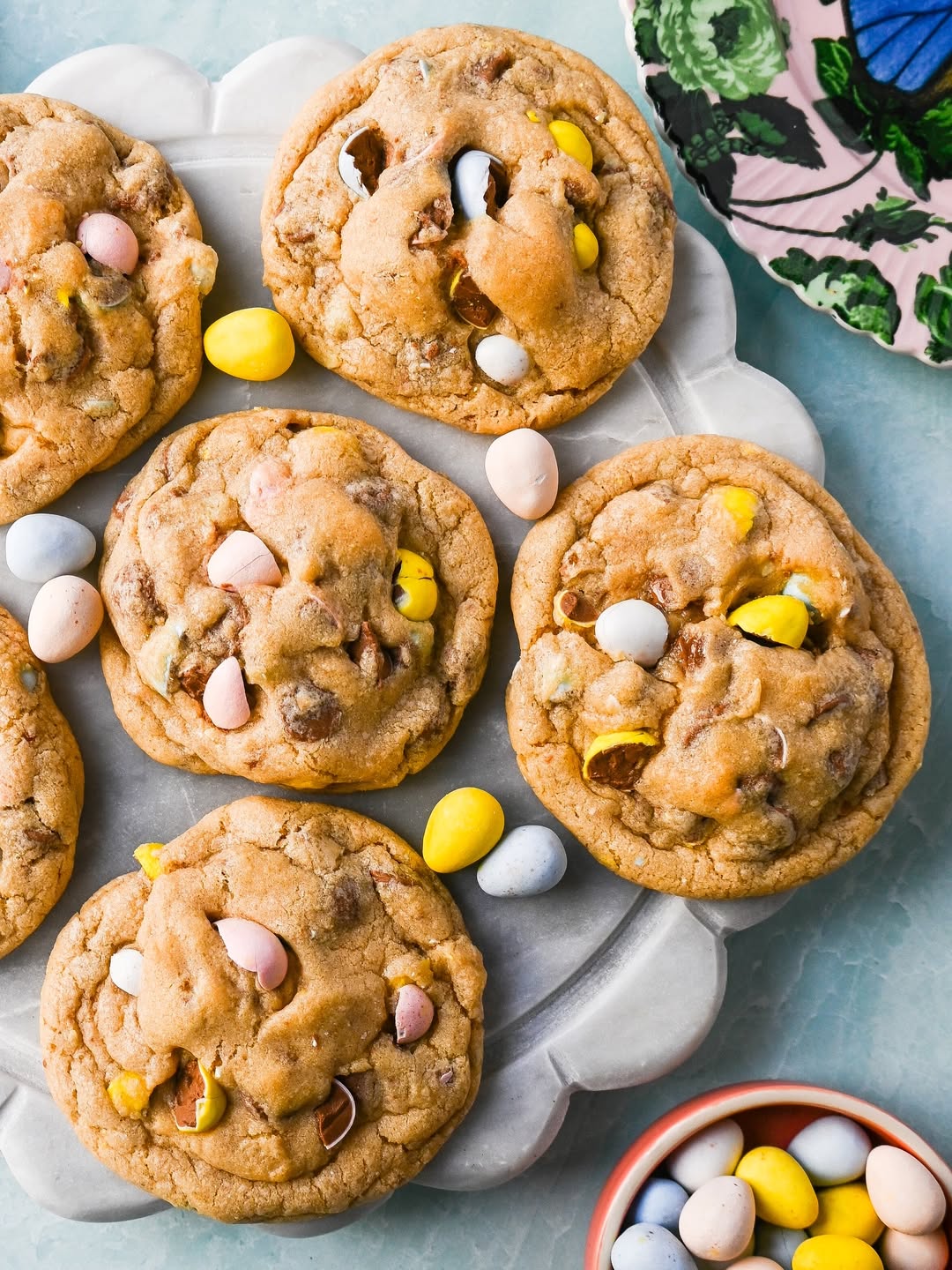
A pitmaster’s approach in making Cadbury egg cookies.
Forget everything you know about standard chocolate chip cookies. By swapping traditional morsels for crushed Cadbury Creme Eggs, you transform a simple snack into a decadent, multi-sensory experience.
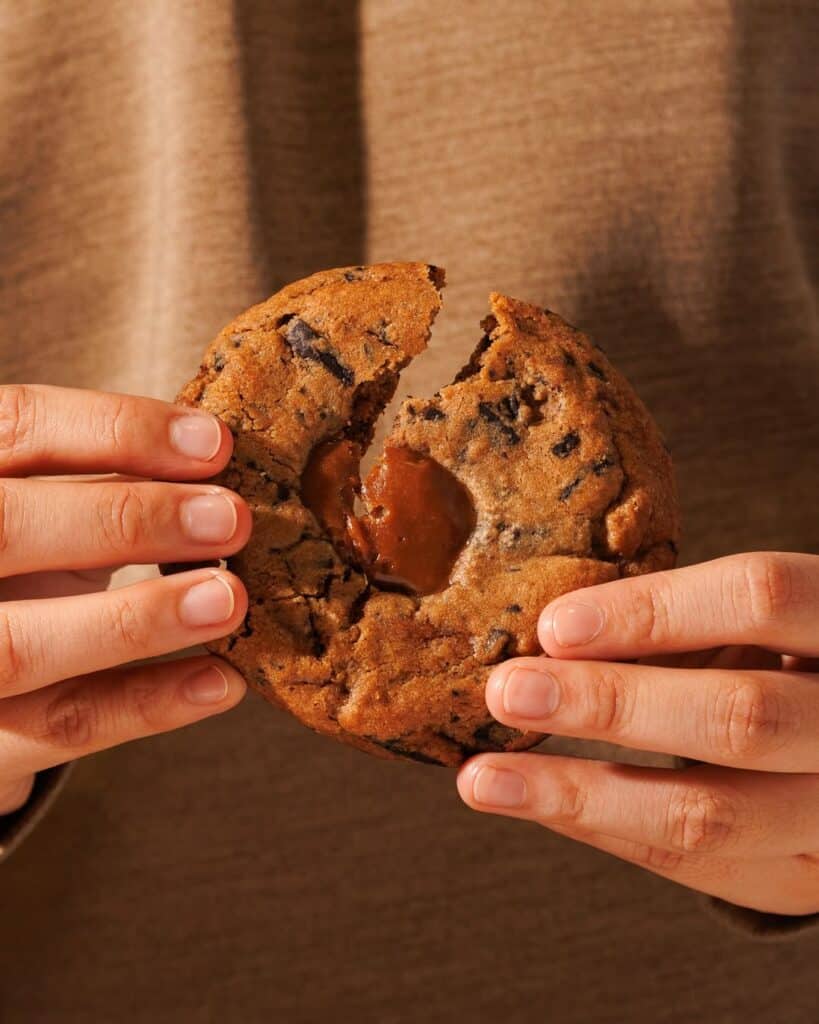
As these cookies bake, the milk chocolate shells melt into the dough while the creamy centers create pockets of gooey sweetness that stay soft long after they leave the oven.
If you’ve been searching for the ultimate “pull-apart” cookie, you’ve just found it.
To achieve that perfect bake, consider chilling your dough for at least thirty minutes; this prevents the fondant from spreading too thin and ensures a thick, chewy foundation.
For an extra gourmet touch, a light sprinkle of flaky sea salt on top perfectly balances the intense sweetness of the milk chocolate and sugar-shell slurry.
Whether you are serving these at a spring gathering or enjoying a warm treat straight from the sheet, these cookies offer a rich, molten texture that is truly impossible to resist.

The Anatomy of a Seasonal Icon
The Cadbury Mini Egg is the crown jewel of the candy aisle. It’s a tiny marvel of confectionery engineering: a crisp, matte sugar shell protecting a core of remarkably high-quality milk chocolate.
Most people just eat them by the handful until they feel a mild sense of regret.
As a chef, I see them as functional mix-ins. That shell doesn’t just look pretty; it provides a structural “crunch” that survives the heat of the oven.
When you fold these into a dough specifically designed for a soft, underbaked center, you create a contrast that’s basically a legal high. We’re aiming for a cookie that is “crisp-on-the-rim” and “pudding-in-the-middle.”
The Chemistry of the “Sugar-Shell Slurry”
In the barbecue world, we talk about the “bark” on a brisket; in baking, we focus on the sugar-shell slurry.
When you crush those eggs, you’re creating a specific ratio of large chunks and fine, pastel “dust” that fundamentally changes the dough’s molecular structural integrity:
- Localized Caramelization: As the cookies bake, the candy dust dissolves into the surrounding butter and flour, creating pockets of intense, caramelized sugar.
- The Shatter-Crisp Effect: These high-sugar zones lead to a unique texture that contrasts sharply with the soft, pillowy dough.
- Integrated Toffee: This phenomenon effectively turns the candy shell into a secondary sweetener, bonding with the flour on a microscopic level to create an integrated candy-shell toffee.
You aren’t just eating chocolate; you’re experiencing a complex profile where the shell provides a crunch that a standard chocolate chip simply can’t match.
High-Altitude and Humidity Adjustments
A pitmaster knows that smoking a brisket at sea level in Houston is a different beast than working in the thin air of Denver.
Your Cadbury egg cookies are just as sensitive to the atmospheric environment:
- High-Altitude Strategy: Lower air pressure causes dough to rise and spread too fast. To prevent a “thin mess,” add an extra tablespoon of flour to toughen the structure and increase your oven temp by 5°C.
- The Humidity Fix: In coastal or humid areas, flour acts like a sponge for moisture. If your kitchen is damp, extend your fridge time to a 48-hour dehydration chill to ensure the edges set properly.
- The Sweet Spot: These adjustments ensure that regardless of your elevation, the edges remain stable while the center hits that legendary gooey 79°C finish.
The “Reverse-Sear” Pairing Strategy
We’ve mastered the cookie, but a chef knows the meal isn’t over until the pairing is set.
To cut through the fatty richness of browned butter and milk chocolate, you need an acidic or bitter counterpoint:
- The Morning Brew: Skip the mimosas and opt for Cold Brew Coffee with a dash of cinnamon. The roasted bitterness acts as a palate cleanser for the heavy sugar shells.
- The Pitmaster’s Nightcap: For an adult-only twist, a neat Bourbon (think Buffalo Trace or Woodford Reserve) complements the toasted, nutty notes of the dough.
- Flavor Harmony: Much like a reverse-sear on a steak, this strategy uses a refined, room-temperature pairing to highlight the floral undertones of the chocolate while mellowing out the sugar rush.
The Science of the Bake: 79°C is the Magic Number
I use a precision digital thermometer for my wagyu, and I use it for my cookies. Most people overbake cookies because they wait for them to look “done.” By the time a cookie looks “done” in the oven, it’s already overcooked.
Set your oven to 175°C (350°F). We are looking for an internal temperature of 79°C to 82°C.
At this point, the edges are set and golden, but the center is still technically “underdone.” Once you pull them out, the “carry-over cooking” will finish them off on the hot baking sheet, leaving the center perfectly gooey.
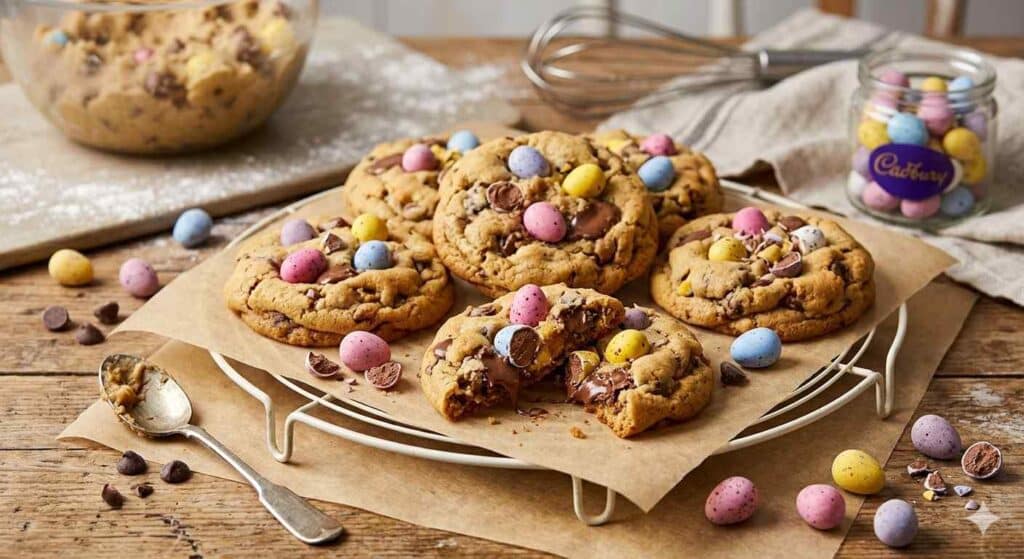
The Aesthetic Trick: As soon as they come out, press a few reserved, brightly colored Cadbury egg halves into the top. It makes them look like they belong in a professional bakery window.
Why Did Things Go Sideways?
Even the best pitmasters have a bad day at the smoker. If your Cadbury egg cookies didn’t turn out like the pictures, here is why:
- Flat as a Board: Your butter was likely too warm when you started, or you skipped the chill step. Cold dough is the secret to height.
- Tough and Bready: You probably over-measured the flour. Use a scale if you have one. 125g per cup is the standard. If you “scoop and pack,” you’re using 30% too much flour.
- The “Meltdown”: If the sugar shells of the eggs melted into a puddle, your oven might be running too hot. Check it with an oven thermometer; most home ovens are liars.
Storage and Reheating
If you have leftovers (a rare occurrence), store them in an airtight container with a single slice of plain white bread. The cookies will “steal” the moisture from the bread, staying soft while the bread turns into a crouton.
When you’re ready for a midnight snack, nuke it for 8 seconds. It’ll re-melt the milk chocolate centers of the Cadbury eggs, and for a fleeting moment, all will be right with the world.
Final Thoughts
At the end of the day, baking the perfect Cadbury egg cookies is a lot like managing a long smoke on a brisket – it’s all about respecting the variables and knowing when to pull the heat.
You’ve done the hard work of browning the butter, chilling the dough, and hitting those precise internal temps, so don’t overthink the finish. These cookies are meant to be messy, gooey, and unapologetically decadent.
Whether you’re sharing them at a family spread or hoarding a warm batch for yourself after the kitchen goes quiet, remember that the best recipes are the ones that disappear the fastest.
Crack a few more eggs, keep your salt flaky, and enjoy the best bite of the season.
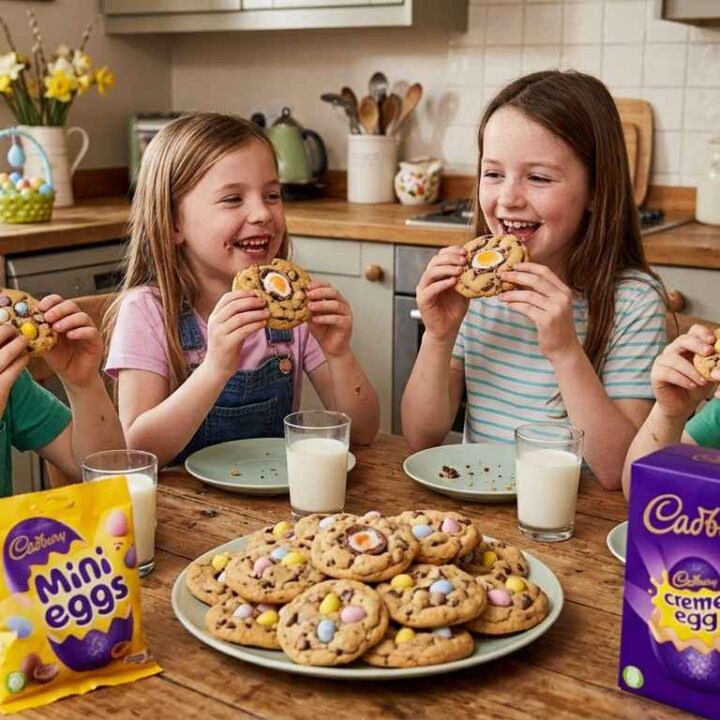
Cadbury Egg Cookies Recipe
Image credit: Google Gemini
Ingredients
- In a commercial kitchen, we don't eyeball things. If you want consistency, you need to respect the chemistry of the bowl.
- The Flour Power: We’re using All-Purpose flour, but here is the pitmaster’s secret: add two teaspoons of cornstarch. Cornstarch softens the harsh proteins in the flour, resulting in a "pillowy" crumb that stays soft for days.
- The Fat Choice: You can use softened butter, but if you want to win at life, brown your butter. Melt it in a pan until it smells like toasted hazelnuts and looks like amber. It adds a savory depth that balances the hit of sugar from the eggs.
- The Cadbury Prep: Don't just dump the eggs in whole. Put them in a heavy-duty freezer bag and give them a few whacks with a rolling pin. You want "dust and chunks." The dust flavors the dough, while the chunks provide the "wow" factor.
- The Salt Factor: Use a high-quality kosher salt in the dough and flaky sea salt on top. Salt is the volume knob for flavor; without it, the chocolate just tastes "flat."
Instructions
Cooking is about heat management. Baking is about emulsion management.
Step 1: The Creaming Phase
Cream your browned (and cooled!) butter with your sugars.
We’re using a higher ratio of brown sugar to white sugar. Why? Molasses. Brown sugar is acidic and hygroscopic, meaning it grabs moisture and keeps the cookie chewy. Beat them together until the mixture looks like pale, fluffy clouds.
Step 2: The Dry-to-Wet Ratio
Incorporate your eggs and vanilla – use the real stuff, please, not the imitation "brown water" – and then fold in your dry ingredients. Stop mixing the second the white streaks of flour disappear.
Over-mixing develops gluten, and gluten is the enemy of a gooey cookie. We want a cookie, not a baguette.
Step 3: The Big Chill
If you take one thing away from this masterclass, let it be this: You must chill your dough. Put those dough balls in the fridge for at least two hours (or overnight).
Chilling solidifies the fat. If you bake warm dough, the butter leaks out instantly, and you end up with a "greasy pancake" cookie. We want a "mountain" cookie.
Featured image credit: @modern_honey
