
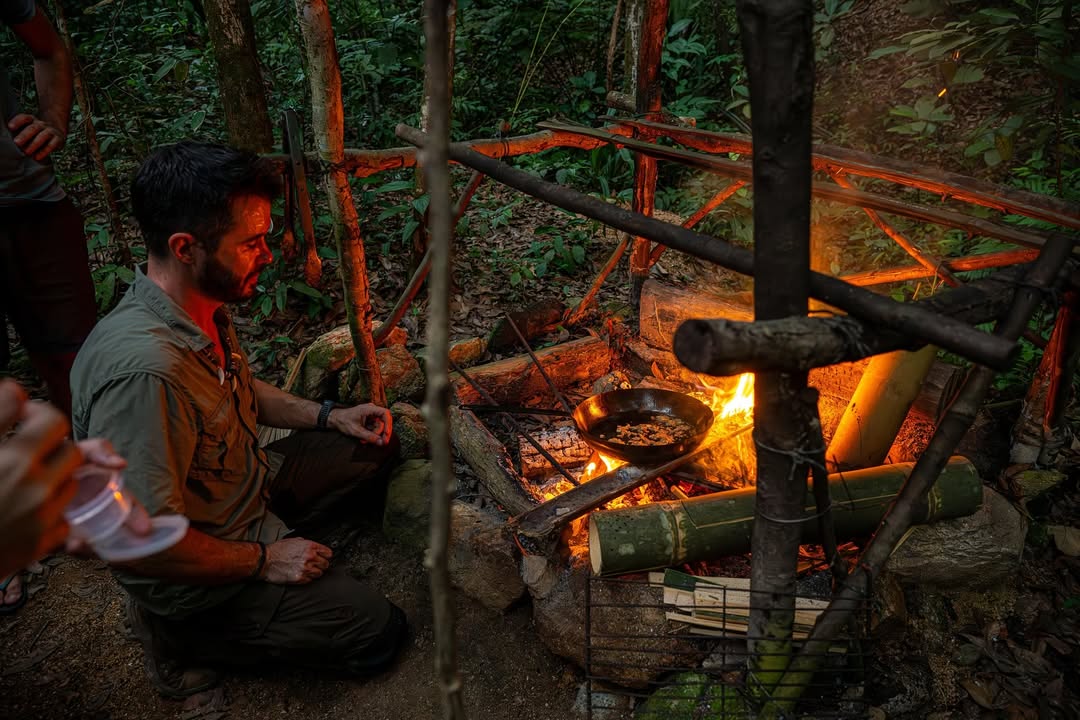
There’s something about cooking over a live fire that rewires your brain in the best way.
No knobs.
No timers.
No “preheat to 375°.”
Just flame, iron, instinct – and whatever ingredients you hauled in.
I’ve cooked over competition pits, thousand-pound smokers, and backyard rigs that cost more than my first truck. But off-grid campfire cooking? That’s the purest form of the craft. It strips away gadgets and leaves you with skill.
And here’s the truth most people miss:
If you can cook well over a campfire, you can cook well anywhere.
This guide isn’t survival food advice. We’re not boiling canned beans and calling it dinner. We’re talking about mastering fire like it’s an instrument – and using cast iron like it’s an extension of your hand.
Let’s get into it.
The Philosophy of Cooking with Fire
Before we talk tools and techniques, you need the right mindset.
Off-grid campfire cooking is not rushed cooking.
It’s not about convenience.
It’s about intention.
When you cook over fire, you:
- Pay attention.
- Adapt constantly.
- Respect heat.
- Earn your meal.
And food tastes better when it’s earned.
There’s no thermostat telling you what the temperature is. You read the fire. You feel it on your knuckles. You listen to how the fat hits the pan.
That connection? That’s the difference between grilling and true fire cooking.
Fire Is the Foundation (And It Has Moods)
Let me tell you something most beginners get wrong:
They cook over flames.
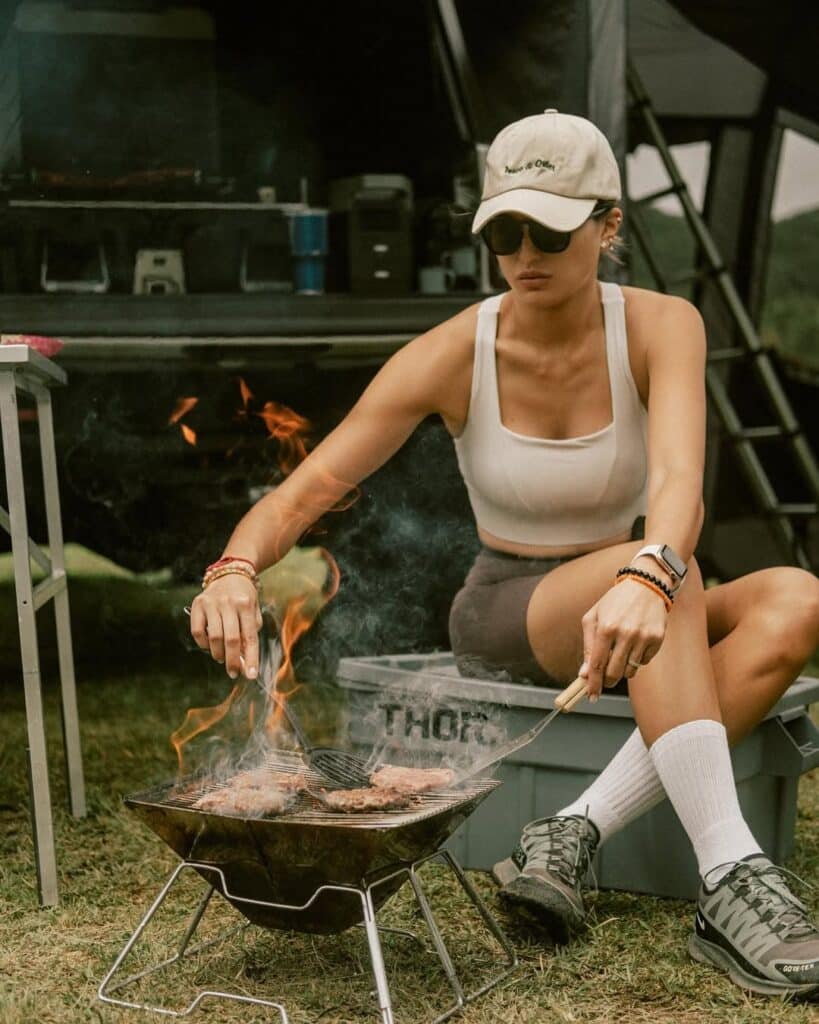
Flames are dramatic. Flames look good in photos. Flames also burn food.
Coals are where the magic lives.
Understanding Fire Stages
A proper cooking fire has three phases:
- Ignition phase – Big flames, unstable heat.
- Burn-down phase – Flames calm, wood turns to embers.
- Coal bed phase – Steady, radiant heat. This is your sweet spot.
If you remember nothing else from this article, remember this:
In off-grid campfire cooking, coals are king.
Choosing the Right Wood
Wood isn’t just fuel. It’s flavor.
Hardwoods Win Every Time
- Oak – steady, balanced heat
- Hickory – bold smoke
- Maple – slightly sweet
- Apple or cherry – light, fruity smoke
Avoid softwoods like pine or spruce. They burn fast and taste like a hardware store.
If you’re cooking in the wild, use dry hardwood. If you’re packing it in, split pieces about wrist-thick for steady coal production.
Build a Two-Zone Fire (This Changes Everything)
One of the biggest upgrades you can make in off-grid campfire cooking is creating zones.
You don’t want one raging pile. You want:
- Hot zone – Direct coals for searing.
- Medium zone – Thinner coal bed for steady cooking.
- Cool zone – Just heat, no direct flame.
This gives you control. And control gives you confidence.
I tell folks all the time:
“If your food burns, it’s not the fire’s fault. It’s your fire layout.”
Cast Iron: The Backbone of Camp Cooking
You can cook with sticks and rocks if you have to.
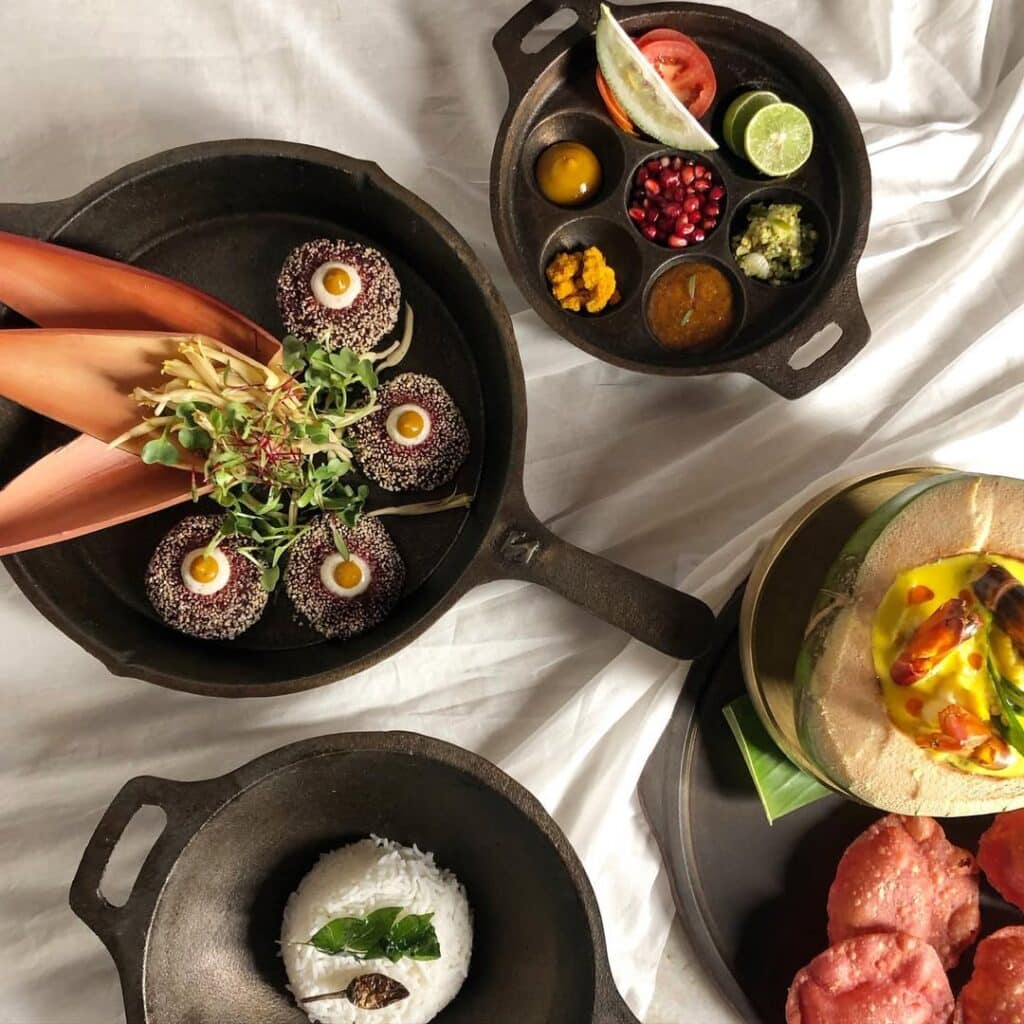
But if you bring cast iron? You’re operating at a different level.
Why Cast Iron Wins Off-Grid
- Holds heat like a vault.
- Distributes heat evenly.
- Survives flame contact.
- Gets better with use.
A thin aluminum pan over a fire warps faster than a cheap lawn chair. Cast iron laughs at abuse.
The Essentials
You don’t need a wagon full of gear.
Bring:
- 10–12” cast iron skillet
- Dutch oven with lid
- Long tongs
- Fireproof gloves
That’s it.
If you can’t cook a great meal with those tools, it’s not the tools holding you back.
Preheat Like You Mean It
Cold cast iron over a campfire is a recipe for sticking and frustration.
Set your skillet over medium coals.
Give it 5–10 minutes.
Let it warm slowly.
Hover your hand over it. If you can hold it there for 3 seconds before pulling back, you’re in a good medium range.
No thermometer needed.
That’s the beauty of off-grid campfire cooking – you learn to trust your senses.
Core Cooking Techniques Over Fire
Now we get into the good stuff.
1. Direct Searing Over Coals
Perfect for:
- Steaks
- Chops
- Burgers
- Skewers
Lay a grate over glowing coals. No flames licking up.
Flip less than you think you should.
Let crust form.
Respect the sizzle.
If it smells like caramelized meat? You’re winning.
If it smells like carbon? Move it to the cooler zone.
2. Coal Bed Cooking (My Favorite)
Set your skillet or Dutch oven directly on coals.
This gives:
- Even heat
- Controlled browning
- Less flare-up risk
You can fry potatoes, cook chili, or make fried rice this way.
And here’s a pitmaster secret:
Coals under the pan. Coals on the lid. That’s how you bake off-grid.
With a Dutch oven, you can make biscuits, cobbler, even cornbread without ever touching an oven dial.
3. Ember Roasting
This is primitive and brilliant.
Wrap potatoes in foil.
Bury them in embers.
Wait.
Same goes for onions, corn, even apples.
The skins char. The inside turns sweet and tender.
Simple food. Big reward.
Mastering Flavor Without Fancy Tools
In off-grid campfire cooking, smoke is seasoning.
And you don’t need bottled sauce to build depth.
Here’s what matters:
Salt Early. Adjust Late.
Salt draws moisture and builds crust. But taste before adding more at the end.
Use Fat Wisely
Bacon grease over coals? That’s flavor gold.
Butter in a hot skillet? Instant aroma upgrade.
Don’t Sauce Too Early
Sauces burn fast over fire.
Glaze during the final minutes.
Caramelization beats charring every time.
Sample Off-Grid Campfire Menu
Let me paint you a picture.
Breakfast
Cast iron skillet.
Thick bacon.
Eggs fried in bacon fat.
Coffee percolating nearby.
The air smells like smoke and salt and morning.
You don’t rush this.
Dinner
Reverse-seared steak.
Start in the cooler zone.
Finish over hot coals for crust.
Skillet potatoes with onions next to it.
Corn roasting in embers.
That meal tastes better than most restaurant plates – not because it’s fancy. Because it’s real.
Dessert
Dutch oven cobbler.
Fruit. Sugar. Biscuit topping.
Coals on top and bottom.
Twenty-five minutes later?
Golden crust. Bubbling filling.
You’ll burn your tongue because you can’t wait. We all do.
Cooking in Weather: Wind, Rain & Cold
Let me tell you something about off-grid campfire cooking – the weather doesn’t care about your dinner plans.
Wind is the sneakiest troublemaker. It shifts heat, fans flames, and can turn a steady coal bed into chaos. The fix? Build your fire with a natural windbreak – rocks, logs, or terrain. Position your hot zone downwind so flames lean away from your food.
Rain? Keep extra dry kindling stored under cover. Wet wood smokes more and burns cooler. That’s fine for flavor, terrible for control.
Cold weather actually helps your coal bed stay steady – but your pans will need more preheat time.
The key phrase here is adaptability. Fire responds to environment. So should you.
If you can cook confidently in wind and drizzle, a calm evening feels like cheating.
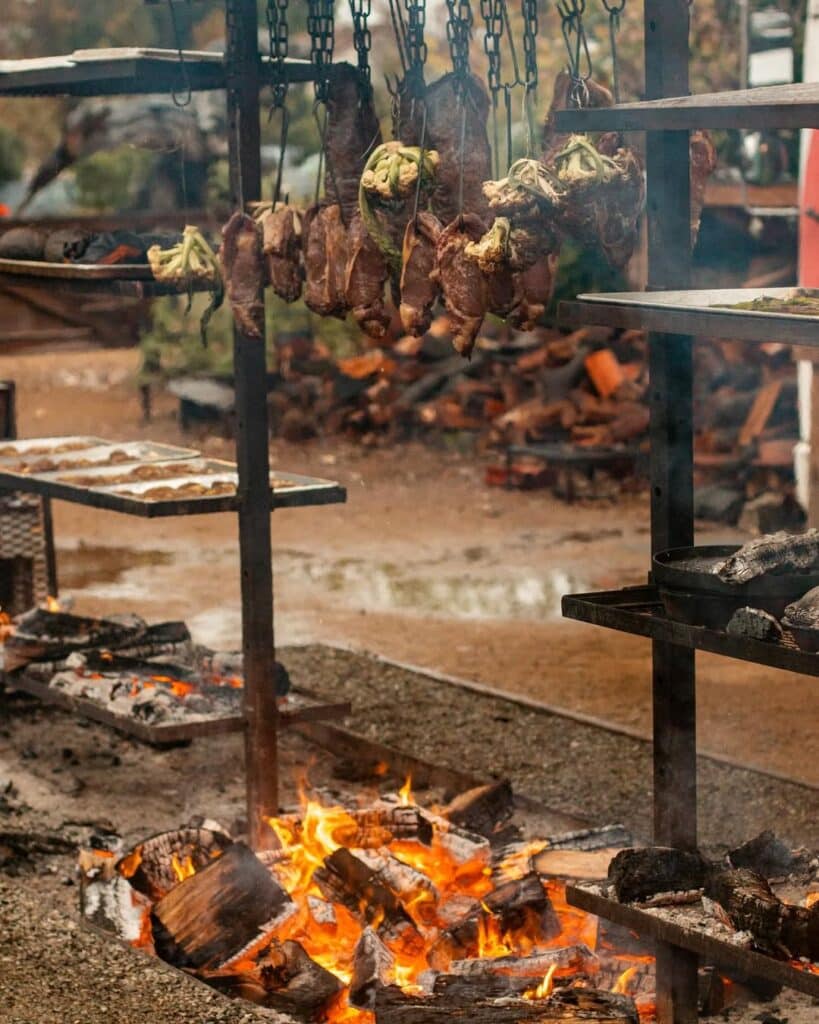
Protein Beyond Beef: Wild Game & Fish
Steak gets the spotlight, but the wilderness offers more.
If you’re serious about off-grid campfire cooking, learn how to handle:
- Venison
- Elk
- Rabbit
- Fresh-caught fish
Wild game is leaner. That means less forgiveness. You must cook it lower and slower to avoid dryness.
Fish? Keep skin on. Cook skin-side down over medium coals until it releases naturally. If it sticks, it’s not ready.
And here’s a pro move: cook game with added fat – bacon grease, butter, or even a strip of pork laid on top. Wild meat loves support.
The flavor payoff is enormous. Cleaner. Earthier. More connected to the environment around you.
When your protein matches your landscape, the meal hits different.
Managing Smoke Like a Flavor Tool
Smoke can elevate a meal – or ruin it.
In off-grid campfire cooking, smoke is not random. It’s controllable.
Thin blue smoke? Perfect.
Thick white smoke? Bitter.
The difference comes down to dry wood and airflow. Smothered fires produce dirty smoke. Well-fed coal beds produce clean aroma.
Want more smoke flavor? Add a chunk of hardwood to mature coals. Not to flames.
And remember this:
Food absorbs smoke most aggressively when it’s cool and moist.
That’s why you don’t oversmoke thin cuts. They’ll taste like a burnt forest.
Treat smoke like salt. Add intentionally. Never dump it on carelessly.
Campfire Timing Without Clocks
You won’t always have a watch. And you don’t need one.
Real off-grid campfire cooking runs on observation, not minutes.
Here’s what to watch instead:
- Sound – Steady sizzle means proper heat. Violent crackling means too hot.
- Smell – Sweet browning aroma? Good. Sharp, acrid scent? Move it.
- Color – Golden brown beats dark brown. Dark brown beats black.
A steak tells you when to flip. The edges bead with moisture. The surface releases easily.
Potatoes tell you when they’re ready. Slide a knife in – no resistance.
Time is helpful.
Awareness is better.
Once you stop obsessing over minutes, you start cooking by instinct.
Cooking for Groups Without Losing Control
Cooking for two over fire is peaceful. Cooking for eight? That’s leadership.
The trick in off-grid campfire cooking for groups is staging.
Don’t cook everything at once.
- Start long-cook items first (potatoes, beans).
- Hold finished food in a warm zone.
- Sear proteins last.
Use your two-zone fire to your advantage. Keep completed items warm without overcooking.
And simplify the menu. Fire is unpredictable – don’t juggle five complicated dishes.
A skillet hash feeds many. A Dutch oven stew scales beautifully.
The goal isn’t perfection. It’s timing and flow.
When everyone eats hot food at the same time, you’ve done your job right.
Minimal Ingredient Cooking: Flavor with Less
One of the biggest lessons from off-grid campfire cooking is restraint.
You don’t need 14 spices.
You need:
- Salt
- Fat
- Heat
- Patience
That’s it.
High heat builds crust.
Fat carries flavor.
Salt amplifies everything.
Fresh herbs can be powerful if available – thyme or rosemary tossed into hot oil transforms potatoes instantly.
But here’s the truth:
Hunger and smoke are powerful seasonings.
When you cook outdoors, your senses heighten. Food tastes richer.
Keep ingredients simple. Let technique shine.
Minimalist cooking isn’t limitation. It’s clarity.
The Mental Game: Confidence Over the Flame
This one matters more than people think.
Fire senses hesitation.
If you poke and flip and constantly second-guess, your food suffers.
In off-grid campfire cooking, confidence builds better meals.
Build your fire early. Let it settle. Trust your coal bed.
Stand back. Observe.
Cooking over flame teaches patience in a way modern kitchens don’t. You can’t rush embers.
You can’t microwave heat.
But when you learn to relax into the rhythm – adjusting wood, rotating pans, managing zones – something shifts.
You stop reacting.
You start directing.
And that’s when cooking becomes craft.
Not survival.
Not convenience.
Craft.
Common Mistakes (So You Don’t Make Them)
Let’s save you some frustration.
Cooking over flames instead of coals.
That’s the big one.
Not letting cast iron preheat.
Patience builds crust.
Overcrowding the pan.
Crowded food steams. Space creates sear.
Ignoring wind.
Wind changes heat direction fast.
Not building enough fire.
Small fire = weak coal bed = uneven cooking.
Fire management is 80% of off-grid campfire cooking success.
Fire Safety and Responsibility
We can’t talk about open flame without respect.
Clear a proper fire ring.
Keep water or dirt nearby.
Never leave embers active when you walk away.
When you’re done:
Stir the coals.
Douse thoroughly.
Feel for heat before leaving.
And clean your cast iron with hot water and a scraper.
Dry it.
Lightly oil it.
Treat your tools well. They’ll outlive you.
Why This Skill Changes You
Here’s something I’ve noticed after years behind fire:
Cooking off-grid slows you down.
It teaches patience.
It builds awareness.
It sharpens instinct.
You stop relying on timers and start reading signs.
The sound of fat hitting iron.
The smell of browning onions.
The glow of coals at dusk.
That awareness follows you home.
Suddenly your stovetop cooking improves. Your grilling improves. Even your timing improves.
Because once you’ve mastered fire in the wild, a kitchen feels easy.
Frequently Asked Questions about Off-Grid Campfire Cooking
1. What is off-grid campfire cooking?
Off-grid campfire cooking is preparing meals over an open fire without electricity, gas, or modern kitchen appliances. It relies on live fire, coal management, and durable tools like cast iron.
It’s not survival cooking (though it can be).
It’s about mastering heat, managing wood, and cooking intentionally in natural settings.
At its core, it’s fire control plus simple ingredients.
2. Is it better to cook over flames or coals?
Always choose coals over flames.
Flames are unpredictable and cause burning.
Coals provide steady, radiant heat, which allows proper searing, frying, and even baking.
If your food keeps scorching, the problem usually isn’t the recipe – it’s that you’re cooking over active flame instead of a mature coal bed.
3. What is the best wood for campfire cooking?
Use dry hardwoods like:
- Oak (balanced and steady)
- Hickory (strong smoke flavor)
- Maple (mild and slightly sweet)
- Fruitwoods like apple or cherry (light, clean smoke)
Avoid softwoods such as pine or spruce. They burn too fast and create unpleasant smoke flavors.
Good wood equals better heat and cleaner flavor.
4. How do you control temperature without a thermometer?
In off-grid campfire cooking, you control heat by:
- Adjusting coal depth
- Creating hot and cool zones
- Raising or lowering your cooking surface
- Moving food between zones
You also rely on your senses:
- Sound (steady sizzle is ideal)
- Smell (sweet browning vs. bitter burning)
- Hand test (how long you can hold your palm above the heat)
Experience replaces gadgets.
5. Can you bake over a campfire?
Yes – and it’s one of the most rewarding skills to learn.
Using a Dutch oven, place coals underneath and on top of the lid. This creates even, surrounding heat, similar to an oven.
You can bake:
- Biscuits
- Cornbread
- Cobbler
- Even bread
The key is balanced coal placement, not excessive heat.
6. What cookware is best for off-grid campfire cooking?
Cast iron is the gold standard.
It:
- Holds heat extremely well
- Distributes heat evenly
- Survives direct flame
- Improves with use
A 10–12 inch skillet and a Dutch oven can handle nearly any meal.
Avoid thin aluminum pans – they warp and create uneven cooking.
7. How do you prevent food from sticking to cast iron over a fire?
Three rules:
- Preheat properly.
- Use enough fat (oil, butter, or grease).
- Don’t move food too early.
Food naturally releases once a crust forms. If it’s sticking, it likely needs more time.
Patience prevents scraping disasters.
8. Is off-grid campfire cooking safe?
Yes – if you respect the fire.
Follow these basics:
- Build fires in established rings or safe clearings.
- Keep water or dirt nearby.
- Never leave embers unattended.
- Fully extinguish coals before leaving.
Fire is a tool. But it demands responsibility.
9. What are common beginner mistakes?
The biggest mistakes in off-grid campfire cooking are:
- Cooking over flames instead of coals
- Not building enough fire for a proper coal bed
- Overcrowding the pan
- Rushing preheat
- Ignoring wind direction
Master the fire first. The food follows.
10. Why does food taste better cooked over a campfire?
Three reasons:
- Live-fire caramelization
- Natural smoke infusion
- Heightened senses outdoors
When you cook off-grid, you’re more present. You smell more. You pay attention.
And when effort meets hunger and open air?
Food just hits harder.
The Real Secret
You don’t need perfection.
You need:
- Steady coals
- Solid cast iron
- Simple ingredients
- Confidence
And maybe a good appetite.
That’s the heart of off-grid campfire cooking.
It’s not about survival rations.
It’s not about Instagram flames.
It’s about mastering heat the old-fashioned way.
Fire.
Iron.
Flavor.
And a meal that tastes like you earned it.
Featured image credit: @justcooking_outdoor
