
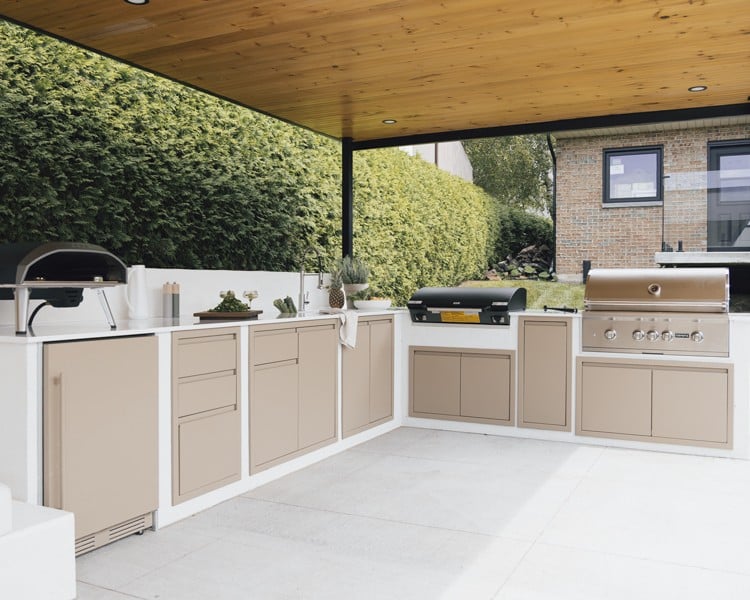
I’ve been building, cooking in, and sweating over outdoor kitchens for a long time. Long enough to remember when an “outdoor kitchen” meant a rusty grill, a lawn chair, and a beer balanced on the cooler lid.
Today? We’re talking stone countertops, solar power, smart layouts, and cooking setups that don’t torch the planet while you torch a ribeye.
That’s where eco-friendly outdoor kitchens come in.
This isn’t about turning your backyard into a science experiment. It’s about building smarter, wasting less, and still cooking incredible food. You can respect the environment and still pull off brisket that makes neighbors wander over “just to say hi.”
Let’s break it down – plain English, pitmaster-approved.
Why Eco-Friendly Outdoor Kitchens Actually Matter
Outdoor kitchens are exploding in popularity. And that’s great. Cooking outside is social, flavorful, and just feels right.
But traditional outdoor kitchens come with baggage:
- Energy-hungry appliances
- Waste-heavy materials
- Inefficient water use
- Short lifespans that lead straight to landfills
An eco-friendly outdoor kitchen flips that script.
The goal isn’t perfection – it’s progress. Use better materials. Smarter power. More efficient cooking methods. Over time, those choices save money, reduce waste, and make your kitchen last longer than your favorite grill tongs.
And here’s the secret pitmasters don’t always tell you:
Sustainable setups often cook better.
Better airflow. More stable heat. Less equipment failure. Fewer “why is this thing broken again?” moments.
What Makes an Outdoor Kitchen Eco-Friendly (For Real)
Let’s clear the smoke.
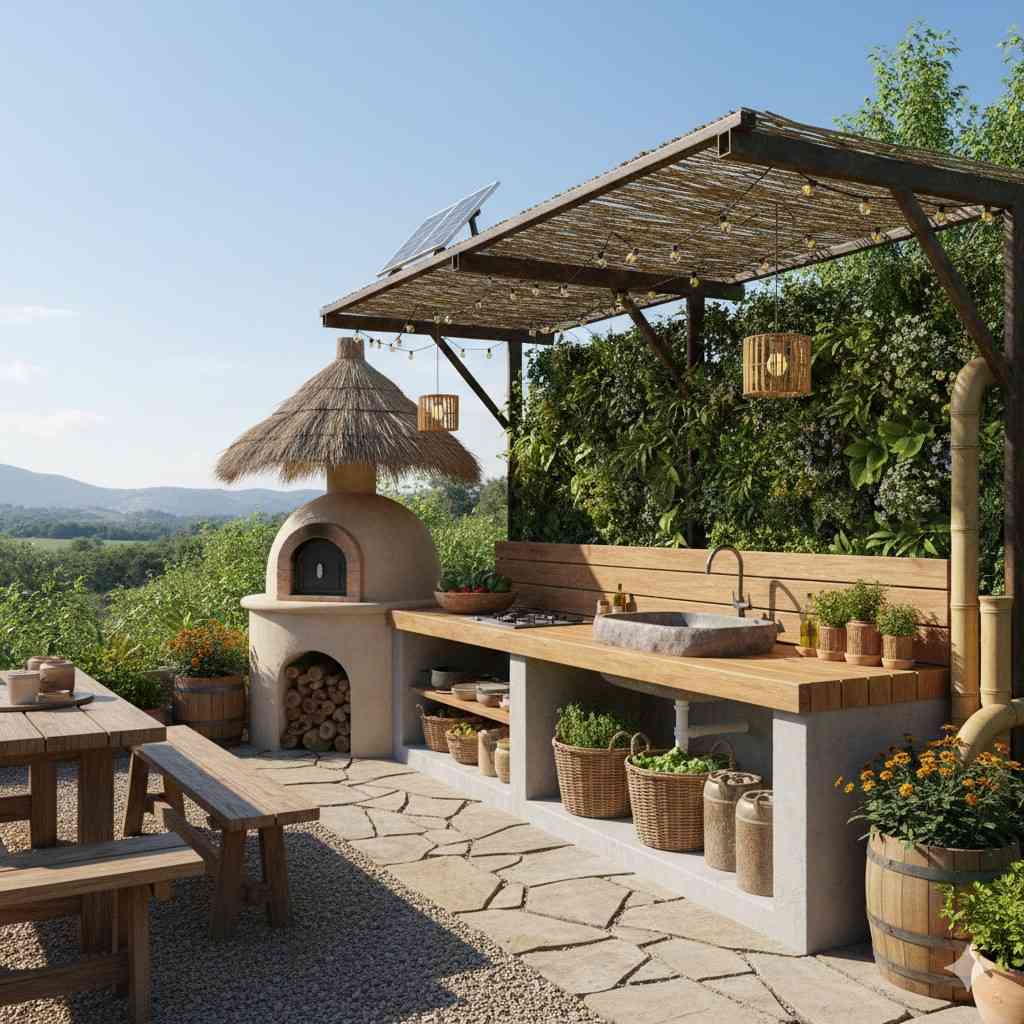
An eco-friendly outdoor kitchen isn’t green because someone slapped the word “natural” on a brochure. It’s green because it follows a few core principles:
1. Reduced Energy Use
- Efficient appliances
- Solar-powered features
- Better heat retention
2. Smarter Material Choices
- Recycled or reclaimed materials
- Long-lasting, weather-resistant builds
- Locally sourced when possible
3. Water Efficiency
- Low-flow fixtures
- Thoughtful cleaning practices
- Less runoff and waste
4. Low-Emission Cooking
- Electric, pellet, or high-efficiency grills
- Sustainable fuel sources
If a kitchen looks green but still wastes power and falls apart in five years, it’s not sustainable – it’s just expensive decor.
Sustainable Materials That Actually Hold Up Outdoors
A pitmaster’s rule of thumb:
If it can’t survive heat, rain, grease, and time – it doesn’t belong outside.
Recycled & Reclaimed Materials
These are the unsung heroes of eco-friendly outdoor kitchens.
- Reclaimed wood adds character and keeps old lumber out of landfills
- Recycled steel and aluminum resist rust and last forever
- Composite cabinetry made from recycled plastics shrugs off moisture
Bonus: reclaimed materials often look better with age. Unlike cheap cabinets, they don’t “fail dramatically.”
Eco-Friendly Countertops
Your countertop takes abuse. Heat, knives, spills, the occasional dropped cast iron.
Good sustainable options include:
- Recycled glass countertops (durable and eye-catching)
- Low-carbon concrete with reduced cement content
- Locally sourced natural stone (less transport, more durability)
Avoid anything that cracks, warps, or stains easily. Sustainability includes longevity.
Cabinetry That Doesn’t Rot or Rust
Outdoor cabinets should be:
- FSC-certified wood
- Bamboo (fast-growing and tough)
- Powder-coated metal
If you’re rebuilding cabinets every few years, you’re wasting money and materials.
Flooring That Works With Nature
Think drainage and durability:
- Permeable pavers
- Recycled brick
- Gravel or stone
Standing water kills outdoor kitchens faster than bad weather forecasts.
Solar Power: The Secret Weapon of Outdoor Kitchens
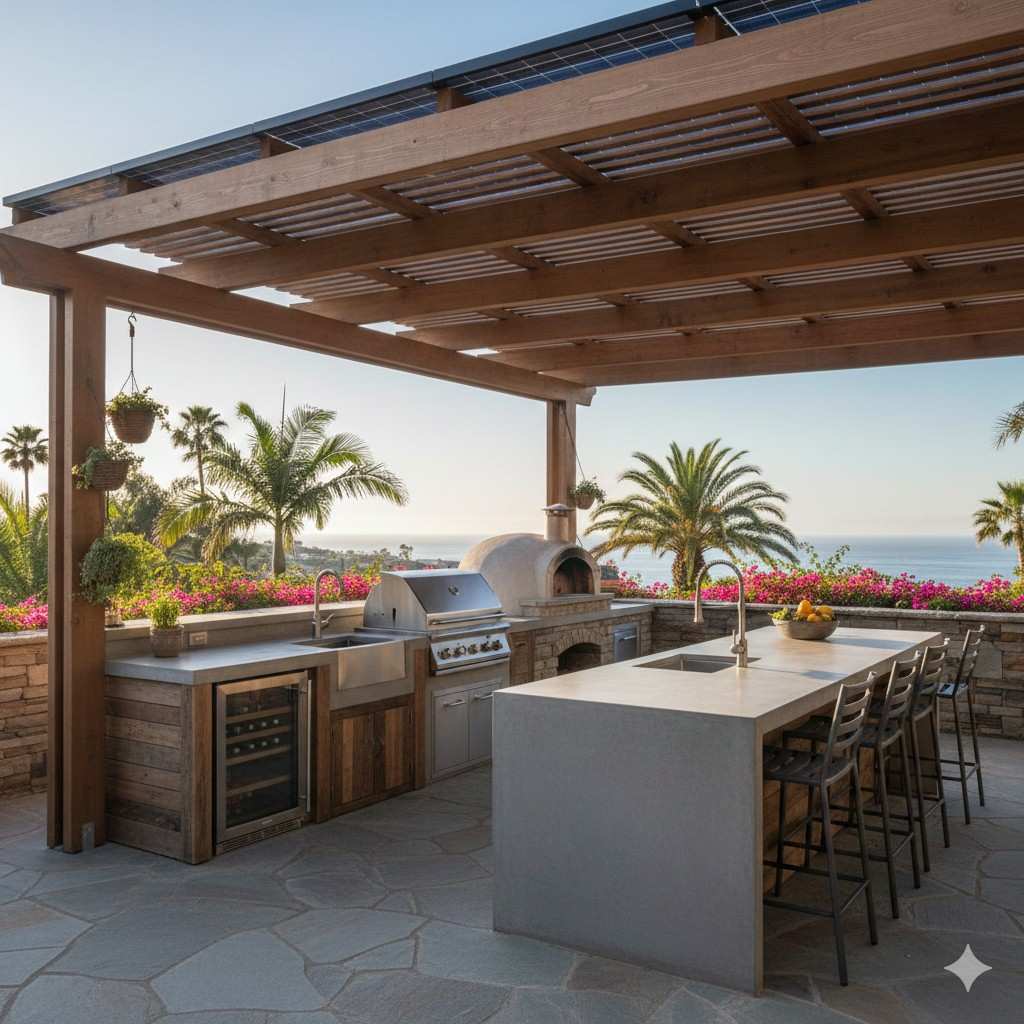
If there’s one place solar power makes sense, it’s outdoors.
Sunlight. Open space. No excuses.
Why Solar Works So Well Outside
- Less reliance on the grid
- Lower long-term energy costs
- Fewer extension cords snaking across patios
In eco-friendly outdoor kitchens, solar isn’t a gimmick – it’s practical.
Solar-Powered Features That Make Sense
You don’t need to run everything on solar to see benefits.
Start with:
- Solar task and ambient lighting
- Solar-powered fans and ventilation
- Charging stations for devices
- Solar beverage coolers or mini-fridges
Lighting alone can dramatically cut energy use.
Solar Setup Options
- Fixed roof-mounted panels
- Ground-mounted systems
- Portable solar generators
Portable systems are perfect if you don’t want permanent installs or permits.
Safety & Weather Reality Check
Always use:
- Outdoor-rated wiring
- Weatherproof connectors
- Proper grounding
Solar is low maintenance, not no maintenance.
Green Cooking Methods That Still Deliver Big Flavor
Now let’s talk food – because if it doesn’t taste good, nobody cares how green it is.
Low-Emission Cooking Equipment
Modern equipment has come a long way.
- Electric grills offer precise control and zero on-site emissions
- Pellet grills burn efficiently and use compressed wood waste
- Infrared grills heat faster and waste less energy
High efficiency equals less fuel and more consistent cooking.
Sustainable Fuel Choices
If you’re using charcoal:
- Look for certified sustainable charcoal
- Avoid mystery briquettes full of fillers
Wood pellets should come from:
- Clean sawdust
- No chemical binders
Better fuel = better smoke = better food.
Eco-Friendly Cooking Habits
This is where pitmasters shine.
- Preheat only when needed
- Use lids to retain heat
- Cook in batches
- Shield grills from wind
Efficiency doesn’t kill flavor – it protects it.

Food Waste Reduction (The Quiet Win)
Outdoor kitchens make waste visible.
Simple fixes:
- Compost scraps
- Plan portions
- Use leftovers creatively
An herb garden nearby? That’s flavor and sustainability.
Water Conservation Without Killing Convenience
Water waste adds up fast outdoors.
Smart Fixtures
- Low-flow faucets
- Motion-sensor taps
They don’t slow you down – they just stop leaks and overuse.
Smarter Water Use
- Collect rainwater for cleaning surfaces
- Reuse greywater for landscaping
Greener Cleaning Habits
- Eco-friendly degreasers
- Steam cleaning instead of constant hosing
A grill doesn’t need a full car wash every time.
Designing Eco-Friendly Outdoor Kitchens That Last
Here’s where many people mess up:
They build for looks, not lifespan.
Longevity Is Sustainability
- Choose durable materials
- Avoid trendy, fragile finishes
- Opt for modular designs
When something breaks, you should be able to fix one part, not the whole kitchen.
Protect What You Build
- Use covers
- Plan for drainage
- Store accessories properly
A protected kitchen lasts longer and wastes less.
Cost vs. Long-Term Savings (The Honest Truth)
Yes, eco-friendly outdoor kitchens can cost more upfront.
But here’s what you save:
- Lower energy bills
- Fewer replacements
- Less maintenance
- Better resale value
Solar lighting alone often pays for itself in a few seasons.
And if incentives or rebates are available? That’s free money.
Integrating Outdoor Gardens for Fresh Ingredients
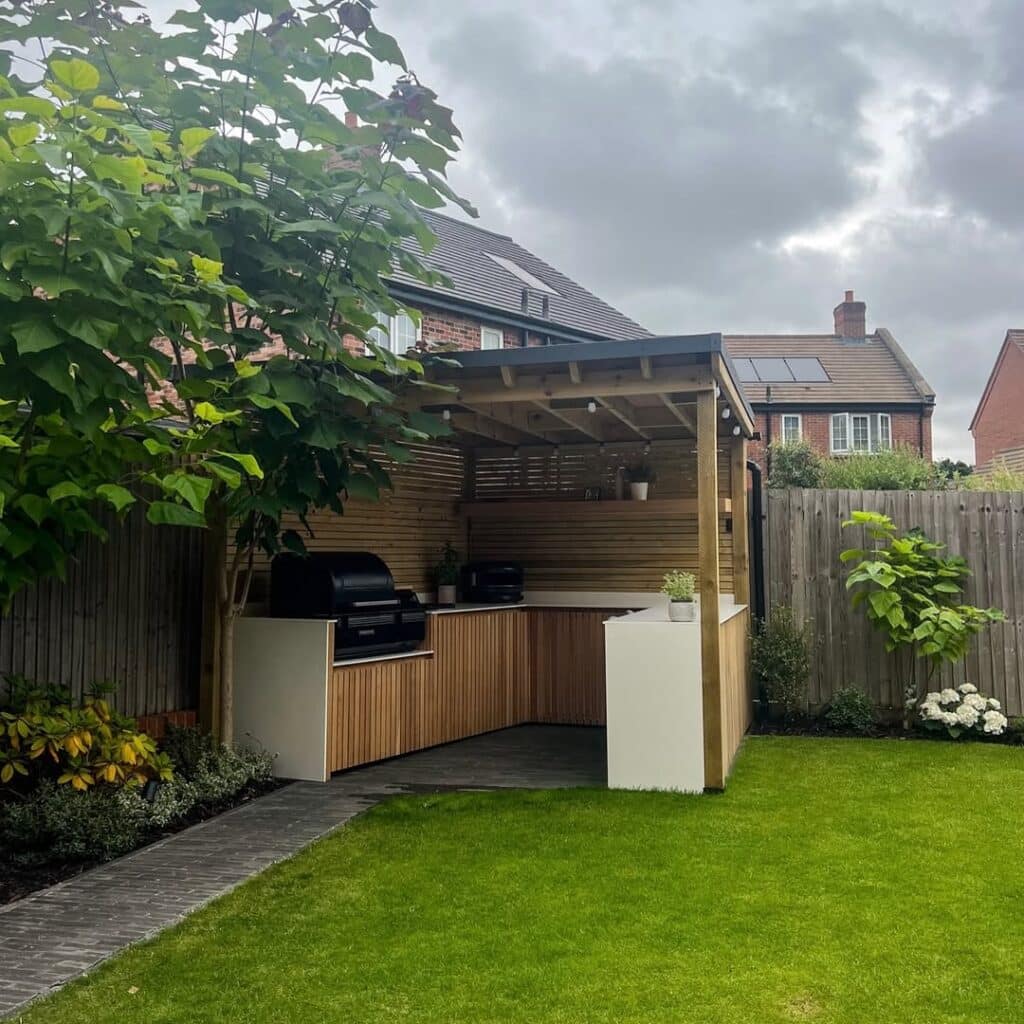
Nothing pairs better with an eco-friendly outdoor kitchen than a backyard herb or vegetable garden. Growing your own produce reduces the carbon footprint of store-bought ingredients and ensures ultra-fresh flavors for your dishes.
Imagine plucking rosemary, basil, or cherry tomatoes right as you prep your grill – no delivery trucks involved. Vertical gardens or raised beds work well for small spaces, while container gardens let you move plants for optimal sun exposure.
Incorporating a small fruit or herb garden is not just practical; it’s a visual win, too, adding greenery to your kitchen area.
Bonus: composting food scraps from cooking feeds your garden, closing the sustainability loop.
This setup transforms your outdoor kitchen into a self-sustaining ecosystem, providing fresh flavors while staying eco-conscious and engaging your family or guests in sustainable cooking practices.
Outdoor Kitchen Lighting and Ambiance Without Wasting Energy
Lighting sets the mood, but it can also waste energy if done wrong. For eco-friendly outdoor kitchens, think LED or solar-powered lights. String lights, task lighting, and accent lights can create warm, inviting ambiance without pulling extra electricity from the grid.
Motion sensors and timers reduce unnecessary use, while dimmable options let you control brightness depending on whether you’re cooking or hosting. You can even integrate solar lanterns or lantern-style lights to add rustic charm.
Don’t forget reflective surfaces – stone or glass countertops can amplify light naturally. The key is to combine aesthetic appeal with energy efficiency, ensuring your kitchen looks amazing at night while remaining planet-friendly and cost-effective.
Outdoor Kitchen Seating and Social Spaces
An outdoor kitchen isn’t just about cooking – it’s about community and connection.
Eco-friendly seating options can be made from recycled wood, bamboo, or metal. Built-in benches reduce the need for extra furniture, while modular seating allows flexible arrangements.
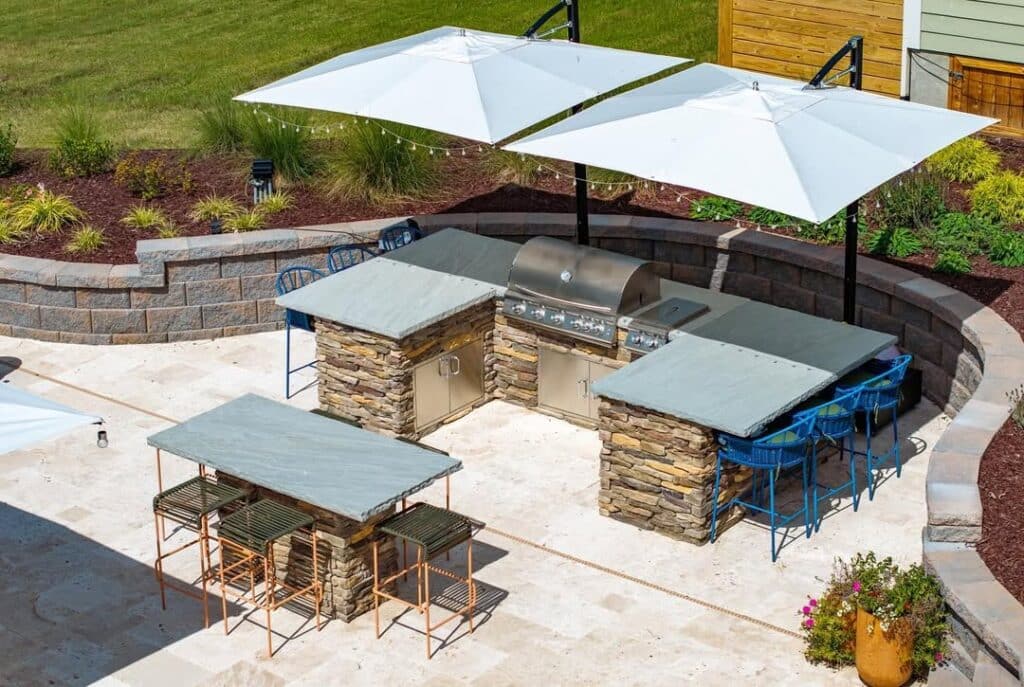
Consider shading elements like reclaimed wood pergolas or solar-powered umbrellas, which keep guests cool without energy-hungry fans.
Placing tables and stools strategically around the cooking area encourages conversation and keeps everyone engaged without crowding the grill. Add potted plants or vertical green walls to define social zones, and you’ve got an eco-friendly hangout that’s functional and inviting.
It’s a perfect mix: sustainable materials, smart design, and social energy, all enhancing the backyard cooking experience.
Smart Storage Solutions for Sustainable Kitchens
Clutter kills efficiency – and it’s even worse outdoors. For eco-friendly outdoor kitchens, storage is key. Opt for cabinetry made from recycled materials, modular shelves, or weatherproof containers that reduce plastic use.
Incorporate drawer inserts and utensil organizers to maximize space and reduce unnecessary replacements of worn items. Think vertically: wall-mounted racks for pots and pans minimize countertop clutter.
Smart storage isn’t just about organization; it extends the life of your tools, reduces waste, and keeps your kitchen functional and sustainable. Don’t overlook cooler and pantry solutions for storing seasonal produce, compostable scraps, or dry goods.
The right storage system turns your outdoor kitchen into a well-oiled, eco-conscious cooking machine, making it easy to focus on flavor instead of hunting for spatulas.
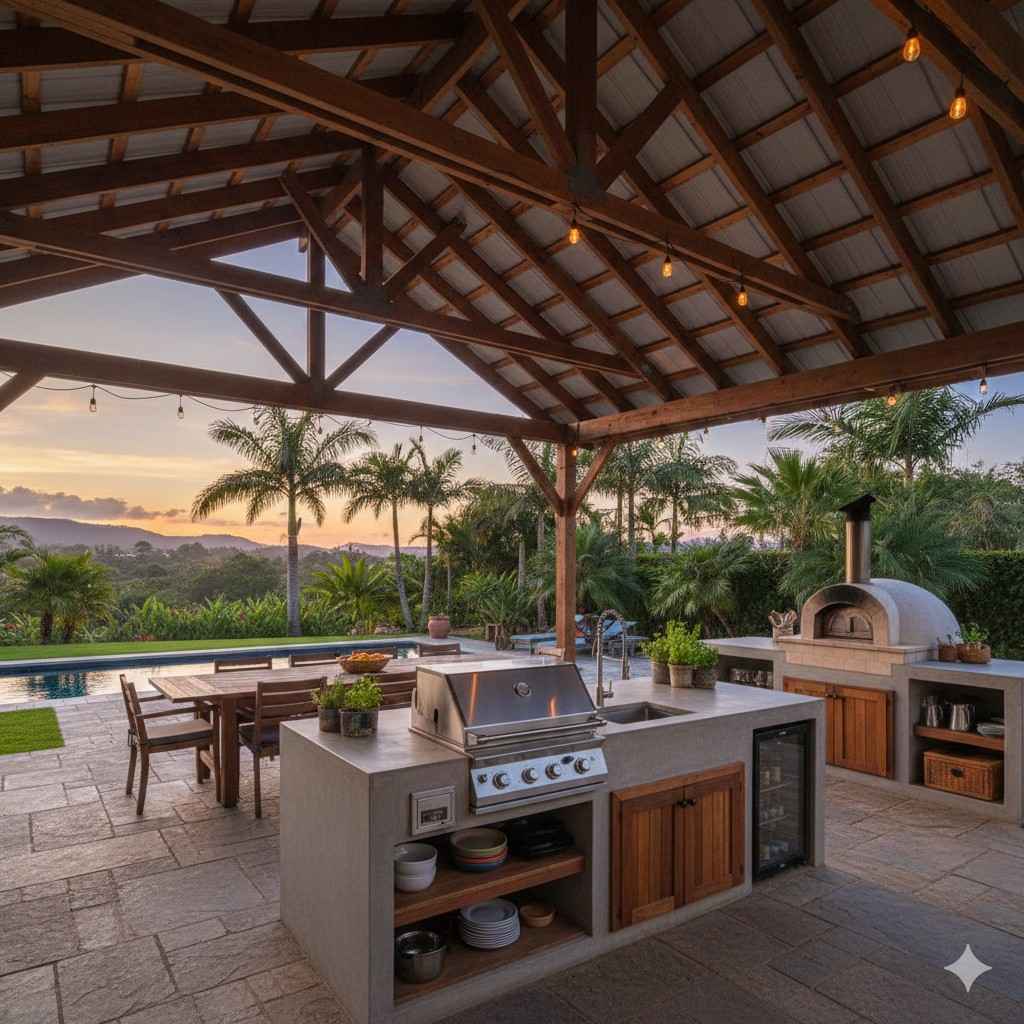
Rain Protection and Weatherproofing
Outdoor kitchens face the elements, and a sustainable design considers long-term protection. High-quality covers, awnings, and pergolas shield appliances and countertops from rain and sun, reducing wear and replacement needs.
Weatherproofing cabinets and appliances keeps moisture and rust at bay, while drainage planning prevents water pooling and damage. Consider porous or sloped flooring to naturally channel water away.
Rainwater can also be collected and stored for garden irrigation, making your kitchen resilient and eco-conscious at the same time.
Protecting your kitchen from harsh weather is a green investment – you save resources, avoid repairs, and maintain a functional, beautiful cooking space for years to come.
In short: staying dry saves your gear and the planet.
Outdoor Kitchen Decor with Sustainable Style
Style doesn’t have to cost the Earth. For eco-friendly outdoor kitchens, décor can be both chic and sustainable. Think reclaimed wood signage, recycled metal art, and stone or clay planters.
Use natural textiles like organic cotton or hemp cushions for seating. Lighting, as mentioned, doubles as decor when using solar lanterns or LED string lights. Even small touches like repurposed jars for condiments or utensils add personality without waste.
The goal is functional beauty: pieces that last, are easy to maintain, and fit your kitchen’s green ethos. Sustainable décor makes your space feel complete, inviting, and personal, proving that eco-conscious choices can be stylish without compromise.
Comparison Table 1: Traditional vs. Eco-Friendly Outdoor Kitchens
| Feature | Traditional Outdoor Kitchen | Eco-Friendly Outdoor Kitchen |
| Materials | Standard treated wood, low-quality metal | Reclaimed wood, FSC-certified bamboo, recycled metal |
| Energy Source | Gas, grid electricity | Solar-powered lighting, electric grills, efficient gas/pellet use |
| Water Use | Standard faucets, high water waste | Low-flow/motion-sensor taps, rainwater integration |
| Durability | Often 5–10 years | Designed for 15+ years |
| Waste Impact | High (frequent replacements) | Low (durable, reusable, repairable) |
| Maintenance | Moderate to high | Low with modular design and weatherproofing |
Comparison Table 2: Cooking Methods & Sustainability
| Cooking Method | Pros | Cons | Eco-Friendly Rating |
| Charcoal Grill | Classic smoky flavor | Produces emissions, not efficient | ⚠️ Moderate |
| Pellet Grill | Efficient, sustainable fuel, consistent heat | Slight learning curve | ✅ High |
| Gas Grill | Quick heating, precise control | Non-renewable fuel, moderate emissions | ⚠️ Moderate |
| Electric/Induction Grill | Low emissions, energy-efficient | Less traditional flavor | ✅ High |
| Infrared Grill | Fast, consistent heat, energy-efficient | Higher upfront cost | ✅ High |
FAQs: Eco-Friendly Outdoor Kitchens
1. What exactly makes an outdoor kitchen eco-friendly?
An eco-friendly outdoor kitchen uses sustainable materials, efficient appliances, solar or renewable energy, and low-emission cooking methods. Longevity, waste reduction, and water-saving measures all count.
2. Can I convert an existing outdoor kitchen to be eco-friendly?
Absolutely. Start with lighting, appliances, and water fixtures. Add solar panels or portable solar generators and replace cabinets/countertops with recycled or FSC-certified materials. You don’t need to rebuild the entire kitchen.
3. Do eco-friendly kitchens cost more?
Upfront costs can be slightly higher due to durable materials and solar installations, but you save in energy bills, water use, and replacement costs. Over 5–10 years, you usually break even.
4. Can I still cook smoky BBQ outdoors without harming the environment?
Yes! Use pellet grills, certified sustainable charcoal, or high-efficiency gas grills. These reduce emissions while still delivering authentic BBQ flavor.
5. How do I maintain an eco-friendly outdoor kitchen?
- Keep surfaces clean with eco-friendly cleaning products
- Use covers and modular parts to reduce wear
- Inspect solar systems and plumbing regularly
- Compost food scraps instead of tossing them
6. Are solar-powered appliances practical for outdoor kitchens?
Definitely. Solar lighting, fans, mini-fridges, and charging stations are highly practical and reduce electricity consumption. For larger appliances, a hybrid system with batteries works best.
7. What materials are best for long-lasting eco-friendly kitchens?
- Reclaimed wood for warmth and character
- Bamboo or FSC-certified wood for cabinets
- Recycled aluminum/steel for durability
- Concrete or recycled glass for countertops
The key is weather resistance, longevity, and low maintenance.
8. Can eco-friendly kitchens be stylish?
Absolutely! Sustainability doesn’t mean sacrificing looks. Reclaimed wood, stone countertops, and solar lighting can create a modern, rustic, or luxury look while staying environmentally conscious.
Common Mistakes to Avoid
Even good intentions can go sideways.
Avoid:
- Overbuilding without a plan
- Mixing incompatible materials
- Ignoring sun and wind exposure
- Buying inefficient appliances because they’re “on sale”
A bad setup wastes more than it saves.
Cooking Better by Building Smarter
An eco-friendly outdoor kitchen isn’t about giving things up.
It’s about making better choices that stack over time.
You get:
- Lower costs
- Better performance
- A kitchen that lasts
- Food that tastes just as good – sometimes better
As a pitmaster, I care about smoke, heat, and flavor. But I also care about not rebuilding the same kitchen twice and not burning more fuel than I need to cook a perfect rack of ribs.
Build smart. Cook hard. Waste less.
Your backyard – and your brisket – will thank you.
Featured image credit: @julienkitchen_products
