
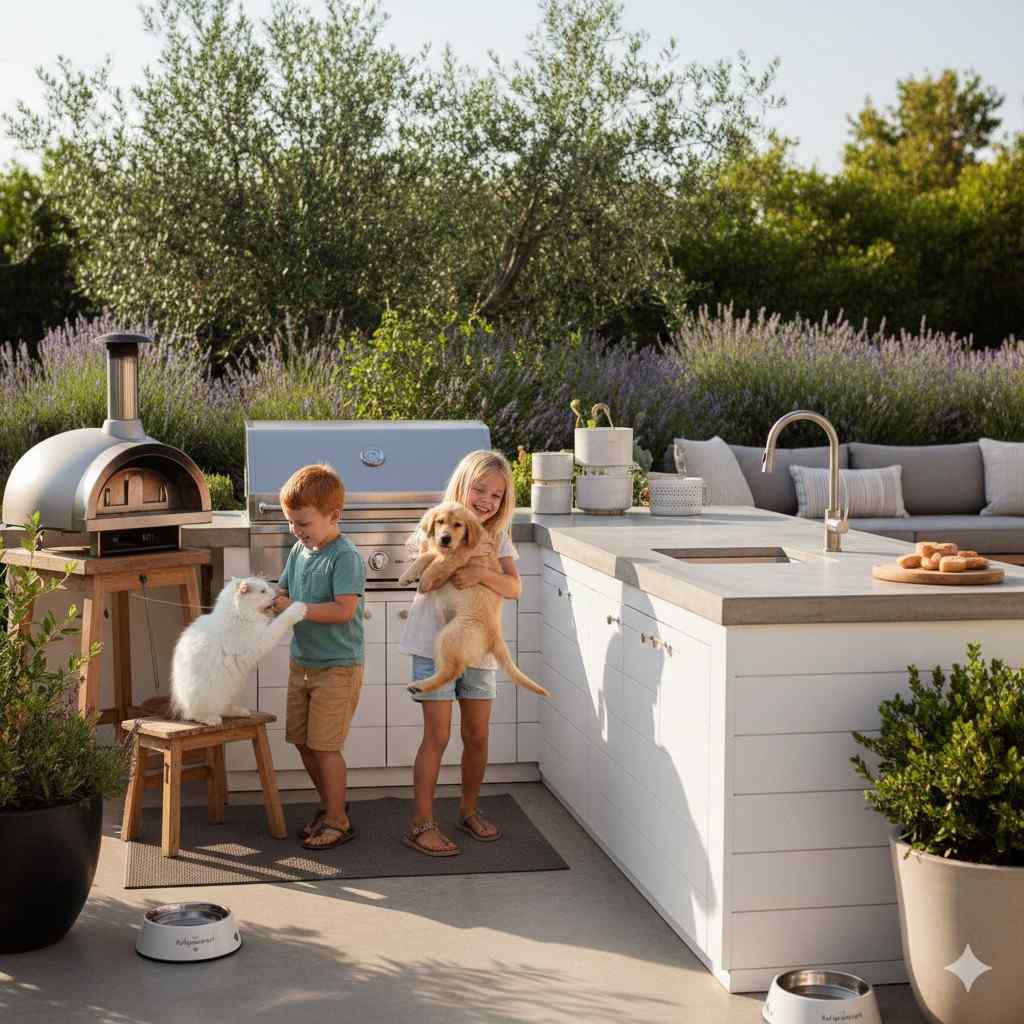
Outdoor kitchens are supposed to make life easier. More space. More fresh air. More memories.
But once kids start running laps and the dog decides the grill island is definitely the new lookout tower, things can get… interesting.
Being around real estate contractor friends for more than two decades taught me one thing: most outdoor kitchens are designed for adults who stand still. Real families don’t.
A truly child and pet friendly outdoor kitchen isn’t about bubble-wrapping your backyard. It’s about smart design choices that quietly prevent accidents, reduce stress, and let you actually enjoy hosting without constantly shouting, “Hey – don’t touch that!”
Let’s break down 16 practical, field-tested design tips that make outdoor kitchens safer, calmer, and far more enjoyable for the whole family.

1. Choose Heat-Resistant, Cool-Touch Materials
If I had a dollar for every metal edge that turned into a branding iron under the sun, I’d be retired by now.
Heat retention is one of the biggest hidden dangers in outdoor kitchens – especially for kids and pets who don’t register “hot” until it’s too late.
Smart material choices include:
- Natural stone or sealed concrete countertops (they dissipate heat better)
- Porcelain surfaces with low thermal retention
- Insulated grill handles and control knobs
- Rounded stone edges instead of metal trims
Key point:
If it gets hot enough to fry an egg at noon, it doesn’t belong at kid height.
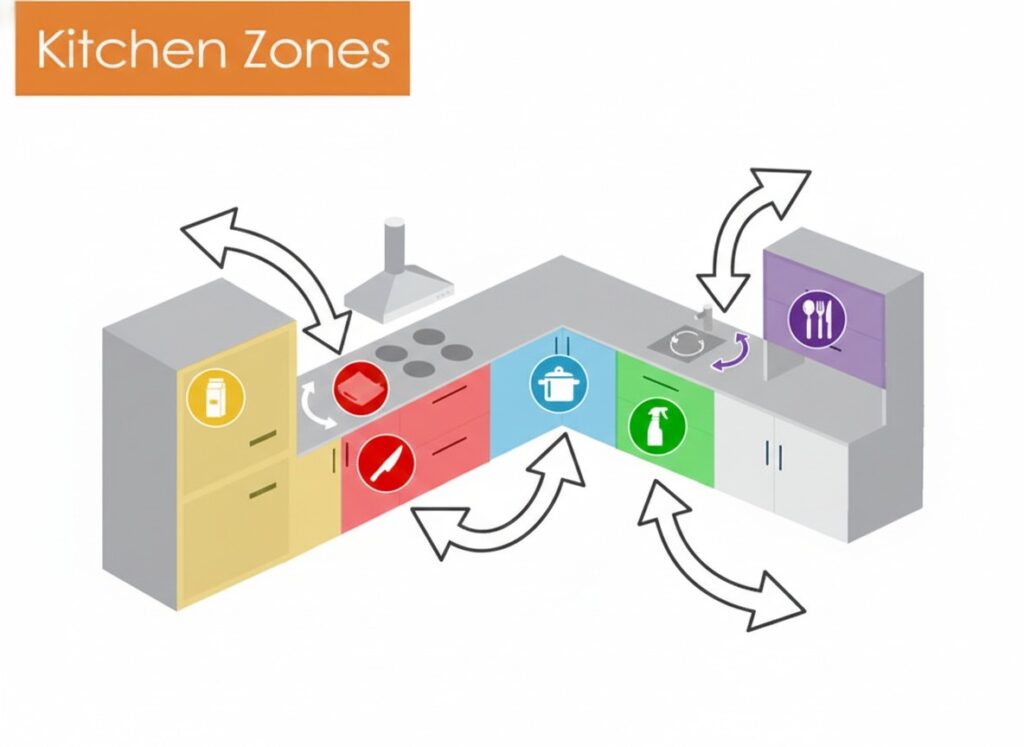
2. Create Clear Zones for Cooking, Eating, and Play
One of the most important principles in child and pet friendly outdoor kitchens is something we use on job sites every day: separation of risk.
Your outdoor kitchen should have:
- A hot zone (grill, burners, pizza oven)
- A social zone (seating, dining, drinks)
- A movement zone (paths kids and pets naturally take)
You don’t need walls. Subtle cues work better:
- Flooring changes
- Planters or low walls
- Island overhangs that act as visual boundaries
Contractor insight:
When people say, “We don’t want barriers,” I remind them – good design doesn’t block movement, it guides it.
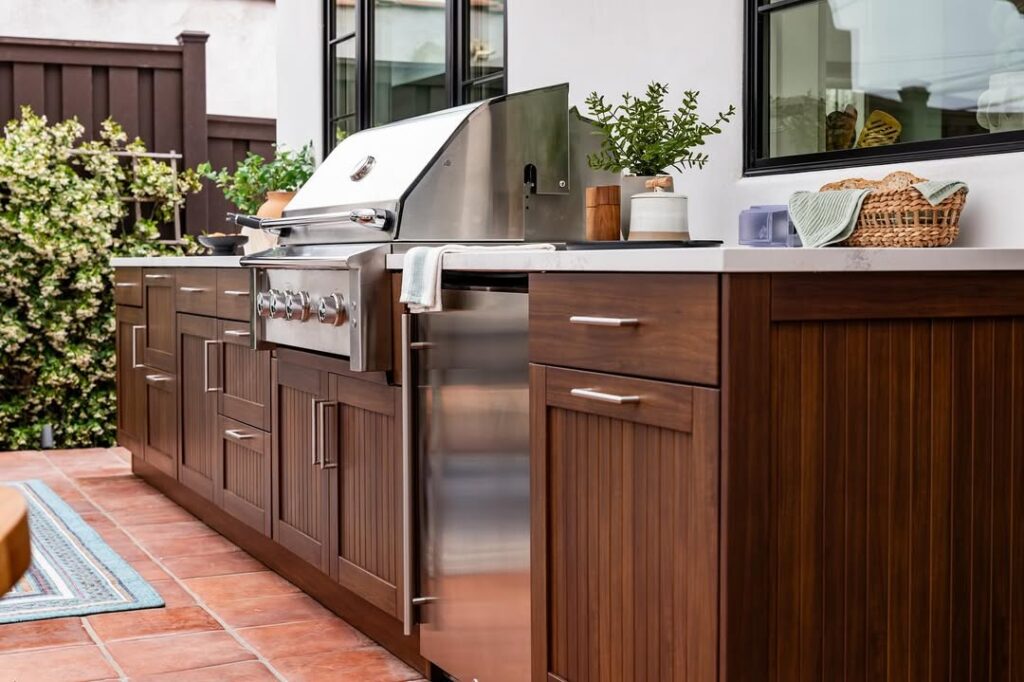
3. Install Child-Safe and Pet-Proof Cabinetry
Outdoor kitchens love to hide dangers in plain sight:
- Knives
- Skewers
- Cleaning chemicals
- Gas controls
Cabinet upgrades that matter:
- Soft-close drawers (no slammed fingers)
- Magnetic or push latches for dangerous storage
- Recessed handles instead of pull bars
- Durable, chew-resistant materials (yes, dogs chew cabinets)
Key phrase:
Out of sight should also mean out of reach.
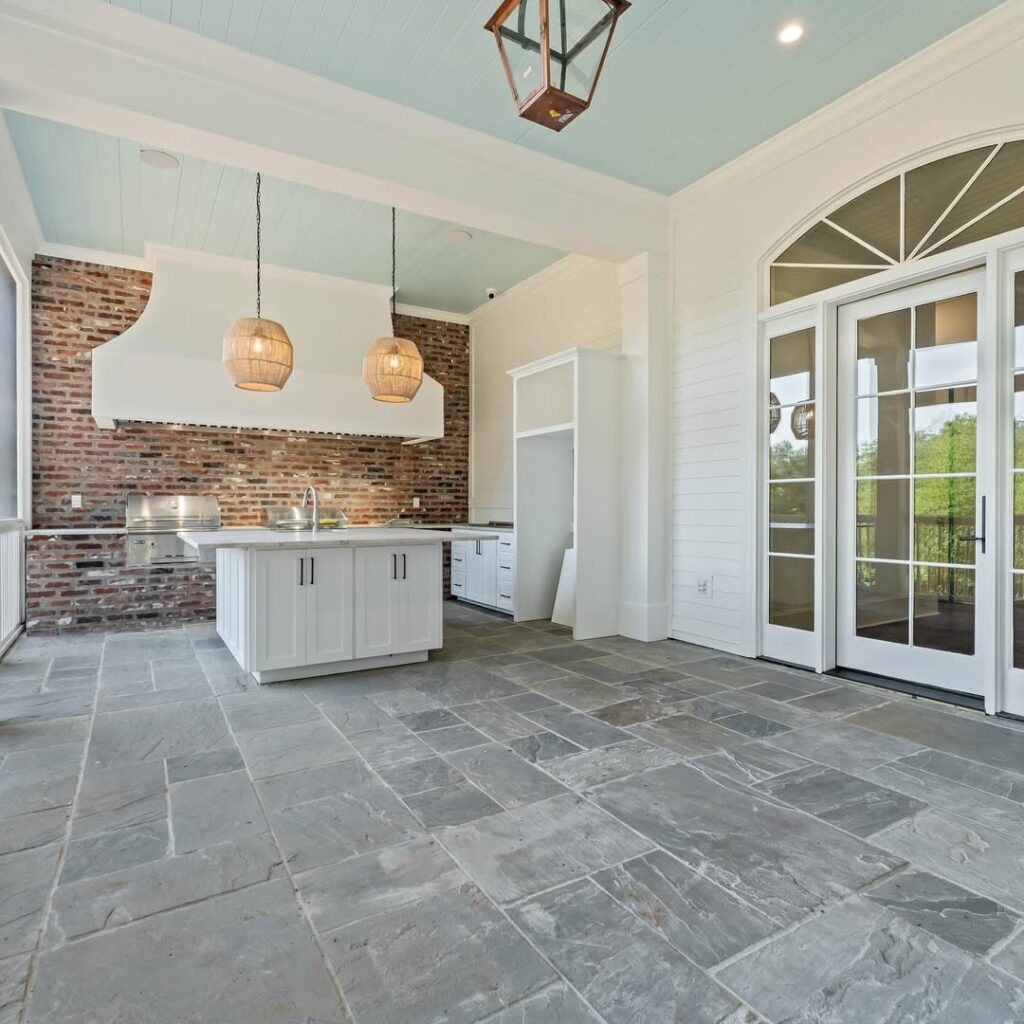
4. Use Slip-Resistant, Paw-Friendly Flooring
I’ve seen more injuries from slippery patios than from grills.
Outdoor spills are inevitable:
- Ice melts
- Drinks tip
- Dogs shake
- Kids sprint barefoot
Best flooring options for family safety:
- Textured concrete
- Outdoor-rated porcelain tile
- Natural stone with non-slip finishes
Avoid:
- Polished stone
- Glossy tiles
- Surfaces that grow algae when wet
Pet-friendly bonus:
Choose materials that stay cooler underfoot. Hot paws end parties fast.
5. Add Strategic Lighting for Evening Safety
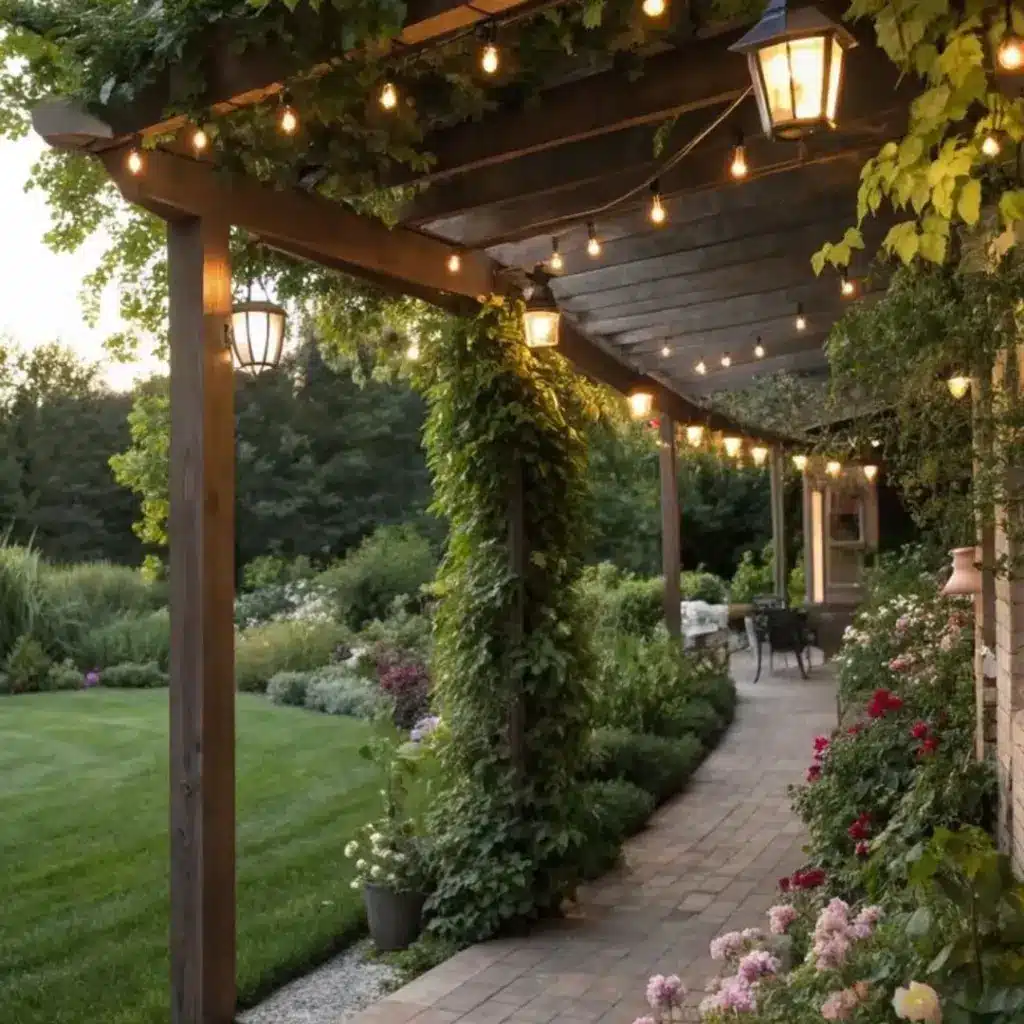
Most accidents happen at dusk – not midnight.
As the sun sets:
- Depth perception drops
- Kids get tired
- Pets disappear into shadows
A safe lighting plan includes:
- Task lighting at grills and prep areas
- Low-level pathway lights
- Soft ambient lighting for seating
- Motion lights near steps or exits
Designer tip:
Good lighting doesn’t feel bright – it feels obvious. If you don’t notice it, it’s working.
6. Keep Flames, Gas, and Electrical Elements Secure
This is where design meets responsibility.
Non-negotiables for child and pet friendly outdoor kitchens:
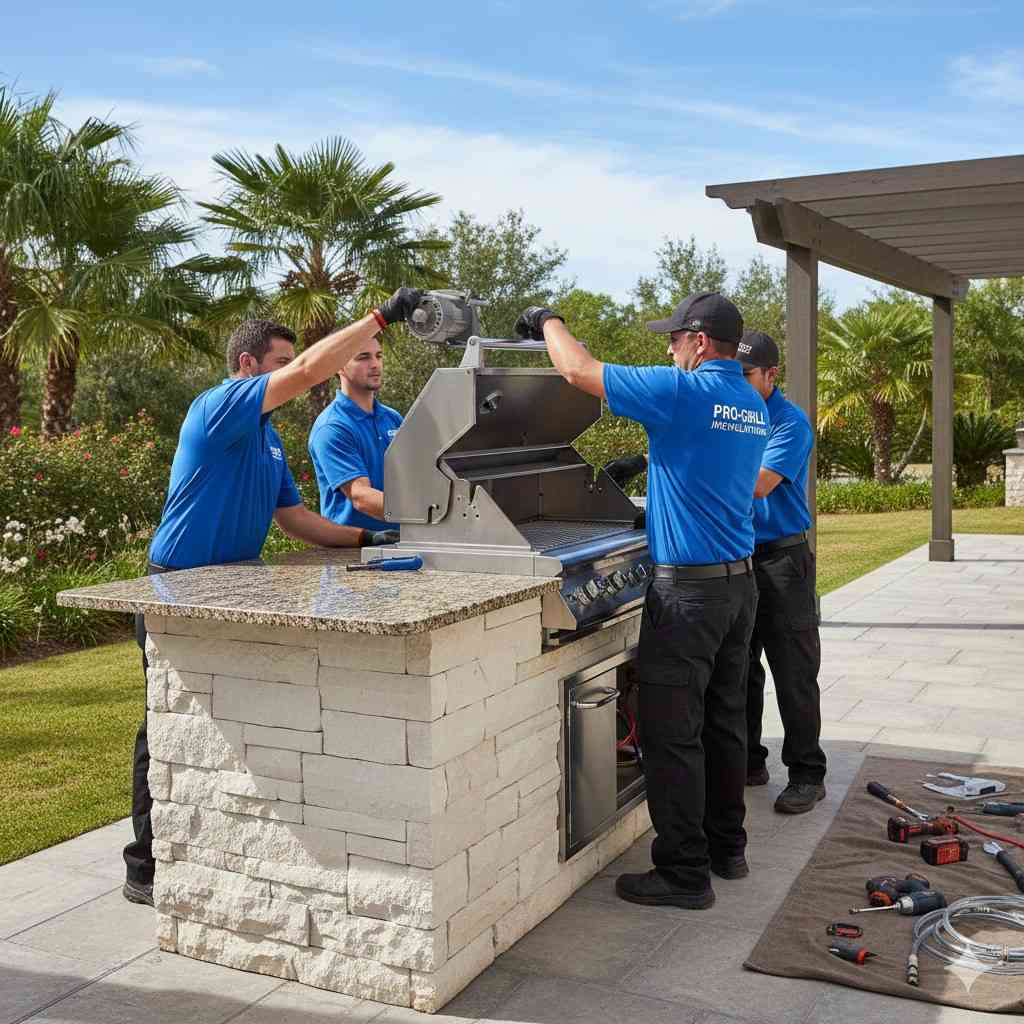
- Built-in grills with secure housings
- Lockable gas shut-off valves
- Covered electrical outlets
- No exposed cords at ground level
Fire pits?
- Keep them raised or recessed
- Add clear seating distance
- Never place them on primary walk paths
Hard truth:
Convenience is great – but control is better.
7. Choose Rounded Edges and Low-Impact Features
Kids don’t fall gracefully. Neither do dogs.
Sharp corners turn normal play into ER visits.
Safer design choices:
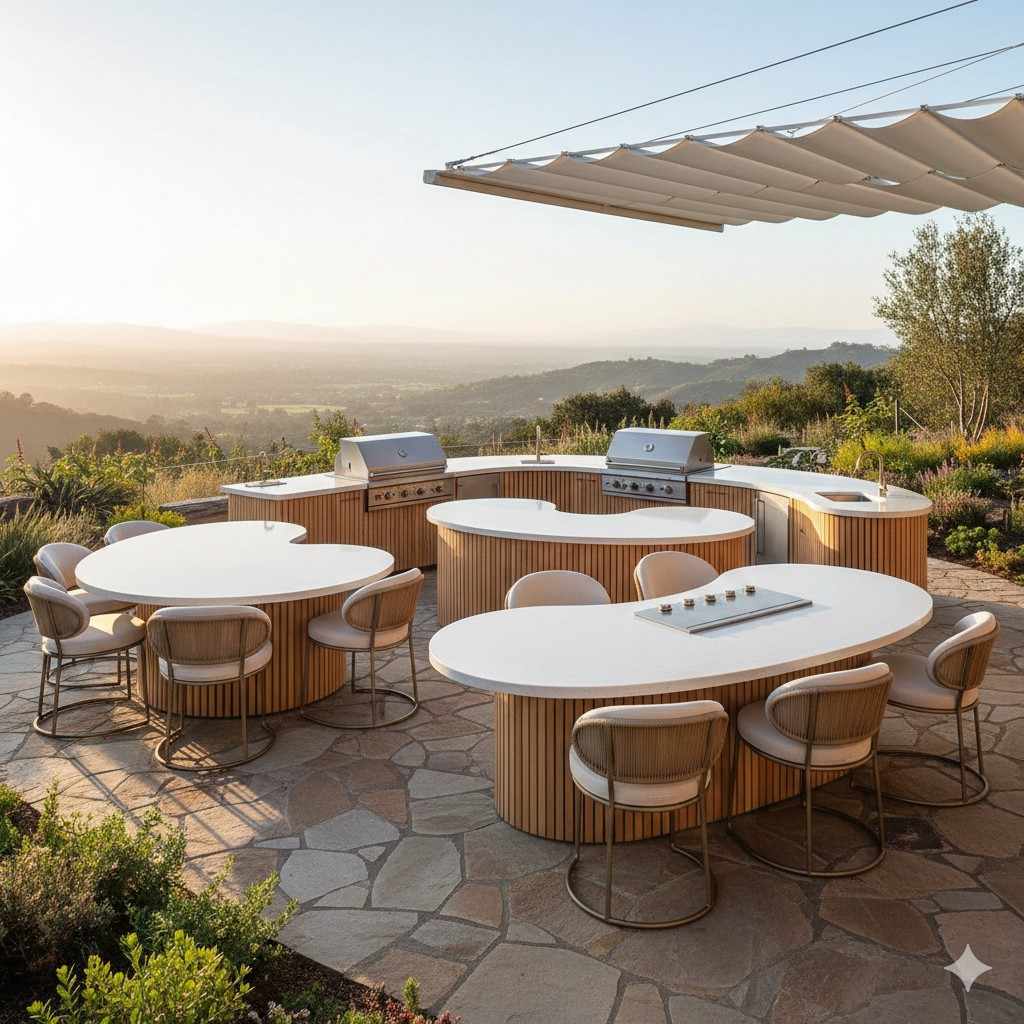
- Bullnose or rounded countertops
- Curved island ends
- Furniture with softened profiles
- No metal brackets at knee or head height
Architect perspective:
In family spaces, impact zones matter more than aesthetics. You can still make it beautiful – just smarter.
8. Use Easy-to-Clean, Non-Toxic Materials
Spills. Fur. Sauce. Mud. Repeat.
The best child and pet friendly outdoor kitchens are designed for fast recovery, not perfection.
Look for:
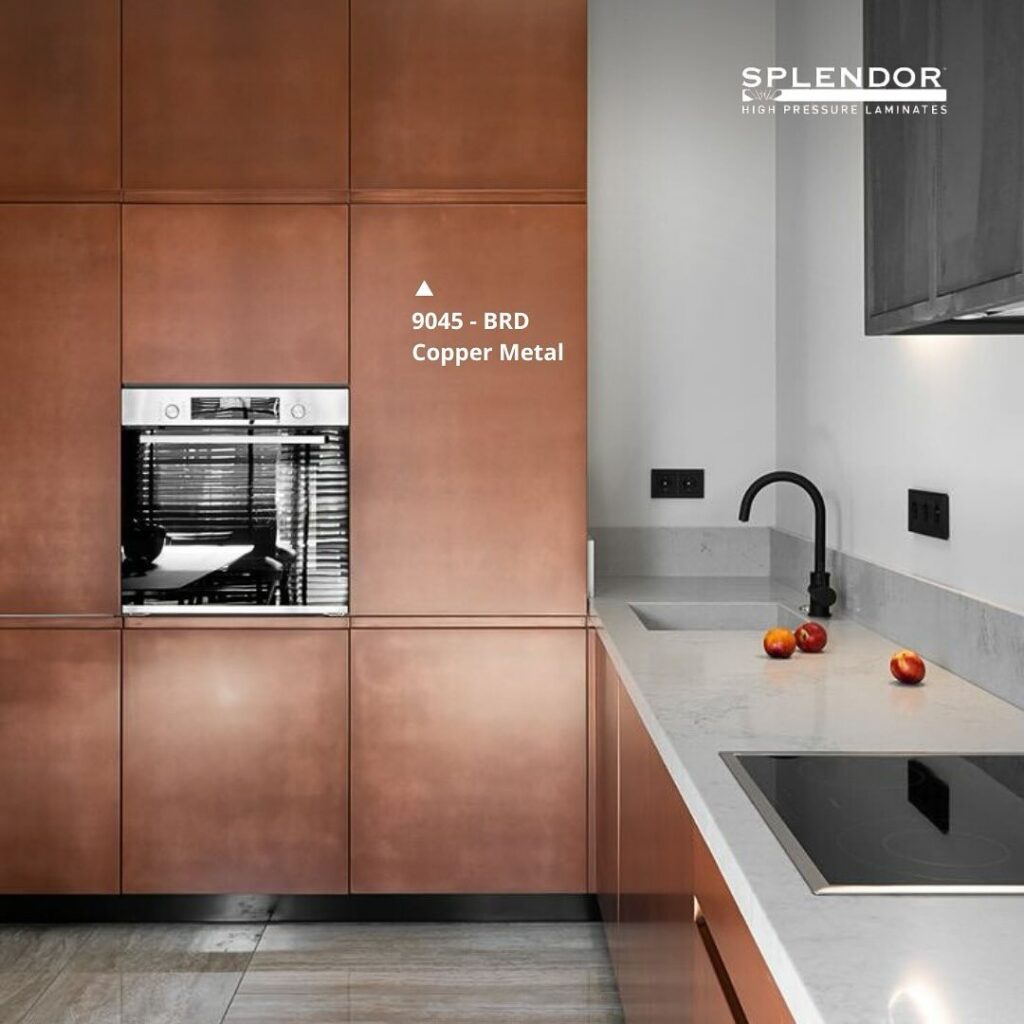
- Non-toxic sealers and finishes
- Stain-resistant cushions
- Mold-resistant fabrics
- Surfaces that don’t trap grease or bacteria
Avoid:
- Cheap sealants
- Porous stone left untreated
- Strong chemical cleaners
Key point:
If it takes special instructions to clean, it won’t stay clean.
9. Design for Visibility and Supervision
One of the biggest mistakes I see?
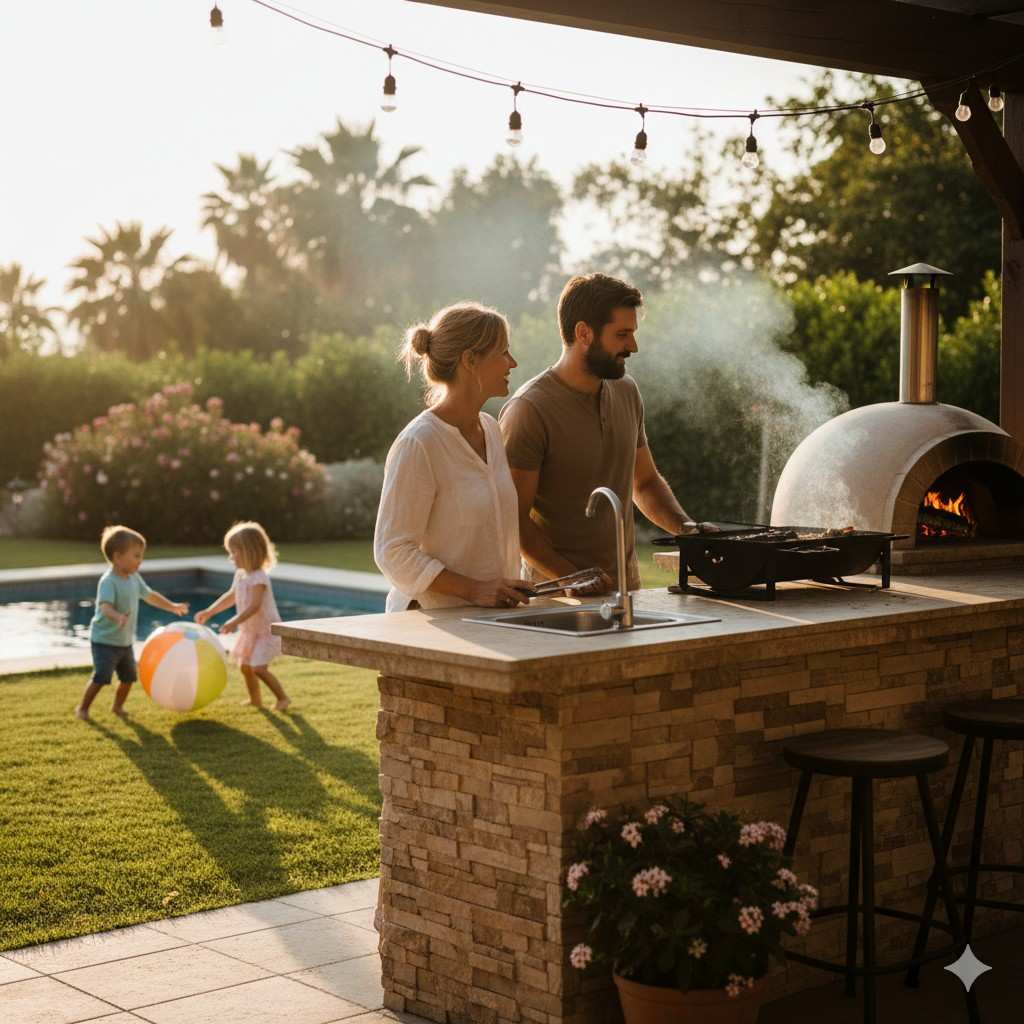
Outdoor kitchens that turn the cook’s back to the entire yard.
Good design keeps:
- Kids visible while prepping
- Pets in sight near food
- Clear lines from grill to seating
How to improve visibility:
- Open layouts
- Lower island backs
- Prep sinks facing outward
- No tall walls between zones
Personal rule:
If you can’t see your kid or your dog, you’re one distraction away from chaos.

10. Add Family-Friendly Extras Without Adding Risk
This is where fun meets function.
Smart extras that don’t compromise safety:
- Built-in trash bins with lids
- A designated pet water station
- Shaded resting areas
- Low snack counters for kids
- Storage for toys, leashes, and games
Punchline from the field:
When kids and pets have their own zones, they’re far less interested in yours.

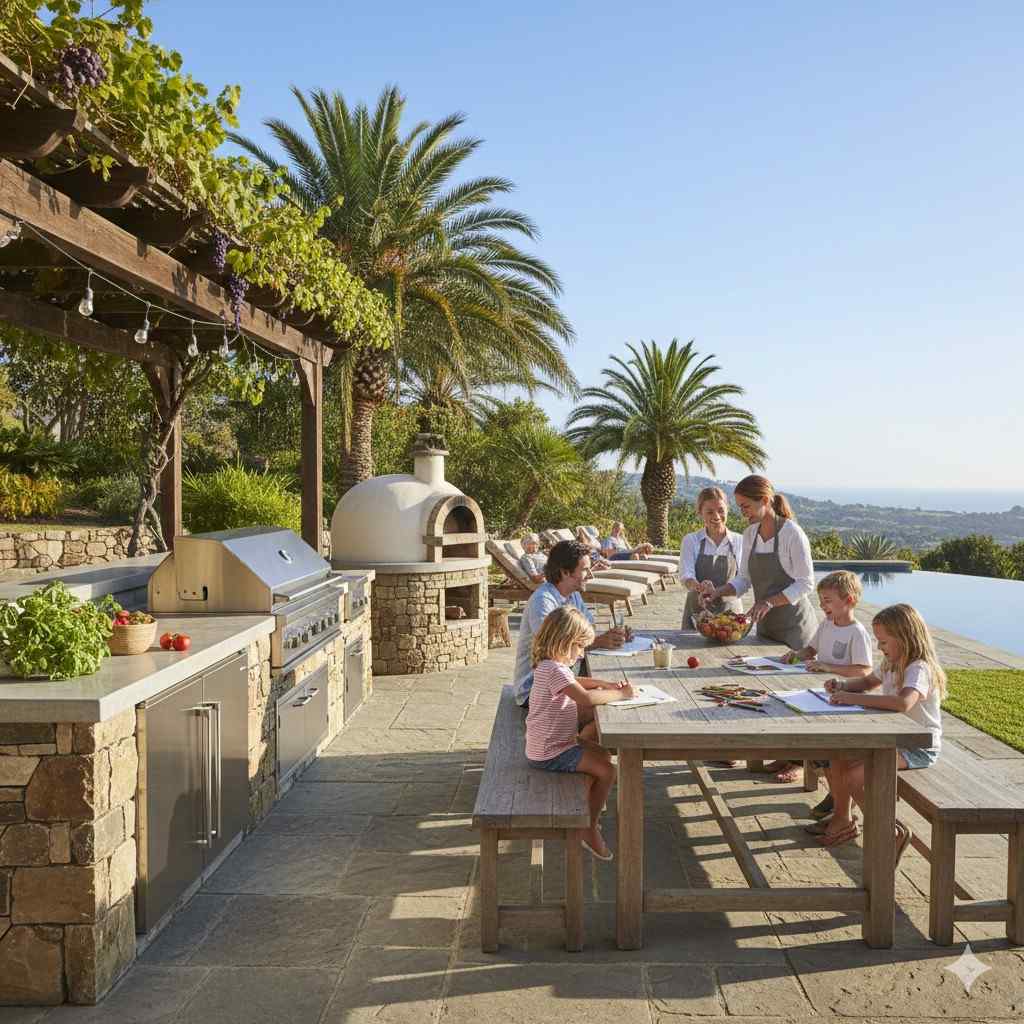
11. Shade Isn’t Optional – It’s a Safety Feature
Most people treat shade as a comfort upgrade. In child and pet friendly outdoor kitchens, it’s a health and safety requirement.
Direct sun turns countertops into hot plates and patios into paw-burn zones. Kids overheat faster than adults, and pets can’t tell you they’re struggling until they already are.
Smart shade solutions include:
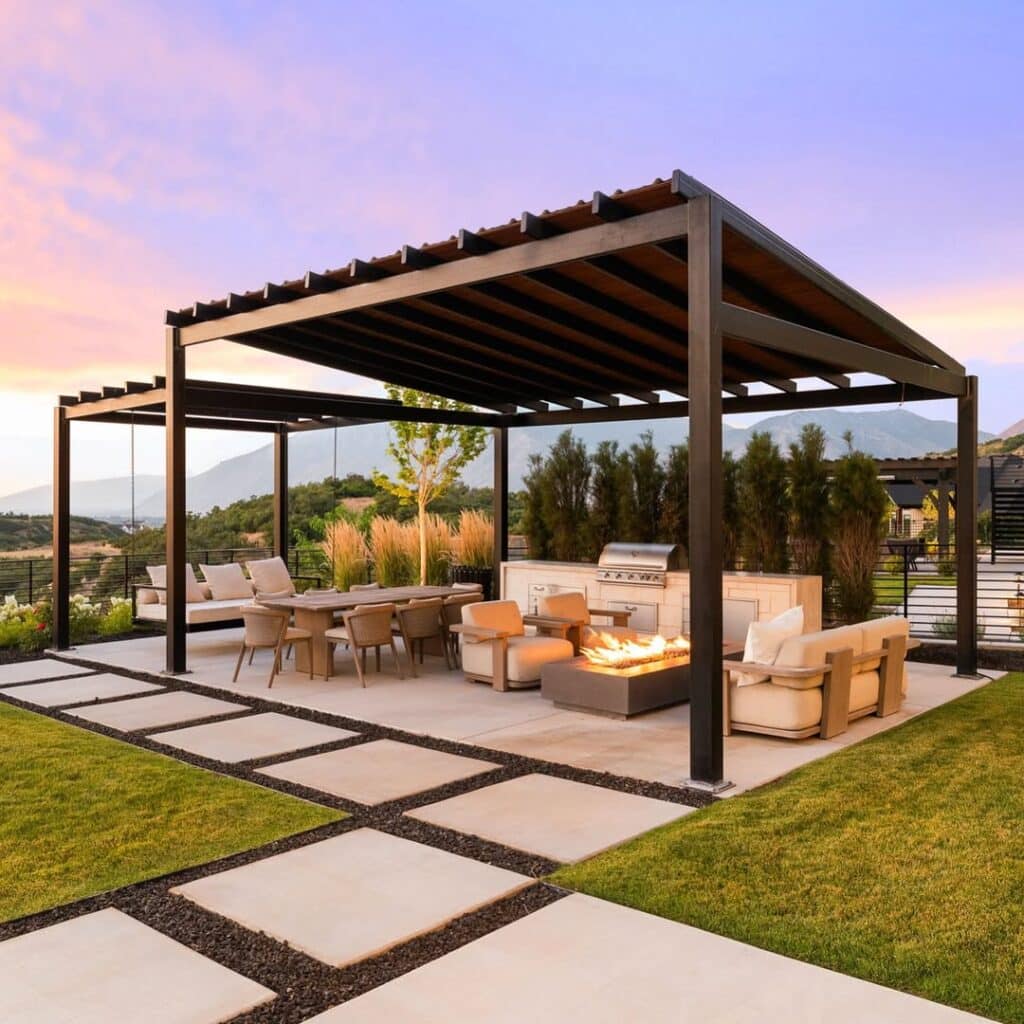
- Pergolas with adjustable louvers
- Retractable awnings over cooking and seating areas
- Strategically placed trees or architectural overhangs
Key point:
Shade lowers surface temperatures, reduces glare, and makes supervision easier.
A shaded outdoor kitchen isn’t just more comfortable – it extends usable hours, keeps tempers cool, and prevents heat-related accidents that most homeowners never see coming.
12. Sound Control Matters More Than You Think
Noise isn’t just annoying – it’s a safety issue.
In loud outdoor spaces, kids don’t hear warnings and pets get overstimulated. Add clanging dishes, sizzling grills, and background music, and suddenly communication breaks down.
Design choices that help:
- Soft-finish ceilings or pergola panels
- Outdoor rugs in seating zones
- Upholstered furniture instead of hard surfaces
Important phrase:
A calmer space is a safer space.
Lower noise levels make it easier to give instructions, spot problems early, and keep pets relaxed – especially during busy gatherings where chaos loves to sneak in.
13. Weather-Proofing Is About Safety, Not Just Durability
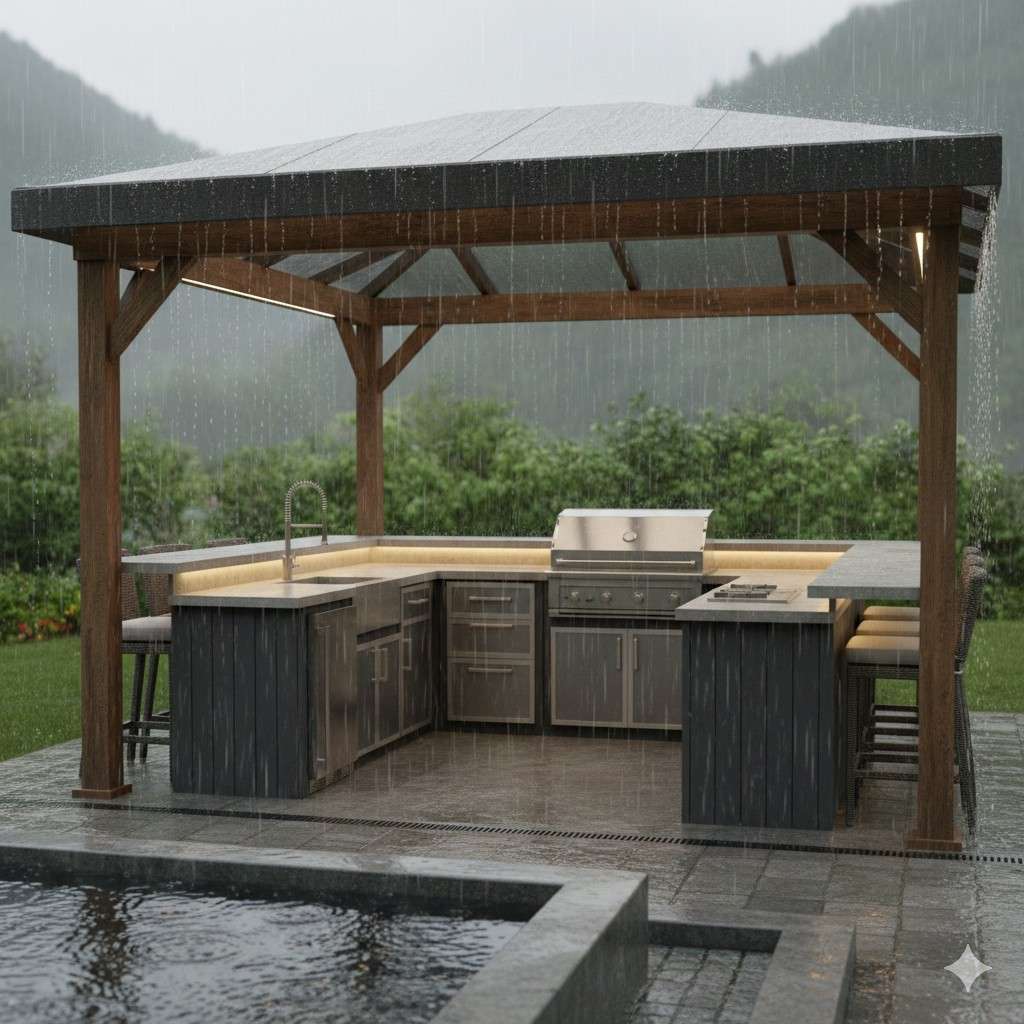
Rain doesn’t just damage furniture – it creates hazards.
Water pooling near grills, slick steps, and damp electrical outlets are common problems in poorly designed outdoor kitchens.
In child and pet friendly outdoor kitchens, weather-proofing should include:
- Proper drainage slopes
- Covered prep areas
- Sealed electrical components
- Quick-drying surfaces
Contractor truth:
If water has nowhere to go, someone will eventually slip there.
Designing for rain, humidity, and wind keeps the space predictable – and predictability is the foundation of safety.
14. Storage Placement Can Make or Break Safety
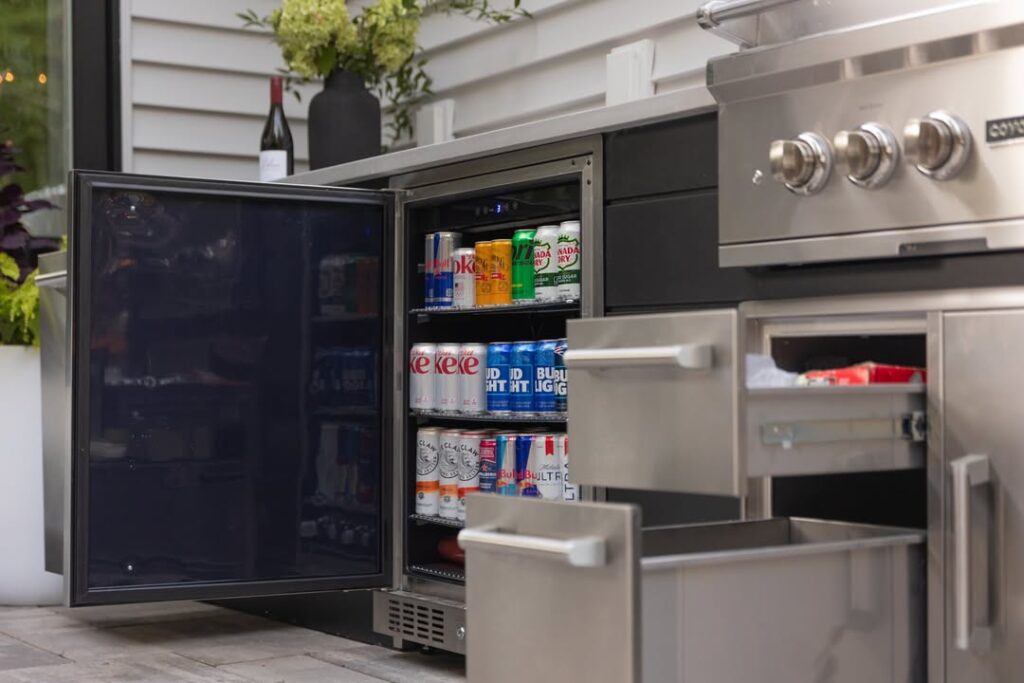
It’s not just what you store – it’s where you store it.
I’ve seen outdoor kitchens where knives were stored lower than dog bowls. That’s not a design flaw – it’s a safety failure.
Better storage strategies:
- High cabinets for sharp tools
- Low drawers for plastic items
- Dedicated zones for kid-accessible items
Key phrase:
Vertical thinking keeps danger out of reach.
When storage placement follows logic instead of convenience, you reduce risk without adding locks or barriers everywhere.
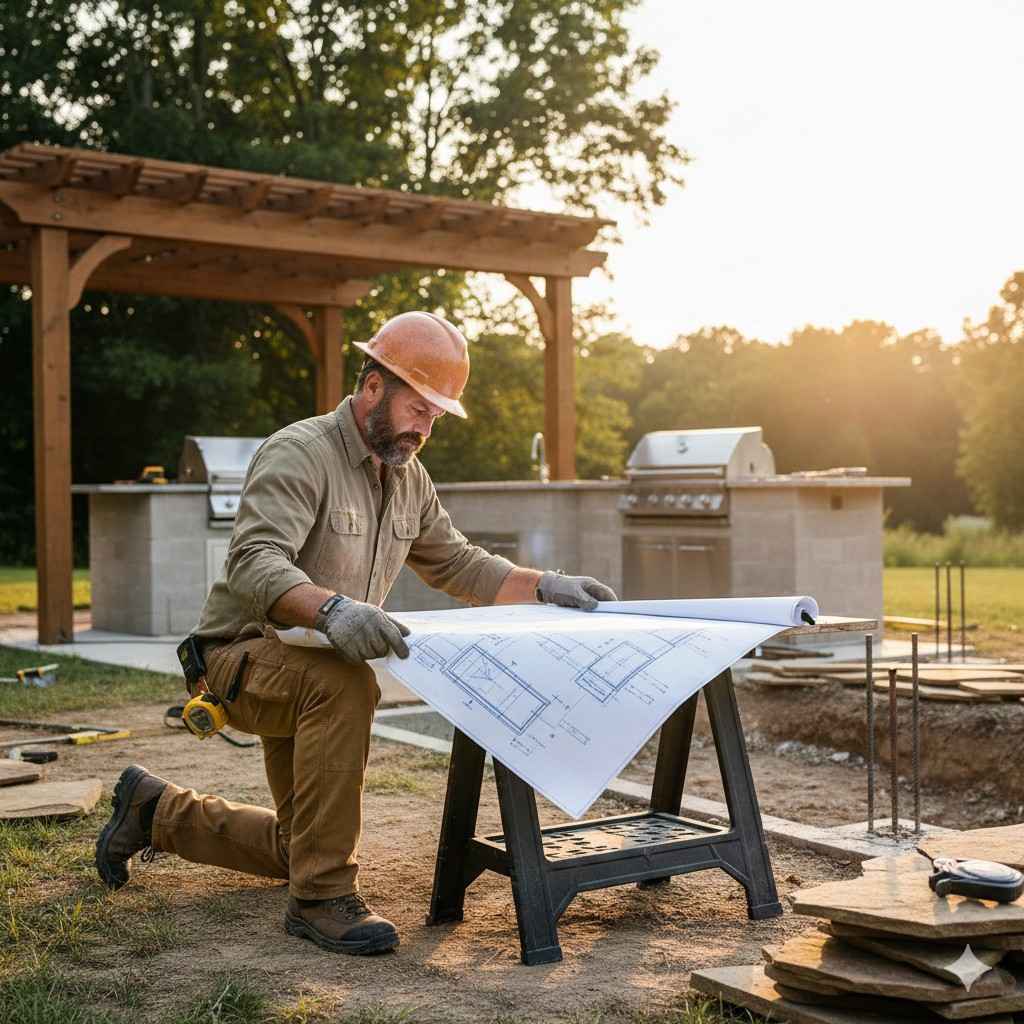
15. Designing for Growth Saves You from Redesigning Later
Kids grow. Pets age. What works today might not work in three years.
A smart child and pet friendly outdoor kitchen accounts for changing needs:
- Flexible seating arrangements
- Modular storage
- Adjustable lighting
- Space that transitions from play to lounge
Expert insight:
Future-proofing is cheaper than rebuilding.
Designing with adaptability in mind keeps the kitchen functional, safe, and enjoyable as your family dynamic evolves – without constant upgrades.
16. The “Drop Zone” That Prevents Accidents
One of my favorite pro tricks? The drop zone.
This is a small, intentional surface near the entrance of the outdoor kitchen where people naturally place:
- Hot trays
- Utensils
- Drinks
- Bags and toys
Without it, those items end up on unsafe edges.
Key takeaway:
Design for human behavior, not perfect behavior.
A well-placed drop zone quietly reduces spills, burns, and clutter – proving once again that the best safety features often go unnoticed.
Child and Pet Friendly Outdoor Kitchens Considerations
When planning child and pet friendly outdoor kitchens, the goal isn’t to eliminate every risk – it’s to design with real-life behavior in mind.
Kids run, pets wander, and gatherings get busy, so safety has to be built into the layout, not added as an afterthought.
That means choosing materials that stay cooler, creating clear zones between cooking and play, and maintaining strong sightlines for easy supervision.
Flooring should handle spills without turning slick, storage should keep hazards out of reach, and shade and lighting should support comfort and visibility throughout the day.
When these considerations work together, the outdoor kitchen feels effortless – safe enough for families, flexible enough for entertaining, and comfortable enough that everyone actually wants to stay outside.
How Family Habits Should Shape Your Outdoor Kitchen Design
One of the biggest mistakes homeowners make is designing an outdoor kitchen for how they wish they entertained, not how their family actually lives.
In real homes, kids drift in and out with snacks, pets patrol the perimeter, and conversations happen mid-prep – not neatly around a dining table.
Child and pet friendly outdoor kitchens work best when they’re shaped by daily habits: where backpacks get dropped, where the dog collapses for shade, where kids naturally congregate while adults cook. When design supports these patterns, supervision becomes effortless instead of exhausting.
You stop reacting to problems and start preventing them. The most successful outdoor kitchens I’ve built weren’t the flashiest – they were the ones that felt intuitive to move through, where safety came from flow, not rules.
Designing around behavior isn’t limiting. It’s what makes a space feel truly livable.

Why “Overbuilding” Is a Smart Safety Strategy Outdoors
In outdoor design, durability and safety are closely linked – and this is where overbuilding quietly shines. Thicker countertops resist chipping when toys get tossed. Reinforced seating doesn’t wobble when kids climb.
Higher-quality fasteners don’t loosen when pets brush past them daily. In child and pet friendly outdoor kitchens, these details matter more than aesthetics ever will. Lightweight, decorative materials might look good on day one, but they fail under real family use.
Overbuilt features age better, stay stable, and reduce long-term hazards caused by wear and tear. As a contractor, I’d rather a space feel solid than delicate. Heavier doesn’t mean clunky – it means reliable.
When everything feels anchored and intentional, parents relax, kids play freely, and pets roam without turning everyday movement into a safety risk.
Frequently Asked Questions (FAQs)
1. What makes an outdoor kitchen child- and pet-friendly?
A child and pet friendly outdoor kitchen is designed to reduce risks without limiting enjoyment.
That means clear zoning between cooking and play areas, heat-resistant materials, slip-resistant flooring, secure storage, and layouts that allow easy supervision.
It’s not about eliminating hazards entirely – it’s about designing so accidents are far less likely to happen.
2. Are outdoor kitchens safe for toddlers and small children?
Yes – when designed correctly. The biggest safety improvements come from:
- Separating hot cooking zones from seating
- Using rounded edges and cool-touch materials
- Installing child-safe cabinet latches
- Maintaining clear sightlines for supervision
Most injuries occur in poorly planned layouts, not well-designed ones.
3. What flooring is best for kids and pets in an outdoor kitchen?
Slip-resistant, textured surfaces work best. Popular options include:
- Textured concrete
- Outdoor-rated porcelain tile
- Natural stone with a non-slip finish
Avoid polished or glossy surfaces, which become slippery when wet and can be uncomfortable for pets’ paws in direct sun.
4. How do I keep pets away from the grill and hot surfaces?
The key is designated zones, not constant correction. Use:
- Kitchen islands as visual barriers
- Planters or low walls to guide movement
- Dedicated pet areas with shade and water
When pets have a comfortable spot nearby, they’re far less likely to wander into danger zones.
5. Are built-in grills safer than freestanding grills?
In most cases, yes. Built-in grills are:
- More stable
- Better insulated
- Easier to secure with lockable gas controls
Freestanding grills can tip, roll, or shift – especially when bumped by kids or pets.
6. What countertop materials are safest for outdoor kitchens?
Look for materials that don’t retain excessive heat and resist chipping:
- Natural stone (properly sealed)
- Concrete with rounded edges
- Porcelain slabs
Avoid thin metal edges or materials that become dangerously hot under direct sunlight.
7. How can I make my outdoor kitchen safer at night?
Lighting plays a huge role in safety. Use:
- Task lighting at grills and prep areas
- Pathway lights along walkways
- Motion lighting near steps or exits
Good lighting prevents trips, burns, and collisions – especially during evening gatherings.
8. Should outdoor kitchen cabinets be child-proofed?
Absolutely. Any cabinet containing:
- Knives
- Tools
- Cleaning products
- Gas or electrical controls
Should have hidden latches or locking mechanisms. Soft-close hardware also reduces finger injuries.
9. Can I still have a fire pit with kids and pets?
Yes, but placement and design matter. Choose fire pits that are:
- Raised or recessed
- Positioned away from high-traffic areas
- Surrounded by clear seating boundaries
Avoid placing fire features where kids naturally run or pets pass through frequently.
10. Is it worth hiring a professional to design a family-friendly outdoor kitchen?
If safety is a priority, yes. Experienced designers and contractors understand:
- Traffic flow patterns
- Risk zones
- Material behavior in heat and weather
A professional design often prevents costly mistakes – and far more expensive accidents – down the line.
Designing an Outdoor Kitchen Everyone Can Enjoy
A great outdoor kitchen isn’t about showing off appliances.
It’s about designing for real life.
When you prioritize:
- Smart zoning
- Safer materials
- Visibility
- Flow
You get something better than just a backyard upgrade – you get peace of mind.
The best child and pet friendly outdoor kitchens don’t feel restrictive. They feel effortless. And when design works the way it should, the only thing you’ll be managing during gatherings is who gets the last burger.
Featured image credit: Google Gemini
