

Backyard parties, tailgates, weddings, and hungry, impatient crowds have all been part of the cooking experience over the years. As a pitmaster, you learn one thing fast: food has one job – to get eaten.
If people are hovering, staring, and not grabbing, something is broken.
A charcuterie board should work the same way. But lately, boards have turned into fragile works of art. They’re gorgeous. They’re symmetrical. They’re also untouched.
This article is about fixing that. Not by dumbing things down – but by building boards the way people actually eat, not the way algorithms reward.
Why Most Charcuterie Boards Fail in Real Life
Most charcuterie boards fail because they’re designed to impress the host, not feed the guests. When looks take priority over usability, even the best ingredients end up untouched.
Let’s call it what it is: most charcuterie boards are designed to impress the host, not feed the guests.
They photograph beautifully and perform terribly.
Too Much of the Wrong Stuff
One of the most common mistakes is believing “more fancy” equals “more successful.”
In reality, piling on expensive or obscure ingredients often creates confusion and hesitation instead of excitement, leaving guests unsure of what to grab or how to eat it.
The truth is, boards fail because:
- There’s too much cheese and not enough support for it
- The cheeses chosen are too hard, too funky, or too intimidating
- Guests don’t want to commit to a strong flavor in public
Hard, aged cheeses look impressive but require effort. People don’t want to:
- Cut
- Crumble
- Guess if they’ll like it
At a party, effort is friction. Friction kills eating.
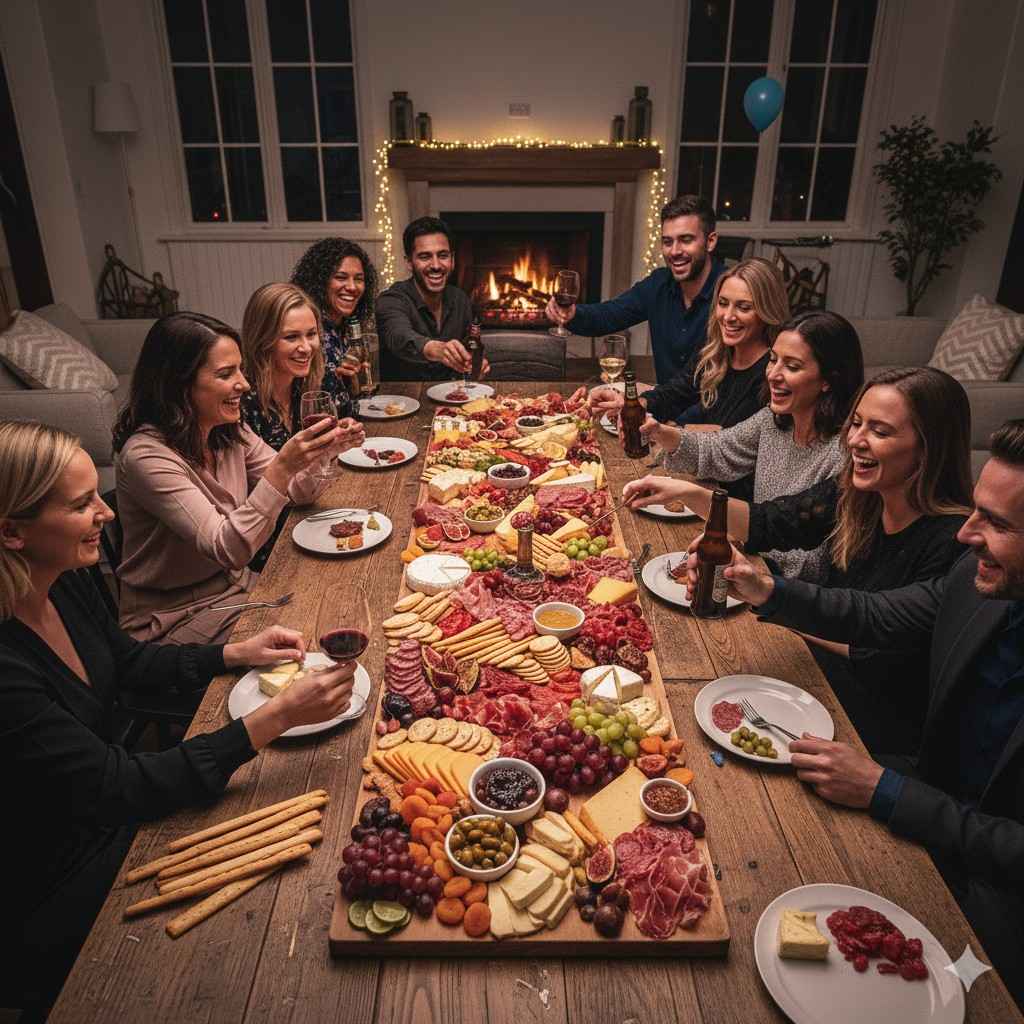
Poor Flow and Accessibility
People don’t approach a board like a chef. They approach it like drivers merging onto a busy highway.
If they can’t tell:
- Where to start
- What to grab
- How to combine things
They hesitate. And hesitation is contagious.
Ferris Bueller would absolutely skip a board that looks like it might collapse if he touches it. “You don’t stop and look around once in a while,” sure – but you also don’t want to be the first one who ruins it.
Ignoring How People Actually Eat
If eating from the board feels awkward or requires two hands and focus, people will quietly skip it. At a party, convenience always wins, and anything that slows people down becomes an easy reason to walk away hungry.
Most guests are:
- Standing
- Holding a drink
- Mid-conversation
They are not:
- Sitting
- Plating
- Strategizing flavors
If your board requires two hands, a knife, and confidence, you’ve already lost half the room.
The Rule That Changes Everything: Build for Eating, Not Aesthetics
This is where most charcuterie boards either start working – or completely fall apart. The moment you stop designing for looks and start designing for how people actually eat, everything about the board improves.
This is the single most important mindset shift:
A charcuterie board is not a centerpiece. It’s a serving system.
I build boards the same way I build barbecue spreads – for speed, comfort, and repeat visits.
The One-Hand Rule
A simple principle can make or break your board: every bite should be easy to grab and enjoy with just one hand.
Every bite should:
- Be assembled quickly
- Be eaten without looking down
- Not drip, crumble, or fall apart
If someone can’t hold a plate and eat comfortably, they’ll eat less – or not at all.
Bite-Logic Framework
The best charcuterie boards guide guests toward satisfying bites without making them think too hard. A little planning in flavor and texture goes a long way in keeping people coming back for more.
People want guidance without being told what to do.
Good boards naturally suggest:
- Creamy cheese + crunchy carrier
- Rich meat + acidic bite
- Familiar flavors with one mild surprise
Bad boards force creativity. And creativity disappears once people are juggling drinks and conversations.
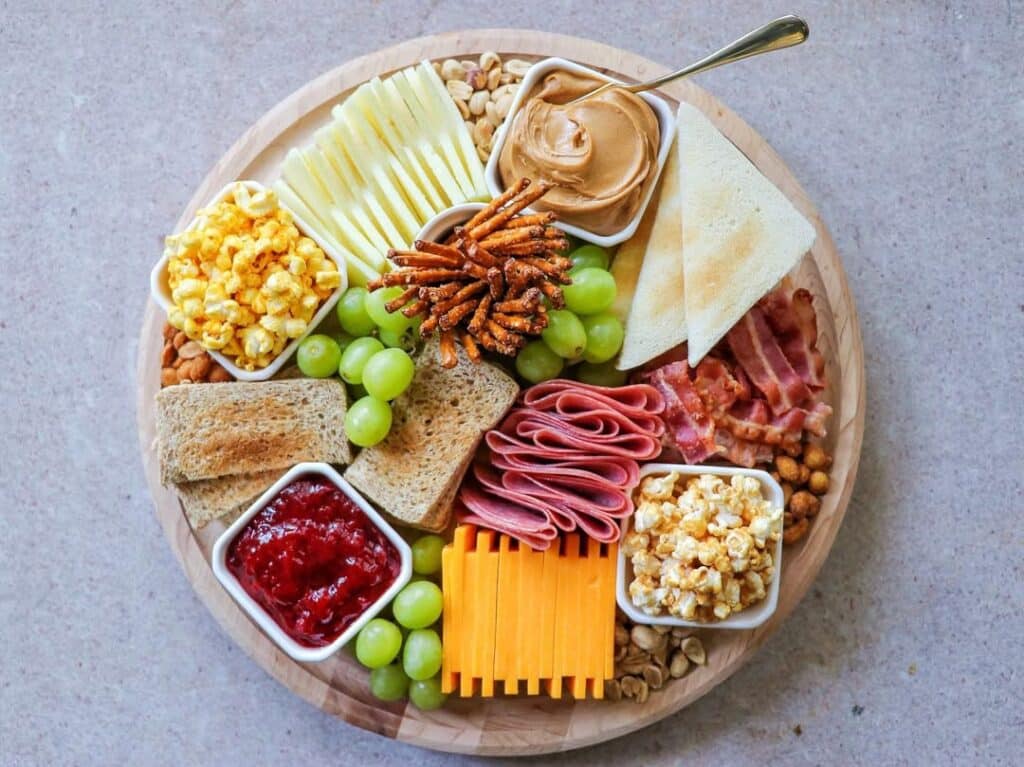
When Pretty Helps – and When It Hurts
Visual appeal can be a powerful tool, but it’s easy to overdo it. Striking the right balance ensures your board draws people in without intimidating them.
A little beauty invites people in. Too much beauty scares them off.
Inviting boards look alive.
Intimidating boards look preserved.
Hulk Hogan might love ripping apart a flawless meat sculpture. Everyone else would rather wait and let someone else go first.
The Ideal Charcuterie Board Formula (Core Components)
This is the backbone. You can adjust later, but this formula works across crowds, budgets, and occasions. Once you understand the core components, you can adjust for crowd size, budget, or occasion, but this structure works reliably every time.
It ensures a balance of flavors, textures, and ease of eating, so guests aren’t left guessing what to grab or how to combine items.
By focusing on a few key elements – cheese, meat, carriers, and fresh accompaniments – you create a board that feels generous, approachable, and satisfying, no matter the event.
This formula takes the guesswork out of building a board and sets the stage for both visual appeal and actual consumption.
Cheeses That Actually Get Eaten
You don’t need a cheese shop’s worth of options. Three cheeses is ideal.
The goal is confidence, not education.
- One soft or spreadable cheese
This is your gateway cheese. It’s friendly, forgiving, and easy to use.
- One semi-soft crowd-pleaser
This is the workhorse. Mild enough for everyone, flavorful enough to enjoy.
- One firmer cheese (pre-sliced)
Firm cheeses are fine—as long as guests don’t have to fight them.
Avoid:
- Ultra-aged “statement” cheeses
- Anything crumbly and dry
- Cheeses that require explanation
Cold cheese kills flavor.
Take it out early. Let it relax. Cheese needs time to wake up.
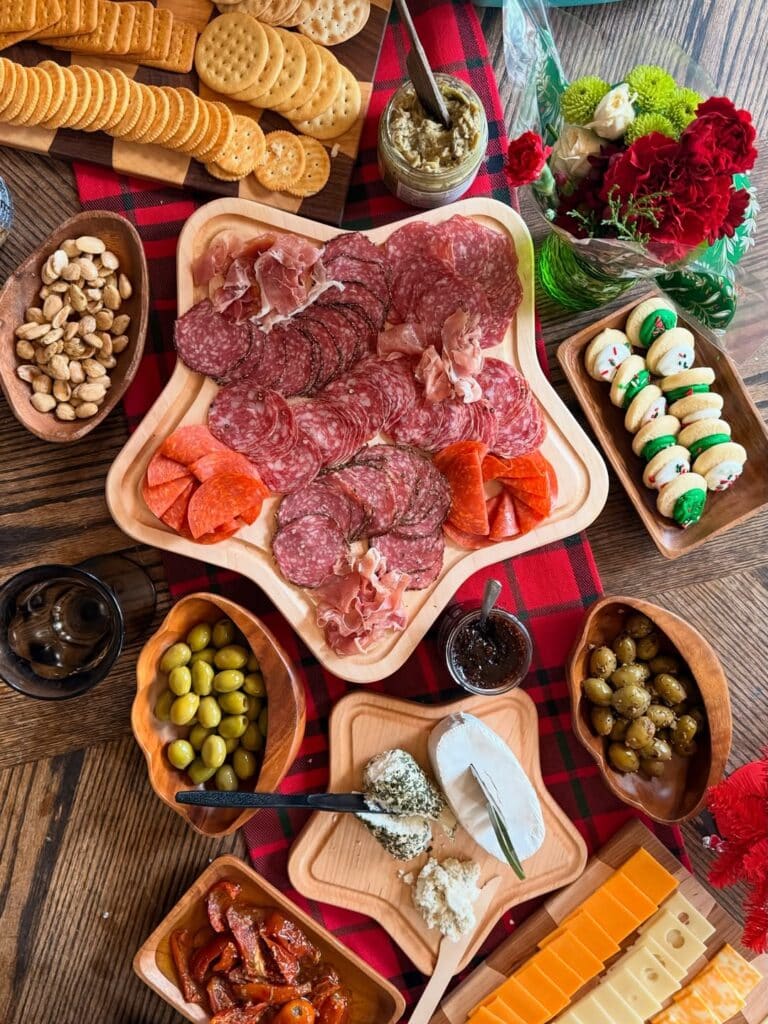
Meats That Make Sense
Meat should be:
- Easy to grab
- Easy to portion
- Easy to pair
Common mistakes include:
- Over-stacking
- Over-styling
- Turning meat into decoration
Instead:
- Fold slices loosely
- Separate portions clearly
- Keep it casual
Nobody wants to wrestle a meat rose like it’s the main event. Hulk Hogan might go full elbow-drop. Your guests will quietly walk away.
Crunch & Carriers (The Real Backbone)
While cheese and meat often steal the spotlight, the real unsung heroes of a charcuterie board are the crunch and carriers. They provide the foundation that lets guests actually assemble bites and keep coming back for more.
If the board runs out of carriers, the party stops eating.
You need:
- One sturdy cracker that won’t break
- One lighter, crispy option
- Optional bread, sliced and ready
Carrier variety matters more than cheese variety.
This is where repeat eating happens.
Fresh & Acidic Elements
Fresh and acidic elements are what prevent a charcuterie board from feeling heavy or one-note. They add brightness, balance, and contrast, keeping every bite lively and encouraging guests to keep eating.
These keep the board alive.
They:
- Cut richness
- Reset the palate
- Prevent flavor fatigue
Think:
- Grapes or berries
- Apple or pear slices
- Pickles, olives, or cornichons
- Mustard, honey, or jam
Without acid, boards get heavy fast – and heavy boards stall.
Portion Planning That Prevents Waste
As a pitmaster, wasted food hurts my soul. A good board finishes unevenly – but it finishes. A well-planned board doesn’t need to be perfectly symmetrical or overly abundant, but it should be balanced enough that most items get sampled and enjoyed.
The goal isn’t for every piece to disappear at the same time; a good board finishes unevenly, with some flavors disappearing faster than others, but the important thing is that it finishes.
Thoughtful portioning ensures guests get plenty to enjoy, nothing sits untouched, and your effort doesn’t go to waste.
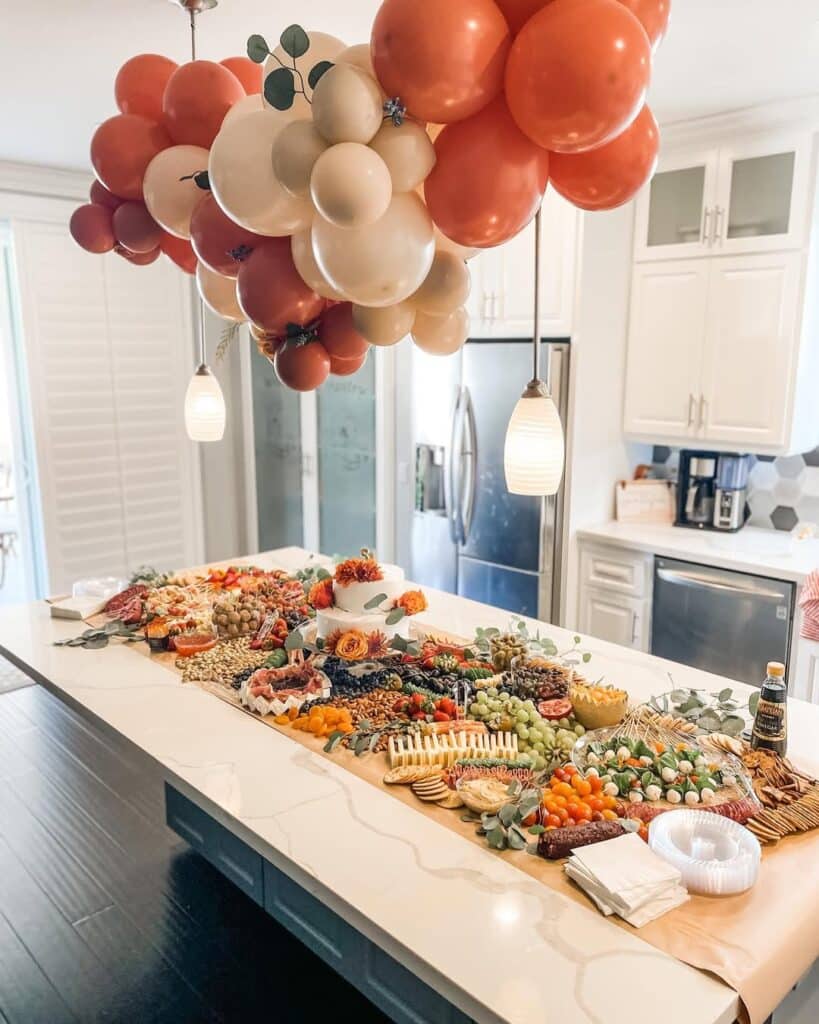
Know the Role of the Board
Before you start assembling, it’s important to understand the purpose of your charcuterie board. Knowing its role helps you choose the right quantity, variety, and layout so it actually serves your guests instead of overwhelming them.
Be honest about what the board is doing:
- Light pre-meal snack
- Main grazing option
- Supporting act
Most boards fail because they try to be everything at once.
The “Finish the Board” Ratio
A reliable way to prevent waste and keep guests satisfied is to think in terms of the “finish the board” ratio. This approach ensures that every component is proportioned to encourage eating, rather than leaving untouched piles at the end of the night.
Successful boards follow a few truths:
- More carriers than cheese
- More meat than expected
- Less variety, better balance
If one item disappears first, that’s not a mistake – that’s feedback.
Scaling Without Chaos
When feeding a crowd, bigger isn’t always better – managing scale is key to keeping the board approachable and inviting.
Instead of one massive board:
- Use two smaller ones
- Refill slowly
- Keep extras hidden
A refreshed board feels generous.
An overloaded one feels overwhelming.
How to Arrange a Charcuterie Board So People Actually Use It
Arrangement isn’t about symmetry – it’s about behavior.
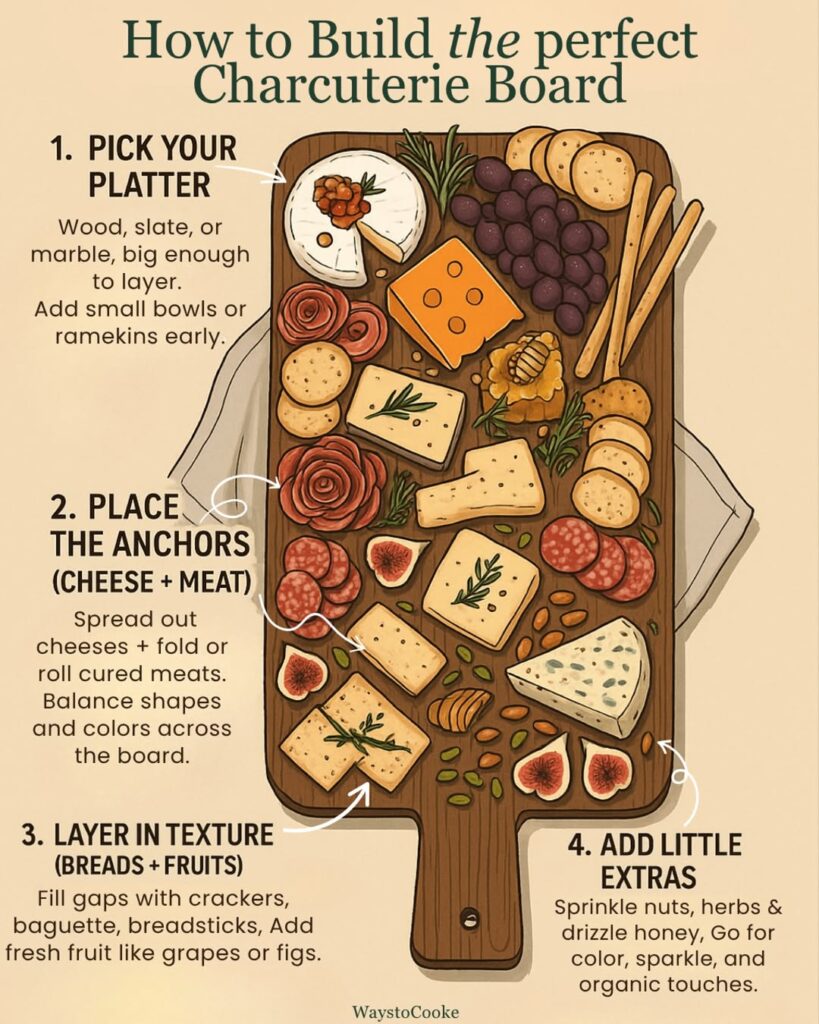
Start With Anchors
A charcuterie board can look stunning, but if it’s not arranged thoughtfully, guests won’t know where to start. Focusing on how people move and interact with the board ensures every item gets noticed and eaten.
Place:
- Cheeses
- Bowls
First. These define movement and flow.
Create Clear Eating Zones
Organizing the board into clear zones helps guests navigate it effortlessly and prevents confusion.
You want obvious areas for:
- Cheese
- Meat
- Grab-and-go items
If everything touches, nothing gets chosen.
Spacing Is Not Empty Space
Strategic spacing on a charcuterie board guides guests naturally and makes the board feel approachable rather than intimidating.
Space tells guests:
- Where to reach
- Where not to worry
Crowding signals hesitation. Breathing room invites action.
Tools Matter More Than You Think
Even the most perfectly arranged board can fail if guests don’t have the right tools to serve themselves. Providing simple utensils makes eating easy, encourages exploration, and keeps the flow of the party going smoothly.
Missing tools stop people cold.
You need:
- Enough knives for each cheese
- Spoons for spreads
- Toothpicks or small picks
- Napkins close by
Without tools, someone like Josh Baskin from Big is absolutely going in bare-handed – and then everyone freezes.
Common Charcuterie Mistakes (And Easy Fixes)
Even experienced hosts can fall into common charcuterie pitfalls that keep a board from being enjoyed. Some boards look too pristine, making guests hesitant to touch anything, while others are cluttered with ingredients that are more decorative than edible.
Timing mistakes – like serving cold cheese, dry meat, or stale crackers – can derail an otherwise perfect spread.
The good news is that these problems are easy to fix: break the first piece yourself to give permission, keep the layout approachable, skip inedible garnishes, and serve items at the right temperature.
Paying attention to these details transforms a board from intimidating or forgettable into one that invites interaction and gets eaten.
The Board No One Wants to Touch
Some boards fail simply because guests don’t feel comfortable starting the first bite.
Fix it by:
- Breaking the first piece yourself
- Leaving obvious gaps
- Making it look “used”
People follow permission.
Ingredients That Look Better Than They Taste
Not every ingredient that looks fancy belongs on a board – if it doesn’t taste good, it’s just taking up space.
Skip:
- Decorative but inedible herbs
- Dried citrus wheels
- Ultra-niche flavors
This isn’t a tasting exam.
Timing and Temperature Errors
Even a perfectly planned board can flop if it’s served at the wrong time or temperature.
Put the board out:
- When people are ready
- Not when you’re done styling
Cold cheese, dry meat, and stale crackers kill momentum fast.
Make It Work for Real-Life Situations
A charcuterie board isn’t one-size-fits-all, and tailoring it to the occasion makes all the difference between a board that dazzles and one that flops.
For casual hangouts, keep it simple and familiar – easy-to-eat cheeses, approachable meats, and plenty of carriers so guests can graze freely without thinking.
Dinner parties call for a slightly more refined approach: smaller portions, sharper flavors, and thoughtful pairings that complement the meal rather than overpower it.
When serving mixed crowds, like families or groups with kids, balance is key – offer safe, kid-friendly options alongside bolder flavors for adults, ensuring everyone has something they’ll enjoy.
Thinking about the real-life context of your board keeps it practical, approachable, and guarantees that it gets eaten, not just admired.
Casual Hangouts
- Familiar flavors
- Big portions
- Zero pressure
Dinner Parties
- Lighter board
- Sharper accents
- Smaller scale
Mixed Crowds
- Kid-friendly options
- Adult depth
- No judgment
Pairing Drinks with Your Board
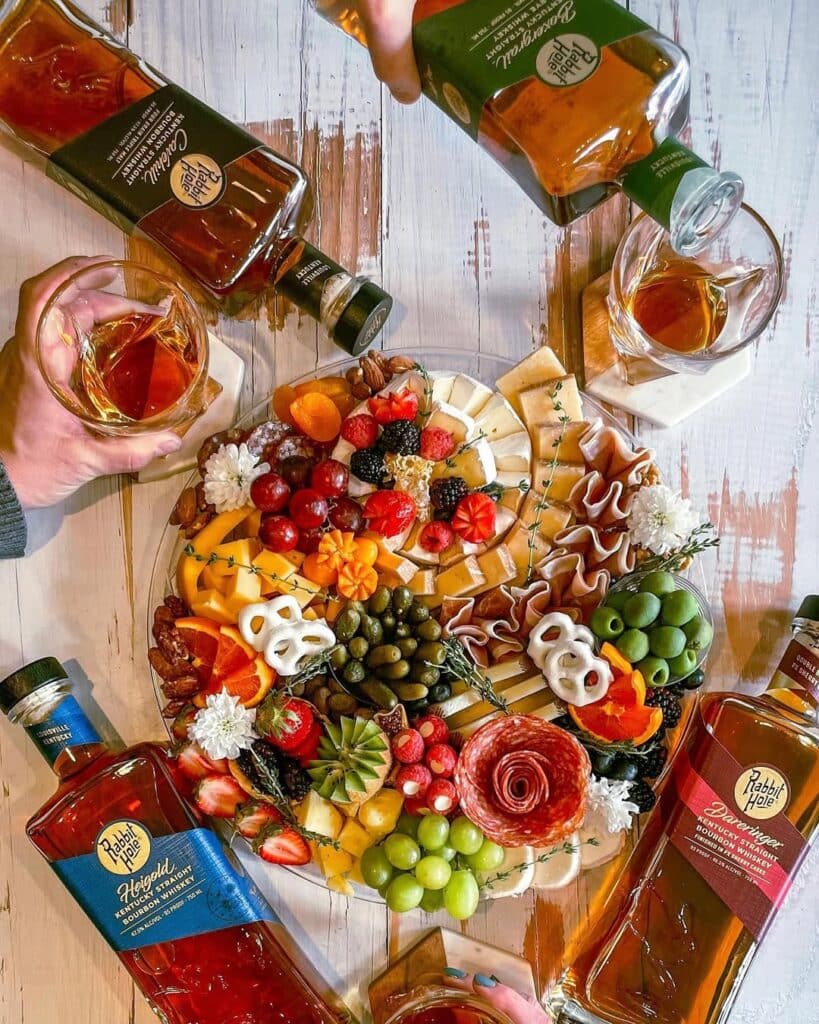
A great charcuterie board isn’t complete without thoughtful drink pairings. Wine, beer, or even sparkling water can enhance flavors and encourage repeat bites. Light, crisp beverages cut richness, while malty beers complement salty meats.
Planning simple drink options keeps guests sipping, eating, and talking – making the board a social hub, not just a snack.
Seasonal & Local Ingredients
Using seasonal and local ingredients adds freshness and flavor while keeping the board dynamic. Strawberries in spring, roasted figs in fall, or locally cured meats elevate both taste and appeal.
Guests notice thoughtful choices, and seasonal items naturally pair with cheeses and carriers, keeping the board approachable yet interesting throughout the year.
Adding a Sweet Element Without Overdoing It
A touch of sweetness balances richness and acidity on your board, but it should never dominate. Think honey drizzles, dried fruits, or chocolate pieces strategically placed.
Sweet elements refresh the palate, encourage creative bites, and give the board a playful edge without distracting from its savory backbone.
The Psychology of Accessibility
How items are placed affects whether people eat them. Easy-to-reach sections, low piles, and small portions invite engagement. Guests avoid intimidating arrangements, but placing a few “highlight” items in plain sight encourages exploration.
Understanding how people approach and perceive the board ensures your hard work gets eaten, not just admired.
FAQ: Charcuterie Boards That Actually Get Eaten
1. How many cheeses and meats should I include on a board?
For most gatherings, three cheeses and two types of meat are ideal. This keeps it approachable, prevents overwhelm, and ensures guests can combine flavors easily without confusion.
2. How far in advance can I prep a charcuterie board?
Prep most ingredients the day before, but slice cheeses, arrange meats, and add fresh elements just before guests arrive. This keeps everything fresh and visually appealing.
3. What are the essential tools I need for guests to serve themselves?
Make sure to provide knives for cheeses, spoons for spreads, toothpicks, and napkins nearby. Missing tools slow down eating and can make guests hesitate to dig in.
4. How can I make my board approachable for mixed crowds or kids?
Include kid-friendly options like mild cheeses, crackers, and fruit, while keeping bolder flavors for adults in separate zones. Clear zones and easy-to-grab bites ensure everyone can enjoy without intimidation.
A Charcuterie Board Should Feel Used – and Loved
The ultimate goal of a charcuterie board isn’t perfection – it’s enjoyment. A board that’s inviting, approachable, and actually eaten is always more successful than one that looks flawless but untouched.
The best boards:
- Look slightly messy
- Empty unevenly
- Get refilled once
- Get remembered later
A successful charcuterie board isn’t perfect – it’s practical.
Like good barbecue, it’s built to disappear.
If people eat it, talk through it, and come back for more, you nailed it.
Featured image credit: @loverboardsoc
