
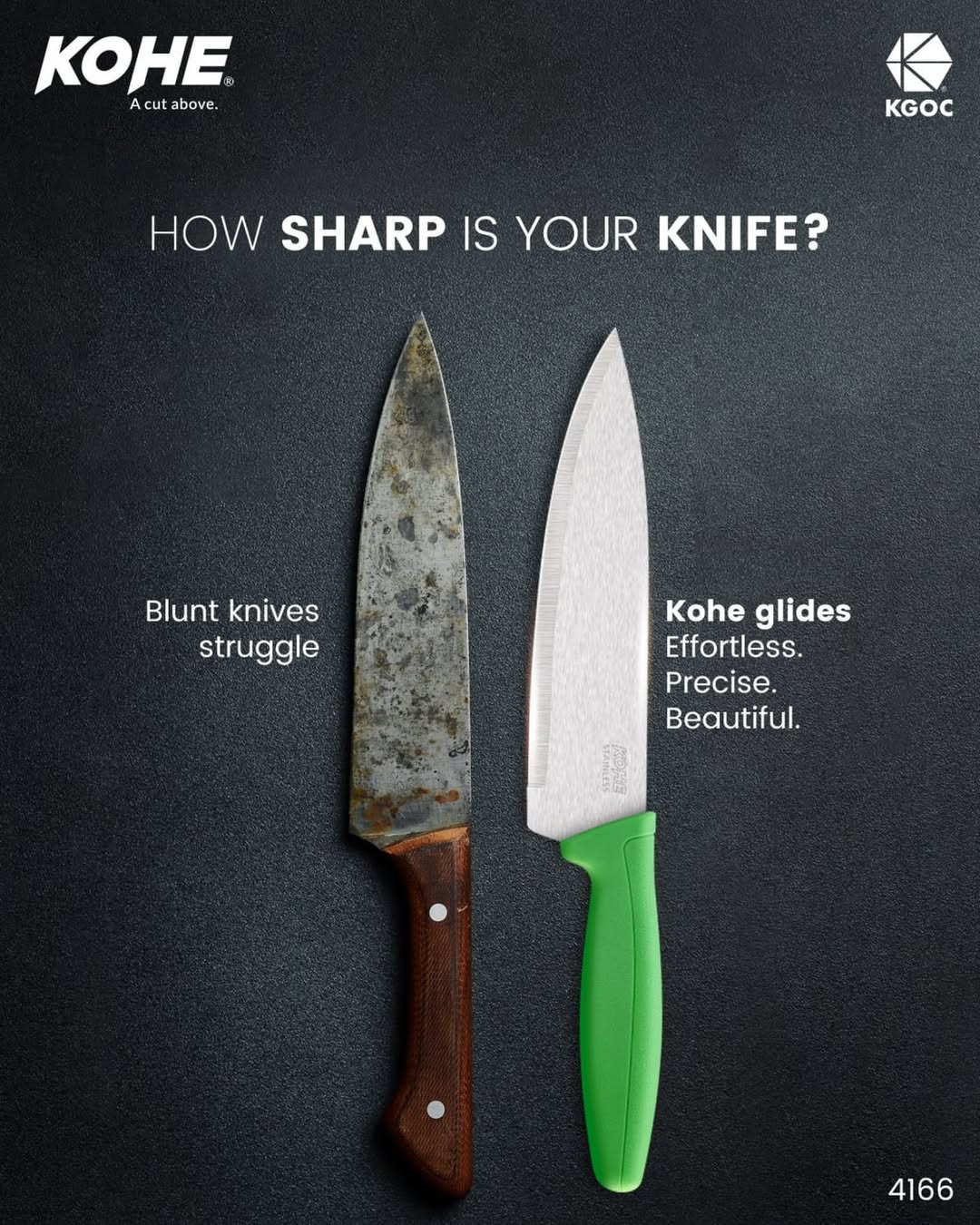
Trying to cut a tomato with a dull knife is enough to test your patience – bad tools make simple prep feel like hard labor. In the grill world, we obsess about sharp edges and good steel.
Kitchen knives are no different: they’re the backbone of every cook’s prep game. A sharp, balanced blade doesn’t just cut food – it makes cooking fun.
This review is all about practical knives you actually want out on the counter every day – from reliable budget champs to premium blades that feel like an extension of your hand.
I’ll walk you through what each knife shines at, and why you might choose it for your kitchen.
How We Picked the Best Everyday Kitchen Knives
Before we stab into the reviews, here’s how we judged them.
We cared about:
- Edge sharpness & retention – Does it stay sharp through test after test?
- Balance & feel in hand – Is it comfortable even when you’re dicing for dinner?
- Versatility – Can it handle meat, veg, herbs, and everything between?
- Value for money – Not all great knives need a mortgage.
- Everyday use – This ain’t a specialty blade parade – these are daily warriors.
Alright – let’s slice.
Best Kitchen Knives for Everyday Cooking

1. Dalstrong Professional Chef Knife – Shogun Series – Best All-Around Knife
If I had to pick just one knife to stock my kitchen for good, this would be it. The Dalstrong Shogun Series feels balanced right out of the box – not too heavy, not too light.
The blade is sharp from day one, and it holds its edge so well that you won’t be constantly reaching for the sharpener. For everyday cooking – slicing steaks, chopping herbs, carving chicken – it handles it all like a seasoned pitboss at a BBQ.
This is a modern knife for the serious home cook who wants a little extra swagger in the kitchen.
Why it’s great: Razor sharp, excellent edge retention, works for nearly every task
Keep in mind: Premium price tag means serious commitment
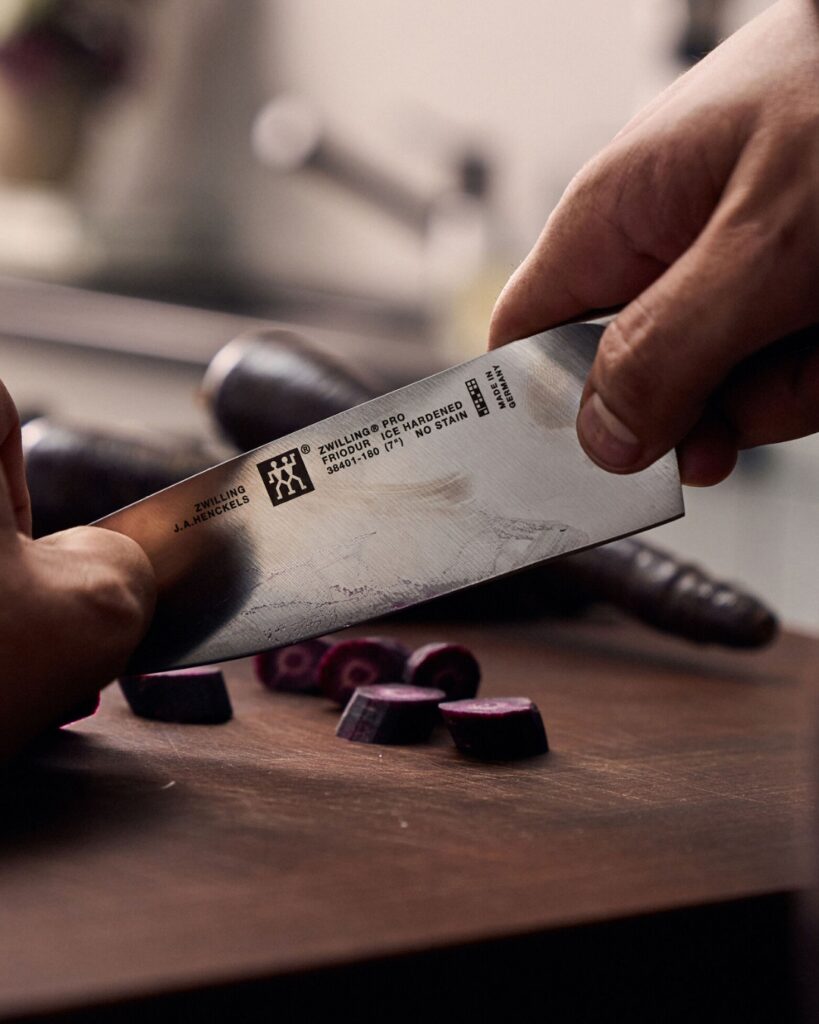
2. Zwilling Professional “S” Chef’s Knife – Best Midrange Everyday Knife
Zwilling is a name any gearhead cook will nod at.
Its Professional “S” Chef’s Knife sits right in that sweet spot – premium quality without being outrageous. The steel feels rock-steady under your grip and it slides through veg, meat, and everything in between.
For everyday cooking, it’s flexible and reliable. It’s one of those knives you reach for first, day after day.
Why it’s great: Trusted German engineering, great balance
Why some might pass: Slightly heavier than ultra-light Japanese blades
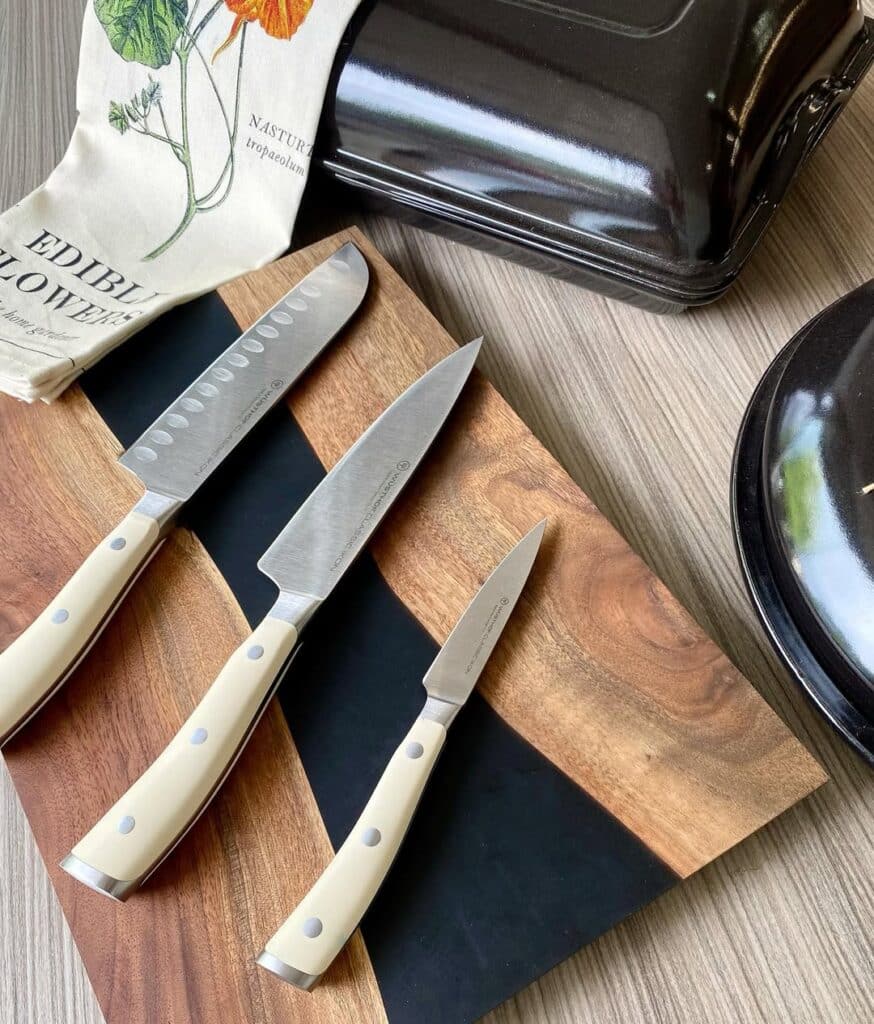
3. Wusthof Classic Ikon Santoku Knife – Best Santoku for Everyday Prep
Santoku knives are like the Swiss Army knives of the kitchen: slightly shorter, incredibly nimble, and perfect for everyday slicing, dicing, and rocking cuts.
This Wusthof Classic Ikon Santoku has that crisp edge you want and a shape that invites you to slice down, push forward, or rock back and forth without fuss.
If your kitchen rhythm is veg-heavy (like for stir-fries and salads), this blade dances.
Why it excels: Comfortable, versatile, easy to control
Fun fact: Santokus feel faster for veg tasks than big chef’s knives
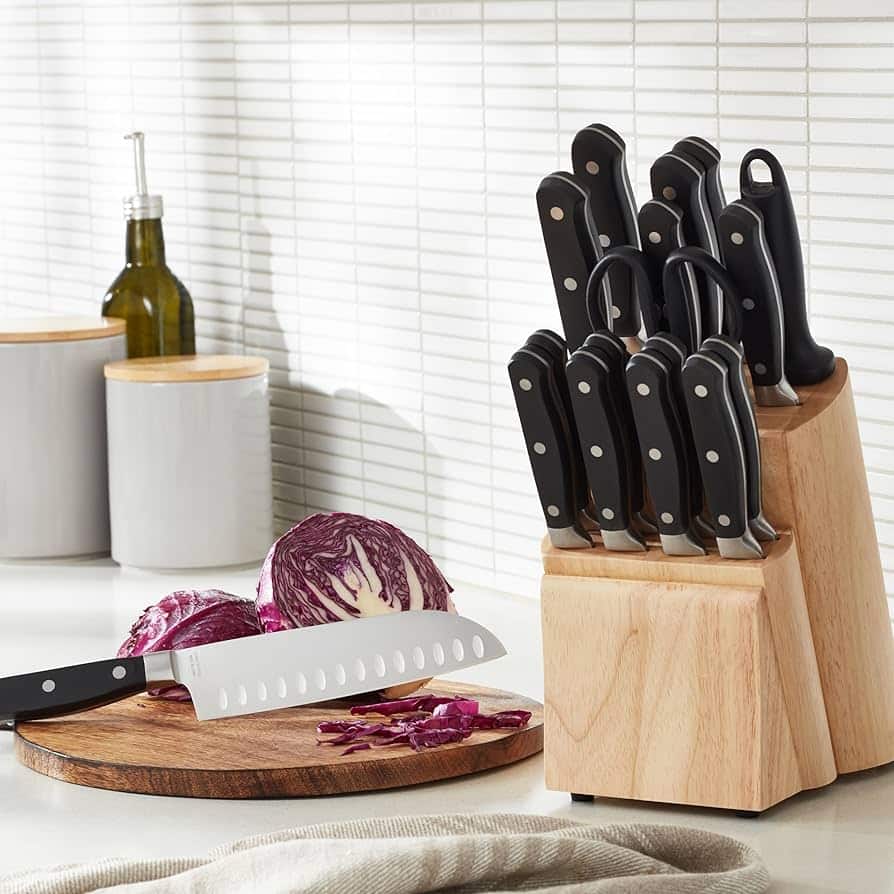
4. Amazon Basics 18‑Piece Knife Set – Best Budget Knife Set
Not everyone’s wallet wants to talk about premium steel, and that’s okay. For everyday cooks on a budget – or folks just starting out – this set hits the sweet spot.
You get a block with an 8” chef’s knife, paring knife, utility blade, and more. They’re not heirloom steel, but they’ll slice and dice without screaming loud enough to wake the kids.
Great for apartment kitchens, beginners, or backup tools.
Why it’s good: Complete set, great value
Don’t expect: Razor-thin professional precision
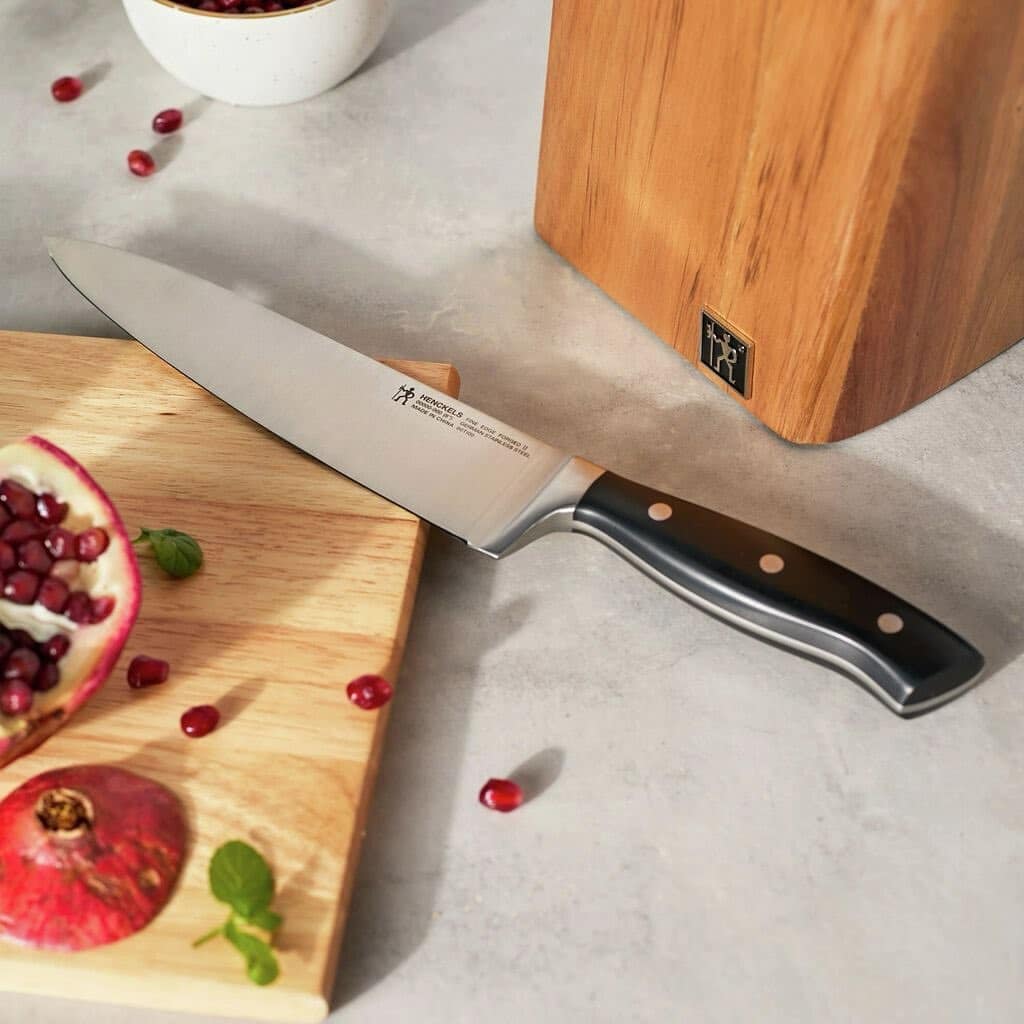
5. Henckels Dynamic 3-Piece Knife Set – Best Simple Starter Trio
If you want quality without fuss, this Henckels set gives you the basics: chef’s knife, utility blade, and paring knife. Each blade is hi-carbon stainless steel and ready for everyday tasks.
It’s like having a good starter pit crew – covers most jobs you’ll throw at it, and holds up better than generic blades.
This set isn’t showy – but it’s steady and dependable.
Why it’s worth it: Simple, solid, affordable
Heads up: Only three knives – no bread or steak knife here
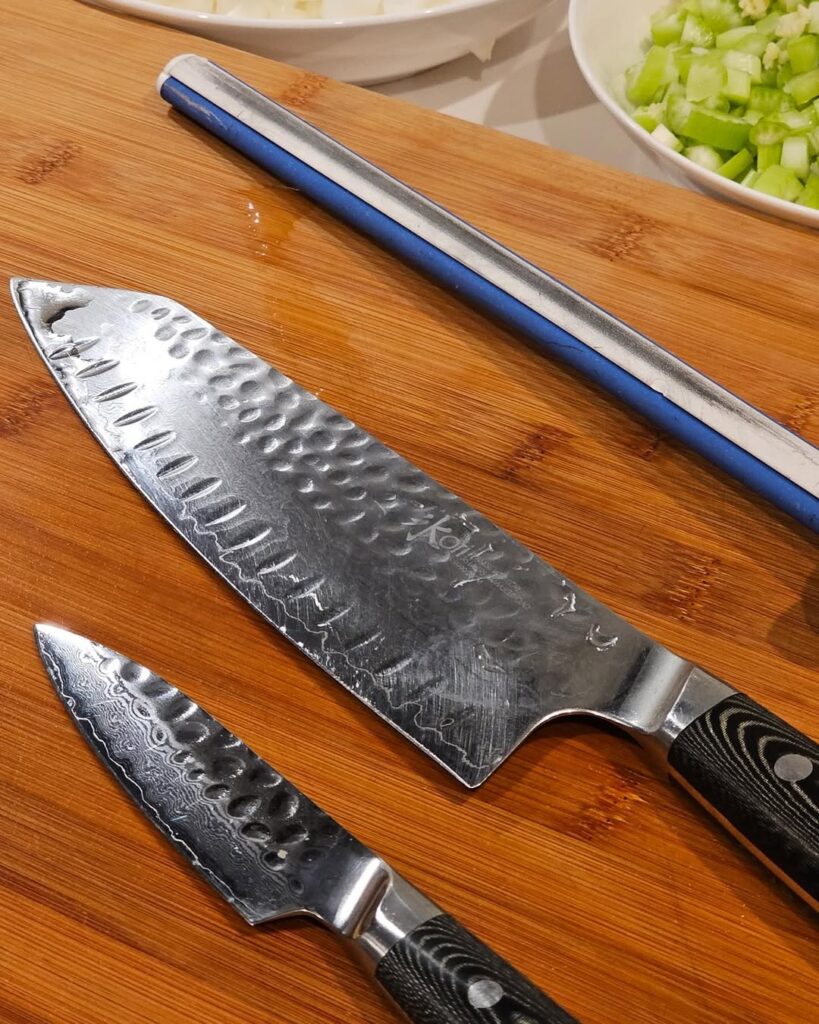
6. Kori Artisan 8″ Chef Knife – Best Everyday Chef Knife (Traditional Look)
This one comes with a bit of buzz and a beautiful hammered Damascus pattern – the kind of knife that sparks joy when you pull it from the block.
Designed for everyday cuts – veg, poultry, steaks – it’s got that classic chef’s knife feel. The wide blade gives extra knuckle room and the micarta handle feels great in hand.
Just be sure you’re getting the real deal and not just looks – always check specs and reviews before you click.
Why it stands out: Beautiful design, comfortable handling
Note: Some folks online question authenticity – research before buying

7. Wüsthof Classic 8″ Chef’s Knife – Everyday Workhorse
Wüsthof’s Classic line is a household name for a reason: it’s the knife you actually use. Its forged, high-carbon stainless blade stays sharp through regular use and the full tang gives it superb balance.
This is the “do-everything” knife: veg, meat, herbs, fruit, you name it. It’s not flashy, it’s just trustworthy.
Pro cooks and home cooks both swear by this one.
Why it’s reliable: Legendary durability, balanced feel
Heads up: Hand wash only – dishwasher will dull it

8. Shun Classic 8″ Hollow Ground Edge Chef’s Knife – Best Everyday Japanese Blade
Here’s where things get fun. Shun knives have this buttery glide when you slice thanks to the hollow ground edge – dimples in the blade that fight food sticking and make chopping faster.
For everyday cooking, this makes a real difference with onions, tomatoes, and sticky herbs. It’s sharp right out of the box and stays that way with care.
This is a blade you learn to trust instinctively – once you use it, you notice the difference.
Why it’s slick: Food doesn’t cling to the blade
Care tip: Keep it dry and sharp – Japanese steel likes respect
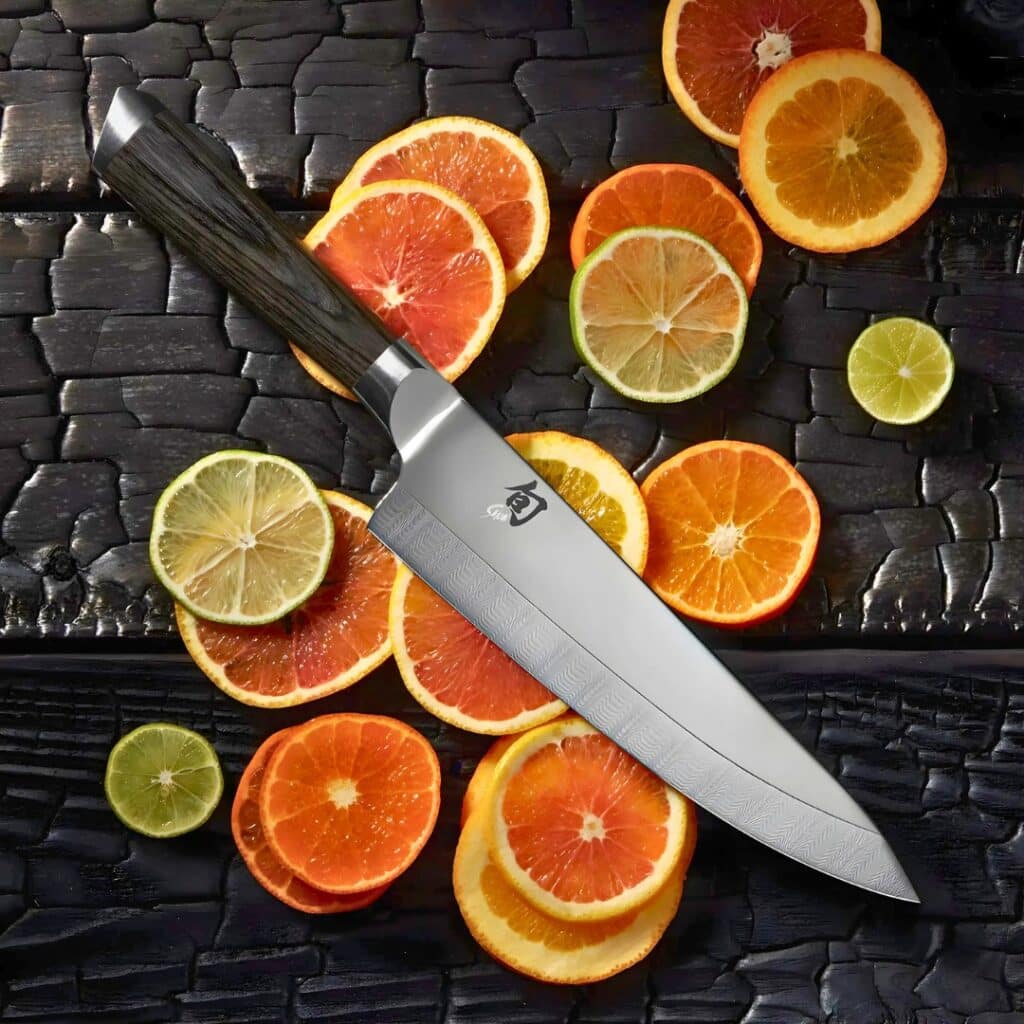
9. Shun Kagerou 8″ Chef Knife – Best Everyday Premium Performer
If you like your blades with a little art and science, the Shun Kagerou blends a dual-core Damascus edge with light weight and razor accuracy.
It’s slightly lighter than many Western knives but cuts with authority. For every day that involves a mix of proteins and veg, this knife feels like it’s reading your mind.
It’s the kind of knife that gets passed down, not tossed in a drawer.
Why it excels: Sharp, light, great balance
Investment level: Higher price point
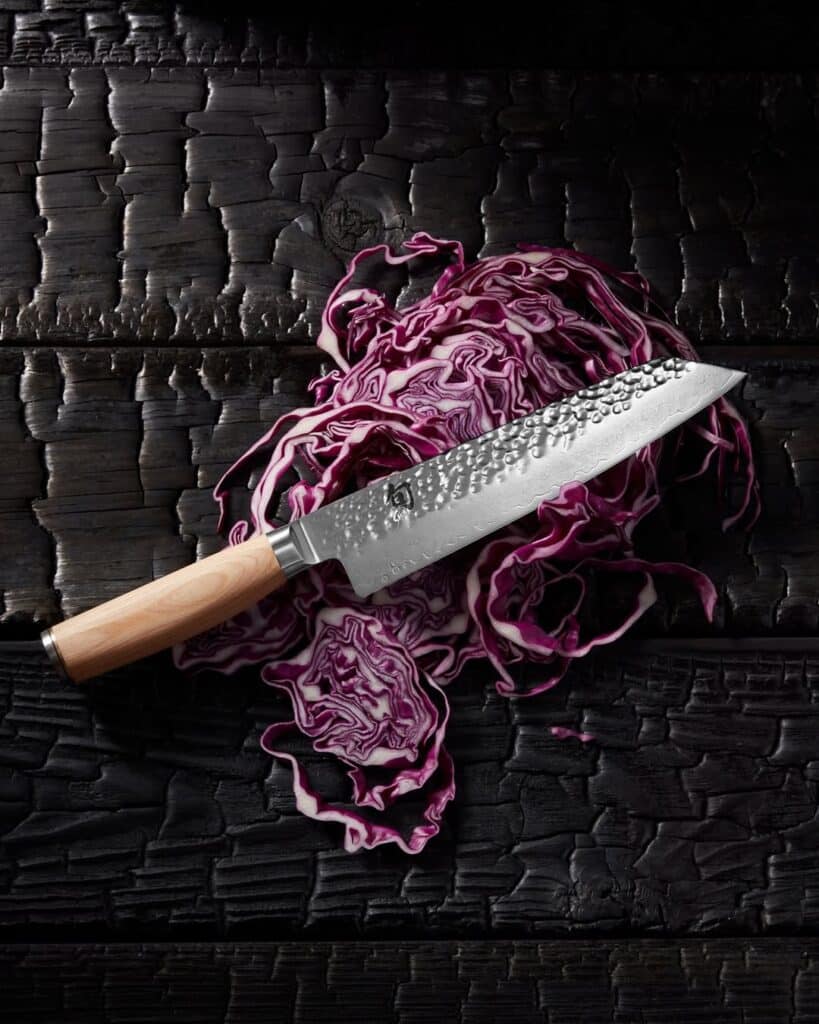
10. Shun Premier 10″ Chef Knife – Best Large Everyday Blade
Sometimes you just need length. If you’re prepping big cuts – roasting racks, large melons, whole chickens – this 10″ chef knife gives you reach without sacrificing control.
It’s a Japanese design with modern performance: great edge retention, smooth rocking cuts, and a blade that feels confident in your grip.
If you cook for a crew, this is a blade that never hesitates.
Why it’s powerful: Long, versatile, excellent for big jobs
Note: Heavier than smaller chef knives
Buying Guide: How to Choose the Best Kitchen Knife
Here’s a quick pitmaster breakdown to help with your pick:
- Blade Material: High-carbon stainless stays sharp longer and resists rust.
- Length:
o 6–8″ for everyday tasks and comfort
o 10″ for larger items and big prep sessions
- Weight & Balance: You want a knife that feels like an extension of your hand, not a detached tool.
- Handle Comfort: Different materials (wood, micarta, POM) feel different. Go with what grips confidently.
Chef’s Knife vs Santoku vs Utility Knife
- Chef’s Knife: The everyday workhorse – curves for rocking cuts and length for reach.
- Santoku: A bit shorter and lighter; perfect for veg and quick chopping.
- Utility Knife: Smaller tasks – trimming meat, slicing small fruits.
If you’re building a starter knife set, aim for at least a chef’s knife and a utility blade.
Why Sharp Knives Are Actually Safer Than Dull Ones
Here’s a truth that surprises a lot of folks at the grill: a sharp knife is safer than a dull knife. Sounds backwards, right? But when a blade is dull, you’re forced to push harder, and that’s when slips happen.
A sharp knife bites into the food immediately, giving you control, precision, and predictability.
Think of it like slicing brisket – you let the blade do the work, not your arm. With a sharp kitchen knife, your cuts are cleaner, your hands stay relaxed, and you’re less likely to lose control mid-slice.
Dull knives skate across tomato skins, onion layers, and chicken skin, which is exactly how fingers get nicked.
Bottom line: less force = fewer accidents. Keep your knives sharp, respect the blade, and your kitchen stays safer and calmer – even during hectic weeknight prep.

The Hidden Role of Knife Balance (And Why Your Wrist Cares)
Most people obsess over sharpness, but knife balance is the real secret sauce for everyday comfort. A well-balanced kitchen knife feels neutral in your hand – not blade-heavy, not handle-heavy.
When the balance point sits right at the bolster or pinch grip, your wrist doesn’t have to fight gravity all night long.
Ever finish prep with a sore wrist or forearm? That’s usually bad balance, not bad technique. A properly balanced knife lets you chop longer, smoother, and with less fatigue. This matters even more if you cook often or prep big meals.
In pitmaster terms: balance is like a well-tuned smoker — you don’t notice it when it’s right, but you suffer when it’s off. When choosing kitchen knives, pick one that feels natural the moment you lift it. Your wrist will thank you tomorrow.
How Your Cutting Board Can Ruin (or Save) Your Knife
You can buy the best kitchen knives in the world and still dull them fast if your cutting board is wrong. Glass, marble, and granite boards might look fancy, but they’re absolute edge killers.
One session on those surfaces can undo hours of careful sharpening.
What you want is wood or rubber. Maple, walnut, bamboo (with quality glue), or soft composite boards absorb impact and protect your blade. It’s like cutting on end-grain wood instead of concrete – your knife edge survives longer, and your cuts stay clean.
Here’s the rule of thumb: if your board sounds loud when you cut, it’s too hard. A good board gives a soft, muted thud.
Pair the right board with quality kitchen knives, and you’ll sharpen less, cut better, and enjoy prep a whole lot more.
Why One Great Knife Beats a Drawer Full of Cheap Ones
A lot of kitchens are stuffed with mismatched knives that never get used. Here’s the reality: one great knife beats five bad ones every time.
With a solid chef’s knife, you can handle 90% of everyday cooking – slicing meat, chopping veg, mincing herbs, even portioning poultry.
Cheap knives dull fast, feel awkward, and end up buried in drawers. A quality blade, on the other hand, stays sharp longer, feels good in hand, and earns its place on the counter. You build muscle memory, confidence, and consistency.
It’s like owning one dependable grill instead of juggling flimsy throwaways. Invest in one knife you trust, learn how it moves, and everything in the kitchen starts flowing better.
Fewer tools, better results – that’s smart cooking.
How Temperature Affects Knife Performance (Yes, Really)
Here’s something most people don’t think about: temperature affects how your knife cuts. Cold foods – especially meat – are firmer and actually easier to slice cleanly. That’s why pitmasters often chill brisket slightly before slicing.
The same logic applies in the kitchen.
Warm tomatoes, soft cheese, or room-temp butter can cling to the blade and tear instead of slice. A sharp knife helps, but temperature control helps even more.
Chill proteins before trimming, refrigerate soft produce briefly, and suddenly your cuts look cleaner and more professional.
This isn’t fancy chef nonsense – it’s practical cooking physics. Pair sharp kitchen knives with smart food temperature, and you’ll get cleaner slices, better presentation, and less frustration during prep.
When to Retire a Knife (And When It Just Needs Love)
Not every dull knife is a dead knife. Before you toss a blade, ask this: is it dull, or is it neglected? Many kitchen knives just need proper sharpening, honing, and a little care. A quality blade can last decades if treated right.
That said, there are signs it’s time to move on. Cracked handles, bent blades, chips that won’t sharpen out – those are deal breakers.
But if your knife just struggles with tomatoes or herbs, chances are it’s begging for a sharpening session, not the trash.
Think of knives like grills – maintenance matters. Respect your tools, sharpen them when needed, and they’ll keep showing up for you, meal after meal.
FAQ
Q: What’s the best knife for everyday cooking?
A: A chef’s knife around 8” – a perfect balance of versatility and control.
Q: How often should I sharpen my kitchen knife?
A: Hone weekly at a minimum; full sharpening every few months depending on use.
A: If you cook every day, absolutely – they make prep smoother and more enjoyable.
Final Verdict
Here’s the bottom line:
- Best all-around: Dalstrong Shogun
- Best value midrange: Zwilling Professional
- Best everyday Japanese: Shun Classic 8″
- Best budget set: Amazon Basics Knife Set
A good knife isn’t just a tool – it’s a partner in the kitchen. Once you find one that feels right, meal prep becomes less of a chore and more like starting a good fire on a cold morning.
Featured image credit: @kohekgoc
