

Let me paint you a picture.
It’s 2:17 a.m.
You’re in pajama pants.
It’s 48 degrees outside.
And you’re squatting next to your smoker whispering, “Why are you at 310°F?!”
If you’ve been there, welcome to the club.
Low-and-slow barbecue is romantic… until you’re babysitting a fire like it’s a newborn that refuses to sleep. That’s where set-it-and-forget-it smoking comes in. And if we’re talking about the pioneers of that movement, we have to talk about BBQ Guru.
Today we’re diving deep into the tools that let you cook like a pitmaster… without living next to your smoker.
What “Set It and Forget It” Smoking Really Means
First, let’s clear something up.
Set-it-and-forget-it smoking doesn’t mean you don’t care.
It means you control the fire instead of the fire controlling you.
Great barbecue depends on one thing more than anything else:
Consistent temperature over time.
Not magic rubs.
Not fancy sauces.
Not secret wood from a mystical forest.
Temperature.
When heat swings wildly, three bad things happen:
- Meat cooks unevenly
- Moisture evaporates too fast
- Bark formation gets unpredictable
And when you’re cooking a brisket for 12–16 hours, “unpredictable” is not your friend.
Traditional smokers rely on manual vent adjustments. That works… until it doesn’t. Wind shifts.
Charcoal burns unevenly. You open the lid one too many times.
That’s why smart pitmasters moved toward automatic temperature control systems.
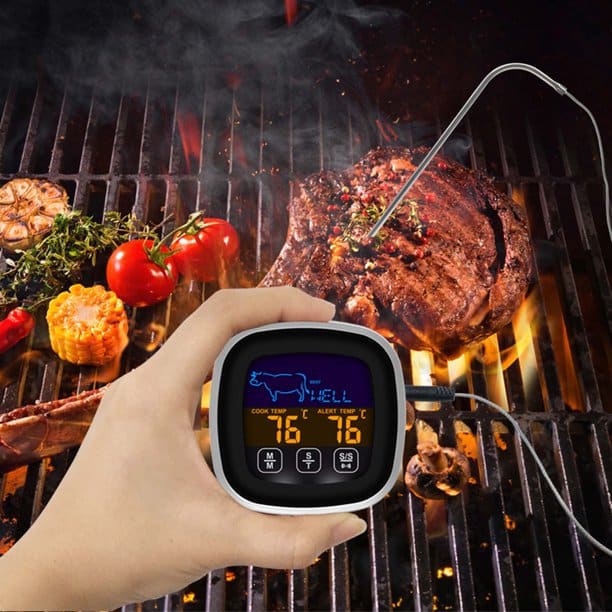
How Automatic Temperature Controllers Actually Work
Here’s the simple version.
Fire needs oxygen.
Oxygen controls heat.
So instead of constantly adjusting vents by hand, these systems do it for you.
A typical system has three parts:
- A temperature probe clipped inside your smoker
- A control unit that reads the temp
- A blower fan that feeds air into the fire when needed
When the temperature drops below your target, the fan kicks on and feeds oxygen to the charcoal.
When it reaches your set temperature, the fan slows or stops.
That’s it.
It’s a feedback loop.
And it’s far more precise than eyeballing vent openings while half asleep.
The result?
Steady heat. Cleaner smoke. Better texture.
It works beautifully on:
- Kamado grills
- Drum smokers
- Bullet smokers
- Even many offset smokers
Once you understand airflow, you understand why these systems are game changers.
BBQ Guru: The Pioneer of Hands-Off Smoking
If automatic pit control had a Hall of Fame, BBQ Guru would be first ballot.
They’ve been building temperature control systems long before WiFi apps were cool. Back when remote monitoring meant standing near a window and squinting.
What makes BBQ Guru special?
Reliability. Simplicity. Proven results.
Their systems are built around one principle:
Control airflow, control the fire.
Popular models like the DigiQ and UltraQ let you:
- Set a target temperature
- Monitor meat temps
- Maintain steady pit heat for 12+ hours
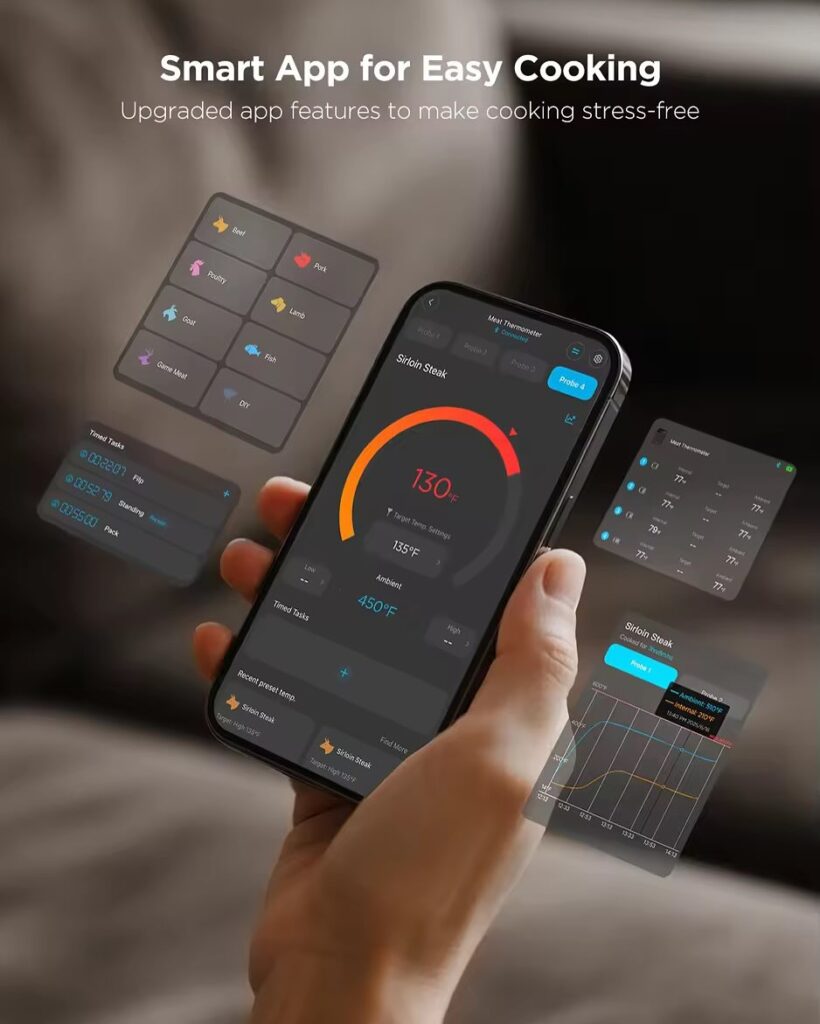
The newer WiFi-enabled units even allow monitoring from your phone.
That means:
You can sleep.
You can run errands.
You can watch the game without sprinting outside every 20 minutes.
And here’s something backyard cooks don’t realize:
BBQ Guru systems often improve fuel efficiency.
Because instead of wild temperature spikes that burn through charcoal, you get controlled airflow. Slower burn. Longer cooks. Fewer refuels.
I’ve run overnight briskets where the temperature barely moved five degrees in either direction.
That’s not luck.
That’s controlled airflow done right.
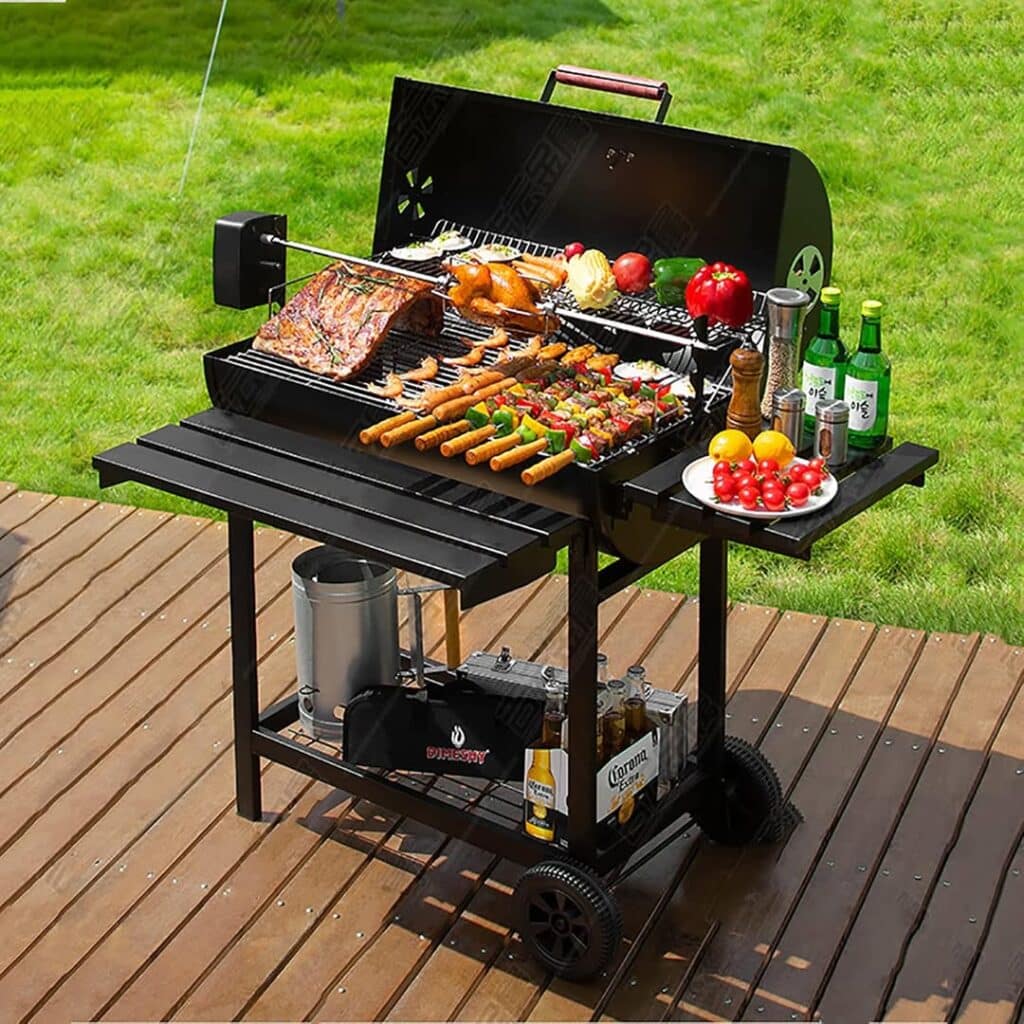
Other Heavy Hitters in Temperature Control
Now, BBQ Guru isn’t alone. The market has grown. Competition pushed innovation.
And that’s good for all of us.
Flame Boss
Flame Boss leans heavily into cloud connectivity. Their app interface is clean and modern.
Great for cooks who love monitoring graphs and getting push alerts.
Strong WiFi performance.
Easy setup.
Very beginner friendly.
FireBoard Drive
This one’s for the data nerds. And I say that with love.
FireBoard gives you detailed cook graphs and deep data tracking. If you like analyzing temperature curves the way some folks analyze stock charts, you’ll love it.
It’s powerful.
It’s precise.
It’s slightly more advanced.
ThermoWorks Signals + Billows
ThermoWorks is famous for probe accuracy. Pair their Signals unit with the Billows fan, and you get serious temperature control with exceptional probe precision.
If probe accuracy matters to you, this combo delivers.
PitmasterIQ
More budget friendly.
More straightforward.
Less fancy, but it works.
Not everyone needs WiFi dashboards. Some folks just want stable heat without breaking the bank.
Smart Thermometers: The “Lite” Version
Let’s talk about something important.
A smart thermometer is not the same thing as a BBQ Guru or airflow controller.
Thermometers monitor.
Controllers control.
Devices like:
- MEATER
- ThermoWorks Smoke
- Inkbird WiFi units
These let you monitor pit and meat temperature remotely. Great tools. I use them.
But they don’t regulate airflow.
So if your smoker spikes, they’ll alert you… but you still have to fix it.
Think of them as security cameras.
Controllers are the security guards.
If you’re new to smoking, a smart thermometer is a great first upgrade. But if you want true set-it-and-forget-it smoking, you’ll want airflow control.
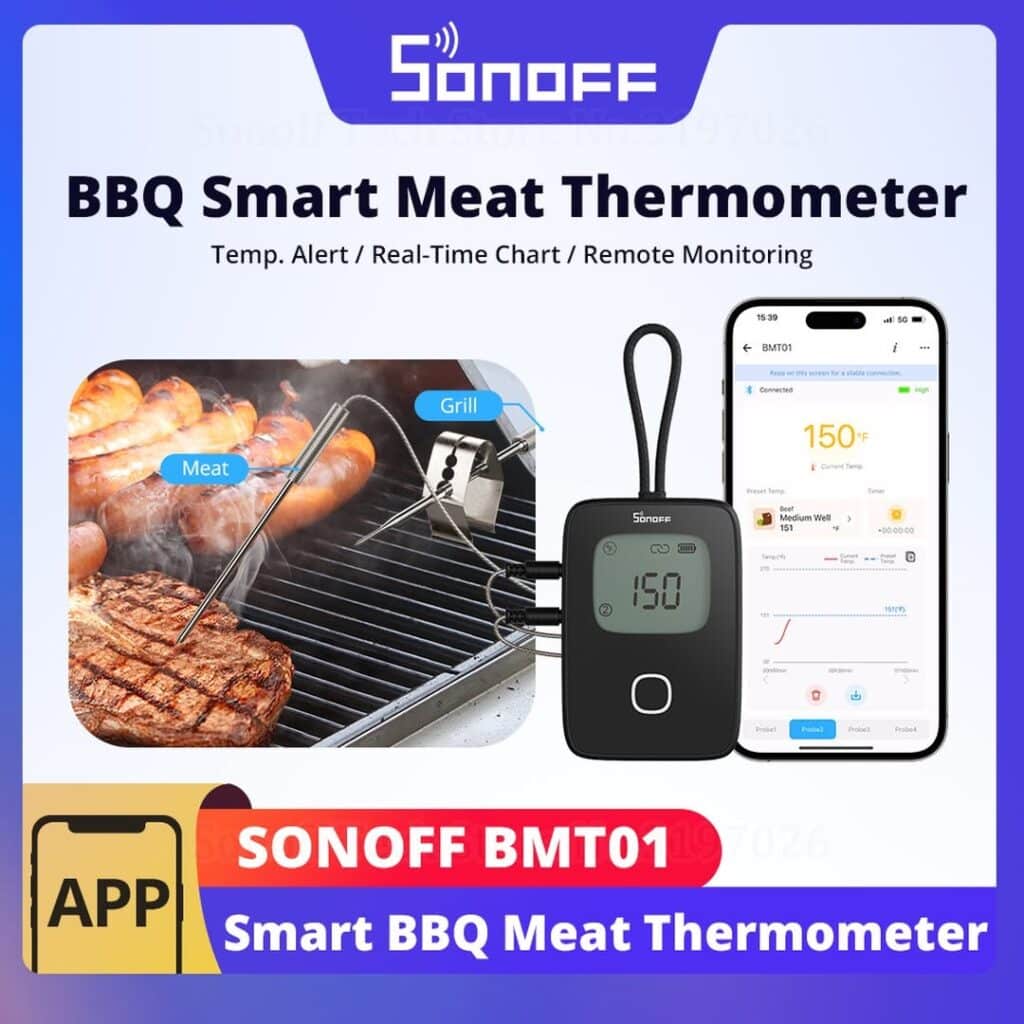
Is WiFi Monitoring Actually Worth It?
Short answer?
For long cooks – yes.
Here’s why:
- Overnight briskets
- Pork shoulders that go 14 hours
- Cold-weather cooks
Being able to check your smoker from bed feels like cheating in the best way.
You get:
- High-temp alerts
- Low-temp alerts
- Meat probe alarms
- Cook history tracking
But here’s my pitmaster warning:
Don’t stare at graphs all day.
If you obsess over every one-degree fluctuation, you’ll drive yourself crazy. Barbecue isn’t heart surgery.
WiFi is a tool.
Not a stress amplifier.
Choosing the Right Tool for Your Smoker
Not every smoker behaves the same.
Kamado Grills
These are airflow-controlled beasts already. Add a BBQ Guru, and they become precision machines.
Because kamados seal so well, small airflow adjustments make big differences. That’s where automatic fans shine.
Drum and Bullet Smokers
These are ideal candidates for airflow controllers. They rely heavily on vent management. Automation makes them ridiculously steady.
Offset Smokers
Offsets are trickier. They rely on clean-burning wood and natural draft.
Automatic fans can help – especially on smaller backyard offsets – but you still need good fire management fundamentals.
Pellet Grills
Pellet grills already use digital controllers. You likely don’t need an external BBQ Guru unless you’re modifying something unique.
What to Look for Before You Buy
Let’s keep this simple.
Focus on:
Probe accuracy. Cheap probes ruin good cooks.
Fan strength (CFM rating). Bigger cookers need stronger airflow.
Build quality. You’re cooking outside. Weather matters.
Ease of use. If it takes a manual thicker than a brisket flat, skip it.
Customer support. When tech fails at midnight, support matters.
And one more thing:
Buy for your cooker size and style – not just features.
More expensive doesn’t always mean better for your setup.
Common Mistakes I See All the Time
Even with a BBQ Guru, people mess up.
Here’s how:
- Leaving vents wide open – The fan can’t regulate airflow if air is coming in from everywhere.
- Using too much lit charcoal – Controllers manage airflow – not runaway fires.
- Poor probe placement – Don’t clip the probe right over direct heat.
- Ignoring air leaks – Gasket leaks ruin precision control.
Remember:
Technology enhances fundamentals. It doesn’t replace them.
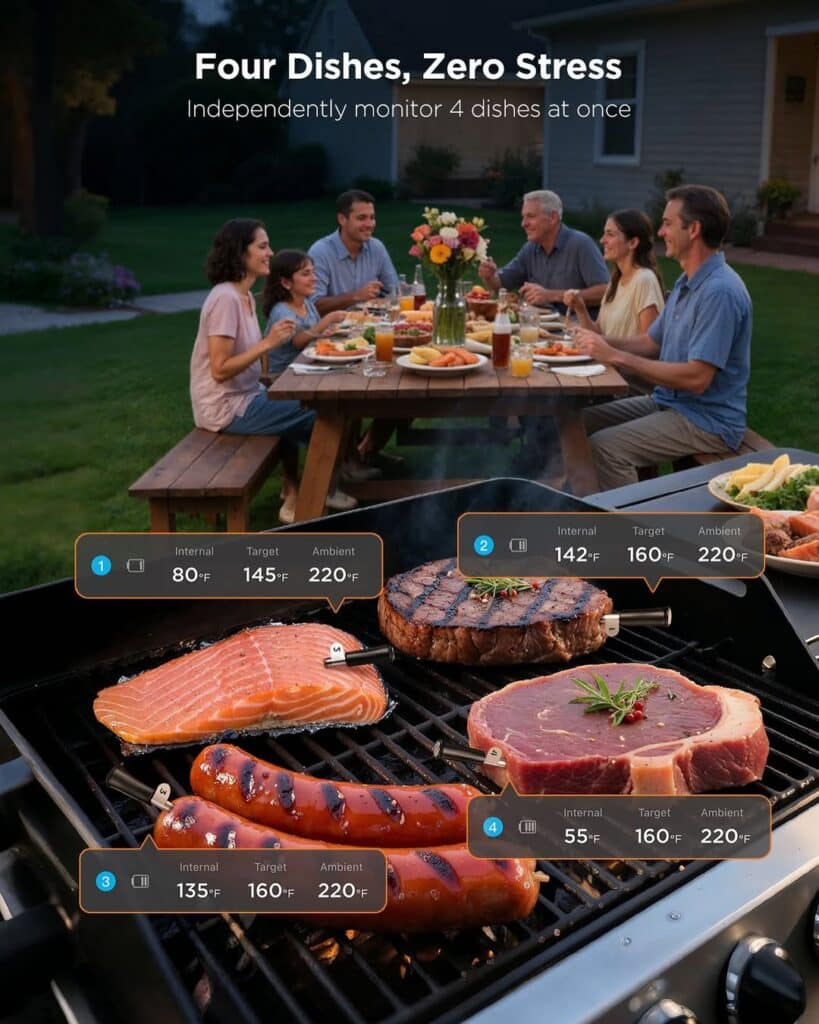
Are BBQ Guru Systems Worth the Investment?
Let’s talk money.
Yes, they’re an investment.
But ask yourself:
- How much is your time worth?
- How much is a ruined brisket worth?
- How much sleep would you like on an overnight cook?
For competition cooks, it’s a no-brainer.
For backyard pitmasters who cook often, it quickly pays off in consistency alone.
For occasional cooks? Maybe start with a good thermometer and upgrade later.
But once you experience a perfectly steady 250°F for 10 straight hours…
You won’t want to go back.
Weather-Proofing Your Cook: Why Controllers Shine in Tough Conditions
Here’s something backyard cooks don’t talk about enough:
Weather is the silent saboteur of barbecue.
Wind steals heat.
Cold air tightens airflow.
Humidity messes with combustion.
On a calm 75°F afternoon, almost any smoker behaves. But throw in a gusty winter night, and suddenly your pit acts like it drank too much coffee.
This is where a BBQ Guru-style controller becomes a stabilizer, not just a convenience tool.
Because it constantly adjusts airflow, it compensates for:
- Sudden temperature drops
- Wind-driven oxygen spikes
- Cold metal surfaces absorbing heat
Instead of chasing your vents every 15 minutes, the system reacts in real time.
Now, is it magic? No.
You still benefit from windbreaks and insulation blankets.
But in tough conditions, automatic airflow control turns chaos into control.
And that’s the difference between fighting your smoker… and mastering it.
The Psychology of Fire Management: Why Pitmasters Overreact
Let me confess something.
The first time I used a temperature controller, I kept checking it every five minutes.
Why?
Because pitmasters are control freaks.
We’re used to reacting to every small temperature change. But here’s the truth:
Small fluctuations are normal. Overcorrection is the real enemy.
Without a controller, you’re constantly making emotional adjustments.
Open the vent. Close the vent. Panic. Repeat.
Automatic systems remove that emotional decision-making loop.
They force you to trust the process.
And once you do, something interesting happens:
You become a calmer cook.
You stop chasing numbers.
You stop lifting the lid.
You start focusing on the meat.
In many ways, a BBQ Guru doesn’t just control airflow – it controls pitmaster anxiety.
And that’s worth more than most people realize.
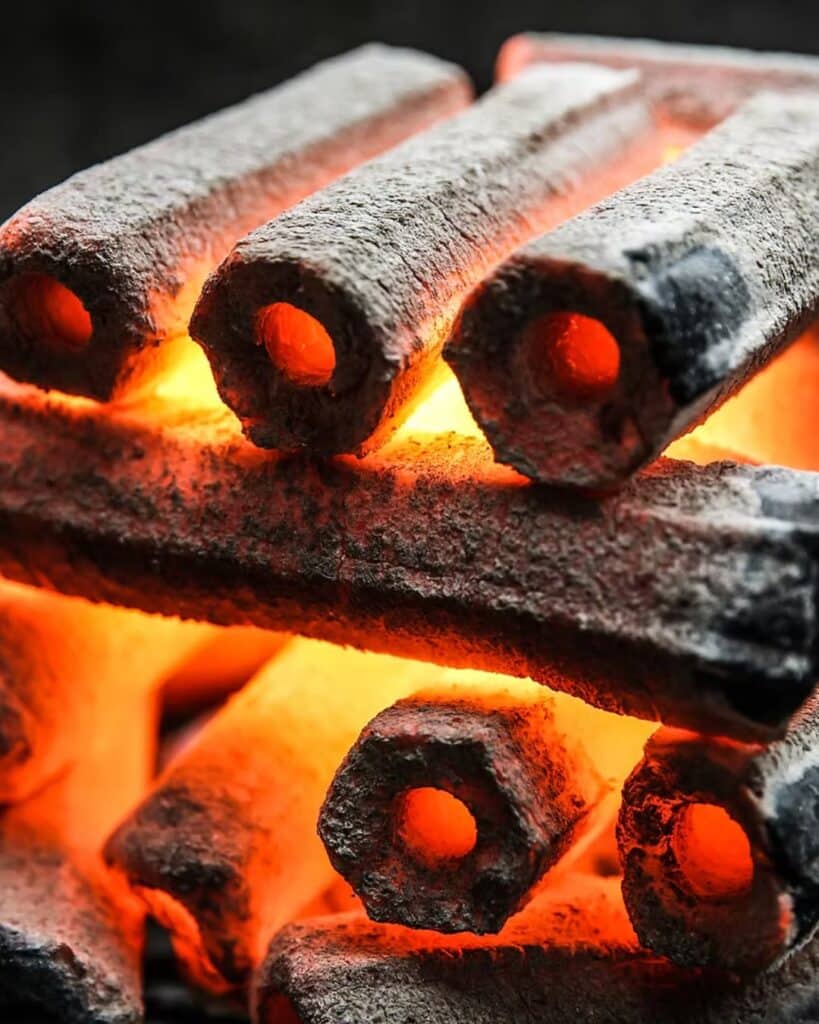
Fuel Choice Matters More Than You Think
Here’s a mistake I see all the time:
Someone installs a top-tier BBQ Guru, then loads their firebox with cheap, dusty charcoal.
Garbage fuel equals unstable burns.
Automatic controllers work best when paired with:
- High-quality lump charcoal
- Uniform briquettes
- Proper charcoal arrangement (Minion method works beautifully)
Controllers regulate oxygen.
But they cannot fix poor combustion quality.
If your fuel produces excessive ash, it can choke airflow mid-cook. If your lump pieces are wildly inconsistent, heat spikes become harder to manage.
Think of it this way:
Your controller is the brain. Your charcoal is the heartbeat.
Both need to be strong.
Investing in better fuel often improves results just as much as upgrading technology.
And when the two work together?
That’s when overnight cooks feel effortless.
Power Sources and Backup Planning
Let’s talk about something practical – and slightly boring – until it matters.
Power.
Most airflow controllers, including many BBQ Guru models, rely on electricity or battery packs.
Now imagine this:
You’re 9 hours into a brisket.
Storm rolls through.
Power goes out.
Your controller shuts off.
Airflow stops.
Temperature drops.
That’s not a nightmare. That’s preventable.
Serious pitmasters think ahead.
Options include:
- Backup battery packs
- Uninterruptible power supplies (UPS)
- Fully charged portable power stations
If you’re cooking for a party, competition, or holiday event, backup power isn’t optional – it’s insurance.
The good news?
Controllers don’t draw much electricity. Even small power stations can keep them running for hours.
Plan for failure before it happens.
That’s pro-level barbecue thinking.
Cleaning and Maintenance: The Overlooked Secret to Accuracy
Nobody gets excited about cleaning probes.
But here’s the deal:
Grease buildup affects temperature readings.
If your probe is coated in carbon and smoke residue, it can:
- React slower
- Read slightly off
- Cause subtle temperature inconsistencies
And when you’re relying on precision, subtle matters.
Every few cooks, take five minutes to:
- Wipe down probes gently
- Check fan intakes for grease
- Inspect cables for heat damage
Also, don’t kink your probe wires. They’re tough, but they’re not invincible.
A well-maintained BBQ Guru system can last for years.
Neglect it, and you’ll start blaming the tool for what’s really a maintenance issue.
Clean gear equals accurate cooks.
Simple. Not glamorous. But critical.
The Competition Circuit: Why Controllers Became Standard Equipment
There was a time when BBQ competitions were dominated by pure manual fire control.
Not anymore.
Walk through a serious competition circuit today, and you’ll spot temperature control systems everywhere.
Why?
Because competitions are about:
- Consistency
- Repeatability
- Precision timing
Judges don’t care how romantic your fire management was. They care about results.
Automatic airflow systems allow teams to:
- Sleep in shifts
- Maintain exact timelines
- Hit turn-in windows consistently
And here’s the kicker:
Many competition cooks who resisted tech at first eventually adopted it after seeing the reliability difference.
It’s not about “cheating.”
It’s about eliminating variables.
When money, reputation, and trophies are on the line, stable temperature isn’t optional – it’s strategic.
And that trickle-down effect is why backyard pitmasters benefit from this technology today.
The Future of Set-It-and-Forget-It BBQ
Here’s something important.
Using a BBQ Guru doesn’t make you less of a pitmaster.
It makes you a smarter one.
Old-school guys sometimes grumble about technology. But let me tell you something:
Every generation of pitmasters adopted better tools.
Better thermometers.
Better smokers.
Better fuel.
Automatic airflow control is just the next evolution.
And at the end of the day, barbecue is about:
- Sharing food
- Feeding people you care about
- Enjoying the process
If a little smart tech helps you focus more on that and less on vent babysitting?
That’s a win.
FAQs
1. What is a BBQ Guru and what does it actually do?
A BBQ Guru is an automatic temperature control system for charcoal and wood smokers. It uses a temperature probe and a small blower fan to regulate airflow inside your smoker.
Here’s the simple version:
- You set your desired cooking temperature.
- The controller monitors the pit temperature.
- The fan adds oxygen to the fire when heat drops.
That’s it.
More oxygen = hotter fire.
Less oxygen = cooler fire.
Instead of manually adjusting vents all day, the system does it for you. The result is steady heat, cleaner smoke, and more predictable barbecue.
It doesn’t cook the meat for you.
It just keeps the fire consistent – which is 90% of great BBQ.
2. Can you use BBQ Guru on any smoker?
Not every smoker — but most charcoal-based ones, yes.
BBQ Guru systems work best on:
- Kamado grills
- Drum smokers
- Bullet smokers (like WSM-style cookers)
- Many backyard offset smokers
They’re designed to attach near the air intake vent and control airflow directly.
Pellet grills usually don’t need one because they already have digital controllers built in.
The key requirement is this:
Your smoker must allow controlled airflow.
If it leaks air everywhere, even the best controller will struggle.
3. Does using a BBQ Guru improve flavor?
Here’s the honest answer:
Indirectly, yes.
A BBQ Guru doesn’t add flavor. It controls temperature.
But stable temperature creates:
- Better bark development
- Cleaner-burning smoke
- Less bitterness from dirty combustion
- Juicier finished meat
When your fire burns efficiently and steadily, the smoke stays thin and blue – and that’s where the magic happens.
Wild temperature swings often create thick, harsh smoke. And that can ruin flavor fast.
So while the controller isn’t seasoning your brisket, it absolutely helps create better conditions for great flavor.
4. Is set-it-and-forget-it smoking really hands-off?
Mostly – but not totally.
You still need to:
- Set up your charcoal properly
- Position your probes correctly
- Keep vents adjusted correctly at the start
- Make sure your smoker is sealed well
Once things are dialed in, though, a BBQ Guru system can maintain temperature for 10–16 hours with minimal intervention.
But don’t misunderstand:
It’s not magic.
It’s automation.
You still need solid fundamentals.
Think of it as cruise control for your smoker.
5. Do I still need a good thermometer if I have a BBQ Guru?
Yes. And here’s why.
Most BBQ Guru models already include meat probes, which is great.
But serious pitmasters often use:
- Backup thermometers
- Instant-read thermometers for tenderness checks
Why?
Because temperature is only part of the story.
A brisket might hit 203°F and still not be tender. That’s when you probe for feel.
So while a BBQ Guru handles pit temperature control, you still rely on experience – and sometimes extra tools – to judge doneness properly.
Technology supports your instincts.
It doesn’t replace them.
6. Are BBQ Guru systems safe to leave running overnight?
Yes – if set up properly.
These systems are designed specifically for long, overnight cooks.
But safe operation depends on:
- Stable smoker placement
- Proper charcoal load (not overfilled and fully lit)
- Clean airflow
- Reliable power supply
Many pitmasters, myself included, use them regularly for overnight briskets and pork shoulders.
The biggest risk in overnight cooks isn’t the controller.
It’s improper fire setup.
Get that right, and the system does exactly what it’s built to do:
Maintain consistent, safe cooking temperatures for hours.
7. Is a BBQ Guru worth it for beginners?
That depends on your personality.
If you enjoy tinkering with vents and learning fire management manually, you may want to master the basics first.
But if you:
- Have limited time
- Cook for family gatherings
- Want predictable results fast
Then yes, a BBQ Guru can dramatically shorten the learning curve.
It removes one of the hardest parts of smoking: temperature control.
Beginners often struggle not because they can’t cook – but because they can’t stabilize heat.
This tool solves that problem immediately.
8. What’s the biggest mistake people make with automatic controllers?
Easy.
They forget to control airflow everywhere else.
If your top vent is wide open and your smoker has leaks, the controller can’t regulate oxygen properly.
Another big mistake?
Using too much lit charcoal at startup. The controller can manage airflow – but it can’t tame a runaway fire.
Remember this:
The controller adjusts oxygen. It doesn’t control fuel quantity.
Good setup + controlled airflow = smooth cooks.
9. Will a BBQ Guru reduce charcoal consumption?
In many cases, yes.
Because it feeds oxygen only when needed, you avoid:
- Over-burning fuel
- Massive temperature spikes
- Wasteful flare-ups
Steady airflow creates steady combustion.
That often means longer burn times and fewer refuels.
It’s not just about convenience.
It’s about efficiency.
10. Is using a BBQ Guru considered “cheating”?
Let’s settle this.
No.
Using a BBQ Guru is not cheating.
It’s using a tool to create consistent results.
Nobody says using a digital thermometer is cheating. Nobody says using a pellet grill is cheating.
Barbecue evolves.
What matters is:
- Fire management
- Meat quality
- Technique
- Flavor
If technology helps you create better barbecue more consistently, that’s not cheating.
That’s smart cooking.
Flip the Ignition Switch and Grill Away
After years behind the smoker, here’s what I know for sure:
Consistent heat creates consistent barbecue.
And consistency is what separates good cooks from great ones.
Whether you choose a BBQ Guru, Flame Boss, FireBoard, or another system, the goal is the same:
Steady fire.
Clean smoke.
Predictable results.
So the next time you’re cooking a brisket overnight…
Set your temp.
Trust your tools.
Get some sleep.
Your barbecue – and your sanity – will thank you.
Featured image credit:
