
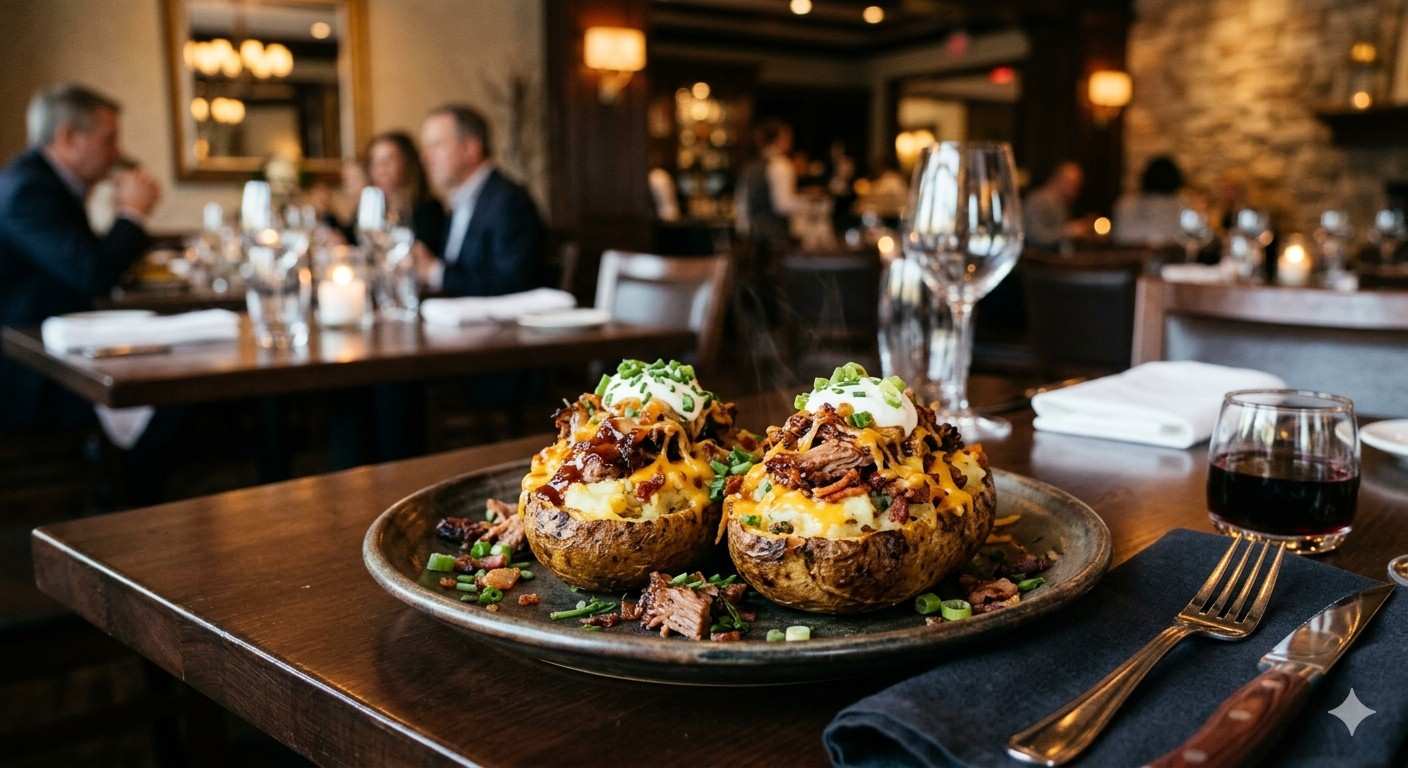
Spending 14 hours tending a fire to achieve the perfect Texas brisket is a labor of love that crowns you the backyard monarch for a weekend.
But by Tuesday, that glorious, bark-heavy beef flat sitting in your fridge starts looking a little less like a crown jewel and a little more like a culinary question mark.
Leftover brisket is a high-stakes ingredient; microwave it carelessly, and you turn an expensive masterpiece into something resembling a leather boot.
Instead of treating your hard work like an afterthought, it is time to elevate those scraps into the ultimate vessel of comfort: twice-baked smoked potatoes.
This isn’t about hiding your leftovers under a generic blanket of melted cheese. This is a deliberate, flavor-engineered strategy to fuse wood fire, rich beef tallow, and velvety potato starch into a brand-new masterpiece.
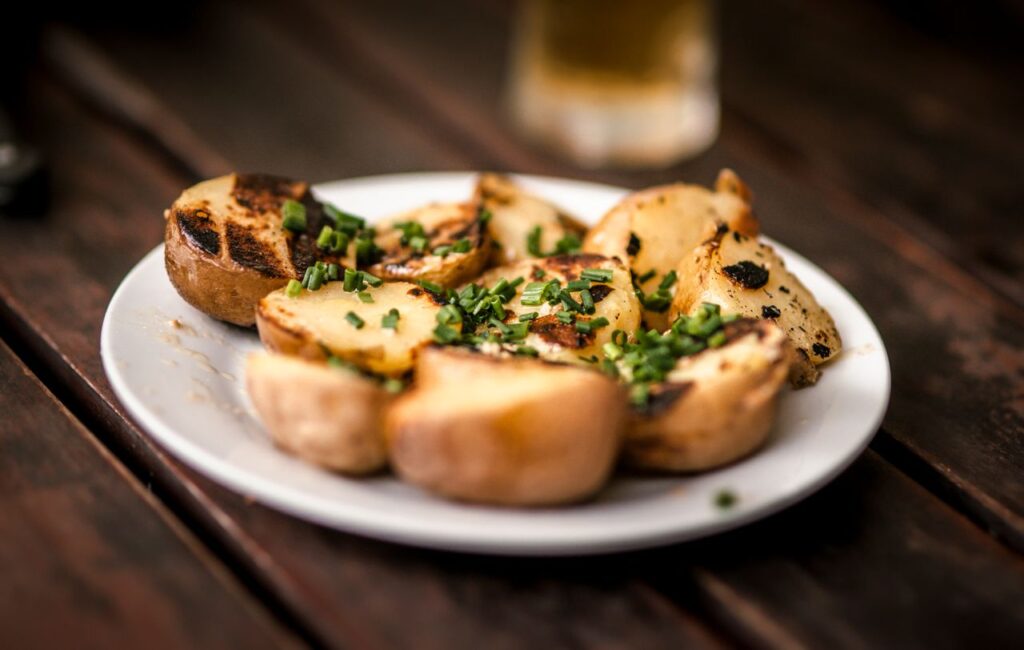
Why the Smoker Beats the Oven (Every Single Time)
Standard twice-baked potatoes are a steakhouse classic, but they suffer from a major design flaw: they miss out on the elemental magic of wood smoke. Taking your spuds out to the pit for their second cook completely transforms the dish.
- The Science of Vapor Absorption: When you hollow out a baked potato, the mashed interior becomes incredibly porous. Returning that whipped flesh to the smoker allows the wood fire aroma to penetrate deep into the potato matrix, rather than just brushing past the outer skin.
- The Ultimate Texture Game: Achieving a legendary stuffed spud requires dramatic structural contrast. The initial bake softens the interior starch, while the second wood-fired session fries the outer skin to a crisp and melts the cheese directly into the crannies of your chopped meat.
Think of the potato skin as a natural, biodegradable skillet. It holds the fat, traps the moisture, and develops a deeply savory crunch that an oven simply cannot replicate without drying out your precious beef.
The Ingredient Blueprint: Sourcing and Prep
To build a potato capable of holding a half-pound of smoked meat, you cannot just grab any random spud from the bin. Every component needs to be selected with intention.
The Starch Backbone
Look for massive, heavy Russet potatoes (often sold individually as “baking potatoes”). Russets are non-negotiable here because their high starch content yields a fluffy, light mash.
Avoid red or Yukon Gold varieties for this specific cook; their waxy texture turns gummy when whipped with heavy fats, leaving you with something resembling wallpaper paste instead of culinary gold.
The Brisket Revival
Pull your leftover brisket flat and point out of the fridge while it is cold – it is infinitely easier to slice that way. Cube the meat into bite-sized, 1/2-inch pieces. Ensure you get a healthy mix of the lean flat and the gelatinous point.
Those little cubes of dark, peppery bark are pure flavor dynamite, and cutting them small ensures you get a bit of brisket in every single forkful.
The Emulsion Squad
- Sharp Cheddar: Skip the pre-shredded bags. Cellulose coatings prevent the cheese from melting smoothly. Grate a block of sharp white or yellow cheddar by hand.
- Sour Cream and Unsalted Butter: These provide the necessary moisture to combat the drying nature of a leftover protein.
- The Acid Hit: A splash of apple cider vinegar or a tangy, vinegar-forward BBQ sauce is crucial. Brisket and potatoes are incredibly rich; a hit of acid cuts through the heavy fats and wakes up your palate.
The Crispy Foundation of a Twice-Baked Smoked Potatoes: Tallow-Rubbed Skins
Before your Russets ever see a knife, you must engineer the ultimate structural vessel using a specific prep sequence:
- The Tallow Slather: Coat raw skins in warmed beef tallow rendered from your weekend brisket cook.
- The Crust Seasoning: Roll the greased spuds in coarse kosher salt and cracked black pepper.
This creates a deeply savory, seasoned outer crust that mimics the iconic bark of a Texas brisket. As the tallow renders in the heat, it actively fries the potato’s exterior layers.
This crucial step transforms an often-discarded wrapper into a shattering, shingle-crisp boundary that prevents your heavy filling from bursting out during the final wood-fired stretch.
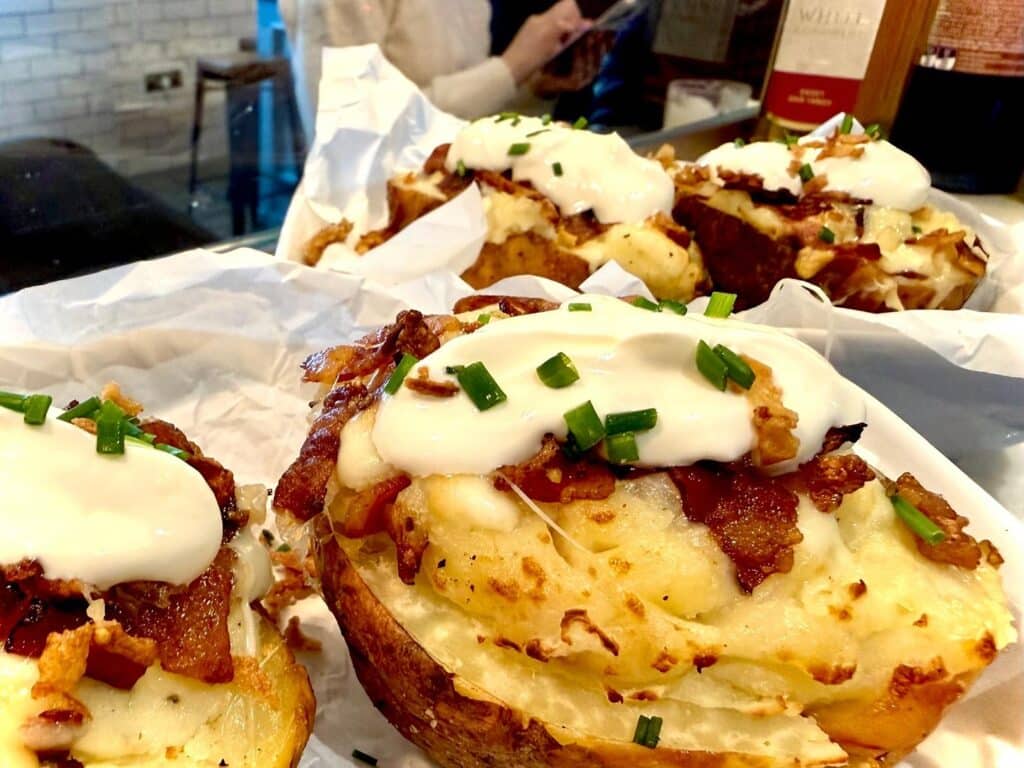
Engineering the Mash: The Reverse-Fold Technique
Achieving a cloud-like texture requires strict mechanical discipline when handling your ingredients:
- The Rice: Pass hot potato flesh through a potato ricer instead of smashing it with a fork to avoid releasing excess starch.
- The Fat Coat: Fold in cold butter and sour cream first to isolate the starch molecules.
- The Protein Fold: Gently stir in your cubed brisket and hand-grated cheddar last.
This reverse-fold technique prevents the mash from turning into wallpaper paste. The careful sequence ensures the heavy meat remains perfectly suspended in a light matrix, guaranteeing that every single bite delivers an airy, decadent contrast to the dense, smoky beef.
The Hidden Layer: Creating a Flavor Trap
To elevate this dish beyond standard backyard fare, construct a hidden flavor trap inside the potato boat before re-stuffing:
- The Base: Paint the bottom of the hollowed skin with a sweet and tangy barbecue glaze.
- The Acid Crunch: Scatter a layer of diced pickled jalapeños and finely minced sweet onions directly over the glaze.
Layer the rich brisket mash over this foundation. When returned to the pit, the trapped heat creates a miniature steam chamber.
The onions soften, the glaze caramelizes against the skin, and guests are treated to a sudden, refreshing burst of acidity and crunch halfway through their meal.
Sweet Smoke Harmony: Picking the Right Fuel
Wood selection is your final opportunity to dictate flavor, as potato flesh acts as an unfiltered flavor sponge:
- The Banned Fuel: Steer clear of hickory or mesquite, which introduce bitter, acrid notes to delicate cream.
- The Ideal Match: Fuel your firebox with a split of pecan wood or sweet cherry.
Pecan delivers a smooth, distinct nuttiness that pairs beautifully with sharp cheddar cheese. Meanwhile, cherry imparts a gorgeous, mahogany hue to the melted cheese crust.
This gentle backdrop bridges the gap between the aggressive, pre-existing brisket bark and the mild, comforting starch of the potato.
Pitmaster Pro-Tips for Perfect Execution
The Temperature Sweet Spot
Always scoop your potatoes while they are warm. If you let them cool completely, the starches lock up, and your mash will become heavy and unpleasantly gummy.
Additionally, be mindful of your wood choice. Potato flesh absorbs smoke like a sponge. Opt for milder fruitwoods rather than intense mesquite, which can easily overpower the delicate dairy flavors in the mash.
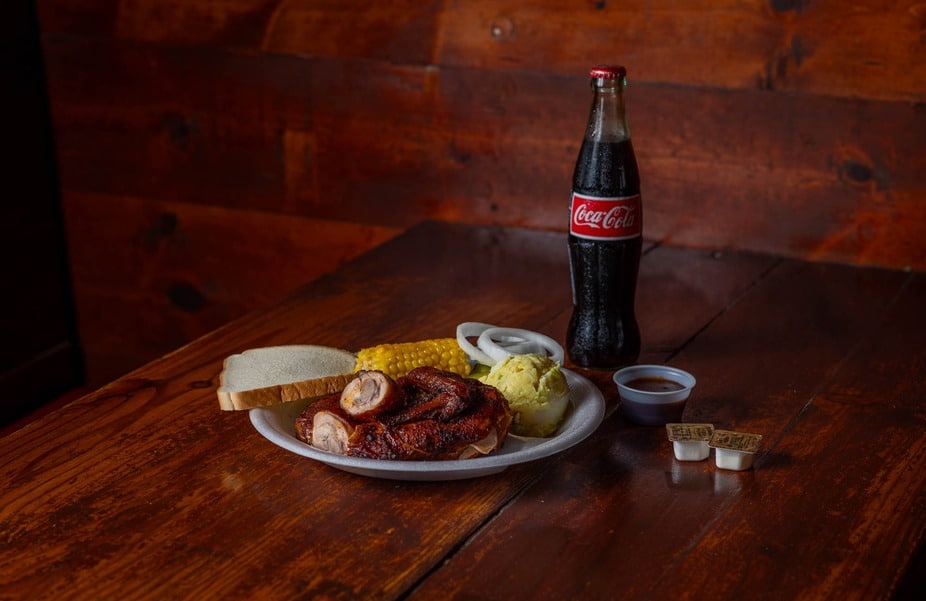
The Grand Finale: Presentation and Sides
When you pull these heavyweights off the smoker, let them rest for five minutes so the cheese sets.
Garnish the top with thinly sliced green onions for a fresh, sharp bite, and scatter a few pickled jalapeño wheels across the melted cheese to balance the smoke.
Because these twice-baked smoked potatoes are incredibly rich and structurally massive, treat them as the undisputed star of the plate. Pair them with a bright, vinegar-based coleslaw or a crisp, cold wedge salad to cleanse your palate between bites.
You started the week with a container of cold leftovers, but with a little fire and strategy, you just engineered the best meal of the week.
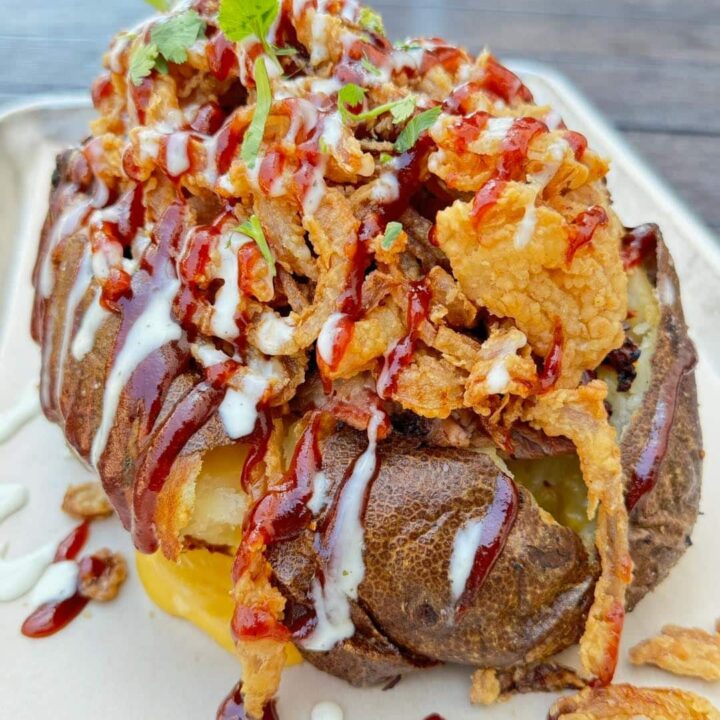
Twice-Baked Smoked Potatoes Loaded with Brisket Leftovers
Image credit: @smokeandfireofficial
Ingredients
- 1. The Potato Base
- 4 large Russet potatoes (scrubbed clean and dried completely)
- 1-2 tbsp olive oil or melted beef tallow (for coating the skins to get them crispy)
- Coarse kosher salt & coarse black pepper (to season the outside of the skins)
- 2. The Ultra-Creamy Potato Filling
- 1/2 cup sour cream (or full-fat Greek yogurt)
- 4 tbsp unsalted butter (softened)
- 1/4 cup whole milk or heavy cream (adjust based on desired thickness)
- 1 cup sharp cheddar cheese (shredded; split: half for mixing into the mash, half for melting on top)
- 2 cloves garlic (minced, or 1 tsp garlic powder)
- 1 tbsp BBQ rub (your favorite sweet/savory brisket rub to tie the flavors together)
- Salt and freshly cracked black pepper (to taste)
- 3. The Brisket & Fixings Topping
- 1.5 to 2 cups leftover smoked brisket (chopped or shredded)
- 1/4 cup of your favorite sweet or tangy BBQ sauce (to toss with the brisket)
- 4 strips of thick-cut bacon (cooked crispy and crumbled – because bacon makes everything better)
- 3-4 green onions or chives (thinly sliced, for that fresh, sharp finish)
- Extra sour cream or a drizzle of BBQ sauce (for serving)
- Pitmaster Tip: When you're ready to smoke these for the second bake, run your cooker at 200°C (400°F) for about 15-20 minutes.
- It's hot enough to melt the cheese into a glorious crust and get the brisket tips beautifully caramelized, while keeping the potato skin incredibly crispy.
Instructions
Phase 1: The Foundation Cook
Fire up your cooker to 400°F. Scrub your Russets thoroughly and poke them a few times with a fork to let steam escape – unless you want to clean an exploded potato bomb off your smoker walls.
Rub the skins generously with beef tallow or olive oil, then coat them in coarse kosher salt.
Bake them directly on the grates for about an hour. You are looking for an internal temperature of 205°F, where the skins are wrinkly and the insides give absolutely no resistance when squeezed.
Phase 2: The Delicate Excavation
Let the potatoes cool for ten minutes. If you try to cut them open immediately, the steam will burn your fingers and ruin your evening. Slice off the top third of each potato lengthwise.
Take a spoon and carefully scoop the fluffy white interior into a large mixing bowl. Leave a sturdy 1/4-inch wall of potato flesh attached to the skin.
If you get greedy and scoop too close to the edge, the structural integrity collapses, and you will end up with a sad, flat potato pancake on your grill grates.
Phase 3: The Whipping and Folding
Add your butter, sour cream, a handful of cheddar, and a pinch of your favorite BBQ rub to the warm potato flesh. Mash vigorously until it is smooth and decadent.
Before adding the brisket, give your cubed meat a quick toss with a tablespoon of warm beef broth or melted tallow. This rehydrates the meat instantly.
Fold half of the brisket cubes directly into the mashed potato mixture, then spoon the stuffing back into the jacket shells.
Don't pack it down tight; keep it piled high and loose so the smoke can find its way into the air pockets.
Phase 4: The Wood-Fired Coronation
Crown the top of each stuffed potato with the remaining brisket cubes and another heavy blanket of grated cheddar. Drop your smoker temperature down to 300°F and throw a chunk of cherry or pecan wood onto the coals.
Place the loaded potatoes back into the smoke chamber for 25 to 30 minutes. You are waiting for the cheese to become a bubbling, golden-brown canopy and for the exposed brisket edges to crisp up into gorgeous little burnt ends.
Featured image credit: Google Gemini
