
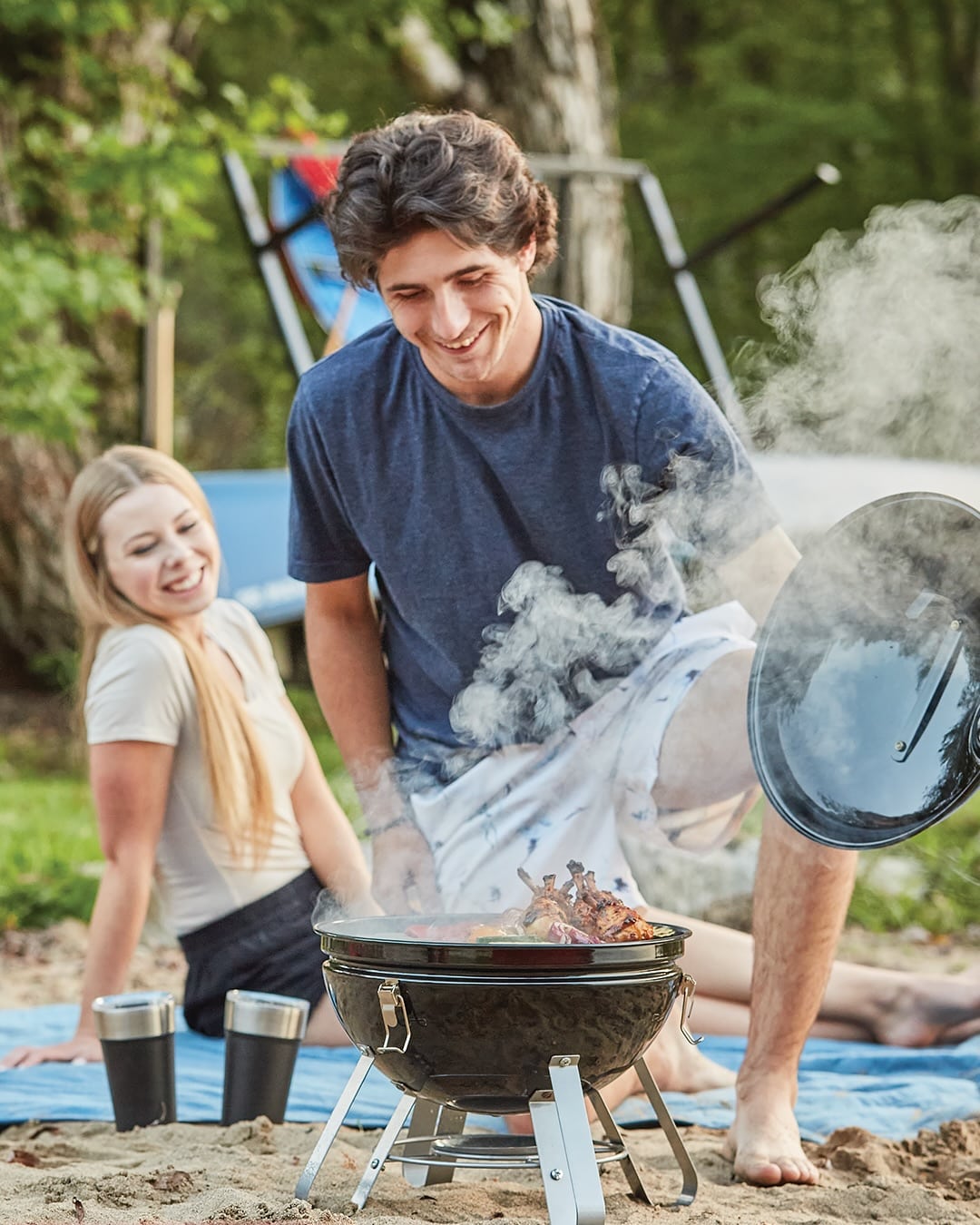
Pure magic begins to stir the moment your truck has been sitting idle for twenty minutes in the middle of nowhere.
It’s that moment when the scent of pine needles starts to mix with the first wisps of blue smoke drifting from a chimney starter.
If you’re a purist, you know exactly what I’m talking about. While the “click-and-hiss” crowd is already boiling water on their propane stoves, we – the charcoal devotees – are playing the long game.
We’re waiting for that perfect layer of white ash, the deep infrared glow of the coals, and that unmistakable smoky crust that only real fire can provide.
Choosing from the best charcoal grills for your next adventure isn’t just about buying a piece of metal; it’s about choosing your partner for the weekend.
I’ve spent more nights than I can count hunched over various grates in the middle of nowhere, sometimes in the rain and occasionally while defending my sausages from a particularly ambitious raccoon.
Through trial, error, and a lot of scorched eyebrows, I’ve learned that a “portable” grill isn’t actually portable if it takes three people to lift, and “durable” doesn’t mean much if the legs wobble the second you place a ribeye on the rack.
The Pre-Trip Briefing: What Actually Matters
Before we dive into the steel and iron, let’s talk shop. When you’re out in the wild, you are the mechanic, the chef, and the cleanup crew. You need gear that respects your limited trunk space and your precious relaxation time.
First, let’s look at weight versus surface area. It is a cruel law of physics that the lighter a grill is, the less food it holds. If you’re flying solo or with a partner, a small footprint is your best friend.
But if you’re tasked with feeding a family of four who have been hiking all day and are bordering on “hangry” mutiny, you need real estate.
Next, we have the material showdown. Plated steel is lightweight and heats up fast, but it can be flimsy. Cast iron is the king of heat retention – it sears like a dream – but it’s heavy enough to serve as a boat anchor.
Then there is stainless steel, which strikes a beautiful balance but usually comes with a premium price tag.
Finally, consider packability. I’ve seen grills that look like masterpieces in the backyard but turn into a nightmare of loose bolts and greasy vents when you try to shove them into a SUV.
You want “nesting” designs where everything fits inside the lid, or folding legs that snap into place with a satisfying click rather than a prayer.
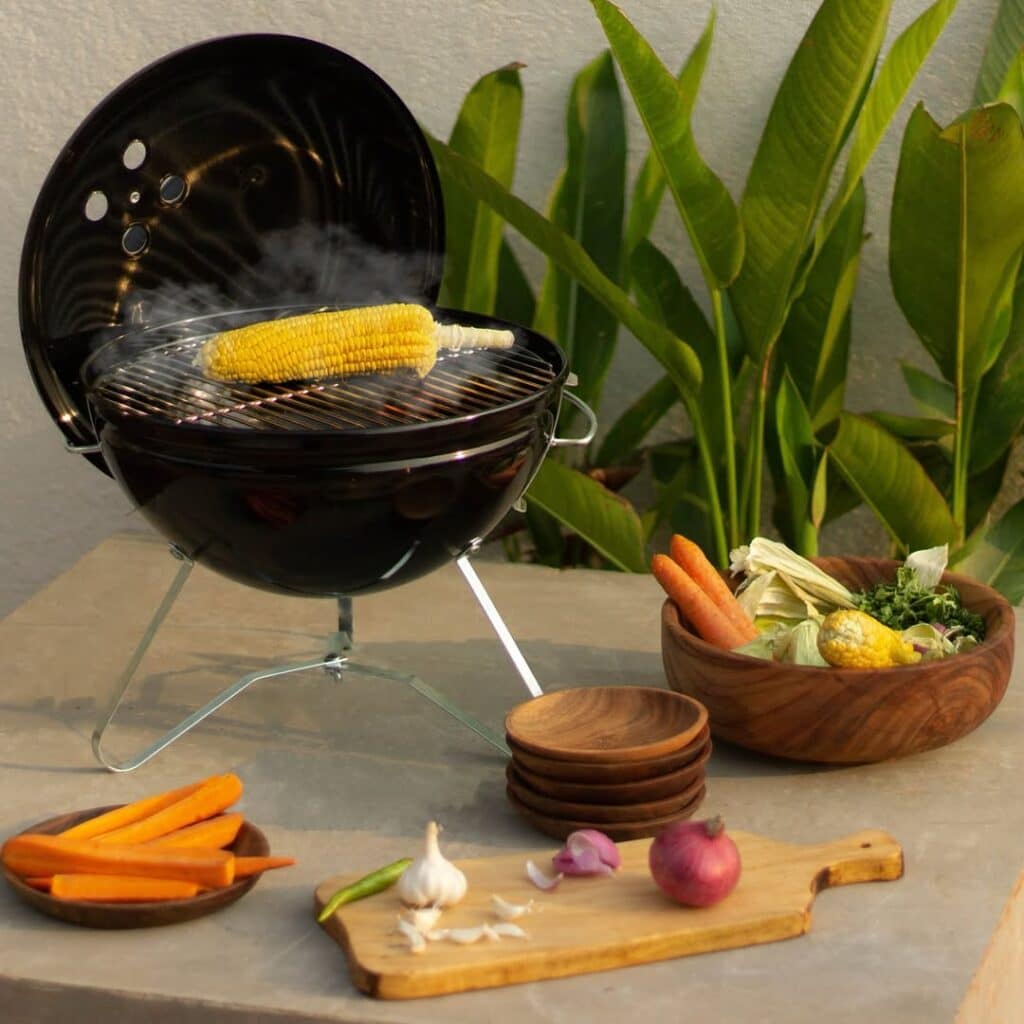
1. The Rugged Icon: The Weber Jumbo Joe
If there were a Hall of Fame for the best charcoal grills, the Weber kettle would be the first induction. The Jumbo Joe is the classic 18-inch kettle’s younger, more adventurous brother who spent a summer backpacking through Europe.
It takes the legendary airflow and heat control of a full-sized Weber and chops the legs off to make it trunk-friendly.
Why it’s a winner: The beauty of this design is the Tuck-and-Carry lid lock. You can literally lock the lid in place, pick it up by the handle, and carry it like a very heavy, very round briefcase.
The 18-inch diameter gives you enough room for a full spatchcocked chicken or about eight burgers at once.
The Pitmaster’s Take: The airflow on this thing is a masterpiece. You can shut the vents down to a sliver and roast a pork shoulder low and slow, or open them wide for a high-heat sear that would make a steakhouse jealous.
Just be warned: it’s still a porcelain-enameled bowl. Treat it like a lady; if you toss it into the truck bed without a cover, you might end up with a chipped finish that leads to rust.
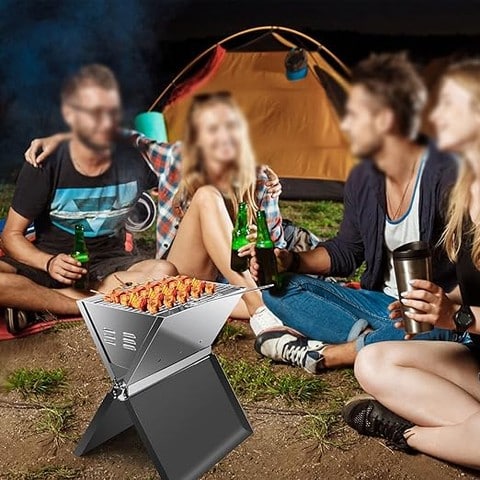
2. The Space-Saver: The Notebook Folding Grill
This is the grill for the minimalist who treats their car’s cargo space like a game of high-stakes Tetris. When folded flat, this grill is barely an inch thick. You could literally slide it under your car seat or behind a suitcase.
Why it’s a winner: It uses a simple, X-shaped folding mechanism.
You pop it open, drop in the charcoal tray and the grate, and you’re cooking. It’s deceptively stable for something that looks like a piece of origami. It’s the ultimate “just in case” grill for day trips and beach bonfires.
The Pitmaster’s Take: Because it’s thin and sits low to the ground, it lacks the sophisticated venting of a kettle. It’s a “hot and fast” machine.
Don’t try to smoke a brisket on this; you’ll just end up with a very frustrated group of campers and a dry piece of meat.
It’s built for hot dogs, thin steaks, and skewers. Keep your expectations as flat as the grill, and you’ll be delighted with the performance.
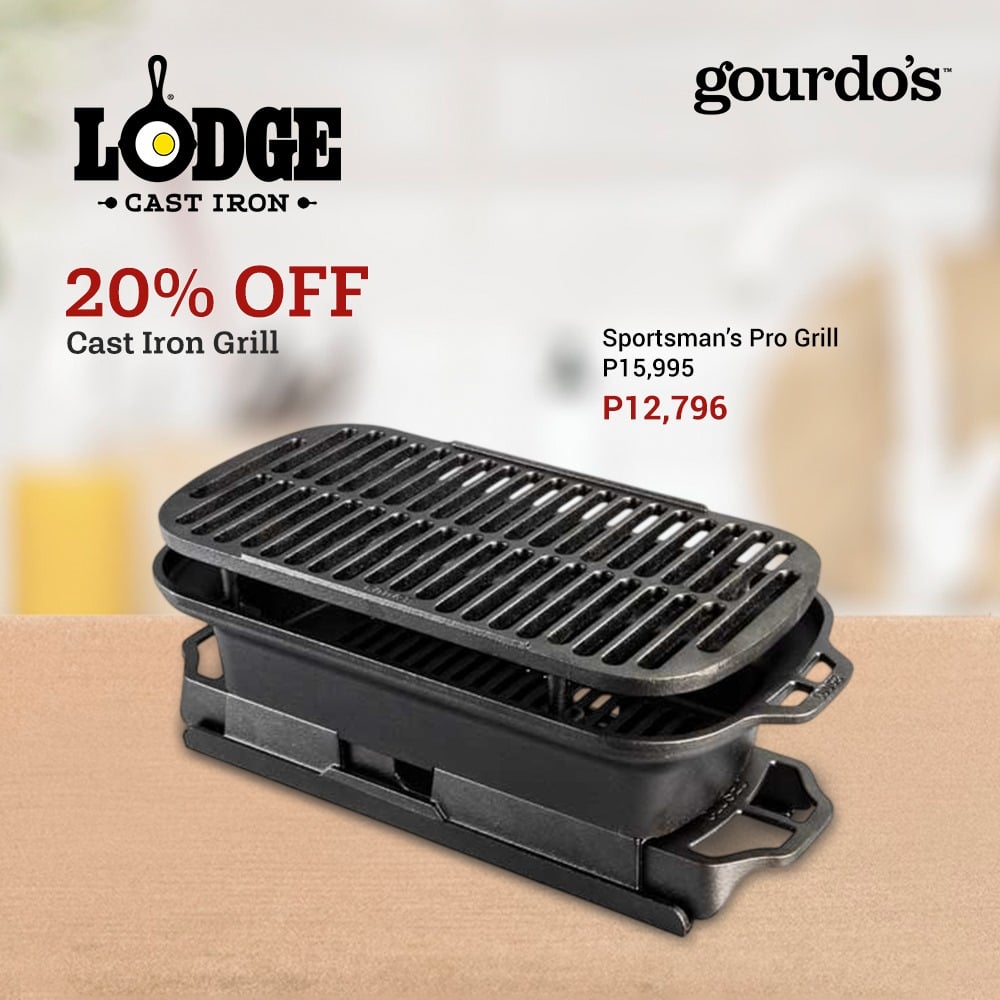
3. The Heavy-Duty Workhorse: Lodge Cast Iron Sportsman’s Pro
Some people want a grill they can pass down to their grandkids. If that’s you, look no further than the Lodge Sportsman’s Pro. This is essentially a hibachi-style grill forged out of solid American cast iron.
It doesn’t have a lid, it doesn’t have fancy wheels, and it weighs as much as a small boulder, but it is virtually indestructible.
Why it’s a winner: Cast iron is the gold standard for infrared heat. While steel grills reflect heat, cast iron absorbs it and radiates it back into the food. This results in a crust that is dark, crispy, and even.
It’s also incredibly fuel-efficient; once those walls get hot, you only need a handful of coals to keep it going for an hour.
The Pitmaster’s Take: This is a “buy once, cry once” purchase. It requires maintenance – you have to keep it seasoned to prevent rust – but the flavor payoff is immense. It’s perfect for the “basecamp” style of camping where you aren’t moving every day.
Pro tip: use the flip-down door to add coals without moving the grate. It makes you look like a seasoned pro while you’re flipping your morning bacon.
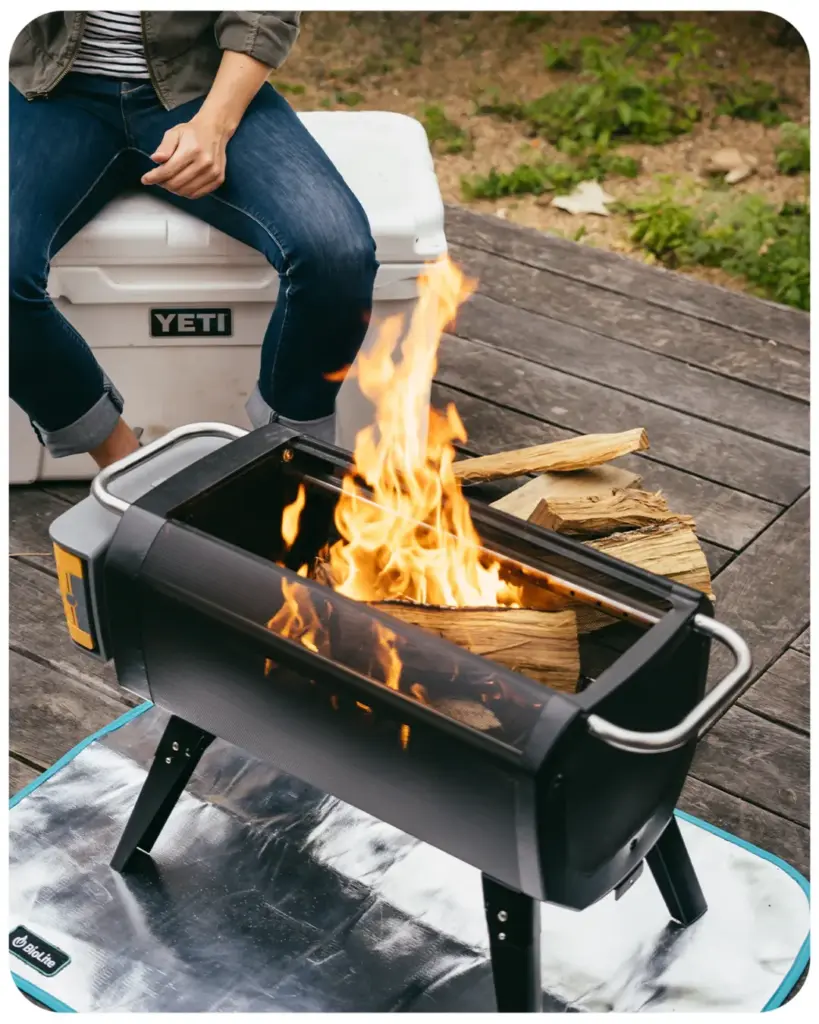
4. The Modern Innovator: BioLite FirePit+
We live in the future, and the BioLite FirePit+ is proof.
This isn’t just a grill; it’s a piece of combustion engineering. It features a built-in fan system powered by a rechargeable battery pack that injects oxygen into the fire through 51 separate jets.
Why it’s a winner: It solves the biggest complaint people have about charcoal: the smoke.
By creating a more efficient burn, it drastically reduces smoke, meaning you aren’t constantly playing “musical chairs” to avoid a cloud of ash. Plus, you can control the fan speed from an app on your phone.
Yes, you can literally “turn up the heat” from your camp chair.
The Pitmaster’s Take: This is a dual-threat. After the cooking is done, you slide the grill grate off and use it as a portable fire pit. The mesh sides allow for a 360-degree view of the embers, which creates a fantastic ambiance.
It’s the most “social” grill on the list. Just remember to charge the battery before you leave home, or you’ll be stuck with a very expensive, albeit very pretty, regular fire pit.
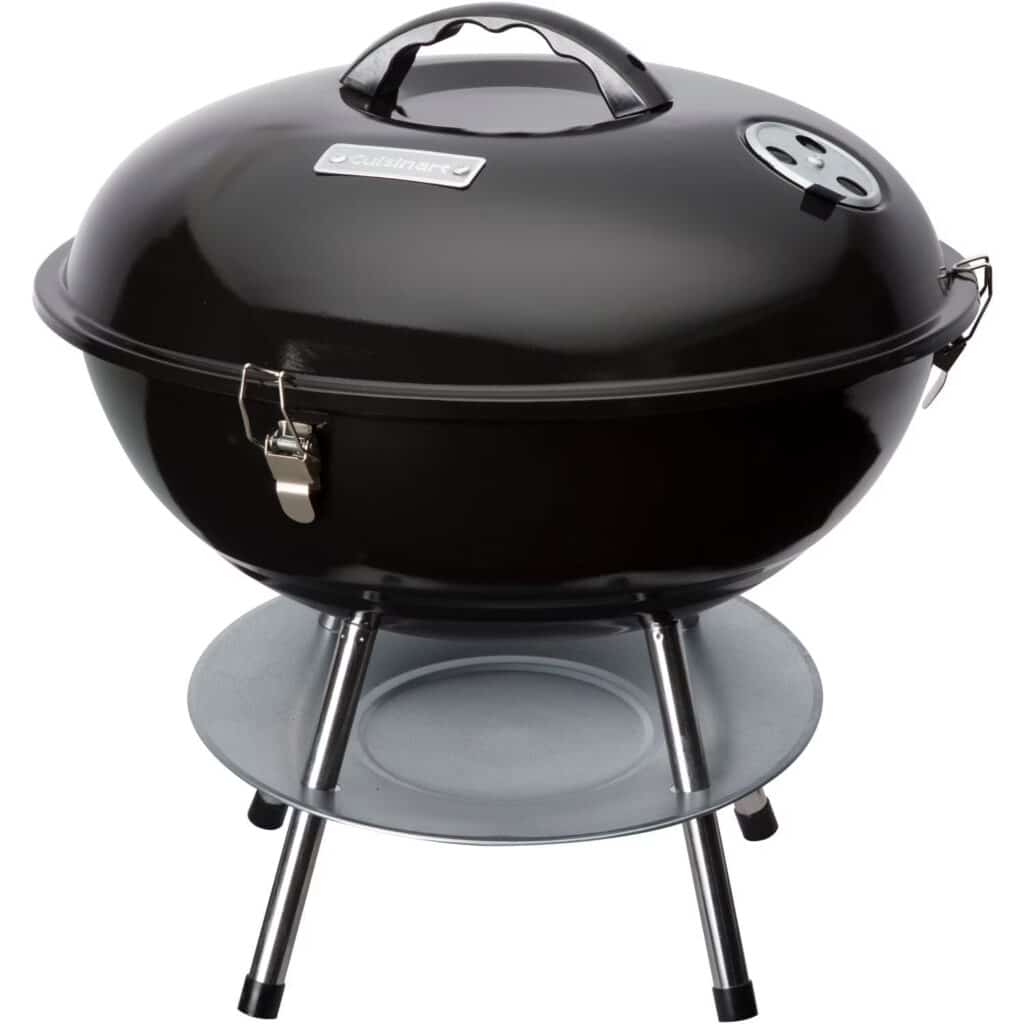
5. The Budget Trailblazer: Cuisinart Portable Charcoal Grill
Not everyone needs a high-tech fan or a cast-iron heirloom. Sometimes you just need something that works for twenty bucks and fits in the trunk next to the cooler. The Cuisinart 14-inch portable grill is the “uncomplicated friend” of the outdoor world.
Why it’s a winner: It’s incredibly light – barely two pounds – making it the best choice for anyone who has to carry their gear more than a few yards from the car.
It features a three-lock lid system that stays secure during transport and a surprisingly effective dual-venting system for heat control.
The Pitmaster’s Take: It’s basic, but don’t let that fool you. If you know how to manage your coals, you can turn out world-class food on this. It’s the best charcoal grill for beginners or occasional campers.
My only advice? Upgrade the grate if you plan on using it every weekend. The stock grate is a bit thin, but for the price of a couple of pizzas, this grill is a total steal.
Pitmaster Pro-Tips: Grilling in the Wild
Having the gear is only half the battle. To truly master the campsite, you need a bit of “trail-craft.”
Fuel Management: Leave the briquettes at home and go for lump charcoal. Briquettes are full of fillers and binders that produce a mountain of ash – which is a nightmare to clean up in the woods.
Lump charcoal is just charred wood; it lights faster, burns hotter, and leaves behind very little residue. Plus, it smells like a real campfire.
Wind and Weather: Nature doesn’t care about your medium-rare steak. If it’s windy, your grill will burn through fuel twice as fast. Position your grill downwind of your vehicle or a large rock to create a natural windbreak.
Also, keep the lid on! Every time you “peek” to see how the chicken is doing, you’re losing 25% of your heat.
Safety First: This is the big one. Never, ever dump hot coals in the woods or even in a trash can. I’ve seen entire campsites ruined because someone thought their coals were “cool enough.”
Drown them in water until they stop hissing, then stir the ash to make sure every ember is out. Leave no trace applies to your fire, too.
Maintenance & The “Pack-Out”
Cleaning a grill while camping sounds like a chore, but it’s easier if you do it while the metal is still warm. Take a crumpled ball of aluminum foil and a pair of tongs to scrub the grates right after you finish cooking.
The steam from the meat juices will help lift the gunk.
When it’s time to pack up, place your grill inside a heavy-duty trash bag before putting it in your car.
No matter how well you cleaned it, there will be loose ash and grease, and nothing ruins a post-trip high like finding a charcoal smudge on your car’s upholstery.
The Final Verdict
So, which one belongs in your kit?
- If you want the absolute best cooking experience and have the space, take the Weber Jumbo Joe.
- If you are a gear geek who loves a gadget, the BioLite FirePit+ is your toy.
- If you’re a solitary wanderer looking to save space, go for the Notebook Folding Grill.
- For the long-haul traditionalist, the Lodge Cast Iron is your forever grill.
- And if you’re just looking for value, the Cuisinart will never let you down.
The wilderness is waiting, and the hot dogs aren’t going to grill themselves. Grab your coals, find a spot with a view, and remember: the best meal you’ll ever eat is the one seasoned with wood smoke and mountain air.
See you on the trail.
Frequently Asked Questions: The Adventure-Ready 5
Whether you’re a weekend warrior or a backcountry minimalist, choosing the right charcoal companion is key to a successful trip. Here are the most common questions about the top-rated grills from our guide.
General Grill Selection
What is the best overall grill for a family camping trip?
The Weber Jumbo Joe is the top pick for families. Its 18-inch cooking surface provides enough “real estate” to feed about four people (roughly eight burgers or a whole chicken) while remaining portable thanks to its lid-locking handle.
Which grill is best if I have very limited trunk space?
The Notebook Folding Grill is the winner for space management. It folds down to just an inch thick, allowing you to slide it behind suitcases or under a car seat.
Are these grills durable enough for frequent travel?
Most are built for the road, but they require different levels of care. The Lodge Cast Iron Sportsman’s Pro is virtually indestructible but heavy.
The Weber Jumbo Joe is durable but has a porcelain coating that can chip if tossed around roughly. The Cuisinart is a budget option with a thinner grate, best for occasional use.
Technical Features & Performance
Can I smoke meat on a portable grill?
Yes, but only on specific models.
The Weber Jumbo Joe has sophisticated airflow vents that allow for “low and slow” cooking. On the flip side, the Notebook Folding Grill lacks these vents and is only recommended for “hot and fast” cooking like hot dogs and skewers.
What makes the BioLite FirePit+ different from a regular grill?
It uses a battery-powered fan system to inject oxygen into the fire, which drastically reduces smoke. It also doubles as a 360-degree fire pit once you’re done cooking and can be controlled via a smartphone app.
Is cast iron better than steel?
It depends on your priorities. Cast iron (like the Lodge) offers superior heat retention and a better sear, but it is very heavy and requires “seasoning” to prevent rust. Steel is much lighter and heats up faster but doesn’t hold heat as long.
Tips for the Trail
Should I use charcoal briquettes or lump charcoal?
The “Pitmaster” recommendation is lump charcoal. It is made of pure charred wood, lights faster, burns hotter, and produces significantly less ash – making cleanup much easier at a campsite.
How do I clean my grill while camping?
The easiest way is to scrub the grates while they are still warm using a crumpled ball of aluminum foil held by tongs.
To keep your car clean, always place the cooled grill inside a heavy-duty trash bag before loading it back into your vehicle.
What is the most important safety rule for charcoal grilling?
Never dump hot coals. You must drown them in water until they stop hissing and stir the ashes to ensure every ember is extinguished. This follows the “Leave No Trace” principle and prevents forest fires.
At a Glance: Which one is for me?
| If you want… | Choose the… |
| The best cooking performance | Weber Jumbo Joe |
| High-tech gadgets & less smoke | BioLite FirePit+ |
| A “forever” heirloom grill | Lodge Cast Iron Sportsman’s Pro |
| Maximum space saving | Notebook Folding Grill |
| The best value for your money | Cuisinart Portable Grill |
Featured image credit: @napoleonproducts
