In the world of Texas barbecue, there are two types of people: those who treat the “Holy Trinity” of salt, pepper, and smoke like a closed religious canon, and those who realize that a little experimentation is how legends are born.
Don’t get me wrong – I’m a purist at heart. If you serve me brisket with liquid smoke on it, we aren’t friends.
But if you’re looking to take that Texas-Style Coffee Rub Brisket from “backyard hobby” to “neighborhood celebrity,” you need to invite coffee to the party.
Think of coffee as the ultimate wingman for beef. It doesn’t show up to make everything taste like a morning latte; it shows up to make the beef taste more like beef.
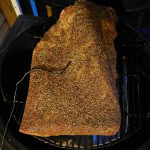
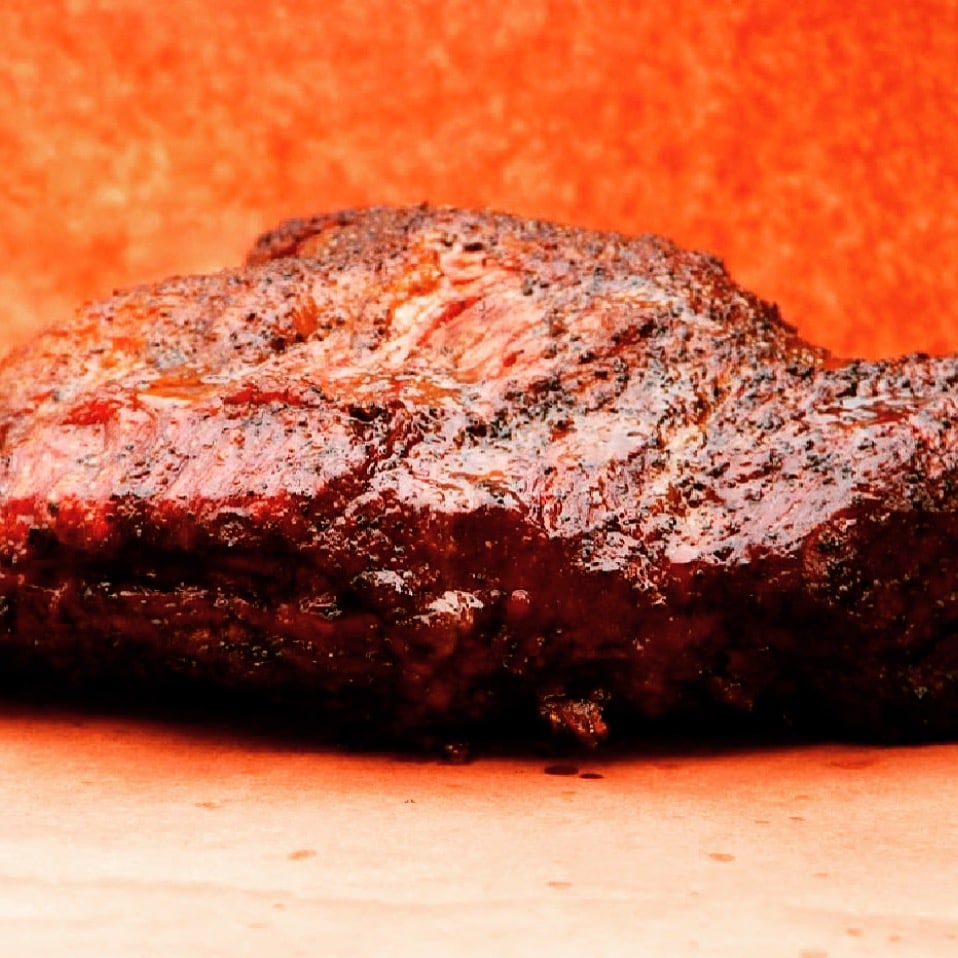
It adds a dark, brooding complexity that helps build a bark so crusty and mahogany-dark it looks like it was forged in a volcano.
And today, we aren’t just making meat; we’re capturing the smoky drippings to ensure not a single drop of flavor escapes the smoker.
The Science of the Bean and the Bark
Why coffee for your Texas-Style Coffee Rub Brisket? It’s not about the caffeine – though God knows we need it when we’re waking up at 3:00 AM to light the logs.
Coffee is naturally acidic. When applied to a brisket, that acidity acts as a gentle meat tenderizer, breaking down those stubborn connective tissues during the long haul of a 12-hour cook.
More importantly, coffee is the king of the Maillard reaction. This is the chemical dance between amino acids and reducing sugars that gives browned food its flavor.
Because coffee grounds are fine and dark, they jumpstart the formation of a thick, savory bark.
By the time the smoke hits those oils in the coffee, you’re creating a crust that’s deeper and more complex than what you’d get with just salt and pepper.
If a standard Texas brisket is a classic rock song, a coffee-rubbed brisket is a heavy metal anthem.
The Anatomy of the Cut: Trimming for Success
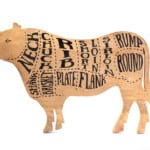
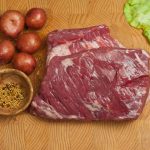
You can’t just throw a 15-pound “packer” brisket on the grates and hope for the best. That’s like trying to win a drag race in a minivan – the aerodynamics are all wrong. You need to trim with intent.
Target the “deckle” – that hard, waxy fat between the point and the flat. It won’t render; it’ll just sit there like a cold stick of butter at the end of the day.
Aim for a uniform 1/4-inch fat cap. This layer acts as an insulator, protecting the meat from drying out while slowly melting into the muscle.
Pitmaster Pro-Tip: Trim your meat while it’s ice-cold. Fat at room temperature is like trying to cut a wet sponge with a butter knife. Cold fat is firm, obedient, and much more forgiving of a sharp boning knife.
The Midnight Coffee Rub: Your Flavor Blueprint
Forget the pre-made shakers. We’re building this from scratch. The key is the grind size. You want a “fine” to “medium-fine” grind – think slightly coarser than espresso.
If the grounds are too big, it’ll feel like you’re eating sand; too fine, and it turns into a muddy paste.
The “Black Gold” Ratio:
- 1/2 cup Coarse Kosher Salt (The foundation)
- 1/2 cup 16-mesh Black Pepper (The Texas heat)
- 1/4 cup Finely Ground Dark Roast Coffee (The soul)
- 1 tablespoon Granulated Garlic (The bridge)
Apply a light binder – I’m a fan of a thin coat of yellow mustard or even a little beef tallow.
It won’t taste like mustard when it’s done, I promise. It just gives the rub something to hold onto so it doesn’t fall into the fire.
The Setup: Low, Slow, and Strategic
We’re aiming for a steady 225°F to 250°F.
If your smoker temperature is jumping around more than a caffeinated toddler, your brisket will be tough. Use Post Oak if you can find it; it’s the Texas standard because it burns clean and smells like heaven.
Now, let’s talk about the smoky drippings.
Most people let those juices fall into the bottom of the smoker where they burn and smell like a tire fire. Not us. Place a disposable aluminum foil pan on the rack directly underneath where the brisket will sit.
Fill it with a half-inch of beef broth and a splash of Worcestershire sauce. As the brisket cooks, the fat and seasoned juices will drip into this pan, mingling with the broth and absorbing the smoke. This is your “liquid gold.”
Surviving the Stall and the Wrap
Around the 5 or 6-hour mark, your brisket’s internal temperature will hit about 160°F and just… stop. It’s called the stall, and it’s enough to make grown men cry. The meat is “sweating,” and the evaporation is cooling it down.
Don’t panic and don’t turn up the heat. This is when you check your bark. If it looks like a dark, beautiful crust, it’s time to wrap. Use peach butcher paper.
Unlike foil, which steams the meat and ruins your bark (turning it into “pot roast”), butcher paper breathes. It keeps the moisture in but lets the crust stay crunchy.
Before you fold the paper, take a ladle of those smoky drippings from your catch pan and pour it over the meat. It’s like giving your brisket a spa day in its own juices.
The Finish Line: Probe Tender
Forget the clock. Your brisket is done when it’s done. We are looking for internal temperatures between 203°F and 205°F, but the real test is the “probe test.” Take a temperature probe or a skewer and poke the thickest part of the meat.
It should feel like you’re pushing it into a room-temperature stick of butter. No resistance.
The Most Important Ingredient: Patience
I know you’re hungry. The neighbors are hovering. But if you slice that brisket the second it comes off the pit, all those juices you worked so hard for will run across the cutting board and disappear forever.
Rest your brisket for at least 2 hours.
Wrap it in a towel and put it in an empty, dry cooler. This allows the muscle fibers to relax and reabsorb the moisture. A well-rested brisket is the difference between a juicy masterpiece and a dry disappointment.
Slicing and Serving
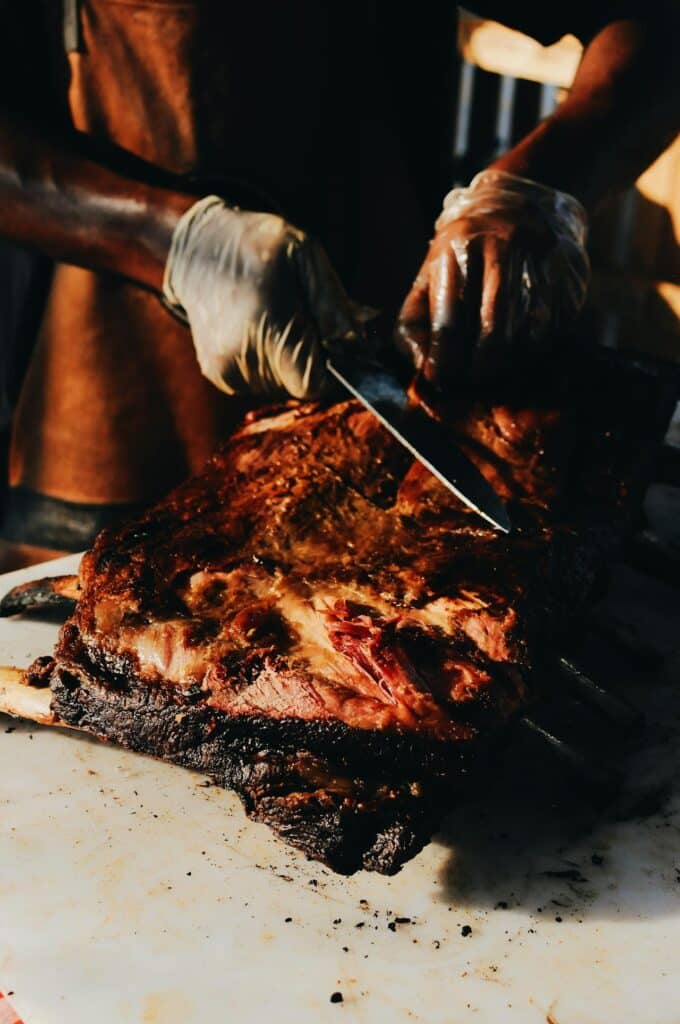
When it’s time to show off, remember: always slice against the grain. Look for the direction the fibers are running and cut perpendicular to them. For the “Flat” (the leaner side), go for pencil-thick slices.
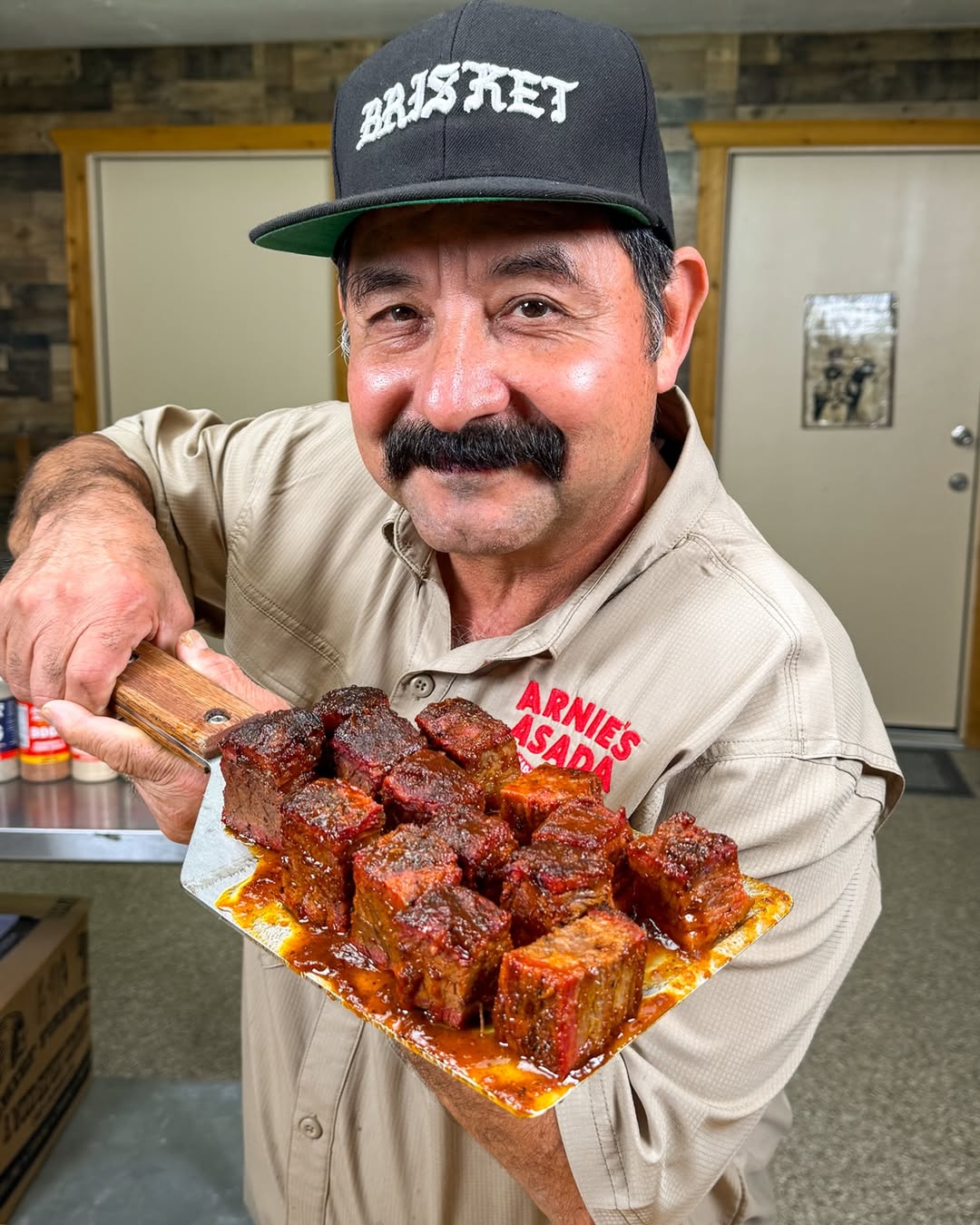
For the “Point” (the fatty side), you can go a bit thicker or even cube it up for “burnt ends.”
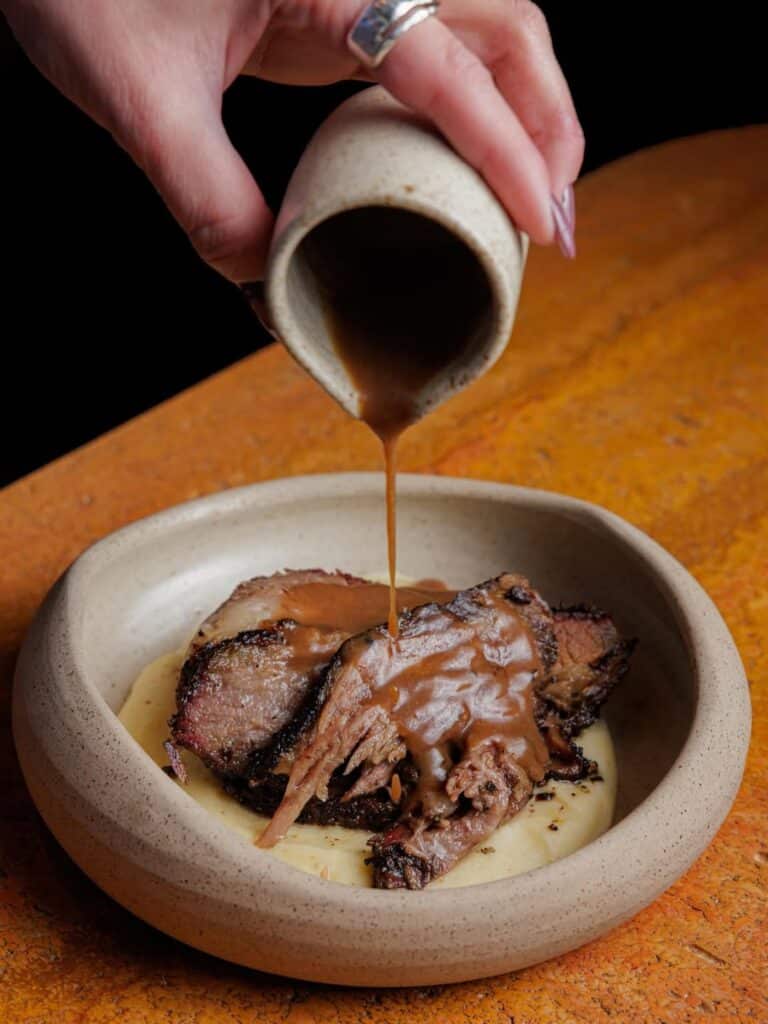
Take the remaining liquid from your drip pan, strain out any heavy soot, and serve it on the side as a smoky au jus.
Dip a slice of white bread into those drippings, top it with a piece of Texas-Style Coffee Rub Brisket, a pickle, and a slice of onion.
Final Thoughts – Texas-Style Coffee Rub Brisket
Wrapping this Texas-style cook is all about honoring the patience it requires. That dark, earthy coffee bark and those liquid-gold smoky drippings aren’t just ingredients; they’re the reward for ten hours of fire management.
Whether you’re feeding a hungry crowd or perfecting your backyard craft, this brisket proves that a little bold experimentation is exactly how BBQ legends are made.
You’ve just achieved pitmaster enlightenment. Enjoy the meat coma – you earned it.
Texas-Style Coffee Rub Brisket With Smoky Drippings
Image credit: Malte Luk
Ingredients
- The Main Event
- 1 Whole Packer Brisket (12–15 lbs): Look for a Prime grade if your budget allows; the marbling makes a world of difference.
- The "Midnight" Coffee Rub
- 1/2 cup Coarse Kosher Salt
- 1/2 cup 16-mesh Black Pepper: (This "cafeteria grind" is essential for Texas bark).
- 1/4 cup Dark Roast Coffee Grounds: Fine to medium-fine grind (avoid instant coffee).
- 1 tbsp Granulated Garlic
- 1 tbsp Smoked Paprika: (Optional, for a color boost).
- Binder: 1/4 cup Yellow Mustard or Beef Tallow.
- The Drip Pan (Liquid Gold)
- 2 cups Beef Broth
- 1/2 cup Water
- 1 tbsp Worcestershire Sauce
- 1 tsp Black Pepper
Instructions
1. The Cold Trim
Pull your brisket straight from the fridge. Use a sharp boning knife to remove the hard "deckle" fat (the white, waxy chunk between the point and flat).
Flip it to the fat cap and trim it down to a uniform 1/4-inch thickness. Square off the thin edges of the flat so they don't burn to a crisp.
2. Seasoning the Beast
Slather a very thin layer of mustard over the entire brisket – this is just to help the rub stick. Mix your rub ingredients in a bowl and apply liberally. You aren't "sprinkling" here; you are coating.
Pat the rub into the meat; don't rub it in, or you'll smear the spices. Let it sit at room temperature for 30–40 minutes while you fire up the smoker.
3. The Setup
Preheat your smoker to 250°F (121°C) using Post Oak or Hickory. Place an aluminum drip pan on the rack below where the meat will sit. Add your broth, water, and Worcestershire to the pan.
This catches the rendering fat and creates a humid environment to prevent the meat from drying.
4. The Low and Slow Cook
Place the brisket on the grates, fat side up (or fat side toward your heat source).
Close the lid and resist the urge to peek for at least 4 hours. If any spots look particularly dry, you can spritz them with a little apple cider vinegar or water.
5. The Wrap (The Texas Crutch)
Once the internal temperature hits roughly 165°F (74°C) and the bark is dark and set (it shouldn't come off when you touch it), it's time to wrap. Lay out two long sheets of peach butcher paper.
Pour a few tablespoons of the warm liquid from your drip pan onto the paper, place the brisket on top, and wrap it tightly like a gift.
6. The Finish
Put the wrapped brisket back in the smoker.
You are looking for an internal temperature of 203°F (95°C), but the "feel" is what matters. Push your probe into the meat; if it slides in like it's hitting a tub of warm butter, it’s done.
7. The Long Rest
This is the hardest part.
Take the wrapped brisket and place it in an empty room-temperature cooler for at least 2 hours. This allows the juices to redistribute so they stay in the meat rather than ending up on your shoes when you slice it.
Featured image credit: @arnietex