
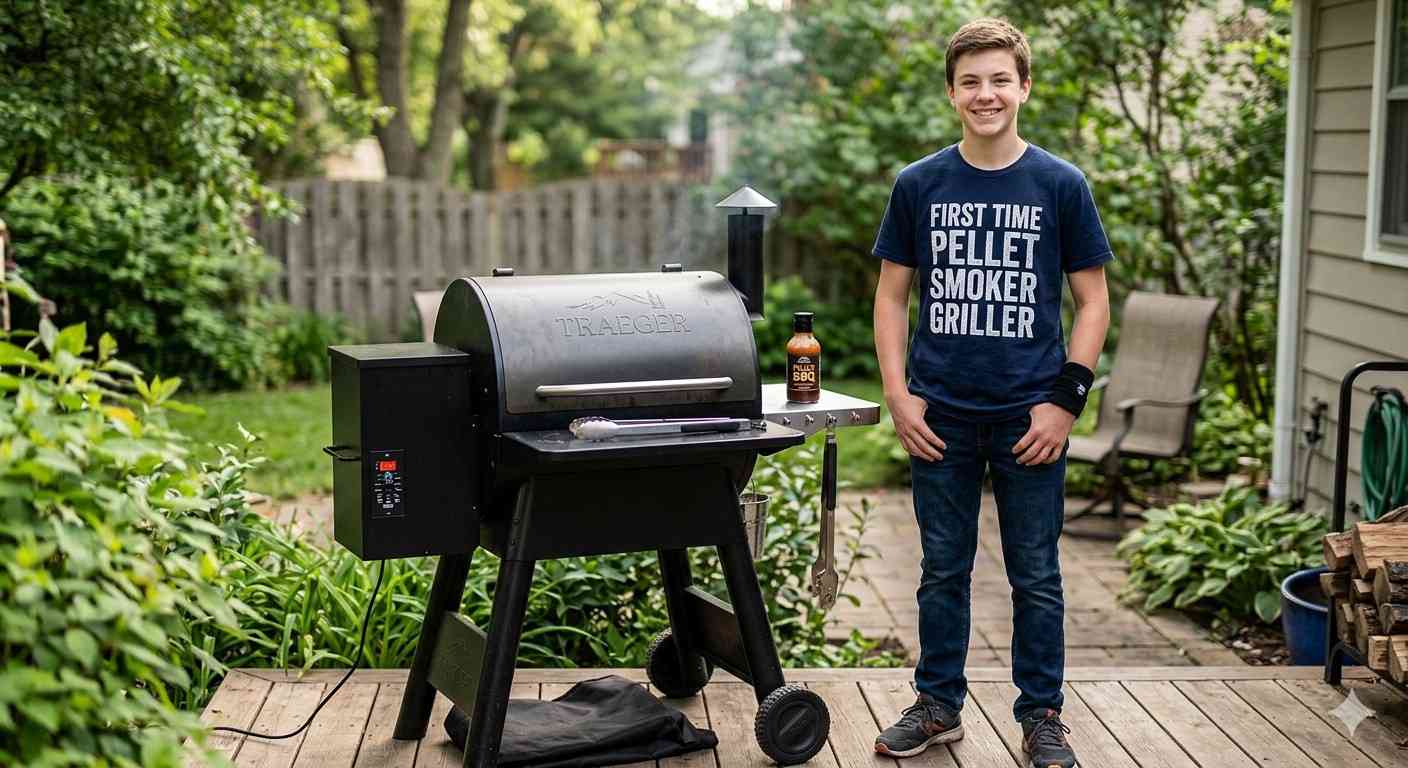
I still remember my first smoker cook.
I had no clue what I was doing. The temperature swung like a broken thermostat, I used way too much wood, and the chicken tasted like it had been camped over a bonfire for three days.
And yet… it hooked me.
Because here’s the truth nobody tells you upfront:
Smoking meat isn’t about perfection. It’s about control, patience, and learning how fire behaves.
This guide is your shortcut through the chaos.
We’re going to strip things down, keep it practical, and get you through your first smoker cook without turning dinner into a smoky regret.
What a Smoker Really Does (And Why It’s Different)
A smoker isn’t just a grill with extra steps.
It’s a low-and-slow cooking environment where heat and smoke work together to transform tough cuts into something tender, juicy, and deeply flavorful.
Think of it like this:
- Grilling = fast, hot, direct heat
- Smoking = slow, controlled, indirect heat + smoke
You’re not just cooking meat.
You’re guiding it through a process.
And yes, that sounds dramatic – but wait until your first bite of properly smoked meat. You’ll get it.
Types of smokers (don’t overthink this)
- Charcoal: classic flavor, more hands-on
- Electric: easiest for beginners
- Pellet: set-it-and-forget-it convenience
- Gas: somewhere in between
Key point: Your smoker doesn’t need to be fancy.
The magic comes from how you manage it, not how much you spent.
The Gear You Actually Need (And What You Don’t)
Let me save you from a common beginner mistake:
Buying everything.
You don’t need a truckload of gear for your first smoker cook.
What matters:
- A reliable meat thermometer (this is non-negotiable)
- Your fuel (charcoal, pellets, etc.)
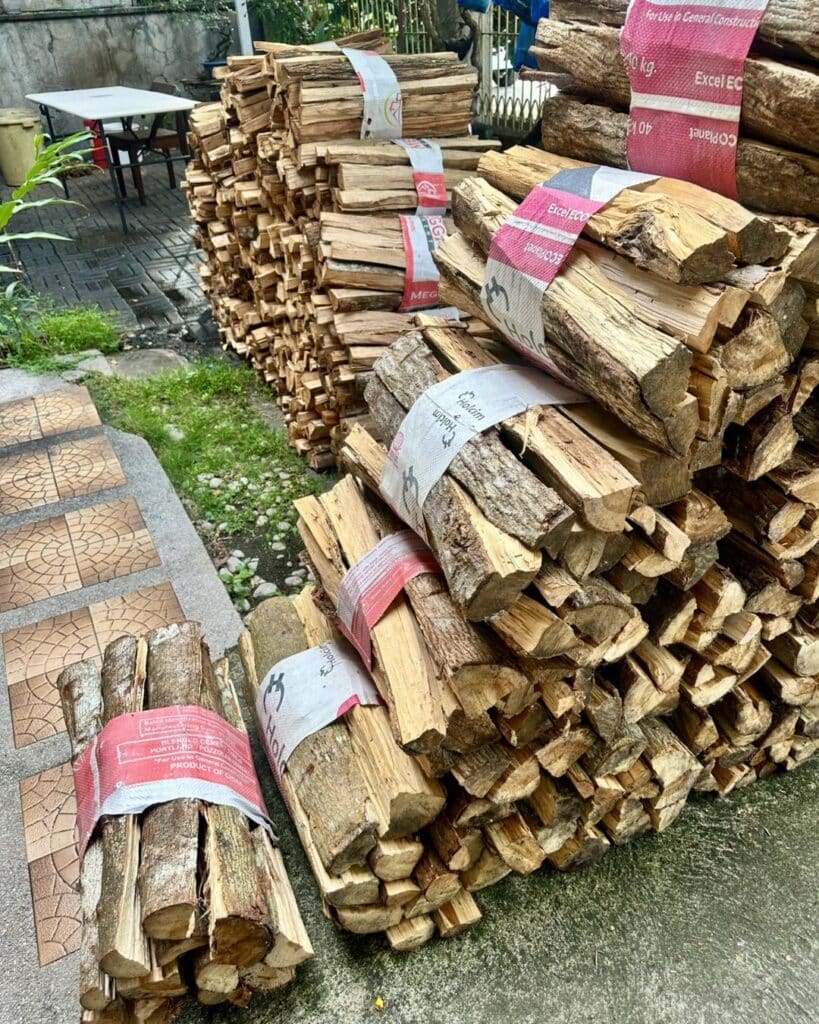
- Wood for smoke
- Basic tools like tongs and heat-resistant gloves
That’s it.
What can wait:
- Fancy rib racks
- Digital fan controllers
- “Competition-grade” anything
Rule of thumb:
If it doesn’t help you control temperature or timing, you probably don’t need it yet.
Choosing the Right Meat (Set Yourself Up to Win)
Here’s where beginners either succeed… or suffer.
Not all meats are forgiving.
For your first smoker cook, pick something that won’t punish small mistakes.
Best beginner cuts:
- Chicken thighs – quick, forgiving, hard to mess up
- Pork shoulder – fatty, resilient, incredibly rewarding
- Ribs – a little trickier, but still manageable
What to avoid (for now):
- Brisket
Brisket is the Mount Everest of BBQ.
You don’t climb Everest on your first hike.
Key point:
Choose meat with more fat and connective tissue. It buys you time and forgiveness.
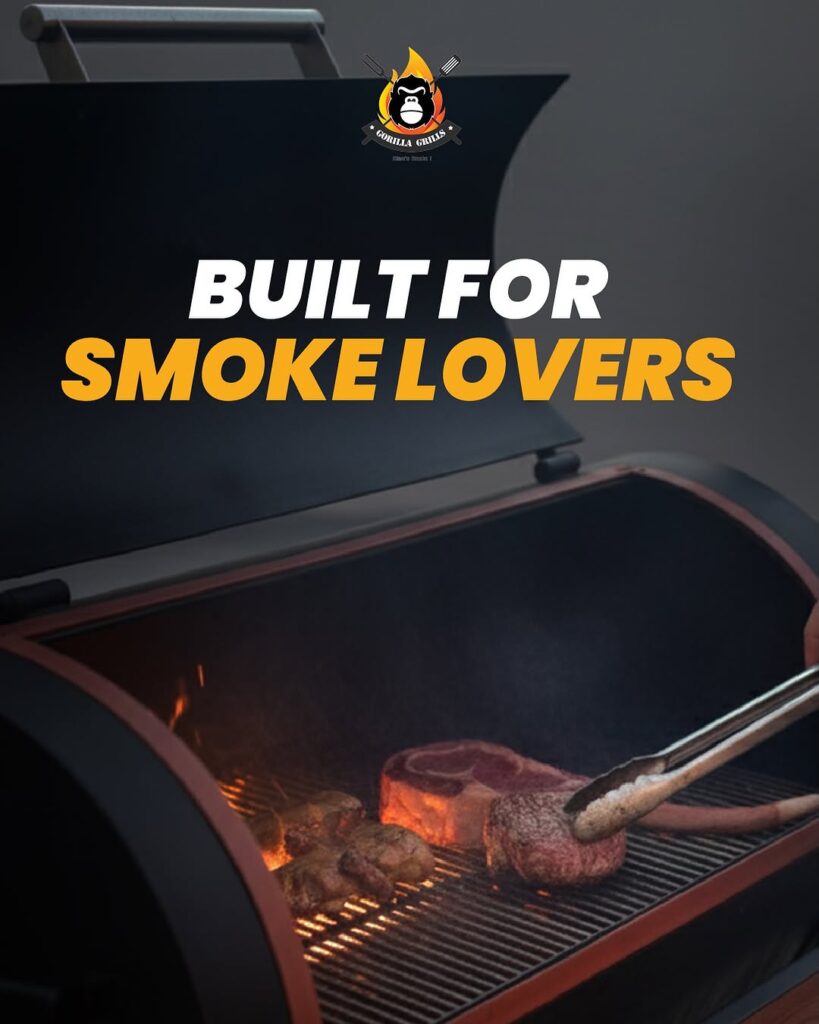
Understanding Smoke (Less Is More… Seriously)
This is where most first-timers go wrong.
They think:
“More smoke = more flavor.”
Nope.
That’s how you end up with meat that tastes like an ashtray.
What you’re aiming for:
- Thin, clean blue smoke
- Not thick, white clouds
Wood basics:
- Mild: apple, cherry
- Medium: hickory
- Strong: mesquite (go easy)
Important phrase to remember:
“You’re seasoning with smoke, not drowning in it.”
Setting Up Your Smoker (Where the Battle Is Won)
Your cook doesn’t start when the meat goes in.
It starts here.
The goal:
Get your smoker sitting comfortably at 225–250°F (107–121°C).
Not spiking.
Not crashing.
Just steady.
Simple setup flow:
- Light your fuel properly (no shortcuts)
- Let the smoker preheat
- Adjust airflow slowly
- Wait until temperature stabilizes
- Add wood only when heat is steady
This is where patience kicks in.
Rushing this step is like baking a cake in an oven that isn’t preheated.
You’re setting yourself up for disappointment.
Prepping the Meat (Keep It Simple, Rookie)
You don’t need a secret rub passed down from BBQ royalty.
For your first smoker cook, simplicity wins.
The basics:
- Salt
- Pepper
- Maybe garlic powder or paprika
That’s enough to let the smoke shine.
A quick pro tip:
Let your meat sit at room temperature for about 20–30 minutes before cooking.
Not hours.
We’re not raising livestock again.
The Smoking Process (What It Actually Feels Like)
You’ve prepped. The smoker is steady. The meat goes in.
Now what?
First lesson:
Do less than you think.
What to expect:
- Temperature will fluctuate a bit (that’s normal)
- You’ll feel tempted to check constantly (don’t)
- Time will move slower than usual (welcome to smoking)
The “Stall” (Don’t Panic)
At some point, your meat’s internal temp may stop rising.
It’s not broken.
It’s science.
Moisture is evaporating, cooling the meat.
Key point:
Stay patient. This is where beginners either win… or give up.
Fire Management: Learning to Control Your Heat Like a Pitmaster
If your first smoker cook teaches you anything, it’s this: fire control is everything.
Not seasoning. Not sauce. Not even the meat.
Fire.
Think of your smoker like a living thing. It breathes. It reacts. And if you don’t manage it, it will absolutely misbehave.
The trick isn’t chasing temperature – it’s anticipating it. Add fuel before your heat drops. Adjust vents in small moves, not wild swings. Big changes lead to bigger problems.
Here’s the mindset shift:
You’re not just cooking – you’re driving the smoker.
And like any vehicle, smooth control beats aggressive corrections.
Key takeaway:
Steady fire = steady results. Learn that early, and your first smoker cook becomes a whole lot less stressful.
Weather Matters: Why the Outdoors Can Ruin (or Save) Your Cook
Nobody talks about this enough.
Your first smoker cook doesn’t happen in a vacuum – it happens outside, where weather has opinions.
Wind will spike your heat.
Cold air will steal it.
Rain will mess with your fuel.
Suddenly, your perfectly planned cook turns into a battle with the elements.
Here’s how to stay ahead:
- Position your smoker out of direct wind
- Expect longer cook times in cold weather
- Use more fuel when temperatures drop
Think of weather as an invisible ingredient.
You can’t control it – but you can respect it and adjust.
Important reminder:
Great pitmasters don’t fight the weather.
They cook with it.
Timing Your Cook: When to Start (So You Don’t Eat at Midnight)
Let me guess – you’re planning your first smoker cook and thinking:
“I’ll just start in the afternoon.”
That’s how people end up eating at midnight.
Smoking takes time. Sometimes a lot of time. And beginners almost always underestimate it.
Here’s a better approach:
- Work backward from when you want to eat
- Add extra buffer time (seriously, add more)
- Remember: meat can rest, but hungry guests can’t
Key phrase to live by:
“It’s done when it’s done – but you should start early anyway.”
Starting early gives you control. Starting late gives you stress.
And trust me – BBQ tastes better when you’re relaxed, not checking the clock every five minutes.
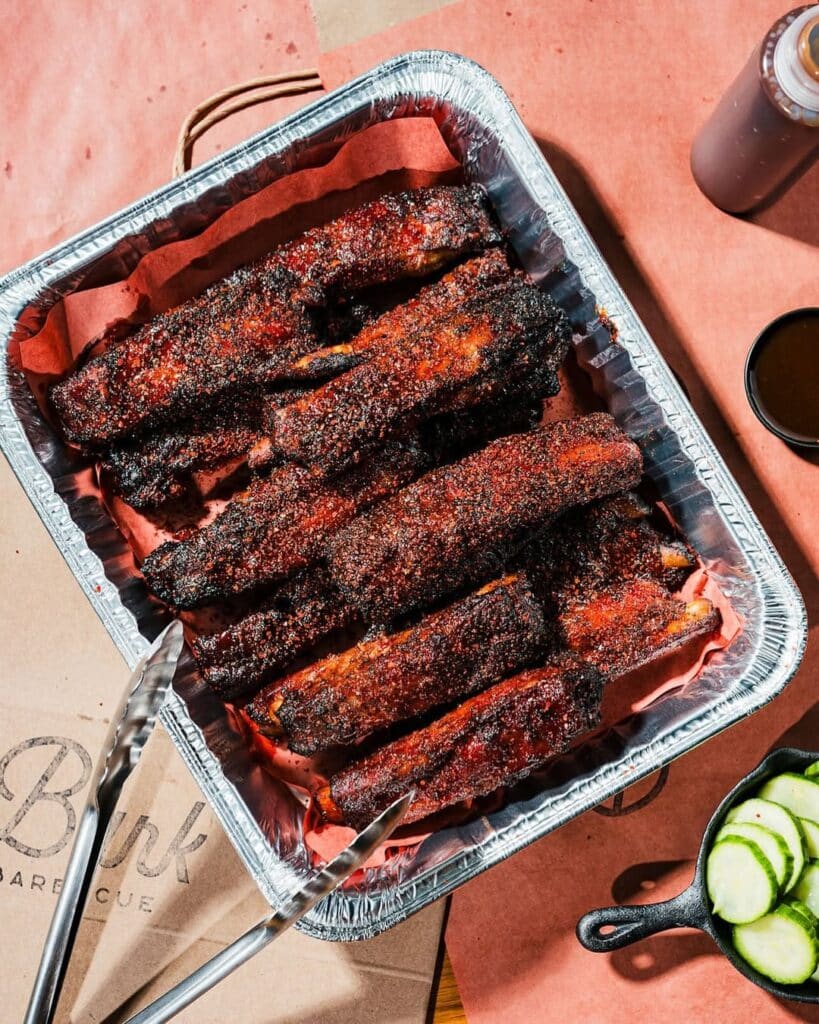
Building Bark: That Flavorful Crust Everyone Talks About
Ah yes – the legendary bark.
That dark, crusty exterior on smoked meat? That’s where flavor lives.
But here’s the catch:
You don’t force bark. You let it happen.
During your first smoker cook, focus on:
- Consistent temperature
- Proper airflow
- Not wrapping too early
Bark forms when smoke, seasoning, and rendered fat come together over time.
If you rush it, you lose it.
If you mess with it too much, you ruin it.
Simple truth:
Great bark is earned, not rushed.
When you nail it for the first time, you’ll understand why pitmasters obsess over it like it’s gold.
The Role of Moisture: Water Pans and Why They Matter
Let’s talk about something subtle – but powerful.
Moisture.
During your first smoker cook, your smoker can dry out faster than you think. That’s where a water pan comes in.
It does three things:
- Stabilizes temperature
- Adds humidity
- Helps prevent meat from drying out
Now, is it mandatory? No.
But for beginners, it’s like training wheels.
It smooths out the ride.
Important insight:
Moisture doesn’t make your meat juicy – proper cooking does.
But it helps create a more forgiving environment while you’re learning.
And in your first cook, forgiveness is a beautiful thing.
Slicing and Serving: Don’t Ruin It at the Finish Line
You did everything right.
The smoke was perfect. The temperature held. The meat looks incredible.
Then… you slice it wrong.
Game over.
For your first smoker cook, remember this:
How you cut the meat matters just as much as how you cooked it.
Always slice against the grain. This shortens muscle fibers and makes every bite more tender.
Cutting with the grain?
That’s how you turn great BBQ into chewy disappointment.
Also:
- Use a sharp knife
- Don’t shred or slice too early
- Serve while warm, not piping hot
Final step, final rule:
Respect the meat all the way to the plate.
The BBQ Mindset: Patience, Instinct, and Letting Go of Perfection
This might be the most important lesson of your first smoker cook.
BBQ is not about perfection.
It’s about:
- Patience over panic
- Consistency over control
- Learning over ego
You will make mistakes.
Your temperature will fluctuate.
Your timing might be off.
Something might not go as planned.
Good.
That’s how you learn.
Every pitmaster you admire? They’ve had bad cooks. Plenty of them.
Key mindset shift:
You’re not trying to be perfect.
You’re trying to get better every time you light the fire.
And once you embrace that?
That’s when BBQ really starts to click.
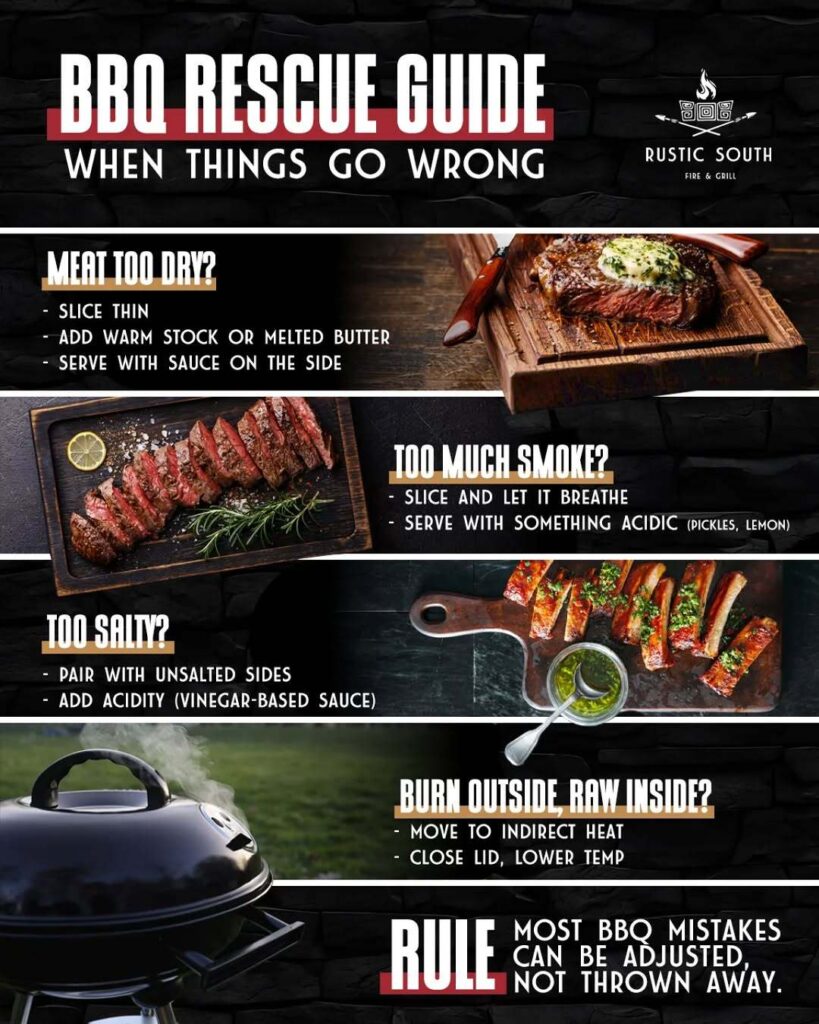
Common Beginner Mistakes (I’ve Made Them All)
Let’s save you some frustration.
1. Opening the smoker too often
Every time you open it, you lose heat and time.
2. Using too much wood
You’re not signaling ships at sea.
3. Ignoring internal temperature
Your thermometer is your best friend.
4. Chasing perfect temperature
Small swings are fine. Stop overcorrecting.
5. Rushing the cook
This is the big one.
Smoking punishes impatience. Every time.
Knowing When It’s Done (Trust the Process)
Forget guesswork.
Two things matter:
- Internal temperature
- Texture
For example:
- Chicken: ~165°F
- Pork shoulder: ~195–205°F (for pulling)
But here’s the real secret:
“Done” isn’t just a number – it’s a feel.
When a probe slides in like butter…
That’s when you know.
Don’t skip the rest
Let the meat rest for at least 10–20 minutes.
This is where juices redistribute.
Skip it, and all that flavor ends up on your cutting board.
Your First Cook Game Plan (Simple and Foolproof)
Let’s keep this practical.
Try this:
Smoked chicken thighs
- Temp: 225–250°F
- Time: 1.5–2 hours
- Target internal temp: 165°F
Flow:
- Season simply
- Stabilize smoker
- Add chicken
- Don’t touch it for at least an hour
- Check temperature
- Pull, rest, eat
That’s it.
No drama.
No overthinking.
Just a clean, successful first smoker cook.

Conclusion: You’re Now Dangerous (In a Good Way)
Here’s what matters most:
Your first smoker cook won’t be perfect.
Mine wasn’t. Nobody’s is.
But if you:
- Control your temperature
- Go easy on the smoke
- Stay patient
You’ll already be ahead of most beginners.
And once you taste that first bite – the one where smoke, fat, and time come together – you’ll understand why people get obsessed with this.
Fair warning:
This hobby has a way of turning into a lifestyle.
Quick FAQ (Because You’re Still Wondering)
How long does smoking take?
Longer than you expect. Plan for hours, not minutes.
Do I need to soak wood chips?
No. That myth refuses to die.
Can I use a grill as a smoker?
Yes – with indirect heat and proper setup.
What temperature should I use?
Stick to 225–250°F. It’s your safe zone.
Featured image credit: Google Gemini
