

Let me tell you something most new grillers don’t realize right away: great barbecue isn’t about owning the biggest smoker or the fanciest gadget. It’s about heat control.
That’s exactly where Slow ’N Sear grills come in.
Instead of fighting unpredictable charcoal fires, these grills are designed around one core idea – controlled two-zone cooking. That means you can run low-and-slow barbecue on one side while keeping a screaming-hot sear zone ready on the other.
The result?
- More consistent cooking
- Less guesswork
- Better flavor development
- And way fewer “oops I burned dinner” moments.
SNS Grills built their kettle lineup specifically around this philosophy, integrating airflow control, charcoal management, and thoughtful pitmaster-friendly features right into the design.
I’ve spent years cooking on kettles, kamados, and everything in between – and I’ll be honest: these grills feel like they were designed by people who actually barbecue every weekend.
Let’s break down the top models.
Quick Overview of SNS Kettle Grill Lineup
Before diving deep, here’s how the main SNS kettle grills fit together:
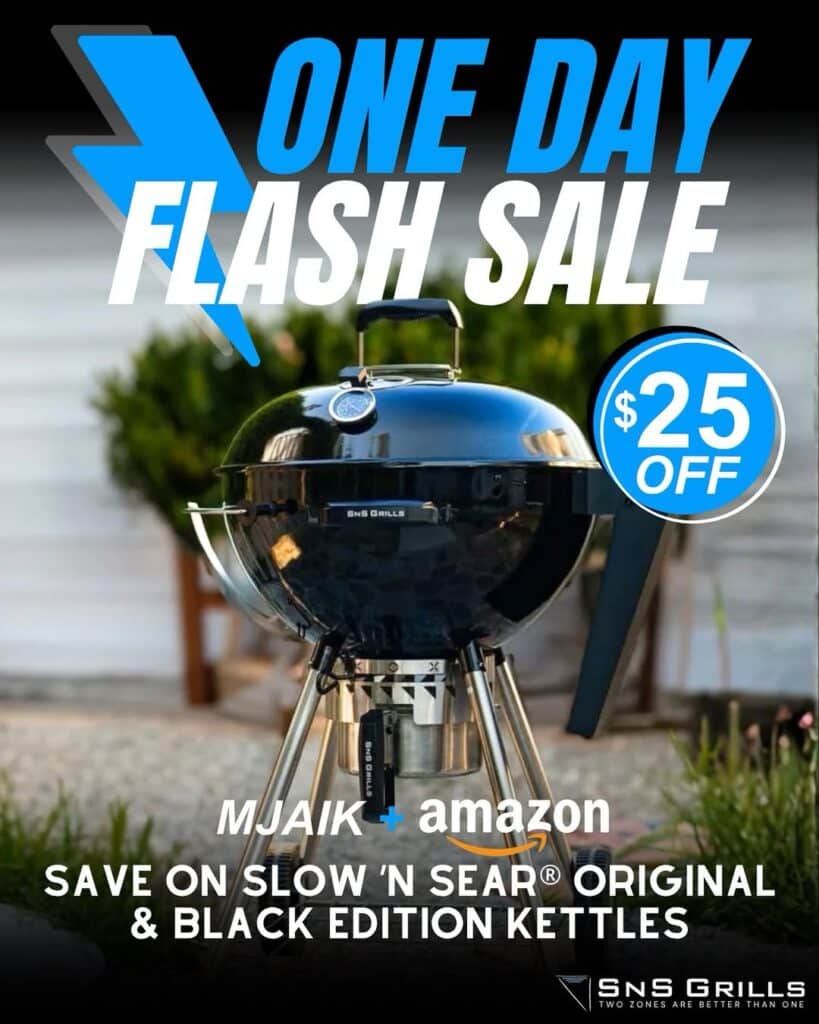
- Black Edition Kettle Grill (22″) – modernized kettle with Slow ’N Sear system.
- Black Edition w/ Side Shelf – adds prep space for longer cooks.
- MasterKettle Grill & Smoker (22″) – enhanced airflow and smoking features.
- Original Kettle Grill & Smoker (22″) – simplified classic design.
- Home ’N Roam Travel Kettle (18″) – portable but still capable.
All share one big advantage: they’re built around the Slow ’N Sear Deluxe insert, designed for precise indirect cooking and powerful searing.
The Core Technology – What Makes Slow ’N Sear Grills Different
Before reviewing individual models, let’s talk about the heart of the system.
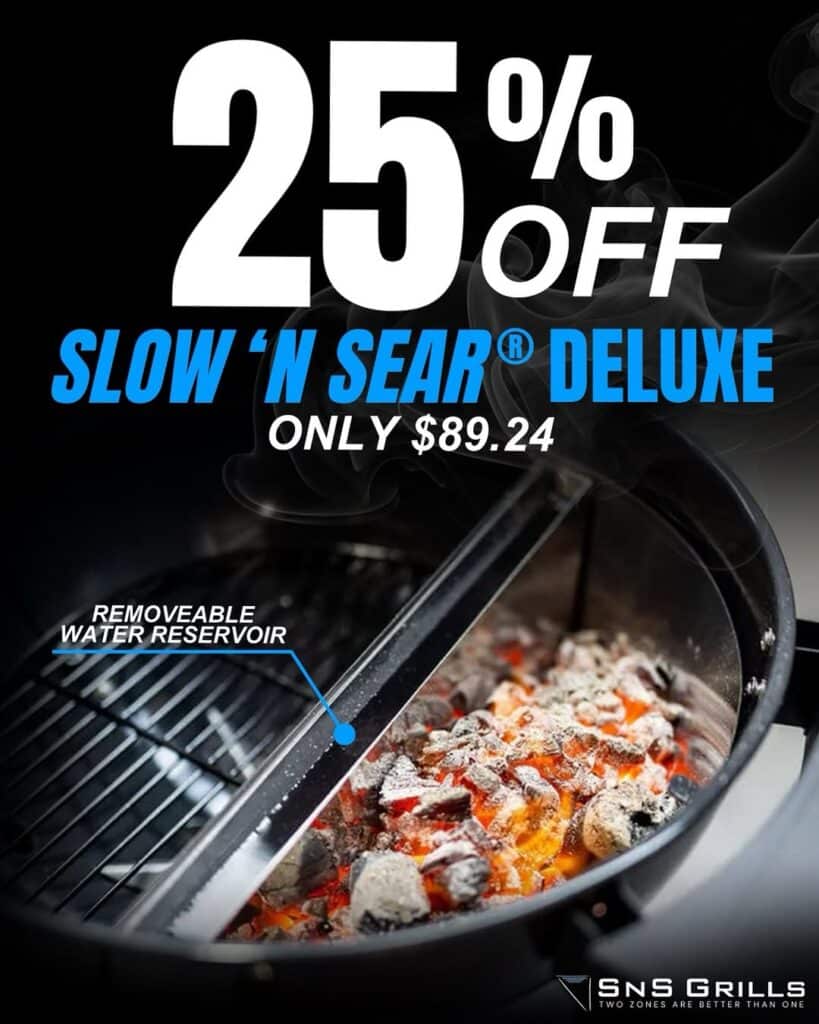
The Slow ’N Sear accessory turns a standard kettle into a two-zone powerhouse.
Key design elements include:
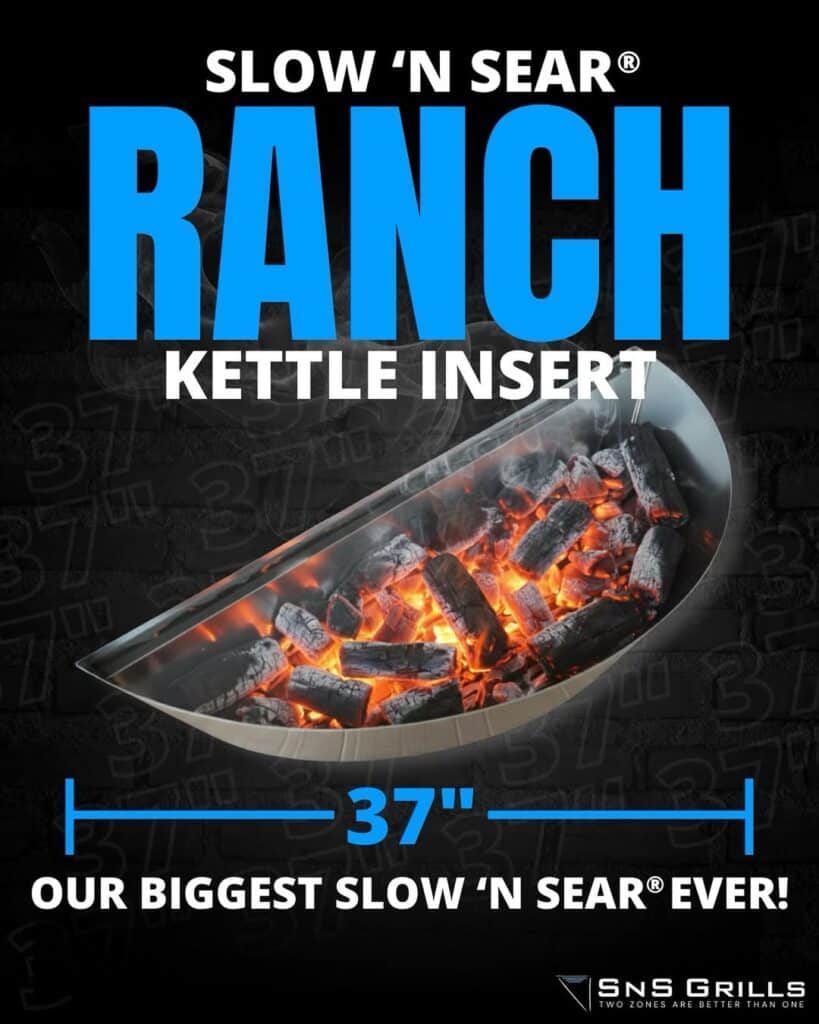
- A charcoal basket holding enough fuel for long cooks – about 8+ hours at low smoking temps.
- A water reservoir that creates a heat barrier and stabilizes temperatures.
- The ability to reach extremely high searing heat when fully loaded.
From a pitmaster perspective, that means:
👉 You’re not constantly rearranging coals.
👉 Temperature swings become manageable.
👉 Switching from smoking to searing becomes seamless.
Individual Slow ’N Sear Grill Reviews
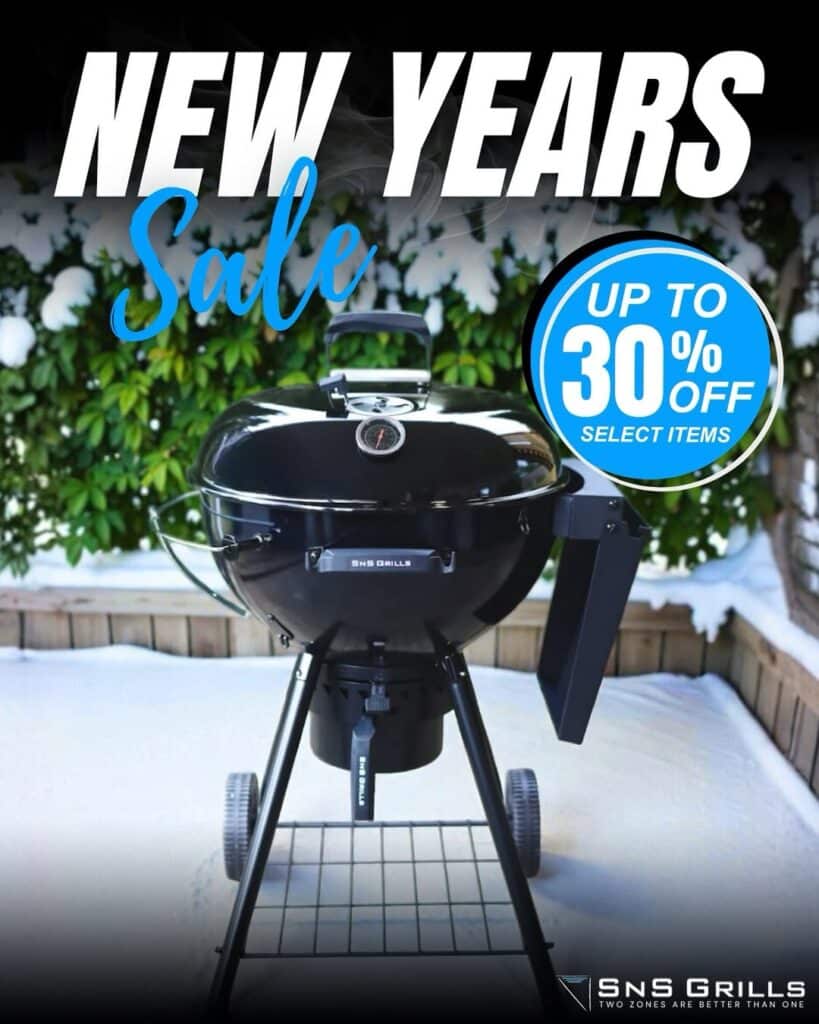
1. Black Edition Kettle Grill — The Modern Everyday Pit
This is the model that feels closest to a “next-generation” kettle grill.
Right away you notice the design tweaks:
- Improved airflow venting
- Integrated Slow ’N Sear cooking system
- Heavy-duty construction
The airflow adjustments make it easier to hold steady smoking temperatures without babysitting the grill every five minutes.
Cooking experience:
- Excellent for ribs, chicken, and reverse-seared steaks.
- Easy to set up two-zone cooking.
Key takeaway: This is the ideal starting point if you want a purpose-built Slow ’N Sear grill without extra complexity.
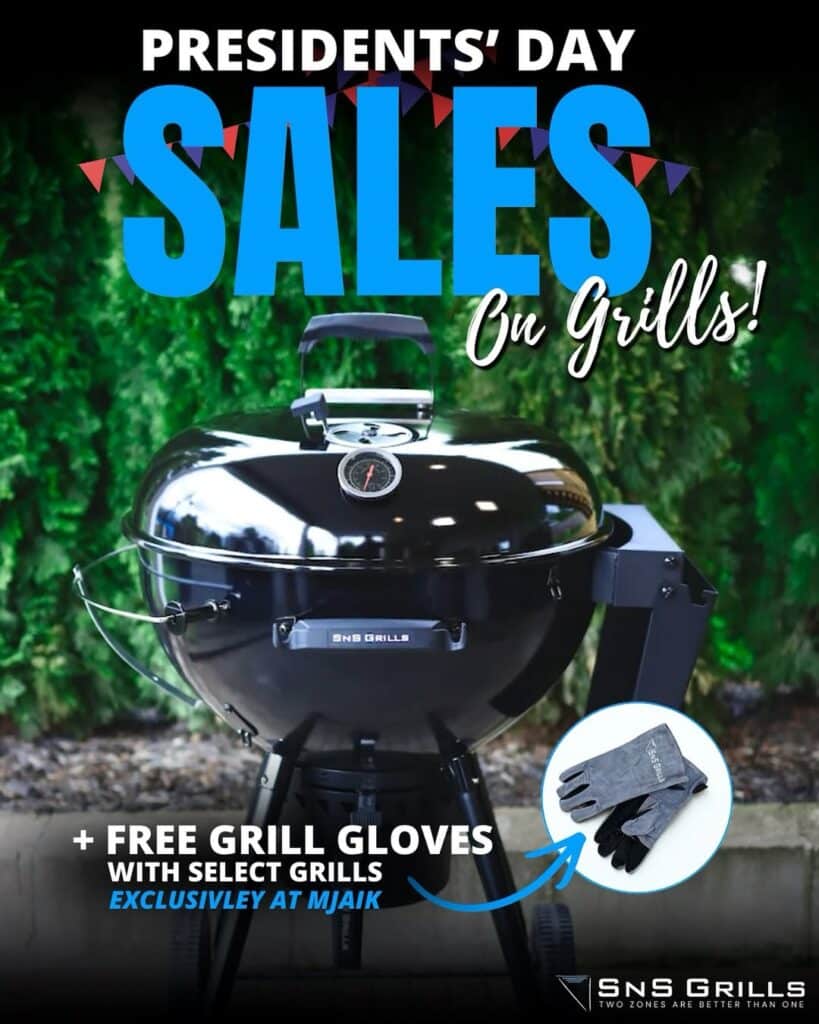
2. Black Edition Kettle w/ Side Shelf – Backyard Workstation Mode
Add a side shelf and suddenly long cooks feel much more manageable.
I didn’t realize how useful prep space was until I started juggling:
- thermometers
- trays of seasoned meat
- sauce bottles
The shelf supports heavy loads (up to brisket-sized weight), which sounds small but makes a big difference during real cooks.
Best for:
- Backyard pitmasters who cook often
- Anyone tired of running back to the kitchen mid-cook.
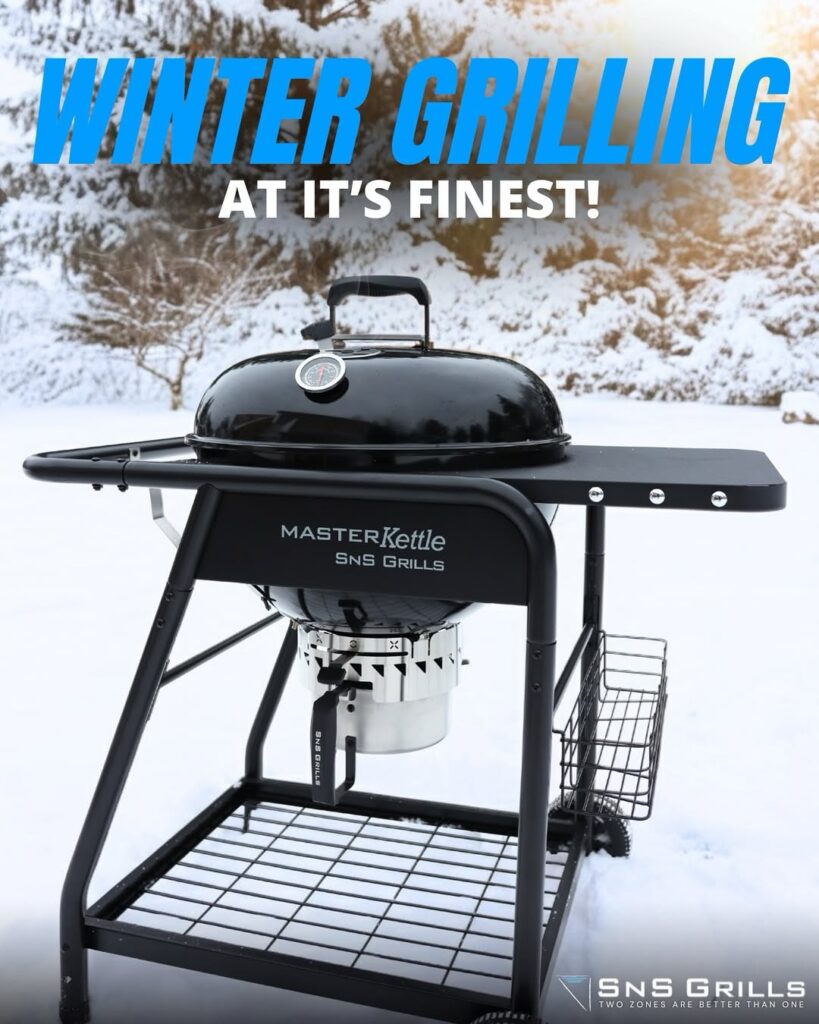
3. MasterKettle Grill & Smoker – Built for Low & Slow Lovers
If your goal is serious smoking, this is where SNS really shines.
Features designed specifically for pitmasters:
- Enhanced airflow control
- Dedicated probe ports for digital thermometers
- Precision vent placement
The ability to run probes cleanly through the grill without pinching wires is underrated – once you’ve used it, you won’t want to go back.
Cooking experience:
- Stable temperatures
- Easy adjustments during long cooks
- Excellent smoke management
Pitmaster verdict: Probably the best option in the lineup for brisket or pork shoulder sessions.
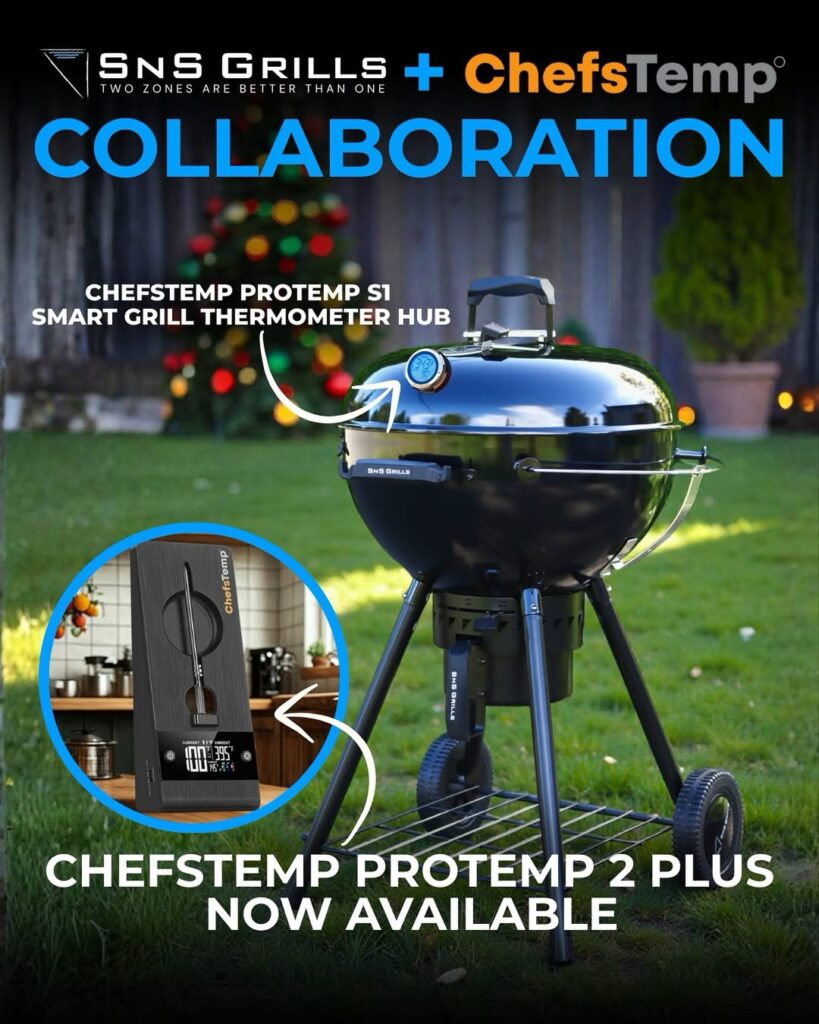
4. Original Kettle Grill & Smoker – Classic Simplicity
Think of this as the stripped-down, no-nonsense version.
It focuses on the essentials:
- Strong airflow design
- Reliable two-zone setup
- Simple construction
Some grillers prefer this because fewer moving parts mean fewer distractions.
If you love learning fire management manually, this one feels honest and responsive.
5. Home ’N Roam Travel Kettle (18″) – Small but Surprisingly Capable
Portable grills usually force compromises.
Not this one.
Even at 18 inches, it supports the Slow ’N Sear cooking style, giving you:
- Real indirect cooking capability
- Enough sear space for steaks
- Excellent airflow control for its size
Perfect for:
- Camping
- Tailgating
- Small patios
One thing to note – cooking space is limited, so large family cooks may feel cramped.
Key Features That Matter in Slow ’N Sear Grills
Airflow Control
Airflow is the difference between fighting your grill and mastering it.
SNS kettles include refined vent designs and extra airflow options like smoke holes and probe ports for better temperature management.
Translation: easier temperature stability.
Two-Zone Cooking Capability
Every model is built around true two-zone cooking:
- One side = indirect heat for smoking.
- Other side = direct heat for searing.
This flexibility makes one grill capable of handling almost any recipe.
Stainless Steel Cooking Components
Many SNS parts use stainless steel construction, improving durability and reducing warping under high heat.
From experience, that means:
- longer lifespan
- easier cleaning
- more consistent heat distribution.
Ease of Cleaning
The ash removal system with multiple vents simplifies cleanup and airflow adjustments.
It sounds like a minor feature – until you’ve cleaned a messy charcoal grill after a long cook.
Fuel Choices That Change Everything (Charcoal Types Explained)
One thing many grillers overlook when using Slow ’N Sear grills is how dramatically fuel choice affects performance. Not all charcoal behaves the same – and choosing the wrong one can make even a great grill feel inconsistent.
Lump charcoal burns hotter and faster, making it perfect for high-heat searing and quick cooks. However, temperature management can feel more reactive because airflow changes quickly impact heat levels.
On the other hand, briquettes provide predictable burn rates, which makes them excellent for low-and-slow smoking sessions where stability matters most.
Some pitmasters mix both for the best of both worlds: briquettes for steady heat and lump pieces for extra punch during searing.
A quick tip from experience: avoid overly dusty charcoal bags. Excess small fragments restrict airflow inside the Slow ’N Sear basket, which can lead to uneven burns.
Master your fuel selection and you’ll unlock another level of control – almost like upgrading the grill itself without spending another dollar.
The Reverse Sear Technique – Where Slow ’N Sear Grills Truly Shine
If there’s one cooking method that perfectly showcases Slow ’N Sear grills, it’s the reverse sear technique.
Instead of blasting meat over high heat immediately, you start on the indirect side. This allows proteins – especially thick steaks – to slowly come up to temperature without overcooking the exterior. Then, you finish with a blazing-hot sear for that deep caramelized crust.
Why does this work so well?
Because two-zone cooking lets you transition seamlessly between heat levels without moving food to another device.
The results are dramatic:
- More even doneness edge-to-edge
- Better moisture retention
- Restaurant-quality crust formation.
The first time you reverse-sear a thick ribeye on a properly set-up kettle, you’ll understand why so many pitmasters refuse to go back to traditional grilling methods.
Managing Weather and Environmental Factors
Outdoor cooking means dealing with variables most indoor chefs never consider. Wind, humidity, and ambient temperature all influence how Slow ’N Sear grills behave.
Cold weather pulls heat away from the grill body, increasing fuel consumption. Strong winds introduce extra oxygen through vents, causing unexpected temperature spikes.
Here’s where kettle design matters: proper airflow systems help compensate for these environmental factors.
A few practical tricks:
- Position your grill with the top vent facing away from the wind.
- Use windbreaks when cooking during breezy conditions.
- Expect longer preheat times in colder climates.
Experienced pitmasters learn to “read the environment” almost like sailors reading the wind.
Once you understand how external conditions influence airflow, maintaining stable temperatures becomes much easier – and your cooks become far more predictable.
Smoke Wood Pairing – Matching Flavor Profiles to Food
One of the most exciting aspects of cooking on Slow ’N Sear grills is experimenting with smoke flavor.
The type of wood you add to your charcoal dramatically changes the final taste. Think of it like seasoning with aroma.
Popular pairings include:
- Hickory – bold and classic for pork and ribs.
- Applewood – sweet and subtle, perfect for poultry.
- Oak – balanced and versatile for beef.
- Cherry – adds color and mild fruitiness.
Because Slow ’N Sear setups concentrate heat and airflow on one side, small chunks of wood ignite gradually, producing cleaner smoke.
Avoid overloading the fire with too much wood. Thin, almost invisible “blue smoke” is the goal – thick white smoke often leads to bitterness.
Mastering wood pairing turns grilling into storytelling through flavor.
Grill Setup Strategies for Different Cooking Styles
Not all pitmasters use their grills the same way. One overlooked advantage of Slow ’N Sear grills is how adaptable the setup can be depending on your goals.
For smoking:
- Use a full charcoal basket with a water reservoir.
- Keep vents partially closed for controlled airflow.
For roasting or baking:
- Spread heat evenly by adjusting charcoal distribution.
- Maintain moderate temperatures around 300–350°F.
For high-heat grilling:
- Fully open vents.
- Stack charcoal tightly to maximize radiant heat.
Think of your grill setup like configuring tools in a workshop. Small changes in airflow and fuel placement transform the cooking environment entirely.
Learning these setups gives you more flexibility without needing additional equipment.
Common Mistakes New Slow ’N Sear Users Make
Even with excellent equipment, beginners often struggle with a few predictable issues.
One major mistake is over-adjusting vents too frequently. Temperature changes take time – constantly tweaking airflow leads to instability.
Another is adding too much charcoal at once. More fuel doesn’t always mean better cooking; it often creates uncontrolled heat spikes.
Also, avoid lifting the lid too often. Every peek releases heat and extends cooking time.
Here’s a pitmaster rule:
👉 “If you’re looking, you’re not cooking.”
Trust the system. Slow ’N Sear designs reward patience and small, deliberate adjustments.
Once you stop chasing temperatures and let the grill settle into its rhythm, cooking becomes far more relaxed and enjoyable.

Accessories That Elevate Slow ’N Sear Grilling
While the core grill setup is powerful, a few accessories significantly enhance the experience.
Consider adding:
- A digital thermometer with dual probes for monitoring both meat and grill temperature.
- High-quality grill gloves for safely managing hot grates and vents.
- Charcoal baskets or organizers for faster reloads during long cooks.
One underrated upgrade is a reliable chimney starter. Properly lighting charcoal ensures consistent ignition and reduces unwanted smoke from partially lit fuel.
Accessories shouldn’t complicate your workflow – they should remove friction and make cooking more intuitive.
Think of them as small upgrades that help you focus on technique instead of troubleshooting.
How Slow ’N Sear Grills Fit into Modern Backyard Cooking Trends
Grilling has evolved far beyond burgers and hot dogs. Today’s backyard cooks want versatility – and that’s exactly why Slow ’N Sear grills are gaining popularity.
They sit at the intersection of several trends:
- Hybrid cooking styles combining smoking and grilling.
- Interest in precision temperature control.
- A return to charcoal flavor without complicated smokers.
Many pitmasters now treat kettle grills as multi-purpose outdoor kitchens capable of roasting, baking, smoking, and searing.
What makes Slow ’N Sear designs stand out is how they simplify advanced techniques. Instead of mastering multiple devices, you learn one system deeply.
In a world moving toward smarter, more efficient cooking tools, these grills feel like the perfect balance between traditional fire management and modern convenience.
Which Slow ’N Sear Grill Should You Choose?
Here’s the quick pitmaster breakdown:
👉 Want the best all-around grill?
Choose the Black Edition Kettle.
👉 Serious about smoking?
Go with the MasterKettle.
👉 Prefer simplicity and classic feel?
Pick the Original Kettle.
👉 Need portability?
The Home ’N Roam Travel Kettle is surprisingly powerful.
Frequently Asked Questions (FAQs)
Do Slow ’N Sear grills replace smokers?
For many backyard cooks – yes. The indirect cooking zone allows real smoking performance without needing a separate smoker.
Are they beginner-friendly?
Absolutely. The two-zone design simplifies fire management dramatically.
Do you still need skill?
Yes – but the grill works with you instead of against you.
Final Verdict – Are Slow ’N Sear Grills Worth It?
After cooking on dozens of charcoal setups, I’ll say this: Slow ’N Sear grills remove friction from charcoal cooking.
They’re not just kettles with accessories slapped on. They’re thoughtfully engineered around real barbecue techniques:
- Stable low-and-slow cooking
- Easy transitions to high heat
- Cleaner airflow control
For beginners, they shorten the learning curve.
For experienced pitmasters, they feel like an upgrade that finally makes kettle grilling behave the way you always wanted.
And honestly? Once you get used to that smooth two-zone control, it’s hard to go back.
Featured image credit: @snsgrills
