
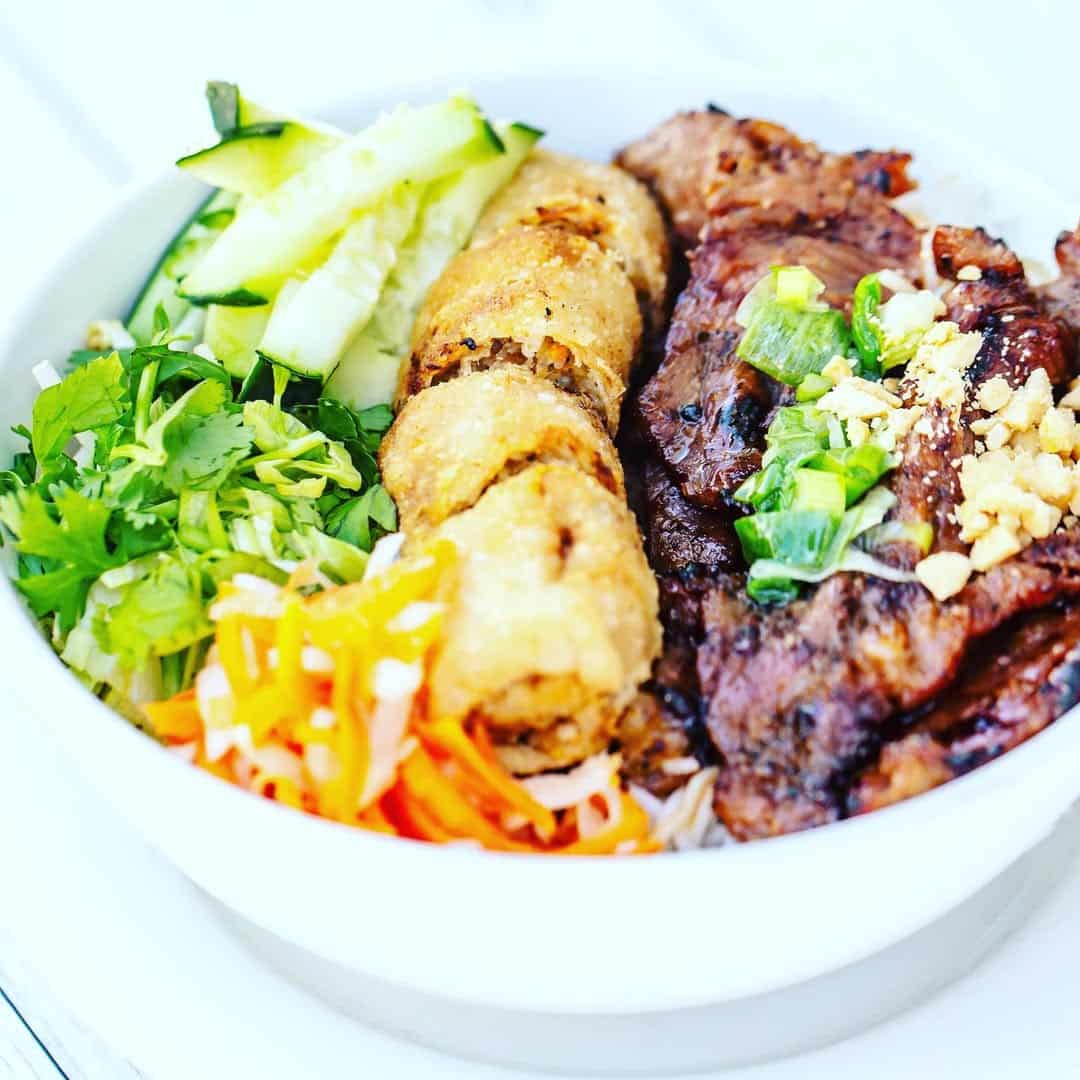
If you’ve never had Bún Thịt Nướng, let me paint the picture for you.
You’ve got warm, smoky Vietnamese grilled pork fresh off the fire. Underneath it? Cool rice vermicelli noodles. Around it? A jungle of crisp lettuce, fresh herbs, crunchy pickles, and a bright, punchy drizzle of nước chấm.
It’s hot meets cold. Sweet meets salty. Fresh meets fire.
As someone who lives and breathes smoke and flame, I love dishes that respect the grill. And this one? It doesn’t just respect it. It celebrates it.
This isn’t heavy barbecue. This is balance. And balance is harder to master than brute-force flavor.
What Is Bún Thịt Nướng?
Let’s break it down.
- Bún = rice vermicelli noodles
- Thịt Nướng = grilled meat (usually pork)
So yes, it literally means grilled meat with noodles. Simple name. Serious flavor.
Traditionally served at room temperature, this bowl is a Vietnamese street food staple. You’ll see it everywhere from roadside vendors to family kitchens. And here’s the genius part: nothing is overly complicated.
Each component is prepared simply, but when layered together, it becomes something deeply satisfying.
The magic is in contrast.
You don’t drown this dish in sauce. You don’t bury it in cheese. You build it thoughtfully. Like a pitmaster building layers of smoke over hours, except here we’re building layers of texture and brightness.
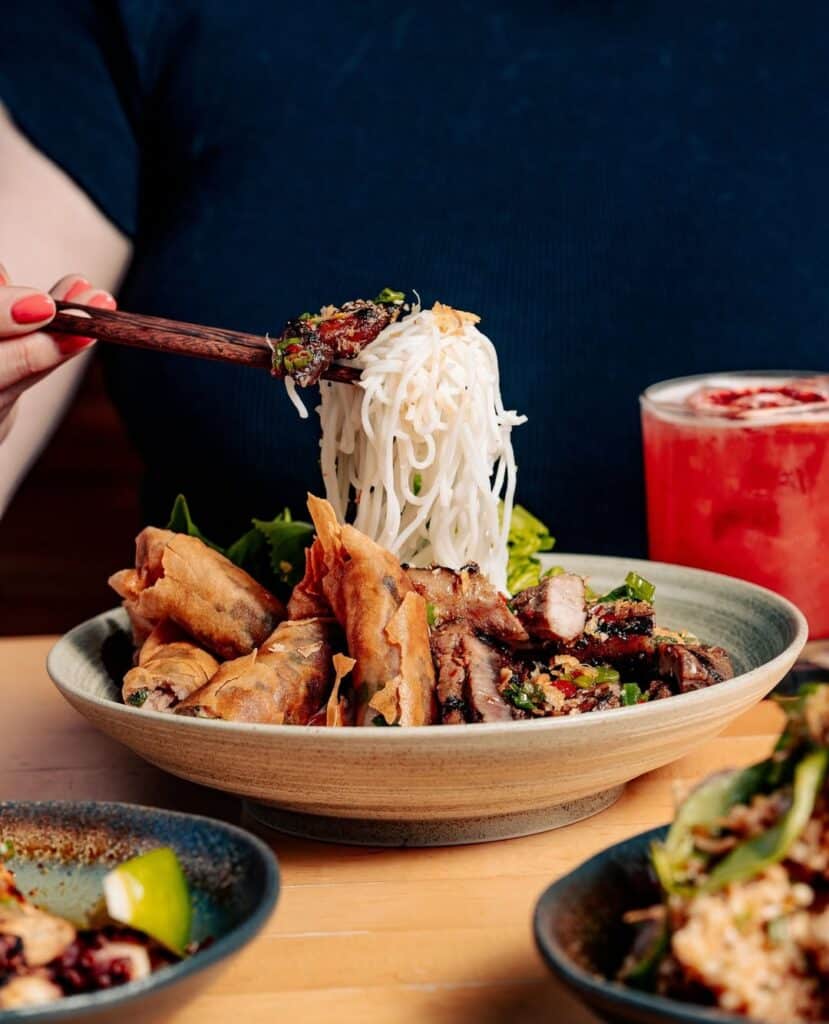
Why This Dish Works So Well
As a cook, I look for three things: structure, contrast, and flavor balance. Bún Thịt Nướng nails all three.
- The pork carries the smoke and sweetness.
- The herbs and vegetables bring freshness and crunch.
- The sauce ties everything together with sweet, salty, and tangy notes.
And the best part? It feels light. You finish a bowl and think, “I could eat that again.” That’s culinary restraint at its finest.
The Role of Fire: Charcoal vs. Gas (And Why It Matters)
Let’s talk heat source. Because not all fire is created equal. If you want deeper flavor in your Vietnamese grilled pork, charcoal brings something special to the table: live-fire aroma.
That subtle smokiness seeps into the caramelized sugars from the marinade and creates complexity you just can’t fake. Gas grills are efficient and convenient – but they burn clean.
Almost too clean. Charcoal adds personality. It crackles. It flares. It demands attention. And that tiny bit of rendered pork fat hitting hot coals?
That’s flavor layering in real time. If charcoal isn’t an option, add a small wood chunk or use a grill pan to develop deep browning and caramelization.
Remember: fire isn’t just heat – it’s an ingredient.
The Cultural Rhythm of the Bowl
Bún Thịt Nướng isn’t just a recipe – it’s part of Vietnam’s everyday food culture. It’s lunch-hour fuel. It’s sidewalk seating on tiny plastic stools. It’s the rhythm of scooters passing by while someone grills pork behind you.
What makes this bowl special is how it fits into daily life. It’s fast but thoughtful. Affordable but layered. That balance reflects a broader philosophy in Vietnamese cuisine: freshness first, flavor always.
There’s no heavy cream, no excess fat, no unnecessary complication. Just smart construction.
And here’s the thing – this dish is often eaten quickly, but never carelessly. That’s a lesson for any cook. Simplicity done well isn’t basic. It’s disciplined.
Knife Skills and Texture Control
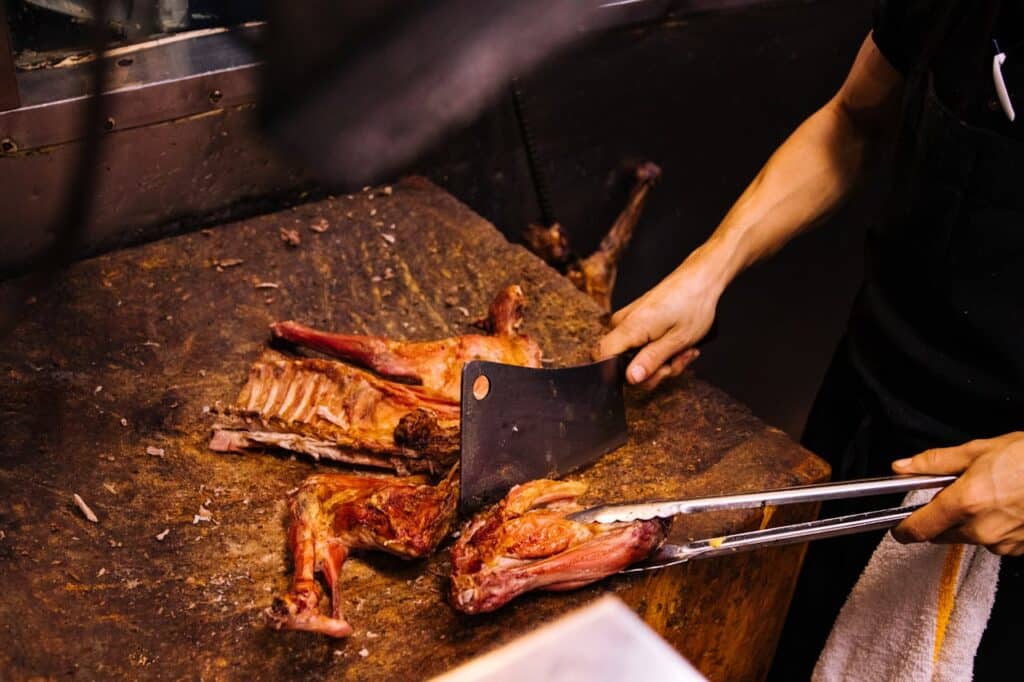
Here’s something most people overlook: how you cut everything changes the dish. Thick cucumber slices? Too watery. Huge herb leaves? Overpowering. Pork sliced too chunky? You lose surface char per bite.
Bún Thịt Nướng is a masterclass in texture precision. The carrots should be fine matchsticks. The lettuce shredded, not chopped into clumsy squares. Herbs gently torn to release aroma without bruising them into bitterness.
Even the pork – slice it thin across the grain to maximize tenderness. This bowl is engineered for forkful harmony. Every bite should contain a little of everything.
When textures are balanced – crisp, tender, chewy, juicy – you don’t just taste the dish. You experience it.
Building the Perfect Bite
Here’s the secret move: don’t eat it layer by layer. Mix it. Thoroughly. I’ve watched first-timers politely pick at the pork like it’s a salad topping. No, no, no. The goal is integration. The noodles soak up sauce.
The herbs perfume the pork. The pickles cut through richness. When properly mixed, each bite delivers sweet, smoky, fresh, salty, and tangy all at once. That’s intentional design. Vietnamese cuisine excels at this concept of balance within a single mouthful.
And here’s the punchline – if your bowl tastes flat, it’s usually not the seasoning. It’s the distribution. Cooking doesn’t end at plating. Sometimes the final technique is knowing how to eat it.
Pro Tips from the Grill
After years behind the fire, here’s what matters most:
- Thinly slice the pork. More surface area = more caramelization.
- Don’t skip the sugar in the marinade. That char is essential.
- Serve slightly warm pork over room-temp ingredients. Contrast is king.
- Taste your sauce twice. Once before resting. Once before serving.
And here’s a small secret: if you slightly over-char a few pieces, leave them in. Those darker bits add complexity. Controlled imperfection beats sterile perfection every time.
Variations Worth Trying
Once you master the base version, you can riff.
Add crispy fried spring rolls for a heartier bowl. Swap pork for grilled chicken thighs. Go vegetarian with grilled tofu and a soy-based sauce.
But before you experiment too much, make the classic version properly at least once.
Learn the rules before you bend them.
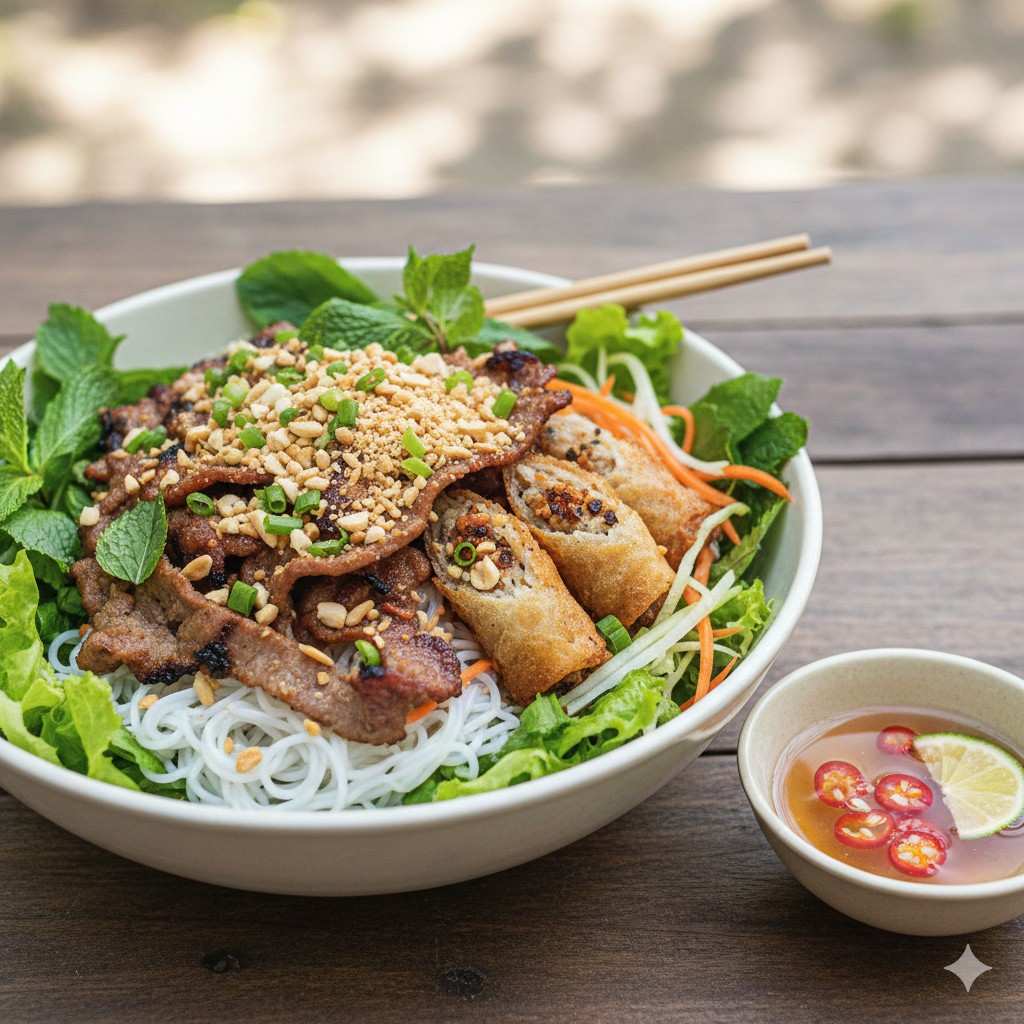
Why This Dish Stays Timeless
As a cook, I admire dishes that don’t rely on gimmicks.
Bún Thịt Nướng isn’t flashy. It’s thoughtful.
It teaches you:
- Balance beats heaviness.
- Texture matters as much as flavor.
- Freshness can coexist with smoke.
And maybe most importantly? Grilling isn’t just about big hunks of meat and loud flavors. Sometimes it’s about restraint, control, and letting the fire whisper instead of shout.
That’s what great Vietnamese grilled pork does in this bowl. It doesn’t dominate. It complements.
And when you take that first bite – smoky pork, cool noodles, bright herbs, sweet-salty sauce – you’ll understand why this humble street food has stayed beloved for generations.
It’s not trying to impress you.
It just quietly does.
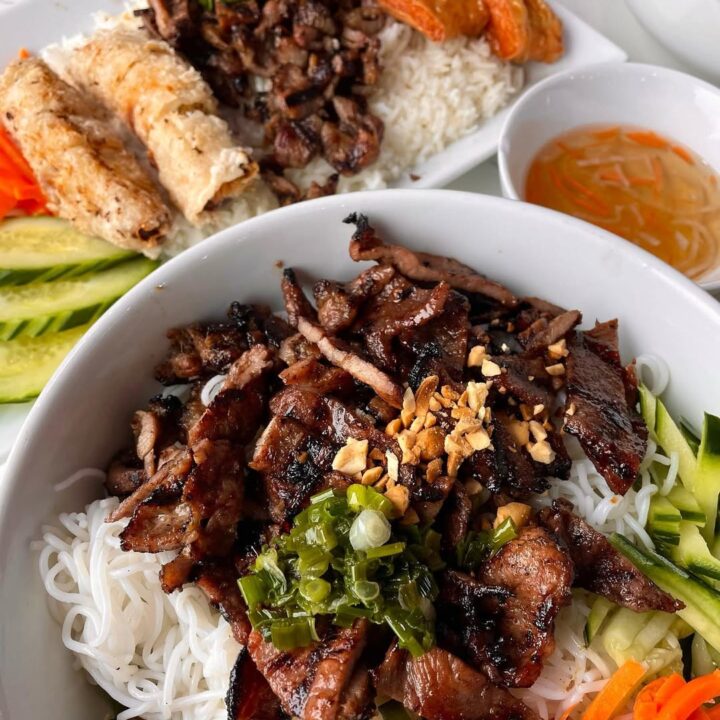
Vietnamese Grilled Pork with Rice Noodles (Bún Thịt Nướng)
Image credit: @dallashungry
Ingredients
The Pork Marinade
- Thinly sliced pork shoulder (or pork butt)
- Garlic
- Shallots
- Fish sauce
- Sugar
- A touch of honey
- Soy sauce
- Fresh lemongrass
- Black pepper
- Neutral oil
Here’s what’s happening:
- Fish sauce brings depth and umami.
- Sugar and honey help caramelization on the grill.
- Lemongrass adds citrusy fragrance.
- Garlic and shallots build savory backbone.
- Marinate at least 1 hour. Overnight? Even better. Good barbecue teaches patience. Same rule applies here.
The Noodles and Fresh Components
- Shredded lettuce
- Bean sprouts
- Julienned cucumber
- Pickled carrots and daikon
- Mint
- Cilantro
- Thai basil
The Nước Chấm (The Glue)
- Fish sauce
- Lime juice
- Sugar
- Water
- Garlic
- Chili
- It should taste balanced – not aggressively salty or sharply sour.
- If it makes your lips pucker too hard, fix it. If it tastes flat, adjust it. Cooking is about tasting, not blindly following.
Instructions
1. Marinate the Pork
Combine all marinade ingredients and coat the pork thoroughly.
Massage it in. Don’t be shy.
Refrigerate for at least 1 hour, preferably overnight. The pork should smell fragrant before it ever hits heat.
2. Prepare the Pickles
Quick-pickle carrots and daikon in vinegar, sugar, and salt. Let them sit for 20–30 minutes.
You want crunch with a little tang – not limp vegetables swimming in acid.
3. Cook the Noodles
Boil rice vermicelli according to package instructions. Rinse under cold water immediately to stop cooking.
Drain thoroughly. Soggy noodles will sabotage the bowl.
4. Grill the Pork
Now we get to the fun part.
If you’ve got a charcoal grill, use it. That subtle smoke elevates the Vietnamese grilled pork beautifully. Gas grill works too. Even a cast-iron skillet can do the job.
Cook over medium-high heat until caramelized and lightly charred. You want those slightly crispy edges. That’s flavor.
Don’t overcook. Pork shoulder stays juicy, but it’s not invincible.
Let it rest briefly, then slice into bite-sized pieces.
5. Make the Sauce
Stir sugar into warm water until dissolved. Add fish sauce and lime juice. Adjust. Then add garlic and chili.
Taste again.
It should hit sweet first, then salty, then tangy. If it punches you in one direction too hard, rebalance.
6. Assemble the Bowl
This is where it all comes together.
Start with lettuce. Add noodles. Layer on the pork.
Scatter herbs. Add pickles and cucumbers.
Then drizzle the sauce – or serve it on the side so people can control their own destiny.
Mix everything together before eating. Yes,
everything. Trust me.
Featured image credit: @foursistersrestaurant
