
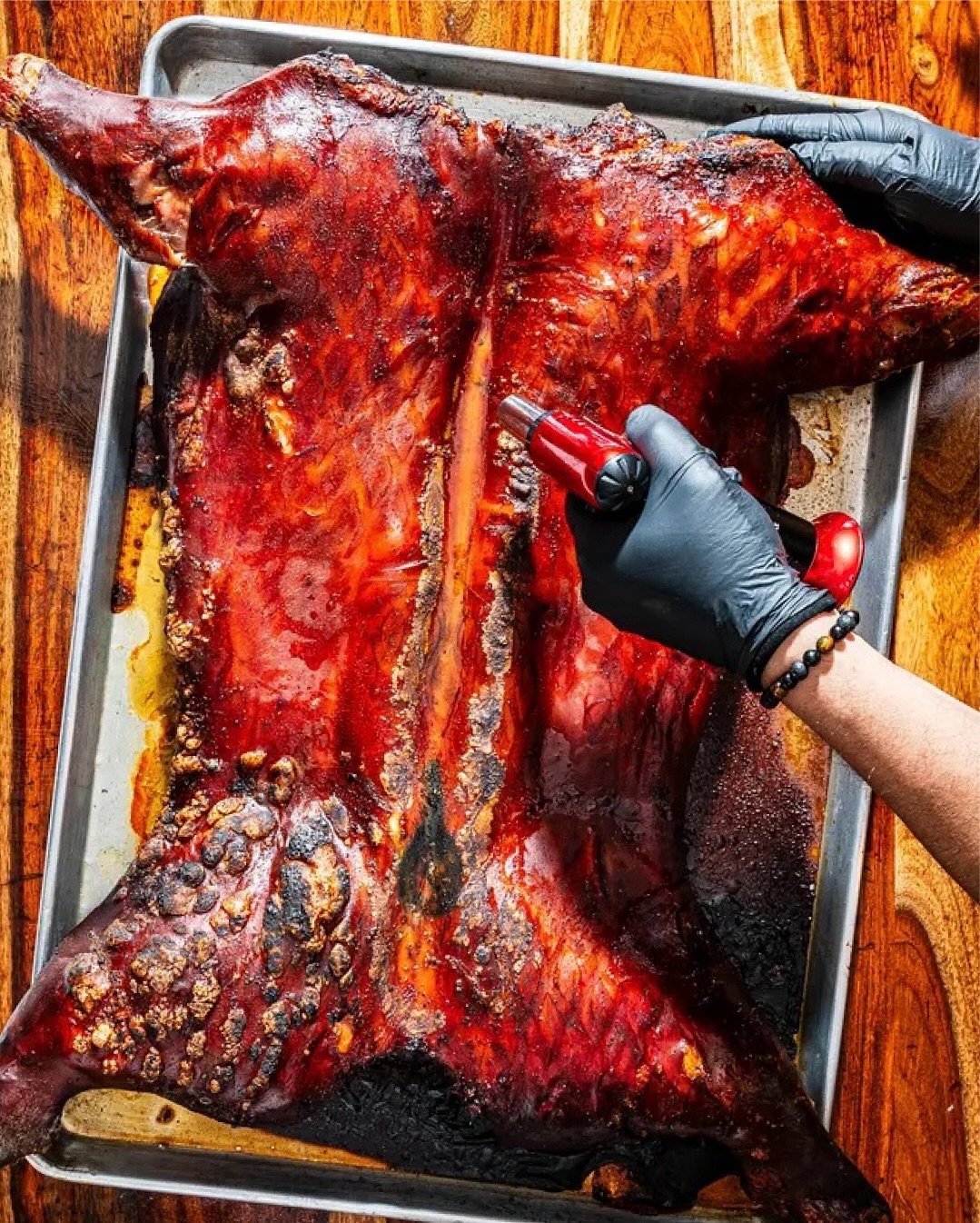
There are cookouts… and then there’s a whole hog pig pickin’.
This isn’t something you casually decide to do on a Saturday morning while sipping coffee. A real pig pickin’ takes planning, patience, smoke, and humility—because at some point, the hog will remind you who’s actually in charge.
I’ve cooked hogs for weddings, reunions, fundraisers, and once for a birthday party that turned into a sunrise breakfast because we started too late. That’s the beauty of it. A pig pickin’ is part meal, part event, part endurance test.
If you do it right, people won’t just remember the food. They’ll remember the day.
This guide covers:
- What makes a whole hog pig pickin’ traditional
- How to choose the right hog
- How to build or select a pit
- A realistic cooking timeline
- The logistics most first-timers forget
- Mistakes that’ll haunt you forever
Let’s get into it.
What Is a Traditional Whole Hog Pig Pickin’?
A whole hog pig pickin’ is exactly what it sounds like: a full hog, cooked low and slow, served straight from the carcass while folks gather around and pick the meat by hand or blade.
No chafing dishes. No slicers. No catering line.
Traditionally:
- The hog is butterflied and cooked skin-side up
- It’s cooked overnight or all day
- Guests eat different cuts at different times
- The cook is as much the show as the food
This isn’t just barbecue. It’s heritage cooking. In the Carolinas especially, pig pickin’s were community events – church fundraisers, harvest celebrations, political rallies. The pit stayed hot, the coffee stayed strong, and nobody rushed anything.
Key point: A pig pickin’ isn’t about perfection. It’s about timing, respect for the animal, and letting the fire do the work.
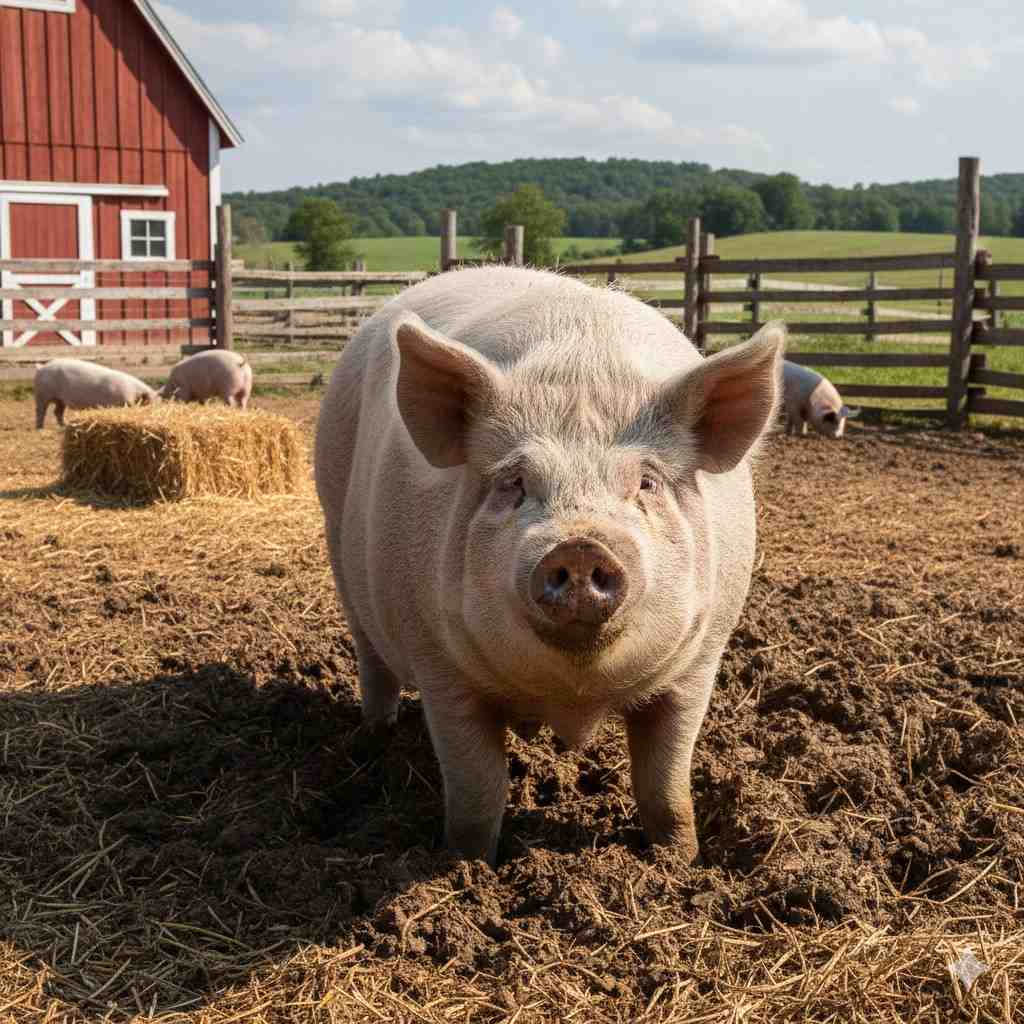
Choosing the Right Hog (Don’t Skip This Part)
The hog sets the tone for everything that follows. Get this wrong and you’ll be fighting uphill all night.
Ideal Hog Size
For most backyard or small-event pig pickin’s:
- 80–120 lbs dressed weight is the sweet spot
- Feeds 40–70 people, depending on sides and appetites
- Cooks evenly without becoming an all-weekend commitment
Bigger hogs mean:
- Longer cook times
- More fuel
- More temperature management
- More chances to mess up
Key phrase: Bigger is not better when you’re learning.
Where to Get the Hog
Start calling around 2–3 weeks in advance:
- Local farms
- Butchers who do whole animals
- Farmers markets with meat vendors
Ask:
- Is it dressed and cleaned?
- Is it fresh or frozen?
- Can they butterfly it for you?
If it’s frozen, plan several days to thaw safely in a cooler with ice.
Prep Basics
Keep it simple:
- Trim excess fat
- Light salt the cavity
- No heavy marinades (they drip and burn)
This is not the time to get fancy. Fire, salt, and time are your real ingredients.
Building or Selecting the Right Pit
Your pit is your kitchen. Treat it like one.
Common Pit Options
1. Cinder block pit
o Most common and forgiving
o Easy airflow control
o Great heat retention
2. In-ground pit
o Old-school and effective
o Requires more prep and cleanup
o Harder to control for beginners
3. Metal or trailer pit
o Convenient
o More consistent
o Less “traditional,” but nobody complains when it tastes good
Key point: The best pit is the one you understand how to manage.
Pit Size and Setup
Your pit should:
- Be at least 12 inches wider and longer than the hog
- Allow airflow underneath
- Keep the hog 18–24 inches above the coals
Too close and you scorch. Too far and you stall.
Fuel Choices
Stick to the classics:
- Oak for steady heat
- Hickory for flavor
- Fruit woods sparingly
Avoid softwoods. Pine belongs in the woods, not your pit.
Plan on:
- A lot more wood or charcoal than you think
- Overnight cooks eat fuel like teenagers eat snacks
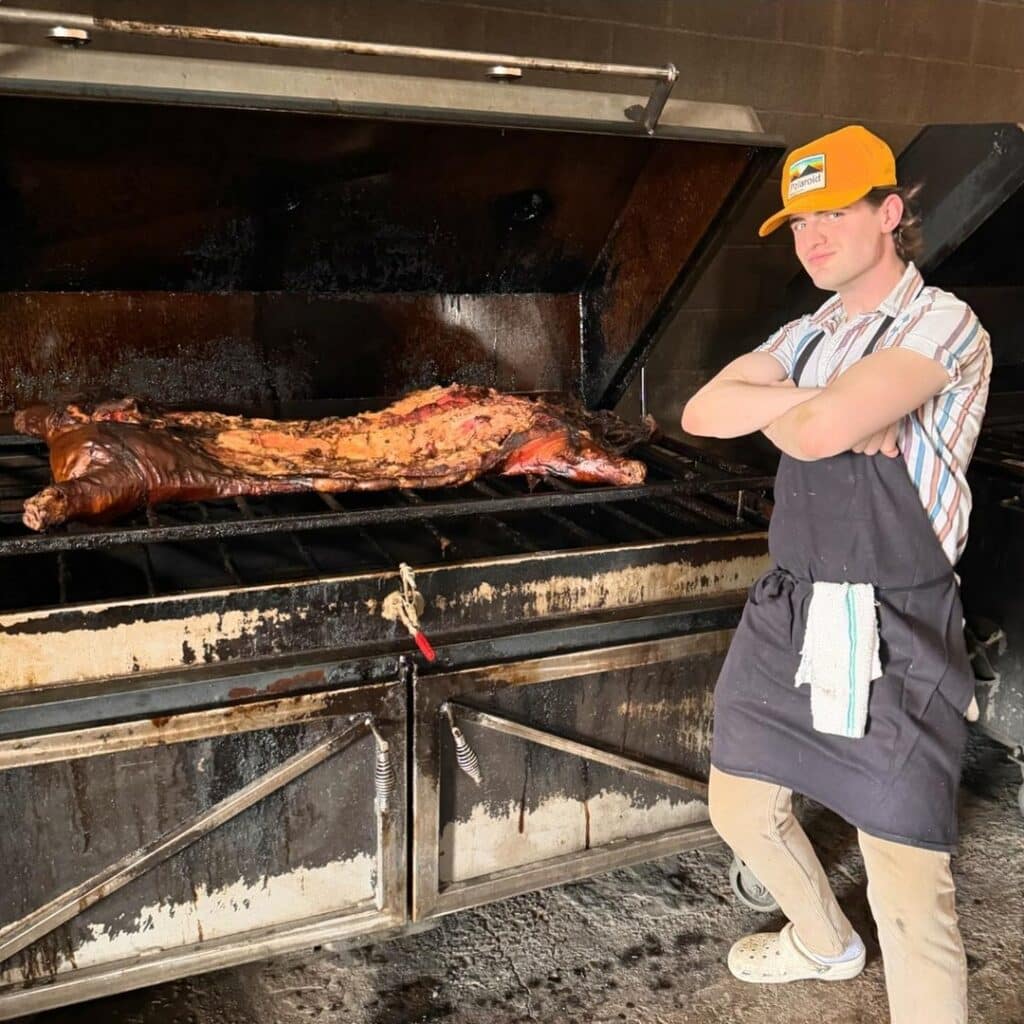
The Whole Hog Pig Pickin’ Timeline (This Is Where Most People Panic)
Here’s the truth: you don’t rush a hog. You plan around it.
A Realistic Timeline
Let’s say guests eat at noon.
The day before
- 10:00 AM – Build pit
- 2:00 PM – Stage wood and tools
- 6:00 PM – Start fire and bring pit to temp
Cook day
- 10:00 PM – Hog goes on
- Overnight – Maintain steady heat (don’t chase temps)
- 8:00 AM – Begin checking doneness
- 10:30 AM – Pull hog to rest
- 12:00 PM – Start picking
Yes, that means an overnight fire. Welcome to the club.
Temperature Management
Target:
- 225–250°F pit temp
- Slow, even heat
- No flare-ups licking the meat
Check:
- Shoulders
- Hams
- Loin (last to finish)
Key phrase: Cook to feel, not just numbers.
When the shoulder blade wiggles loose and the meat pulls clean, you’re there.
Resting the Hog
Rest at least 45–60 minutes.
This:
- Redistributes juices
- Makes picking easier
- Prevents steam burns (ask me how I know)
Logistics: The Stuff That Separates Chaos from Tradition
A pig pickin’ lives or dies on logistics.
People Power
You need:
- One pitmaster (that’s you)
- One or two helpers
- One person not afraid of knives
Do not try to do this solo. You will regret it at 3:00 AM.
Equipment You’ll Actually Use
Have ready:
- Heavy gloves
- Long knives and cleavers
- Aluminum pans
- Handwash station
- Fire extinguisher (seriously)
This isn’t being dramatic. It’s being prepared.
Serving Flow
Traditionally:
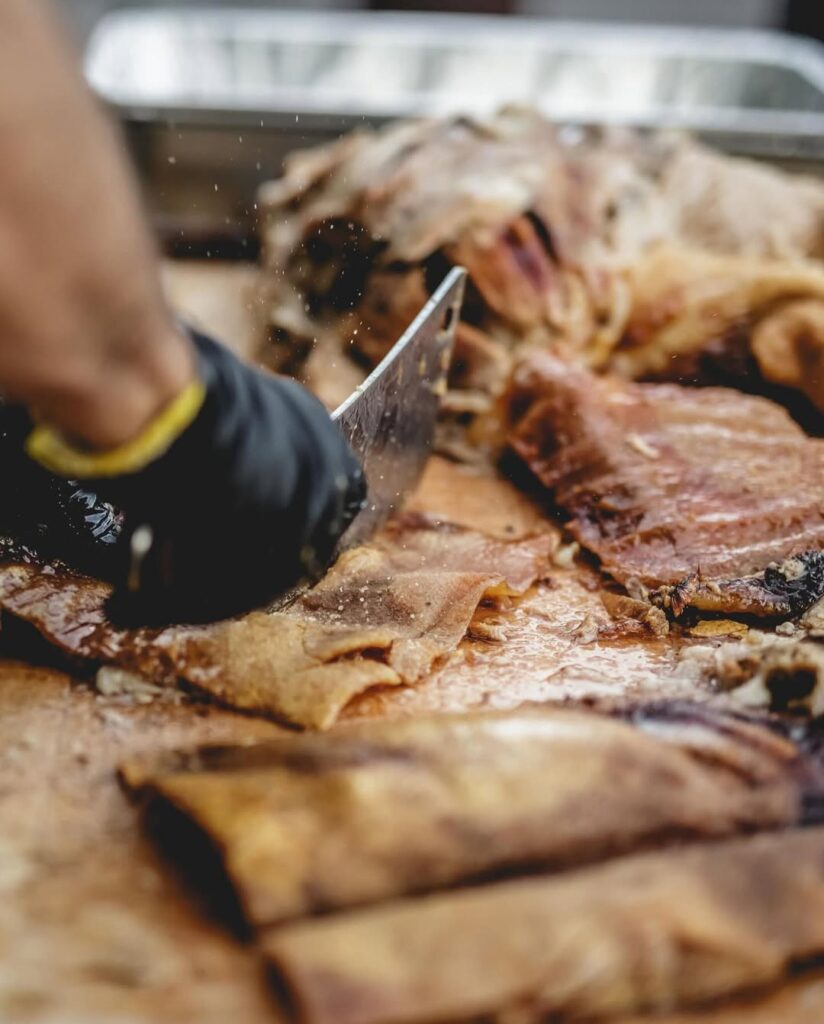
- Skin comes off first
- Shoulders and belly get picked early
- Hams go later
- Loin last
Guests circle the hog. Conversations happen. Someone always asks, “What part is this?”
That’s the magic.
Common Mistakes (Learn from Other People’s Pain)
- Starting too late
- Underestimating fuel
- Over-seasoning
- Cooking too hot
- Not resting the hog
The biggest mistake?
Trying to control everything.
Fire cooking rewards patience, not micromanagement.
Pig Pickin’ Etiquette and Traditions
This isn’t a buffet. It’s a shared experience.
- Don’t rush the pitmaster
- Let elders and kids eat first
- Sauces stay on the side
- Compliments are mandatory
A real whole hog pig pickin’ is slow, social, and slightly chaotic – in the best way.
Weather, Wind, and Why Mother Nature Is Your Co-Pitmaster
Every whole hog pig pickin’ has a silent partner: the weather. You can ignore it, but it won’t ignore you. Wind speeds up fires and steals heat. Cold air makes pits chew through fuel like it’s going out of style.
Rain doesn’t ruin a cook, but it will test your mood – and your tarp game.
The trick isn’t fighting the weather. It’s planning for conditions.
Smart pit adjustments include:
- Facing the pit away from prevailing wind
- Building windbreaks with plywood or hay bales
- Keeping extra dry wood covered and nearby
- Accepting rain early and adjusting instead of scrambling
Here’s the pitmaster truth: some of the best hogs I’ve ever cooked happened in bad weather. Nobody rushed. Everyone paid attention.
The fire got the respect it deserved. Bad weather forces you to slow down – and that mindset always shows up in the meat.
Managing Smoke Flavor Without Overdoing It
Smoke is the soul of a whole hog pig pickin’, but too much turns that soul bitter fast. The goal isn’t thick white clouds rolling like a wildfire – it’s thin, clean blue smoke you can barely see.
Heavy, harsh smoke usually means:
- Green or wet wood
- Poor airflow
- Choking the fire instead of feeding it
Think of smoke like seasoning, not sauce. You want the hog to smell like smoke – not taste like an ashtray. Start your fire early, let it burn down to clean coals, then add wood in small, steady increments.
Here’s a simple rule:
If your eyes are burning, your hog is suffering. Good smoke smells sweet and makes you hungry. Bad smoke smells sharp and makes you step back. Trust your nose – it’s been doing this longer than your thermometer.
Feeding the Fire: Rhythm Beats Force Every Time
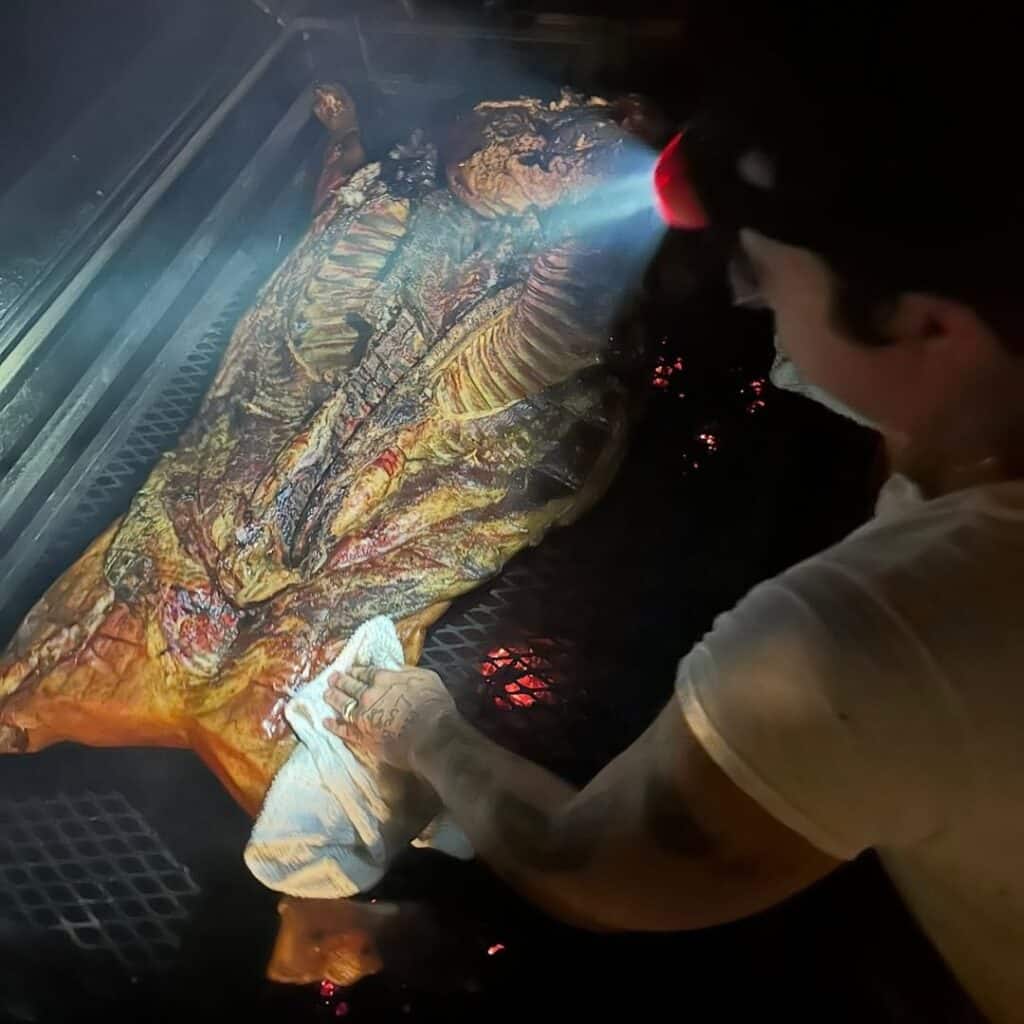
A fire has a rhythm, and learning it is half the art of a whole hog pig pickin’. Beginners panic. They add too much fuel, poke too often, and chase numbers. That’s how temperatures swing and meat dries out.
Instead, focus on small, predictable actions:
- Add fuel before the fire collapses, not after
- Keep coal beds even
- Adjust airflow gradually
You’re not wrestling the fire – you’re keeping it company. Once you find the pace, stick to it:
- Same amount of fuel
- Same timing
- Same placement
That’s why experienced pitmasters look relaxed. They’re not doing less – they’re doing the right amount, consistently. Fire rewards calm hands and steady attention. Anything else, and it starts acting up like a bored dog.
How to Keep Guests Engaged Without Getting in the Way
A whole hog pig pickin’ draws people like a magnet. That’s good – until everyone wants to peek, poke, and ask questions while you’re managing a live fire.
The solution isn’t shooing people away. It’s setting boundaries with hospitality. Create a natural viewing area. Talk while you work. Explain what’s happening so folks feel included without hovering over the pit.
Give guests something useful to do:
- Set up a drinks station
- Prep or organize side dishes
- Place chairs near the pit – but not at the pit
When people feel part of the process, they’re less likely to interfere. And honestly, half the joy of a pig pickin’ is the storytelling. Just make sure the hog stays the main character.
Timing the Pick: When to Open the Hog to the Crowd
There’s a perfect moment in every whole hog pig pickin’ when the hog goes from cooking project to centerpiece. Open it too early and you lose heat and momentum. Too late and people get restless.
The right moment is after the rest, when:
- The meat has settled
- The skin peels clean
- The hog looks ready, not rushed
That’s when you unveil it, step back, and let the moment breathe.
This isn’t a rush. It’s a reveal.
Start with a small group helping pick. Let the crowd watch. Then gradually open it up. This:
- Keeps order
- Protects the meat
- Builds anticipation
A pig pickin’ isn’t a sprint to the food – it’s a slow walk that makes the first bite mean something.
Balancing Tradition with Modern Food Safety
Tradition matters – but so does not making people sick. A real whole hog pig pickin’ can honor the past while respecting modern food safety basics.
That means:
- Keeping raw and cooked tools separate
- Monitoring internal temperatures
- Limiting how long meat sits uncovered
Use gloves when picking. Rotate pans. Keep meat hot or serve it promptly. None of this ruins the vibe – it protects it.
The key is quiet professionalism. You don’t announce safety steps; you just do them smoothly. The best pitmasters make it look effortless. When people remember the hog – not the logistics – you’ve done it right.
The Sounds, Smells, and Moments People Remember Most
Ask anyone about a great whole hog pig pickin’, and they won’t start with temperature charts.
They’ll talk about:
- The smell of smoke in the morning
- The crackle of skin
- The sun coming up while the fire’s still glowing
These sensory moments matter.
That’s why music, pacing, and atmosphere aren’t extras – they’re part of the cook. A pig pickin’ is a slow burn. Let the day unfold naturally. Let conversations drift. Let kids ask questions. Let someone burn a pot of coffee.
The hog is the anchor – but the experience is the memory.
Knowing When You’ve Truly Nailed It
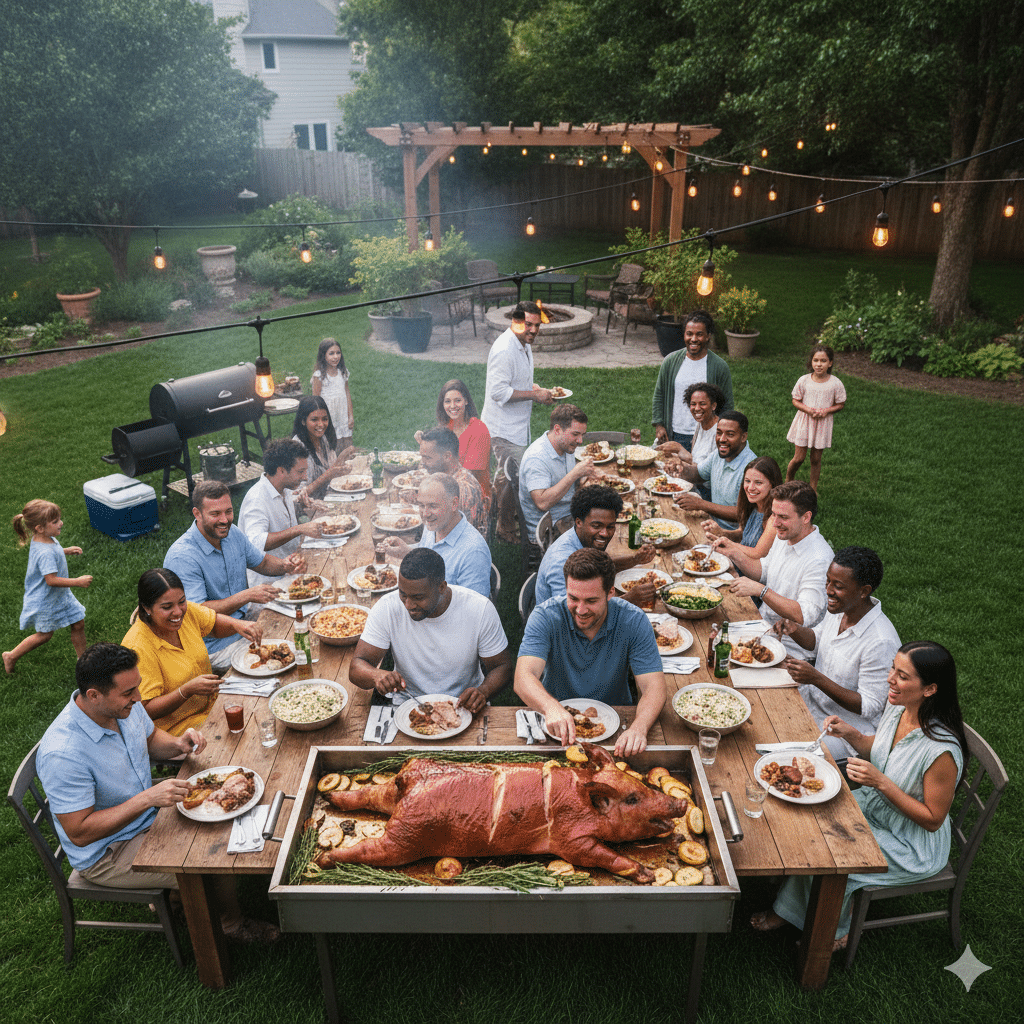
Here’s how you know a whole hog pig pickin’ went right:
- Nobody remembers what time it started
- People linger long after they’ve eaten
- The pitmaster finally sits down
- Someone asks, “When are you doing this again?”
Perfection isn’t spotless execution. It’s flow. It’s when the fire behaved, the meat cooperated, and the people connected. You don’t control every variable – you guide them.
If the hog tasted great and the day felt unhurried, you didn’t just cook food.
You hosted something meaningful.
And that’s the real goal.
Frequently Asked Questions
How long does it take to cook a whole hog?
12–16 hours, depending on size and pit.
How much meat per person?
About 1 lb raw weight per guest.
Can I do this without a custom pit?
Yes, but know your setup.
What’s the best wood?
Oak with hickory accents.
Final Thoughts
A whole hog pig pickin’ will test your patience, your planning, and your sleep schedule.
But when the sun comes up, the smoke hangs low, and someone says, “This is the best hog I’ve ever had,” it all makes sense.
You’re not just cooking meat.
You’re keeping a tradition alive.
And if you mess up a little?
Congratulations – you’re officially a pitmaster now.
Featured image credit: @2fiftytexasbbq
