

A real charcoal grill duel isn’t about gadgets – it’s about heat control, smoke flavor, and timing. The Masterbuilt Gravity 1050 takes on the Oklahoma Joe’s Tahoma 900 DLX, two grills built for cooks who want fire mastery and consistent results.
I’ve run both through searing, smoking, and long cooks, discovering how design and airflow impact performance. These machines are serious tools, rewarding knowledge and punishing mistakes, but the payoff is meat with incredible flavor.
In this review, we’ll cover everything from construction and temperature management to hands-on cooking tests, giving you a pitmaster’s perspective on which grill earns bragging rights.
So let’s settle this duel like pitmasters do – with meat, smoke, and brutally honest opinions.
Shopping for a Charcoal Grill: What Actually Matters
Before we dive head-first into this charcoal grill duel, let’s talk about what separates a good charcoal grill from one that’ll make you question your life choices at 2 a.m. during a brisket cook.
1. Charcoal Flavor Isn’t Optional
Charcoal grills exist for one reason: flavor.
If it doesn’t deliver that deep, smoky, fire-kissed taste, you might as well be cooking indoors and calling it “rustic.”
Both the Gravity 1050 and the Tahoma 900 DLX pass this test – but they take very different paths to get there.
2. Fire Control Is Everything
Here’s the truth most grill ads won’t tell you:
The best grill is the one that lets you control chaos.
- Too much airflow? Fire spikes.
- Too little airflow? Fire chokes.
- Uneven airflow? Congratulations – you’ve invented hot spots.
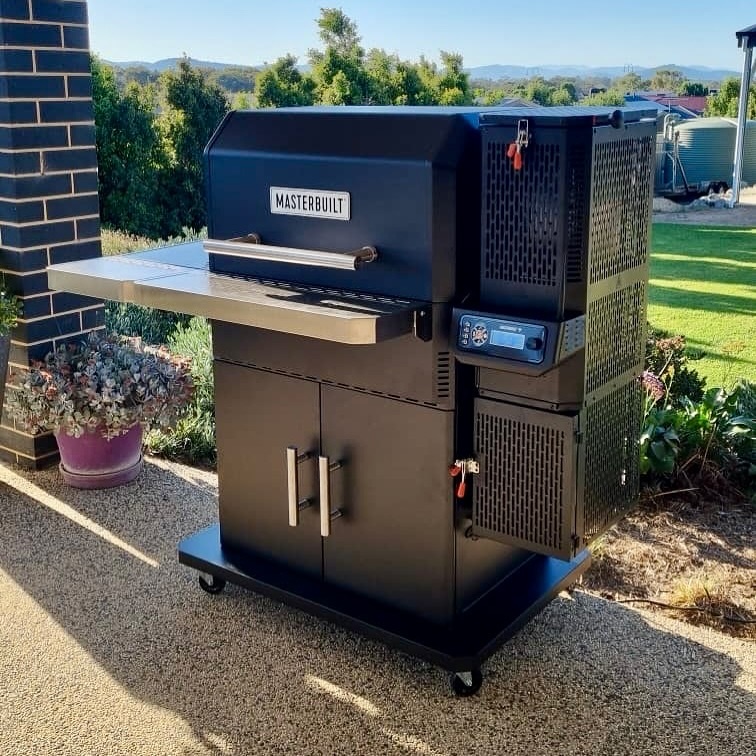
The Masterbuilt Gravity 1050 uses a gravity-fed charcoal system to automate fire management.
The Tahoma 900 DLX leans into classic airflow control, trusting the pitmaster – not a computer – to make the call.
Think of it this way:
- Masterbuilt is precision with training wheels
- Oklahoma Joe’s is old-school muscle memory
Frank Drebin from The Naked Gun would probably trust the Gravity 1050’s digital controls… then accidentally lean on the wrong button and smoke the lawn furniture instead.
3. Build Quality Isn’t Just About Looks
Heavy steel matters. Tight seals matter. Welds matter.
A grill that leaks heat is like a sieve holding soup – technically possible, emotionally devastating.
- Masterbuilt Gravity 1050 focuses on engineered convenience
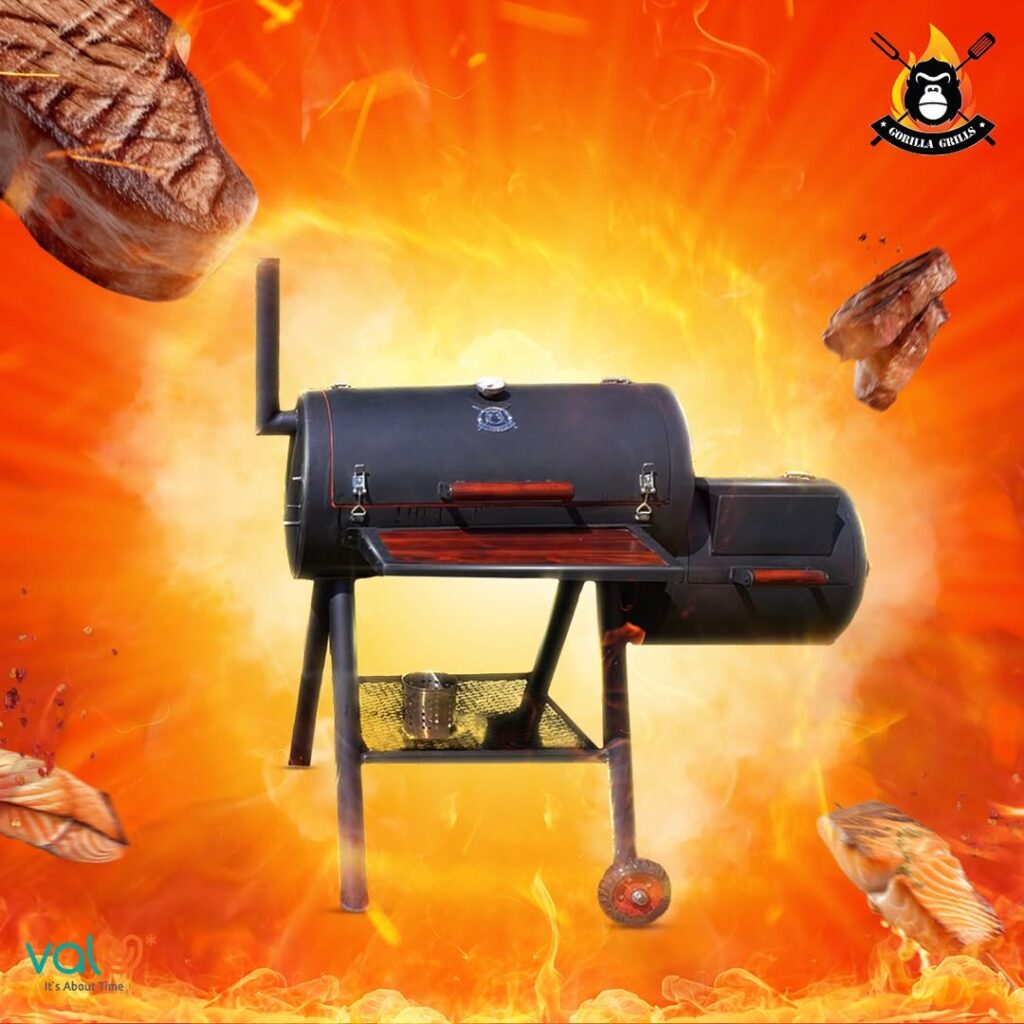
- Tahoma 900 DLX focuses on rugged, traditional pit construction
Both are built to cook. One just assumes you’ll do the thinking. The other assumes you already know how.
4. Convenience vs Craft
This is where the charcoal grill duel gets personal.
Ask yourself:
- Do you want push-button charcoal cooking?
- Or do you enjoy tuning vents and reading smoke like a weather forecast?
Neither answer is wrong. But choosing the wrong grill for your style will make every cook feel like work instead of fun.
And grilling should be fun. If it’s not, Frank Drebin has probably wandered into your backyard and turned all the vents the wrong way.
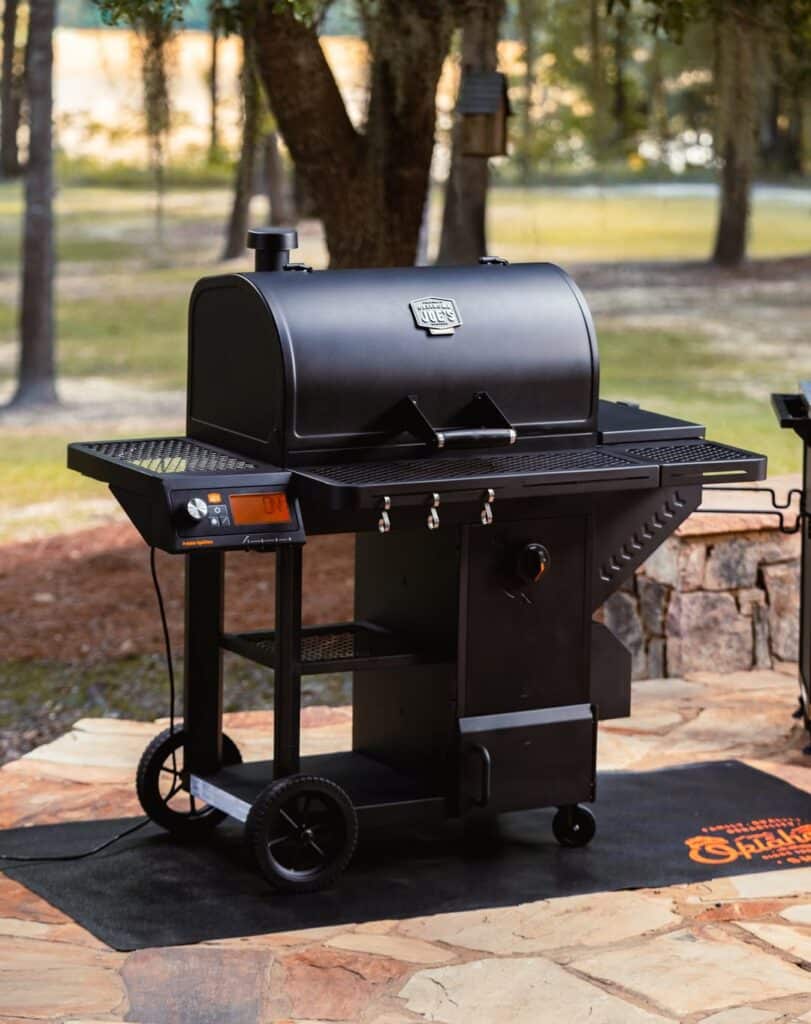
Why This Comparison Matters
The Masterbuilt Gravity 1050 vs Oklahoma Joe’s Tahoma 900 DLX isn’t about which grill is “better.”
It’s about which grill fits how you cook, how you think, and how patient you are when the fire gets moody.
Up next, we’ll break down exact specs, design differences, and what these grills look like when the lid’s open and the heat’s climbing.
Let the charcoal grill duel begin.
Product Specifications & Quick Looks
Before we fire up the grills, let’s get a side-by-side view of the tools we’re working with in this charcoal grill duel.
This isn’t just a list of numbers. These specs tell you how much meat you can cook, how easy it will be to manage fire, and whether each grill matches your style.
Masterbuilt Gravity 1050 – Quick Look
The Gravity 1050 is big, bold, and built for cooks who want controlled charcoal power without constant fussing.
Key Specs:
- Total Cooking Space: ~1,050 sq. in.
- Primary Cooking Area: ~768 sq. in.
- Secondary / Warming Rack: ~282 sq. in.
- Charcoal Capacity: Gravity hopper holds plenty for long cooks.
- Temp Range: ~180°F–700°F+ (with hopper airflow control)
- Construction: Powder-coated steel
- Ignition: Electronic push-button start
- Wheels: Large casters for backyard mobility
What this means in plain English:
You get huge cooking area, smart charcoal feed, and temperature control that feels almost electronic – even though it’s still 100% charcoal.
Oklahoma Joe’s Tahoma 900 DLX – Quick Look
The Tahoma 900 DLX is pure charcoal tradition with a modern twist. Think of it as the grill you can tinker with all day.
Key Specs:
- Total Cooking Space: ~900 sq. in.
- Primary Cooking Area: ~650 sq. in.
- Secondary / Warming Rack: ~250 sq. in.
- Charcoal System: Classic charcoal box (no hopper)
- Temp Range: ~200°F–600°F+ (manual airflow & vents)
- Construction: Heavy gauge steel with porcelain enamel
- Ignition: Chimney starter recommended
- Wheels: Heavy duty wheels
What this means:
You’re working with a trusty traditional design that rewards hands-on fire control. You feel the heat, literally and figuratively.
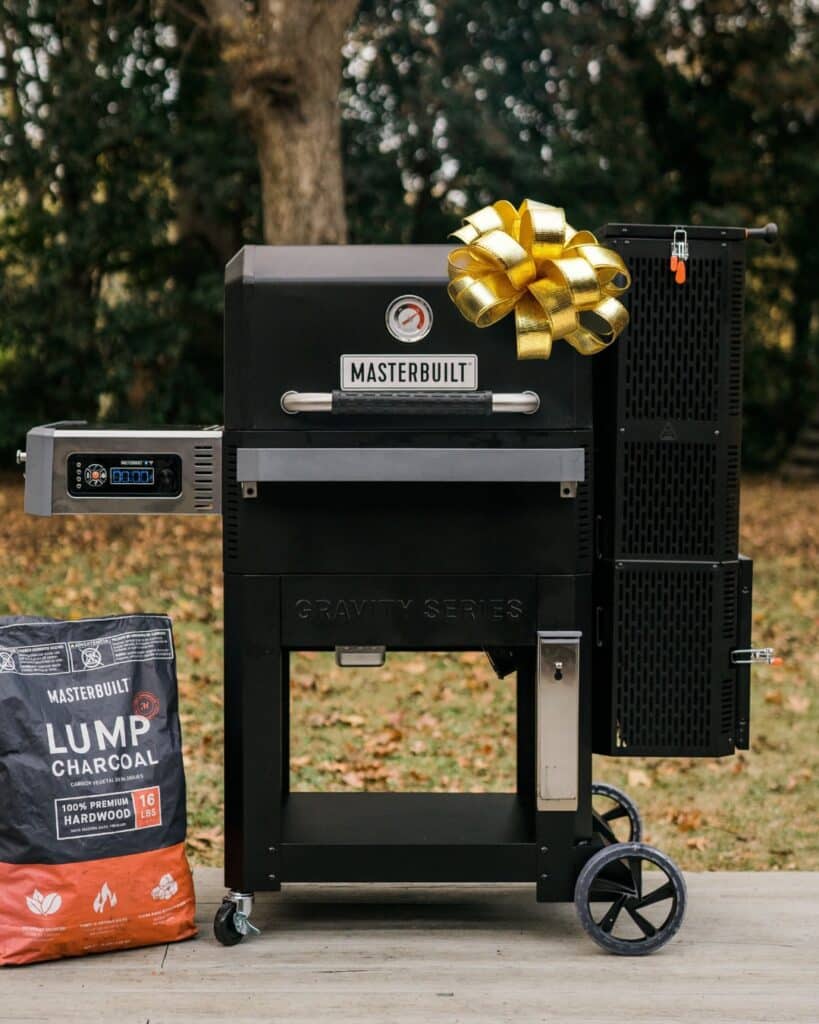
Comparison Table – Masterbuilt Gravity 1050 vs Tahoma 900 DLX
| Feature | Masterbuilt Gravity 1050 | Oklahoma Joe’s Tahoma 900 DLX |
| Total Cooking Area | ~1,050 sq. in. | ~900 sq. in. |
| Primary Grill Space | ~768 sq. in. | ~650 sq. in. |
| Secondary Rack | ~282 sq. in. | ~250 sq. in. |
| Charcoal Delivery | Gravity-fed hopper system | Manual charcoal box |
| Temperature Control | Automated airflow for stable temps | Manual vents – precision with practice |
| Ignition | Push-button start | Chimney starter recommended |
| Construction | Powder-coated steel | Heavy gauge steel + porcelain enamel |
| Portability | Easy-roll casters | Heavy-duty wheels |
| Best Use | Balanced cooks – low & slow to high sear | Traditional grilling & seasoned fire tinkerers |
Specs Breakdown – What These Numbers Really Mean
A few of these specs carry outsized importance in real-world use:
Cooking Area
More space isn’t just bragging rights.
If you want to do a Boston butt and ribs at the same time, that extra 150 sq. in. on the Gravity 1050 isn’t negligible.
But if your typical cook is a brisket and a couple of sides, the Tahoma 900 DLX’s 900 sq. in. is still plenty.
Charcoal Delivery
This is the main fork in the road of our charcoal grill duel:
- Gravity hopper means you set it and mostly forget it. Charcoal drops as the temp needs fuel.
- Traditional box means you’re the one tuning vents like a DJ mixing a track — and that’s exactly the fun for some cooks.
That’s like comparing a drive-by-wire sports car to a classic stick-shift Mustang. Both go fast… but how you control that power is a big part of the ride.
Temperature Control
Automated vs manual airflow affects:
- Consistency
- Learning curve
- Hands-on time
If you like to dial it in and walk away, the Gravity 1050 leans to the automation side. If you enjoy feeling the fire with every tweak, the Tahoma delivers that classic charcoal experience.
Cooking Performance: Where the Duel Gets Real
Specs are nice. Steel thickness is great. But none of that matters if a grill can’t cook consistently, handle heat swings, and deliver flavor.
This is the heart of the charcoal grill duel: how the Masterbuilt Gravity 1050 and Oklahoma Joe’s Tahoma 900 DLX behave once the fire’s rolling and you’re juggling steaks, ribs, and a beer.
Temperature Range & Stability
A great charcoal grill needs to do two things well:
- Stay low and steady
- Get ripping hot when asked
Masterbuilt Gravity 1050
- Low-end: Holds ~180–225°F with impressive consistency
- High-end: Easily pushes past 650–700°F
Once dialed in, this grill barely flinches. The gravity-fed charcoal drops fuel as needed, and airflow stays tight. It’s almost unfair how easy it feels.
You can walk away. You can multitask. You can forget about vents entirely – and the grill just keeps humming along.
If Frank Drebin were running a brisket overnight, this is the grill that would prevent him from accidentally “investigating” it every 20 minutes with the lid open.
Tahoma 900 DLX
- Low-end: Comfortable in the 225–250°F range
- High-end: 600°F+ with proper coal placement
Stability depends on you. Once you learn the vents, the Tahoma can hold temps for hours – but it demands attention, especially during fuel transitions.
This is classic pitmaster cooking. When it’s locked in, it feels rewarding. When it’s not… you learn patience fast.
Heat Distribution & Hot Spots
Uneven heat can ruin an otherwise perfect cook.
Gravity 1050
- Heat flows evenly across the cooking surface
- Minimal hot spots
- Upper racks stay usable, not decorative
Thanks to its vertical fuel feed and controlled airflow, heat spreads predictably. You don’t need to rotate food constantly or guess where the fire is strongest.
Tahoma 900 DLX
- Hotter near the charcoal box
- Cooler zones toward the edges
- Requires strategic food placement
This isn’t a flaw – it’s a feature. Experienced cooks can use these zones to their advantage, searing on one side and finishing on another.
But beginners may find themselves playing musical steaks until they learn the grill’s personality.
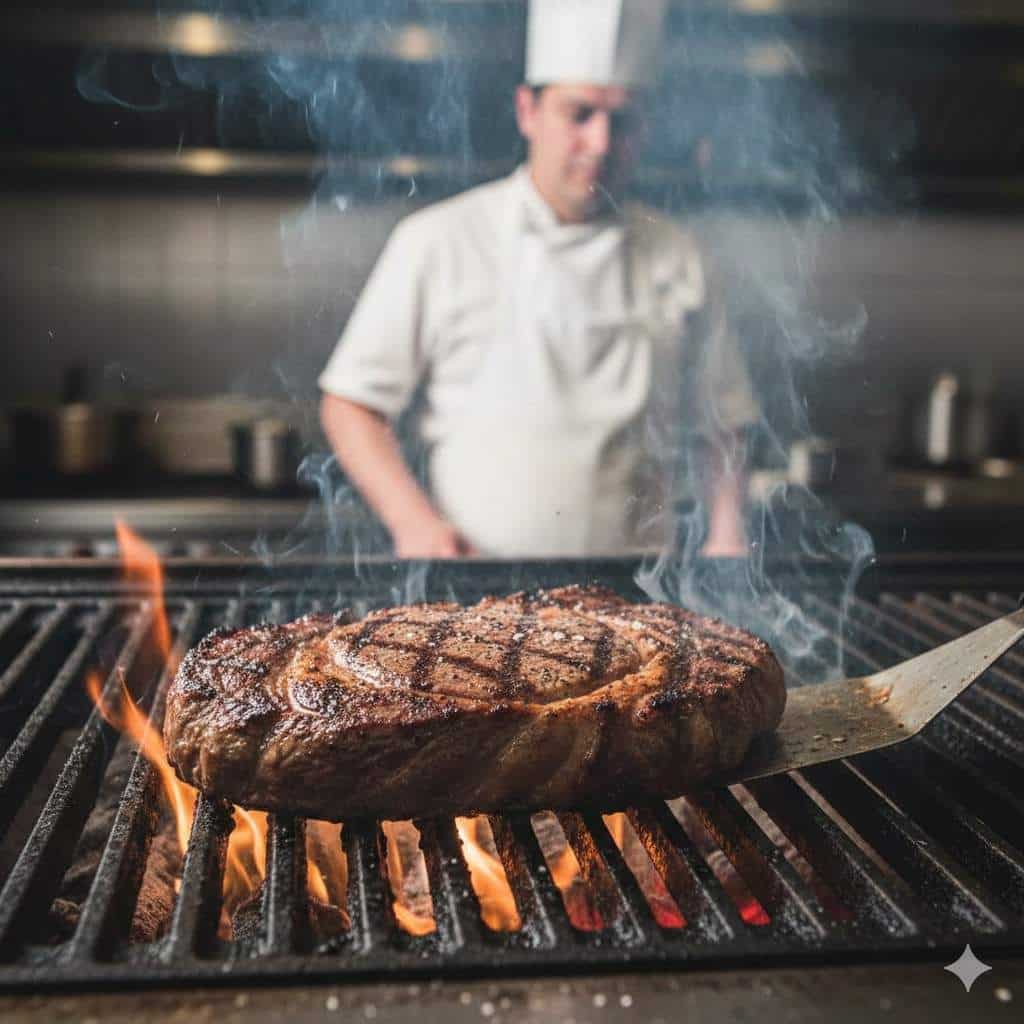
Searing Power
Let’s talk about crust.
Gravity 1050
- Cast iron grates + high airflow = aggressive searing
- Steaks get restaurant-level grill marks fast
- Excellent for burgers, chops, and reverse searing
This grill gets hot quickly. If you blink, your ribeye might be done – and not in the way you planned.
Tahoma 900 DLX
- Strong searing once coals are stacked properly
- Slightly slower to peak heat
- More manual effort, same delicious payoff
You can absolutely get an incredible sear here – but you earn it. Stack coals right, manage airflow, and you’ll be rewarded.
Smoking & Low-and-Slow Performance
This is where charcoal grills really shine.
Gravity 1050
- Consistent smoke
- Excellent for brisket, pork shoulder, ribs
- Less hands-on during long cooks
Wood chunks mixed into the hopper deliver steady smoke without babysitting. It’s almost too easy – like cheating, but legal.
Tahoma 900 DLX
- Rich, traditional charcoal smoke
- Greater control over smoke intensity
- Requires more fire management
If you like building layers of smoke flavor, the Tahoma gives you that freedom. It’s more work, but some pitmasters prefer that hands-on approach.
Fuel Efficiency
Charcoal isn’t cheap. Waste matters.
- Gravity 1050: Efficient burn, controlled airflow, less waste
- Tahoma 900 DLX: Efficient once dialed in, but learning curve costs fuel
Once you know the Tahoma, efficiency improves – but the Gravity 1050 wins for consistency right out of the box.
Cooking Performance Verdict
In this stage of the charcoal grill duel:
- Masterbuilt Gravity 1050 wins for:
o Temperature stability
o Ease of cooking
o Set-it-and-forget-it performance
- Oklahoma Joe’s Tahoma 900 DLX wins for:
o Traditional fire control
o Hands-on pitmaster satisfaction
o Classic charcoal flavor control
Ease of Use & Day-to-Day Cooking
A grill can cook amazing food… and still drive you absolutely nuts.
This part of the charcoal grill duel answers a simple question:
How enjoyable is it to live with these grills once the honeymoon phase ends?
Because when it’s a Tuesday night and you just want burgers – not a PhD in airflow – you’ll feel the difference immediately.
Startup & Fire Management
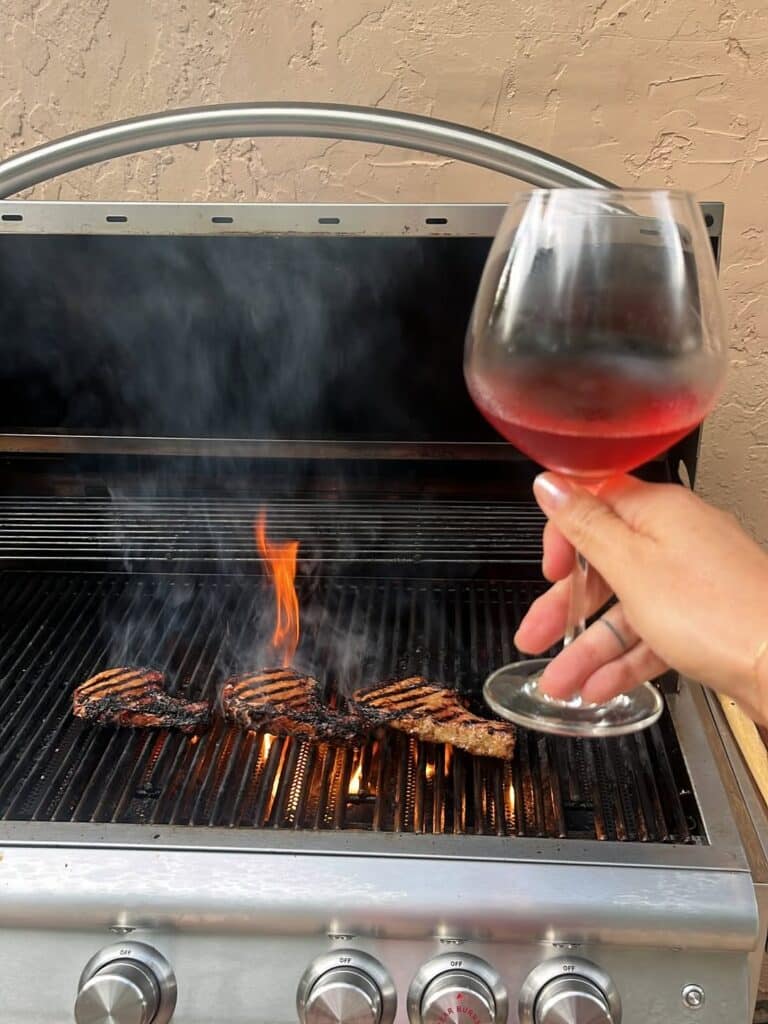
Let’s start with lighting the fire – the moment where many charcoal dreams go to die.
Masterbuilt Gravity 1050
- Push-button ignition
- Gravity hopper feeds charcoal automatically
- No chimney required
You load charcoal. You press a button. The grill gets hot.
That’s it.
It feels suspiciously easy the first time, like you forgot a step. You didn’t. The grill handles ignition and airflow for you.
Frank Drebin would still manage to light the wrong end of the hopper, but that’s not the grill’s fault.
Oklahoma Joe’s Tahoma 900 DLX
- Chimney starter recommended
- Manual coal placement
- Vent tuning required from minute one
This is classic charcoal cooking. You’re in control from the first spark. That’s rewarding – but it takes time and attention.
If you enjoy building a fire and watching it settle, this is your happy place. If you don’t? You’ll feel it fast.
Learning Curve
Every grill has one. These two just live on different planets.
- Gravity 1050:
o Short learning curve
o Easy for beginners
o Predictable behavior
You’ll feel confident by your second or third cook. The grill does most of the thinking, and mistakes are rare.
- Tahoma 900 DLX:
o Steeper learning curve
o Rewards experience
o Punishes impatience
You’ll learn how weather, fuel load, and vent position interact. When it clicks, it’s deeply satisfying. Until then… expect a few “learning meals.”
Temperature Adjustments Mid-Cook
Adjustments happen. Wind picks up. Meat stalls. Life intervenes.
Gravity 1050
- Adjust temp and let the system respond
- Minimal intervention needed
- Great for multitaskers
This grill is forgiving. Small mistakes don’t spiral out of control.
Tahoma 900 DLX
- Vent tweaks affect temps quickly
- Requires monitoring
- Small changes matter
You’re steering the ship directly. That’s powerful – but there’s no autopilot.
Cleanup & Maintenance
Here’s the unglamorous truth:
If cleanup is awful, you’ll grill less.
Gravity 1050
- Removable ash bin
- Predictable grease management
- Slightly more parts to clean
The system makes ash removal easy, but there are more components to stay on top of.
Tahoma 900 DLX
- Traditional ash removal
- Fewer moving parts
- Easier long-term maintenance
It’s simpler. Fewer systems mean fewer things to break – and fewer things to clean.
Portability & Storage
Neither grill is small, but they move differently.
- Gravity 1050:
o Smooth-rolling casters
o Easier to reposition on patios
- Tahoma 900 DLX:
o Heavier overall
o Stable once parked
If you move your grill often, the Gravity 1050 is friendlier. If it lives in one spot, the Tahoma doesn’t care.
Ease of Use Verdict
This phase of the charcoal grill duel is clear-cut:
- Choose Masterbuilt Gravity 1050 if you want:
o Fast startup
o Minimal babysitting
o Stress-free weekday grilling
- Choose Oklahoma Joe’s Tahoma 900 DLX if you want:
o Hands-on control
o Fire-building satisfaction
o A grill that feels earned, not automated
Real-World Cooking Tests: Meat Doesn’t Lie
You can talk about airflow, steel thickness, and fuel efficiency all day. But at some point, you’ve got to throw food on the grill and see what happens.
For this charcoal grill duel, I ran both grills through the same lineup:
- Steaks for searing
- Ribs for low-and-slow
- Chicken for versatility
- Burgers for flare-up control
Same charcoal. Same weather. Same hungry neighbors.
The Sear Test – Steaks & Burgers
This test separates grills that get hot from grills that mean it.
Masterbuilt Gravity 1050
- Reached searing temps fast
- Cast iron grates delivered deep, dark crusts
- Burgers cooked evenly without constant flipping
The Gravity 1050 is borderline aggressive. It doesn’t flirt with high heat – it commits. If you’re not paying attention, your steak will go from perfect to “well-done alibi” in a heartbeat.
Frank Drebin would absolutely walk away for “just a second” and return to something resembling evidence, not dinner.
Oklahoma Joe’s Tahoma 900 DLX
- Took longer to reach peak heat
- Excellent sear once coals were stacked properly
- Burgers benefited from heat zoning
This grill rewards planning. When the fire’s built right, the sear is outstanding – but you earn every char mark.
Low & Slow Test – Ribs & Pork Shoulder
This is where patience pays dividends.
Gravity 1050
- Locked into 225°F and stayed there
- Minimal vent adjustment
- Consistent smoke output
I checked it less. I worried less. The ribs came out tender with clean smoke flavor and no bitter notes.
This grill is ideal if you love barbecue but don’t love hovering.
Tahoma 900 DLX
- Held temps well once stabilized
- Required periodic vent tweaks
- Richer, more hands-on smoke profile
The smoke felt more “alive.” Slightly bolder. If you like managing wood chunks and fine-tuning flavor, this grill shines.
Versatility Test – Whole Chicken & Veggies
A grill should handle more than just meat.
Gravity 1050
- Even heat across racks
- Excellent roasting performance
- Vegetables cooked without burning
The controlled airflow made roasting predictable – almost oven-like, but with charcoal flavor.
Tahoma 900 DLX
- Required rotating food
- Better for cooks who enjoy active management
- Exceptional flavor when dialed in
The chicken had incredible skin once the fire settled. It just took more attention to get there.
Flare-Up Control
Fat happens. Flare-ups test airflow design.
- Gravity 1050: Controlled airflow reduced flare-ups
- Tahoma 900 DLX: Flare-ups manageable with vent control
Neither grill was dangerous, but the Gravity 1050 required less reaction time.
Real-World Results Summary
In this phase of the charcoal grill duel:
- Gravity 1050 excels at:
o Fast searing
o Consistent low-and-slow
o Multitasking cooks
- Tahoma 900 DLX excels at:
o Hands-on flavor control
o Heat zoning
o Traditional pitmaster cooking
Both grills produced excellent food. The difference was how much work it took to get there.
Price & Value: What You’re Really Paying For
We’ve seen how these grills perform. Now let’s talk money. In a charcoal grill duel, price isn’t just a number – it tells you what kind of experience you’re buying.
Masterbuilt Gravity 1050
- Price Range: $1,200–$1,400 (depending on retailer & accessories)
- What you get for that money:
o Gravity-fed hopper automation
o Huge cooking area
o Consistent temperature control
o Modern design & mobility
Value Notes:
You’re paying for convenience, consistency, and tech-assisted charcoal control. You’ll get fewer headaches during long cooks, and even beginners can pull off low-and-slow wonders.
Think of it like hiring a sous-chef you don’t have to feed – minus the attitude.
Oklahoma Joe’s Tahoma 900 DLX
- Price Range: $900–$1,100
- What you get for that money:
o Traditional charcoal pitmaster experience
o Heavy-duty steel & porcelain coating
o Hands-on temperature and smoke control
o Simpler construction = fewer parts to worry about
Value Notes:
You’re paying for durability, classic design, and control over every flame. The learning curve is steeper, but the reward is full-bodied smoke flavor and satisfaction when you nail a cook entirely by skill.
It’s like buying a vintage sports car – you drive it with care, feel every turn, and smile knowing it’s yours.
Side-by-Side Value Comparison
| Aspect | Gravity 1050 | Tahoma 900 DLX |
| Price | Higher | Moderate |
| Cooking Convenience | Automated, low babysitting | Hands-on, requires attention |
| Durability | Good, engineered steel | Heavy-duty steel, long-lasting |
| Learning Curve | Easy | Steeper |
| Smoke Flavor Control | Consistent, mild adjustment | Manual, bold & customizable |
| Maintenance | More parts, ash bins | Fewer moving parts, simple |
How to Decide
Ask yourself:
- Do you want automation and convenience? → Gravity 1050
- Do you enjoy tinkering, learning, and full control over fire? → Tahoma 900 DLX
Price is less about dollars and more about lifestyle. The Tahoma saves a bit upfront but demands more skill and attention. The Gravity 1050 costs more but can flatten the learning curve and save time during weekday cooks.
Even Frank Drebin could justify the Gravity 1050 if he wanted smoke without accidentally detonating the neighbor’s mailbox.
Value Verdict
- Gravity 1050: Great if your priority is consistency, convenience, and multi-tasking.
- Tahoma 900 DLX: Great if your priority is authentic pitmaster experience and hands-on control.
Pros & Cons: The Charcoal Grill Duel Summary
After putting these grills through specs, design, performance, and price, it’s time to cut through the smoke. Here’s a side-by-side breakdown.
Masterbuilt Gravity 1050 – Pros
- Automated charcoal feed: Set it, mostly forget it, perfect for busy cooks
- Consistent temperatures: Low-and-slow or high-sear, it rarely flinches
- Large cooking area: Handles ribs, brisket, chicken, and sides without crowding
- Modern, engineered design: Clean lines, smooth airflow, and easy mobility
- Beginner-friendly: Short learning curve, excellent for those new to charcoal grilling
Masterbuilt Gravity 1050 – Cons
- Higher price point: Costlier than traditional grills
- More parts to clean: Hopper system, ash tray, and grates
- Less “hands-on” feel: Pitmasters who love tinkering might miss full control
Oklahoma Joe’s Tahoma 900 DLX – Pros
- Durable, heavy-duty construction: Thick steel and porcelain coating, built to last
- Classic pitmaster experience: Full control over airflow, smoke, and coal placement
- Hands-on flavor customization: Fire management affects every bite
- Simpler maintenance: Fewer moving parts to worry about
Oklahoma Joe’s Tahoma 900 DLX – Cons
- Steeper learning curve: Beginners may struggle initially
- Manual fire control: Requires more attention, especially during low-and-slow cooks
- Slightly smaller cooking area: May limit simultaneous large cooks compared to Gravity 1050
Customer Feedback & Social Proof
- Gravity 1050 owners: Love the “set it and forget it” convenience. Common praise: consistent temps and ease of searing. Occasional complaints: assembly and cleaning can be tedious.
- Tahoma 900 DLX owners: Appreciate the traditional charcoal control and durability. Frequent praises: deep smoke flavor and hands-on grilling satisfaction. Occasional complaints: learning curve and vent adjustment needed.
Overall, both grills have rave reviews when used by the right audience.
Final Verdict – Who Wins the Charcoal Grill Duel?
Here’s the honest truth:
- Masterbuilt Gravity 1050 wins for convenience and consistency.
Perfect for those who want amazing charcoal flavor with minimal babysitting. Great for weekday cooks, multitaskers, or anyone who prefers a “tech-assisted” charcoal experience. - Oklahoma Joe’s Tahoma 900 DLX wins for traditional pitmaster satisfaction.
Perfect for those who enjoy hands-on fire management, nuanced smoke flavor, and a grill that rewards skill. It’s slower to master but deeply satisfying for purists.
Think of it like this:
- Gravity 1050 = the calm, precise scientist of grilling
- Tahoma 900 DLX = the seasoned, hands-on artist
Frank Drebin would probably lean toward the Gravity 1050 to avoid accidentally creating a “mystery smoke cloud” over the neighbor’s yard – but he’d secretly admire the Tahoma’s old-school charm if he had time to learn it.
Suitable Alternatives
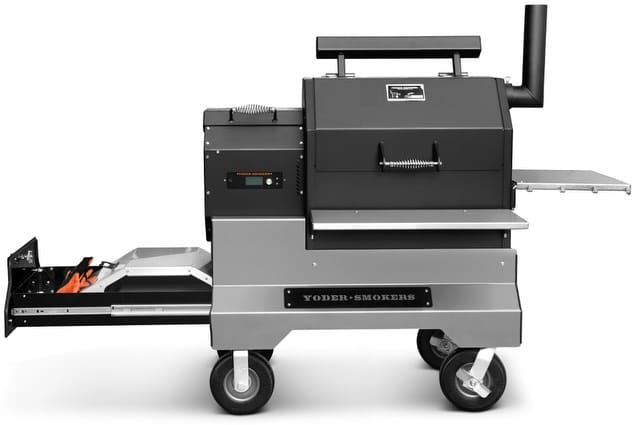
Recommended product:
1. Pellet Grill – The “Set-and-Forget” Flavor Machine
Pellet grills are quickly becoming a favorite for folks who love the smoky depth of charcoal but want precision and convenience.
They burn compressed wood pellets and use an electric system to maintain exact temperatures – think of them as a smoker, grill, and oven all in one machine.
Out of the box you’ll notice how predictable heat control transforms your cooking. Digital controllers let you dial in a temp and walk away; the grill manages airflow and fuel so you’re not adjusting vents like some kind of BBQ weather forecaster.
Pellet grills also infuse real wood flavor into everything from brisket to pizza because the combustion of wood pellets releases rich, aromatic smoke.
That said, they aren’t perfect. They need electricity to run the auger and controller, so no plugging them into a tree stump at a campsite.
They also tend to be pricier than basic grills, and some smoke aficionados argue the smoke flavor isn’t quite the same as a live charcoal fire.
Still, for anyone who wants versatility + convenience + real smoke character, pellet grills are a compelling alternative that lets you explore new cooking techniques without constant supervision.
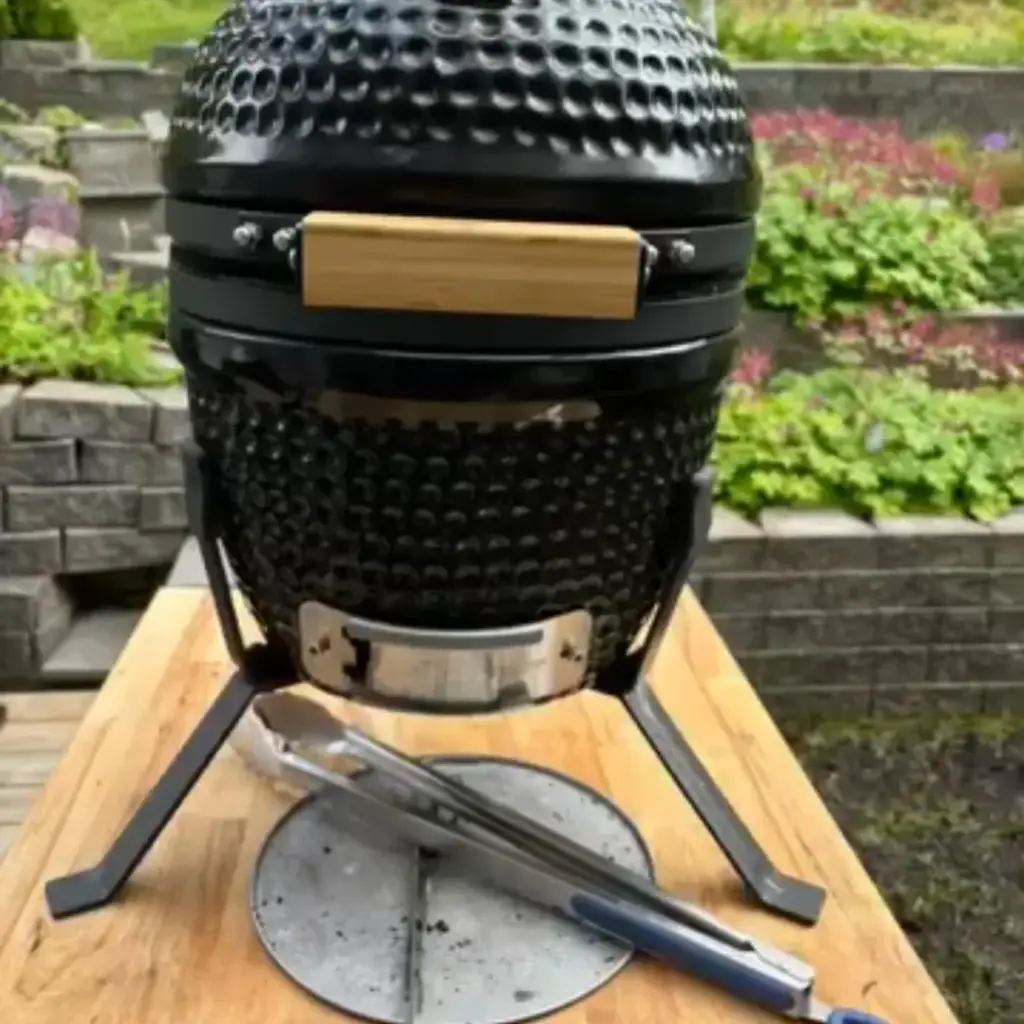
2. Kamado-Style Ceramic Grill – The Heat-Retention Beast
If you want charcoal’s flavor with next-level temperature control, a kamado grill is a smart upgrade. These egg-shaped ceramic grills excel at trapping heat and moisture, making them as capable of high-temp searing as low-and-slow smoking.
The thick ceramic walls act a bit like a thermal battery – once hot, it stays hot – and adjustable vents let you dial in airflow with real finesse.
A kamado handles a breathtaking range of jobs: searing steaks at sky-high temps in the 700 °F range, roasting whole birds evenly, or maintaining a steady 225 °F for long smoked briskets.
Their versatility means you get multiple cooks in one grill, and once you master airflow, you’re rewarded with results that nearly rival dedicated smokers.
But this mastery comes with quirks. Kamados take longer to heat up and cool down, and they’re significantly heavier than your average kettle or pellet grill. Ceramic can also be fragile – a drop or hard knock could crack it.
If you’re ready to “level up” your fire management skills, a kamado offers serious performance and flavor depth that’s hard to beat.
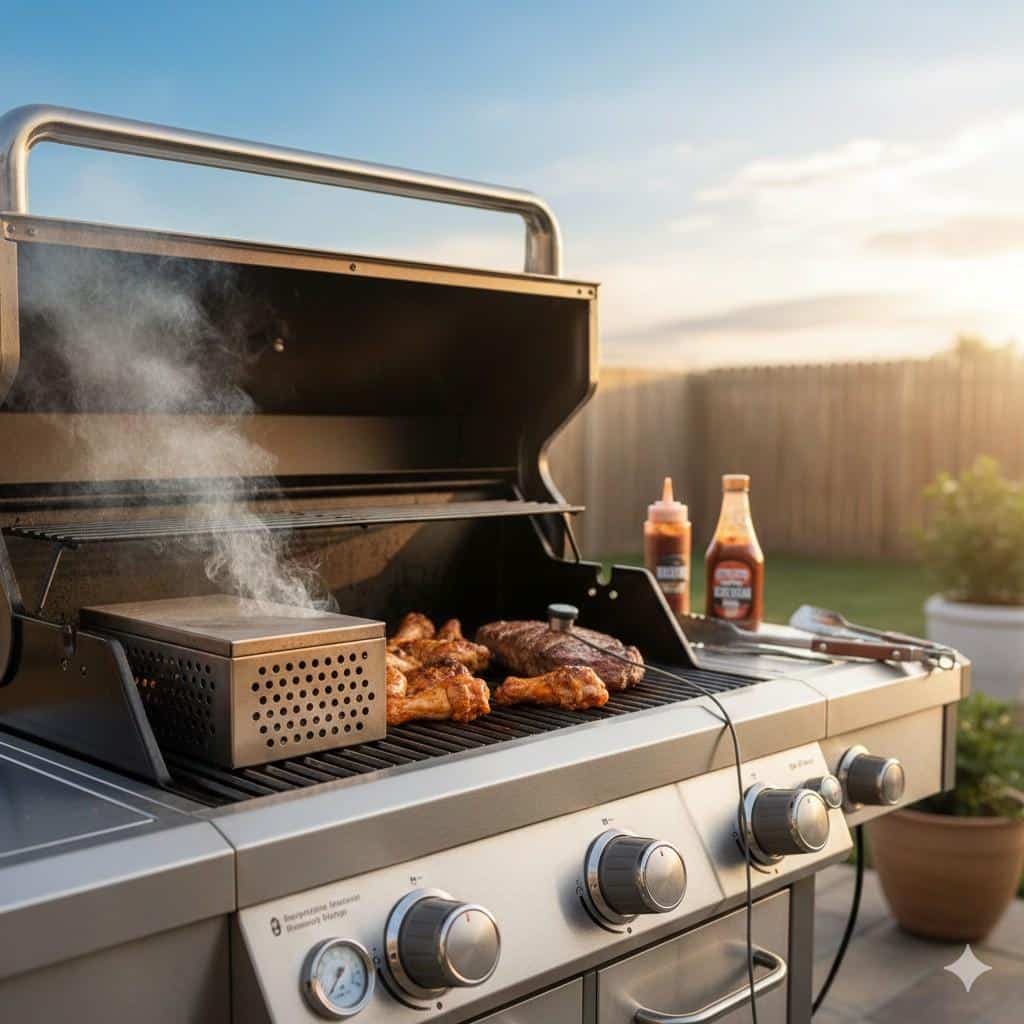
3. Gas Grill with Smoker Box – A Practical Middle Ground
Not ready to give up convenience for fire mastery? A high-quality gas grill paired with a smoker box is a solid alternative to pure charcoal – especially for cooks who want smoke flavor without the fuss of live charcoal.
Modern gas grills heat up fast and offer precise temperature control with the turn of a knob, ideal for busy weeknight meals.
Adding a smoker box filled with wood chips or pellets lets you generate smoke while still enjoying all the benefits of gas grilling.
This setup gives you the best of both worlds: the ease of propane and a noticeable smoky note that’s much deeper than most people expect.
With this you can sear steaks, roast chickens, and even slow-smoke ribs – all without fighting with coals or vents.
Of course, this option won’t reproduce the exact intensity of live charcoal flavor. And wood chips need replenishing every so often during longer cooks, which is a slight chore compared to truly set-and-forget systems.
But if your priority is speed + control + a touch of smoke, a gas grill with a smoker box is a worthy, practical alternative to pure charcoal cookers.
Bottom Line
- Choose Gravity 1050 if you want automation, predictable results, and minimal fuss.
- Choose Tahoma 900 DLX if you want classic charcoal mastery, hands-on control, and the satisfaction of earning every cook.
At the end of the day, both grills deliver incredible flavor, solid construction, and a true charcoal experience. The winner of this duel isn’t just the grill – it’s the pitmaster who uses it well.
Let the fire (and the flavor) decide.
Featured image credit: Canva edited image
