
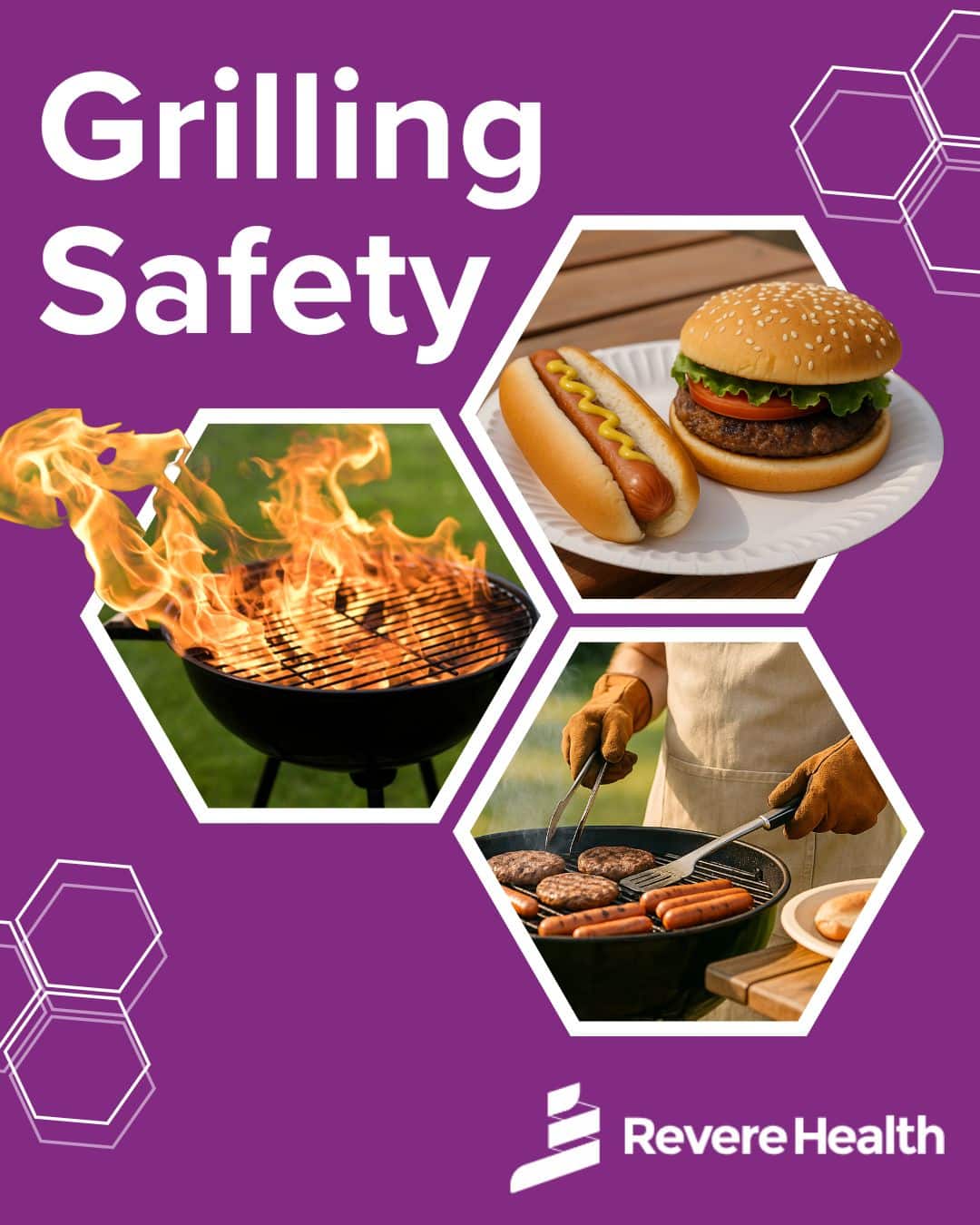
Live-fire cooking rewards understanding, not force. Great BBQ comes from working with fire – not trying to dominate it. Fire isn’t the problem. Panic is.
Most beginner grilling accidents don’t start with recklessness. They start with uncertainty. The lid opens too fast. Grease builds up unnoticed. The grill is set too close to the house. What should be a relaxed cook quickly turns into a problem.
This guide covers BBQ safety and fire management for beginners, explained clearly and without alarmism. With proper heat control, fuel management, and respect for fire, you’ll cook better food and enjoy the process with confidence.
Let’s start with the basics every pitmaster learns early.
Fire 101: What You’re Actually Working With
Fire only needs three things: fuel, heat, and oxygen. Remove or control one of those, and you control the fire. That’s it. BBQ fire management isn’t about strength or speed – it’s about balance.
When you grill, you’re not cooking with flames. You’re cooking with heat. Flames are just a side effect, and too many flames usually mean something’s gone wrong. This is where beginners get tripped up. They chase flames instead of controlling temperature.
Understanding the difference between direct heat and indirect heat is the first major breakthrough. Direct heat cooks fast and hot – great for burgers and steaks. Indirect heat cooks slower and steadier – perfect for chicken, ribs, and anything that needs time without burning.
Once you stop fearing fire and start managing it, everything else gets easier.
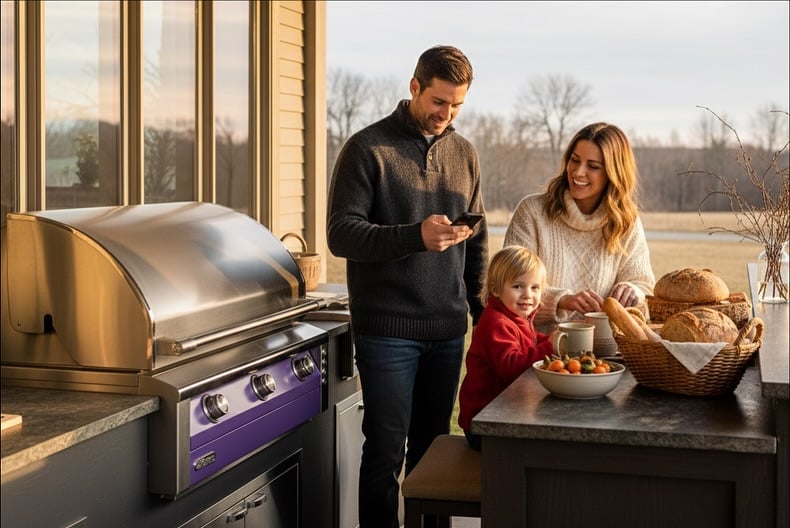
Choosing the Right Grill (BBQ Safety Starts Before the Fire)
Your grill choice matters more than most beginners realize. A grill that’s unstable, poorly ventilated, or too small for your needs makes safe cooking harder than it should be.
Gas grills offer convenience and predictable heat, but they demand respect for fuel lines, valves, and ignition systems. Charcoal grills bring flavor and flexibility, but they require more attention to airflow and ash management.
No matter the type, a safe grill should feel solid, sit level on the ground, and allow good airflow. If it wobbles, leaks, or struggles to hold temperature, that’s not “character.” That’s a hazard.
Cheap grills don’t save money if they compromise safety. Start with equipment that works with you, not against you.
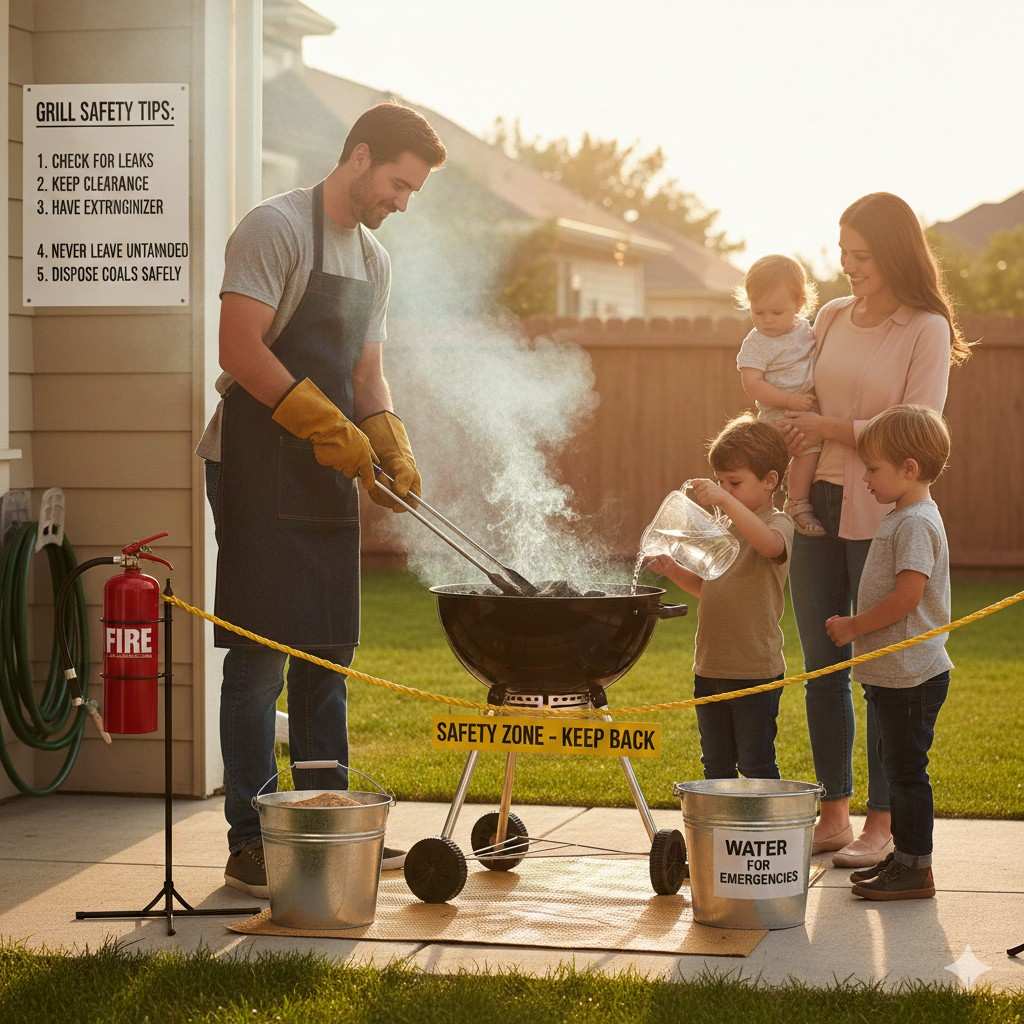
Setting Up a Safe Grilling Zone
I’ve seen grills parked under overhangs, next to siding, and once – memorably – inside a garage with the door cracked “for airflow.” Don’t do that. Ever.
- Your grill needs real space – not just a convenient spot.
- Always set up outdoors, well away from walls, railings, trees, and anything that can burn or melt.
- Make sure the grill sits on stable ground.
- Grass is generally fine, but decks require extra caution.
- Avoid uneven surfaces, which increase the risk of tipping or grease-related accidents.
- Consider the people around you – kids, pets, and guests carrying drinks.
- Keep the grill out of foot traffic and common walkways.
- Create a clear buffer zone so you can focus on cooking instead of managing hazards.
Good setup prevents most accidents before the fire is even lit.
Safety Gear: The Stuff You’ll Be Glad You Bought
You don’t need a firefighter’s kit to grill safely, but a few basics make a big difference.
Heat-resistant gloves protect you when flipping lids or moving grates.
Long-handled tools keep your hands out of the danger zone. A reliable thermometer saves you from undercooked food and unnecessary flare-ups.
And yes – you should have a fire extinguisher nearby. Not because you expect trouble, but because being prepared is part of being calm. Most flare-ups never need it, but knowing it’s there keeps your head clear.
One more thing: clothing. Loose sleeves and synthetic fabrics don’t belong near open flame. BBQ is casual, but fire doesn’t care about vibes.
Lighting the Grill Safely (This Is Where Most Mistakes Happen)
Lighting a grill should never feel rushed. That’s when people cut corners.
For charcoal, a chimney starter is your best friend. It lights coals evenly without chemicals and gives you predictable heat.
Lighter fluid works, but it demands patience and restraint. If the coals aren’t ready, adding more fluid won’t help – it’ll just create drama.
Gas grills are simpler, but still deserve respect. Always open the lid before igniting. Trapped gas plus a spark equals a surprise you won’t enjoy.
Never relight immediately after a failed ignition. Give it time to clear. Fire rewards patience and punishes impatience every single time.
Fire Management: Control the Heat, Not the Flames
Here’s a pitmaster truth: If you’re constantly fighting flames, you’ve already lost control.
Heat is managed through airflow and fuel, not by stabbing at fire with tongs. On charcoal grills, vents are your steering wheel. Open vents increase heat. Closed vents slow things down. Small adjustments matter.
Creating heat zones is another key skill. Pile coals on one side, leave the other cooler. That gives you options. Food cooking too fast? Move it. Need a quick sear? Slide it back.
Gas grills use burners instead of vents, but the principle is the same. Control heat gradually. Big swings cause problems.
Calm fire cooks better food.
Flare-Ups: What They Are and Why They Happen
Flare-ups look scary, but they’re usually just grease hitting heat. Fat drips, flames jump, eyebrows reconsider their life choices.
The mistake beginners make is reacting too fast. Water is never the answer. Neither is panic.
The correct move is simple: move the food away from the flame, close the lid briefly, and reduce airflow or heat. Flames need oxygen. Take that away, and they settle down.
Regular grill cleaning prevents most flare-ups before they start. Grease buildup is a problem waiting for a spark.
Flare-ups are signals, not disasters – if you know how to read them.
Grease Fires: The One Thing You Don’t Ignore
Unlike flare-ups, grease fires demand immediate action. They burn hotter, spread faster, and don’t calm down politely.
Grease fires usually happen when drip trays are neglected or grills are overloaded with fatty food at high heat. Prevention is the real solution. Clean your grill. Empty trays. Don’t stack food like firewood.
If a grease fire starts, close the lid and shut down the heat source. Starve it of oxygen. Never throw water on it. That turns fire into fireworks.
Knowing what not to do matters as much as knowing what to do.
Safe Habits While Cooking
The safest pitmasters aren’t the most cautious – they’re the most focused.
Don’t walk away from an active grill. Don’t multitask with alcohol early in the cook. Handle raw meat carefully and keep cooked food separate.
Thermometers aren’t optional. Guessing doneness leads to overcooking, undercooking, and unnecessary fire exposure from repeated flipping and checking.
Stay present. BBQ rewards attention.
Shutting Down the Grill the Right Way
How you finish matters.
Gas grills should be turned off at the burners first, then the fuel supply. Charcoal grills need vents closed to suffocate remaining coals. Ashes should be cool – completely cool – before disposal.
Many fires happen after cooking is done because someone assumes the danger is over. Fire doesn’t follow schedules.
Let everything cool naturally. Store grills safely. Respect the shutdown as much as the startup.
Common Beginner Mistakes (We’ve All Made Them)
Every pitmaster has a story. Mine involves a wind gust, an open lid, and a lesson learned quickly.
- Never leave your grill unattended – even a quick distraction can turn into a flare-up.
- Avoid overcrowding the cooking surface – too much food at once affects heat distribution and increases flare-ups.
- Keep up with maintenance – clean grates, empty grease trays, and check fuel lines regularly.
- Choose a safe location – grills should be stable, outdoors, and away from walls, overhangs, and foot traffic.
- Learn from every cook – mistakes aren’t failures, they’re lessons. Pay attention to what happens and adjust next time.
- Focus on progress, not perfection – your skills improve with experience; even seasoned pitmasters make mistakes.
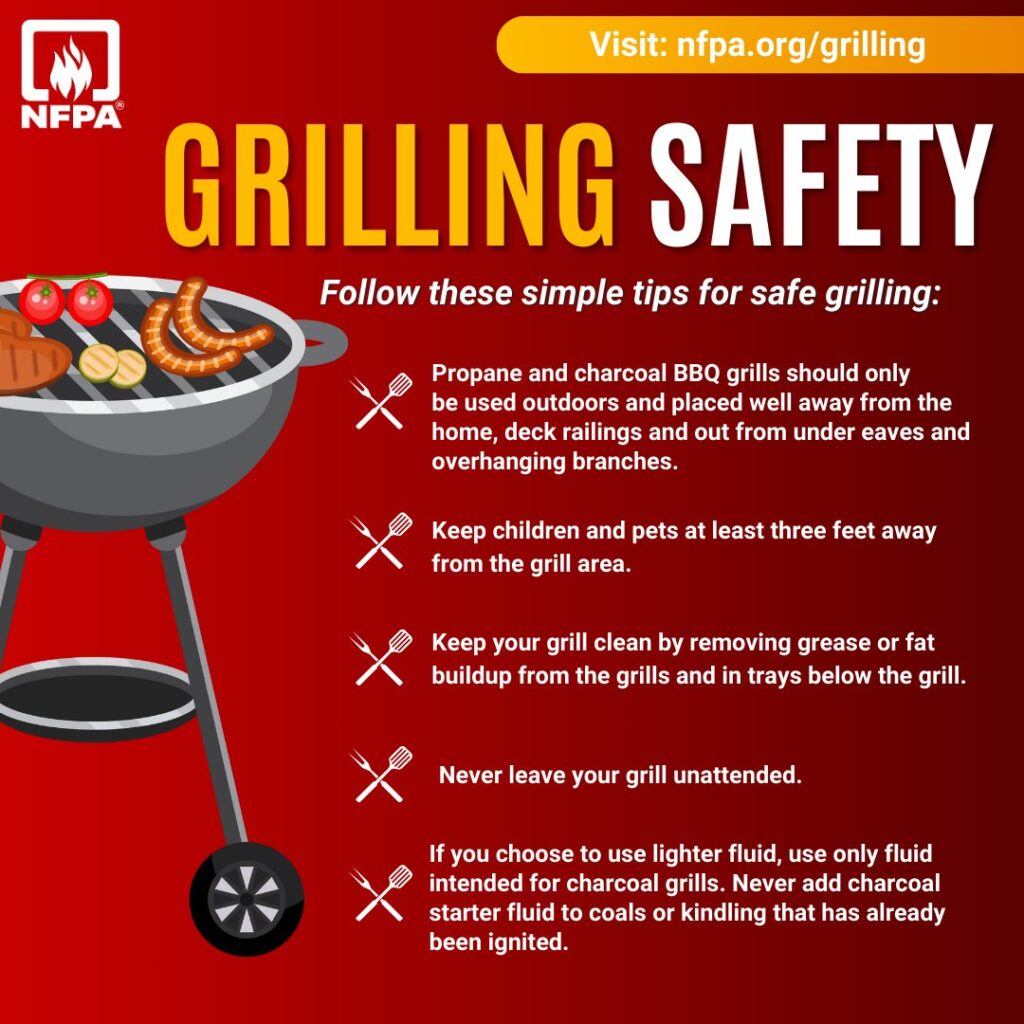
Frequently Asked Questions (FAQs)
Q1: How do I safely light a charcoal grill?
- Use a chimney starter instead of lighter fluid whenever possible—it gives even heat without chemical risks.
- If you use lighter fluid, add it to cold coals only and let it soak in before lighting.
- Always wait until coals are glowing and covered in ash before cooking.
Q2: Can I use a gas grill indoors or in a garage?
- Never. Gas grills produce carbon monoxide and need proper ventilation. Always grill outdoors on level, stable ground.
Q3: How do I prevent flare-ups while cooking?
- Avoid overcrowding the grill.
- Trim excess fat from meats.
- Keep a cooler side or indirect heat zone to move food if flames spike.
- Clean grates and drip trays regularly.
Q4: What should I do if a grease fire starts?
- Close the grill lid to cut oxygen.
- Turn off the heat source if possible.
- Never use water – use baking soda for small fires or a fire extinguisher for larger ones.
Q5: How do I manage wind and weather when grilling?
- Position grills with vents away from strong wind.
- Use natural barriers like fences, but avoid flammable materials.
- Adjust cooking times and monitor heat during cold or rainy weather.
Q6: How can I safely teach kids or beginners to help with the grill?
- Assign tasks away from the heat source, like prepping toppings or setting the table.
- Explain basic safety rules, like staying out of the grill zone.
- Start with supervision and gradually give more responsibility as confidence grows.
Q7: How do I shut down a grill safely?
- Gas: Turn off burners first, then the fuel supply.
- Charcoal: Close vents and allow coals to cool completely before disposing of ashes.
- Never store a hot grill; wait until it is fully cooled.
Confidence Comes From Control
BBQ safety and fire management aren’t about fear. They’re about confidence built on understanding.
When you respect fire, it behaves. When you manage heat, food cooks better. When you prepare properly, emergencies become unlikely.
The best pitmasters aren’t fearless. They’re calm, deliberate, and ready for whatever the fire does next.
And once you get there? BBQ stops feeling risky – and starts feeling like home.
Featured image credit: @reverehealth
